CoreIPC Industrial Computing-Lösungen

Industriecomputer für Energiemanagementsysteme
Zusammenfassung
Energiemanagement ist zu einer strategischen Priorität für Industrieanlagen geworden, Gewerbebauten, Dienstprogramme, und Infrastrukturbetreiber weltweit. Steigende Energiekosten, Nachhaltigkeitsinitiativen, CO2-Reduktionsziele, und zunehmende regulatorische Anforderungen veranlassen Unternehmen dazu, intelligente Energiemanagementsysteme einzuführen (EMS) überwachungsfähig, analysieren, und Optimierung des Energieverbrauchs in Echtzeit.
Ein Industriecomputer für Energiemanagementsysteme dient als zentrale Rechenplattform, die Daten von intelligenten Zählern sammelt, Sensoren, Energieüberwachungsgeräte, HVAC-Systeme, Anlagen für erneuerbare Energien, und Industrieausrüstung. Durch die Ermöglichung der Datenerfassung in Echtzeit, Kantenbearbeitung, Analytik, und sichere Kommunikation, Industriecomputer helfen Unternehmen dabei, die Energieeffizienz zu verbessern, Betriebskosten senken, und unterstützen langfristige Nachhaltigkeitsziele.
Dieser Artikel untersucht die Rolle von Industriecomputern in modernen Energiemanagementsystemen, die Herausforderungen energieintensiver Umgebungen, Überlegungen zur Systemarchitektur, Einsatzszenarien, und die geschäftlichen Vorteile der Einführung industrietauglicher Computerplattformen für Energiemanagementanwendungen.
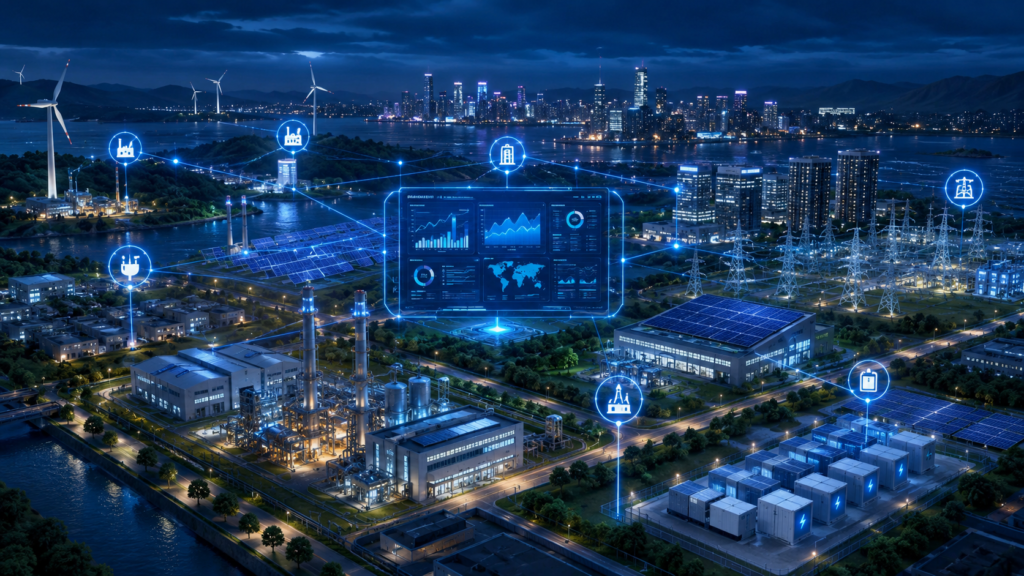
Globales Energiemanagement-Ökosystem, das Industrieanlagen integriert, Anlagen für erneuerbare Energien, Batteriespeichersysteme, und Versorgungsinfrastruktur.
Branchenüberblick
Der weltweite Energieverbrauch nimmt im Zuge der Industrieproduktion weiter zu, Urbanisierung, digitale Transformation, und die Elektrifizierung beschleunigt sich. Unternehmen stehen unter wachsendem Druck, den Energieverbrauch zu optimieren und gleichzeitig die betriebliche Effizienz aufrechtzuerhalten und die Umweltbelastung zu reduzieren.
Moderne Energiemanagementsysteme haben sich über einfache Überwachungslösungen hinaus entwickelt. Heutige EMS-Plattformen integrieren sich:
- Intelligente Stromzähler
- Gebäudemanagementsysteme (BMS)
- HVAC-Steuerungssysteme
- Industrielle Automatisierungsausrüstung
- Anlagen für erneuerbare Energien
- Energiespeichersysteme
- Ladeinfrastruktur für Elektrofahrzeuge
- Schnittstellen zum Versorgungsnetz
- Edge-Analyseplattformen
- Cloudbasierte Energiemanagementsoftware
Diese miteinander verbundenen Systeme erzeugen große Mengen an Betriebsdaten, die kontinuierlich verarbeitet werden müssen, um intelligente Energieoptimierungsstrategien zu unterstützen.
Industriecomputer spielen in diesem Ökosystem eine entscheidende Rolle, indem sie als Edge-Computing-Schicht zwischen Feldgeräten und zentralisierten Verwaltungsplattformen fungieren. Sie sorgen für eine zuverlässige Datenverarbeitung, Kommunikation, Lagerung, und Steuerungsmöglichkeiten in anspruchsvollen industriellen und kommerziellen Umgebungen.
Da Organisationen Energieeffizienzinitiativen und CO2-Neutralitätsziele verfolgen, Industrielle Computerplattformen werden zu wesentlichen Bestandteilen der Energiemanagement-Infrastrukturen der nächsten Generation.
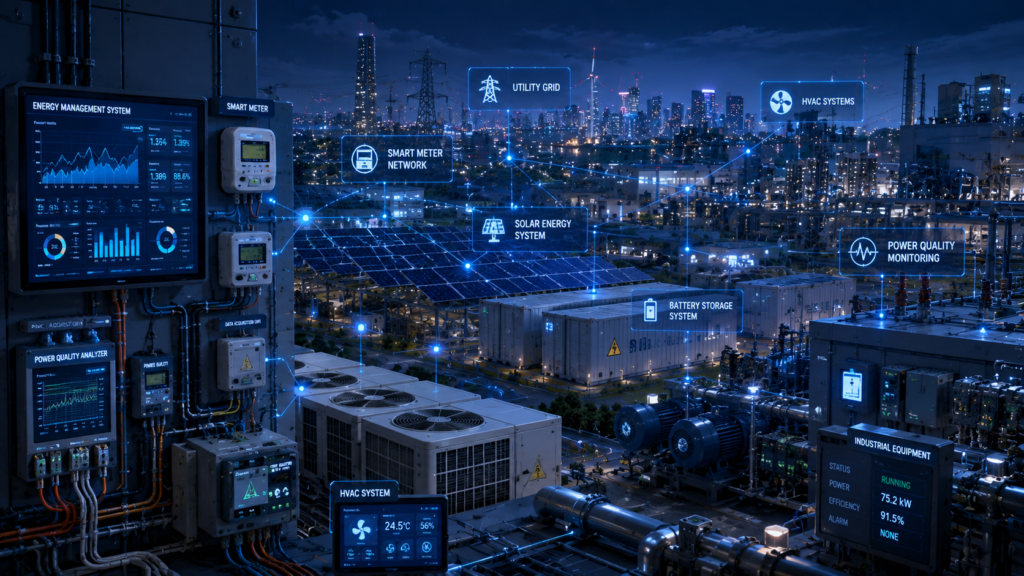
Moderne Energiemanagementsysteme müssen verschiedene Energieressourcen integrieren, Überwachungsgeräte, und industrielle Infrastruktur in einer einheitlichen Plattform.
Wichtigste Herausforderungen
Integration verschiedener Energiedatenquellen
Energiemanagementumgebungen umfassen typischerweise Geräte von mehreren Anbietern, die unterschiedliche Kommunikationsprotokolle verwenden.
Zu den gängigen Datenquellen gehören::
- Intelligente Stromzähler
- Gaszähler
- Wasserzähler
- HVAC-Controller
- SPS-Systeme
- Solarwechselrichter
- Batteriespeichersysteme
- Netzqualitätsanalysatoren
- Umweltsensoren
Das Sammeln und Normalisieren von Daten von diesen Geräten erfordert eine flexible und hochkompatible Computerplattform.
Anforderungen an die Echtzeitüberwachung
Energieverbrauchsmuster können sich aufgrund von Produktionsplänen schnell ändern, Belegungsniveau, Umgebungsbedingungen, oder Geräteverhalten.
Es kann zu einer verzögerten Sichtbarkeit kommen:
- Energieverschwendung
- Geldbußen verlangen
- Ineffizienzen der Ausrüstung
- Erhöhte Betriebskosten
Industriecomputer müssen eine kontinuierliche Echtzeitüberwachung und schnelle Datenverarbeitung unterstützen, um eine zeitnahe Entscheidungsfindung zu ermöglichen.
Raue Einsatzumgebungen
Energiemanagementsysteme werden häufig eingesetzt:
- Umspannwerke
- Versorgungsschaltschränke
- Produktionsanlagen
- Erneuerbare Energieparks
- Gehäuse für Outdoor-Geräte
- Mechanische Räume
In diesen Umgebungen können Computergeräte dem Risiko ausgesetzt sein:
- Staub
- Vibration
- Hitze
- Kalt
- Luftfeuchtigkeit
- Elektromagnetische Störungen
Hardware für Endverbraucher kann in der Regel nicht die Zuverlässigkeit bieten, die für einen langfristigen Betrieb erforderlich ist.
Cybersicherheitsrisiken
Die Energieinfrastruktur ist zunehmend mit Unternehmensnetzwerken und Cloud-Plattformen verbunden.
Zu den potenziellen Risiken gehören::
- Unbefugter Zugriff
- Datendiebstahl
- Ransomware-Angriffe
- Betriebsstörung
- Kritische Schwachstellen in der Infrastruktur
Industrielle Computerplattformen müssen sichere Kommunikation und Systemhärtung unterstützen.
Herausforderungen bei der Skalierbarkeit
Der Einsatz von Energiemanagementsystemen nimmt im Laufe der Zeit häufig zu.
Organisationen müssen sich möglicherweise integrieren:
- Zusätzliche Einrichtungen
- Neue Energieanlagen
- Erneuerbare Energiesysteme
- Intelligente Gebäudetechnologien
- Ladenetze für Elektrofahrzeuge
Die zugrunde liegende Computerinfrastruktur muss zukünftiges Wachstum ohne größere Neugestaltung unterstützen.
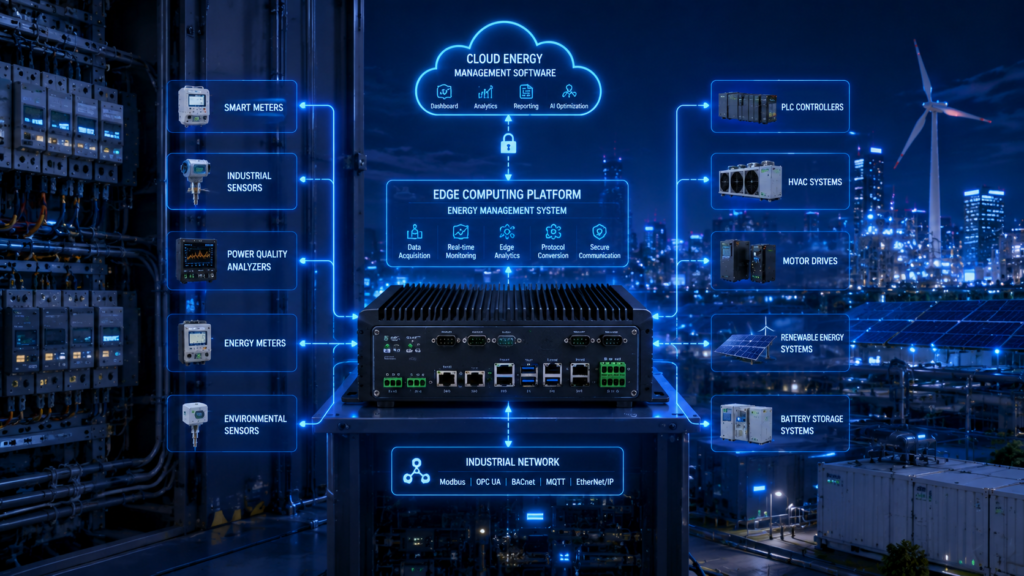
Industriecomputer, der als zentraler Edge-Computing-Hub in einem modernen Energiemanagementsystem fungiert.
Lösungsarchitektur
Ein typisches Energiemanagementsystem, das auf industrieller Computertechnologie basiert, besteht aus mehreren Schichten.
Feldgeräteschicht
Diese Ebene umfasst:
- Intelligente Energiezähler
- Stromwandler
- Netzqualitätsanalysatoren
- Temperatursensoren
- Umweltsensoren
- HVAC-Controller
- SPS
- Ausrüstung für erneuerbare Energien
Diese Geräte erfassen Betriebs- und Energieverbrauchsdaten in der gesamten Anlage.
Kommunikationsschicht
Zu den industriellen Kommunikationstechnologien können gehören:
- Modbus RTU
- Modbus TCP
- BACnet
- CAN-Bus
- MQTT
- OPC UA
- EtherNet/IP
- RS232
- RS485
- Industrielles Ethernet
Die Kommunikationsschicht ermöglicht einen sicheren und zuverlässigen Datenaustausch zwischen Feldgeräten und Edge-Systemen.
Industrielle Computerschicht
Der Industriecomputer fungiert als Edge-Intelligence-Hub.
Zu den Hauptaufgaben gehören::
- Datenerfassung
- Protokollkonvertierung
- Datennormalisierung
- Lokaler Datenbankspeicher
- Echtzeitanalysen
- Alarmmanagement
- Edge-KI-Verarbeitung
- Sichere Kommunikation
- Lokale Visualisierung
Durch lokale Verarbeitung der Daten, Industriecomputer reduzieren die Latenz und minimieren die Abhängigkeit von der Cloud-Konnektivität.
Energiemanagement-Softwareschicht
Diese Schicht bietet:
- Energie-Dashboards
- Historische Analyse
- Trendüberwachung
- Bedarfsprognose
- Verbrauchsbenchmarking
- Reporting-Tools
- Kohlenstoffverfolgung
- Analyse der Anlagenleistung
Energiemanager gewinnen verwertbare Erkenntnisse über zentralisierte Überwachungsschnittstellen.
Enterprise- und Cloud-Integrationsschicht
Energiedaten können integriert werden:
- ERP-Systeme
- MES-Plattformen
- SCADA-Systeme
- Gebäudemanagementsysteme
- Plattformen zur Nachhaltigkeitsberichterstattung
- Versorgungsmanagementsysteme
- Cloud-Analyseplattformen
Diese Integration unterstützt unternehmensweite Energieoptimierungsstrategien.
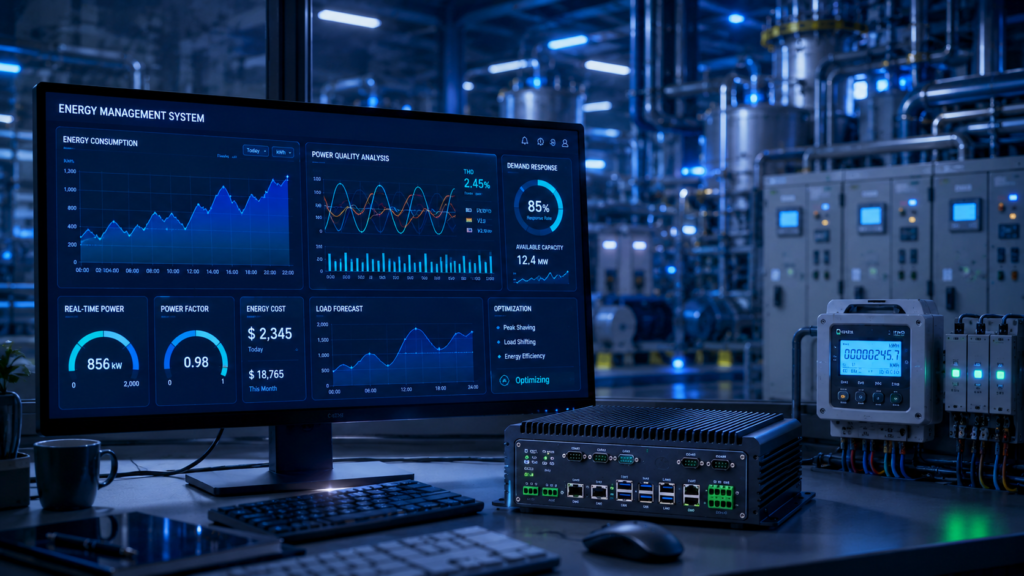
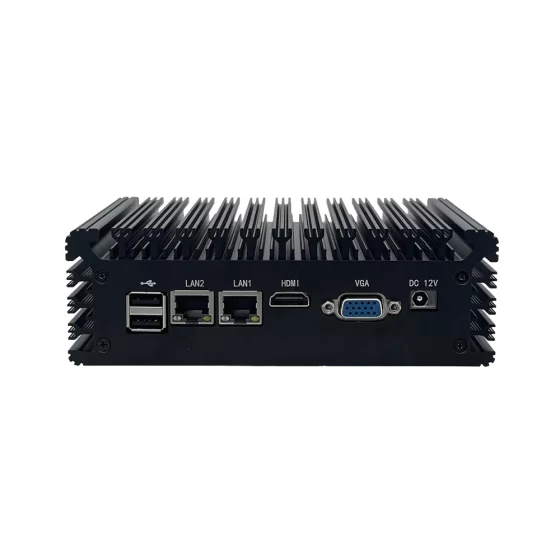
Industriecomputer, der Energieanalysen in Echtzeit ermöglicht, Überwachung der Stromqualität, und intelligente Energieoptimierung.
Hauptmerkmale
Zuverlässigkeit auf Industrieniveau
Energiemanagementanwendungen erfordern häufig einen kontinuierlichen Betrieb.
Industriecomputer sind dafür konzipiert:
- 24/7 Betrieb
- Langer Produktlebenszyklus
- Hohe Systemstabilität
- Industrielle Zertifizierungen
- Erweiterte Betriebstemperaturen
Diese Eigenschaften gewährleisten eine zuverlässige Systemleistung.
Lüfterlose Architektur
Lüfterlose Industriecomputer bieten mehrere Vorteile:
- Reduzierter Wartungsaufwand
- Niedrigere Ausfallraten
- Staubgeschützter Betrieb
- Stille Leistung
- Verbesserte Zuverlässigkeit
Dadurch eignen sie sich für Schaltschränke und industrielle Steuerungsumgebungen.
Umfangreiche Konnektivität
Energiemanagementsysteme sind auf die Kommunikation mit zahlreichen Geräten angewiesen.
Industriecomputer unterstützen üblicherweise:
- Mehrere LAN-Ports
- RS232/RS485-Anschlüsse
- USB-Schnittstellen
- Digitale I/O
- CAN-Bus
- Drahtlose Kommunikation
Diese Flexibilität vereinfacht die Systemintegration.
Edge-Computing-Fähigkeit
Edge Computing ermöglicht die lokale Verarbeitung von Energiedaten.
Zu den Vorteilen gehören::
- Schnellere Reaktionszeiten
- Reduzierte Bandbreitennutzung
- Verbesserte Zuverlässigkeit
- Lokale Entscheidungsfindung
- Niedrigere Cloud-Verarbeitungskosten
Edge Intelligence wird in modernen EMS-Bereitstellungen immer wichtiger.
Unterstützung für breite Spannungseingänge
In Umgebungen der Energieinfrastruktur kann es zu Spannungsschwankungen kommen.
Industriecomputer unterstützen oft:
- 9V–36 V Gleichstrom
- 12V–24 V DC
- 24V–48 V Gleichstrom
Die breite Spannungsunterstützung verbessert die Einsatzflexibilität.
Sicheres Remote-Management
Fernzugriffsfunktionen ermöglichen es den Betreibern:
- Überwachen Sie Energiesysteme
- Software aktualisieren
- Diagnostizieren Sie Probleme
- Geräte konfigurieren
- Berichte erstellen
Sichere Verwaltungsfunktionen helfen, die Wartungskosten zu senken.
Bereitstellungsszenarien
Intelligente Produktionsanlagen
Hersteller nutzen Energiemanagementsysteme, um:
- Überwachen Sie den Energieverbrauch in der Produktion
- Analysieren Sie den Stromverbrauch auf Maschinenebene
- Identifizieren Sie Ineffizienzen
- Reduzieren Sie die Betriebskosten
- Unterstützen Sie Nachhaltigkeitsinitiativen
Industriecomputer bieten Echtzeiteinblick in die Energieleistung in Produktionsumgebungen.
Gewerbebauten
Bürokomplexe, Einkaufszentren, Hotels, und Campus verlassen sich zur Optimierung auf EMS-Plattformen:
- HVAC-Systeme
- Beleuchtungssysteme
- Aufzüge
- Elektrische Infrastruktur
- Belegungsbasierte Steuerung
Industriecomputer ermöglichen eine zentrale Gebäudeenergieoptimierung.
Anlagen für erneuerbare Energien
Solarparks und Windenergieanlagen erfordern eine kontinuierliche Überwachung:
- Energieerzeugung
- Leistung des Wechselrichters
- Batteriespeichersysteme
- Netzanbindung
- Umgebungsbedingungen
Industriecomputer bieten zuverlässige Edge-Processing-Funktionen in Remote-Umgebungen.
Versorgungsinfrastruktur
Versorgungsunternehmen setzen Industriecomputer ein:
- Umspannwerke
- Vertriebsnetze
- Smart-Grid-Systeme
- Demand-Response-Programme
Diese Systeme verbessern die Sichtbarkeit und die betriebliche Effizienz.
Rechenzentren
Rechenzentren verbrauchen erhebliche Mengen Strom.
Energiemanagementsysteme helfen Betreibern:
- Überwachen Sie die Effektivität des Stromverbrauchs (PUE)
- Kühlsysteme optimieren
- Verfolgen Sie den Energieverbrauch
- Verbessern Sie Nachhaltigkeitskennzahlen
Industrielle Computerplattformen unterstützen die Überwachung und Berichterstattung in Echtzeit.
Ladenetze für Elektrofahrzeuge
Da die Akzeptanz von Elektrofahrzeugen zunimmt, Betreiber benötigen ein intelligentes Energiemanagement für die Ladeinfrastruktur.
Industriecomputer helfen bei der Verwaltung:
- Überwachung der Ladestation
- Lastausgleich
- Gitterinteraktion
- Integration von Energiespeichern
- Demand-Response-Strategien
Geschäftsvorteile
Reduzierte Energiekosten
Echtzeitüberwachung ermöglicht es Unternehmen, Ineffizienzen zu erkennen und Energienutzungsmuster zu optimieren.
Zu den potenziellen Vorteilen gehören::
- Niedrigere Stromrechnungen
- Reduzierte Spitzenlastgebühren
- Verbesserte Geräteauslastung
- Bessere betriebliche Effizienz
Verbesserte Nachhaltigkeitsleistung
Organisationen können:
- Verfolgen Sie die CO2-Emissionen
- Unterstützen Sie ESG-Initiativen
- Erfüllen Sie die gesetzlichen Anforderungen
- Nachhaltigkeitsziele erreichen
Genaue Energiedaten bilden die Grundlage für die Umweltberichterstattung.
Verbesserte operative Transparenz
Energiemanager erhalten Zugriff auf:
- Echtzeit-Dashboards
- Historische Trends
- Kennzahlen zur Geräteleistung
- Analyse des Energieverbrauchs
Eine verbesserte Sichtbarkeit unterstützt eine fundierte Entscheidungsfindung.
Erhöhte Systemzuverlässigkeit
Industriecomputer sorgen für einen stabilen Betrieb in anspruchsvollen Umgebungen, Reduzierung von Ausfallzeiten und Wartungsaufwand.
Bessere Anlagennutzung
Kontinuierliche Überwachung hilft Unternehmen bei der Identifizierung:
- Nicht ausgelastete Ausrüstung
- Energieintensive Anlagen
- Wartungsanforderungen
- Prozessineffizienzen
Dies verbessert die Gesamtleistung der Anlage.
Zukunftssichere Infrastruktur
Unterstützung für industrielle Computerplattformen:
- Systemerweiterung
- Neue Geräteintegration
- Neue Technologien
- Einführung erneuerbarer Energien
Unternehmen können ihre EMS-Infrastruktur entsprechend den sich ändernden Anforderungen skalieren.
Warum CoreIPC
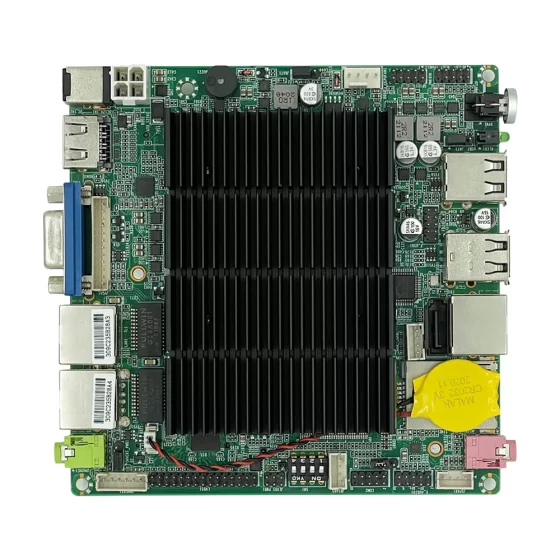
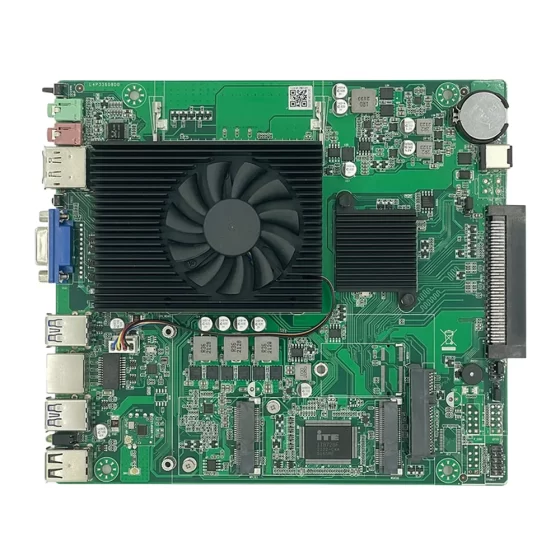
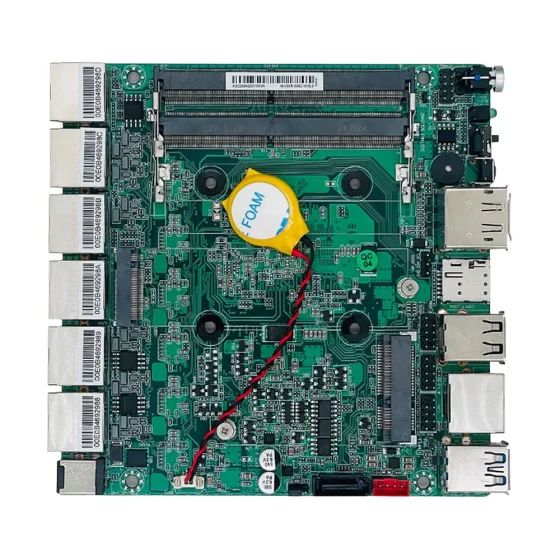
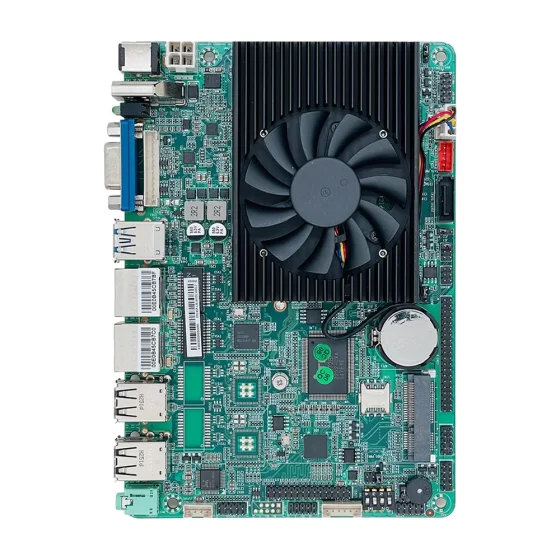
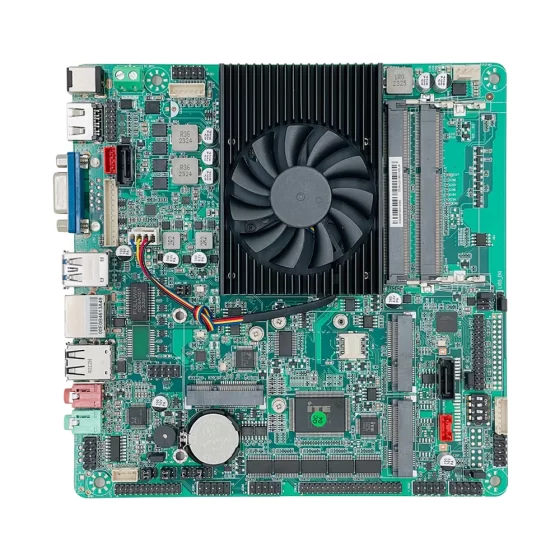
CoreIPC bietet industrielle Computerplattformen für anspruchsvolle Energiemanagementanwendungen. Unser Portfolio umfasst Industrie-PCs, Lüfterlose Computer, eingebettete Systeme, Mini-ITX-Motherboards, und maßgeschneiderte Embedded-Computing-Lösungen, die die Energieüberwachung in Echtzeit unterstützen, Edge-Analyse, und industrielle Kommunikationsanforderungen. Mit langen Produktlebenszyklen, flexible I/O-Konfigurationen, Zuverlässigkeit auf Industrieniveau, und OEM/ODM-Anpassungsfunktionen, CoreIPC hilft Systemintegratoren, Anbieter von Energielösungen, und Industriebetreiber bauen skalierbare und zuverlässige Energiemanagementsysteme für die moderne Energieinfrastruktur.
Häufig gestellte Fragen
1. Was ist ein Industriecomputer für Energiemanagementsysteme??
Ein Industriecomputer ist eine robuste Computerplattform, die zum Sammeln verwendet wird, Verfahren, analysieren, und verwalten Sie energiebezogene Daten von Zählern, Sensoren, Controller, und andere Infrastrukturgeräte innerhalb eines Energiemanagementsystems.
2. Warum werden Industriecomputer gegenüber Verbraucher-PCs bevorzugt??
Industriecomputer bieten eine erhöhte Zuverlässigkeit, größere Betriebstemperaturbereiche, Optionen für die industrielle Konnektivität, und langfristige Verfügbarkeit, die für den Einsatz kritischer Energieinfrastrukturen erforderlich ist.
3. Welche Kommunikationsprotokolle werden üblicherweise in EMS-Anwendungen verwendet??
Zu den gängigen Protokollen gehört Modbus RTU, Modbus TCP, BACnet, MQTT, OPC UA, EtherNet/IP, CAN-Bus, RS232, und RS485.
4. Können Industriecomputer erneuerbare Energiesysteme unterstützen??
Ja. Industriecomputer können Solarstromanlagen überwachen und verwalten, Windkraftanlagen, Batterie-Energiespeichersysteme, und hybride Energieinfrastrukturen.
5. Welche Rolle spielt Edge Computing im Energiemanagement??
Edge Computing ermöglicht die lokale Verarbeitung von Energiedaten, Reduzierung der Latenz, Verbesserung der Zuverlässigkeit, und Unterstützung der Entscheidungsfindung in Echtzeit ohne ständige Cloud-Abhängigkeit.
6. Sind Industriecomputer für den Einsatz im Freien geeignet??
Viele Industriecomputer unterstützen erweiterte Temperaturbereiche, lüfterlose Designs, und robuste Gehäuse, die für Außenschränke und Infrastrukturinstallationen geeignet sind.
7. Wie verbessern Industriecomputer die Cybersicherheit??
Industriecomputer können sichere Betriebssysteme unterstützen, VPN-Konnektivität, Firewalls, Zugangskontrollmechanismen, verschlüsselte Kommunikation, und Tools zur Überwachung der Cybersicherheit.
8. Können Energiemanagementsysteme in bestehende SCADA-Plattformen integriert werden??
Ja. Die meisten modernen EMS-Lösungen unterstützen die Integration mit SCADA, ERP, MES, und Gebäudemanagementsysteme über standardmäßige Industrieprotokolle.
9. Welche Branchen profitieren von Energiemanagementsystemen??
Herstellung, Dienstprogramme, Transport, Gewerbeimmobilien, Gesundheitspflege, Rechenzentren, erneuerbare Energie, und die Smart-City-Infrastruktur profitieren alle von EMS-Technologien.
10. Wie skalierbar sind industrielle computerbasierte EMS-Einsätze??
Industrielle Computerplattformen können von der Bereitstellung einer einzelnen Einrichtung bis hin zu unternehmensweiten Energiemanagementarchitekturen über mehrere Standorte hinweg skaliert werden.
Abschluss
Ein Industriecomputer für Energiemanagementsysteme dient als Grundlage für ein intelligentes Energiemonitoring, Optimierung, und Nachhaltigkeitsinitiativen. Durch die Ermöglichung der Datenerfassung in Echtzeit, Edge-Analyse, sichere Kommunikation, und nahtlose Integration in die Energieinfrastruktur, Industriecomputer helfen Unternehmen, ihre betriebliche Effizienz zu verbessern und gleichzeitig den Energieverbrauch und die Umweltbelastung zu reduzieren.
Da sich Energiemanagementsysteme ständig weiterentwickeln, Industrietaugliche Computerplattformen werden für die Unterstützung zuverlässiger Systeme weiterhin von entscheidender Bedeutung sein, skalierbar, und zukunftsfähige Energieoptimierungsstrategien.
Kontaktieren Sie uns
Suchen Sie nach zuverlässigen Industrie-Computing-Lösungen für Ihr Energiemanagementsystem-Projekt?
CoreIPC bietet Industrie-PCs, eingebettete Computer, Mini-ITX-Motherboards, Edge-Computing-Plattformen, und maßgeschneiderte eingebettete Lösungen für anspruchsvolle Energiemanagementanwendungen.
Kontaktieren Sie noch heute unser Engineering-Team, um Ihre Projektanforderungen zu besprechen und die richtige Industrie-Computing-Plattform für Ihren Einsatz zu finden.