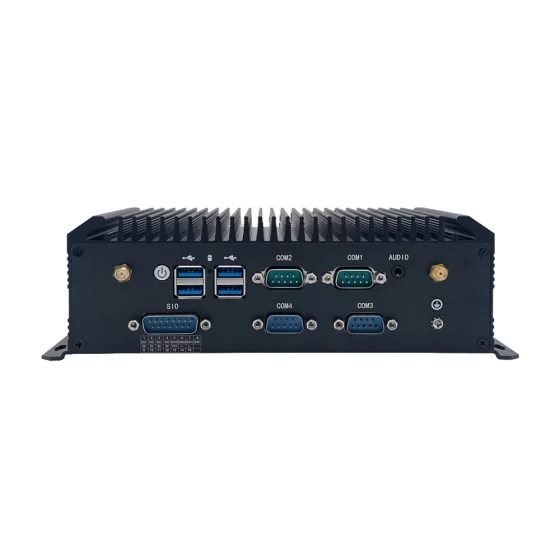
CoreIPC 산업용 컴퓨팅 솔루션

에너지 관리 및 배터리 인프라를 위한 안정적인 컴퓨팅
요약
An industrial computer for energy storage systems plays a critical role in modern energy management infrastructure. 배터리 에너지 저장 시스템이 재생 에너지 현장에서 더욱 널리 사용됨에 따라, 상업용 건물, 산업 시설, 마이크로그리드, EV 충전소, 및 유틸리티 규모의 전력 프로젝트, 모니터링하려면 안정적인 엣지 컴퓨팅 하드웨어가 필요합니다., 제어, 이러한 시스템을 안전하고 효율적으로 연결.
에너지 저장 시스템은 단순한 배터리 캐비닛이 아닙니다.. 완전한 솔루션에는 배터리 관리 시스템이 포함될 수 있습니다., 전력 변환 시스템, 에너지 관리 시스템, 환경 모니터링, 계량 장치, 화재 예방 시스템, 그리드 인터페이스, 클라우드 플랫폼, 및 원격 운영 센터. 산업용 컴퓨터는 이러한 장치를 연결하는 엣지 컴퓨팅 및 통신 플랫폼 역할을 합니다., 운영 데이터 처리, 로컬 제어 로직 지원, 감독 시스템과의 안전한 통신을 가능하게 합니다..
소비자급 컴퓨터나 사무용 PC와 비교 시, industrial computer platforms are better suited for energy storage environments because they are designed for continuous operation, stable thermal performance, 유연한 I/O, 긴 수명주기 가용성, and integration with industrial communication networks.
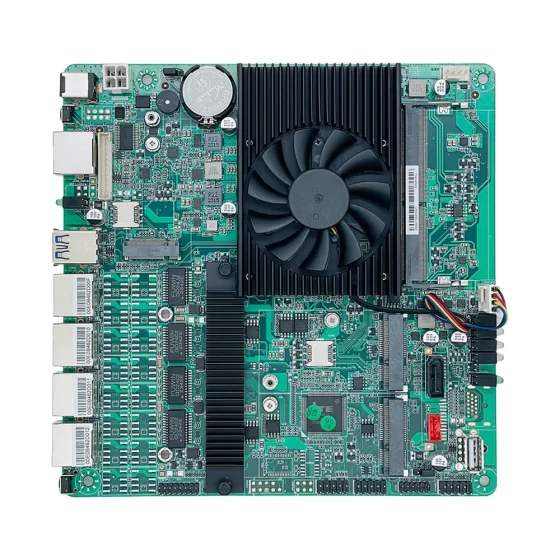
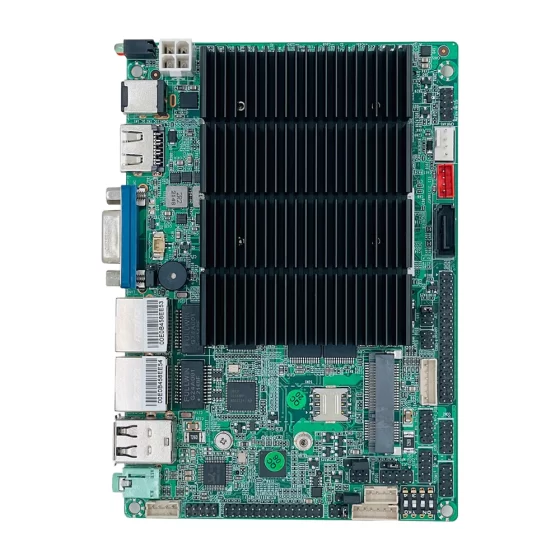
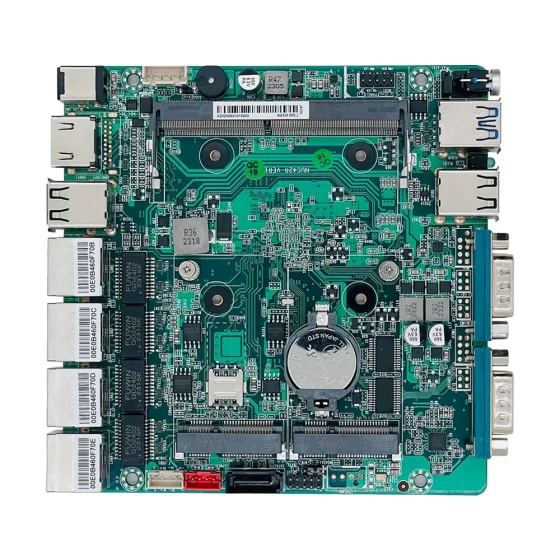
CoreIPC provides industrial computing platforms, 임베디드 컴퓨터, industrial motherboards, and customized hardware options for energy management and energy storage system applications. These platforms can support edge monitoring, gateway control, 프로토콜 변환, data acquisition, remote maintenance, and OEM energy equipment integration.
This article explains the architecture, challenges, 배포 시나리오, and business value of using industrial computer platforms in energy storage systems.
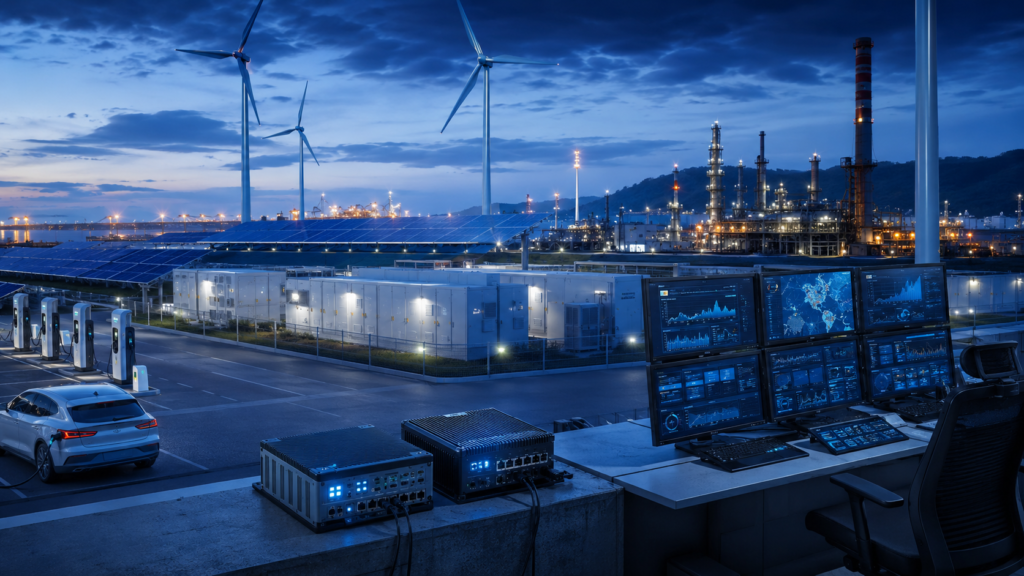
Energy storage systems connect renewable energy, 산업 시설, EV charging, and cloud-based energy management.
산업 개요
Energy infrastructure is changing from centralized and one-directional power generation toward distributed, intelligent, and software-managed energy networks. Renewable energy generation, battery storage, smart grids, EV charging, industrial peak shaving, and microgrid systems are creating new requirements for local computing and communication.
Energy storage systems are an important part of this transformation. They help store electricity, balance supply and demand, 재생에너지 통합을 지원하다, provide backup power, and improve energy flexibility for industrial and commercial users. 하지만, energy storage systems require precise monitoring and coordination. Battery status, charging and discharging behavior, temperature, voltage, current, system alarms, grid conditions, and power conversion status must be continuously monitored.
An industrial computer can serve as a local edge control and data processing node inside the energy storage architecture. It can collect data from battery management systems, 미터, PCS units, 센서, protection devices, and site controllers. It can also run gateway software, energy management software, monitoring applications, 로컬 데이터베이스, visualization systems, and communication services.
In many projects, the energy storage system must communicate with cloud platforms, SCADA 시스템, EMS platforms, utility control systems, building management systems, or industrial automation networks. This creates a need for a hardware platform that supports multiple Ethernet ports, 직렬 통신, USB, 저장, wireless expansion, and stable operating system compatibility.
Energy storage projects also have long service expectations. Hardware may be installed in outdoor cabinets, electrical rooms, industrial plants, renewable energy farms, charging stations, or remote infrastructure sites. These environments require stable operation, strong mechanical design, wide power input options, and reliable thermal control.
For system integrators and OEM equipment manufacturers, the industrial computer is not just an accessory. It becomes a central part of the energy storage system architecture, helping connect power electronics, 배터리 시스템, 로컬 제어, and remote energy management platforms.
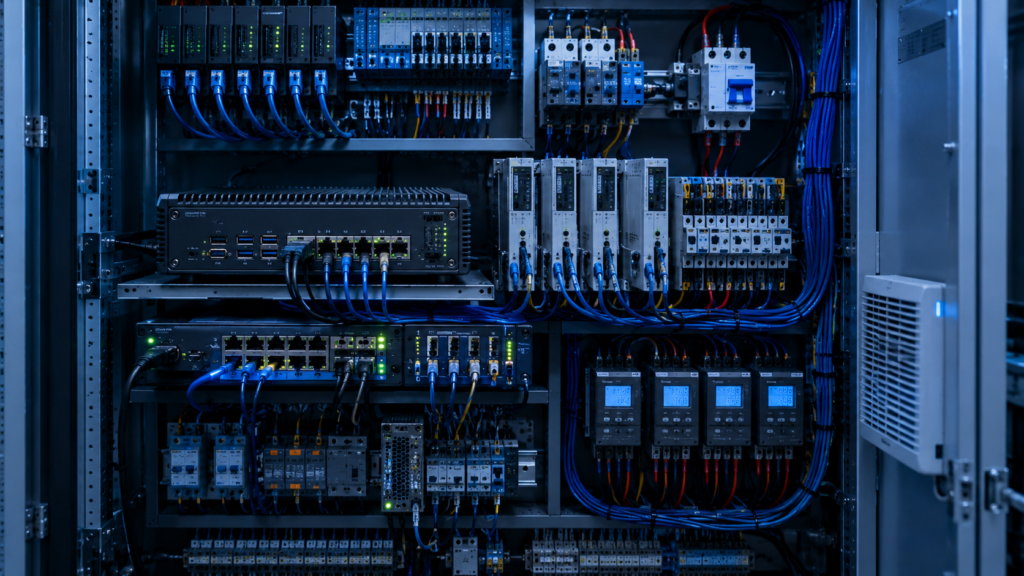
Industrial computers connect BMS, PCS, 미터, 센서, and safety devices inside energy storage systems.
주요 과제
1. Continuous Operation Requirements
Energy storage systems often operate around the clock. Monitoring, alarm handling, 데이터 로깅, 의사소통, and local control cannot depend on hardware that is designed only for office use. If the computer platform fails, the system may lose visibility, 원격 액세스, or control coordination.
An industrial computer for energy storage systems should be designed for 24/7 operation with stable components, reliable power design, and proper thermal management. This is especially important for sites where maintenance access is limited or downtime is expensive.
2. Complex Device Communication
A complete energy storage system may include BMS, PCS, EMS, 미터, 온도 센서, smoke detectors, fire suppression interfaces, HVAC 시스템, relays, and grid connection equipment. These devices may use different communication interfaces and protocols.
The computing platform must support flexible I/O and communication expansion. 이더넷, RS232, RS485, CAN, USB, GPIO, and wireless options may all be relevant depending on the system design. In some projects, the industrial computer must act as a protocol gateway between field devices and upper-level platforms.
3. Data Acquisition and Local Processing
Energy storage systems generate continuous operational data. This may include battery cell data, cabinet status, power flow, 경보, event records, temperature data, charging and discharging history, and grid interaction information.
Sending all raw data directly to the cloud is not always efficient. Local processing allows the system to filter, 가게, 분석하다, and forward useful data. Edge computing also supports faster response for local alarms and control decisions.
4. Harsh Deployment Environments
Energy storage equipment may be installed in industrial facilities, 야외 캐비닛, 재생 가능 에너지 사이트, 변전소, or remote locations. These environments may involve heat, 먼지, 진동, 습기, unstable power, and limited ventilation.
Industrial computer hardware must be selected based on real deployment conditions. Fanless design, 견고한 인클로저, wide temperature support, stable DC input, and secure mounting options can improve system reliability.
5. Cybersecurity and Remote Access
Energy storage systems are increasingly connected to cloud platforms and remote operation centers. This improves visibility and maintenance efficiency but also increases cybersecurity requirements.
The industrial computer may support VPN access, firewall functions, secure communication, user authentication, local data protection, and segmented network architecture. Hardware with multiple LAN ports can help separate internal equipment networks from external management networks.
6. Lifecycle and Maintenance
Energy storage projects may remain in service for many years. Hardware changes during the project lifecycle can create software compatibility issues, certification delays, spare parts problems, 유지 관리의 복잡성.
Industrial computing platforms provide better lifecycle stability than short-cycle consumer hardware. For OEMs and system integrators, this helps maintain consistent system design across multiple project phases.
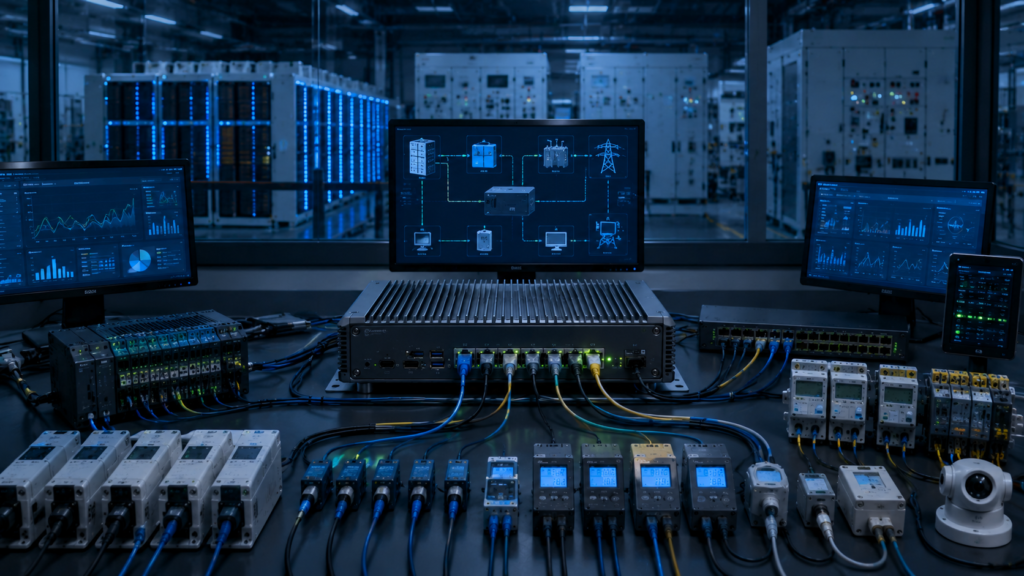
An industrial computer acts as the edge computing node between field devices and energy management platforms.
Industrial Computer for Energy Storage Systems: Solution Architecture
An industrial computer for energy storage systems usually sits between field-level energy equipment and upper-level management platforms. Its role can include data collection, communication gateway, 로컬 제어, 심상, 프로토콜 변환, 엣지 컴퓨팅, and remote maintenance.
Field Device Layer
The field device layer includes battery modules, battery management systems, 전력 변환 시스템, 미터, 센서, fire protection devices, HVAC equipment, relays, and other site-level devices. These devices provide real-time status and operational signals.
The industrial computer connects to these devices through Ethernet, 직렬 포트, CAN, USB, or digital I/O depending on system design. In many energy storage projects, RS485 and Ethernet are especially common for device communication and metering.
Edge Computing Layer
The industrial computer operates at the edge computing layer. It collects data, runs local software, stores records, processes alarms, manages communication, and supports local visualization. It may also host an HMI interface, web dashboard, database, protocol gateway, or lightweight EMS application.
This layer is important because it allows the system to continue local monitoring and response even when cloud communication is limited or temporarily unavailable.
Network and Security Layer
The network layer connects the energy storage system to SCADA, EMS, 클라우드 플랫폼, utility systems, building management systems, or remote operation centers. Multiple LAN ports can support separated networks, such as internal device network, site management network, and external remote access network.
Secure communication is important for energy infrastructure. VPN, firewall rules, 접근 제어, and encrypted data transmission may be implemented at the system level.
Supervisory and Cloud Layer
At the upper level, data from the energy storage system may be used for energy scheduling, fault diagnosis, performance analysis, 예측 유지 관리, 보고, and fleet management. The industrial computer helps ensure that field data is properly collected and transmitted to these supervisory platforms.
A reliable architecture does not rely only on cloud control. It combines local edge computing with upper-level energy management systems to achieve both responsiveness and centralized visibility.
주요 특징
산업 등급 신뢰성
Energy storage systems require stable operation over long periods. Industrial computers are designed with more practical reliability considerations than standard office computers. They can support long operating hours, stable motherboard design, controlled component selection, and rugged system integration.
For energy storage applications, reliability is especially important because the computer may manage critical monitoring, 의사소통, and alarm functions.
Flexible I/O and Communication
Different energy storage systems use different device architectures. Some require multiple Ethernet ports for BMS, PCS, EMS, 그리고 클라우드 커뮤니케이션. Others require serial ports for meters, 센서, and industrial controllers.
An industrial computer platform can provide flexible I/O options, LAN 포함, COM, USB, GPIO, and expansion interfaces. This makes integration easier for system integrators and OEM equipment manufacturers.
Fanless and Compact Design
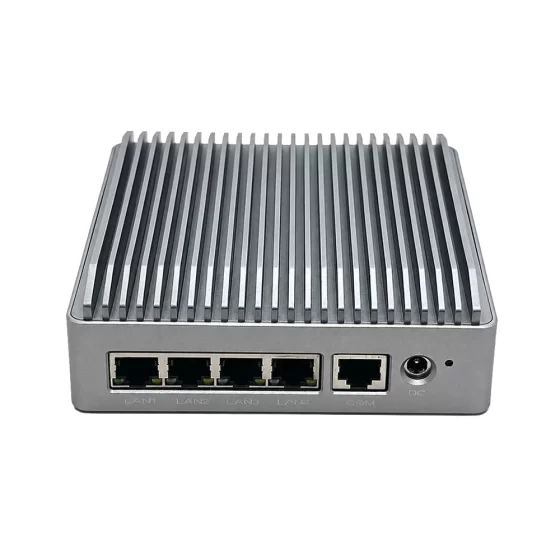
Energy storage cabinets and electrical rooms often have limited space. Fanless embedded computers and compact industrial PCs are suitable for installation inside control cabinets or edge equipment enclosures.
Fanless design reduces moving parts and helps improve long-term reliability in dusty or maintenance-sensitive environments. 하지만, thermal design must be carefully matched with processor power and enclosure conditions.
Edge Data Processing
Industrial computers can process data locally before sending it to upper-level systems. This reduces communication load and supports faster response to alarms or abnormal conditions.
Local edge processing may include data filtering, event recording, energy statistics, historical storage, 프로토콜 변환, and dashboard visualization.
Multi-LAN Network Separation
Energy storage systems often need separated networks for internal devices, 유지 보수 액세스, cloud communication, and site-level control. Multi-LAN industrial computers help create clear network zones.
This improves system organization and can support more secure architecture by separating internal field equipment from external communication paths.
Storage and Logging Support
Energy storage systems often require event logs, alarm history, charging and discharging records, and system performance data. Industrial computers can support SSD storage for local databases, log files, 구성 백업, and software applications.
Reliable storage is important for troubleshooting, system analysis, and long-term operation records.
OEM and ODM Customization
Energy storage equipment manufacturers may require customized hardware platforms. This can include enclosure design, I/O layout, 전원 입력, motherboard configuration, BIOS settings, branding, 장착 방법, and pre-installed software environment.
OEM and ODM customization helps customers build standardized energy storage products with consistent computing hardware.
배포 시나리오
Battery Energy Storage System Cabinet
In a battery energy storage cabinet, the industrial computer can work as a local control and monitoring platform. It may collect data from BMS, PCS, 미터, 온도 센서, and safety systems. It can also support local HMI, alarm records, and communication with cloud or EMS platforms.
Compact fanless systems are often suitable for cabinet-level installation.
Commercial and Industrial Energy Storage
공장, 창고, 상업용 건물, and industrial parks use energy storage for peak shaving, backup power, renewable integration, and energy cost management. An industrial computer can help monitor power flow, connect metering devices, support local EMS software, and communicate with building or facility management systems.
Renewable Energy Storage Site
Solar and wind energy systems often require storage to improve energy flexibility. The industrial computer can connect renewable generation equipment, 배터리 시스템, PCS units, 미터, and site monitoring platforms.
In remote renewable sites, rugged hardware and stable communication are especially important.
Microgrid Control System
Microgrids combine generation, 저장, loads, 및 제어 시스템. An industrial computer can serve as an edge controller or gateway for microgrid monitoring, 장치 통신, energy dispatch support, and remote supervision.
It can help connect distributed energy resources with upper-level management software.
EV Charging and Storage Integration
Energy storage is increasingly used together with EV charging infrastructure to reduce grid pressure and improve charging flexibility. An industrial computer can monitor battery status, charging equipment, 미터, network connectivity, and site energy flow.
The system may also support remote monitoring, billing integration, and local data logging depending on the project.
Utility and Substation Energy Storage
Utility-scale energy storage and substation applications require stable communication and monitoring hardware. Industrial computer platforms can support protocol conversion, data acquisition, local supervision, and connection to SCADA or utility control systems.
In this scenario, lifecycle stability and system reliability are especially important.
Remote and Containerized Energy Storage
Containerized energy storage systems may be deployed in remote locations or temporary power projects. The industrial computer can provide local monitoring, gateway communication, environmental data collection, 원격 유지 관리 액세스.
Fanless and rugged platforms are often preferred for these applications.
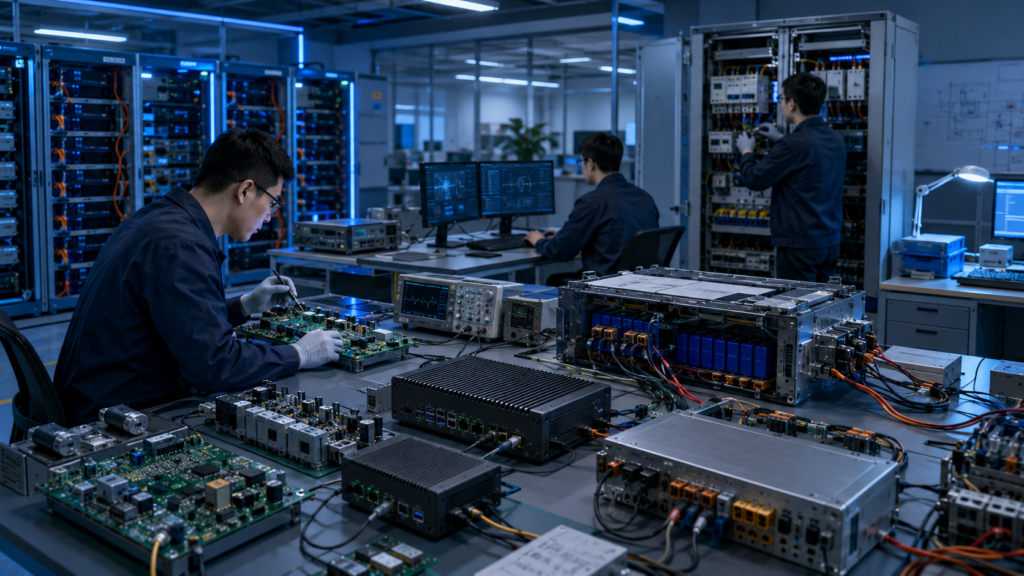
CoreIPC supports OEM energy storage equipment development with industrial computers, embedded boards, and custom computing platforms.
비즈니스 이점
Improved System Reliability
Using an industrial computer helps improve the reliability of the energy storage control and monitoring platform. Stable hardware reduces the risk of unexpected downtime and supports continuous system operation.
For energy storage equipment, reliable computing hardware helps protect the overall system operation and maintenance process.
Faster System Integration
Industrial computers with flexible I/O and communication interfaces help system integrators connect different devices more efficiently. Instead of building custom hardware for every project, integrators can use a proven platform and adapt it to different system architectures.
This reduces development effort and supports faster deployment.
Better Edge Intelligence
Local computing allows the energy storage system to process data near the equipment. This improves response time, reduces unnecessary data transmission, and supports local monitoring even when cloud communication is unstable.
Edge intelligence is increasingly important for distributed energy infrastructure.
Stronger OEM Product Strategy
For energy storage equipment manufacturers, a standardized industrial computer platform helps create consistent product designs. OEM customization can support different product series, enclosure styles, I/O configurations, and software environments.
This improves repeatability across projects and reduces long-term maintenance complexity.
장기 가용성
Energy storage projects often require hardware continuity for expansion, 예비 부품, and maintenance. Industrial computer platforms provide better lifecycle support than consumer devices.
This helps customers reduce redesign risk and maintain stable system architecture over time.
Flexible Application Expansion
A single industrial computer platform can support multiple energy-related applications, including battery monitoring, EMS gateway, power data acquisition, site controller, cloud gateway, and protocol converter.
This flexibility allows customers to reuse the same hardware foundation across different energy management projects.
왜 CoreIPC인가?
CoreIPC provides industrial computers, 임베디드 컴퓨터, industrial motherboards, and customized computing platforms for energy management and energy storage system applications. Our hardware solutions support flexible I/O, stable operation, 컴팩트한 디자인, and OEM/ODM customization for B2B energy equipment manufacturers and system integrators.
For energy storage projects, CoreIPC can help customers evaluate suitable computing platforms for monitoring, communication gateway, edge control, 로컬 데이터 처리, and remote management applications. With experience in industrial computing hardware and embedded system integration, CoreIPC supports reliable hardware foundations for battery energy storage systems, 마이크로그리드, EV charging infrastructure, 재생 가능 에너지 사이트, and industrial energy management systems.
자주 묻는 질문
1. Why do energy storage systems need an industrial computer?
Energy storage systems need an industrial computer to collect data, manage communication, support local monitoring, and connect field devices with upper-level platforms. The computer may communicate with BMS, PCS, 미터, 센서, EMS software, and cloud systems. 사무용 컴퓨터에 비해, industrial computers are better suited for continuous operation, cabinet installation, 유연한 I/O, and long lifecycle requirements in energy infrastructure projects.
2. What is the role of an industrial computer in battery energy storage systems?
In battery energy storage systems, the industrial computer can act as an edge gateway, data acquisition unit, local monitoring system, protocol converter, or EMS computing platform. It collects operational data from battery management systems, 전력 변환 시스템, 미터, 센서, and safety devices. It can also store logs, process alarms, display system status, and transmit data to remote management platforms.
3. Can an embedded computer be used inside an energy storage cabinet?
예. A compact embedded computer is suitable for installation inside an energy storage cabinet when it meets the project’s power, thermal, 입출력, and reliability requirements. Fanless embedded computers are often preferred because they reduce moving parts and maintenance needs. The system should be selected based on cabinet space, operating temperature, device communication interfaces, software requirements, 및 설치방법.
4. What interfaces are important for energy storage applications?
Common interfaces include Ethernet, RS232, RS485, CAN, USB, GPIO, and storage interfaces. Ethernet is often used for PCS, EMS, cloud communication, and network integration. RS485 is commonly used for meters, 센서, and field devices. Some systems may require CAN for battery-related communication. The exact interface selection depends on the energy storage system architecture and device protocol requirements.
5. How does an industrial computer support energy management?
An industrial computer supports energy management by collecting real-time power and battery data, running local EMS or gateway software, storing operational records, and communicating with supervisory platforms. It can help monitor charging and discharging behavior, power flow, system alarms, and device status. It also enables local decision support and remote maintenance for distributed energy systems.
6. Is fanless design important for energy storage systems?
Fanless design is useful in energy storage systems because it reduces moving parts, noise, dust intake, and maintenance requirements. Many energy storage cabinets and electrical rooms have limited airflow, so the thermal design must be carefully evaluated. A fanless industrial computer should be selected based on processor power, 인클로저 디자인, expected workload, and environmental conditions.
7. Can the industrial computer connect energy storage systems to the cloud?
예. The industrial computer can act as a cloud gateway by collecting data from local devices and transmitting selected data to cloud platforms or remote operation centers. It may support secure communication, data filtering, local buffering, 원격 유지 관리 액세스. This allows operators to monitor multiple energy storage sites from a centralized platform while keeping local edge functions available.
8. What is the difference between an industrial computer and a regular PC in energy storage applications?
A regular PC is typically designed for office environments and general computing tasks. An industrial computer is designed for more demanding operating conditions, longer lifecycle availability, 유연한 I/O, 안정적인 전원 입력, 지속적인 작동. In energy storage applications, these characteristics are important because the hardware may be installed inside cabinets, 변전소, 공장, or outdoor equipment rooms.
9. Can CoreIPC customize industrial computers for energy storage equipment manufacturers?
예. CoreIPC can support OEM and ODM customization for energy storage equipment manufacturers. Customization may include motherboard selection, 인클로저 디자인, I/O layout, 전원 입력, mounting structure, BIOS settings, branding requirements, and pre-installed software environments. This helps customers build standardized energy storage products with reliable and repeatable computing hardware.
10. How should I choose an industrial computer for energy storage systems?
Start by defining the system architecture, required interfaces, software platform, installation environment, 전원 입력, operating temperature, 저장 요구 사항, and communication requirements. Consider whether the computer will work as a gateway, local controller, HMI platform, data logger, or EMS node. For long-term projects, also evaluate lifecycle support, customization options, and hardware availability.
결론
An industrial computer for energy storage systems provides the reliable edge computing foundation needed for modern energy management, battery monitoring, 장치 통신, and remote operation. As energy storage infrastructure becomes more intelligent and distributed, local computing hardware must support stable operation, 유연한 I/O, secure communication, 데이터 처리, and long-term lifecycle requirements.
By using industrial computer and embedded computer platforms, energy storage equipment manufacturers and system integrators can build more reliable, 확장 가능, and serviceable systems for battery cabinets, 마이크로그리드, 재생 가능 에너지 사이트, EV 충전소, 산업 시설, and utility applications.
CoreIPC supports energy storage system projects with industrial computing platforms designed for real-world deployment, OEM customization, and long-term B2B integration.
문의하기
Looking for an industrial computer platform for your energy storage system project?
Contact CoreIPC to discuss your energy management application, required interfaces, 프로세서 플랫폼, 인클로저 디자인, 전원 입력, communication architecture, and OEM/ODM customization needs. Our team can help you evaluate suitable industrial computer and embedded computer platforms for battery energy storage systems, 마이크로그리드, renewable energy infrastructure, and intelligent energy management solutions.