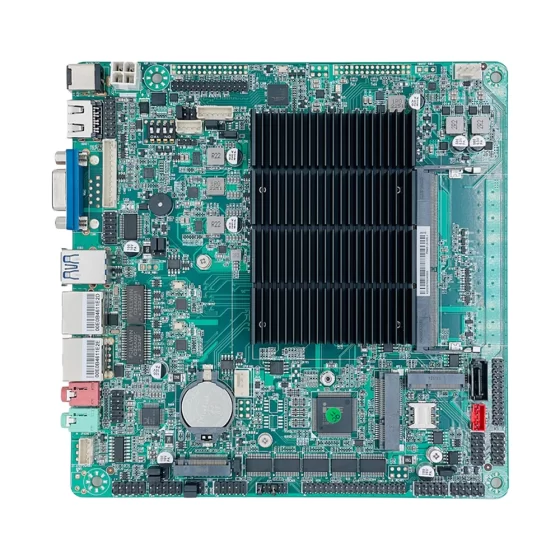
Решения CoreIPC для промышленных вычислений

Промышленный компьютер для систем энергоменеджмента
Управляющее резюме
Energy management has become a strategic priority for industrial facilities, Коммерческие здания, коммунальные услуги, and infrastructure operators worldwide. Rising energy costs, sustainability initiatives, carbon reduction targets, and increasing regulatory requirements are driving organizations to adopt intelligent Energy Management Systems (EMS) capable of monitoring, анализируя, and optimizing energy consumption in real time.
An Industrial Computer for Energy Management Systems serves as the central computing platform that collects data from smart meters, датчики, power monitoring devices, системы отопления, вентиляции и кондиционирования, активы возобновляемой энергетики, and industrial equipment. Благодаря возможности сбора данных в режиме реального времени, обработка кромок, аналитика, и безопасная связь, industrial computers help organizations improve energy efficiency, сократить эксплуатационные расходы, and support long-term sustainability goals.
This article explores the role of industrial computers in modern Energy Management Systems, the challenges faced by energy-intensive environments, system architecture considerations, сценарии развертывания, and the business benefits of adopting industrial-grade computing platforms for energy management applications.
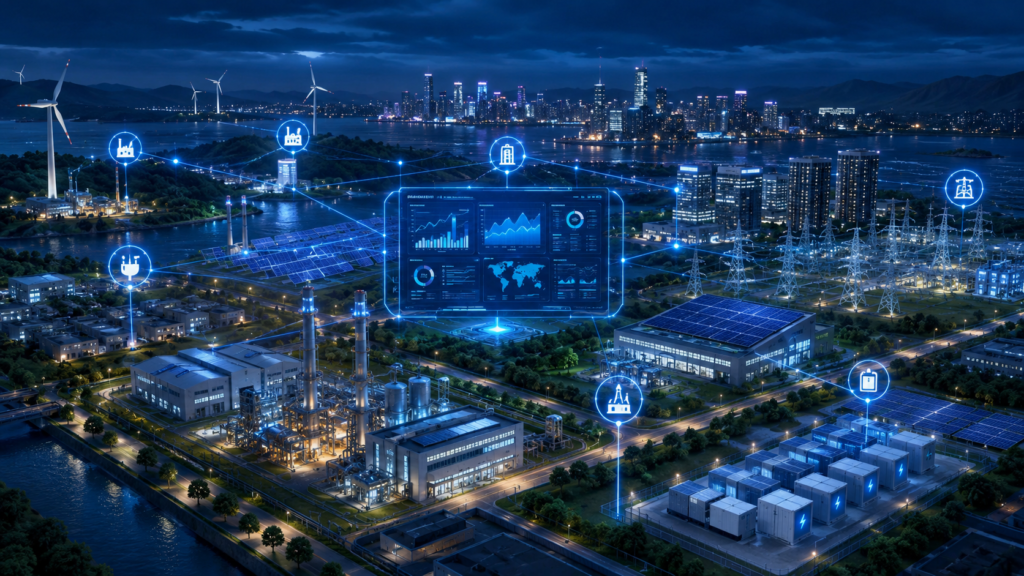
Global energy management ecosystem integrating industrial facilities, активы возобновляемой энергетики, системы хранения аккумуляторов, and utility infrastructure.
Обзор отрасли
Global energy consumption continues to increase as industrial production, urbanization, digital transformation, and electrification accelerate. Organizations are under growing pressure to optimize energy usage while maintaining operational efficiency and reducing environmental impact.
Modern Energy Management Systems have evolved beyond simple monitoring solutions. Today’s EMS platforms integrate:
- Smart power meters
- Building Management Systems (BMS)
- HVAC control systems
- Industrial automation equipment
- Активы возобновляемой энергетики
- Системы хранения энергии
- Инфраструктура зарядки электромобилей
- Utility grid interfaces
- Edge analytics platforms
- Cloud-based energy management software
These interconnected systems generate large volumes of operational data that must be processed continuously to support intelligent energy optimization strategies.
Industrial computers play a critical role in this ecosystem by serving as the edge computing layer between field devices and centralized management platforms. They provide reliable data processing, коммуникация, хранилище, and control capabilities in demanding industrial and commercial environments.
As organizations pursue energy efficiency initiatives and carbon neutrality objectives, industrial computing platforms are becoming essential components of next-generation energy management infrastructures.
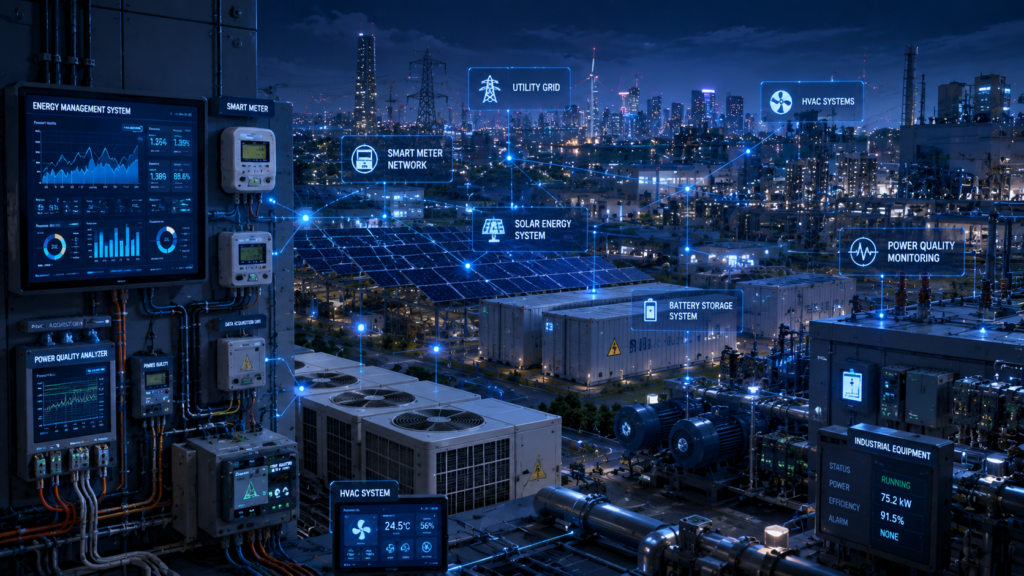
Modern Energy Management Systems must integrate diverse energy assets, monitoring devices, and industrial infrastructure into a unified platform.
Ключевые проблемы
Integrating Diverse Energy Data Sources
Energy management environments typically include equipment from multiple vendors using different communication protocols.
Общие источники данных включают в себя:
- Smart electricity meters
- Gas meters
- Water meters
- HVAC controllers
- ПЛК-системы
- Solar inverters
- Системы хранения аккумуляторов
- Power quality analyzers
- Датчики окружающей среды
Collecting and normalizing data from these devices requires a flexible and highly compatible computing platform.
Real-Time Monitoring Requirements
Energy consumption patterns can change rapidly due to production schedules, occupancy levels, условия окружающей среды, or equipment behavior.
Delayed visibility can result in:
- Energy waste
- Demand charge penalties
- Equipment inefficiencies
- Увеличение эксплуатационных расходов
Industrial computers must support continuous real-time monitoring and rapid data processing to enable timely decision-making.
Жесткие условия развертывания
Energy management systems are often deployed in:
- Electrical substations
- Шкафы управления инженерными сетями
- Производственные мощности
- Renewable energy farms
- Outdoor equipment enclosures
- Mechanical rooms
These environments may expose computing equipment to:
- Пыль
- Вибрация
- Нагревать
- Cold
- Влажность
- Электромагнитные помехи
Consumer-grade hardware typically cannot provide the reliability required for long-term operation.
Риски кибербезопасности
Energy infrastructure is increasingly connected to enterprise networks and cloud platforms.
Потенциальные риски включают в себя:
- Несанкционированный доступ
- Data theft
- Атаки программ-вымогателей
- Operational disruption
- Critical infrastructure vulnerabilities
Industrial computing platforms must support secure communication and system hardening.
Проблемы масштабируемости
Energy management deployments frequently expand over time.
Organizations may need to integrate:
- Additional facilities
- New energy assets
- Renewable energy systems
- Smart building technologies
- EV charging networks
The underlying computing infrastructure must support future growth without major redesign.
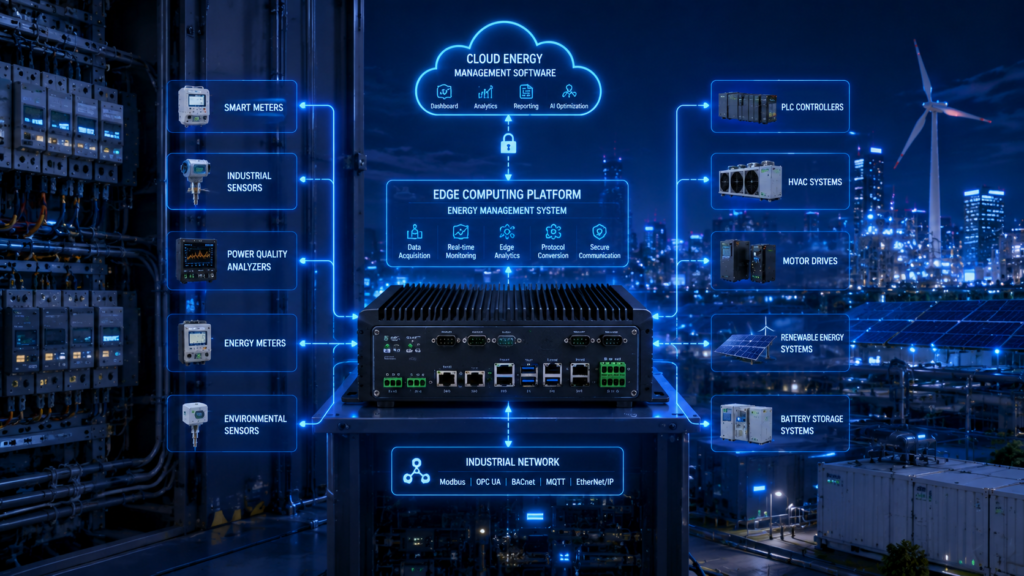
Industrial computer acting as the central edge computing hub in a modern Energy Management System.
Архитектура решения
A typical Energy Management System built around industrial computing technology consists of several layers.
Уровень полевых устройств
Этот слой включает в себя:
- Smart energy meters
- Current transformers
- Power quality analyzers
- Датчики температуры
- Датчики окружающей среды
- HVAC controllers
- ПЛК
- Оборудование для возобновляемых источников энергии
These devices collect operational and energy consumption data throughout the facility.
Коммуникационный уровень
Industrial communication technologies may include:
- Модбус РТУ
- Модбус TCP
- BACnet
- CAN-шина
- MQTT
- ОПЦ ЮА
- ЭтерНет/IP
- RS232
- RS485
- Промышленный Ethernet
The communication layer enables secure and reliable data exchange between field devices and edge systems.
Промышленный компьютерный уровень
The industrial computer functions as the edge intelligence hub.
Ключевые обязанности включают в себя:
- Сбор данных
- Преобразование протокола
- Нормализация данных
- Local database storage
- Аналитика в реальном времени
- Управление тревогами
- Периферийная обработка ИИ
- Безопасная связь
- Локальная визуализация
Обрабатывая данные локально, industrial computers reduce latency and minimize dependence on cloud connectivity.
Energy Management Software Layer
This layer provides:
- Energy dashboards
- Historical analysis
- Trend monitoring
- Demand forecasting
- Consumption benchmarking
- Инструменты отчетности
- Carbon tracking
- Asset performance analysis
Energy managers gain actionable insights from centralized monitoring interfaces.
Enterprise and Cloud Integration Layer
Energy data can be integrated with:
- ERP-системы
- MES-платформы
- СКАДА-системы
- Building Management Systems
- Sustainability reporting platforms
- Utility management systems
- Платформы облачной аналитики
This integration supports enterprise-wide energy optimization strategies.
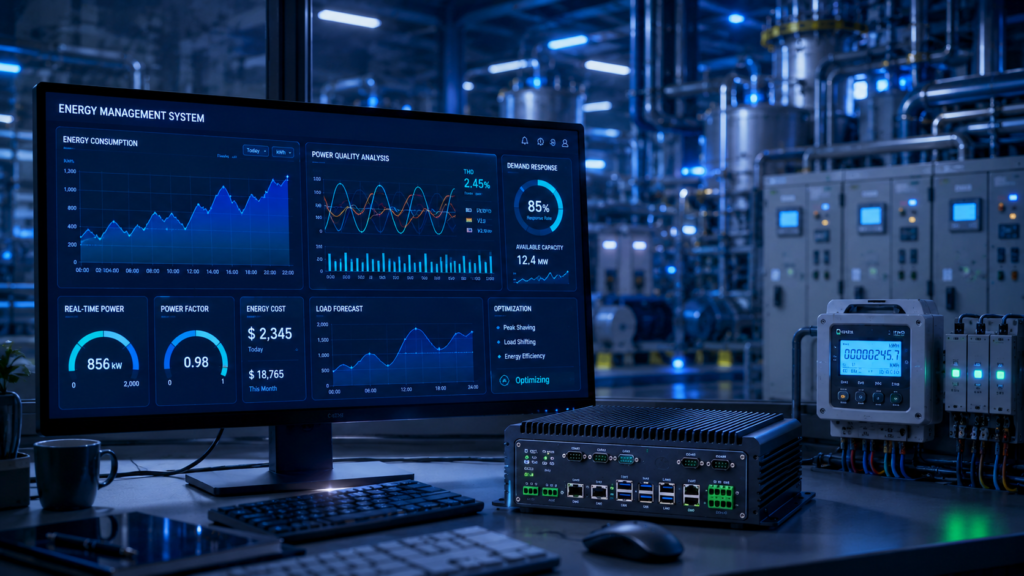
Industrial computer enabling real-time energy analytics, power quality monitoring, and intelligent energy optimization.
Ключевые особенности
Надежность промышленного уровня
Energy management applications often require continuous operation.
Industrial computers are designed for:
- 24/7 операция
- Long product lifecycle
- High system stability
- Industrial certifications
- Extended operating temperatures
These characteristics ensure dependable system performance.
Безвентиляторная архитектура
Fanless industrial computers provide several advantages:
- Сокращенное обслуживание
- Более низкий уровень отказов
- Dust-resistant operation
- Silent performance
- Повышенная надежность
This makes them suitable for electrical cabinets and industrial control environments.
Богатые возможности подключения
Energy management systems depend on communication with numerous devices.
Промышленные компьютеры обычно поддерживают:
- Несколько портов LAN
- RS232/RS485 ports
- USB-интерфейсы
- Цифровой ввод/вывод
- CAN-шина
- Беспроводная связь
This flexibility simplifies system integration.
Возможности периферийных вычислений
Edge computing enables local processing of energy data.
Преимущества включают в себя:
- Более быстрое время ответа
- Reduced bandwidth usage
- Повышенная надежность
- Принятие решений на местном уровне
- Lower cloud processing costs
Edge intelligence is becoming increasingly important in modern EMS deployments.
Широкая поддержка входного напряжения
Power infrastructure environments may experience voltage fluctuations.
Industrial computers often support:
- 9В–36 В постоянного тока
- 12В–24 В постоянного тока
- 24В–48 В постоянного тока
Wide voltage support improves deployment flexibility.
Безопасное удаленное управление
Remote access capabilities allow operators to:
- Monitor energy systems
- Update software
- Diagnose issues
- Configure devices
- Создание отчетов
Secure management features help reduce maintenance costs.
Сценарии развертывания
Smart Manufacturing Facilities
Manufacturers use Energy Management Systems to:
- Monitor production energy consumption
- Analyze machine-level power usage
- Identify inefficiencies
- Reduce operating costs
- Support sustainability initiatives
Industrial computers provide real-time visibility into energy performance across production environments.
Commercial Buildings
Office complexes, shopping centers, hotels, and campuses rely on EMS platforms to optimize:
- системы отопления, вентиляции и кондиционирования
- Lighting systems
- Elevators
- Electrical infrastructure
- Occupancy-based controls
Industrial computers enable centralized building energy optimization.
Renewable Energy Installations
Solar farms and wind energy facilities require continuous monitoring of:
- Energy generation
- Inverter performance
- Системы хранения аккумуляторов
- Grid connectivity
- Условия окружающей среды
Industrial computers provide reliable edge processing capabilities in remote environments.
Utility Infrastructure
Utilities deploy industrial computers in:
- Substations
- Distribution networks
- Smart grid systems
- Программы реагирования на спрос
These systems improve visibility and operational efficiency.
Data Centers
Data centers consume significant amounts of electricity.
Energy Management Systems help operators:
- Monitor power usage effectiveness (PUE)
- Optimize cooling systems
- Track energy consumption
- Improve sustainability metrics
Industrial computing platforms support real-time monitoring and reporting.
EV Charging Networks
As electric vehicle adoption grows, operators need intelligent energy management for charging infrastructure.
Промышленные компьютеры помогают управлять:
- Мониторинг зарядной станции
- Балансировка нагрузки
- Grid interaction
- Energy storage integration
- Demand response strategies
Преимущества для бизнеса
Reduced Energy Costs
Real-time monitoring enables organizations to identify inefficiencies and optimize energy usage patterns.
Potential benefits include:
- Lower utility bills
- Reduced peak demand charges
- Improved equipment utilization
- Better operational efficiency
Improved Sustainability Performance
Organizations can:
- Track carbon emissions
- Support ESG initiatives
- Meet regulatory requirements
- Achieve sustainability goals
Accurate energy data provides a foundation for environmental reporting.
Улучшенная операционная прозрачность
Energy managers gain access to:
- Real-time dashboards
- Historical trends
- Equipment performance metrics
- Energy consumption analytics
Improved visibility supports informed decision-making.
Повышенная надежность системы
Industrial computers provide stable operation in demanding environments, reducing downtime and maintenance requirements.
Лучшее использование активов
Continuous monitoring helps organizations identify:
- Underutilized equipment
- Energy-intensive assets
- Требования к техническому обслуживанию
- Process inefficiencies
This improves overall asset performance.
Future-Proof Infrastructure
Поддержка промышленных вычислительных платформ:
- System expansion
- New device integration
- Emerging technologies
- Renewable energy adoption
Organizations can scale their EMS infrastructure as requirements evolve.
Почему CoreIPC
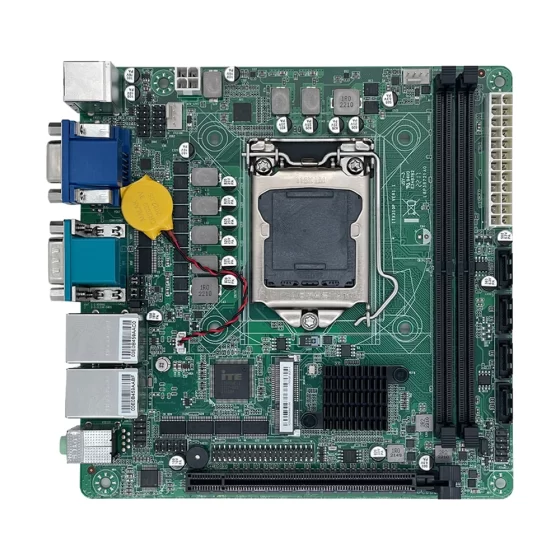
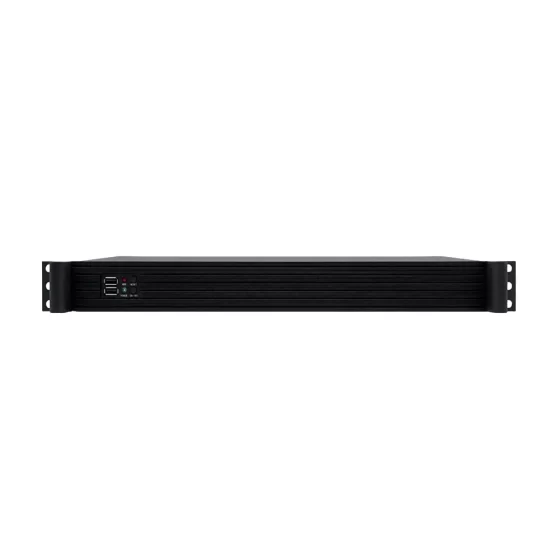
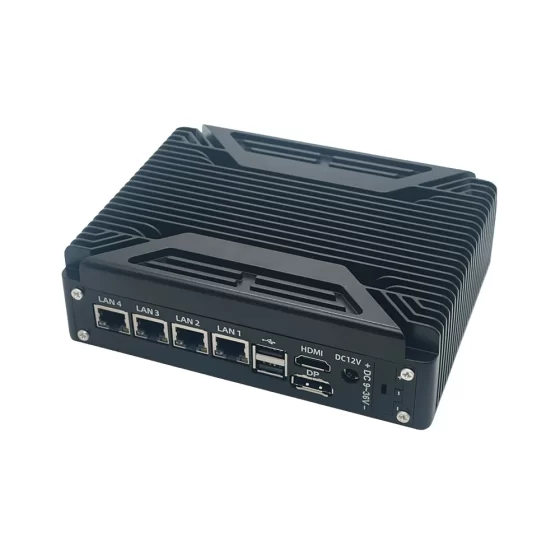
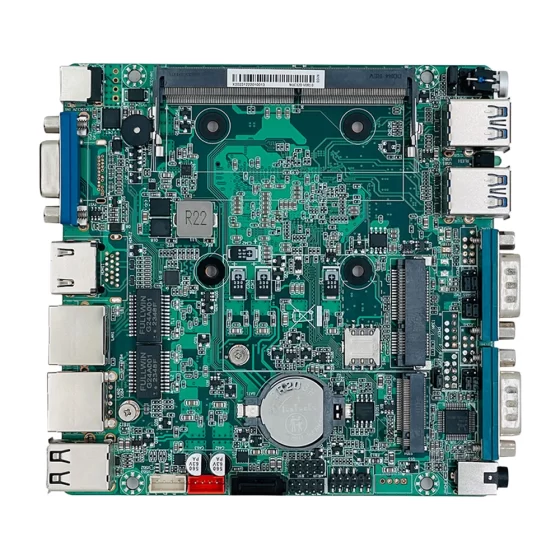
CoreIPC provides industrial computing platforms designed for demanding energy management applications. В нашем портфолио промышленные ПК., безвентиляторные компьютеры, встроенные системы, Материнские платы Mini-ITX, and customized embedded computing solutions that support real-time energy monitoring, периферийная аналитика, and industrial communication requirements. With long product lifecycles, гибкие конфигурации ввода-вывода, надежность промышленного уровня, и возможности настройки OEM/ODM, CoreIPC помогает системным интеграторам, energy solution providers, and industrial operators build scalable and dependable Energy Management Systems for modern energy infrastructure.
Часто задаваемые вопросы
1. What is an Industrial Computer for Energy Management Systems?
An industrial computer is a rugged computing platform used to collect, процесс, анализировать, and manage energy-related data from meters, датчики, контролеры, and other infrastructure devices within an Energy Management System.
2. Why are industrial computers preferred over consumer PCs?
Industrial computers offer enhanced reliability, более широкий диапазон рабочих температур, industrial connectivity options, and long-term availability required for critical energy infrastructure deployments.
3. Which communication protocols are commonly used in EMS applications?
Common protocols include Modbus RTU, Модбус TCP, BACnet, MQTT, ОПЦ ЮА, ЭтерНет/IP, CAN-шина, RS232, and RS485.
4. Могут ли промышленные компьютеры поддерживать системы возобновляемых источников энергии?
Да. Industrial computers can monitor and manage solar power systems, ветряные турбины, battery energy storage systems, and hybrid energy infrastructures.
5. What role does edge computing play in energy management?
Edge computing enables local processing of energy data, уменьшение задержки, повышение надежности, and supporting real-time decision-making without constant cloud dependency.
6. Are industrial computers suitable for outdoor deployments?
Many industrial computers support extended temperature ranges, fanless designs, and rugged enclosures suitable for outdoor cabinets and infrastructure installations.
7. How do industrial computers improve cybersecurity?
Industrial computers can support secure operating systems, VPN-подключение, брандмауэры, access control mechanisms, encrypted communications, and cybersecurity monitoring tools.
8. Can Energy Management Systems integrate with existing SCADA platforms?
Да. Most modern EMS solutions support integration with SCADA, ERP-система, МЧС, and Building Management Systems through standard industrial protocols.
9. What industries benefit from Energy Management Systems?
Производство, коммунальные услуги, транспорт, commercial real estate, здравоохранение, центры обработки данных, renewable energy, and smart city infrastructure all benefit from EMS technologies.
10. How scalable are industrial computer-based EMS deployments?
Industrial computing platforms can scale from a single facility deployment to enterprise-wide energy management architectures spanning multiple locations.
Заключение
An Industrial Computer for Energy Management Systems serves as the foundation for intelligent energy monitoring, optimization, and sustainability initiatives. Благодаря возможности сбора данных в режиме реального времени, периферийная аналитика, secure communications, and seamless integration with energy infrastructure, industrial computers help organizations improve operational efficiency while reducing energy consumption and environmental impact.
As Energy Management Systems continue to evolve, industrial-grade computing platforms will remain essential for supporting reliable, масштабируемый, and future-ready energy optimization strategies.
Связаться с нами
Looking for reliable industrial computing solutions for your Energy Management System project?
CoreIPC поставляет промышленные ПК, встроенные компьютеры, Материнские платы Mini-ITX, периферийные вычислительные платформы, and customized embedded solutions designed for demanding energy management applications.
Contact our engineering team today to discuss your project requirements and discover the right industrial computing platform for your deployment.