حلول الحوسبة الصناعية CoreIPC

الكمبيوتر الصناعي لأنظمة إدارة الطاقة
ملخص تنفيذي
Energy management has become a strategic priority for industrial facilities, المباني التجارية, المرافق, ومشغلي البنية التحتية في جميع أنحاء العالم. ارتفاع تكاليف الطاقة, مبادرات الاستدامة, أهداف خفض الكربون, وتدفع المتطلبات التنظيمية المتزايدة المؤسسات إلى اعتماد أنظمة ذكية لإدارة الطاقة (إي إم إس) قادرة على المراقبة, تحليل, وتحسين استهلاك الطاقة في الوقت الحقيقي.
يعمل الكمبيوتر الصناعي لأنظمة إدارة الطاقة كمنصة حوسبة مركزية تقوم بجمع البيانات من العدادات الذكية, أجهزة الاستشعار, أجهزة مراقبة الطاقة, أنظمة التدفئة والتهوية وتكييف الهواء, أصول الطاقة المتجددة, والمعدات الصناعية. من خلال تمكين الحصول على البيانات في الوقت الحقيقي, معالجة الحافة, تحليلات, والاتصالات الآمنة, تساعد أجهزة الكمبيوتر الصناعية المؤسسات على تحسين كفاءة استخدام الطاقة, تقليل التكاليف التشغيلية, ودعم أهداف الاستدامة طويلة المدى.
يستكشف هذا المقال دور أجهزة الكمبيوتر الصناعية في أنظمة إدارة الطاقة الحديثة, التحديات التي تواجهها البيئات كثيفة الاستهلاك للطاقة, اعتبارات بنية النظام, سيناريوهات النشر, and the business benefits of adopting industrial-grade computing platforms for energy management applications.
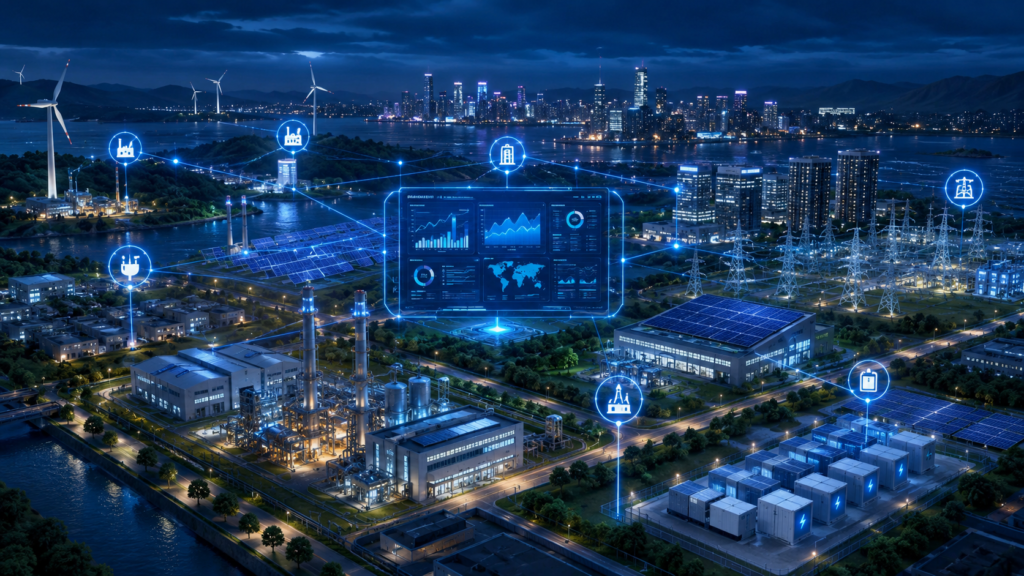
Global energy management ecosystem integrating industrial facilities, أصول الطاقة المتجددة, أنظمة تخزين البطارية, and utility infrastructure.
نظرة عامة على الصناعة
Global energy consumption continues to increase as industrial production, urbanization, التحول الرقمي, and electrification accelerate. Organizations are under growing pressure to optimize energy usage while maintaining operational efficiency and reducing environmental impact.
Modern Energy Management Systems have evolved beyond simple monitoring solutions. Today’s EMS platforms integrate:
- Smart power meters
- Building Management Systems (BMS)
- HVAC control systems
- Industrial automation equipment
- أصول الطاقة المتجددة
- أنظمة تخزين الطاقة
- البنية التحتية لشحن المركبات الكهربائية
- Utility grid interfaces
- Edge analytics platforms
- Cloud-based energy management software
These interconnected systems generate large volumes of operational data that must be processed continuously to support intelligent energy optimization strategies.
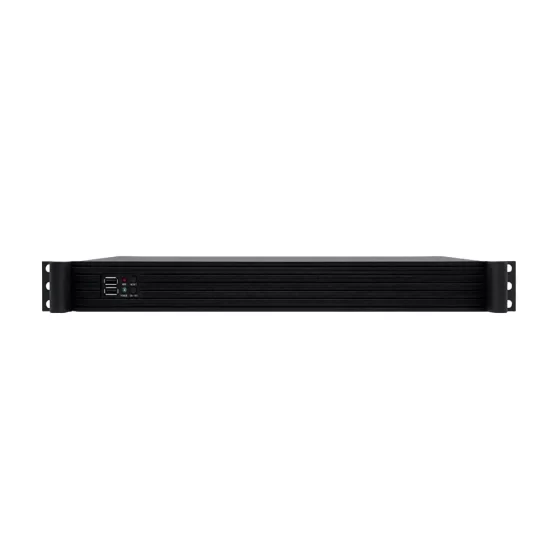
Industrial computers play a critical role in this ecosystem by serving as the edge computing layer between field devices and centralized management platforms. They provide reliable data processing, تواصل, تخزين, and control capabilities in demanding industrial and commercial environments.
As organizations pursue energy efficiency initiatives and carbon neutrality objectives, industrial computing platforms are becoming essential components of next-generation energy management infrastructures.
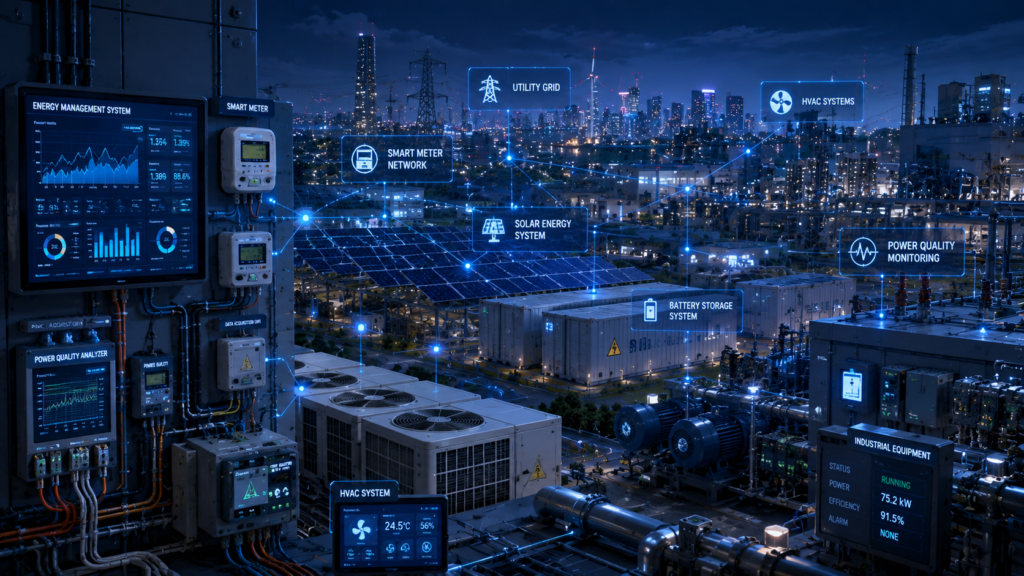
Modern Energy Management Systems must integrate diverse energy assets, monitoring devices, and industrial infrastructure into a unified platform.
التحديات الرئيسية
Integrating Diverse Energy Data Sources
Energy management environments typically include equipment from multiple vendors using different communication protocols.
تتضمن مصادر البيانات الشائعة:
- Smart electricity meters
- Gas meters
- Water meters
- HVAC controllers
- أنظمة PLC
- Solar inverters
- أنظمة تخزين البطاريات
- Power quality analyzers
- أجهزة الاستشعار البيئية
Collecting and normalizing data from these devices requires a flexible and highly compatible computing platform.
Real-Time Monitoring Requirements
Energy consumption patterns can change rapidly due to production schedules, occupancy levels, الظروف البيئية, or equipment behavior.
Delayed visibility can result in:
- Energy waste
- Demand charge penalties
- Equipment inefficiencies
- Increased operating costs
Industrial computers must support continuous real-time monitoring and rapid data processing to enable timely decision-making.
بيئات النشر القاسية
Energy management systems are often deployed in:
- Electrical substations
- خزائن التحكم في المرافق
- مرافق التصنيع
- Renewable energy farms
- Outdoor equipment enclosures
- Mechanical rooms
These environments may expose computing equipment to:
- تراب
- اهتزاز
- حرارة
- Cold
- رطوبة
- التداخل الكهرومغناطيسي
Consumer-grade hardware typically cannot provide the reliability required for long-term operation.
مخاطر الأمن السيبراني
Energy infrastructure is increasingly connected to enterprise networks and cloud platforms.
Potential risks include:
- الوصول غير المصرح به
- Data theft
- Ransomware attacks
- Operational disruption
- Critical infrastructure vulnerabilities
Industrial computing platforms must support secure communication and system hardening.
Scalability Challenges
Energy management deployments frequently expand over time.
Organizations may need to integrate:
- Additional facilities
- New energy assets
- Renewable energy systems
- Smart building technologies
- EV charging networks
The underlying computing infrastructure must support future growth without major redesign.
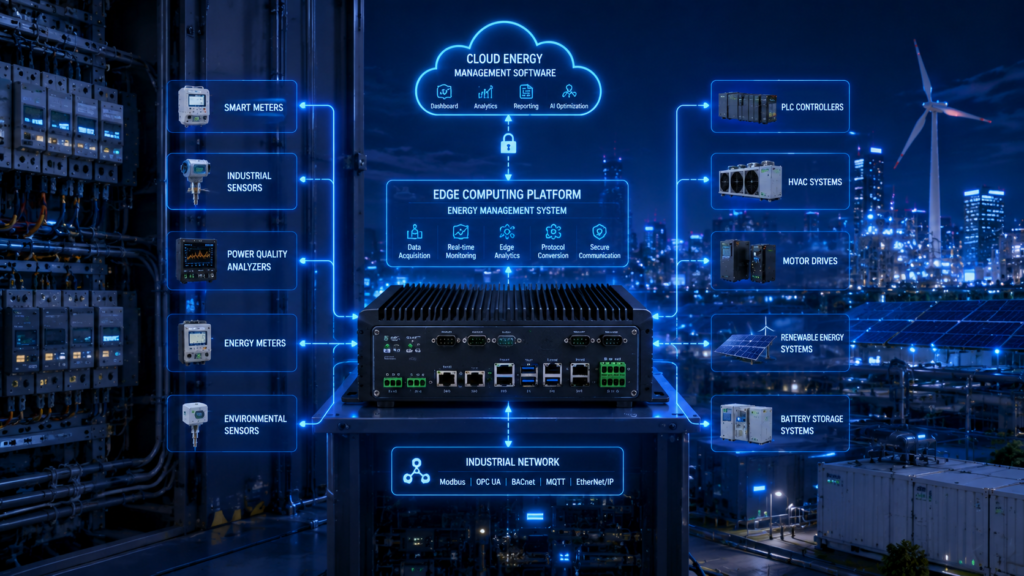
Industrial computer acting as the central edge computing hub in a modern Energy Management System.
هندسة الحلول
A typical Energy Management System built around industrial computing technology consists of several layers.
طبقة الجهاز الميداني
تتضمن هذه الطبقة:
- Smart energy meters
- Current transformers
- Power quality analyzers
- أجهزة استشعار درجة الحرارة
- أجهزة الاستشعار البيئية
- HVAC controllers
- الشركات المحدودة العامة
- معدات الطاقة المتجددة
These devices collect operational and energy consumption data throughout the facility.
طبقة الاتصالات
Industrial communication technologies may include:
- مودبوس ار تي يو
- مودبوس تكب
- BACnet
- يمكن الحافلة
- إم كيو تي تي
- OPC تعميم الوصول إلى الخدمات
- إيثرنت/IP
- RS232
- RS485
- إيثرنت الصناعية
The communication layer enables secure and reliable data exchange between field devices and edge systems.
طبقة الكمبيوتر الصناعية
The industrial computer functions as the edge intelligence hub.
تشمل المسؤوليات الرئيسية:
- الحصول على البيانات
- تحويل البروتوكول
- Data normalization
- Local database storage
- تحليلات في الوقت الحقيقي
- إدارة الإنذار
- Edge AI processing
- اتصالات آمنة
- Local visualization
من خلال معالجة البيانات محليا, industrial computers reduce latency and minimize dependence on cloud connectivity.
Energy Management Software Layer
This layer provides:
- Energy dashboards
- Historical analysis
- Trend monitoring
- Demand forecasting
- Consumption benchmarking
- أدوات إعداد التقارير
- Carbon tracking
- Asset performance analysis
Energy managers gain actionable insights from centralized monitoring interfaces.
Enterprise and Cloud Integration Layer
Energy data can be integrated with:
- أنظمة تخطيط موارد المؤسسات
- منصات MES
- أنظمة سكادا
- Building Management Systems
- Sustainability reporting platforms
- Utility management systems
- منصات التحليلات السحابية
This integration supports enterprise-wide energy optimization strategies.
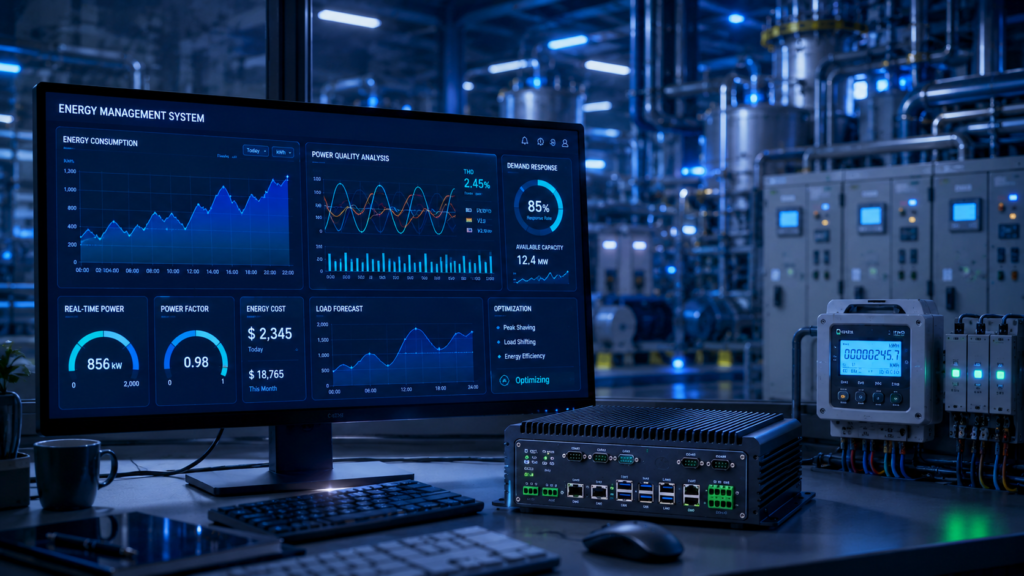
Industrial computer enabling real-time energy analytics, power quality monitoring, and intelligent energy optimization.
الميزات الرئيسية
موثوقية من الدرجة الصناعية
Energy management applications often require continuous operation.
Industrial computers are designed for:
- 24/7 عملية
- Long product lifecycle
- High system stability
- Industrial certifications
- Extended operating temperatures
These characteristics ensure dependable system performance.
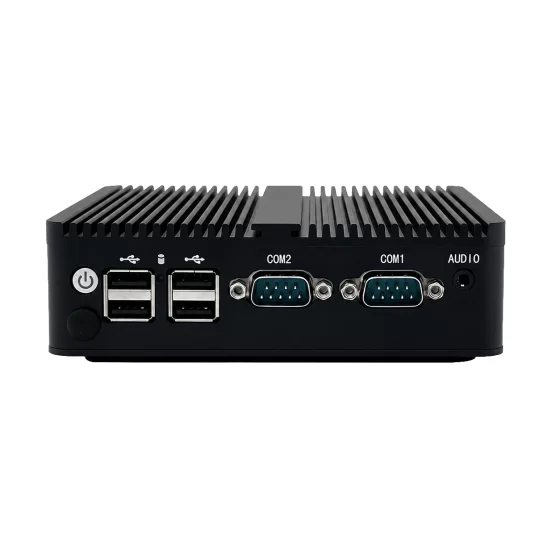
العمارة بدون مروحة
Fanless industrial computers provide several advantages:
- انخفاض الصيانة
- انخفاض معدلات الفشل
- Dust-resistant operation
- الأداء الصامت
- تحسين الموثوقية
This makes them suitable for electrical cabinets and industrial control environments.
اتصال غني
Energy management systems depend on communication with numerous devices.
أجهزة الكمبيوتر الصناعية تدعم عادة:
- منافذ LAN متعددة
- RS232/RS485 ports
- واجهات يو اس بي
- الإدخال/الإخراج الرقمي
- يمكن الحافلة
- الاتصالات اللاسلكية
This flexibility simplifies system integration.
القدرة على الحوسبة الحافة
Edge computing enables local processing of energy data.
تشمل الفوائد:
- أوقات استجابة أسرع
- Reduced bandwidth usage
- تحسين الموثوقية
- صنع القرار المحلي
- Lower cloud processing costs
Edge intelligence is becoming increasingly important in modern EMS deployments.
Wide Voltage Input Support
Power infrastructure environments may experience voltage fluctuations.
Industrial computers often support:
- 9V–36V DC
- 12V–24V DC
- 24V–48V DC
Wide voltage support improves deployment flexibility.
Secure Remote Management
Remote access capabilities allow operators to:
- Monitor energy systems
- Update software
- Diagnose issues
- Configure devices
- إنشاء التقارير
Secure management features help reduce maintenance costs.
سيناريوهات النشر
Smart Manufacturing Facilities
Manufacturers use Energy Management Systems to:
- Monitor production energy consumption
- Analyze machine-level power usage
- Identify inefficiencies
- Reduce operating costs
- Support sustainability initiatives
Industrial computers provide real-time visibility into energy performance across production environments.
Commercial Buildings
Office complexes, shopping centers, hotels, and campuses rely on EMS platforms to optimize:
- أنظمة التدفئة والتهوية وتكييف الهواء
- أنظمة الإضاءة
- Elevators
- Electrical infrastructure
- Occupancy-based controls
Industrial computers enable centralized building energy optimization.
Renewable Energy Installations
Solar farms and wind energy facilities require continuous monitoring of:
- Energy generation
- Inverter performance
- أنظمة تخزين البطاريات
- Grid connectivity
- الظروف البيئية
Industrial computers provide reliable edge processing capabilities in remote environments.
Utility Infrastructure
Utilities deploy industrial computers in:
- Substations
- Distribution networks
- Smart grid systems
- برامج الاستجابة للطلبات
These systems improve visibility and operational efficiency.
Data Centers
Data centers consume significant amounts of electricity.
Energy Management Systems help operators:
- Monitor power usage effectiveness (PUE)
- Optimize cooling systems
- Track energy consumption
- Improve sustainability metrics
Industrial computing platforms support real-time monitoring and reporting.
EV Charging Networks
As electric vehicle adoption grows, operators need intelligent energy management for charging infrastructure.
تساعد أجهزة الكمبيوتر الصناعية في الإدارة:
- مراقبة محطة الشحن
- موازنة التحميل
- Grid interaction
- Energy storage integration
- Demand response strategies
فوائد الأعمال
Reduced Energy Costs
Real-time monitoring enables organizations to identify inefficiencies and optimize energy usage patterns.
Potential benefits include:
- Lower utility bills
- Reduced peak demand charges
- Improved equipment utilization
- Better operational efficiency
Improved Sustainability Performance
Organizations can:
- Track carbon emissions
- Support ESG initiatives
- Meet regulatory requirements
- Achieve sustainability goals
Accurate energy data provides a foundation for environmental reporting.
تعزيز الرؤية التشغيلية
Energy managers gain access to:
- Real-time dashboards
- Historical trends
- Equipment performance metrics
- Energy consumption analytics
Improved visibility supports informed decision-making.
Increased System Reliability
Industrial computers provide stable operation in demanding environments, reducing downtime and maintenance requirements.
استخدام أفضل للأصول
Continuous monitoring helps organizations identify:
- Underutilized equipment
- Energy-intensive assets
- Maintenance requirements
- Process inefficiencies
This improves overall asset performance.
Future-Proof Infrastructure
دعم منصات الحوسبة الصناعية:
- System expansion
- New device integration
- Emerging technologies
- Renewable energy adoption
Organizations can scale their EMS infrastructure as requirements evolve.
لماذا كورIPC
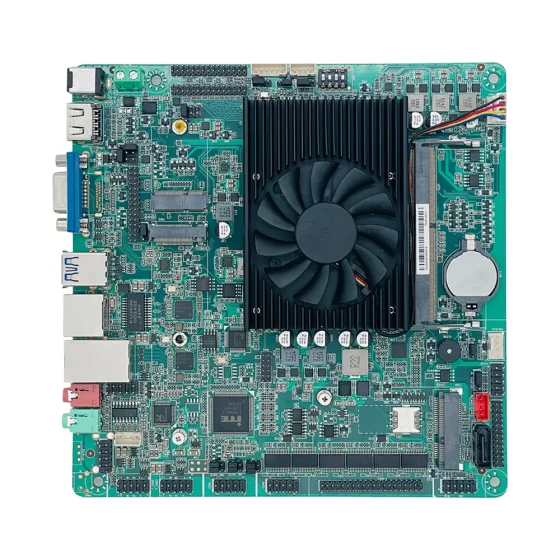
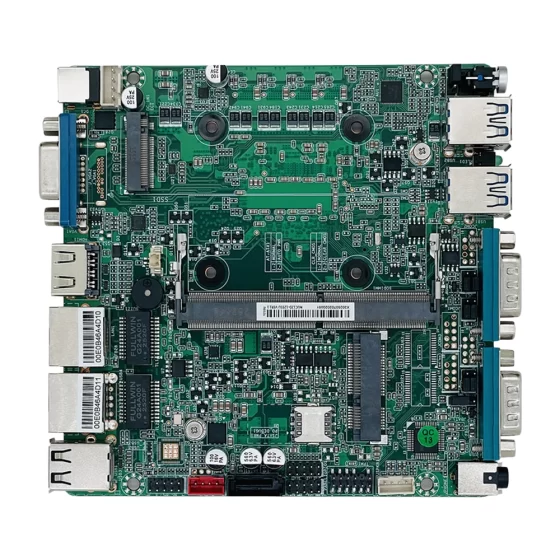
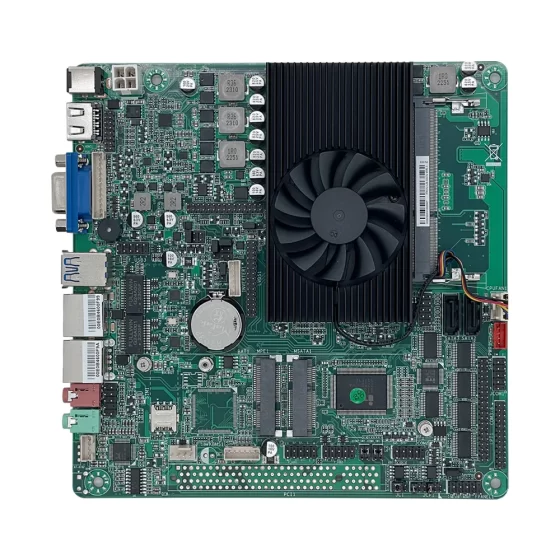
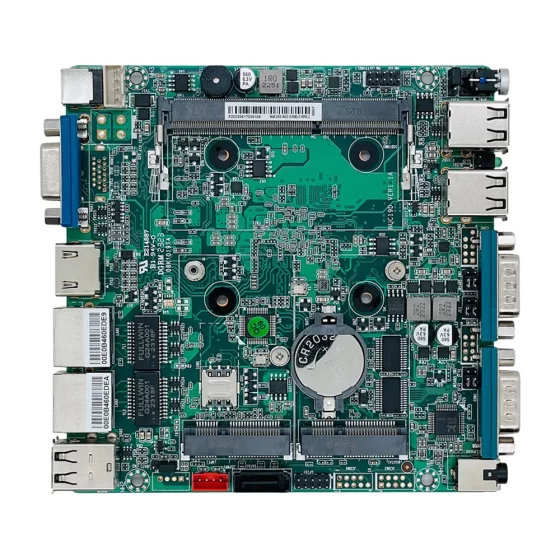
CoreIPC provides industrial computing platforms designed for demanding energy management applications. تشمل محفظتنا أجهزة الكمبيوتر الصناعية, أجهزة كمبيوتر بدون مروحة, الأنظمة المدمجة, Mini-ITX motherboards, and customized embedded computing solutions that support real-time energy monitoring, تحليلات الحافة, and industrial communication requirements. مع دورات حياة المنتج الطويلة, تكوينات الإدخال/الإخراج المرنة, موثوقية من الدرجة الصناعية, وقدرات التخصيص OEM/ODM, CoreIPC يساعد تكامل النظام, energy solution providers, and industrial operators build scalable and dependable Energy Management Systems for modern energy infrastructure.
الأسئلة المتداولة
1. What is an Industrial Computer for Energy Management Systems?
An industrial computer is a rugged computing platform used to collect, عملية, تحليل, and manage energy-related data from meters, أجهزة الاستشعار, وحدات تحكم, and other infrastructure devices within an Energy Management System.
2. Why are industrial computers preferred over consumer PCs?
Industrial computers offer enhanced reliability, نطاقات درجة حرارة التشغيل الأوسع, industrial connectivity options, and long-term availability required for critical energy infrastructure deployments.
3. Which communication protocols are commonly used in EMS applications?
Common protocols include Modbus RTU, مودبوس تكب, BACnet, إم كيو تي تي, OPC تعميم الوصول إلى الخدمات, إيثرنت/IP, يمكن الحافلة, RS232, و RS485.
4. هل تستطيع أجهزة الكمبيوتر الصناعية دعم أنظمة الطاقة المتجددة؟?
نعم. Industrial computers can monitor and manage solar power systems, توربينات الرياح, battery energy storage systems, and hybrid energy infrastructures.
5. What role does edge computing play in energy management?
Edge computing enables local processing of energy data, تقليل الكمون, تحسين الموثوقية, and supporting real-time decision-making without constant cloud dependency.
6. Are industrial computers suitable for outdoor deployments?
Many industrial computers support extended temperature ranges, تصاميم بدون مروحة, and rugged enclosures suitable for outdoor cabinets and infrastructure installations.
7. How do industrial computers improve cybersecurity?
Industrial computers can support secure operating systems, اتصال VPN, جدران الحماية, access control mechanisms, encrypted communications, and cybersecurity monitoring tools.
8. Can Energy Management Systems integrate with existing SCADA platforms?
نعم. Most modern EMS solutions support integration with SCADA, تخطيط موارد المؤسسات, زارة التربية والعلم, and Building Management Systems through standard industrial protocols.
9. What industries benefit from Energy Management Systems?
تصنيع, المرافق, مواصلات, commercial real estate, الرعاية الصحية, مراكز البيانات, الطاقة المتجددة, and smart city infrastructure all benefit from EMS technologies.
10. How scalable are industrial computer-based EMS deployments?
Industrial computing platforms can scale from a single facility deployment to enterprise-wide energy management architectures spanning multiple locations.
خاتمة
An Industrial Computer for Energy Management Systems serves as the foundation for intelligent energy monitoring, optimization, and sustainability initiatives. من خلال تمكين الحصول على البيانات في الوقت الحقيقي, تحليلات الحافة, secure communications, and seamless integration with energy infrastructure, industrial computers help organizations improve operational efficiency while reducing energy consumption and environmental impact.
As Energy Management Systems continue to evolve, industrial-grade computing platforms will remain essential for supporting reliable, قابلة للتطوير, and future-ready energy optimization strategies.
اتصل بنا
Looking for reliable industrial computing solutions for your Energy Management System project?
يوفر CoreIPC أجهزة الكمبيوتر الصناعية, أجهزة الكمبيوتر المدمجة, Mini-ITX motherboards, منصات الحوسبة الحافة, and customized embedded solutions designed for demanding energy management applications.
Contact our engineering team today to discuss your project requirements and discover the right industrial computing platform for your deployment.