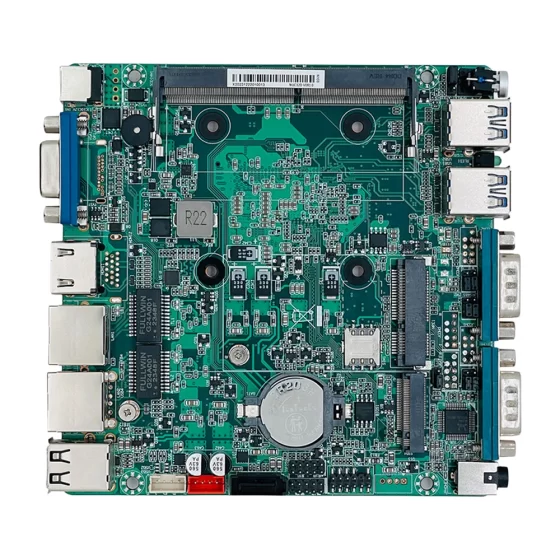
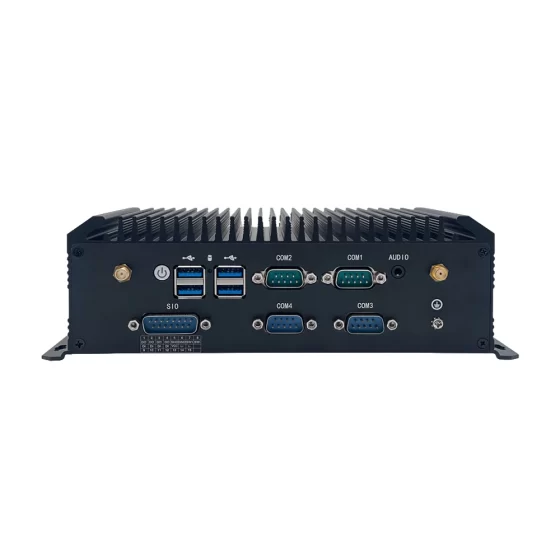
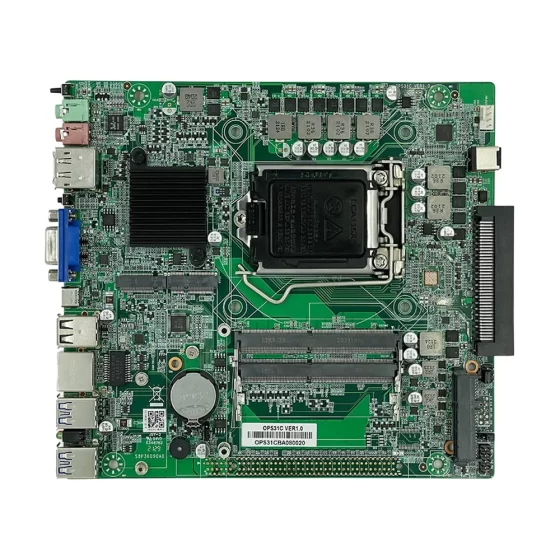
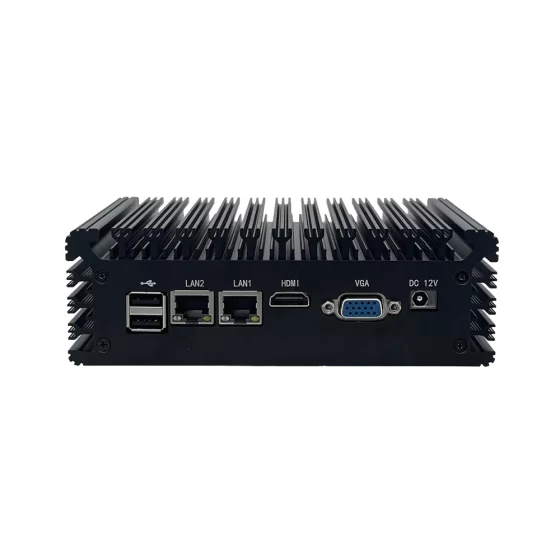
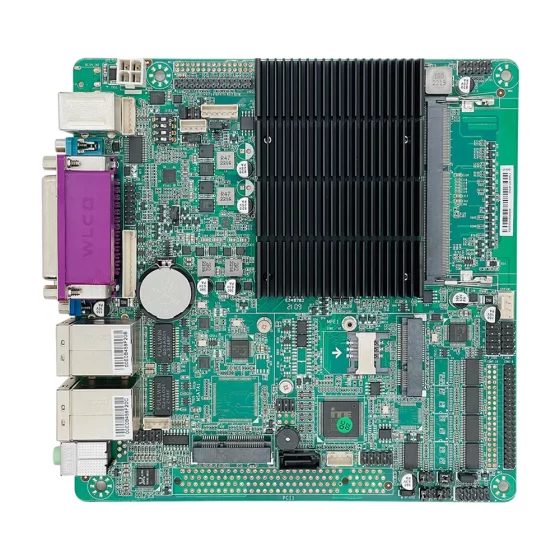
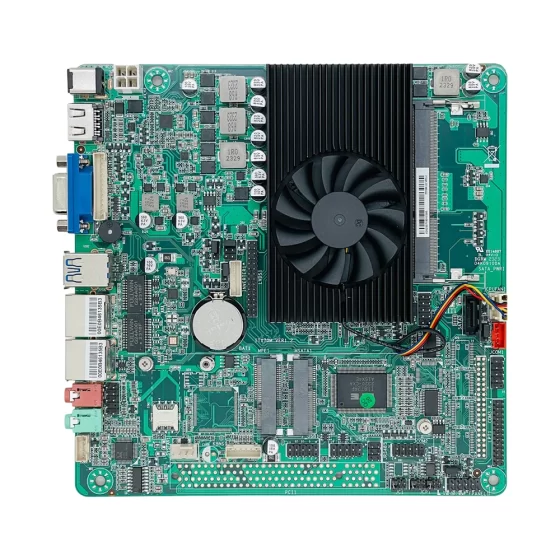
Soluciones de informática industrial CoreIPC

Computadora industrial para señalización digital
Resumen ejecutivo
Digital signage has transformed the way organizations communicate with customers, employees, visitors, and the public. From retail stores and shopping malls to transportation hubs, hospitality venues, corporate campuses, healthcare facilities, and educational institutions, digital signage systems have become essential tools for delivering dynamic content, enhancing customer engagement, and improving operational efficiency.
Unlike traditional static displays, modern digital signage platforms provide real-time content management, multimedia playback, interactive experiences, targeted advertising, and centralized control capabilities. These systems rely on powerful computing platforms capable of delivering reliable performance while operating continuously in commercial and public environments.
Un Computadora industrial para señalización digital serves as the core computing engine behind digital display networks. It manages content playback, multimedia processing, gestión remota, network communications, interactive applications, and real-time content updates across single-screen and multi-screen deployments. By combining industrial-grade reliability with flexible display connectivity and long lifecycle availability, industrial computers provide a stable foundation for professional digital signage applications.
Industrial computers and embedded computers are increasingly preferred for digital signage deployments because they offer fanless operation, factores de forma compactos, extended operational lifecycles, wide environmental tolerance, and rich I/O interfaces. These characteristics help organizations deploy reliable signage systems that operate continuously while minimizing maintenance requirements.
As smart retail, self-service technologies, interactive customer experiences, and intelligent public information systems continue to evolve, industrial computers are becoming critical technologies supporting next-generation digital signage infrastructure.
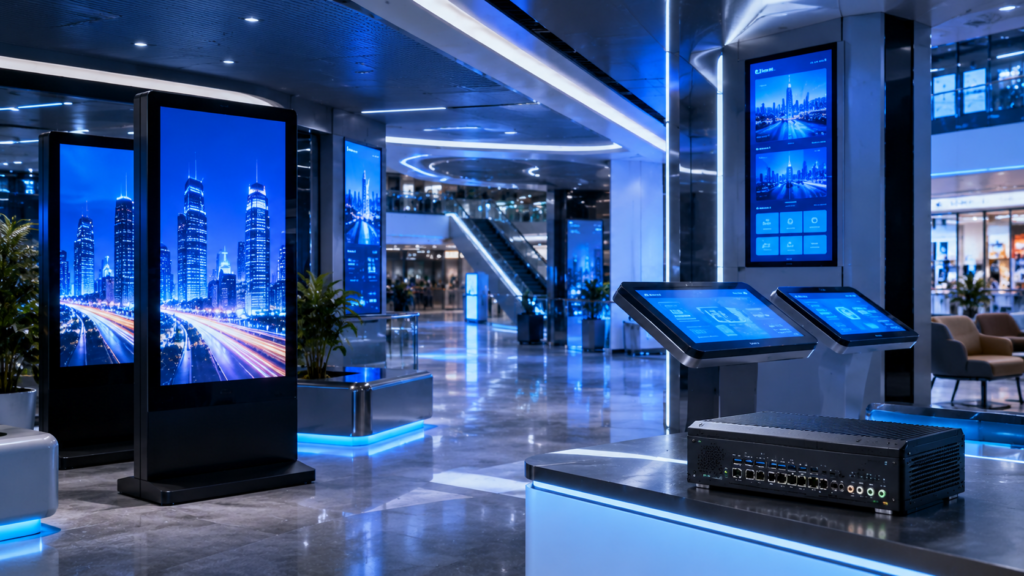
Industrial computers provide reliable multimedia playback and centralized management for digital signage and kiosk applications.
Descripción general de la industria
Digital signage technology has experienced rapid adoption across numerous industries as organizations seek more effective ways to communicate information and engage audiences.
Common deployment environments include:
- Retail stores
- Shopping malls
- Restaurants
- Airports
- Estaciones de ferrocarril
- Bus terminals
- Hotels
- Hospitals
- Educational institutions
- Corporate facilities
Modern digital signage systems support a wide range of content types, incluido:
- Advertising campaigns
- Promotional content
- Interactive information
- Wayfinding systems
- Public announcements
- Corporate communications
- Transportation schedules
- Menu boards
- Self-service applications
- Real-time data displays
The increasing demand for dynamic content and interactive experiences has driven the need for more capable computing platforms.
Today’s digital signage deployments often require:
- High-resolution content playback
- Soporte para múltiples pantallas
- Interactive touch functionality
- Cloud-based content management
- Real-time updates
- Monitoreo remoto
- Network connectivity
- Data analytics integration
Traditional commercial PCs may struggle to meet the reliability and lifecycle requirements of professional signage deployments.
Industrial computers provide a more robust alternative by delivering stable operation, flexible integration capabilities, y disponibilidad de la plataforma a largo plazo.
As organizations continue investing in customer engagement and digital transformation initiatives, demand for industrial computing platforms in digital signage applications continues to grow.
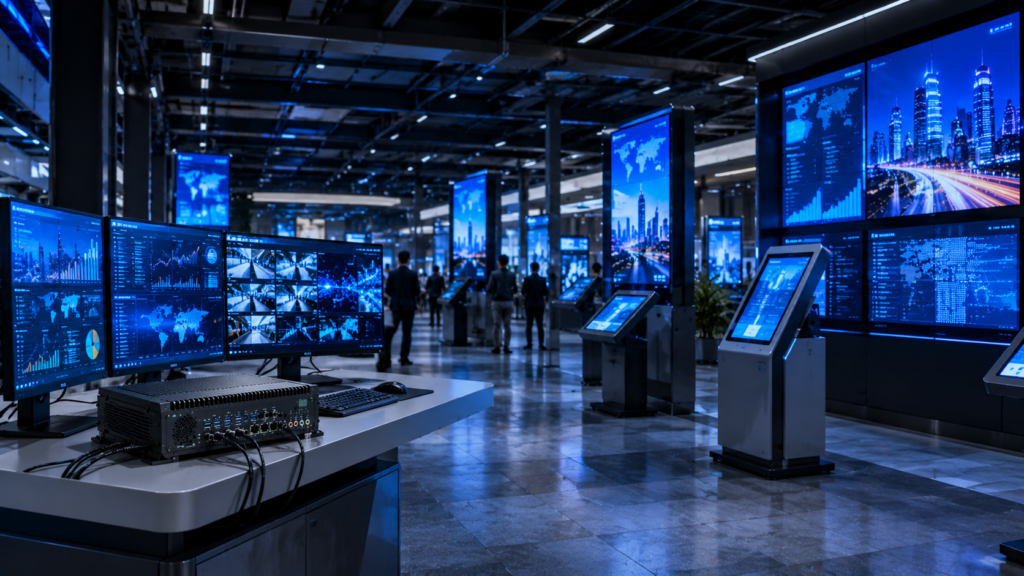
Large-scale digital signage deployments require reliable content management, multi-display support, y funcionamiento continuo.
Desafíos clave
Requisitos de operación continua
Digital signage systems frequently operate:
- 24/7
- Extended business hours
- Public environments
- Unattended locations
Computing platforms must provide reliable continuous operation without frequent maintenance.
High-Resolution Multimedia Processing
Modern displays often require:
- Full HD playback
- 4K content rendering
- Video streaming
- Multi-screen synchronization
- Dynamic content updates
These workloads demand sufficient processing performance.
Multi-Display Management
Large deployments may involve:
- Video walls
- Multiple screens
- Interactive displays
- Distributed signage networks
Managing synchronized content across multiple displays can be complex.
Remote Deployment Locations
Many signage systems are installed in locations where direct maintenance access is limited.
Organizations require:
- Monitoreo remoto
- Gestión remota
- Centralized control
- System diagnostics
These capabilities reduce operational costs.
Environmental Considerations
Digital signage systems may be deployed in:
- Outdoor environments
- Transportation facilities
- Industrial locations
- Public spaces
Computing platforms must withstand environmental challenges while maintaining stable performance.
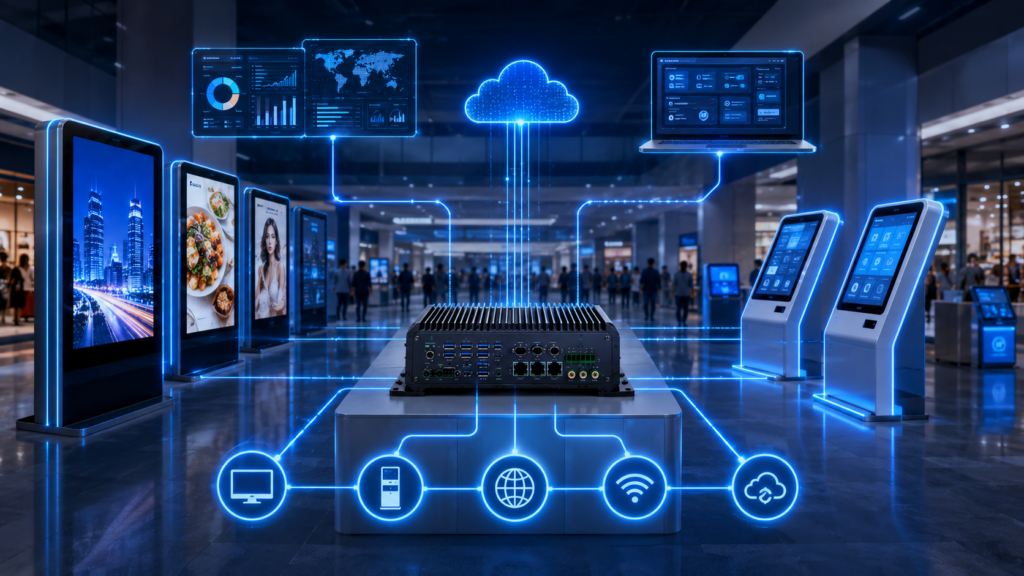
Industrial computers connect displays, quioscos, redes, and cloud platforms for centralized digital signage management.
Arquitectura de la solución
A typical digital signage deployment consists of multiple interconnected layers.
Capa 1: Display Layer
Esta capa incluye:
- LCD displays
- LED displays
- Touchscreen displays
- Video walls
- Interactive kiosks
- Outdoor displays
These devices present content to users.
Capa 2: Capa de conectividad
La infraestructura de comunicación puede incluir:
- Ethernet networks
- Wifi
- Conectividad celular
- Redes de fibra
- Conectividad en la nube
This layer enables content distribution and management.
Capa 3: Capa de Computación Industrial
The industrial computer serves as the digital signage player and control platform.
Las funciones incluyen:
- Content playback
- Multimedia processing
- Display control
- Comunicaciones de red
- Almacenamiento local
- Gestión remota
- Monitoreo del sistema
This layer provides reliable signage operation.
Capa 4: Content Management Layer
Las aplicaciones pueden incluir:
- Content management systems (CMS)
- Scheduling platforms
- Advertising management tools
- Interactive applications
- Plataformas de análisis
These systems control content delivery.
Capa 5: Capa de integración empresarial
Enterprise connectivity supports:
- Servicios en la nube
- Aplicaciones empresariales
- Customer analytics systems
- Retail management platforms
- Herramientas de informes
This layer enables centralized management and operational visibility.
Características clave
Confiabilidad de grado industrial
Digital signage deployments require dependable operation.
Las computadoras industriales proporcionan:
- Construcción robusta
- Componentes de grado industrial
- Estabilidad a largo plazo
- Soporte de operación continua
- Disponibilidad de ciclo de vida extendido
These features improve system uptime.
Diseño sin ventilador
Many digital signage deployments utilize fanless systems.
Los beneficios incluyen:
- Mantenimiento reducido
- Fiabilidad mejorada
- Funcionamiento silencioso
- Mejor resistencia al polvo
Fanless platforms are ideal for public environments.
Multi-Display Support
Las computadoras industriales comúnmente soportan:
- Multiple HDMI outputs
- DisplayPort connectivity
- Video wall configurations
- Multi-monitor environments
These capabilities simplify complex signage deployments.
High-Performance Graphics
Digital signage applications require smooth multimedia performance.
Soporte a computadores industriales:
- High-resolution video playback
- 4K content rendering
- Interactive graphics
- Multimedia acceleration
These capabilities enhance user experiences.
Compact Form Factor
Space limitations often exist in signage installations.
Compact industrial computers enable:
- Easy integration
- Flexible mounting
- Kiosk deployment
- Hidden installations
These characteristics simplify deployment.
Remote Management Capabilities
Centralized administration enables:
- Monitoreo del sistema
- Remote updates
- Content management
- Diagnóstico
- Programación de mantenimiento
These features reduce operational costs.
Largo ciclo de vida del producto
Signage deployments frequently remain operational for many years.
Las plataformas industriales proporcionan:
- Disponibilidad a largo plazo
- Configuraciones de hardware estables
- Programas de soporte extendido
These characteristics simplify lifecycle planning.
Escenarios de implementación
Retail Digital Signage
Retail organizations utilize industrial computers for:
- Promotional displays
- Advertising content
- Interactive product information
- Customer engagement systems
These applications improve customer experiences.
Self-Service Kiosks
Industrial computers power:
- Information kiosks
- Ticketing systems
- Check-in terminals
- Ordering kiosks
These systems support self-service operations.
Transportation Information Displays
Transportation facilities utilize signage systems for:
- Información del pasajero
- Arrival and departure schedules
- Wayfinding systems
- Public announcements
These capabilities improve traveler experiences.
Hospitality Applications
Hotels and hospitality venues deploy digital signage for:
- Guest information
- Event schedules
- Interactive directories
- Promotional content
These applications improve service quality.
Corporate Communications
Organizations utilize digital signage for:
- Internal communications
- Performance dashboards
- Visitor information
- Gestión de instalaciones
These systems improve communication effectiveness.
Educational Institutions
Schools and universities deploy signage systems for:
- Campus information
- Event announcements
- Emergency notifications
- Interactive directories
These applications improve information accessibility.
Beneficios comerciales
Improved Customer Engagement
Dynamic digital content captures attention more effectively than traditional static displays.
Enhanced Communication
Organizations can deliver information quickly and efficiently across multiple locations.
Costos operativos reducidos
Centralized management reduces content distribution and maintenance expenses.
Increased Revenue Opportunities
Digital advertising and promotional content can generate additional revenue streams.
Greater Flexibility
Content can be updated instantly to support changing business requirements.
Better Brand Visibility
Professional digital signage enhances brand presence and customer experiences.
Apoyo a la Transformación Digital
Digital signage platforms contribute to broader smart facility and customer engagement strategies.
Por qué CoreIPC
CoreIPC provides industrial computing platforms designed for digital signage, quioscos de autoservicio, pantallas interactivas, transportation information systems, and intelligent customer engagement applications. Our industrial computers and embedded computers deliver fanless operation, multi-display support, confiabilidad de grado industrial, rica conectividad, y disponibilidad de ciclo de vida prolongado. With OEM/ODM customization capabilities and extensive embedded computing experience, CoreIPC helps organizations deploy scalable digital signage solutions that improve communication, engagement, y eficiencia operativa.
Preguntas frecuentes
1. What is an Industrial Computer for Digital Signage?
An Industrial Computer for Digital Signage is a reliable computing platform that powers digital displays, multimedia content playback, interactive applications, and centralized signage management systems.
2. Why use industrial computers instead of commercial PCs?
Las computadoras industriales proporcionan mayor confiabilidad, operación sin ventilador, longer product lifecycles, and better suitability for continuous operation environments.
3. What types of displays can industrial computers support?
Industrial computers commonly support LCD displays, LED displays, touchscreen panels, video walls, quioscos, and multi-monitor configurations.
4. Can industrial computers support 4K content?
Sí. Many industrial computers support 4K video playback, high-resolution graphics, and multimedia acceleration.
5. Are industrial computers suitable for self-service kiosks?
Sí. Their compact design, fiabilidad, and connectivity make them ideal for kiosk deployments.
6. What industries use digital signage systems?
Industries include retail, transporte, hospitality, cuidado de la salud, educación, corporate communications, e infraestructura pública.
7. Why is fanless operation important?
Los sistemas sin ventilador reducen los requisitos de mantenimiento, mejorar la confiabilidad, and eliminate noise in public environments.
8. Can digital signage systems be managed remotely?
Sí. Most deployments support centralized remote monitoring, content updates, diagnóstico, and management.
9. How do industrial computers improve signage reliability?
They use industrial-grade components designed for continuous operation and long-term stability.
10. What should be considered when selecting a digital signage computer?
Key considerations include display support, multimedia performance, conectividad, remote management capabilities, especificaciones ambientales, y disponibilidad del ciclo de vida.
Conclusión
Un Computadora industrial para señalización digital provides the reliable computing foundation required for modern digital communication systems. By enabling high-resolution content playback, multi-display management, interactive experiences, remote administration, y funcionamiento continuo, industrial computers help organizations improve customer engagement, communication effectiveness, y eficiencia operativa. As digital signage deployments continue to expand across industries, industrial computers and embedded computers will remain essential technologies supporting the future of intelligent visual communication.
Contáctenos
Looking for a reliable Industrial Computer for Digital Signage applications?
CoreIPC proporciona computadoras industriales, computadoras integradas, placas base industriales, and customized computing solutions designed for digital signage, quioscos de autoservicio, pantallas interactivas, transportation information systems, and intelligent customer engagement deployments.
Contact our engineering team today to discuss your project requirements and discover the ideal computing platform for your digital signage application.