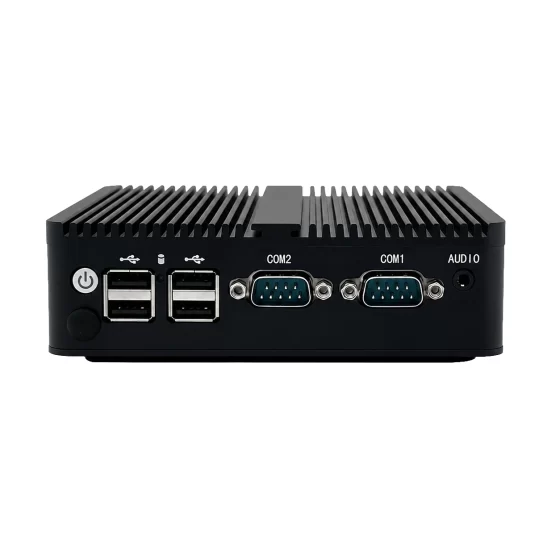
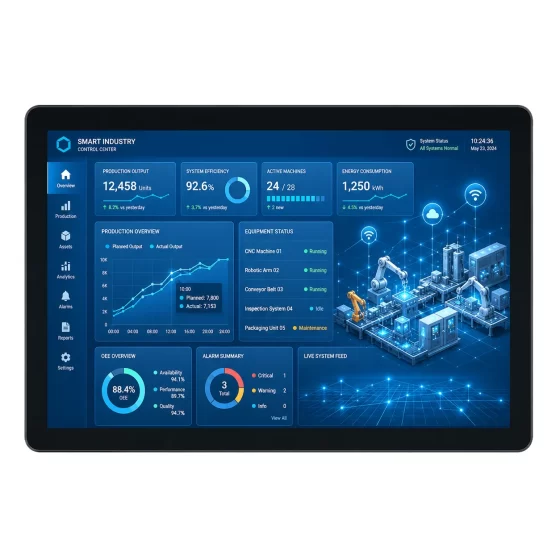
CoreIPC 산업용 컴퓨팅 솔루션

디지털 사이니지용 산업용 컴퓨터
요약
Digital signage has transformed the way organizations communicate with customers, 직원, 방문자, 그리고 대중. 소매점과 쇼핑몰부터 교통 중심지까지, 환대 장소, 기업 캠퍼스, 의료 시설, 및 교육 기관, 디지털 사이니지 시스템은 동적 콘텐츠를 전달하는 데 필수적인 도구가 되었습니다., 고객 참여 강화, 운영 효율성 향상.
기존의 정적 디스플레이와는 달리, 최신 디지털 사이니지 플랫폼은 실시간 콘텐츠 관리를 제공합니다., 멀티미디어 재생, 대화형 경험, 타겟 광고, 및 중앙 집중식 제어 기능. 이러한 시스템은 상업 및 공공 환경에서 지속적으로 작동하면서 안정적인 성능을 제공할 수 있는 강력한 컴퓨팅 플랫폼을 기반으로 합니다..
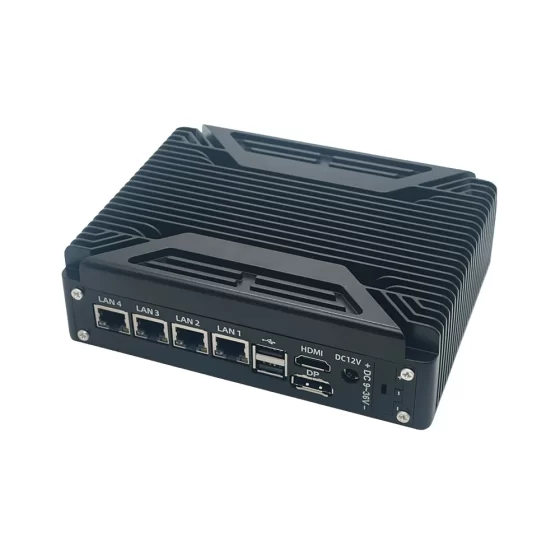
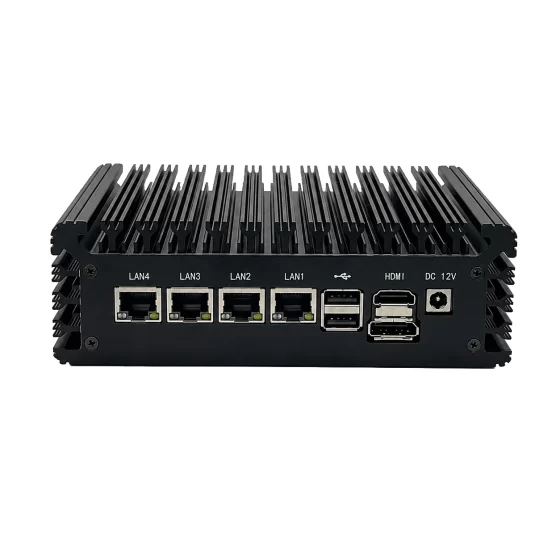
An 디지털 사이니지용 산업용 컴퓨터 serves as the core computing engine behind digital display networks. 콘텐츠 재생을 관리합니다., 멀티미디어 처리, 원격 관리, 네트워크 통신, 대화형 애플리케이션, 단일 화면 및 다중 화면 배포 전반에 걸쳐 실시간 콘텐츠 업데이트. 산업 등급 신뢰성과 유연한 디스플레이 연결 및 긴 수명 주기 가용성을 결합하여, industrial computers provide a stable foundation for professional digital signage applications.
Industrial computers and embedded computers are increasingly preferred for digital signage deployments because they offer fanless operation, compact form factors, extended operational lifecycles, wide environmental tolerance, and rich I/O interfaces. These characteristics help organizations deploy reliable signage systems that operate continuously while minimizing maintenance requirements.
As smart retail, self-service technologies, interactive customer experiences, and intelligent public information systems continue to evolve, industrial computers are becoming critical technologies supporting next-generation digital signage infrastructure.
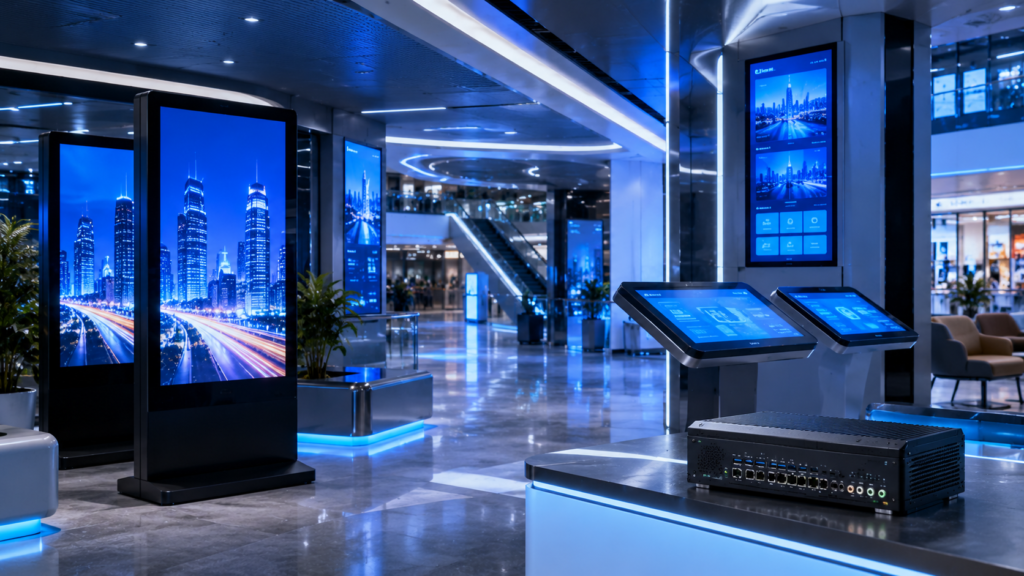
Industrial computers provide reliable multimedia playback and centralized management for digital signage and kiosk applications.
산업 개요
Digital signage technology has experienced rapid adoption across numerous industries as organizations seek more effective ways to communicate information and engage audiences.
Common deployment environments include:
- Retail stores
- Shopping malls
- Restaurants
- Airports
- Railway stations
- Bus terminals
- Hotels
- Hospitals
- Educational institutions
- Corporate facilities
Modern digital signage systems support a wide range of content types, 포함:
- Advertising campaigns
- Promotional content
- Interactive information
- Wayfinding systems
- Public announcements
- Corporate communications
- Transportation schedules
- Menu boards
- Self-service applications
- Real-time data displays
The increasing demand for dynamic content and interactive experiences has driven the need for more capable computing platforms.
Today’s digital signage deployments often require:
- High-resolution content playback
- 다중 디스플레이 지원
- Interactive touch functionality
- Cloud-based content management
- Real-time updates
- Remote monitoring
- Network connectivity
- Data analytics integration
Traditional commercial PCs may struggle to meet the reliability and lifecycle requirements of professional signage deployments.
Industrial computers provide a more robust alternative by delivering stable operation, flexible integration capabilities, and long-term platform availability.
As organizations continue investing in customer engagement and digital transformation initiatives, demand for industrial computing platforms in digital signage applications continues to grow.
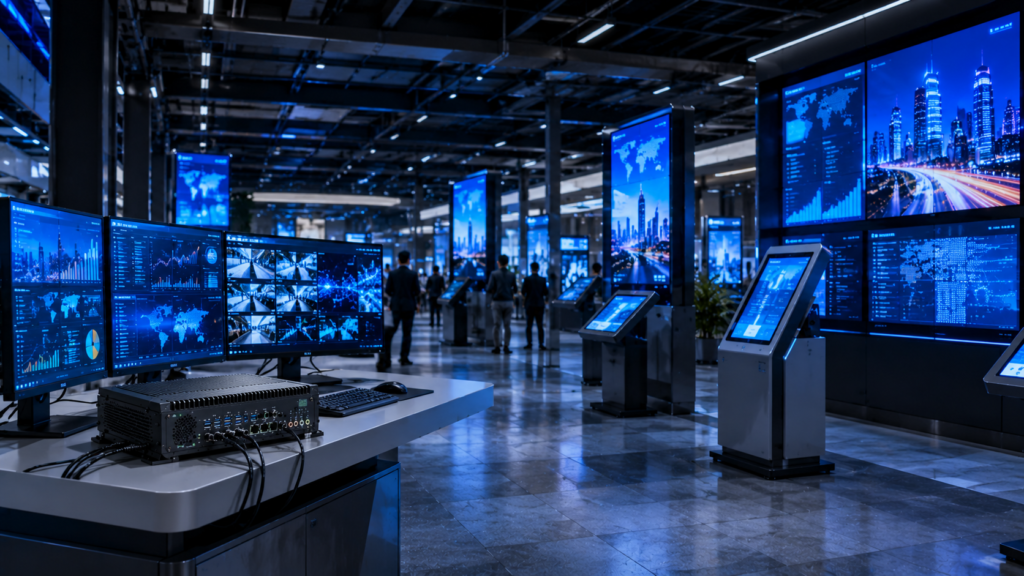
Large-scale digital signage deployments require reliable content management, multi-display support, 지속적인 작동.
주요 과제
Continuous Operation Requirements
Digital signage systems frequently operate:
- 24/7
- Extended business hours
- Public environments
- Unattended locations
Computing platforms must provide reliable continuous operation without frequent maintenance.
High-Resolution Multimedia Processing
Modern displays often require:
- Full HD playback
- 4K content rendering
- Video streaming
- Multi-screen synchronization
- Dynamic content updates
These workloads demand sufficient processing performance.
Multi-Display Management
Large deployments may involve:
- Video walls
- Multiple screens
- Interactive displays
- Distributed signage networks
Managing synchronized content across multiple displays can be complex.
Remote Deployment Locations
Many signage systems are installed in locations where direct maintenance access is limited.
Organizations require:
- Remote monitoring
- Remote management
- Centralized control
- System diagnostics
These capabilities reduce operational costs.
Environmental Considerations
Digital signage systems may be deployed in:
- Outdoor environments
- Transportation facilities
- Industrial locations
- Public spaces
Computing platforms must withstand environmental challenges while maintaining stable performance.
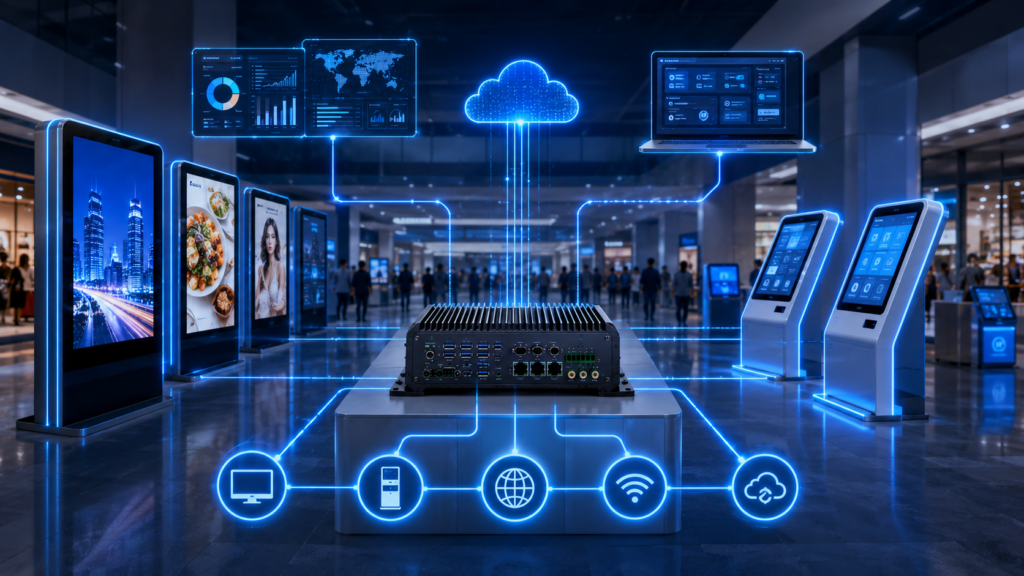
Industrial computers connect displays, kiosks, networks, and cloud platforms for centralized digital signage management.
Solution Architecture
A typical digital signage deployment consists of multiple interconnected layers.
Layer 1: Display Layer
This layer includes:
- LCD displays
- LED displays
- Touchscreen displays
- Video walls
- Interactive kiosks
- Outdoor displays
These devices present content to users.
Layer 2: Connectivity Layer
Communication infrastructure may include:
- Ethernet networks
- Wi-Fi
- Cellular connectivity
- Fiber networks
- Cloud connectivity
This layer enables content distribution and management.
Layer 3: 산업용 컴퓨팅 계층
The industrial computer serves as the digital signage player and control platform.
Functions include:
- Content playback
- Multimedia processing
- Display control
- Network communications
- Local storage
- Remote management
- System monitoring
This layer provides reliable signage operation.
Layer 4: Content Management Layer
Applications may include:
- Content management systems (CMS)
- Scheduling platforms
- Advertising management tools
- Interactive applications
- Analytics platforms
These systems control content delivery.
Layer 5: Enterprise Integration Layer
Enterprise connectivity supports:
- Cloud services
- Business applications
- Customer analytics systems
- Retail management platforms
- Reporting tools
This layer enables centralized management and operational visibility.
주요 특징
산업 등급 신뢰성
Digital signage deployments require dependable operation.
Industrial computers provide:
- Rugged construction
- Industrial-grade components
- Long-term stability
- Continuous operation support
- Extended lifecycle availability
These features improve system uptime.
팬리스 디자인
Many digital signage deployments utilize fanless systems.
Benefits include:
- Reduced maintenance
- Improved reliability
- Silent operation
- Better dust resistance
Fanless platforms are ideal for public environments.
Multi-Display Support
Industrial computers commonly support:
- Multiple HDMI outputs
- DisplayPort connectivity
- Video wall configurations
- Multi-monitor environments
These capabilities simplify complex signage deployments.
High-Performance Graphics
Digital signage applications require smooth multimedia performance.
Industrial computers support:
- High-resolution video playback
- 4K content rendering
- Interactive graphics
- Multimedia acceleration
These capabilities enhance user experiences.
Compact Form Factor
Space limitations often exist in signage installations.
Compact industrial computers enable:
- Easy integration
- Flexible mounting
- Kiosk deployment
- Hidden installations
These characteristics simplify deployment.
Remote Management Capabilities
Centralized administration enables:
- System monitoring
- Remote updates
- Content management
- Diagnostics
- Maintenance scheduling
These features reduce operational costs.
Long Product Lifecycle
Signage deployments frequently remain operational for many years.
Industrial platforms provide:
- Long-term availability
- Stable hardware configurations
- Extended support programs
These characteristics simplify lifecycle planning.
배포 시나리오
Retail Digital Signage
Retail organizations utilize industrial computers for:
- Promotional displays
- Advertising content
- Interactive product information
- Customer engagement systems
These applications improve customer experiences.
Self-Service Kiosks
Industrial computers power:
- Information kiosks
- Ticketing systems
- Check-in terminals
- Ordering kiosks
These systems support self-service operations.
Transportation Information Displays
Transportation facilities utilize signage systems for:
- Passenger information
- Arrival and departure schedules
- Wayfinding systems
- Public announcements
These capabilities improve traveler experiences.
Hospitality Applications
Hotels and hospitality venues deploy digital signage for:
- Guest information
- Event schedules
- Interactive directories
- Promotional content
These applications improve service quality.
Corporate Communications
Organizations utilize digital signage for:
- Internal communications
- Performance dashboards
- Visitor information
- Facility management
These systems improve communication effectiveness.
Educational Institutions
Schools and universities deploy signage systems for:
- Campus information
- Event announcements
- Emergency notifications
- Interactive directories
These applications improve information accessibility.
비즈니스 이점
Improved Customer Engagement
Dynamic digital content captures attention more effectively than traditional static displays.
Enhanced Communication
Organizations can deliver information quickly and efficiently across multiple locations.
Reduced Operational Costs
Centralized management reduces content distribution and maintenance expenses.
Increased Revenue Opportunities
Digital advertising and promotional content can generate additional revenue streams.
Greater Flexibility
Content can be updated instantly to support changing business requirements.
Better Brand Visibility
Professional digital signage enhances brand presence and customer experiences.
Support for Digital Transformation
Digital signage platforms contribute to broader smart facility and customer engagement strategies.
왜 CoreIPC인가?
CoreIPC provides industrial computing platforms designed for digital signage, 셀프 서비스 키오스크, 대화형 디스플레이, transportation information systems, and intelligent customer engagement applications. Our industrial computers and embedded computers deliver fanless operation, multi-display support, 산업 등급의 신뢰성, rich connectivity, 긴 수명주기 가용성. With OEM/ODM customization capabilities and extensive embedded computing experience, CoreIPC helps organizations deploy scalable digital signage solutions that improve communication, engagement, 및 운영 효율성.
자주 묻는 질문
1. What is an Industrial Computer for Digital Signage?
An Industrial Computer for Digital Signage is a reliable computing platform that powers digital displays, multimedia content playback, 대화형 애플리케이션, and centralized signage management systems.
2. Why use industrial computers instead of commercial PCs?
Industrial computers provide higher reliability, 팬리스 작동, longer product lifecycles, and better suitability for continuous operation environments.
3. What types of displays can industrial computers support?
Industrial computers commonly support LCD displays, LED displays, touchscreen panels, video walls, kiosks, and multi-monitor configurations.
4. Can industrial computers support 4K content?
예. Many industrial computers support 4K video playback, high-resolution graphics, and multimedia acceleration.
5. Are industrial computers suitable for self-service kiosks?
예. Their compact design, 신뢰할 수 있음, and connectivity make them ideal for kiosk deployments.
6. What industries use digital signage systems?
Industries include retail, 운송, 환대, 건강 관리, 교육, corporate communications, and public infrastructure.
7. Why is fanless operation important?
Fanless systems reduce maintenance requirements, improve reliability, and eliminate noise in public environments.
8. Can digital signage systems be managed remotely?
예. Most deployments support centralized remote monitoring, content updates, 진단, and management.
9. How do industrial computers improve signage reliability?
They use industrial-grade components designed for continuous operation and long-term stability.
10. What should be considered when selecting a digital signage computer?
Key considerations include display support, multimedia performance, 연결성, remote management capabilities, environmental specifications, and lifecycle availability.
결론
An 디지털 사이니지용 산업용 컴퓨터 provides the reliable computing foundation required for modern digital communication systems. By enabling high-resolution content playback, multi-display management, 대화형 경험, remote administration, 지속적인 작동, industrial computers help organizations improve customer engagement, communication effectiveness, 및 운영 효율성. As digital signage deployments continue to expand across industries, industrial computers and embedded computers will remain essential technologies supporting the future of intelligent visual communication.
문의하기
Looking for a reliable Industrial Computer for Digital Signage applications?
CoreIPC provides industrial computers, 임베디드 컴퓨터, industrial motherboards, and customized computing solutions designed for digital signage, 셀프 서비스 키오스크, 대화형 디스플레이, transportation information systems, and intelligent customer engagement deployments.
Contact our engineering team today to discuss your project requirements and discover the ideal computing platform for your digital signage application.