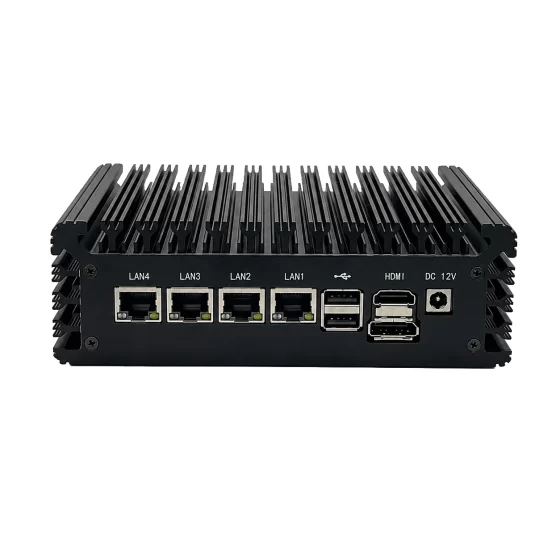
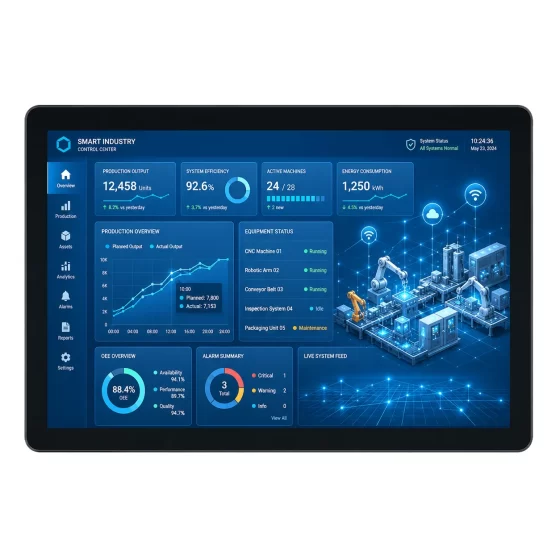
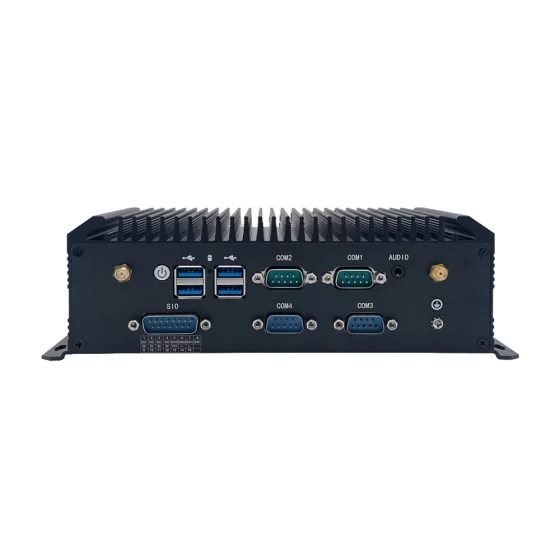
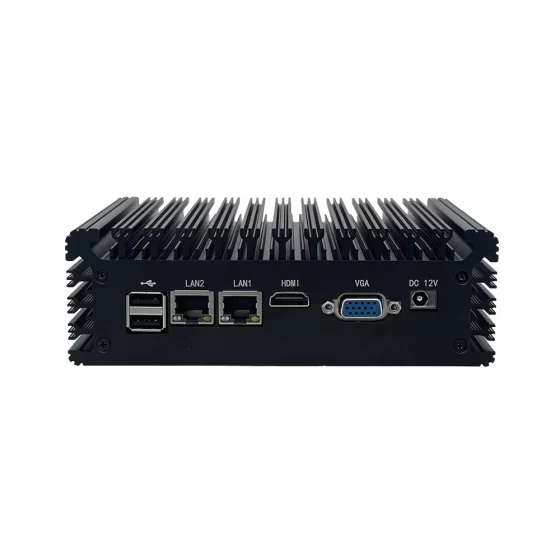
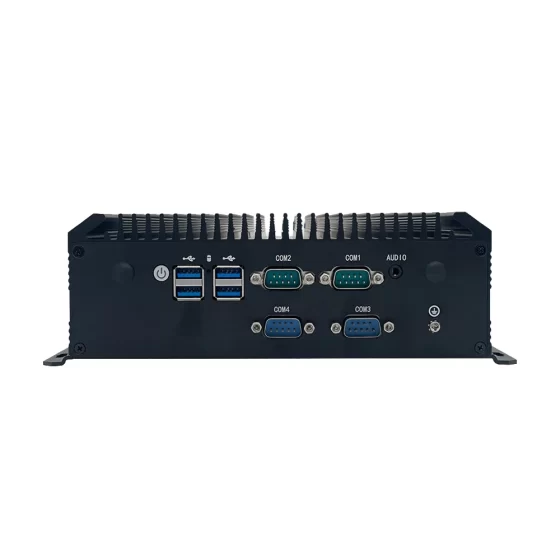
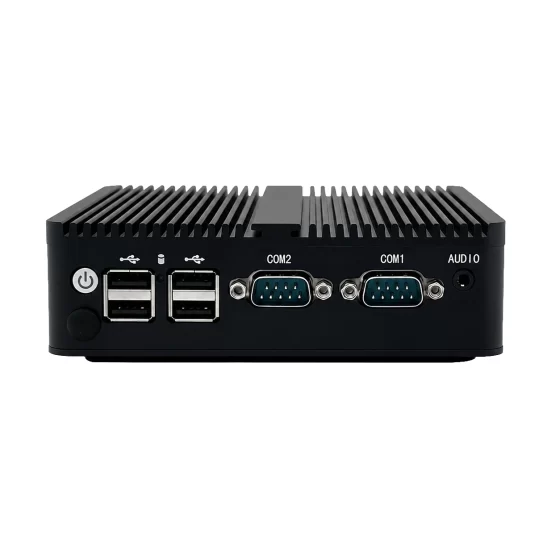
CoreIPC 산업용 컴퓨팅 솔루션

PCB 검사용 산업용 컴퓨터
요약
A reliable PCB 검사용 산업용 컴퓨터 is a critical component in modern electronics manufacturing environments where precision, 속도, 품질 관리는 생산 효율성과 제품 신뢰성에 직접적인 영향을 미칩니다.. 인쇄 회로 기판으로서 (PCB) 점점 복잡해진다, 제조업체에는 미세한 결함을 감지할 수 있는 고급 검사 시스템이 필요합니다., 조립 오류, 납땜 문제, 탁월한 정확도로 부품 배치 부정확성.
기존의 수동 검사 방법은 더 이상 대량 전자 제품 생산 요구 사항을 충족하기에 충분하지 않습니다.. 최신 PCB 검사 시스템은 머신 비전에 의존합니다., 자동 광학 검사 (AOI), 자동 X-Ray 검사 (AXI), 인공지능, 제조 공정 전반에 걸쳐 일관된 품질을 보장하는 실시간 이미지 처리 기술.
이러한 검사 시스템의 중심에는 이미지 획득에 필요한 컴퓨팅 성능을 제공하는 산업용 컴퓨터 또는 임베디드 컴퓨터가 있습니다., 결함 분석, 생산 모니터링, 데이터베이스 관리, 및 공장 통합. 상업용 PC와는 다르게, industrial computers are specifically designed to operate reliably in demanding manufacturing environments while supporting continuous operation, high-speed data processing, and long product lifecycle requirements.
This article explores the role of industrial computers in PCB inspection applications, 주요 배포 과제, 시스템 아키텍처 고려 사항, 필수 기능, and the business benefits of implementing industrial-grade computing platforms in electronics manufacturing facilities.

Modern PCB manufacturing facilities rely on AOI inspection systems, industrial computers, and automated production lines to ensure high-quality electronics assembly and defect detection
산업 개요
Printed circuit boards form the foundation of virtually every electronic product manufactured today. Industries such as consumer electronics, 산업 자동화, automotive electronics, medical devices, telecommunications, aerospace, and defense all depend on high-quality PCB manufacturing processes.
As electronic products continue to become smaller, faster, and more complex, PCB production requires increasingly sophisticated inspection technologies capable of identifying defects that may not be visible to the human eye.
Common PCB manufacturing defects include:
- Missing components
- Incorrect component placement
- Solder bridges
- Insufficient solder
- Open circuits
- Short circuits
- Surface contamination
- Bent leads
- Component polarity errors
- Trace defects
To maintain quality standards, manufacturers deploy inspection technologies throughout the production process.
Typical inspection stages include:
- Solder paste inspection (SPI)
- Pre-reflow inspection
- Post-reflow AOI
- X-ray inspection
- Functional testing
- Final quality verification
These inspection systems generate significant volumes of image and production data that require high-performance computing resources for real-time processing and analysis.
Industrial computers serve as the core computing platform that enables:
- High-speed image acquisition
- Vision processing
- 결함 감지
- 데이터 저장
- Production traceability
- Manufacturing analytics
- Factory integration
As a result, industrial computing platforms have become an essential component of modern PCB manufacturing facilities.

Modern PCB inspection systems must process high-resolution images and detect microscopic defects on increasingly complex circuit boards in real time.
주요 과제
High-Speed Image Processing Requirements
PCB inspection systems capture large quantities of high-resolution images during production.
Modern inspection equipment may process:
- Multiple cameras
- High frame rates
- Ultra-high-resolution images
- Multi-angle inspections
Processing this data in real time requires significant computing power.
Increasing PCB Complexity
Today’s circuit boards often feature:
- Fine-pitch components
- Ball grid arrays (BGAs)
- Microvias
- Dense layouts
- Multi-layer designs
Detecting defects within these complex assemblies demands advanced inspection algorithms and powerful image processing capabilities.
Continuous Production Operation
Electronics manufacturing lines frequently operate:
- 24/7 production schedules
- High-throughput assembly processes
- Minimal downtime environments
Inspection systems must maintain continuous performance without affecting production efficiency.
Large Data Volumes
PCB inspection systems generate substantial amounts of data including:
- Images
- 검사 결과
- 생산 기록
- Quality reports
- Traceability information
Reliable storage and data management infrastructure are essential.
Factory Integration Requirements
Inspection systems must communicate with:
- SMT production lines
- MES 플랫폼
- ERP 시스템
- Quality management software
- Manufacturing databases
Achieving seamless integration requires flexible industrial communication capabilities.

Industrial computers connect AOI systems, machine vision cameras, manufacturing databases, and MES platforms to enable intelligent PCB inspection and production traceability.
솔루션 아키텍처
A modern PCB inspection solution consists of several interconnected layers.
층 1: PCB Production Equipment
The manufacturing layer includes:
- Solder paste printers
- Pick-and-place machines
- Reflow ovens
- 컨베이어
- PCB handling systems
These systems perform the physical manufacturing processes.
층 2: Vision Acquisition Layer
The inspection layer includes:
- 산업용 카메라
- Optical lenses
- 조명 시스템
- X-ray sensors
- Laser measurement devices
These devices capture images and inspection data.
층 3: Industrial Computer Layer
The industrial computer functions as the processing platform.
Responsibilities include:
- 이미지 획득
- Image processing
- 결함 감지
- AI 추론
- 데이터베이스 관리
- 품질 분석
- 생산 모니터링
- Reporting
This layer provides the computing resources required for inspection operations.
층 4: Manufacturing Software Layer
Software systems include:
- AOI software
- AXI software
- SPC systems
- 추적성 플랫폼
- Quality management applications
The industrial computer hosts and supports these applications.
층 5: Enterprise Integration Layer
Enterprise connectivity enables integration with:
- MES 플랫폼
- ERP 시스템
- Manufacturing databases
- Cloud analytics platforms
- Factory dashboards
This layer transforms inspection data into actionable business intelligence.
주요 특징
High-Performance Processing
PCB inspection applications require powerful computing resources.
Industrial computers typically support:
- Multi-core processors
- High-speed memory
- NVMe storage
- GPU 가속
- AI processing capabilities
These resources enable real-time inspection performance.
산업 등급 신뢰성
Electronics manufacturing facilities require dependable operation.
Industrial computers provide:
- Fanless designs
- Rugged construction
- Solid-state storage
- Industrial-grade components
- Long-term stability
These characteristics improve system availability.
Machine Vision Optimization
Industrial computers designed for vision applications support:
- Multiple camera interfaces
- High-bandwidth image transfer
- GPU processing
- 실시간 분석
This enables rapid defect detection and inspection accuracy.
Flexible Connectivity
PCB inspection systems require extensive connectivity.
Typical interfaces include:
- 기가비트 이더넷
- USB 3.0
- USB 3.2
- 직렬 포트
- 디지털 I/O
- Camera interfaces
- Display outputs
These interfaces support integration with production equipment and inspection devices.
AI Inspection Capability
Artificial intelligence is increasingly used in PCB inspection.
Industrial computers can support:
- Deep learning models
- Defect classification
- Pattern recognition
- Automated quality analysis
AI improves inspection accuracy and reduces false positives.
Data Management Support
Industrial computers support:
- 로컬 데이터베이스
- Historical data storage
- 생산 기록
- 추적성 시스템
Reliable data management improves quality control and compliance.
긴 수명주기 가용성
Industrial computing platforms offer:
- 장기 가용성
- Stable hardware configurations
- Extended support periods
This reduces redesign costs and simplifies maintenance planning.
배포 시나리오
자동 광학 검사 (AOI)
AOI systems use industrial computers to:
- Capture images
- Analyze solder joints
- Verify component placement
- Detect manufacturing defects
Real-time processing is essential for maintaining production throughput.
Automated X-Ray Inspection (AXI)
Industrial computers process X-ray images to inspect:
- Hidden solder joints
- BGA connections
- Internal defects
These systems support advanced quality control requirements.
SMT Production Monitoring
Manufacturers deploy industrial computers to monitor:
- Production status
- 장비 활용
- Yield performance
- Process quality
This supports continuous improvement initiatives.
AI-Based Defect Detection
Machine learning algorithms help identify complex defects that traditional rule-based systems may miss.
Industrial computers provide the processing power required for AI inference and model execution.
Quality Traceability Systems
Inspection results are linked to production records for:
- 제품 추적성
- Regulatory compliance
- Failure analysis
- Warranty management
Industrial computers manage and store this information.
Smart Factory Integration
Industrial computers connect inspection systems with broader factory infrastructure including MES, ERP, and Industrial IoT platforms.
비즈니스 이점
Improved Product Quality
Advanced inspection systems help identify defects before products reach customers.
This improves quality and reduces field failures.
Higher Production Efficiency
Automated inspection eliminates many manual inspection tasks and supports higher manufacturing throughput.
Reduced Rework Costs
Early defect detection prevents defective products from progressing through the production process.
This reduces material waste and labor costs.
Enhanced Traceability
Inspection data provides detailed production records that support quality management and compliance requirements.
Better Operational Visibility
Manufacturers gain real-time insight into:
- Yield rates
- Defect trends
- Process performance
- Equipment status
This supports data-driven decision-making.
Support for Smart Manufacturing
Industrial computers provide the computing infrastructure required for Industry 4.0 이니셔티브, AI inspection systems, and intelligent factory operations.
왜 CoreIPC인가?
CoreIPC provides industrial computing platforms designed for machine vision, automated inspection, and electronics manufacturing applications. Our industrial computers, 임베디드 컴퓨터, and embedded boards deliver the performance, 신뢰할 수 있음, and connectivity required for PCB inspection systems, AOI platforms, AI-based quality control, 스마트 팩토리 통합. With industrial-grade durability, long product lifecycles, 유연한 I/O 구성, and OEM/ODM customization capabilities, CoreIPC helps manufacturers deploy scalable and reliable inspection solutions for modern electronics production environments.
자주 묻는 질문
What is a PCB inspection computer?
A PCB inspection computer is an industrial computing platform used to support automated optical inspection, X-ray inspection, 머신 비전 처리, and quality control operations in electronics manufacturing environments.
Why use an industrial computer for PCB inspection?
Industrial computers provide higher reliability, longer lifecycles, better environmental tolerance, and superior connectivity compared to commercial PCs, making them ideal for manufacturing applications.
Can industrial computers support AOI systems?
예. Industrial computers are commonly used as the processing platform for Automated Optical Inspection systems, 이미지 획득 처리, analysis, 및 결함 감지.
Are GPUs important for PCB inspection?
Many advanced inspection systems use GPU acceleration to improve image processing performance, AI inference speed, and machine vision capabilities.
Can industrial computers support AI-based inspection?
예. Modern industrial computers can run deep learning models for defect classification, pattern recognition, and automated quality analysis.
What interfaces are commonly required?
Typical interfaces include Ethernet, USB 3.0, 직렬 포트, 디지털 I/O, 카메라 인터페이스, and multiple display outputs.
How do industrial computers improve production quality?
They enable faster and more accurate defect detection, helping manufacturers identify issues before products leave the production line.
Can industrial computers integrate with MES systems?
예. Industrial computers often connect inspection systems to MES, ERP, quality management, and manufacturing database platforms.
What industries use PCB inspection computers?
Consumer electronics, automotive electronics, 산업 자동화, telecommunications, aerospace, medical devices, and defense industries commonly deploy PCB inspection systems.
What should be considered when selecting a PCB inspection computer?
Important factors include processor performance, GPU support, 카메라 연결, 저장 용량, 신뢰할 수 있음, lifecycle availability, and software compatibility.
결론
An PCB 검사용 산업용 컴퓨터 provides the computing foundation required for modern electronics manufacturing quality control systems. By supporting high-speed image processing, machine vision applications, AI-based defect detection, and factory-wide integration, industrial computers enable manufacturers to improve product quality, increase production efficiency, and support smart manufacturing initiatives.
As PCB designs continue to grow more complex and quality requirements become increasingly stringent, industrial computing platforms will remain a critical component of advanced inspection systems and intelligent electronics manufacturing operations.
문의하기
Looking for an industrial computer solution for PCB inspection applications?
CoreIPC provides industrial computers, 임베디드 컴퓨터, industrial motherboards, and customized computing platforms designed for machine vision, automated inspection, AI 분석, and electronics manufacturing environments.
Contact our engineering team to discuss your PCB inspection requirements and discover the right industrial computing solution for your project.