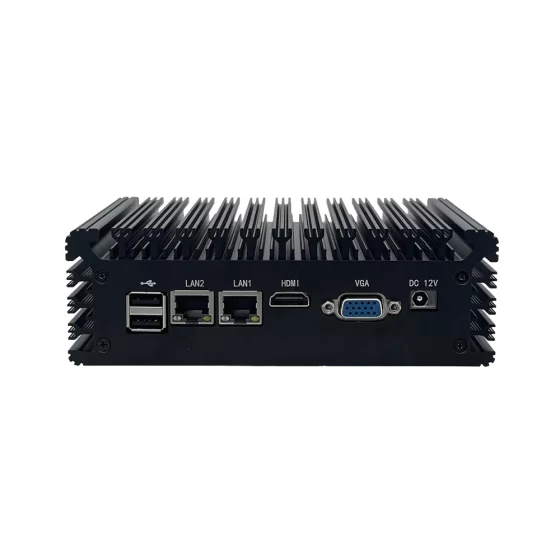
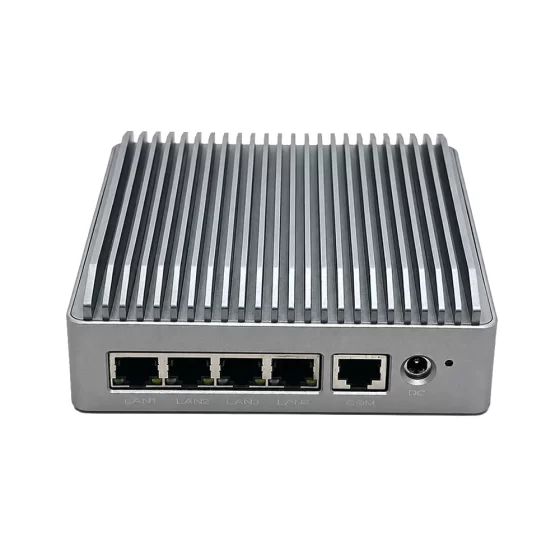
边缘数据采集平台: 用于可靠工厂数据采集的工业计算
执行摘要
An edge data collection platform provides the industrial computing foundation for collecting, 加工, and transferring factory data from machines, 传感器, PLC, 米, 检查系统, 及生产设备.
In modern manufacturing, data must be captured close to where it is generated. Machines produce status signals, sensors measure process conditions, PLCs manage automation logic, and inspection systems generate quality records. If this data is delayed, 不完整的, or collected manually, digital manufacturing systems cannot provide accurate visibility.
Industrial computers and embedded computers are widely used as edge data collection nodes because they can operate near machines, connect different industrial interfaces, process local data, and communicate with MES, 监控与数据采集系统, 企业资源计划, 工业物联网, 和云平台.
与标准办公电脑相比, industrial computing platforms provide better reliability, 灵活的输入/输出, 无风扇选项, 坚固的机械设计, long operating lifecycle, and practical deployment in real factory environments.
A well-designed edge data collection platform helps manufacturers improve production visibility, 减少手动报告, connect legacy machines, support real-time monitoring, and build a scalable data foundation for smart manufacturing.
This article explains how industrial computers support edge data collection, 制造商面临哪些部署挑战, 解决方案架构如何运作, and which hardware features are important for reliable industrial data acquisition.

Industrial computers collect production data from machines, 传感器, 扫描仪, 射频识别设备, 米, and industrial equipment.
行业概况
Factory Data Is Becoming a Strategic Asset
Manufacturing data is no longer used only for basic reporting.
今天, factories use production data to improve efficiency, 质量, 可追溯性, 能源管理, equipment utilization, 和决策. Data from the shop floor can support MES systems, SCADA平台, 工业物联网仪表板, 预测性维护, quality analytics, and enterprise planning.
然而, these systems are only useful when the data is accurate and reliable.
A factory may have many data sources, 包括:
- PLC控制器
- 数控机床
- Sensors and meters
- 条码扫描仪
- RFID阅读器
- Vision inspection systems
- 测试设备
- Robots and motion systems
- Energy monitoring devices
- Environmental monitoring systems
An edge data collection platform connects these data sources and turns equipment-level signals into usable manufacturing information.
Why Edge Collection Matters
Centralized data collection is often not enough for industrial environments.
Factory devices may use different protocols, 网络, signal types, 和数据格式. Some machines may be located far from the server room. Some systems may need local buffering when the network is unstable. Others may require local processing before data is sent to higher-level software.
Edge collection solves this problem by placing computing hardware close to machines and devices.
An industrial computer can collect data locally, filter unnecessary records, 转换协议, store temporary data, and send structured information to factory software platforms.
This improves both reliability and system scalability.
Industrial Computers as Edge Data Nodes
Industrial computers are well suited for edge data collection because they combine computing capability with factory-ready hardware design.
They can connect to PLCs, 传感器, 扫描仪, 米, 相机, 和网络设备. They can also run local applications, protocol services, database clients, visualization software, or communication middleware.
Embedded computers are especially useful when space is limited or when data collection hardware must be installed inside cabinets, 机器, or compact production terminals.
Together, industrial computers and embedded computers form the practical hardware layer for connected factories.

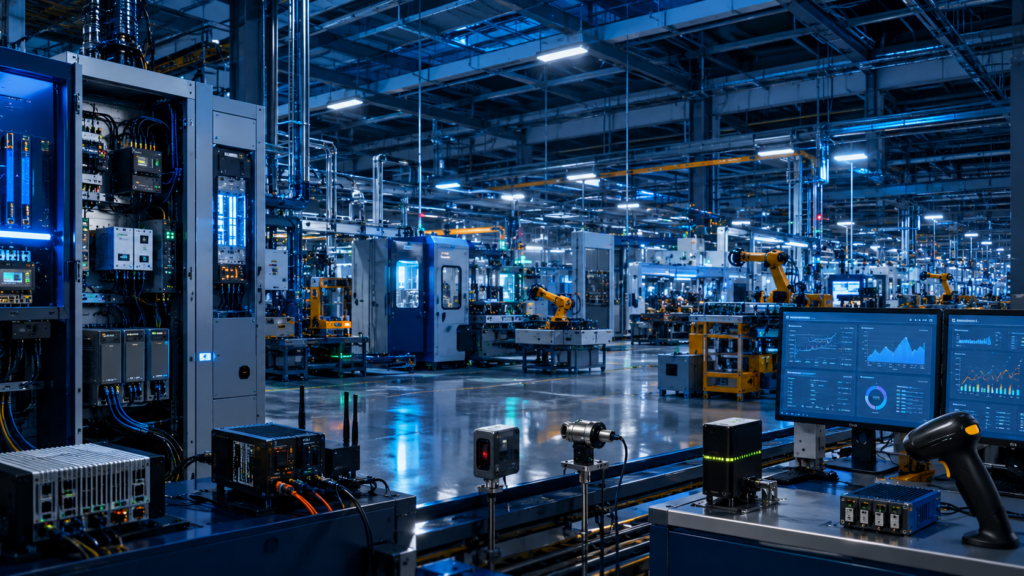
Industrial computers help collect data from mixed factory equipment and legacy machines.
主要挑战
Connecting Different Industrial Devices
The first challenge is device diversity.
Factories often use equipment from different vendors and different generations. A new production line may support Ethernet-based communication, while older machines may still rely on RS232, RS485, 干接点, or external sensors.
A practical edge data collection system may need to connect:
- PLC
- CNC controllers
- 传感器
- 米
- 条码扫描仪
- 射频识别设备
- 相机
- 测试设备
- Weighing systems
- Label printers
- Industrial network switches
Without the right I/O configuration, the system may require too many external adapters. This increases complexity and reduces reliability.
Collecting Data from Legacy Machines
Legacy machine integration is a common problem in factories.
Many older machines were not designed for modern digital manufacturing systems. They may not provide standard APIs or modern network protocols. 然而, replacing all legacy equipment is usually expensive and unrealistic.
Industrial computers help solve this problem by acting as local data collection gateways.
They can collect signals through serial ports, 以太网, USB, 传感器, 或网关模块. This allows manufacturers to digitalize existing equipment step by step.
Maintaining Data Accuracy
Edge data collection must be stable and accurate.
If machine status is missed, sensor data is delayed, or scan records are lost, higher-level systems may make decisions based on incomplete information.
Poor data quality can affect:
- Production monitoring
- Downtime analysis
- 质量检验
- 产品追溯
- Energy reporting
- Equipment maintenance
- 流程优化
A reliable industrial computer reduces these risks by supporting continuous data acquisition close to the equipment.
Handling Harsh Factory Conditions
Edge data collection computers are often installed in demanding environments.
They may be placed inside control cabinets, near machines, 在工作站下, inside equipment enclosures, 或者在生产线旁边.
These environments may include:
- 灰尘
- 振动
- 热
- 电噪声
- Cable movement
- Limited airflow
- Unstable power
- Long operating hours
Industrial-grade design is important because a hardware failure can interrupt data collection and reduce factory visibility.
Network Stability and Data Buffering
Factory networks may not always be stable.
Temporary network interruption can happen because of maintenance, switch failure, cable issues, wireless interference, or production area changes.
A strong edge data collection platform should support local buffering. The industrial computer can continue collecting data, store records temporarily, and synchronize with the server when the network recovers.
This helps prevent data gaps and supports continuous production monitoring.

Industrial computers act as edge data nodes between factory devices and software platforms.
Edge Data Collection Solution Architecture
设备和传感器层
The device and sensor layer includes the physical equipment that generates raw factory data.
This may include machines, PLC, 传感器, 米, 检查系统, 条形码阅读器, RFID阅读器, 相机, and test instruments.
The data generated at this layer may include:
- Machine running status
- 报警事件
- Production count
- 周期
- 温度
- 压力
- 振动
- Power consumption
- 产品编号
- 检查结果
- Test value
- Process parameter
This layer is highly diverse. Different devices may use different protocols, 数据格式, and communication speeds.
工业边缘计算层
The industrial edge computing layer is where the industrial computer or embedded computer is deployed.
This layer performs local data collection, 预处理, 协议转换, buffering, and communication with upper-level systems.
在这一层, the industrial computer may perform tasks such as:
- Reading PLC data
- Collecting sensor values
- Receiving scanner input
- Connecting meters and controllers
- Running protocol conversion software
- Filtering unnecessary data
- Formatting records
- Storing temporary logs
- Uploading data to servers
- Supporting local visualization
This edge layer reduces the burden on centralized systems and improves data reliability.
Factory Software Layer
The factory software layer includes MES, 监控与数据采集系统, 质量管理体系, industrial databases, 生产仪表板, and equipment monitoring platforms.
The edge data collection computer sends structured data to these systems.
例如, it may collect machine output count from a PLC, combine it with barcode scan data, and send the result to MES for production tracking.
It may also send energy meter data to an energy management system or equipment status data to a maintenance dashboard.
企业和云层
Some factories send selected data to ERP, cloud analytics, business intelligence platforms, or remote monitoring systems.
The edge data collection platform can help control which data is sent upward.
Instead of sending every raw signal, the edge computer can preprocess data locally and upload only useful records. This reduces network load and improves data management efficiency.
Local Resilience Layer
Local resilience is important in industrial environments.
If the network connection to the server is interrupted, the edge computer should continue collecting data. It can store records locally and upload them later.
This helps maintain data continuity and prevents production records from being lost during temporary communication problems.
主要特点
工业级可靠性
Reliability is the most important requirement for edge data collection hardware.
The system may need to run continuously near production equipment. It must remain stable even when exposed to vibration, 灰尘, 热, 电噪声, 或营业时间长.
重要的可靠性特征包括:
- 工业主板设计
- 无风扇系统选项
- 坚固的外壳结构
- SSD存储支持
- 热性能稳定
- 宽电压输入选项
- 安全安装方法
- 长生命周期规划
The goal is not only to collect data, but to collect it continuously and accurately.
灵活的I/O配置
Edge data collection platforms require strong interface flexibility.
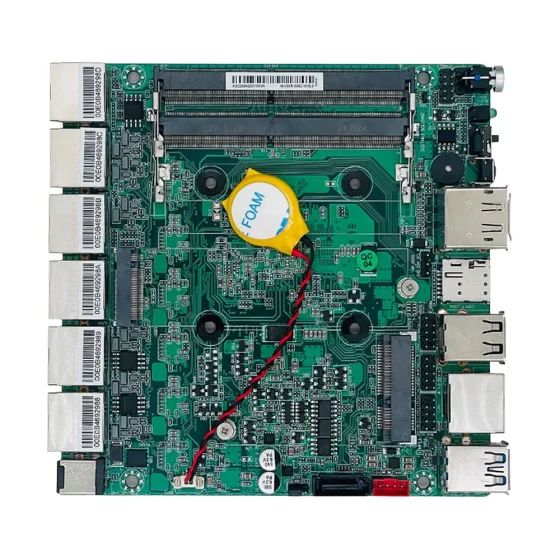
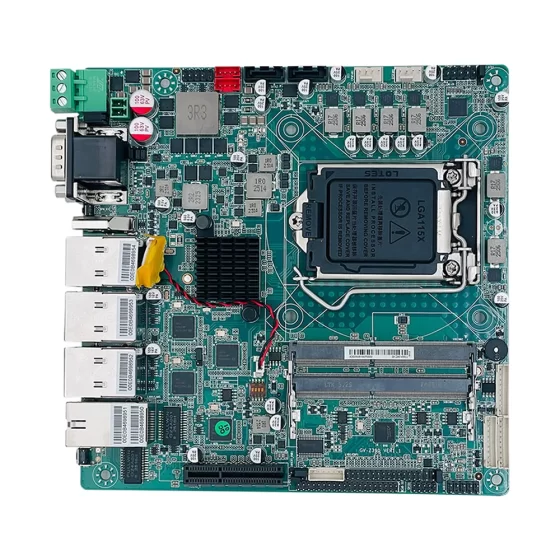
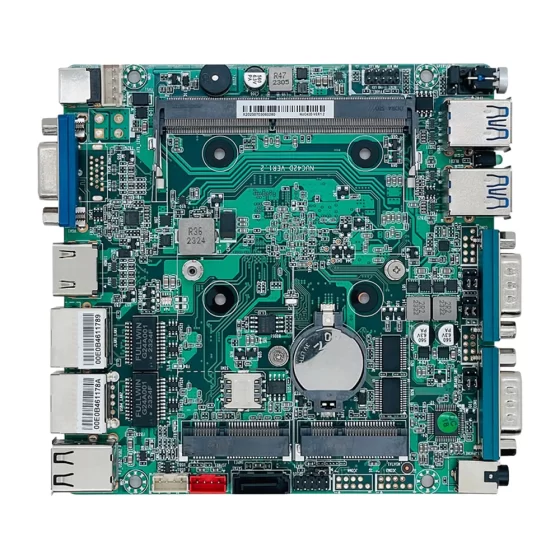
A single industrial computer may connect to PLCs, 传感器, 米, 条码扫描仪, 射频识别设备, 相机, 和工业网络.
有用的 I/O 选项可能包括:
- 多个 LAN 端口
- USB 2.0 和USB 3.0
- RS232
- RS485
- 通用输入输出接口
- HDMI
- 显示端口
- M.2扩展
- Mini PCIe 扩展
- Wireless module support
The correct I/O configuration helps reduce external adapters and simplifies field deployment.
Multiple LAN Ports
Multiple LAN ports are useful for many edge data collection applications.
One LAN port may connect to machine-side devices, while another connects to the factory network or server. This helps separate machine communication from higher-level data traffic.
This design can support:
- 网络分段
- 机器数据采集
- Gateway applications
- Secure communication paths
- Factory IT integration
- Reduced traffic interference
For industrial data acquisition, network design is often as important as computing performance.
无风扇和低维护设计
Fanless industrial computers are widely used for edge data collection.
它们减少灰尘摄入并消除一个常见的机械故障点. This is useful in production areas where maintenance access is limited or airborne particles may affect standard computers.
然而, fanless systems still need proper thermal planning. CPU工作负载, 环境温度, 安装位置, enclosure space, and airflow should all be considered.
本地存储和数据缓冲
Edge data collection systems often need local storage.
The computer may store logs, 临时记录, device data, 报警历史记录, 配置文件, 或本地数据库.
SSD storage is commonly preferred because it offers better shock resistance and faster response than mechanical drives.
For applications with frequent logging, storage capacity and write endurance should be reviewed carefully.
Software and Protocol Compatibility
A data collection platform must work with real industrial software environments.
It may need to support Windows, Linux, 基于浏览器的应用程序, protocol drivers, middleware, database clients, or custom data acquisition software.
部署前, the hardware should be tested with:
- PLC通讯工具
- Sensor drivers
- Scanner and RFID devices
- Database connections
- Remote maintenance software
- Security settings
- Factory network configuration
This helps reduce integration risk during field installation.
部署场景
Machine Data Acquisition
Machine data acquisition is one of the most common edge data collection scenarios.
An industrial computer can connect to PLCs, 数控机床, 控制器, 米, or sensors. It collects machine status, 周期, alarm information, 输出计数, and process values.
This data can then be sent to MES, 监控与数据采集系统, or equipment monitoring platforms.
Sensor Data Collection
Factories may use sensors to monitor temperature, 湿度, pressure, 振动, current, voltage, airflow, or environmental conditions.
An embedded computer can collect sensor data locally and send it to monitoring systems.
This is useful for process control, 设备健康监测, 能源管理, and environmental supervision.
Barcode and RFID Data Collection
Production traceability often depends on barcode and RFID systems.
An industrial computer can connect to scanners, RFID阅读器, 标签打印机, and MES terminals. It can collect product IDs, 物料批次, operator confirmations, and process results.
This helps build accurate production records across multiple process steps.
Quality Inspection Data Collection
Inspection stations often generate important data for quality control.
工业计算机可以连接相机, 测量工具, 测试仪器, 和检查软件. It can collect inspection results, associate them with product IDs, and upload data to MES or quality management systems.
This improves traceability and supports root cause analysis.
Energy and Utility Monitoring
Factories may collect data from power meters, water meters, gas meters, air compressors, 暖通空调系统, and environmental monitoring devices.
An edge data collection platform can gather this information and send it to energy management or facility monitoring systems.
This helps manufacturers understand energy usage, identify abnormal consumption, and support sustainability goals.
Industrial IoT Gateways
An embedded computer can act as an industrial IoT gateway.
It collects data from machines and field devices, preprocesses the data, and sends selected information to local servers or cloud platforms.
This allows factories to build connected monitoring systems without sending every raw signal directly to the cloud.
OEM Equipment Data Integration
Machine builders can integrate embedded computers or industrial motherboards into equipment to support data collection and remote monitoring.
This allows machines to provide production data, alarm records, usage information, and diagnostic data to customer systems.
对于原始设备制造商, built-in data collection capability can improve equipment value and simplify smart factory integration.
商业效益
提高生产可视性
An edge data collection platform helps manufacturers see what is happening across the factory floor.
By collecting real-time data from machines, 传感器, 扫描仪, 和检查系统, production teams can monitor equipment status, 输出数量, 停机事件, 高质量的结果, and process conditions.
这可以改善决策并减少响应延迟.
Better Data Accuracy
Collecting data directly at the edge reduces manual reporting and delayed input.
Industrial computers can capture data at the source and transfer it to higher-level systems automatically.
This improves data consistency and reduces the risk of human error.
更强的可追溯性
Traceability requires accurate records across production steps.
Edge data collection computers can capture product IDs, 物料批次, 机器状态, process parameters, 检查结果, and test records.
When this information is connected to MES or quality systems, 制造商可以建立更完整的生产历史.
Faster Problem Detection
Real-time data collection helps factories detect abnormal conditions earlier.
If a machine stops, a sensor value goes outside the normal range, or a quality test fails, the system can send data to monitoring platforms quickly.
This allows production teams to investigate and respond faster.
更好地利用现有设备
Factories do not need to replace all machines to build digital systems.
Industrial computers can collect data from legacy equipment through serial ports, 以太网, USB, 传感器, 或网关模块.
This allows manufacturers to digitalize existing assets gradually and protect previous equipment investments.
Scalable Digital Manufacturing Foundation
A standardized edge data collection platform supports scalable factory digitalization.
Once data collection hardware is deployed consistently across lines and sites, manufacturers can build MES, 监控与数据采集系统, 工业物联网, energy monitoring, 分析, and predictive maintenance systems on the same data foundation.
This supports long-term smart manufacturing development.
为什么选择CoreIPC
CoreIPC provides industrial computing platforms for machine connectivity, 工厂自动化, 嵌入式系统, and digital manufacturing. For edge data collection applications, CoreIPC专注于可靠的工业计算机硬件, 嵌入式计算机解决方案, 灵活的 I/O 配置, compact mechanical design, 和OEM/ODM定制支持. CoreIPC帮助系统集成商, 设备制造商, and manufacturing teams select computing platforms that match real shop-floor requirements, 包括设备接口, 网络设计, 安装方法, 电源输入, 热条件, lifecycle planning, and scalable deployment needs.
常见问题解答
1. What is an edge data collection platform?
An edge data collection platform is a system that collects data close to machines, 传感器, PLC, 米, 扫描仪, 及生产设备.
It usually includes industrial computing hardware, 通讯接口, data acquisition software, 本地存储, and network connectivity. The goal is to collect reliable factory data and send it to MES, 监控与数据采集系统, 工业物联网, 质量, or analytics systems.
2. Why are industrial computers used for edge data collection?
Industrial computers are used because they are designed for factory environments and continuous operation.
They can connect industrial devices, run local data acquisition software, support multiple interfaces, buffer data during network interruptions, and communicate with higher-level systems. Compared with office PCs, they provide better reliability, mounting flexibility, I/O support, and long-term deployment stability.
3. How is an embedded computer used in edge data collection?
嵌入式计算机可以安装在机器附近, inside control cabinets, 显示器后面, or inside OEM equipment.
It may collect data from PLCs, 传感器, 扫描仪, 米, 或测试仪器. It can also run protocol conversion software, store temporary records, and upload structured data to factory systems. Its compact design makes it useful for space-limited industrial environments.
4. What interfaces are important for edge data collection?
常见接口包括LAN, USB, RS232, RS485, 通用输入输出接口, HDMI, 显示端口, M.2, 和迷你 PCIe.
LAN ports support network communication with PLCs, servers, and switches. USB connects scanners, 相机, and peripheral devices. 串行端口对于旧机器很有用, 米, 和控制器. GPIO may be used for simple signal input or output.
5. Can edge data collection connect legacy equipment?
是的. Industrial computers are often used to connect legacy equipment that does not support modern digital systems directly.
They can collect data through serial communication, 以太网, USB, 传感器, 或外部网关. This allows factories to digitalize older equipment without replacing all machines, making data collection more practical and cost-effective.
6. Why is local data buffering important?
Local data buffering helps prevent data loss during temporary network interruptions.
If the connection to the server is unavailable, the edge computer can continue collecting records and store them locally. After the connection recovers, the system can upload the stored data. This improves data continuity and supports reliable production monitoring.
7. Do edge data collection systems need multiple LAN ports?
Multiple LAN ports are useful in many industrial data collection systems.
One LAN port may connect to machine-side devices or PLCs, 而另一个连接到 MES, 监控与数据采集系统, or factory IT networks. This separation improves network organization and can support better security and traffic management.
8. Is a fanless industrial computer suitable for edge data collection?
无风扇工业计算机通常很合适,因为它可以减少灰尘吸入并消除常见的机械故障点.
This is useful in factories where systems run continuously or are installed in dusty areas. 然而, the system should still be selected based on workload, 环境温度, 安装位置, and available airflow.
9. How does edge data collection support traceability?
Edge data collection supports traceability by capturing data at each production step.
The system can collect product IDs, 物料批次, 机器状态, process parameters, 检查结果, and test records. When this data is sent to MES or quality systems, manufacturers can build a more complete production history.
10. What should be considered before selecting edge data collection hardware?
Manufacturers should review the number of connected devices, required interfaces, CPU工作负载, 存储需求, 操作系统支持, 网络设计, 安装方法, 电源输入, environmental conditions, 和生命周期要求.
It is also important to test the hardware with real devices, 协议, 软件, and factory network settings before large-scale deployment.
结论
An edge data collection platform is a practical foundation for connected manufacturing and industrial digitalization.
By placing industrial computing hardware close to machines, 传感器, 扫描仪, 米, 检查系统, 及生产设备, manufacturers can collect more accurate data and transfer it reliably to MES, 监控与数据采集系统, 工业物联网, 质量, 活力, and analytics systems.
应根据实际部署需求选择合适的工控机或嵌入式计算机, 包括 I/O 配置, 网络设计, 安装方法, 电源输入, 热条件, 存储容量, software compatibility, 和生命周期规划.
CoreIPC supports edge data collection projects with industrial computing platforms designed for practical factory environments. With a reliable hardware foundation, manufacturers can improve visibility, 加强可追溯性, connect legacy machines, and build scalable smart manufacturing systems.
联系我们
寻找工业计算机, 嵌入式计算机, or industrial motherboard for an edge data collection platform?
联系 CoreIPC 讨论您的项目需求, 包括设备接口, 输入/输出配置, processor platform, 安装方法, 电源输入, 运行环境, 生命周期需求, 和 OEM/ODM 定制选项.
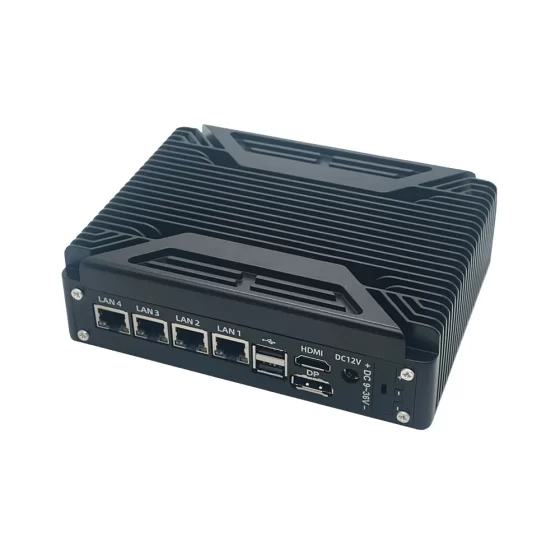
CoreIPC工业计算解决方案