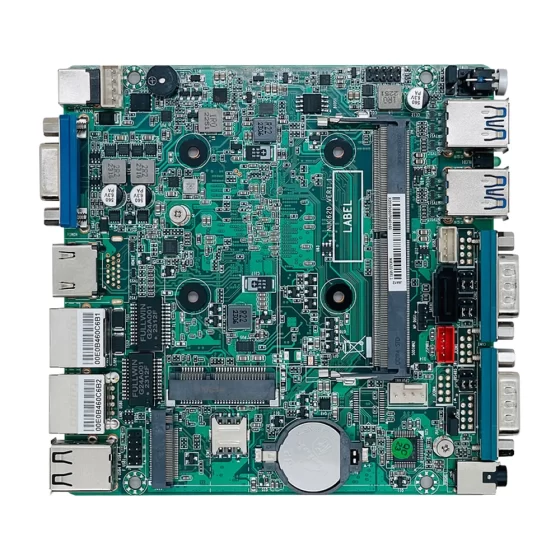
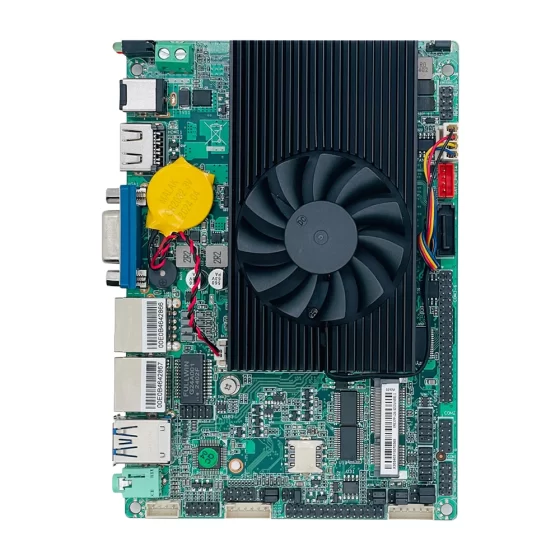
CoreIPC工业计算解决方案

流量监控边缘平台
执行摘要
Modern transportation systems generate enormous volumes of data from roadside cameras, 交通传感器, 雷达系统, 自动车牌识别 (ANPR) 设备, 智能交通信号灯, 和连接的基础设施. 随着城市的不断扩张和车辆保有量的增加, 交通当局需要能够收集信息的智能系统, 加工, 并实时分析交通数据. 传统的集中式处理架构常常面临延迟问题, 带宽限制, 和可扩展性挑战, 使边缘计算对于智能交通部署变得越来越重要.
一个 流量监控边缘平台 provides the computing infrastructure necessary to support real-time traffic monitoring, 视频分析, 事件检测, 车辆分类, 交通流量分析, 以及智能交通管理. 通过更接近源头处理数据, 边缘平台减少延迟, 改善响应时间, 最小化带宽消耗, 并提高整体系统可靠性.
工业计算机和嵌入式计算机通常部署为交通监控边缘平台,因为它们提供了坚固性, 可靠性, 连接性, and long-term availability required for transportation environments. These systems operate continuously in roadside cabinets, transportation control centers, tolling systems, intersections, highways, 隧道, and smart city infrastructure while supporting mission-critical transportation applications.
As Intelligent Transportation Systems (它是), 智慧城市, autonomous mobility initiatives, and AI-powered traffic management continue to evolve, traffic monitoring edge platforms are becoming foundational technologies that enable safer, 更有效率, and more intelligent transportation networks.
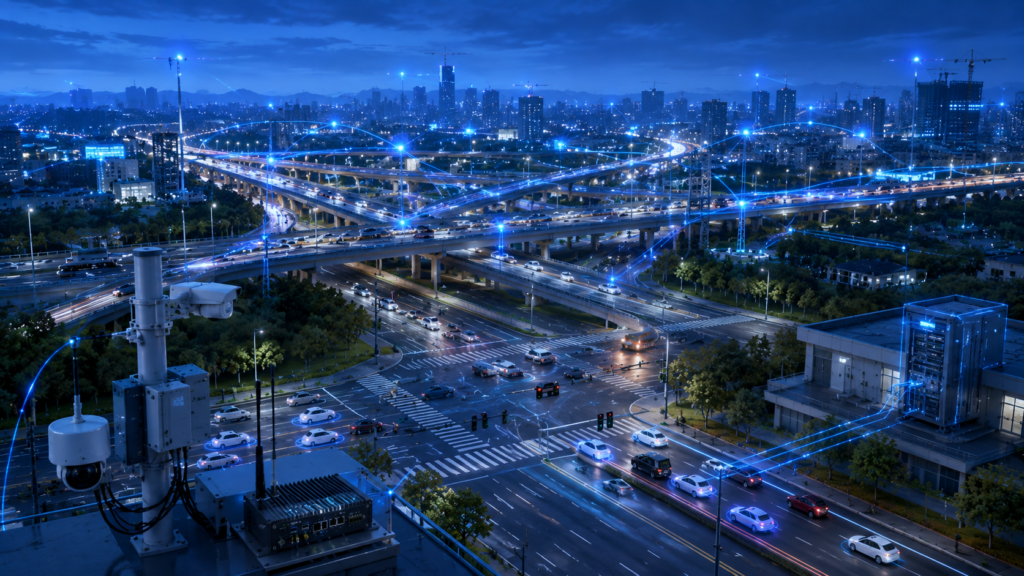
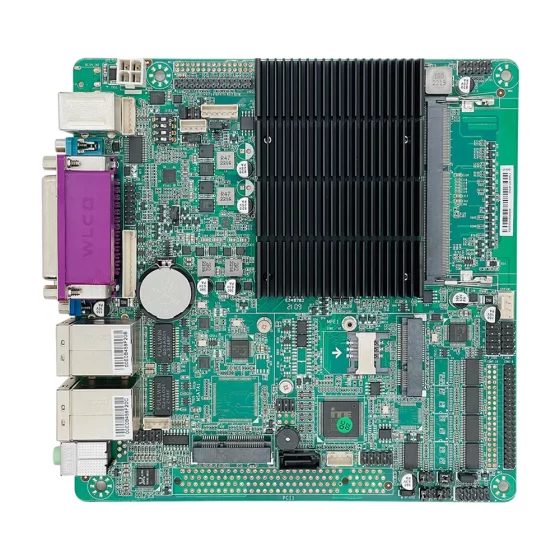
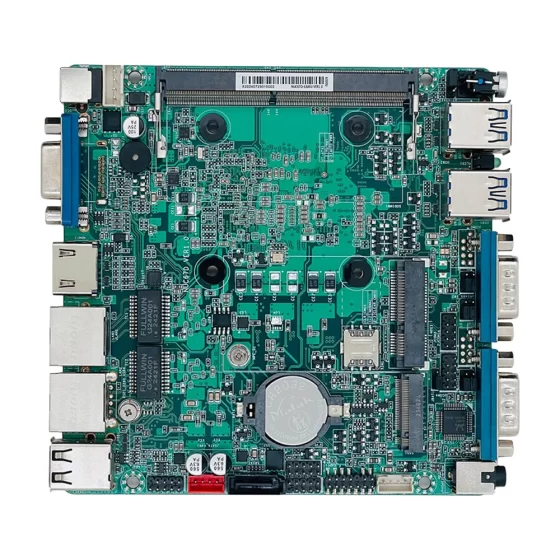
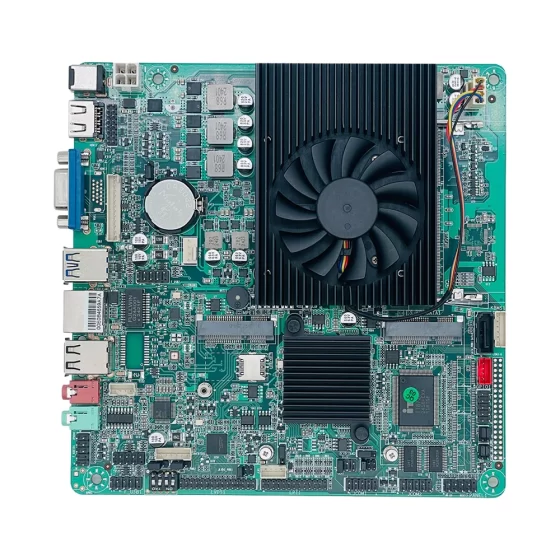
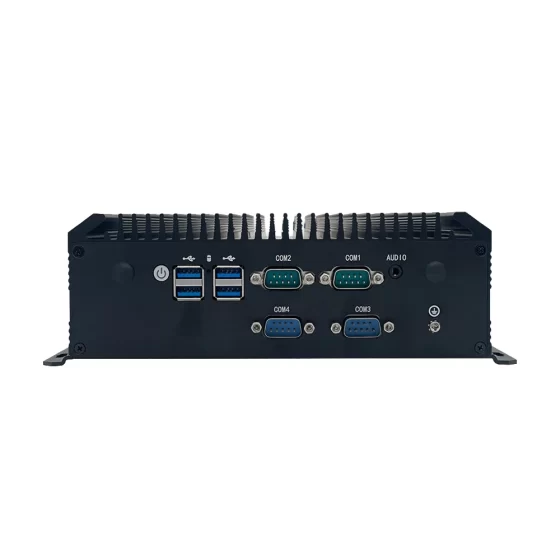
Edge computing platform enabling real-time traffic monitoring, 车辆检测, 以及智能交通管理.
行业概况
Traffic congestion, road safety concerns, environmental sustainability initiatives, and increasing urbanization are driving the adoption of intelligent transportation technologies worldwide.
Transportation authorities and municipalities increasingly rely on advanced monitoring systems to improve visibility across transportation networks and optimize traffic operations.
Modern traffic monitoring environments typically include:
- Roadside cameras
- ANPR systems
- Traffic sensors
- Radar detection systems
- 可变信息标志
- 交通信号控制器
- Highway monitoring systems
- Toll collection systems
- 智能十字路口
- Connected vehicle infrastructure
These systems continuously generate large volumes of data that must be processed in real time to support transportation operations.
Traditional cloud-only architectures present several challenges:
- High network latency
- Increased bandwidth costs
- 连接依赖性
- Limited scalability
- Delayed incident response
因此, edge computing has become a critical component of modern traffic management systems.
Traffic Monitoring Edge Platforms enable local processing of transportation data, allowing agencies to perform:
- Real-time video analytics
- 车辆检测
- Traffic counting
- Incident identification
- 交通流量分析
- Speed monitoring
- Lane occupancy measurement
- AI-powered transportation analytics
Industrial computers deployed at the edge provide the processing power required to execute these workloads while maintaining reliable operation in harsh roadside environments.
The growth of smart cities, connected infrastructure, and intelligent transportation systems is expected to further increase demand for traffic monitoring edge platforms across global transportation networks.
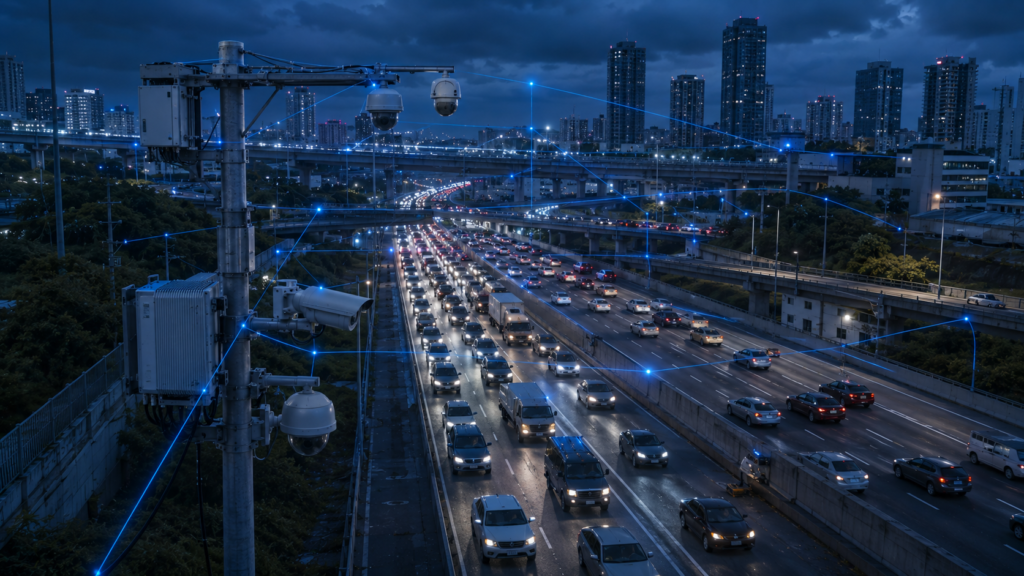
Modern traffic monitoring systems must manage high traffic volumes, multiple camera feeds, and real-time transportation analytics.
主要挑战
Real-Time Traffic Analysis
Traffic management systems must process information immediately to support operational decision-making.
Applications requiring low-latency processing include:
- 事件检测
- Congestion monitoring
- 交通信号优化
- Emergency response coordination
- Wrong-way vehicle detection
Cloud-only architectures may introduce delays that impact operational effectiveness.
Edge platforms help reduce latency by processing data locally.
Large Volumes of Video Data
Modern transportation systems utilize large numbers of high-resolution cameras.
Video streams generate substantial bandwidth requirements.
挑战包括:
- Continuous recording
- 实时分析
- 多相机处理
- 长期储存
- Network utilization
Traffic monitoring edge platforms reduce bandwidth consumption by processing data before transmission.
Harsh Transportation Environments
Roadside deployments are exposed to:
- 极端温度
- 灰尘
- 湿度
- 振动
- 电噪声
- Weather conditions
Computing platforms must withstand these environmental challenges while maintaining continuous operation.
Distributed Infrastructure Management
Transportation systems often span:
- Cities
- Highways
- Tunnels
- Bridges
- Transit corridors
Managing distributed infrastructure requires reliable remote monitoring and centralized visibility.
网络安全要求
Transportation infrastructure is increasingly connected.
Systems must protect:
- Traffic data
- Operational systems
- Video feeds
- Communication networks
- Public infrastructure
Cybersecurity has become an essential component of transportation deployments.
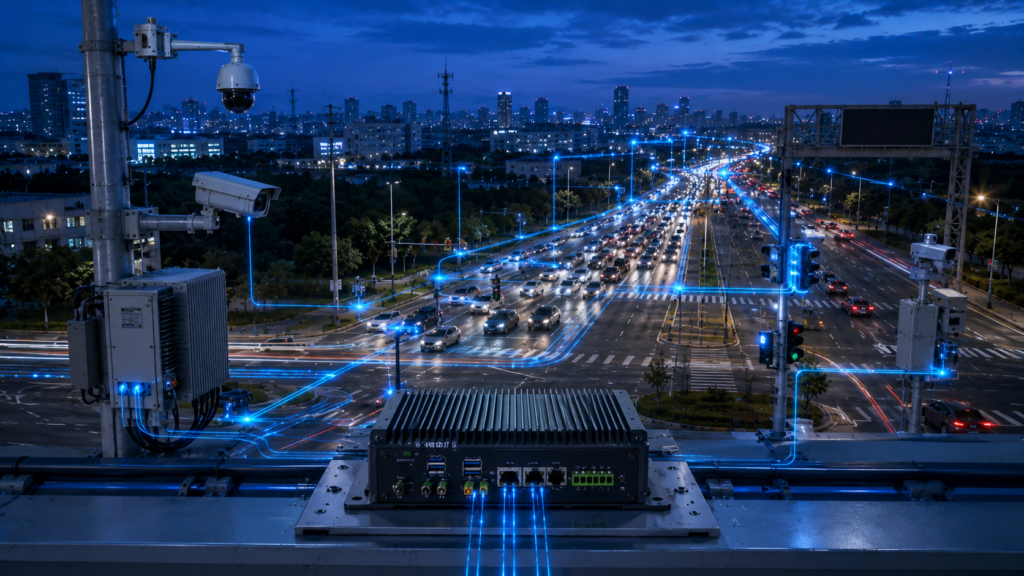
Industrial computers enable real-time traffic monitoring, 边缘分析, and intelligent transportation system connectivity.
解决方案架构
A modern Traffic Monitoring Edge Platform typically consists of multiple interconnected layers.
层 1: 数据采集层
场层包括:
- 交通摄像头
- 自动车牌识别相机
- 雷达传感器
- Traffic detectors
- 环境传感器
- Signal controllers
These devices collect operational traffic information.
层 2: 连接层
通信基础设施可能包括:
- 工业以太网
- 光纤网络
- 无线通讯
- 蜂窝网络
- Dedicated transportation networks
This layer enables secure and reliable data transmission.
层 3: 边缘计算层
The traffic monitoring edge platform serves as the local processing engine.
功能包括:
- 视频分析
- 人工智能推理
- 车辆检测
- 事件处理
- 数据聚合
- 本地存储
- 协议转换
This layer enables real-time decision-making at the network edge.
层 4: 应用层
交通运输应用包括:
- 交通管理系统
- 视频管理系统
- Incident detection platforms
- ANPR software
- Traffic analytics engines
- Smart intersection systems
The edge platform hosts and supports these applications.
层 5: 中央管理层
企业集成支持:
- Traffic control centers
- 智慧城市平台
- 云分析
- 报告系统
- Transportation dashboards
This layer provides centralized visibility and operational oversight.
主要特点
工业级可靠性
Traffic monitoring systems operate continuously.
工业计算机提供:
- 坚固的结构
- 工业级组件
- 长期可靠性
- 持续运营支持
- Transportation-grade durability
These features help ensure system availability.
无风扇设计
Many transportation deployments utilize fanless systems.
好处包括:
- 减少维护
- 提高可靠性
- 更好的防尘性能
- 静音运行
Fanless designs are particularly valuable for roadside cabinets.
边缘人工智能处理
Modern traffic systems increasingly utilize artificial intelligence.
应用包括:
- 车辆分类
- 事件检测
- 交通流量分析
- 行人检测
- 车牌识别
Edge platforms support AI workloads locally.
高速网络
Transportation systems require extensive connectivity.
常见的接口包括:
- 千兆位以太网
- Fiber connectivity
- 蜂窝通信
- 无线网络
- 串行通讯
These capabilities simplify integration with transportation infrastructure.
Wide Temperature Support
Transportation deployments often operate in outdoor environments.
Industrial computers support operation across wide temperature ranges to ensure reliable performance.
Flexible Expansion Options
Edge platforms may support:
- 额外的网络
- 存储扩展
- 人工智能加速器
- Communication modules
This flexibility supports evolving transportation requirements.
产品生命周期长
Transportation infrastructure often remains operational for many years.
产业平台提供:
- 长期供货
- 稳定的硬件平台
- 扩展支持计划
These characteristics reduce lifecycle management complexity.
部署场景
高速公路交通监控
Traffic monitoring edge platforms support:
- 车辆计数
- 交通流量分析
- Congestion monitoring
- Speed enforcement
- 事件检测
These capabilities improve highway management.
智能交叉口
Edge computing enables:
- Adaptive traffic signals
- 车辆检测
- Pedestrian monitoring
- Intersection analytics
- 流量优化
Smart intersections improve urban mobility.
Toll Collection Systems
Traffic monitoring platforms support:
- 车辆识别
- ANPR processing
- Transaction management
- 流量分析
These functions improve tolling efficiency.
Tunnel Monitoring
Transportation authorities utilize edge platforms for:
- 事件检测
- Environmental monitoring
- 交通管理
- Safety analytics
Reliable monitoring improves tunnel safety.
智慧城市交通
Edge platforms integrate with:
- Smart city systems
- Urban mobility platforms
- Public transportation infrastructure
- Connected vehicle environments
These deployments support intelligent transportation ecosystems.
Transportation Operations Centers
Industrial computers support centralized transportation management by providing local processing, 分析, and data aggregation capabilities.
商业效益
Faster Incident Response
Real-time analytics help transportation authorities identify incidents more quickly and coordinate response activities.
Improved Traffic Flow
Traffic monitoring data enables optimization of signal timing, routing strategies, and congestion management programs.
Reduced Network Bandwidth
Local processing minimizes the amount of data transmitted to centralized systems.
Enhanced Public Safety
Traffic monitoring platforms support accident detection, emergency response coordination, and roadway safety initiatives.
降低运营成本
Automation and edge analytics reduce manual monitoring requirements and improve operational efficiency.
Scalable Transportation Infrastructure
Edge platforms provide a flexible foundation for future ITS and smart city initiatives.
为什么选择CoreIPC
CoreIPC provides industrial computing platforms designed for intelligent transportation systems, 交通监控, roadside deployments, 和智慧城市基础设施. Our industrial computers and embedded computers deliver reliable performance, 无风扇运行, industrial-grade durability, 丰富的连接性, and long lifecycle support for transportation applications. Whether deployed in traffic monitoring systems, smart intersections, transportation control cabinets, or intelligent roadway infrastructure, CoreIPC solutions provide the computing foundation required for modern traffic management and edge analytics environments.
常见问题解答
1. What is a Traffic Monitoring Edge Platform?
A Traffic Monitoring Edge Platform is a computing system deployed near transportation infrastructure that processes traffic data locally. It supports video analytics, 车辆检测, 交通监控, and intelligent transportation applications while reducing latency and bandwidth requirements.
2. Why is edge computing important for traffic monitoring?
Edge computing enables real-time processing of transportation data close to the source. This reduces network latency, improves incident response times, minimizes bandwidth usage, and enhances overall transportation system reliability.
3. What devices connect to a traffic monitoring edge platform?
Typical devices include traffic cameras, 自动车牌识别相机, radar sensors, traffic detectors, 环境传感器, traffic signal controllers, and roadside communication equipment.
4. Can traffic monitoring edge platforms support AI applications?
是的. Modern platforms support AI-powered vehicle classification, 事件检测, pedestrian monitoring, 流量分析, and license plate recognition applications.
5. Why are industrial computers used in transportation environments?
Industrial computers provide rugged construction, 宽温支持, 长生命周期可用性, and reliable operation in harsh roadside and transportation environments.
6. Are fanless systems suitable for roadside deployments?
是的. 无风扇系统减少维护需求, 提高可靠性, and provide better resistance to dust and environmental contaminants.
7. How do edge platforms reduce bandwidth requirements?
By processing data locally and transmitting only relevant information, edge platforms reduce the amount of raw video and sensor data sent to centralized systems.
8. Can these platforms integrate with traffic management systems?
是的. Traffic monitoring edge platforms commonly integrate with traffic management systems, 视频管理软件, 智慧城市平台, and transportation control centers.
9. What transportation applications use edge computing?
Applications include highway monitoring, smart intersections, tolling systems, 隧道监控, 流量分析, 事件检测, and connected transportation infrastructure.
10. What should be considered when selecting a traffic monitoring edge platform?
重要的考虑因素包括处理性能, 环境规格, networking capabilities, AI support, 扩展选项, 生命周期可用性, 和软件兼容性.
结论
一个 流量监控边缘平台 provides the intelligence, processing power, and reliability required for modern transportation infrastructure. 通过启用实时分析, AI-powered traffic monitoring, 本地数据处理, 以及智能交通管理, edge platforms help transportation authorities improve safety, 效率, 和运营可见性. As smart cities and intelligent transportation systems continue to expand, industrial computers and embedded computers will remain essential technologies supporting the future of connected mobility.
联系我们
Looking for a reliable Traffic Monitoring Edge Platform for intelligent transportation applications?
CoreIPC提供工业计算机, 嵌入式计算机, 工业主板, and customized computing solutions designed for traffic monitoring, 智能交通系统, 智慧城市基础设施, and edge AI deployments.
Contact our engineering team to discuss your project requirements and discover the ideal computing platform for your transportation application.