销售查询
|
获取报价


Vehicle-Mounted Industrial Computer for Smart Transportation Systems | 核心IPC

Vehicle-Mounted Industrial Computer for Smart Transportation Systems

Vehicle-Mounted Industrial Computer for Smart Transportation Systems

执行摘要

The rapid development of intelligent transportation infrastructure is transforming how vehicles, road networks, transit systems, and logistics fleets operate. Modern transportation environments increasingly rely on real-time data collection, 边缘计算, AI analytics, vehicle connectivity, and intelligent decision-making to improve safety, 效率, 和运营可见性.

A Vehicle-Mounted Industrial Computer serves as the computing core inside buses, trains, trucks, emergency vehicles, mining vehicles, autonomous mobile platforms, and intelligent transportation systems. These rugged computing platforms are specifically designed to withstand vibration, shock, 温度波动, unstable power conditions, and demanding outdoor environments while delivering reliable computing performance.

By integrating GPS positioning, wireless communications, AI-powered video analytics, fleet management software, vehicle diagnostics, and transportation control systems, vehicle-mounted industrial computers enable intelligent transportation operations and support the growing demands of Smart Transportation initiatives.

This article explores the role of vehicle-mounted industrial computers in modern transportation systems, deployment architectures, key technical requirements, industry challenges, and the business benefits they provide across a wide range of transportation applications.


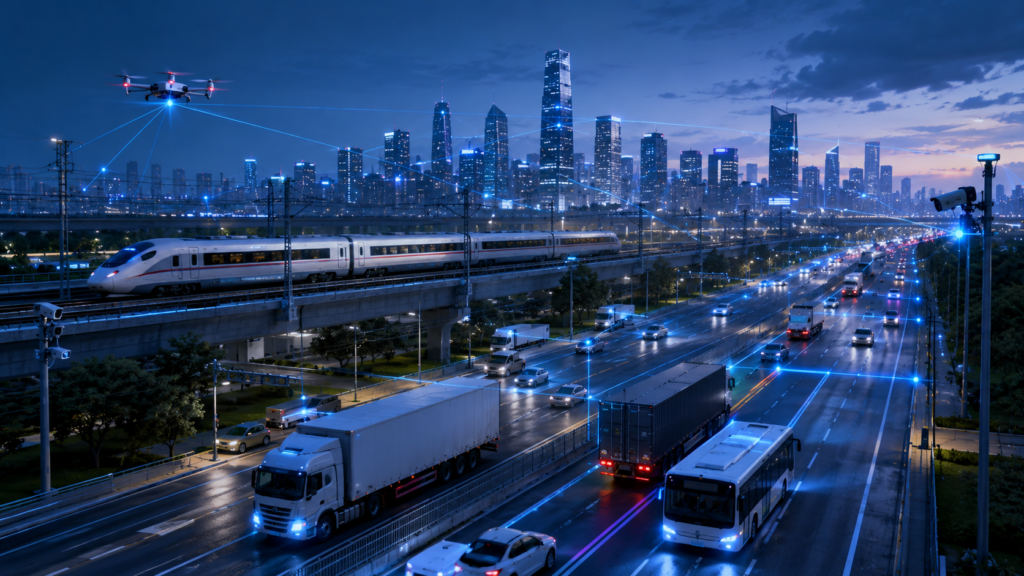
Smart transportation ecosystem connecting city buses logistics trucks railway systems traffic monitoring infrastructure and connected vehicles

Connected transportation infrastructure integrating public transit, logistics fleets, railway networks, and intelligent traffic management systems.

行业概况

Transportation systems worldwide are undergoing significant digital transformation driven by urbanization, smart city initiatives, autonomous technologies, and increasing demands for operational efficiency.

Modern transportation environments now generate massive amounts of operational data from:

  • Vehicle sensors
  • GPS systems
  • Onboard diagnostics
  • Surveillance cameras
  • 乘客信息系统
  • Fleet management platforms
  • Traffic monitoring infrastructure
  • Roadside equipment
  • Wireless communication networks

To process this information effectively, transportation operators require computing platforms capable of operating directly within vehicles and transportation infrastructure.

Vehicle-mounted industrial computers have become a critical component of:

  • Public transportation systems
  • Fleet management solutions
  • 智能交通系统 (它是)
  • Railway operations
  • Logistics and freight transportation
  • Emergency response vehicles
  • Mining transportation fleets
  • Airport ground support vehicles
  • Autonomous transportation platforms

Unlike conventional commercial computers, these industrial-grade platforms are designed specifically for mobile deployment environments where reliability, durability, and continuous operation are essential.

As transportation systems become increasingly connected and data-driven, vehicle-mounted industrial computers serve as the foundation for edge computing and intelligent transportation applications.


Heavy-duty transportation vehicle operating in extreme weather conditions with roadside communication infrastructure and rugged transportation environment

Vehicle-mounted computing systems must operate reliably under vibration, harsh weather, unstable power conditions, and demanding transportation environments.

主要挑战

Harsh Mobile Operating Environments

Transportation vehicles are constantly exposed to challenging operating conditions including:

  • Continuous vibration
  • Mechanical shock
  • Road impacts
  • 粉尘暴露
  • 湿度
  • 极端温度

Conventional computing hardware often experiences reduced reliability in such environments.

Vehicle-mounted industrial computers must be engineered to maintain stable operation under demanding conditions.

Unstable Power Conditions

Vehicle electrical systems can experience:

  • Voltage fluctuations
  • Power surges
  • Engine startup interruptions
  • Battery instability
  • 电磁干扰

Industrial transportation computers require intelligent power protection mechanisms and wide voltage input support to ensure uninterrupted operation.

Real-Time Data Processing Requirements

Modern transportation systems rely on:

  • Real-time location tracking
  • Driver monitoring
  • Video surveillance
  • 车辆诊断
  • Route optimization
  • Traffic condition analysis

These applications require low-latency edge computing capabilities capable of processing data directly inside vehicles.

Connectivity Challenges

Transportation vehicles often operate across diverse geographic regions where network conditions vary significantly.

Systems must support:

  • 4G LTE
  • 5G
  • 无线上网
  • 全球定位系统
  • GNSS
  • Private transportation networks

Maintaining reliable communications across mobile environments remains a critical challenge.

网络安全问题

Connected transportation systems face growing cybersecurity threats.

Potential risks include:

  • Unauthorized system access
  • Data breaches
  • Vehicle communication interception
  • Fleet management compromise
  • Operational disruptions

Transportation computing platforms must support secure communication architectures and cybersecurity best practices.

Long Lifecycle Requirements

Transportation infrastructure investments typically operate for many years.

Organizations require computing platforms that provide:

  • 长期供货
  • 稳定的硬件平台
  • 一致的软件支持
  • Upgrade flexibility

Industrial-grade systems are designed to meet these extended lifecycle expectations.


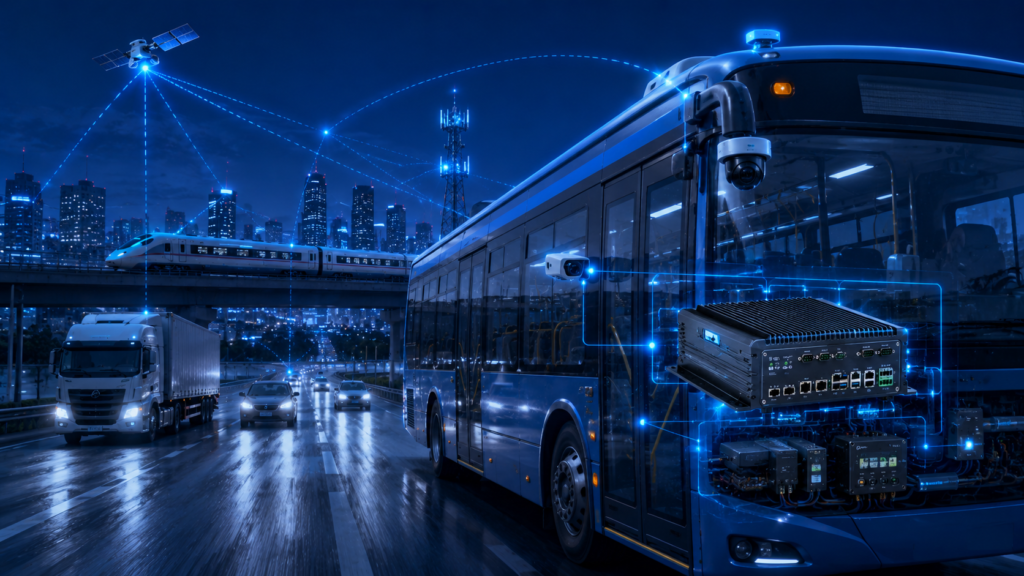
Vehicle-mounted industrial computer integrated with GPS modules cameras sensors CAN Bus systems wireless communications and fleet management infrastructure

Vehicle-mounted industrial computer enabling real-time connectivity, 边缘计算, and fleet management in smart transportation systems.

解决方案架构

A modern Vehicle-Mounted Industrial Computer deployment typically consists of multiple integrated layers.

Vehicle Data Acquisition Layer

This layer collects operational data from:

  • Engine control systems
  • CAN Bus networks
  • OBD systems
  • GPS modules
  • 环境传感器
  • Fuel monitoring systems
  • Driver behavior monitoring devices
  • Vehicle diagnostics systems

These data sources provide real-time operational visibility.

通讯层

Vehicle-mounted computers communicate through:

  • 4G LTE
  • 5G
  • 无线上网
  • 蓝牙
  • 以太网
  • CAN总线
  • RS232
  • RS485

Multiple communication options ensure reliable connectivity across transportation environments.

边缘计算层

The vehicle-mounted industrial computer serves as the edge computing platform.

Key functions include:

  • 数据采集
  • 本地分析
  • 人工智能推理
  • 视频处理
  • 事件检测
  • Route optimization
  • Driver monitoring
  • Data buffering

Edge processing reduces latency and minimizes network dependency.

Fleet Management Layer

Fleet management platforms provide:

  • Vehicle tracking
  • Route management
  • Driver performance monitoring
  • 维护计划
  • Fuel consumption analysis
  • 运营报告

Vehicle-mounted computers continuously exchange information with centralized management systems.

Transportation Operations Layer

Transportation operators gain access to:

  • Fleet dashboards
  • Operational analytics
  • Vehicle status monitoring
  • 乘客信息系统
  • Incident management tools
  • Predictive maintenance platforms

These capabilities improve transportation efficiency and service quality.


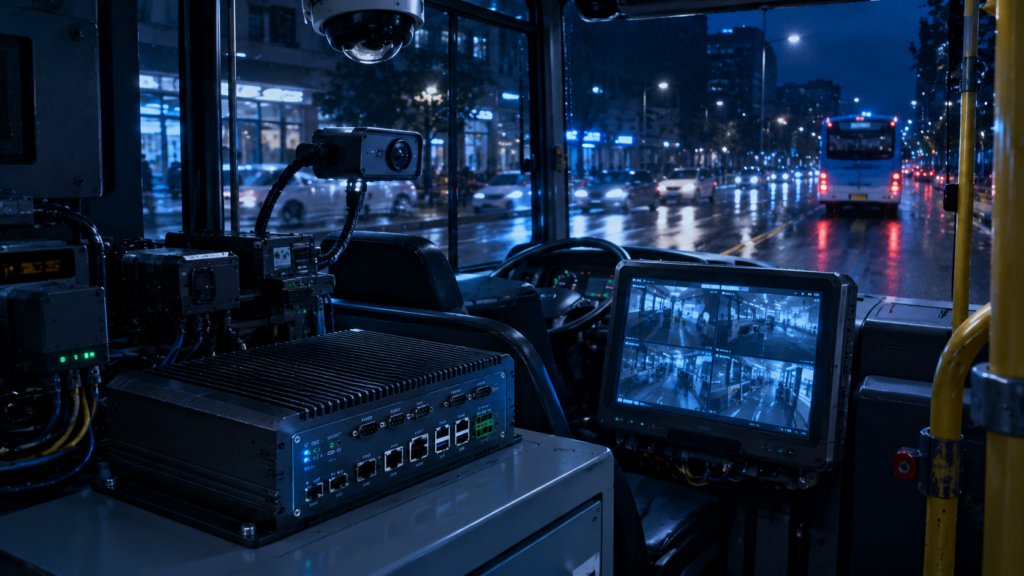
Vehicle-mounted industrial computer performing real-time vehicle monitoring AI-powered transportation analytics and edge computing inside a modern transit vehicle

Vehicle-mounted industrial computer enabling real-time monitoring, AI analytics, and edge computing for intelligent transportation systems.

主要特点

Rugged Industrial Design

Vehicle-mounted industrial computers are designed for transportation environments requiring:

  • Shock resistance
  • Vibration resistance
  • 无风扇运行
  • Industrial-grade construction
  • 长期可靠性

These characteristics ensure dependable performance in mobile applications.

Wide Operating Temperature Support

Transportation deployments frequently encounter:

  • Hot summer environments
  • Cold winter conditions
  • Outdoor operation
  • Engine compartment heat

Industrial platforms commonly support extended temperature ranges to ensure stable operation.

宽电压输入

Vehicle power systems often operate under varying electrical conditions.

Industrial transportation computers typically support:

  • 9V–36V DC
  • 12V–24V DC
  • 24V–48V DC

Wide input ranges improve compatibility with diverse vehicle platforms.

Integrated Wireless Connectivity

Modern transportation applications depend on continuous connectivity.

Common options include:

  • 全球定位系统
  • GNSS
  • 4G LTE
  • 5G
  • 无线上网
  • 蓝牙

These technologies enable real-time communication and location services.

Rich Expansion Capabilities

Vehicle-mounted systems frequently integrate:

  • 相机
  • 传感器
  • Displays
  • Communication modules
  • Diagnostic equipment

Industrial computers provide flexible expansion interfaces to support these requirements.

Edge AI Processing

Transportation operators increasingly deploy AI-powered applications including:

  • Driver monitoring
  • 乘客计数
  • 流量分析
  • Vehicle inspection
  • 视频分析

Vehicle-mounted industrial computers provide the processing capabilities needed for these workloads.


部署场景

Public Transportation Systems

Buses and transit vehicles use vehicle-mounted industrial computers for:

  • 乘客信息系统
  • Automatic vehicle location
  • Fleet tracking
  • 安全监控
  • 收费系统

These capabilities improve operational efficiency and passenger experience.

Logistics and Fleet Management

Transportation fleets deploy industrial computers to support:

  • Vehicle tracking
  • Route optimization
  • Fuel management
  • Driver behavior monitoring
  • Cargo monitoring

Real-time visibility improves fleet utilization and operational control.

Railway Transportation

Rail operators use vehicle-mounted computing systems for:

  • Train diagnostics
  • Video surveillance
  • 旅客信息
  • Communications management
  • Operational monitoring

Industrial reliability is essential for railway environments.

Emergency Response Vehicles

Police, ambulance, and fire service vehicles require onboard computing platforms capable of:

  • Dispatch integration
  • Incident reporting
  • GPS navigation
  • Video recording
  • Secure communications

Vehicle-mounted industrial computers provide mission-critical support.

Mining and Heavy Equipment

Mining vehicles operate in extremely demanding environments.

应用包括:

  • 设备监控
  • Autonomous operations
  • 车队协调
  • 安全监控
  • Maintenance diagnostics

Industrial-grade computing platforms provide the durability required for these deployments.

Smart City Transportation

Smart city initiatives increasingly rely on intelligent transportation systems integrating:

  • 联网车辆
  • Traffic management systems
  • Roadside infrastructure
  • 实时分析
  • Vehicle-to-infrastructure communication

Vehicle-mounted industrial computers enable these advanced transportation capabilities.


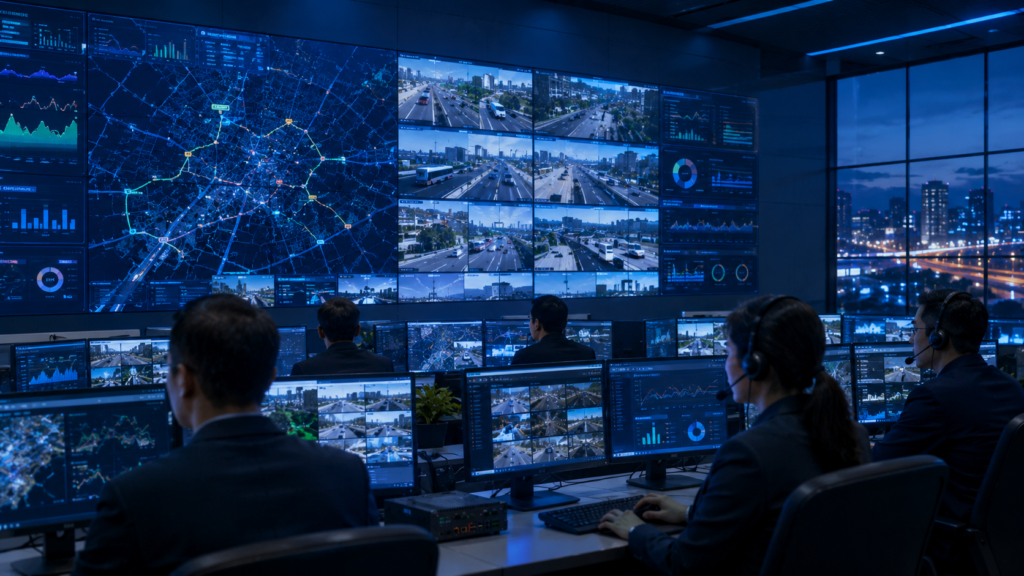
Modern transportation operations center utilizing intelligent fleet management systems vehicle-mounted industrial computers and smart transportation infrastructure

Transportation operations center improving fleet visibility, transportation safety, route optimization, and operational efficiency through intelligent transportation technologies.

商业效益

提高运营效率

Real-time data collection and analytics help transportation operators optimize routes, improve vehicle utilization, and reduce operational inefficiencies.

增强安全性

Advanced monitoring capabilities support:

  • Driver behavior analysis
  • 车辆诊断
  • 事件检测
  • Video surveillance

These features contribute to safer transportation operations.

减少停机时间

Continuous monitoring enables predictive maintenance strategies that reduce unexpected failures and improve fleet availability.

Better Fleet Visibility

Transportation managers gain real-time access to:

  • Vehicle locations
  • Operational status
  • Fuel consumption
  • Driver performance
  • Maintenance conditions

This visibility supports better decision-making.

Lower Operating Costs

Vehicle-mounted computing solutions help reduce costs through:

  • Improved route planning
  • Reduced fuel consumption
  • Lower maintenance expenses
  • Increased fleet productivity

Future-Ready Infrastructure

Industrial computing platforms support future transportation technologies including:

  • Autonomous vehicles
  • AI analytics
  • Smart city integration
  • Connected transportation ecosystems

Organizations can adapt as transportation technologies evolve.


为什么选择CoreIPC

CoreIPC provides industrial computing solutions designed for demanding transportation environments. Our portfolio includes fanless industrial PCs, 嵌入式计算机, 迷你 ITX 主板, Edge AI platforms, and customized vehicle-mounted computing solutions engineered for vibration resistance, wide temperature operation, intelligent transportation systems, and mobile edge computing applications. With flexible customization capabilities, 产品生命周期长, 和工业级可靠性, CoreIPC helps transportation operators, 系统集成商, and smart city solution providers build dependable and scalable transportation computing infrastructures.


常见问题解答

1. What is a Vehicle-Mounted Industrial Computer?

A Vehicle-Mounted Industrial Computer is a rugged computing platform specifically designed for installation inside transportation vehicles where vibration, 温度波动, power instability, and demanding operating conditions require industrial-grade reliability.

2. What industries use vehicle-mounted industrial computers?

Common industries include public transportation, 后勤, railways, emergency services, mining, construction, smart city infrastructure, and intelligent transportation systems.

3. Why are fanless designs important in transportation applications?

无风扇系统减少维护需求, 提高可靠性, eliminate dust intake, and enhance long-term stability in harsh vehicle environments.

4. Can vehicle-mounted computers support 5G connectivity?

是的. Many modern vehicle-mounted industrial computers support 5G modules for high-speed communications, real-time data transmission, and intelligent transportation applications.

5. What communication interfaces are commonly required?

Common interfaces include CAN Bus, 以太网, RS232, RS485, USB, 无线上网, 蓝牙, 全球定位系统, GNSS, and cellular communications.

6. Are these systems suitable for outdoor transportation environments?

是的. Industrial-grade vehicle computers are designed to withstand vibration, temperature extremes, 湿度, and challenging outdoor conditions.

7. How do vehicle-mounted industrial computers support fleet management?

They collect vehicle data, transmit operational information, provide GPS tracking, support diagnostics, and enable real-time communication with fleet management platforms.

8. Can these systems support AI applications?

是的. Many vehicle-mounted computers support Edge AI workloads such as driver monitoring, 视频分析, passenger counting, and intelligent transportation analysis.

9. What is the benefit of edge computing in transportation?

Edge computing reduces latency, improves response times, minimizes network dependency, and enables real-time processing directly inside vehicles.

10. How long do industrial transportation computers typically remain available?

Industrial computing platforms often provide significantly longer product lifecycles than consumer hardware, supporting transportation projects that require long-term deployment stability.


结论

A Vehicle-Mounted Industrial Computer is a critical enabling technology for Smart Transportation systems. By providing ruggedized edge computing, reliable communications, 实时分析, and intelligent data processing capabilities, these platforms help transportation operators improve safety, 效率, visibility, and operational performance.

As transportation networks continue to become more connected and intelligent, vehicle-mounted industrial computers will remain essential components supporting the next generation of intelligent transportation infrastructure.


联系我们

Looking for reliable vehicle-mounted computing solutions for transportation, fleet management, railway, 后勤, or intelligent transportation projects?

CoreIPC提供工业计算机, 嵌入式系统, Edge AI platforms, and customized transportation computing solutions designed for demanding mobile environments.

Contact our engineering team today to discuss your Smart Transportation project requirements.

留言


    安全检查: