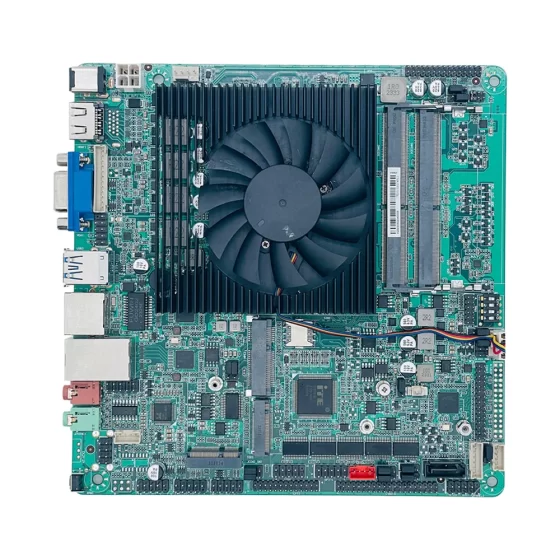
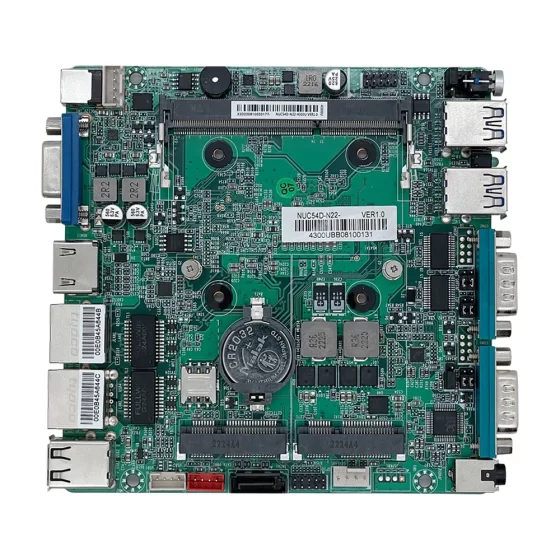
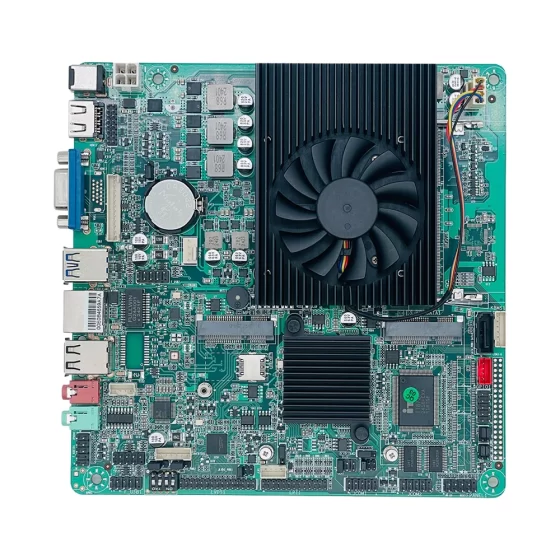
Soluciones de informática industrial CoreIPC

PC industrial para sistemas de monitoreo SCADA
Resumen ejecutivo
Un PC industrial para sistemas de monitoreo SCADA serves as the computing foundation of modern industrial monitoring and supervisory control environments. As industrial facilities continue to embrace digital transformation, Internet industrial de las cosas (IIoT), computación de borde, and data-driven operations, Supervisory Control and Data Acquisition (SCADA) systems have become increasingly important for real-time visibility, operational control, y toma de decisiones.
SCADA platforms collect data from PLCs, sensores, remote terminal units (RTU), redes industriales, and field devices to provide operators with centralized monitoring and management capabilities. Sin embargo, the effectiveness of a SCADA system largely depends on the reliability and performance of the underlying computing hardware.
Industrial PCs and embedded computers provide the processing power, conectividad, fiabilidad, and long-term stability required for SCADA applications operating in demanding industrial environments. These systems support data acquisition, visualización, historical data storage, gestión de alarmas, comunicación industrial, and enterprise integration while maintaining continuous operation under harsh conditions.
This article explores the role of industrial PCs in SCADA monitoring systems, examines common deployment challenges, discusses solution architecture, and highlights the operational benefits of deploying industrial-grade computing platforms in modern industrial environments.

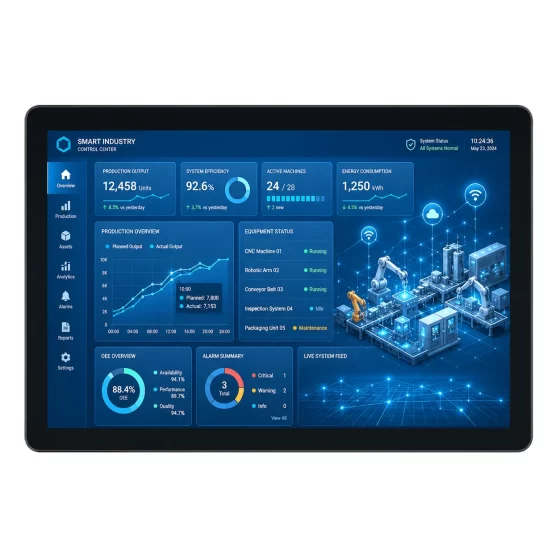
SCADA systems provide centralized visibility into industrial operations by connecting field devices, sistemas de control, and monitoring platforms across large-scale facilities.
Descripción general de la industria
SCADA systems have become one of the most important technologies in industrial automation, infrastructure management, and process control. Originally developed to monitor remote industrial assets and production processes, SCADA platforms have evolved into comprehensive operational intelligence systems that provide real-time visibility across manufacturing facilities, utilidades, redes de transporte, energy infrastructure, and critical industrial operations.
Modern SCADA systems are widely deployed in:
- Plantas de fabricación
- Instalaciones de generación de energía
- Water treatment plants
- Operaciones de petróleo y gas
- Infraestructura de transporte
- Building automation systems
- Renewable energy projects
- Smart city deployments
- Logistics facilities
- Industrial utilities
Today’s industrial organizations require more than basic process visualization. They increasingly depend on SCADA platforms for:
- Monitoreo en tiempo real
- Análisis de datos históricos
- Gestión de alarmas
- Informes de producción
- Diagnóstico remoto
- Mantenimiento predictivo
- Optimización energética
- Gestión de activos
- Cumplimiento normativo
- Enterprise integration
As operational environments become more connected, SCADA systems must process growing volumes of data from:
- Controladores PLC
- Sensores industriales
- Sistemas de visión artificial
- Medidores inteligentes
- Dispositivos industriales de IoT
- Equipo remoto
Industrial computers provide the performance and reliability necessary to support these expanding requirements while ensuring uninterrupted system operation.

Modern SCADA systems must integrate distributed industrial assets, sistemas de control, redes de comunicacion, and monitoring platforms to achieve reliable operational visibility.
Desafíos clave
Requisitos de operación continua
Many SCADA systems operate continuously.
Facilities often require:
- 24/7 operación
- Monitoreo en tiempo real
- High availability
- Tiempo de inactividad mínimo
Any interruption in SCADA functionality may impact production efficiency, operational safety, and asset management.
Entornos industriales hostiles
SCADA infrastructure is frequently deployed in challenging conditions, incluido:
- Polvo
- Vibración
- Humedad
- Interferencia electromagnética
- Altas temperaturas
- Remote outdoor locations
Commercial computers are generally not designed for these environments.
Increasing Data Volumes
Modern industrial facilities generate substantial amounts of operational data.
SCADA systems must process information from:
- Thousands of sensors
- Multiple PLCs
- Distributed control systems
- Remote assets
- Dispositivos industriales de IoT
This requires significant computing resources and reliable storage capabilities.
Multi-Protocol Integration
Las instalaciones industriales a menudo contienen equipos de múltiples proveedores..
A typical SCADA deployment may involve:
- PLC Allen-Bradley
- Siemens PLCs
- PLC Mitsubishi
- Modbus devices
- BACnet systems
- OPC UA servers
- MQTT gateways
Supporting multiple communication protocols can be complex.
Preocupaciones de ciberseguridad
Industrial control systems are increasingly connected to enterprise networks and cloud platforms.
Las organizaciones deben proteger:
- Datos operativos
- Industrial assets
- Control infrastructure
- Critical operations
Industrial PCs used in SCADA environments must support secure communication and network segmentation strategies.

Industrial PCs connect SCADA platforms, Sistemas PLC, field devices, and cloud infrastructure to enable real-time monitoring and operational intelligence.
Arquitectura de la solución
A modern SCADA monitoring system consists of multiple interconnected layers.
Capa 1: Dispositivos de campo
La capa de campo incluye:
- Sensores
- Actuadores
- Metros
- Unidades
- Pumps
- Valves
- Switchgear
- Industrial instruments
These devices collect operational data and execute control commands.
Capa 2: Capa de control
The control layer consists of:
- PLC
- RTU
- Distributed control systems
- Edge controllers
These systems perform local control functions and gather data from field devices.
Capa 3: Capa de PC industrial
The industrial PC serves as the SCADA computing platform.
Sus responsabilidades incluyen:
- Adquisición de datos
- Conversión de protocolo
- Gestión de alarmas
- Visualization
- Almacenamiento de datos históricos
- Informes
- Analytics
- Computación de borde
Los protocolos de comunicación pueden incluir:
- Modbus TCP
- Modbus RTU
- OPC-UA
- MQTT
- Ethernet/IP
- PROFINET
- BACnet
Capa 4: SCADA Software Layer
The SCADA software environment provides:
- HMI interfaces
- Dashboards
- Alarm systems
- Análisis de tendencias
- Historical databases
- Registro de eventos
The industrial PC hosts and supports these applications.
Capa 5: Capa empresarial y de nube
Soportes de integración empresarial:
- sistemas ERP
- plataformas MES
- Análisis de la nube
- Mantenimiento predictivo
- Multi-site monitoring
Industrial PCs act as secure gateways between operational systems and enterprise applications.
Características clave
Confiabilidad de grado industrial
SCADA systems require dependable computing hardware.
Las PC industriales proporcionan:
- Operación sin ventilador
- Construcción robusta
- Almacenamiento de estado sólido
- Estabilidad a largo plazo
- Certificaciones industriales
These characteristics improve reliability and system availability.
Diseño sin ventilador
Fanless industrial computers eliminate moving parts that commonly fail in harsh environments.
Los beneficios incluyen:
- Mantenimiento reducido
- Fiabilidad mejorada
- Funcionamiento silencioso
- Mejor resistencia al polvo
Fanless designs are particularly valuable in remote and unattended SCADA installations.
Operación de temperatura amplia
SCADA deployments often occur in outdoor or industrial environments.
Soporte a computadores industriales:
- Wide operating temperatures
- Estabilidad térmica
- Operación continua
This ensures dependable performance in demanding conditions.
Interfaces de comunicación flexibles
Industrial PCs provide extensive connectivity options.
Las interfaces típicas incluyen:
- GigabitEthernet
- Puertos serie
- USB
- RS232
- RS422
- RS485
- Autobús CAN
- E/S digitales
This flexibility supports integration with a wide range of industrial devices.
Capacidad de computación de borde
Industrial PCs increasingly support edge computing workloads.
Los beneficios incluyen:
- Menor latencia
- Tráfico de red reducido
- Tiempos de respuesta más rápidos
- Análisis locales
This improves overall SCADA system performance.
Data Storage and Historian Support
SCADA systems often require long-term data retention.
Soporte a computadores industriales:
- Historical databases
- Registro de datos
- Grabación de eventos
- Informes de producción
Reliable storage capabilities are essential for operational analysis and compliance requirements.
Soporte de ciberseguridad
Industrial PCs can support:
- Segmentación de red
- Aplicaciones de cortafuegos
- Secure communication protocols
- Remote access management
These capabilities strengthen industrial cybersecurity strategies.
Escenarios de implementación
Manufacturing Facilities
Industrial PCs support SCADA monitoring for:
- Líneas de producción
- Equipo de embalaje
- Sistemas robóticos
- Assembly operations
Operators gain real-time visibility into manufacturing performance.
Tratamiento de Aguas y Aguas Residuales
SCADA systems monitor:
- Pumps
- Valves
- Reservoirs
- Water quality sensors
Industrial computers provide reliable operation in demanding utility environments.
Power Generation
Power facilities utilize SCADA systems for:
- Turbine monitoring
- Substation management
- Informes energéticos
- Diagnóstico de equipos
Industrial PCs support continuous monitoring and operational reliability.
Oil and Gas Operations
Industrial computers support remote SCADA monitoring for:
- Pipelines
- Pump stations
- Storage facilities
- Refinery operations
Reliable computing infrastructure is essential for operational safety.
Automatización de edificios
SCADA platforms are increasingly deployed in:
- Commercial buildings
- Data centers
- Hospitals
- Airports
Industrial PCs support centralized facility monitoring and management.
Renewable Energy Projects
Solar and wind energy facilities use SCADA systems to monitor:
- Inversores
- Power generation
- Condiciones ambientales
- Grid performance
Industrial computers provide reliable operation in remote environments.
Beneficios comerciales
Visibilidad operativa mejorada
SCADA systems provide real-time insight into equipment performance and operational status.
Industrial PCs ensure reliable access to this critical information.
Tiempo de inactividad reducido
Continuous monitoring helps identify equipment issues before failures occur.
Organizations can respond proactively and minimize disruptions.
Enhanced Decision-Making
SCADA-generated data supports informed operational and maintenance decisions.
Industrial PCs provide the computing resources required for data analysis and reporting.
Mayor escalabilidad
Industrial computing platforms support future expansion as facilities add equipment, sensores, y aplicaciones de software.
Menor costo total de propiedad
Industrial-grade hardware reduces maintenance requirements and extends deployment lifecycles.
Esto contribuye a reducir los costos operativos generales..
Apoyo a la Transformación Digital
Industrial PCs provide the infrastructure necessary for:
- IoT industrial
- Computación de borde
- Mantenimiento predictivo
- Análisis de IA
- Integración en la nube
These technologies help organizations modernize operations and improve competitiveness.
Por qué CoreIPC
CoreIPC provides industrial computing platforms designed for demanding SCADA monitoring environments. Nuestros ordenadores industriales, computadoras integradas, and industrial motherboards deliver reliable performance, conectividad flexible, largos ciclos de vida del producto, and industrial-grade durability. Whether supporting manufacturing automation, utility infrastructure, gestión de energía, or remote monitoring applications, CoreIPC solutions help organizations deploy stable and scalable SCADA systems with confidence.
Preguntas frecuentes
What is a SCADA industrial PC?
A SCADA industrial PC is a rugged computing platform designed to host SCADA software, collect operational data, manage industrial communications, and provide real-time monitoring in industrial environments.
Why use an industrial PC instead of a commercial PC for SCADA?
Industrial PCs are designed for harsh environments, operación continua, wide temperature ranges, y confiabilidad a largo plazo, making them better suited for industrial applications.
Can industrial PCs host SCADA software directly?
Sí. Industrial PCs commonly host SCADA applications, historian databases, software HMI, alarm management systems, and reporting tools.
¿Qué protocolos de comunicación se admiten comúnmente??
Industrial PCs typically support Modbus TCP, Modbus RTU, OPC-UA, MQTT, Ethernet/IP, PROFINET, BACnet, y otros estándares de comunicación industrial.
Are fanless industrial computers suitable for SCADA systems?
Sí. Fanless systems provide improved reliability, lower maintenance requirements, and better resistance to dust and contamination.
Can industrial PCs support remote SCADA monitoring?
Sí. Industrial computers can support remote access, conectividad en la nube, and distributed monitoring applications.
How do industrial PCs support edge computing?
They process operational data locally, reducing latency and bandwidth usage while enabling faster decision-making.
What industries use SCADA industrial PCs?
Fabricación, utilidades, energía, petróleo y gas, transporte, tratamiento de agua, energía renovable, and building automation sectors all commonly deploy SCADA industrial PCs.
How long do industrial PCs remain available?
Industrial computing platforms typically provide extended product lifecycles and long-term availability to support industrial automation projects.
What should be considered when selecting a SCADA industrial PC?
Key factors include processor performance, interfaces de comunicación, especificaciones ambientales, capacidad de almacenamiento, disponibilidad del ciclo de vida, cybersecurity requirements, y compatibilidad de software.
Conclusión
Un PC industrial para sistemas de monitoreo SCADA provides the reliable computing foundation required for modern industrial monitoring, supervisory control, and operational intelligence applications. While SCADA software delivers visibility and control, industrial computers ensure dependable performance, conectividad robusta, long-term reliability, and support for emerging technologies such as Industrial IoT, computación de borde, and predictive maintenance.
By deploying industrial-grade computing platforms, organizations can improve operational visibility, reducir el tiempo de inactividad, enhance decision-making, and build scalable monitoring infrastructures that support long-term digital transformation goals.
Contáctenos
Looking for an industrial PC solution for your SCADA monitoring system?
CoreIPC proporciona computadoras industriales, computadoras integradas, placas base industriales, and customized computing platforms designed for SCADA, IoT industrial, computación de borde, gestión de energía, and industrial automation applications.
Contact our engineering team to discuss your project requirements and identify the ideal industrial computing solution for your deployment.