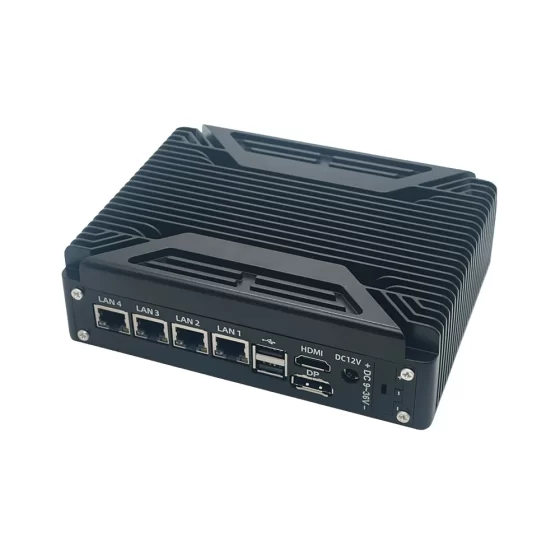
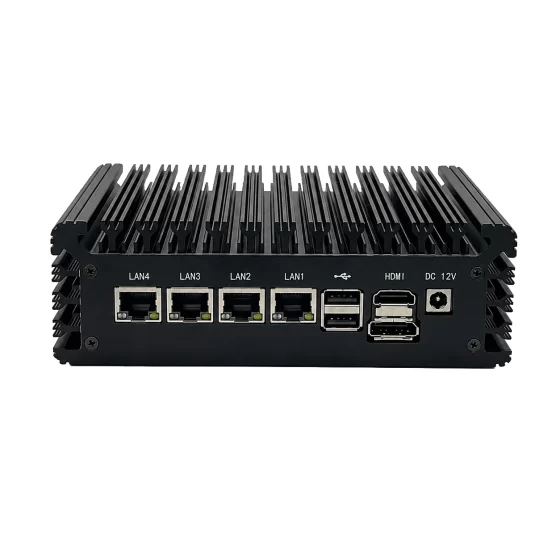
CoreIPC 산업용 컴퓨팅 솔루션

감시용 엣지 AI 컴퓨터: 산업 모니터링 및 보안을 위한 엣지 AI 감시
요약
Edge AI surveillance is becoming an important technology foundation for industrial monitoring, 시설보안, 안전의식, 장비 가시성, 현대 산업 환경의 실시간 비디오 분석.
공장, 창고, 에너지 시설, 교통 허브, 물류센터, 스마트 인프라 사이트는 많은 카메라와 지속적인 비디오 스트림으로 운영되는 경우가 많습니다.. 모든 원본 비디오를 원격 클라우드나 중앙 서버로 보내면 대역폭 사용량이 높아질 수 있습니다., 숨어 있음, 보관 압력, 및 네트워크 종속성.
감시용 엣지 AI 컴퓨터는 비디오 데이터를 로컬에서 처리합니다.. IP 카메라에 연결할 수 있습니다., 산업용 카메라, 센서, 출입 통제 시스템, 경보, PLC, 네트워크 스위치, 및 모니터링 대시보드. 카메라 네트워크 근처에서 AI 모델을 실행하여 이벤트를 감지할 수 있습니다., 비정상적인 상태를 분류하다, 경고 트리거, 선택한 결과를 보안 플랫폼이나 산업 시스템으로 보냅니다..
산업용 컴퓨터 또는 임베디드 컴퓨터는 이러한 워크로드를 위한 로컬 컴퓨팅 플랫폼을 제공합니다.. 표준 상업용 PC와 비교, industrial computers are better suited for continuous operation in factory and infrastructure environments because they support rugged installation, 유연한 I/O, multiple network interfaces, 안정적인 스토리지, 팬리스 옵션, 긴 수명주기 배포.
This article explains how edge AI surveillance systems work, what challenges appear in real deployment, 솔루션 아키텍처의 구조, and which hardware features are important when selecting an industrial computer or embedded computer for AI-based surveillance and monitoring.
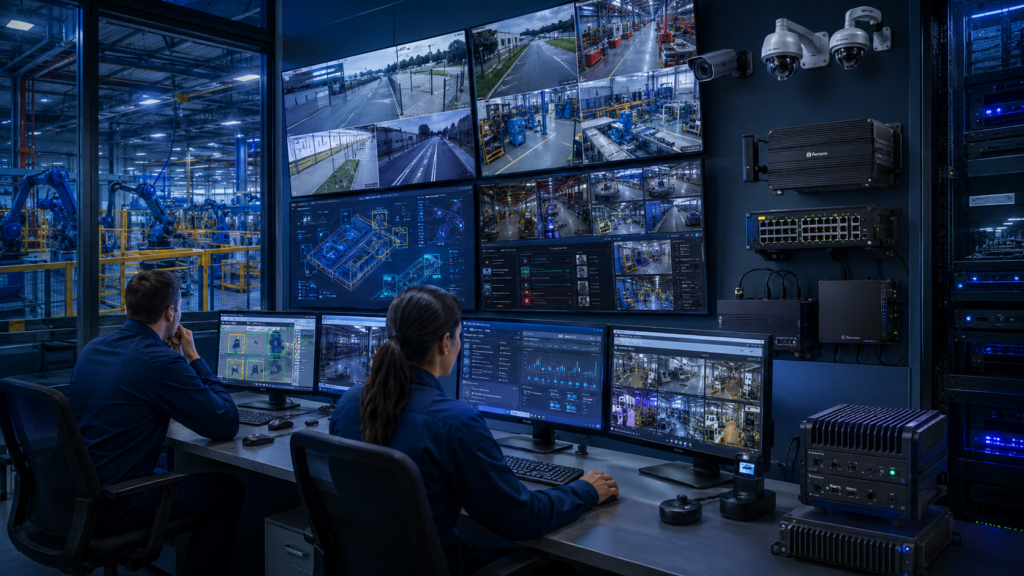
Edge AI computers process camera streams locally for industrial monitoring, facility visibility, and event alerts.
산업 개요
Surveillance Is Moving from Recording to Intelligence
Traditional surveillance systems mainly record video for later review.
This approach is useful, but it has limitations. Operators cannot manually watch every camera all the time, and important events may only be discovered after a problem has already occurred.
Edge AI surveillance adds local intelligence to camera systems.
Instead of only recording video, the system can analyze camera streams in real time and generate event-based alerts.
Industrial surveillance may support:
- Facility perimeter monitoring
- Restricted area detection
- Equipment area monitoring
- Production line visibility
- Warehouse and logistics monitoring
- Safety event awareness
- Vehicle and material flow monitoring
- Abnormal behavior or abnormal scene detection
- Fire, smoke, or spill detection support
- Remote site monitoring
The goal is to improve visibility and response without sending every video stream to the cloud.
Why Edge AI Matters for Surveillance
Surveillance video creates large amounts of data.
A site with many cameras can quickly generate heavy network traffic and storage requirements. If all video is processed centrally, the system may require high bandwidth and powerful centralized servers.
Edge AI computing helps reduce this pressure.
The edge AI computer can process video near the camera network and upload only selected information, such as alarms, event clips, metadata, or summary records.
This supports faster response and more efficient system design.
Industrial Computing Is Needed for Real Deployment
Industrial surveillance systems are often installed in practical field conditions.
The computing hardware may operate in control rooms, 캐비닛, factory floors, 창고, 교통 장소, 변전소, outdoor enclosures, or remote facilities.
These environments may include dust, 진동, 온도 변화, unstable power, limited maintenance access, and continuous operating schedules.
Industrial computers and embedded computers are designed for these conditions.
안정적인 작동을 제공합니다., 견고한 인클로저, 다중 LAN 포트, storage options, I/O connectivity, 긴 수명주기 가용성.

Camera bandwidth, 네트워크 세분화, storage retention, alarm wiring, 접근 제어, and cabinet deployment affect surveillance reliability.
주요 과제
Multiple Video Streams
Edge AI surveillance often involves multiple cameras.
Each camera stream adds processing, network, and storage load. The system may need to process several IP camera streams, industrial camera feeds, or high-resolution video channels at the same time.
Key workload factors include:
- 카메라 수
- Video resolution
- 프레임 속도
- Compression format
- AI 모델 복잡성
- Event detection requirements
- Storage duration
- Local display needs
- Network upload frequency
The edge AI computer must be selected according to the actual number of cameras and analysis tasks.
Real-Time Event Detection
Surveillance systems are most valuable when they detect important events quickly.
If AI processing is delayed, the system may miss the correct response window.
Real-time requirements may appear in:
- Perimeter intrusion alerts
- Restricted zone monitoring
- Equipment abnormality detection
- Conveyor blockage detection
- Vehicle movement monitoring
- Warehouse aisle monitoring
- Fire or smoke event support
- Safety area awareness
- Remote site alarms
The computing platform must provide stable sustained performance during continuous video analysis.
Network Bandwidth and Segmentation
Video surveillance networks can create heavy traffic.
If camera streams share the same network as production systems, PLC, MES, or office IT traffic, network congestion may occur.
A practical edge AI surveillance computer may need multiple LAN ports for network separation.
예를 들어:
- One LAN port for IP cameras
- One LAN port for local monitoring systems
- One LAN port for factory IT connection
- One LAN port for remote access or cloud upload
Good network architecture improves stability and supports better cybersecurity planning.
Storage and Retention
Surveillance systems may need to store video clips, event images, AI metadata, 로그, 및 로컬 데이터베이스.
The storage requirement depends on camera count, recording method, event retention policy, 이미지 해상도, and upload strategy.
Some systems store only event clips. Others need continuous local recording for a defined retention period.
스토리지 계획에서는 고려해야 할 사항:
- Capacity
- 쓰기 속도
- 지구력 쓰기
- Backup method
- Local database workload
- Video retention period
- Event clip storage
- Network interruption behavior
Reliable storage helps protect important surveillance records.
Privacy and Operational Policy
AI surveillance must be deployed carefully.
Industrial monitoring should focus on safety, 보안, 장비 가시성, and operational awareness. It should follow site policy, local regulations, access control rules, and data retention requirements.
System design should consider:
- What events are monitored
- Who can access video data
- How long records are stored
- How alerts are reviewed
- Which areas are monitored
- How data is protected
- How remote access is controlled
The computing platform should support secure deployment and controlled data handling.

Edge AI computers connect cameras, 경보, 출입 통제 시스템, VMS platforms, cloud monitoring, and security dashboards.
Edge AI Surveillance Solution Architecture
Camera and Sensor Layer
The camera and sensor layer captures raw visual and event data.
이 레이어에는 다음이 포함될 수 있습니다.:
- IP cameras
- 산업용 카메라
- Thermal cameras
- Low-light cameras
- PTZ cameras
- 도어 센서
- Access control signals
- Motion sensors
- Alarm inputs
- Environmental sensors
- Network video devices
These devices generate the video and event data required for AI analysis.
Stable camera connections and proper network design are essential for reliable edge AI surveillance.
엣지 AI 컴퓨팅 레이어
The edge AI computing layer is where the industrial computer or embedded computer processes video data locally.
이 레이어에서는, the computer may:
- Receive camera streams
- Decode video
- Run AI inference models
- Detect defined events
- Classify abnormal scenes
- Store event clips
- Generate alerts
- Display local dashboards
- Send metadata to platforms
- 네트워크 문제 중 버퍼 레코드
This layer reduces latency and limits the need to upload all raw video.
AI Video Analytics Layer
The AI video analytics layer contains the software logic used to analyze surveillance streams.
응용 프로그램에 따라, it may include:
- Object detection
- Area monitoring
- Vehicle detection
- Person detection for safety zones
- Abnormal scene detection
- Smoke or fire event support
- Equipment status recognition
- Production flow monitoring
- Video event classification
- Rule-based alarm logic
The industrial computer must support the required operating system, 드라이버, AI runtime, video management software, and camera protocols.
Alert and Control Layer
The alert and control layer connects AI results with action.
When the system detects an event, it may trigger a local alarm, send a notification, mark a video clip, display an alert on a dashboard, or send data to a security platform.
산업 환경에서, it may also connect with:
- Alarm devices
- Access control systems
- PLC
- SCADA 시스템
- Safety monitoring systems
- Facility management systems
- Remote monitoring platforms
This helps turn video analysis into operational response.
Platform Integration Layer
Edge AI surveillance systems often connect with higher-level systems.
The edge AI computer may send selected data to:
- Video management systems
- Security operation platforms
- SCADA 시스템
- Industrial IoT dashboards
- Cloud monitoring platforms
- 로컬 데이터베이스
- Facility management systems
- 유지보수 플랫폼
Instead of sending every frame, the system can send events, metadata, alerts, snapshots, and selected clips.
This makes surveillance deployment more efficient and easier to manage.
주요 특징
AI Video Processing Performance
Edge AI surveillance requires stable video analytics performance.
The right hardware depends on camera count, 해결, 프레임 속도, AI 모델 복잡성, and event detection requirements.
Selection should consider:
- CPU 성능
- GPU 또는 AI 가속기 지원
- 메모리 용량
- Video decoding workload
- 네트워크 대역폭
- 저장 속도
- 운영 체제 지원
- AI 프레임워크 호환성
- 열 설계
A compact embedded computer may support a small camera group. A larger multi-camera surveillance system may require an edge AI computer or industrial PC with stronger acceleration.
Multiple LAN Ports
Multiple LAN ports are valuable in surveillance systems.
They allow separation between camera networks, management networks, factory networks, and remote access networks.
This can improve:
- Camera traffic stability
- 네트워크 세분화
- Security planning
- 원격 유지보수
- Multi-site deployment
- Local recording reliability
- Factory network organization
For sites with many IP cameras, network design should be planned before hardware selection.
유연한 산업용 I/O
Surveillance systems may need to connect with more than cameras.
Important I/O options may include:
- 랜
- USB
- RS232
- RS485
- GPIO
- 디지털 입력
- 디지털 출력
- HDMI
- 디스플레이포트
- M.2
- PCIe
- SATA 또는 NVMe 스토리지
These interfaces can support cameras, 경보, 센서, 접근 통제 장치, display screens, 네트워크 스위치, 저장 장치, and industrial systems.
Flexible I/O reduces external converters and improves deployment reliability.
안정적인 로컬 스토리지
Local storage is important for edge AI surveillance.
The computer may store video clips, event snapshots, metadata, alarm logs, AI model files, 시스템 로그, 및 로컬 데이터베이스.
SSD 또는 NVMe 스토리지는 기계식 드라이브보다 빠른 액세스와 더 나은 충격 저항을 제공하기 때문에 일반적으로 선호됩니다..
For video-heavy deployments, 저장 용량, 지구력을 쓰다, retention policy, backup method, and upload strategy should be reviewed carefully.
견고하고 팬이 없는 디자인
Edge AI surveillance computers may run continuously in challenging environments.
Fanless designs can reduce dust intake and remove one common mechanical failure point. Rugged enclosures help protect the system from vibration, 케이블 스트레스, 및 캐비닛 설치 조건.
하지만, video analytics and AI inference may generate heat.
Thermal design should be reviewed based on CPU workload, accelerator use, 인클로저 디자인, 주변 온도, 기류, and mounting location.
긴 수명주기 및 유지 관리성
Surveillance infrastructure often stays in service for many years.
Frequent hardware changes can create issues with video software, camera compatibility, AI 모델, 운영 체제, and driver validation.
Industrial computing platforms with lifecycle planning help system integrators and facility operators maintain consistent deployments across multiple sites and equipment generations.
This improves long-term support and reduces maintenance complexity.

Edge AI surveillance platforms improve event detection, 원격 모니터링, facility visibility, data control, and operational response.
배포 시나리오
Factory Perimeter Monitoring
Factories can use edge AI surveillance for perimeter awareness.
The system can process video from cameras near gates, fences, loading areas, and restricted zones.
The edge AI computer can detect defined events, generate alerts, and send selected records to security systems or monitoring dashboards.
Warehouse and Logistics Monitoring
Warehouses and logistics centers often need visibility across aisles, loading docks, conveyor areas, and sorting zones.
Edge AI surveillance can help monitor package movement, vehicle activity, blocked pathways, abnormal congestion, and operational exceptions.
The industrial computer processes video locally and sends event records to monitoring systems.
Production Line Video Monitoring
Production lines may use cameras to monitor machine areas, product flow, conveyor conditions, and operator stations.
AI video analytics can detect stoppages, missing product flow, abnormal movement, or visual events that need review.
This supports better operational visibility and faster response.
Remote Facility Monitoring
Remote industrial facilities may include energy sites, pump stations, 변전소, 다용도실, and outdoor equipment areas.
An embedded computer can process camera streams locally, buffer events, and send selected alerts over limited network connections.
This reduces bandwidth usage and supports remote operation.
Transportation and Infrastructure Surveillance
Transportation sites may use edge AI surveillance for platforms, parking areas, logistics yards, tunnels, stations, and access zones.
The system can analyze video locally and send event-based alerts to monitoring centers.
Industrial computers are useful where deployment conditions require rugged hardware and continuous operation.
Equipment Area Monitoring
Some facilities use cameras to monitor equipment rooms, machine zones, conveyor transfer points, or utility systems.
AI surveillance can support abnormal scene detection, equipment status visibility, and alarm verification.
This helps operators confirm whether a machine or facility event needs immediate action.
Safety Zone Awareness
Industrial sites may use video analytics to support safety zone awareness.
The system can detect when defined areas become occupied or when abnormal movement appears near equipment.
Such systems should be deployed according to site safety policy and should support operators rather than replace formal safety systems.
OEM Surveillance System Integration
System integrators and OEM solution providers can integrate edge AI computers into surveillance appliances, video analytics boxes, smart monitoring gateways, or industrial security systems.
The computing platform can provide video processing, AI 추론, 로컬 저장소, network interfaces, alarm I/O, and remote monitoring connectivity.
비즈니스 이점
Faster Local Event Detection
Edge AI surveillance processes video near the camera network.
This reduces the delay between event capture and alert generation.
Fast local detection is useful for restricted zones, 시설보안, production exceptions, remote site monitoring, and safety awareness.
Reduced Bandwidth Usage
Video data can create heavy network traffic.
Edge AI computers can analyze video locally and upload only selected events, snapshots, clips, or metadata.
This reduces bandwidth load and makes surveillance systems easier to scale across multiple cameras and sites.
향상된 운영 가시성
AI surveillance helps operators understand what is happening across factories, 창고, infrastructure sites, and remote facilities.
Instead of relying only on manual camera review, the system can highlight events that need attention.
This improves monitoring efficiency and supports faster investigation.
Better Resilience During Network Issues
Local processing helps surveillance systems continue operating when network connections are unstable.
The edge AI computer can keep processing camera streams, storing event data, and buffering records.
When the connection recovers, selected data can be uploaded to higher-level systems.
Stronger Security and Data Control
Edge processing allows more video data to remain local.
This can support better data control when raw video does not need to leave the site.
System designers can define what information is stored, what is uploaded, who can access it, and how long records are retained.
Scalable Multi-Site Deployment
A standardized edge AI surveillance platform makes it easier to deploy similar systems across multiple factories, 창고, or infrastructure sites.
일관된 하드웨어로 소프트웨어 이미지가 단순화됩니다., camera validation, 예비 부품 계획, remote maintenance, and lifecycle support.
This helps system integrators and facility operators scale surveillance intelligence more efficiently.
왜 CoreIPC인가?
CoreIPC provides industrial computing platforms for edge AI, 비디오 분석, 산업용 IoT, 공장 자동화, 및 임베디드 시스템 통합. For edge AI surveillance applications, CoreIPC는 안정적인 산업용 컴퓨터 하드웨어에 중점을 둡니다., 임베디드 컴퓨터 솔루션, 유연한 I/O 구성, multi-network deployment, 컴팩트한 시스템 디자인, 및 OEM/ODM 맞춤형 지원. CoreIPC는 시스템 통합자를 돕습니다., security solution providers, and industrial operators select computing platforms that match real deployment requirements, 카메라 수 포함, AI 워크로드, 스토리지 디자인, 네트워크 세분화, 장착 방법, 전원 입력, 열적 조건, 및 수명주기 계획.
자주 묻는 질문
1. What is edge AI surveillance?
Edge AI surveillance uses local computing hardware to process camera streams near the surveillance site.
Instead of sending all raw video to a remote server, the edge AI computer analyzes video locally, detects defined events, stores selected records, and sends alerts or metadata to monitoring platforms. This improves response time and reduces bandwidth usage.
2. Why use an industrial computer for edge AI surveillance?
An industrial computer is better suited for surveillance systems deployed in factories, 창고, infrastructure sites, and remote facilities.
It supports continuous operation, 견고한 설치, multiple network ports, 유연한 I/O, 안정적인 스토리지, 긴 수명주기 가용성. These features help the system operate reliably near cameras, 캐비닛, 기계, and industrial networks.
3. How is an embedded computer used in surveillance systems?
An embedded computer can act as a compact video analytics node.
It can be installed near camera groups, inside control cabinets, in monitoring gateways, or inside OEM surveillance appliances. It can process video streams, AI 모델 실행, store event records, and send selected alerts to monitoring systems.
4. What AI functions can edge surveillance support?
Edge AI surveillance can support object detection, area monitoring, vehicle detection, restricted zone alerts, abnormal scene detection, production flow monitoring, equipment area monitoring, and event-based video review.
The exact functions depend on camera placement, AI model design, 조명 조건, system policy, and real deployment testing.
5. Does edge AI surveillance need a GPU?
Some surveillance systems need GPU or AI accelerator support, especially when processing multiple video streams, high-resolution cameras, or complex AI models.
Smaller systems with fewer streams may run on CPU-based industrial computers or embedded computers. Hardware selection should be based on real camera count, model performance, and response-time requirements.
6. What interfaces are important for edge AI surveillance computers?
Important interfaces may include multiple LAN ports, USB, RS232, RS485, GPIO, digital input, digital output, HDMI, 디스플레이포트, M.2, PCIe, SATA, and NVMe storage support.
Multiple LAN ports are especially useful for separating camera networks, factory networks, 원격 액세스, and management traffic.
7. Can fanless industrial computers support surveillance analytics?
Fanless industrial computers can support many edge AI surveillance applications, especially moderate camera workloads and cabinet-based deployments.
하지만, multi-camera video analytics may generate significant heat. CPU 작업량, accelerator use, 인클로저 디자인, 주변 온도, 기류, and mounting location should be reviewed before deployment.
8. How does edge AI surveillance reduce bandwidth usage?
The edge AI computer processes video locally and uploads only selected information.
This may include event records, snapshots, short video clips, alarm metadata, or summary data. By avoiding continuous upload of all raw video, the system reduces bandwidth pressure and makes multi-camera deployment more efficient.
9. Can edge AI surveillance connect with industrial systems?
예. Edge AI surveillance computers can connect with security platforms, video management systems, SCADA, 산업용 IoT 대시보드, alarm devices, 출입 통제 시스템, and facility management platforms.
In some industrial deployments, they may also communicate with PLCs or local monitoring systems for event coordination.
10. 배포 전에 테스트해야 할 사항?
배포 전, 시스템은 실제 카메라로 테스트되어야 합니다., real lighting conditions, actual camera count, 네트워크 아키텍처, AI 모델, local storage workload, alert timing, 그리고 장기 실행 작업.
열 안정성, network interruption behavior, event accuracy, 접근 제어, and maintenance workflow should also be validated.
결론
Edge AI surveillance is a practical foundation for industrial monitoring, 시설보안, 비디오 분석, remote site visibility, and event-based operational awareness.
By placing an industrial computer or embedded computer close to camera networks, 센서, 경보, access systems, and monitoring platforms, organizations can process video locally, reduce bandwidth usage, improve response time, and maintain better control over surveillance data.
The right edge AI surveillance platform should be selected according to real deployment requirements, 카메라 수 포함, video resolution, AI 워크로드, 네트워크 아키텍처, storage retention, I/O 구성, 장착 방법, 전원 입력, 열적 조건, 운영 체제 지원, security policy, 및 수명주기 계획.
CoreIPC supports edge AI surveillance projects with industrial computing platforms designed for practical field deployment. 올바른 하드웨어 기반을 갖춘 경우, system integrators and industrial operators can build reliable, 확장 가능, and efficient AI video monitoring systems.
문의하기
산업용 컴퓨터를 찾고 계시다면, 임베디드 컴퓨터, or edge AI platform for edge AI surveillance?
프로젝트 요구 사항을 논의하려면 CoreIPC에 문의하세요., 카메라 수 포함, AI 워크로드, 네트워크 세분화, 스토리지 디자인, I/O 구성, 장착 방법, 전원 입력, 운영 환경, 수명주기 요구 사항, 및 OEM/ODM 사용자 정의 옵션.