CoreIPC 산업용 컴퓨팅 솔루션

예측 분석을 위한 산업용 AI: 스마트 팩토리 의사결정을 위한 산업용 AI 분석
요약
Industrial AI analytics is becoming a key foundation for predictive maintenance, 프로세스 최적화, 품질 개선, 에너지 모니터링, 스마트팩토리 의사결정.
현대 공장은 기계에서 대량의 데이터를 생성합니다., 센서, PLC, 카메라, 로봇, 미터, 검사 시스템, 및 생산 소프트웨어. 이 데이터가 나중에 보고할 목적으로만 저장되는 경우, 공장에서는 조기 경고 신호를 놓칠 수 있습니다, 반복되는 품질 패턴, 에너지 이상, 및 프로세스 변경.
예측 분석을 위한 산업용 AI는 기계 측 데이터를 유용한 통찰력으로 전환하는 데 도움이 됩니다.. 장비 동작을 분석할 수 있습니다., 비정상적인 패턴을 감지, 잠재적인 실패를 예측하다, 프로세스 드리프트 식별, 더 빠른 생산 결정을 지원합니다..
산업용 컴퓨터 또는 임베디드 컴퓨터는 이러한 워크로드를 위한 로컬 컴퓨팅 플랫폼을 제공합니다.. PLC로부터 데이터를 수집할 수 있습니다., 센서, 카메라, 게이트웨이, 에너지 미터, 및 생산 시스템, 그런 다음 장비 근처에서 분석 모델을 실행합니다..
표준 상업용 PC와 비교, industrial computers are better suited for factory environments because they support rugged deployment, 유연한 I/O, 안정적인 네트워킹, 로컬 저장소, 팬리스 디자인 옵션, 긴 수명주기 가용성.
This article explains how industrial AI analytics works, what challenges appear in real deployment, 솔루션 아키텍처의 구조, and which hardware features are important when selecting an industrial computer or embedded computer for predictive analytics applications.
Industrial AI Analytics Factory Deployment
산업 개요
Factories Need Predictive Insight
Traditional factory monitoring often focuses on current status.
Operators may see alarms, machine states, 생산 횟수, and maintenance records. These signals are useful, but they may not reveal what is likely to happen next.
Predictive analytics adds another layer of intelligence.
It helps factories analyze historical and real-time data to identify early warning signs, hidden correlations, and abnormal trends.
Industrial AI analytics can support:
- 예측 유지보수
- Equipment health monitoring
- Quality trend analysis
- Process anomaly detection
- Energy usage optimization
- Production bottleneck analysis
- Machine utilization analysis
- Yield improvement
- Failure pattern recognition
- Maintenance planning
The goal is to help teams move from reactive response to earlier, data-supported action.
AI Analytics Is Moving to the Edge
Cloud platforms can support large-scale data storage, 대시보드, and enterprise-level analytics.
하지만, many industrial analytics tasks benefit from local edge processing. Machine data may need to be analyzed quickly, buffered during network interruptions, or filtered before upload.
An industrial computer deployed near production equipment can process data locally.
This helps reduce latency, lower bandwidth usage, protect sensitive production data, and maintain local operation when the network is unstable.
Edge-based industrial AI analytics is especially useful when factories need fast alerts, local dashboards, or continuous data collection from distributed machines.
산업용 컴퓨팅은 하드웨어 기반입니다
Predictive analytics requires more than software models.
It needs reliable computing hardware that can collect data from industrial devices, run analytics workloads, 로컬 기록 저장, and communicate with factory systems.
Industrial computers and embedded computers provide this foundation.
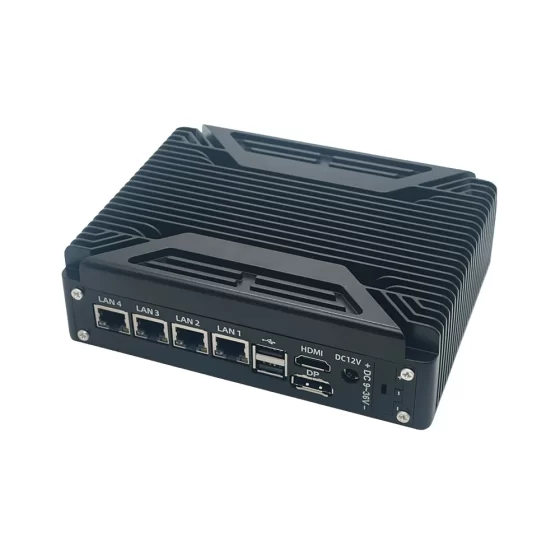
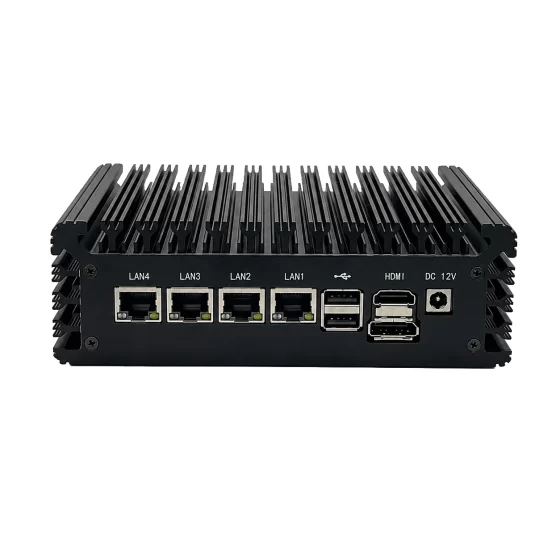
They can support multiple LAN ports, 직렬 통신, GPIO, 디지털 I/O, USB 장치, SSD storage, 디스플레이 출력, and expansion modules.
This makes them suitable for machine-side analytics, 산업용 IoT 게이트웨이, predictive maintenance nodes, energy monitoring systems, and smart factory platforms.

Industrial AI Analytics Deployment Challenges
주요 과제
Data from Different Machines and Systems
Industrial data is often fragmented.
A single factory may include legacy machines, 최신 PLC, 센서, 에너지 미터, 로봇, 카메라, 검사 시스템, and software platforms from different vendors.
Each system may use different interfaces, 데이터 형식, update rates, and communication methods.
일반적인 데이터 소스는 다음과 같습니다.:
- PLC
- 센서
- Machine controllers
- Robots
- Motors and drives
- 에너지 미터
- 비전 시스템
- 테스트 장비
- 산업용 게이트웨이
- MES and SCADA systems
An industrial AI analytics platform must collect and organize this data reliably before useful predictions can be made.
Data Quality and Consistency
Predictive analytics depends on data quality.
If sensor values are missing, timestamps are inconsistent, machine states are unclear, or data is collected only occasionally, AI models may produce weak results.
Important data quality factors include:
- Sampling frequency
- Timestamp accuracy
- Sensor calibration
- Machine state context
- Data completeness
- Noise filtering
- Event labeling
- Production batch information
- Maintenance history
- 품질 기록
The industrial computer must support stable data acquisition and local buffering to reduce data gaps.
Real-Time Alert Requirements
Predictive analytics becomes valuable when it can support timely action.
If a machine shows early signs of abnormal vibration, overheating, current fluctuation, quality drift, or energy waste, the system should detect the pattern early and generate a useful alert.
Delayed analytics may reduce the value of the system.
Real-time or near-real-time requirements may appear in:
- 예측 유지보수
- Process deviation detection
- Quality trend monitoring
- Energy anomaly alerts
- Production bottleneck analysis
- Equipment utilization monitoring
- Safety-related monitoring support
The computing platform must provide stable sustained performance under continuous operation.
Model Deployment and Maintenance
Industrial AI analytics models may need ongoing adjustment.
Machines wear over time, production recipes change, sensor behavior shifts, and new product models enter production. A predictive model that works during a pilot project may need maintenance during long-term use.
System designers must consider:
- Model update workflow
- Local model storage
- Version control
- 데이터 로깅
- Alert review
- False alarm handling
- Maintenance feedback
- Long-term validation
The industrial AI computer should support a practical software environment for model deployment and maintenance.
Factory Environment Reliability
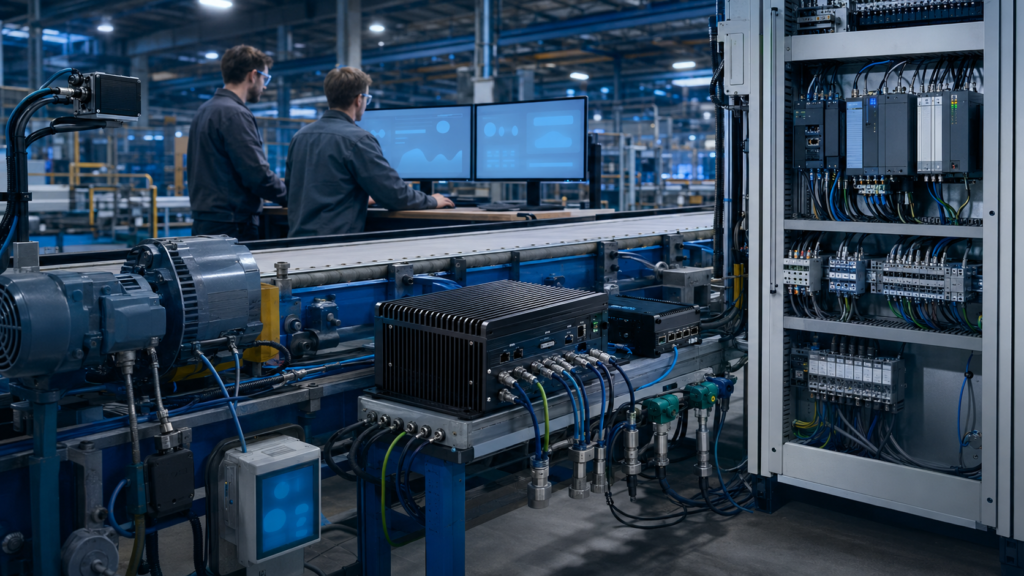
Predictive analytics systems are often deployed near machines or inside control cabinets.
These locations may include vibration, 먼지, 열, 전기적 소음, 제한된 공기 흐름, 케이블 운동, and continuous operating schedules.
If the analytics computer fails, data collection may stop and prediction records may become incomplete.
Industrial-grade hardware helps reduce this risk by supporting rugged installation, 안정적인 열 설계, 안정적인 스토리지, and long lifecycle planning.

Industrial AI Predictive Analytics Architecture
Industrial AI Analytics Solution Architecture
Device and Sensor Layer
The device and sensor layer includes the machines and data sources being monitored.
This layer may include PLCs, 센서, 모터, 드라이브, 카메라, 로봇, 에너지 미터, 테스트 장비, 및 생산 장비.
Typical data may include:
- Vibration values
- Temperature data
- Motor current
- Pressure values
- Speed and cycle time
- 기계 상태
- 알람 이력
- 에너지 소비
- Product quality records
- 검사 결과
- 유지보수 이벤트
This raw data provides the input for industrial AI analytics.
산업용 엣지 컴퓨팅 레이어
The industrial edge computing layer is where the industrial computer or embedded computer collects, 프로세스, and stores data locally.
이 레이어에서는, 시스템은:
- 센서 데이터 수집
- Read PLC records
- Process machine events
- Store local history
- Run analytics models
- Detect abnormal patterns
- Generate predictive alerts
- Buffer data during network issues
- Display local dashboards
- Upload selected data to factory systems
This layer helps bring predictive intelligence closer to production equipment.
AI Analytics Layer
The AI analytics layer contains the models and logic used to convert data into insight.
응용 프로그램에 따라, it may include:
- Anomaly detection
- Predictive maintenance models
- Trend analysis
- Failure pattern recognition
- Quality prediction
- Energy usage analysis
- Production bottleneck detection
- Rule-based alarm filtering
- Sensor fusion logic
The industrial computer must support the required operating system, analytics tools, AI runtime, database software, and industrial communication software.
공장 소프트웨어 통합 계층
Predictive analytics becomes more useful when connected with factory systems.
The industrial computer may send selected data to:
- MES
- SCADA
- ERP
- 유지보수 플랫폼
- 품질 데이터베이스
- Industrial IoT dashboards
- Cloud analytics platforms
- Local historian systems
- Production monitoring dashboards
Instead of uploading all raw data, the system can send alarms, trends, summaries, abnormal events, and selected records.
This reduces bandwidth pressure and improves data organization.
Operator and Maintenance Interface Layer
Operators and maintenance teams need a practical interface.
The industrial AI computer may connect to a monitor, 터치스크린, HMI panel, or local dashboard workstation.
The interface can show:
- Machine health status
- Predictive alerts
- 센서 동향
- 에너지 사용량
- Quality trends
- 알람 이력
- 장비 활용
- Model status
- Network status
- System logs
A clear interface helps teams understand predictions and respond with appropriate maintenance or process actions.
주요 특징
Stable Analytics Performance
Industrial AI analytics systems must operate continuously.
The hardware should be selected according to the number of machines, sensor update rate, AI 모델 복잡성, local database workload, and dashboard requirements.
Selection should consider:
- CPU 성능
- 메모리 용량
- 저장 속도
- 네트워크 대역폭
- AI software compatibility
- Local database workload
- 운영 체제 지원
- 열 설계
- Long-running stability
For lightweight sensor analytics, an embedded computer may be sufficient. For larger multi-line analytics, a more powerful industrial PC or edge AI computer may be required.
Multiple Industrial Interfaces
Predictive analytics platforms must connect with many types of equipment.
유용한 I/O 옵션은 다음과 같습니다.:
- 다중 LAN 포트
- RS232
- RS485
- USB
- GPIO
- 디지털 입력
- 디지털 출력
- HDMI
- 디스플레이포트
- M.2
- PCIe
- SATA 또는 NVMe 스토리지
These interfaces can support PLCs, 센서, 게이트웨이, 에너지 미터, 카메라, 바코드 리더기, local displays, and industrial networks.
유연한 I/O는 외부 변환기 사용을 줄이고 배포 안정성을 향상시킵니다..
안정적인 로컬 스토리지
Predictive analytics depends on historical data.
The industrial computer may need to store sensor records, machine status history, alarm logs, 모델 파일, 로컬 데이터베이스, reports, and temporary buffers.
SSD or NVMe storage is commonly preferred because it provides faster access and better shock resistance than mechanical drives.
스토리지 설계에서 고려해야 할 사항:
- Data retention period
- Local database size
- 지구력 쓰기
- Backup strategy
- Network interruption behavior
- 업로드 빈도
- Event record requirements
Reliable local storage helps protect analytics data and supports long-term traceability.
Network Separation and Connectivity
Industrial AI analytics systems often connect both machine networks and factory IT systems.
Multiple LAN ports can help separate traffic.
예를 들어:
- One LAN port for PLCs
- One LAN port for sensors or gateways
- One LAN port for MES or SCADA
- One LAN port for cloud upload
- One LAN port for remote maintenance
This improves network organization, reduces traffic conflicts, and supports better cybersecurity planning.
견고하고 팬이 없는 디자인
Industrial analytics computers often operate in production environments.
Fanless design can reduce dust intake and remove one common mechanical failure point. Rugged enclosures help protect the system from vibration, 케이블 스트레스, 및 캐비닛 설치 조건.
Thermal design should still be reviewed carefully.
Processor workload, 인클로저 디자인, 주변 온도, 기류, 저장 장치, and mounting position all affect long-term reliability.
긴 수명주기 및 유지 관리성
Predictive analytics systems may remain in production for many years.
Frequent hardware changes can create software validation issues, driver compatibility problems, and maintenance challenges.
Industrial computing platforms with lifecycle planning help manufacturers and system integrators maintain consistent analytics deployments across multiple machines, 윤곽, and factory sites.
This supports scalable smart factory implementation.
배포 시나리오
Predictive Maintenance
Predictive maintenance is one of the most common industrial AI analytics applications.
The system collects vibration, 온도, 현재의, 압력, and machine status data.
AI models can detect abnormal patterns and generate alerts before equipment failure becomes serious.
This helps maintenance teams plan service more effectively.
Quality Trend Analysis
Industrial AI analytics can help identify quality trends across production lines.
The system can combine inspection results, 기계 매개변수, 센서 데이터, 및 배치 정보.
This helps engineers understand recurring defects, process drift, and quality variation.
Energy Analytics
Energy monitoring systems can use AI analytics to identify abnormal consumption patterns.
The platform may collect data from power meters, 압축기, HVAC 장비, 모터, and production lines.
AI analysis can help detect energy waste, unusual operating behavior, and equipment inefficiency.
Production Bottleneck Analysis
Factories can use AI analytics to study cycle times, machine states, downtime events, and line flow.
The industrial computer can process production data locally and send trend summaries to dashboards.
This helps teams identify bottlenecks and improve equipment utilization.
Machine Health Monitoring
Machine health monitoring focuses on equipment condition.
The system can analyze sensor data, alarm history, and operating patterns to estimate equipment health.
This supports maintenance planning and reduces reliance on manual inspection alone.
Process Anomaly Detection
Process conditions may change slowly before visible problems occur.
AI analytics can detect abnormal combinations of sensor values, machine states, 생산 속도, or quality results.
This helps engineers respond earlier to process instability.
Industrial IoT Analytics Gateway
An embedded computer can act as an analytics gateway for distributed IIoT systems.
기계 데이터를 수집할 수 있습니다., run local analysis, 버퍼 레코드, and upload selected results to cloud or factory systems.
This supports scalable digital transformation across machines and lines.
OEM Machine Analytics Integration
Machine builders can integrate industrial AI analytics into equipment.
The computing platform can provide local data collection, predictive maintenance logic, dashboard display, alarm output, and remote monitoring connectivity.
This helps OEMs deliver smarter machines with built-in analytics capability.
비즈니스 이점
Earlier Problem Detection
Industrial AI analytics helps detect abnormal trends before they become serious failures.
By analyzing machine data, sensor values, 품질 기록, and operating patterns, factories can respond earlier to equipment or process issues.
This supports more proactive maintenance and production control.
다운타임 위험 감소
Predictive analytics can help maintenance teams avoid unexpected equipment stoppages.
When the system detects early warning signs, teams can plan inspection or service during scheduled maintenance windows.
Reliable industrial computing hardware helps keep data collection and analytics running continuously.
Improved Quality Control
AI analytics can connect quality results with machine conditions and process parameters.
This helps engineers understand why defects occur and which operating conditions are linked with quality variation.
Better quality insight supports process improvement and yield optimization.
Better Energy Efficiency
Energy analytics can identify unusual power consumption, inefficient equipment behavior, and abnormal utility patterns.
Factories can use these insights to reduce waste and improve energy management.
This is especially useful for facilities with many machines, 압축기, 모터, and utility systems.
Stronger Data Traceability
Predictive analytics data can be linked with machine IDs, 타임스탬프, sensor values, 경보, 품질 결과, maintenance records, and production batches.
This creates stronger traceability for engineering analysis, audits, root cause investigation, 지속적인 개선.
Reliable local storage helps prevent important records from being lost.
Scalable Smart Factory Analytics
A standardized industrial AI analytics platform makes it easier to deploy predictive analytics across multiple machines, 생산 라인, and factory sites.
일관된 하드웨어로 소프트웨어 이미지가 단순화됩니다., 운전자 관리, 예비 부품 계획, 유지 보수 훈련, 및 장기적인 기술 지원.
This helps manufacturers scale from pilot analytics projects to broader smart factory deployment.
왜 CoreIPC인가?
CoreIPC provides industrial computing platforms for edge AI, 산업용 IoT, 기계 모니터링, 예측 유지 관리, 공장 자동화, 및 임베디드 시스템 통합. For industrial AI analytics applications, CoreIPC는 안정적인 산업용 컴퓨터 하드웨어에 중점을 둡니다., 임베디드 컴퓨터 솔루션, 유연한 I/O 구성, 컴팩트한 시스템 디자인, 로컬 저장 기능, 및 OEM/ODM 맞춤형 지원. CoreIPC는 시스템 통합자를 돕습니다., 기계 제작자, 제조업체는 실제 배포 요구 사항에 맞는 컴퓨팅 플랫폼을 선택합니다., 센서 인터페이스 포함, AI 워크로드, 네트워크 설계, 프로토콜 통합, 저장 요구 사항, 장착 방법, 전원 입력, 열적 조건, 및 수명주기 계획.
자주 묻는 질문
1. What is industrial AI analytics?
Industrial AI analytics uses machine data, sensor values, 생산 기록, and AI models to identify patterns, predict potential issues, and support factory decision-making.
It can support predictive maintenance, quality trend analysis, 에너지 모니터링, process anomaly detection, machine health monitoring, and production optimization.
2. Why use an industrial computer for predictive analytics?
An industrial computer provides the local processing and connectivity needed for factory analytics deployment.
PLC로부터 데이터를 수집할 수 있습니다., 센서, 기계, 미터, 카메라, and gateways. It can run analytics models, 로컬 기록 저장, generate alerts, and upload selected data to MES, SCADA, 클라우드 플랫폼, or dashboards.
3. How is an embedded computer used in industrial AI analytics?
An embedded computer can act as a compact analytics node near machines or inside control cabinets.
센서 데이터를 수집할 수 있습니다., process machine records, run local AI models, store alarms, and send results to factory systems. Its compact design is useful for distributed monitoring and OEM machine integration.
4. What data is needed for predictive analytics?
Predictive analytics may use vibration, 온도, 현재의, 압력, machine status, alarm history, 에너지 소비, 사이클 시간, 검사 결과, maintenance records, and production batch data.
The best data depends on the specific machine, failure mode, 프로세스, and business objective.
5. Does industrial AI analytics require a GPU?
항상 그런 것은 아니다. Many predictive analytics workloads based on sensor data can run on CPU-based industrial computers.
GPU or AI accelerator support may be useful for video analytics, image-based analysis, large models, or more complex workloads. Hardware should be selected after testing real data and model requirements.
6. What interfaces are important for analytics computers?
Important interfaces may include multiple LAN ports, RS232, RS485, USB, GPIO, digital input, digital output, HDMI, 디스플레이포트, M.2, PCIe, SATA, and NVMe storage support.
These interfaces help connect PLCs, 센서, 미터, 게이트웨이, 카메라, local displays, 및 공장 네트워크.
7. Can industrial AI analytics connect with MES or SCADA systems?
예. Industrial computers can send analytics results, alerts, trends, machine status, and production records to MES, SCADA, 품질 시스템, maintenance platforms, 및 클라우드 대시보드.
This connects machine-side analytics with higher-level manufacturing workflows.
8. How does industrial AI analytics support predictive maintenance?
The system collects machine data such as vibration, 온도, 현재의, 압력, and operating status.
AI models analyze patterns and detect abnormal behavior before failure becomes serious. The industrial computer can generate local alerts and upload maintenance records to dashboards or maintenance systems.
9. Why is local storage important for predictive analytics?
Predictive analytics depends on historical data.
Local storage helps preserve sensor records, machine status, 경보, 모델 파일, and event logs. It also allows the system to continue collecting data during temporary network interruptions.
Reliable storage improves data continuity and traceability.
10. 배포 전에 테스트해야 할 사항?
배포 전, the system should be tested with real PLCs, 센서, 머신 데이터, AI 모델, 네트워크 아키텍처, 스토리지 워크로드, dashboard software, 그리고 장기 실행 작업.
열 안정성, data buffering, alert timing, upload behavior, and maintenance access should also be validated to reduce production risk.
결론
Industrial AI analytics is a practical foundation for predictive maintenance, process anomaly detection, 품질 개선, energy optimization, machine health monitoring, 스마트팩토리 의사결정.
By placing an industrial computer or embedded computer close to PLCs, 센서, 미터, 기계, 카메라, 및 생산 시스템, manufacturers can process data locally, detect abnormal trends earlier, reduce network dependency, and improve operational visibility.
The right industrial AI analytics platform should be selected according to real deployment requirements, 센서 인터페이스 포함, AI 워크로드, 네트워크 아키텍처, 프로토콜 통합, I/O 구성, local storage needs, 장착 방법, 전원 입력, 열적 조건, 운영 체제 지원, 및 수명주기 계획.
CoreIPC supports industrial AI analytics projects with industrial computing platforms designed for practical factory and equipment deployment. 올바른 하드웨어 기반을 갖춘 경우, manufacturers and machine builders can build reliable, 확장 가능, and data-driven predictive analytics systems for smart manufacturing.
문의하기
산업용 컴퓨터를 찾고 계시다면, 임베디드 컴퓨터, or edge AI platform for industrial AI analytics?
프로젝트 요구 사항을 논의하려면 CoreIPC에 문의하세요., including sensor interface, AI 워크로드, data collection method, 네트워크 아키텍처, 스토리지 디자인, 장착 방법, 전원 입력, 운영 환경, 수명주기 요구 사항, 및 OEM/ODM 사용자 정의 옵션.