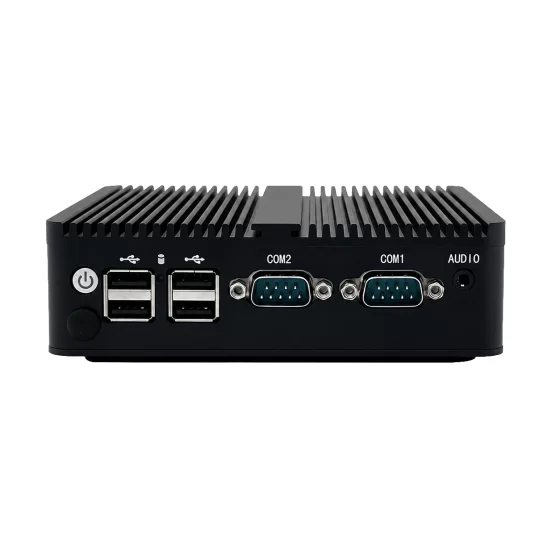
CoreIPC Industrial Computing Solutions

Industrial Computer for Smart Grid Applications
Executive Summary
The global energy sector is experiencing a fundamental transformation as utilities, governments, and industrial organizations modernize aging power infrastructure to meet growing electricity demand, renewable energy integration requirements, and sustainability goals. Traditional electrical grids are evolving into intelligent, interconnected systems capable of real-time monitoring, automated control, predictive maintenance, and dynamic energy optimization. These next-generation energy networks are collectively known as Smart Grids.
An Industrial Computer for Smart Grid Applications plays a critical role in enabling this transformation. Industrial computers serve as the edge intelligence layer that connects field devices, substations, renewable energy assets, communication networks, and centralized management platforms. By collecting, processing, and analyzing operational data in real time, industrial computers help utilities improve grid reliability, increase operational efficiency, support renewable energy integration, and enhance cybersecurity across critical infrastructure.
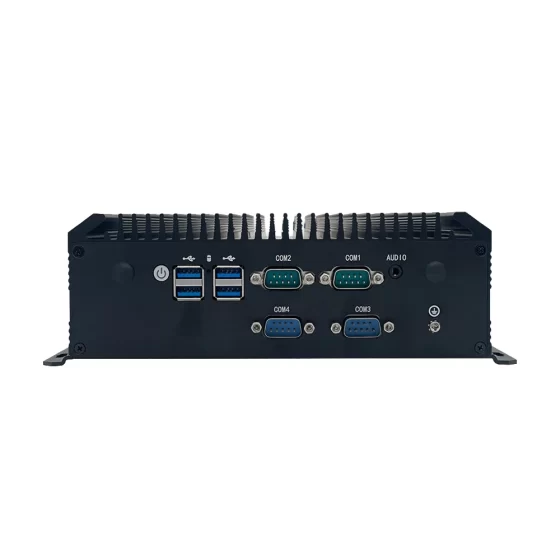
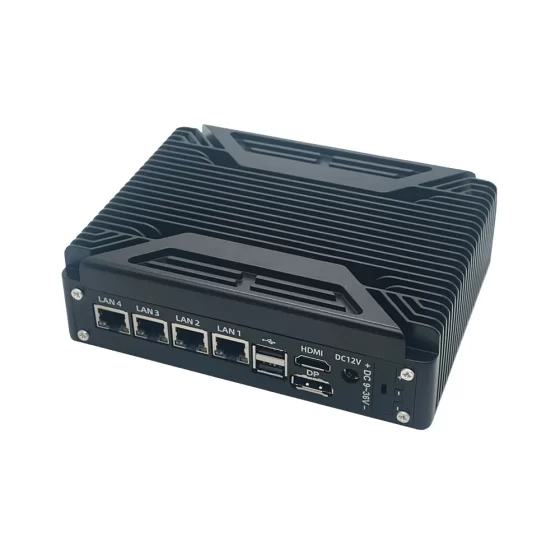
Unlike commercial computing platforms, industrial computers are designed specifically for demanding utility environments. They provide industrial-grade reliability, fanless operation, long lifecycle availability, wide-temperature support, robust connectivity, and secure communications. These capabilities make them ideal for deployment in substations, control cabinets, renewable energy facilities, distribution automation systems, and energy management applications.
As Smart Grid infrastructure continues to expand worldwide, industrial computers are becoming indispensable components for intelligent energy management, grid modernization, and digital utility transformation.
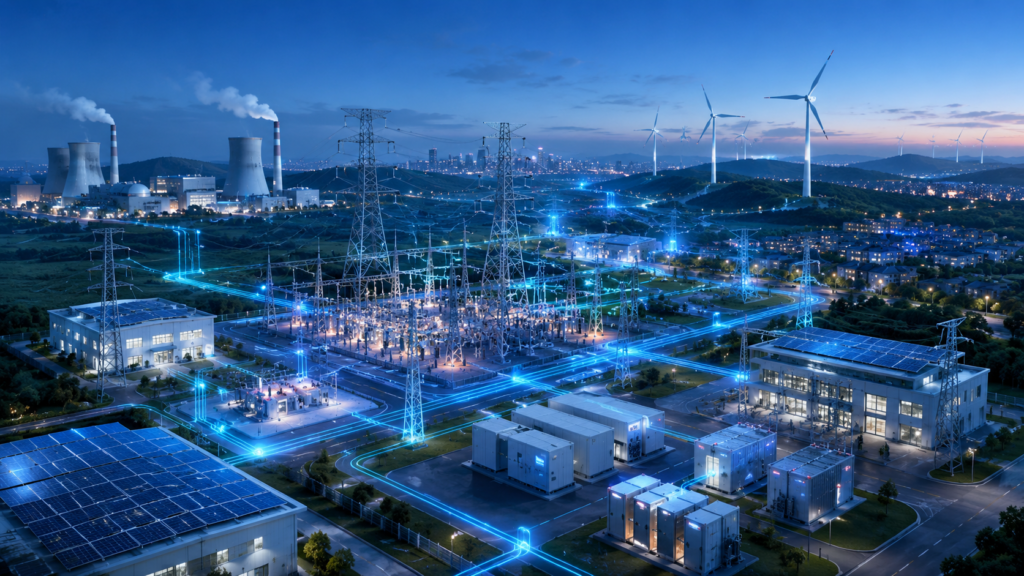
Modern Smart Grid infrastructure connects conventional power generation, renewable energy systems, substations, and energy storage assets through intelligent monitoring and industrial computing technologies.
Industry Overview
For decades, electrical power systems operated using centralized generation and one-way power distribution models. Electricity was generated at large power plants and transmitted through distribution networks to residential, commercial, and industrial consumers.
While this model served the industry well for many years, several emerging challenges have increased the need for more intelligent grid management:
- Increasing electricity demand
- Aging utility infrastructure
- Renewable energy integration
- Distributed generation systems
- Electric vehicle adoption
- Grid reliability requirements
- Energy efficiency initiatives
- Decarbonization goals
- Cybersecurity concerns
To address these challenges, utilities are investing heavily in Smart Grid technologies.
A Smart Grid combines electrical infrastructure with advanced computing, communications, automation, and analytics technologies to create an intelligent and responsive energy ecosystem.
Modern Smart Grid environments typically include:
- Smart substations
- Intelligent transformers
- Distribution automation systems
- Renewable energy facilities
- Energy storage systems
- Smart meters
- SCADA platforms
- Energy Management Systems (EMS)
- Distribution Management Systems (DMS)
- Outage Management Systems (OMS)
- Distributed Energy Resource Management Systems (DERMS)
These systems continuously generate massive amounts of operational data that must be processed and analyzed in real time.
Industrial computers provide the computing foundation necessary to support these applications by enabling local processing, edge analytics, communication management, and secure integration between operational technology (OT) and information technology (IT) environments.
As Smart Grids become more sophisticated, the demand for reliable industrial computing platforms continues to increase across the global energy sector.
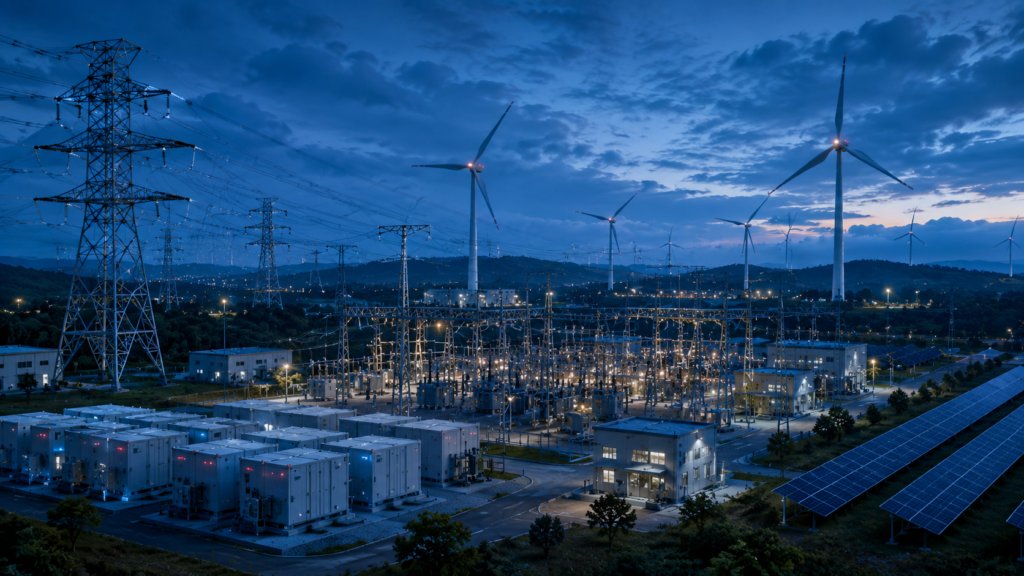
Modern Smart Grid environments must coordinate substations, renewable energy assets, energy storage systems, and communication networks while maintaining reliability, efficiency, and grid stability.
Key Challenges
Managing Distributed Energy Resources
Modern Smart Grids must support a growing number of distributed energy assets, including:
- Solar power systems
- Wind farms
- Battery storage systems
- Microgrids
- Combined heat and power systems
- Electric vehicle charging infrastructure
Managing these distributed resources requires real-time coordination and intelligent control.
Industrial computers help utilities collect data, monitor asset performance, and execute automated control strategies.
Processing Large Volumes of Operational Data
Smart Grid environments generate data from thousands of connected devices.
Data sources include:
- Smart meters
- Protection relays
- Sensors
- Transformers
- Circuit breakers
- Renewable energy assets
- Grid monitoring equipment
This information must be processed quickly to support operational decision-making and maintain grid stability.
Maintaining Reliability in Harsh Environments
Utility infrastructure is often deployed in challenging environments such as:
- Outdoor substations
- Utility control cabinets
- Remote installations
- High-temperature regions
- High-humidity environments
- Locations with electromagnetic interference
Commercial computers are generally not designed for these conditions.
Industrial computers must operate continuously while maintaining reliability under harsh environmental conditions.
Ensuring Cybersecurity
Power infrastructure is considered critical infrastructure worldwide.
Cyber threats targeting energy systems continue to increase.
Utilities must protect:
- Control systems
- Operational data
- Communication networks
- Grid assets
- Customer information
Industrial computers play an important role in supporting cybersecurity strategies through secure communications, access control, and network segmentation.
Supporting Renewable Energy Integration
Renewable energy sources introduce variability into electrical grids.
Unlike conventional power generation, renewable resources depend on environmental conditions.
Industrial computers help utilities:
- Monitor generation output
- Forecast energy production
- Manage storage assets
- Balance supply and demand
- Improve grid stability
These capabilities are essential for successful renewable energy integration.
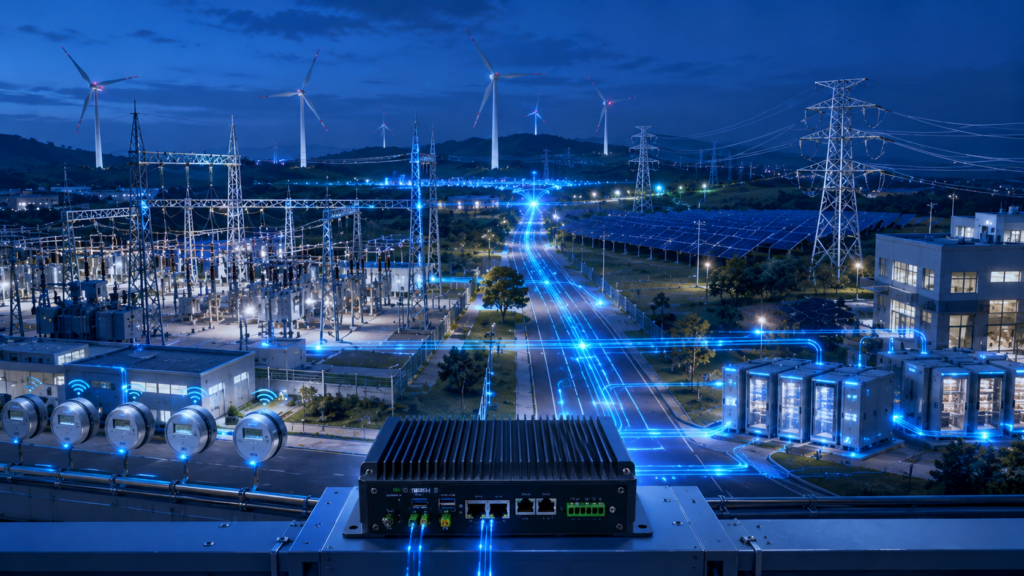
Industrial computers serve as the edge intelligence platform that connects substations, smart meters, renewable energy assets, and utility monitoring systems across modern Smart Grid environments.
Solution Architecture
A typical Smart Grid deployment consists of several interconnected layers.
Layer 1: Field Device Layer
The field layer contains operational assets including:
- Smart meters
- Protection relays
- Sensors
- Transformers
- Circuit breakers
- Renewable energy equipment
- Battery storage systems
These devices generate operational data and execute control actions.
Layer 2: Communication Layer
Communication networks connect field devices with local and centralized management systems.
Common technologies include:
- Industrial Ethernet
- Fiber optic networks
- Wireless communications
- Cellular networks
- Industrial IoT gateways
- Utility communication infrastructure
Reliable communications are essential for Smart Grid operations.
Layer 3: Industrial Computer Layer
The industrial computer serves as the local intelligence platform.
Key responsibilities include:
- Data acquisition
- Protocol conversion
- Edge analytics
- Alarm management
- Event processing
- Device monitoring
- Cybersecurity functions
- Local decision-making
This layer enables rapid response to operational events.
Layer 4: Grid Management Layer
Applications at this level include:
- SCADA systems
- Energy Management Systems
- Distribution Management Systems
- Outage Management Systems
- Asset Management Platforms
- Predictive Maintenance Software
Industrial computers support these applications through local processing and communication services.
Layer 5: Enterprise and Cloud Layer
The enterprise layer enables:
- Utility operations centers
- Business intelligence platforms
- Cloud analytics
- AI-powered forecasting
- Reporting systems
- Digital twin environments
This layer transforms operational data into actionable insights.
Key Features
Industrial-Grade Reliability
Smart Grid infrastructure requires continuous operation.
Industrial computers provide:
- Ruggedized construction
- Industrial-grade components
- Long-term reliability
- Continuous operation support
- Extended lifecycle availability
These characteristics help minimize downtime and maintenance requirements.
Fanless Design
Many Smart Grid deployments utilize fanless industrial computers.
Benefits include:
- Improved reliability
- Reduced maintenance
- Dust resistance
- Silent operation
- Longer service life
Fanless systems are particularly valuable in remote utility installations.
Wide Operating Temperature Range
Utility environments may experience significant temperature fluctuations.
Industrial computers support:
- High-temperature operation
- Low-temperature operation
- Outdoor deployment
- Thermal stability
This ensures reliable operation in diverse environmental conditions.
Rich Industrial Connectivity
Smart Grid applications require extensive communication capabilities.
Industrial computers commonly support:
- Gigabit Ethernet
- Serial communications
- RS232
- RS422
- RS485
- CAN Bus
- Digital I/O
- USB interfaces
These interfaces simplify integration with utility equipment.
Edge Computing Capabilities
Edge computing enables data processing close to the source.
Benefits include:
- Reduced latency
- Faster response times
- Lower bandwidth consumption
- Improved reliability
- Enhanced operational visibility
Industrial computers provide the computing power required for edge analytics and local decision-making.
Cybersecurity Support
Modern industrial computers support advanced security capabilities such as:
- Secure boot
- TPM modules
- VPN connectivity
- Access control
- Firewall applications
- Secure communications
These features help protect critical utility infrastructure.
Long Product Lifecycle
Utility projects often remain operational for many years.
Industrial computers offer:
- Long-term availability
- Stable hardware platforms
- Extended support programs
- Reduced redesign requirements
These characteristics simplify lifecycle management and reduce total ownership costs.
Deployment Scenarios
Smart Substation Automation
Industrial computers are widely used in smart substations to support:
- Equipment monitoring
- Event recording
- Protection systems
- Data acquisition
- Remote diagnostics
- Operational analytics
These capabilities improve visibility and reliability across utility infrastructure.
Renewable Energy Management
Industrial computers help manage:
- Solar power plants
- Wind energy facilities
- Battery storage systems
- Hybrid energy systems
By processing operational data locally, utilities can optimize energy production and improve grid integration.
Distribution Automation
Utilities deploy industrial computers to support:
- Fault detection
- Fault isolation
- Service restoration
- Voltage regulation
- Load balancing
Distribution automation improves service quality while reducing outage durations.
Smart Meter Data Collection
Industrial computers aggregate and process information from large numbers of smart meters.
Applications include:
- Consumption monitoring
- Billing systems
- Demand response programs
- Energy analytics
This supports more efficient utility operations and customer engagement.
Electric Vehicle Charging Infrastructure
As EV adoption increases, utilities must manage growing charging networks.
Industrial computers support:
- Charging station monitoring
- Energy optimization
- Usage analytics
- Load management
- Remote administration
These functions help utilities maintain grid stability while supporting transportation electrification.
Microgrid Management
Industrial computers support intelligent control of:
- Local generation assets
- Energy storage systems
- Distributed loads
- Grid interconnections
Microgrids improve resilience, reliability, and energy independence.
Business Benefits
Improved Grid Reliability
Real-time monitoring and automation help utilities detect and resolve issues before they impact service availability.
Enhanced Operational Efficiency
Industrial computers automate data collection, analysis, and reporting processes, reducing manual workload and improving productivity.
Better Asset Utilization
Operational visibility enables utilities to optimize asset performance and extend equipment lifespan.
Faster Fault Detection and Recovery
Edge analytics support rapid identification of abnormal operating conditions and accelerate response times.
Reduced Operating Costs
Automation, predictive maintenance, and improved operational visibility help reduce maintenance expenses and operational inefficiencies.
Improved Renewable Energy Integration
Industrial computers provide the intelligence required to manage renewable energy variability and maintain grid stability.
Foundation for Future Expansion
Scalable industrial computing platforms support future Smart Grid modernization initiatives and digital transformation projects.
Why CoreIPC
CoreIPC provides industrial computing platforms designed for Smart Grid Applications, Energy Management Systems, utility automation, renewable energy infrastructure, and edge computing environments. Our industrial computers deliver reliable performance, industrial-grade durability, flexible I/O connectivity, long lifecycle availability, and OEM/ODM customization capabilities. Whether deployed in substations, renewable energy facilities, distribution automation systems, or intelligent utility networks, CoreIPC solutions help energy providers build scalable, secure, and future-ready Smart Grid infrastructures.
Frequently Asked Questions
1. What is an industrial computer for Smart Grid applications?
An industrial computer is a rugged computing platform designed to support monitoring, control, communications, analytics, and automation within Smart Grid infrastructure. It operates reliably in utility environments while processing operational data in real time.
2. Why are industrial computers important for Smart Grids?
Industrial computers provide the processing power, connectivity, reliability, and cybersecurity capabilities required to support intelligent energy management and grid modernization initiatives.
3. Can industrial computers support renewable energy systems?
Yes. Industrial computers are widely used in solar farms, wind farms, battery storage systems, and hybrid energy installations for monitoring, analytics, and control.
4. What communication protocols are commonly used in Smart Grid deployments?
Common protocols include Modbus, DNP3, IEC 61850, IEC 60870-5-104, OPC UA, MQTT, and industrial Ethernet standards.
5. Are fanless industrial computers suitable for utility applications?
Yes. Fanless systems improve reliability, reduce maintenance requirements, and perform well in dusty or remote environments.
6. How do industrial computers support edge computing?
They process data locally, reducing latency and enabling faster operational decision-making without relying on cloud connectivity.
7. Can industrial computers improve grid reliability?
Yes. They enable real-time monitoring, predictive maintenance, fault detection, and automated control functions that improve service continuity.
8. How do industrial computers support cybersecurity?
Industrial computers support secure communications, VPNs, firewalls, TPM modules, and access control systems to protect critical infrastructure.
9. What industries use Smart Grid computing platforms?
Utilities, renewable energy providers, transportation operators, industrial facilities, and energy management organizations commonly deploy Smart Grid computing solutions.
10. What should be considered when selecting an industrial computer for Smart Grid applications?
Key considerations include reliability, environmental specifications, connectivity options, cybersecurity capabilities, processing performance, and long-term product availability.
Conclusion
An Industrial Computer for Smart Grid Applications is a foundational technology for modern intelligent energy infrastructure. By enabling real-time monitoring, automation, edge analytics, renewable energy integration, and secure communications, industrial computers help utilities improve grid reliability, operational efficiency, and sustainability. As Smart Grid deployments continue to expand worldwide, industrial computing platforms will remain essential for supporting digital transformation, intelligent energy management, and the future of connected power networks.
Contact Us
Looking for a reliable industrial computing platform for Smart Grid Applications, Energy Management Systems, or utility automation projects?
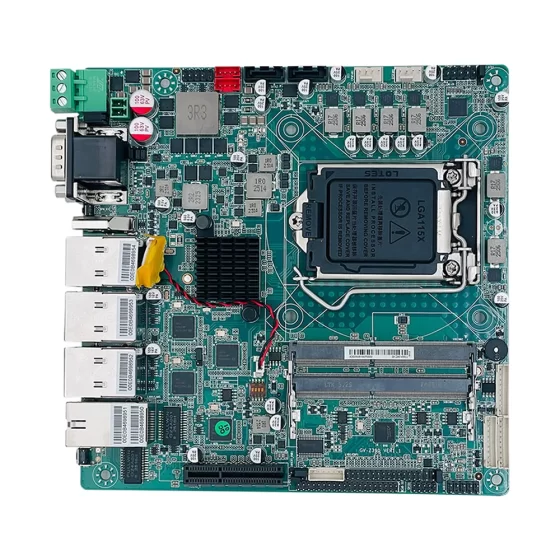
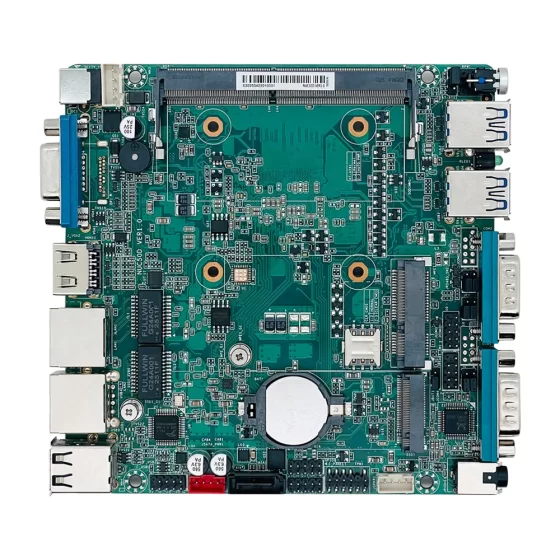
CoreIPC provides industrial computers, embedded computers, industrial motherboards, and customized computing solutions designed for Smart Grid infrastructure, renewable energy integration, substation automation, and edge computing deployments.
Contact our engineering team today to discuss your project requirements and discover the ideal industrial computing platform for your Smart Grid application.