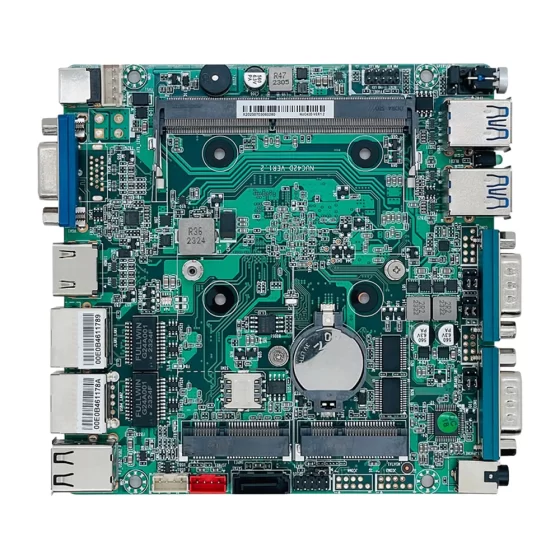
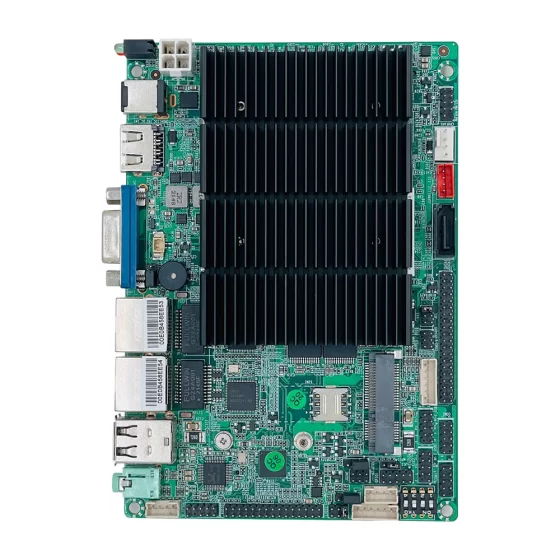
CoreIPC Industrial Computing Solutions

Executive Summary
An industrial IoT gateway serves as the critical bridge between operational technology (OT) and information technology (IT), enabling industrial equipment, sensors, PLCs, and control systems to communicate with enterprise applications, cloud platforms, and Industrial IoT infrastructures. As manufacturers accelerate Industry 4.0 adoption, industrial IoT gateways have become essential components for data acquisition, protocol conversion, edge computing, remote monitoring, and intelligent automation.
Traditional industrial environments often contain a mix of legacy equipment, modern PLCs, industrial networks, and cloud-based analytics platforms. Industrial IoT gateways simplify integration by collecting data from diverse devices, processing information locally, and securely transmitting valuable insights to higher-level systems.
Modern industrial IoT gateway solutions increasingly incorporate edge computing capabilities, enabling real-time analytics, predictive maintenance, equipment monitoring, and intelligent decision-making without relying solely on cloud connectivity. By reducing latency, improving security, and enhancing operational visibility, industrial IoT gateways help organizations improve efficiency, reduce downtime, and accelerate digital transformation initiatives.
This article explores industrial IoT gateway architectures, deployment challenges, key features, business benefits, and recommended CoreIPC industrial computing platforms for Industrial IoT applications.
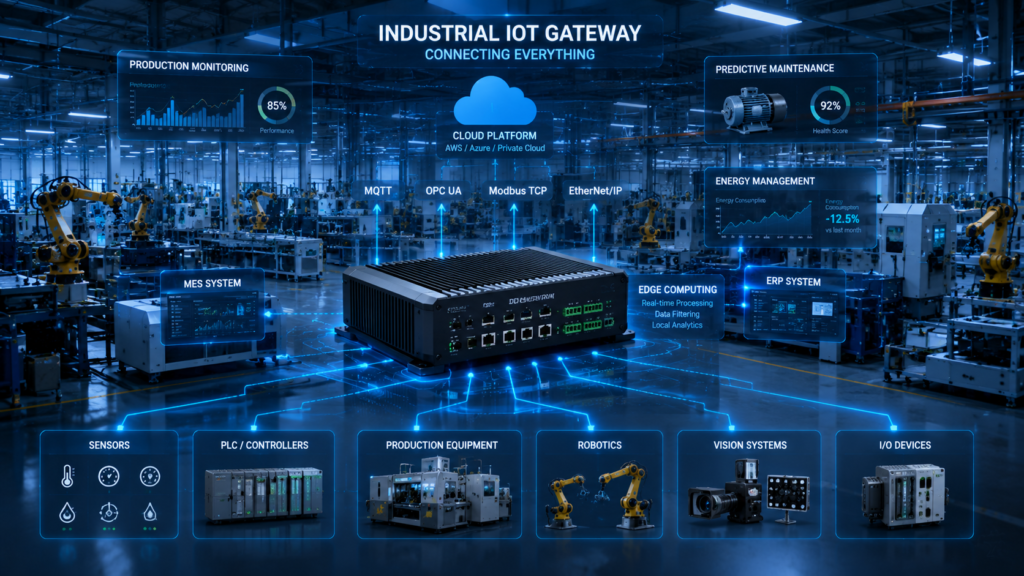
Industrial IoT gateway enabling data acquisition, edge computing, protocol conversion, and real-time connectivity between factory equipment and enterprise systems.
Industry Overview
The Growing Importance of Industrial IoT
Industrial IoT (IIoT) is transforming manufacturing, energy, transportation, healthcare, and industrial infrastructure by enabling connected devices to share data and support intelligent decision-making.
Industrial organizations increasingly require:
- Real-time equipment monitoring
- Predictive maintenance
- Remote diagnostics
- Energy optimization
- Production analytics
- Asset tracking
- Digital transformation
These initiatives rely on reliable industrial IoT gateway infrastructure.
Industry 4.0 and Connected Manufacturing
Industry 4.0 emphasizes:
- Smart factories
- Connected machines
- Edge computing
- Industrial AI
- Digital twins
- Cloud integration
- Data-driven operations
Industrial IoT gateways play a central role by connecting field devices with enterprise systems.
The Shift Toward Edge Computing
Sending all operational data directly to cloud platforms can create:
- Bandwidth limitations
- Latency issues
- Security concerns
- Increased operating costs
Modern industrial IoT gateways address these challenges through edge computing capabilities that process data locally before transmitting only relevant information.
Key Challenges
Legacy Equipment Integration
Many industrial facilities operate equipment that was never designed for Industrial IoT connectivity.
Examples include:
- Legacy PLCs
- Serial devices
- Proprietary controllers
- Older automation systems
Industrial IoT gateways provide protocol translation and connectivity.
Multiple Industrial Communication Protocols
Industrial environments often use:
- Modbus RTU
- Modbus TCP
- PROFINET
- EtherNet/IP
- OPC UA
- CAN Bus
- MQTT
Managing interoperability between these protocols can be complex.
Real-Time Data Requirements
Manufacturers increasingly require:
- Instant alarms
- Real-time monitoring
- Immediate notifications
- Fast response times
Industrial IoT gateways must process data efficiently.
Cybersecurity Risks
Connected industrial systems face growing risks from:
- Unauthorized access
- Malware attacks
- Data breaches
- Network vulnerabilities
Secure gateway deployment is essential.
Remote Site Management
Industrial assets may be distributed across:
- Multiple factories
- Remote facilities
- Energy installations
- Transportation networks
Industrial IoT gateways support centralized monitoring.
Scalability Challenges
Industrial IoT projects often expand over time.
Solutions must support:
- Additional devices
- New sensors
- Expanded facilities
- Increased data volumes
without major redesign.
Solution Architecture
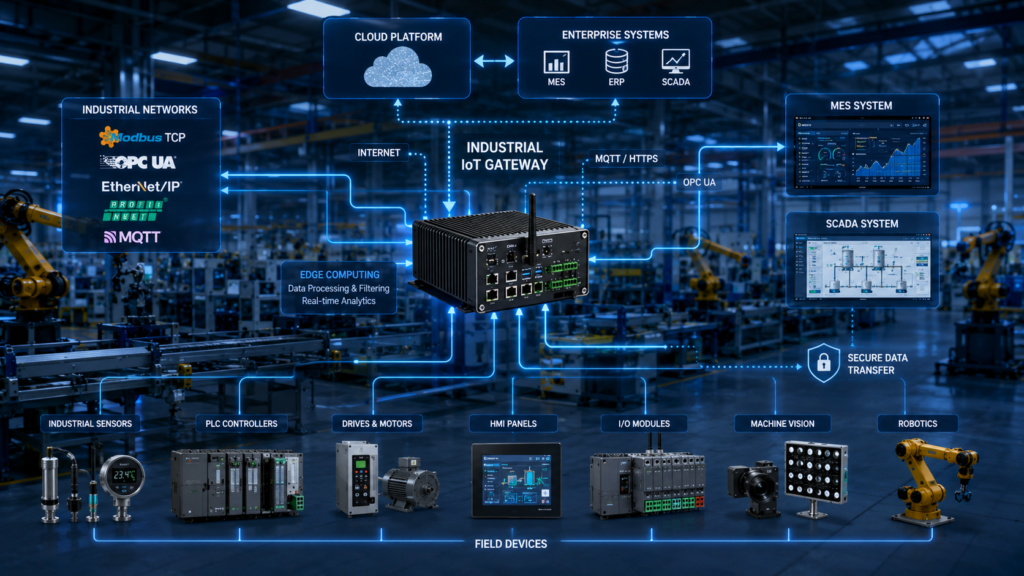
Industrial IoT gateway architecture enabling edge computing, protocol conversion, industrial networking, cloud connectivity, and enterprise system integration.
Industrial IoT Gateway Architecture
A typical Industrial IoT deployment consists of multiple layers.
Field Device Layer
Connected devices include:
- Sensors
- PLCs
- Industrial controllers
- Smart meters
- Industrial cameras
- RFID readers
- Actuators
These devices generate operational data.
Data Acquisition Layer
Industrial IoT gateways collect data through:
- Serial communication
- Ethernet communication
- Digital I/O
- Wireless connectivity
The gateway acts as a central collection point.
Edge Computing Layer
Industrial IoT gateways perform:
- Data filtering
- Protocol conversion
- Local analytics
- Event processing
- Edge AI workloads
- Data aggregation
This reduces cloud dependency.
Industrial Network Layer
Communication may occur through:
- Industrial Ethernet
- PROFINET
- EtherNet/IP
- Modbus TCP
- OPC UA
- MQTT
The gateway ensures interoperability.
Enterprise Integration Layer
Data is transmitted to:
- MES systems
- ERP platforms
- SCADA systems
- Cloud platforms
- Analytics engines
This enables enterprise-wide visibility.
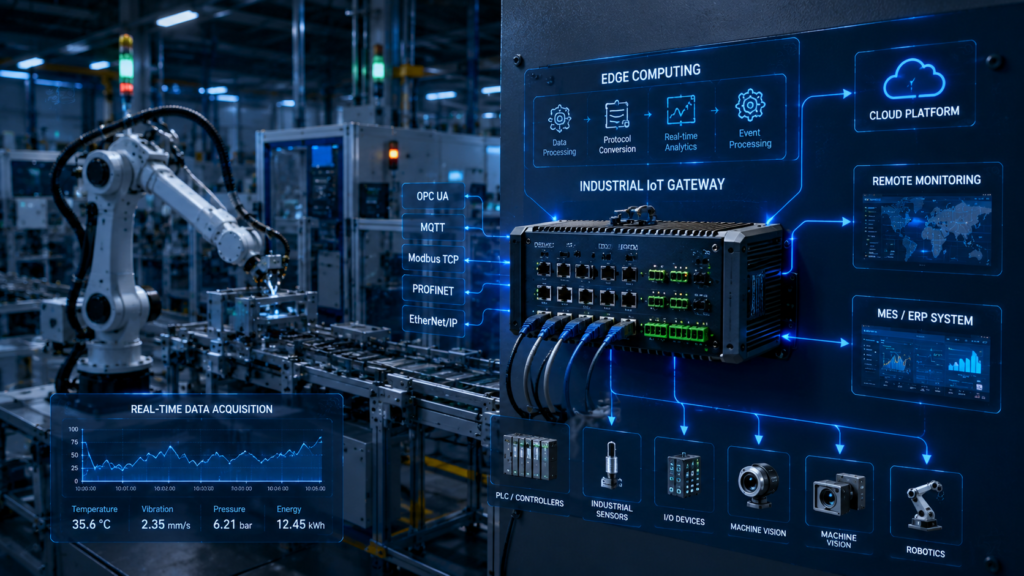
Industrial IoT gateway enabling edge computing, protocol conversion, industrial networking, and real-time data processing for Industry 4.0 applications.
Key Features
1. Multi-Protocol Connectivity
Industrial IoT gateways support communication between diverse industrial devices and enterprise systems.
2. Edge Computing Capability
Local processing enables:
- Faster response times
- Reduced bandwidth usage
- Lower latency
for Industrial IoT deployments.
3. Real-Time Data Acquisition
Gateways continuously collect operational data from field devices and sensors.
4. Protocol Conversion
Industrial IoT gateways simplify communication between legacy systems and modern applications.
5. Remote Monitoring Support
Operators can monitor assets across multiple locations from centralized platforms.
6. Industrial-Grade Reliability
Industrial environments require:
- 24/7 operation
- Rugged construction
- Stable performance
for mission-critical applications.
7. Cybersecurity Protection
Modern gateways support:
- Secure communication
- User authentication
- Network segmentation
- Data encryption
to improve security.
8. Cloud Connectivity
Industrial IoT gateways support integration with cloud services for advanced analytics and reporting.
9. Scalable Deployment
Organizations can expand connected device networks without major infrastructure changes.
Recommended CoreIPC Products
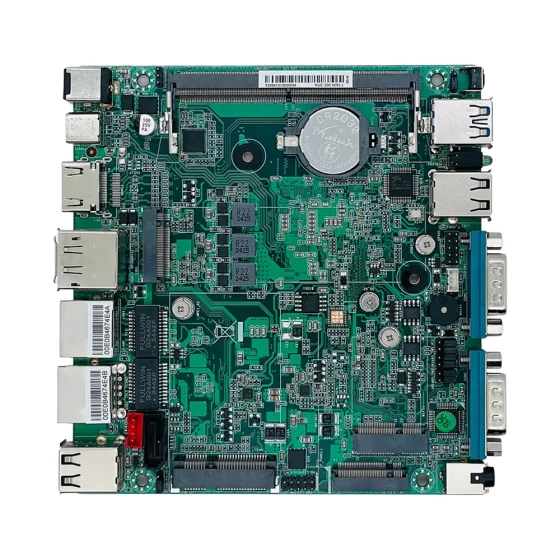
Embedded Computers
Suitable for:
- Industrial IoT gateways
- Data acquisition systems
- Edge computing applications
Key advantages:
- Compact size
- Low power consumption
- Flexible deployment
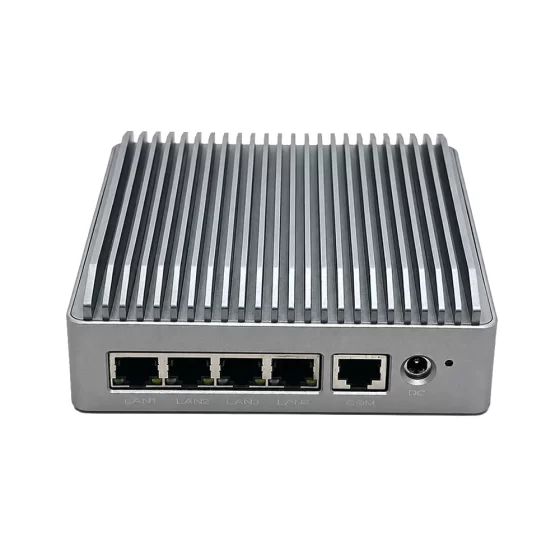
Fanless Industrial PCs
Suitable for:
- Harsh environments
- Remote installations
- Industrial networking
Key advantages:
- Maintenance-free operation
- Improved reliability
- Silent operation
Industrial PCs
Suitable for:
- Large-scale IoT deployments
- Centralized monitoring
- Multi-device integration
Key advantages:
- High processing performance
- Expansion flexibility
- Rich connectivity
Edge AI Computers
Suitable for:
- Intelligent analytics
- Predictive maintenance
- AI-powered monitoring
Key advantages:
- Local AI processing
- Real-time insights
- Reduced cloud dependency
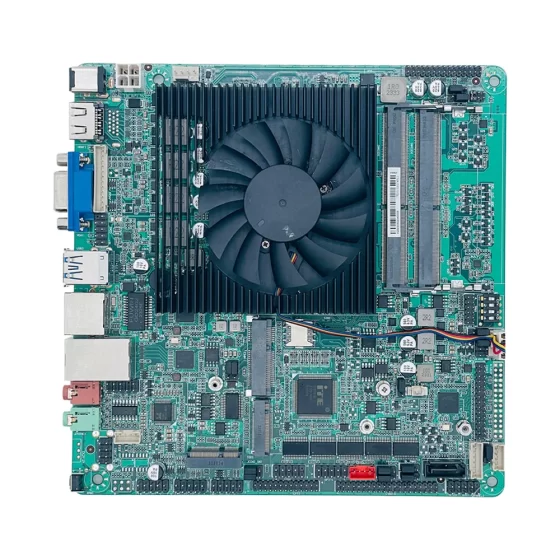
Mini-ITX Motherboards
Suitable for:
- Custom gateway development
- OEM projects
- Embedded networking systems
Key advantages:
- Standard form factor
- Flexible system design
- Rich I/O support
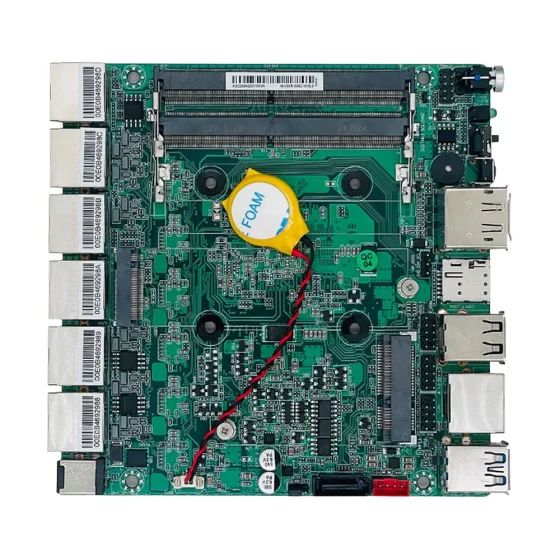
Custom Embedded Boards
Suitable for:
- Specialized Industrial IoT applications
- Proprietary industrial systems
Key advantages:
- Customized hardware
- Application-specific optimization
Deployment Scenarios
Smart Manufacturing
Industrial IoT gateways connect:
- PLCs
- Production equipment
- Sensors
- Manufacturing systems
to improve factory visibility.
Predictive Maintenance
Gateways collect equipment condition data and support analytics for early fault detection.
Energy Monitoring
Industrial IoT gateways gather:
- Power consumption
- Equipment efficiency
- Utility data
for energy optimization.
Remote Asset Monitoring
Organizations monitor equipment across multiple locations through centralized platforms.
Smart Transportation
Industrial IoT gateways support:
- Fleet monitoring
- Vehicle diagnostics
- Infrastructure monitoring
for transportation systems.
Building Automation
Gateways connect HVAC, lighting, security, and facility management systems.
Industrial Environmental Monitoring
Organizations use gateways to collect data from environmental sensors and monitoring equipment.
Business Benefits
Reduced Downtime
Continuous monitoring helps identify issues before failures occur.
Improved Operational Visibility
Organizations gain real-time access to equipment and production data.
Lower Maintenance Costs
Predictive maintenance reduces unnecessary service activities.
Enhanced Data Utilization
Industrial IoT gateways transform raw data into actionable information.
Improved Scalability
Organizations can expand Industrial IoT deployments efficiently.
Accelerated Digital Transformation
Connected systems support Industry 4.0 and smart manufacturing initiatives.
Why CoreIPC
CoreIPC provides industrial computing platforms designed for Industrial IoT, edge computing, and intelligent connectivity applications.
CoreIPC supports Industrial IoT projects through:
- Industrial computing expertise
- Embedded hardware development
- OEM manufacturing services
- ODM project support
- Product customization
- Long lifecycle support
- Industrial-grade quality
- Global deployment experience
Whether connecting industrial equipment, deploying edge computing solutions, or building Industrial IoT infrastructures, CoreIPC delivers reliable industrial computing platforms for demanding environments.
Frequently Asked Questions
1. What is an industrial IoT gateway?
An industrial IoT gateway is a device that connects industrial equipment and field devices with enterprise systems and cloud platforms, enabling data acquisition, protocol conversion, and edge computing.
2. Why is an industrial IoT gateway important?
It bridges operational technology and information technology systems, enabling Industrial IoT connectivity and digital transformation.
3. What protocols do industrial IoT gateways support?
Common protocols include Modbus, OPC UA, MQTT, PROFINET, EtherNet/IP, and CAN Bus.
4. Can an industrial IoT gateway perform edge computing?
Yes. Many gateways process data locally to reduce latency and bandwidth usage.
5. How does an industrial IoT gateway improve security?
Gateways support secure communication, authentication, encryption, and network segmentation.
6. What industries use industrial IoT gateways?
Manufacturing, energy, transportation, healthcare, utilities, and logistics commonly deploy Industrial IoT gateways.
7. Can industrial IoT gateways connect legacy equipment?
Yes. Protocol conversion capabilities enable integration with older industrial devices.
8. What role does MQTT play?
MQTT is commonly used for efficient Industrial IoT data transmission between edge devices and cloud platforms.
9. Can industrial IoT gateways integrate with PLCs?
Yes. Gateways frequently communicate with PLCs and automation systems.
10. What is the difference between an industrial IoT gateway and a router?
A gateway performs protocol conversion, edge processing, and industrial integration, while a router primarily forwards network traffic.
11. Can industrial IoT gateways support remote monitoring?
Yes. Remote monitoring is one of the most common Industrial IoT gateway applications.
12. How do industrial IoT gateways support Industry 4.0?
They connect machines, sensors, enterprise systems, and cloud platforms to create intelligent, data-driven operations.
Conclusion
Industrial IoT gateways have become essential infrastructure components for modern connected industrial environments. By enabling data acquisition, protocol conversion, edge computing, and enterprise integration, these platforms help organizations unlock the full value of Industrial IoT initiatives. From smart manufacturing and predictive maintenance to energy management and remote monitoring, industrial IoT gateways provide the connectivity foundation required for Industry 4.0 transformation. Selecting the right industrial computing platform ensures reliable performance, scalability, and long-term success in Industrial IoT deployments.
Contact Us
Looking for an Industrial IoT Gateway solution?
CoreIPC provides industrial computing platforms for:
- Industrial IoT
- Edge Computing
- Remote Monitoring
- Data Acquisition
- Smart Manufacturing
- Predictive Maintenance
- OEM Projects
- ODM Projects
- Custom Embedded Hardware Development
Contact CoreIPC today to discuss your Industrial IoT gateway requirements and identify the ideal computing platform for your project.