CoreIPC Industrial Computing Solutions

Industrial IoT for Smart Warehouses: Industrial IoT Warehouse Platform for Connected Logistics Operations
Executive Summary
Industrial iot warehouse systems provide the computing foundation for connected storage, automated material handling, inventory visibility, equipment monitoring, barcode scanning, RFID tracking, environmental sensing, AGV and AMR coordination, and real-time warehouse operation management.
Modern warehouses are no longer simple storage spaces. They often include conveyor systems, sorting lines, barcode readers, RFID devices, vision inspection points, weighing stations, AGVs, AMRs, forklifts, sensors, access control devices, industrial switches, WMS platforms, WCS software, cloud dashboards, and local monitoring systems.
To make these systems work together, warehouses need reliable edge computing and data connectivity.
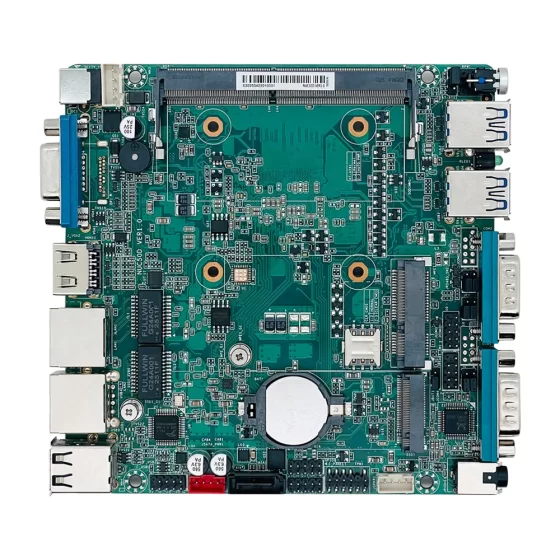
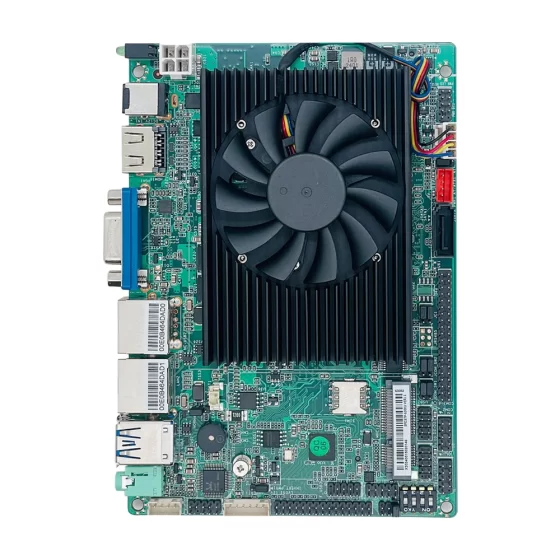
An industrial computer or embedded computer can act as the local industrial IoT gateway or warehouse edge platform. It can collect data from warehouse equipment, connect different devices, process records locally, buffer data during network interruptions, support secure remote access, and send structured information to WMS, WCS, ERP, cloud platforms, or local dashboards.
Compared with office PCs or consumer gateways, industrial computers are better suited for warehouse environments because they support rugged installation, multiple LAN ports, serial communication, GPIO, local storage, fanless design options, stable power input, and long lifecycle availability.
This article explains how industrial IoT supports smart warehouse operations, what deployment challenges appear in real logistics environments, how the solution architecture works, and which hardware features matter when selecting an industrial computer or embedded computer for smart warehouse IoT applications.
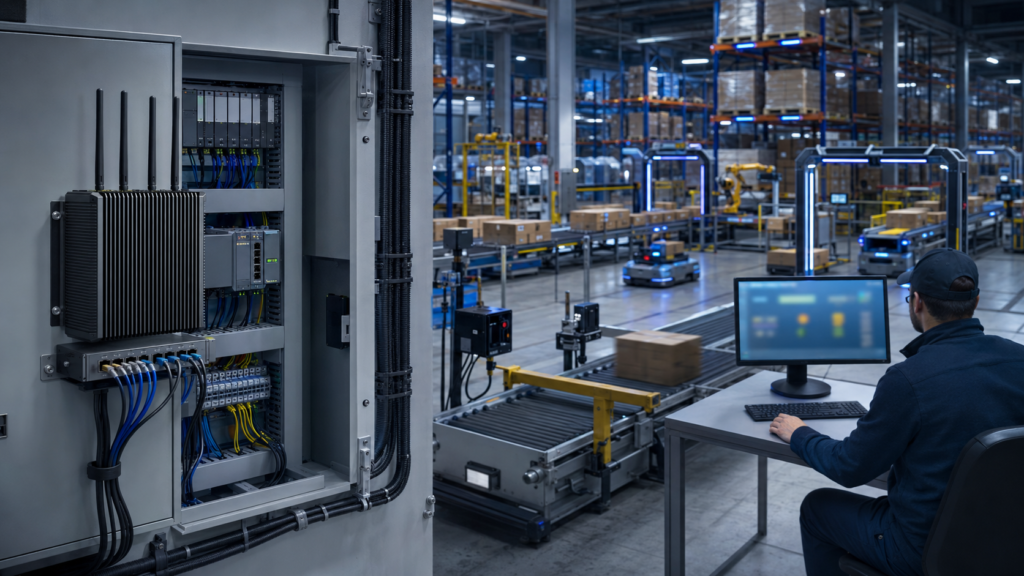
Smart Warehouse Data Collection
Industry Overview
Warehouses Are Becoming More Automated
Warehouses are under pressure to move goods faster, reduce picking errors, improve inventory accuracy, and support real-time order fulfillment.
To achieve this, many facilities are adopting connected automation systems.
Common smart warehouse technologies include:
- Barcode scanning
- RFID tracking
- Conveyor control
- Sorting systems
- AGV and AMR robots
- Automated storage systems
- Vision inspection
- Weighing and dimensioning
- Environmental monitoring
- Warehouse management systems
- Warehouse control systems
- Cloud operation dashboards
These systems generate large amounts of operational data.
Without a reliable industrial IoT layer, this data may remain fragmented across devices, machines, and software platforms.
Industrial IoT Connects Warehouse Equipment
Industrial IoT helps connect physical warehouse equipment with software systems.
It allows warehouse operators to collect and use data from conveyors, scanners, robots, sensors, meters, cameras, gates, weighing systems, and local controllers.
The goal is to improve visibility into:
- Inventory movement
- Equipment status
- Sorting performance
- Picking accuracy
- Robot operation
- Conveyor conditions
- Energy usage
- Environmental conditions
- Alarm events
- Maintenance needs
- Order processing flow
An industrial iot warehouse platform turns disconnected equipment into a more coordinated logistics operation.
Industrial Computing Is the Edge Foundation
Smart warehouse systems need reliable computing near the equipment.
Industrial computers and embedded computers can be installed in control cabinets, sorting systems, conveyor zones, warehouse racks, charging areas, loading docks, cold chain facilities, and remote logistics nodes.
These environments may include dust, vibration, temperature variation, cable stress, unstable power, and long operating hours.
Industrial computing platforms provide the hardware foundation for stable warehouse IoT deployment.
They support flexible I/O, network segmentation, local storage, edge processing, and long-term operation.

Smart Warehouse IoT Deployment Challenges
Key Challenges
Connecting Many Warehouse Devices
A smart warehouse may include many different devices from different vendors.
A single facility may use barcode readers, RFID readers, sensors, conveyors, robot controllers, weighing stations, cameras, access control devices, and industrial switches.
These systems may use different interfaces and protocols.
A warehouse IoT platform must support practical connectivity, including:
- Ethernet
- USB
- RS232
- RS485
- GPIO
- Digital input
- Digital output
- Wireless modules
- Camera interfaces
- Local display output
- Storage expansion
Flexible device connectivity helps reduce integration complexity.
Integrating WMS and WCS Systems
Warehouse management systems and warehouse control systems often need real-time equipment data.
A WMS may need inventory status, picking results, receiving records, and shipment data. A WCS may need conveyor status, sorter activity, robot tasks, scanner events, and equipment alarms.
The industrial IoT platform must collect data from physical devices and forward structured information to software systems.
This may require:
- Data normalization
- Timestamp alignment
- Event filtering
- Equipment status mapping
- Barcode and RFID record handling
- Local buffering
- API or database integration
- Platform communication management
A reliable embedded computer can serve as the local bridge between warehouse equipment and software platforms.
Handling High Data Volume
Smart warehouses can generate high data volume.
Barcode scanners may process thousands of items per hour. Cameras may capture images continuously. Sensors may report equipment status in real time. AMRs may send position and task data. Conveyors may generate frequent status events.
The computing platform must be sized according to:
- Device count
- Data point count
- Scan frequency
- Camera workload
- Robot data rate
- Local database size
- Network bandwidth
- Upload frequency
- Edge processing workload
- Storage retention requirements
Underpowered systems can create delays, data loss, or unstable integration.
Maintaining Operation During Network Interruptions
Warehouse operations cannot stop because a cloud connection or enterprise link becomes unstable.
A smart warehouse IoT platform should support local buffering and store-and-forward behavior.
This helps preserve:
- Scan records
- Sorting events
- Inventory movement logs
- Robot task records
- Equipment alarms
- Environmental data
- Access records
- Maintenance logs
When the network connection recovers, buffered data can be uploaded to WMS, WCS, ERP, cloud platforms, or local databases.
Supporting Real-Time Response
Some warehouse operations need fast local response.
Examples include scanner validation, conveyor stop signals, sorter status alerts, robot zone monitoring, cold chain temperature warnings, and equipment fault detection.
If all data must go to the cloud before action, response may be delayed.
Edge computing allows important logic to run locally.
An industrial computer can process warehouse events near the equipment and send only selected results to higher-level systems.
Protecting Warehouse Networks
Smart warehouse systems often connect operational devices with enterprise software and cloud platforms.
This creates security requirements.
The IoT platform may need to separate:
- Warehouse equipment network
- Office IT network
- Camera network
- Robot network
- Scanner network
- WMS or WCS network
- Remote maintenance network
- Cloud uplink
- Management network
Multiple LAN ports and controlled communication policies help reduce unnecessary exposure.

Industrial IoT Warehouse Architecture
Industrial IoT Warehouse Solution Architecture
Warehouse Device Layer
The warehouse device layer includes the physical equipment that generates data or requires control.
This layer may include:
- Barcode readers
- RFID readers
- Conveyors
- Sorters
- Weighing systems
- Dimensioning systems
- AGVs
- AMRs
- Forklift terminals
- Industrial cameras
- Environmental sensors
- Access control devices
- PLC controllers
- Local HMIs
These devices provide real-time operational data for warehouse visibility and automation.
Industrial IoT Edge Layer
The industrial IoT edge layer is the local computing layer.
At this layer, the industrial computer or embedded computer may:
- Collect scanner records
- Receive sensor data
- Connect robot systems
- Monitor conveyor status
- Process local events
- Buffer data
- Convert protocols
- Store logs
- Apply security rules
- Forward selected information to software systems
This layer connects physical warehouse operations with digital platforms.
Data Processing Layer
The data processing layer improves raw data before it reaches higher-level systems.
The platform may process:
- Barcode events
- RFID reads
- Inventory movement records
- Conveyor alarms
- Sortation events
- Robot task status
- Environmental records
- Energy usage
- Equipment health data
- Loading dock events
By processing data locally, the platform reduces bandwidth usage and improves response time.
Warehouse Software Integration Layer
The industrial IoT platform connects warehouse equipment with software systems.
It may send structured data to:
- WMS
- WCS
- ERP
- MES
- Cloud dashboards
- Local databases
- Maintenance platforms
- Fleet management systems
- Energy management platforms
- Security monitoring systems
This integration helps warehouse managers see what is happening in real time and coordinate operations more effectively.
Security and Management Layer
The security and management layer helps keep warehouse connectivity reliable and controlled.
It may include:
- Network segmentation
- Firewall policies
- Secure remote access
- User permissions
- Local logging
- Configuration backup
- Device health monitoring
- Storage status monitoring
- Remote diagnostics
- Update management
This layer helps reduce risk and simplify long-term maintenance.
Key Features
Multi-Device Connectivity
Industrial IoT warehouse platforms must connect many types of equipment.
Important I/O options may include:
- LAN
- USB
- RS232
- RS485
- GPIO
- Digital input
- Digital output
- HDMI
- DisplayPort
- M.2
- PCIe
- SATA or NVMe storage
Native industrial interfaces reduce the need for external converters.
This improves reliability and makes installation cleaner in warehouse control cabinets.
Multi-LAN Network Design
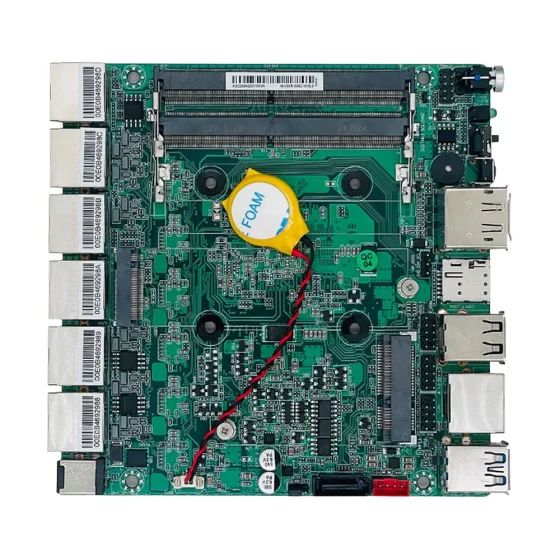
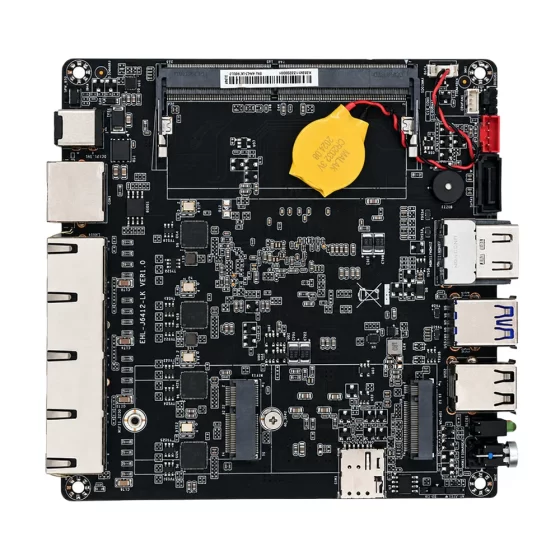
Multiple LAN ports are valuable for warehouse IoT deployment.
They allow different networks to remain separated.
Useful configurations may include:
- Equipment network
- Scanner network
- Camera network
- Robot network
- WMS or WCS network
- Factory or warehouse IT network
- Remote maintenance network
- Management network
Multi-LAN design improves traffic organization and supports stronger security boundaries.
Local Storage and Data Buffering
Local storage is important for smart warehouse data continuity.
The platform may store:
- Scan records
- RFID events
- Sorting logs
- Robot task data
- Conveyor alarms
- Environmental records
- Local databases
- Upload buffers
- Remote access logs
- Diagnostic files
SSD or NVMe storage is commonly preferred because it provides fast access and better shock resistance than mechanical drives.
Storage design should consider retention period, write endurance, backup workflow, and network interruption behavior.
Edge Processing Performance
The platform may collect, process, store, and forward data at the same time.
Hardware selection should consider:
- CPU performance
- Memory capacity
- Device count
- Data point count
- Scanner event rate
- Camera workload
- Robot data volume
- Local database workload
- Storage speed
- Operating system support
For larger warehouses, the system should be tested with real device connections and traffic volume.
Rugged and Fanless Design
Warehouse environments can be dusty and vibration-prone.
Fanless industrial computers reduce dust intake and remove one common mechanical failure point.
Rugged enclosures help protect the system from vibration, cable stress, installation impact, and continuous operation.
Thermal design should still be reviewed carefully, especially when the system handles continuous data collection, local processing, and storage writes.
Secure Remote Access
Smart warehouse systems often need remote support.
System integrators, equipment suppliers, and warehouse IT teams may need access to gateways, scanners, conveyors, robots, or local dashboards.
Remote access should be controlled through:
- User authentication
- VPN or secure tunnel support
- Access permissions
- Session logging
- Maintenance windows
- Network segmentation
- Configuration backup
- Emergency access rules
This supports maintenance efficiency without exposing the full warehouse network.
Wireless and Expansion Options
Some warehouse systems require wireless connectivity or expansion.
M.2 and PCIe interfaces can support wireless modules, additional network cards, storage expansion, or custom modules.
This is useful for distributed warehouse areas, mobile equipment integration, and OEM gateway products.
Expansion capability helps the same platform serve different warehouse applications.
Long Lifecycle and Maintainability
Warehouse IoT systems may remain in service for years.
Consistent hardware helps maintain software images, drivers, spare parts, configuration templates, and validation procedures.
Industrial computing platforms with lifecycle planning help system integrators and warehouse operators deploy stable solutions across many facilities.

Smart Warehouse IoT Operations
Deployment Scenarios
Barcode and RFID Data Collection
A smart warehouse may use barcode and RFID devices across receiving, storage, picking, packing, and shipping areas.
An industrial IoT platform can collect these records, timestamp events, buffer data locally, and forward structured information to WMS or ERP systems.
This improves inventory accuracy and traceability.
Conveyor and Sorting System Monitoring
Conveyors and sorting systems generate continuous status and alarm data.
An embedded computer can collect signals from controllers, sensors, scanners, and local devices.
It can provide local monitoring and send selected events to WCS or maintenance platforms.
This helps improve equipment visibility.
AGV and AMR Operation Support
AGVs and AMRs need reliable communication with task systems, fleet platforms, charging stations, and warehouse infrastructure.
An industrial computer can support local IoT connectivity, network segmentation, and data exchange between robot systems and warehouse platforms.
This supports safer and more reliable robot-assisted logistics.
Cold Chain Warehouse Monitoring
Cold chain warehouses need continuous temperature and humidity monitoring.
An embedded computer can collect environmental sensor data, store local records, generate local alerts, and send data to cloud or facility management systems.
Local buffering helps preserve records during network interruptions.
Smart Loading Dock Monitoring
Loading dock operations may include cameras, sensors, access control, barcode scanners, and truck scheduling systems.
A warehouse IoT gateway can collect data from dock equipment and forward selected events to operation dashboards.
This improves visibility into inbound and outbound logistics.
Warehouse Energy Monitoring
Warehouses use lighting, HVAC, conveyors, chargers, compressors, and automation systems.
An industrial IoT platform can collect energy data from meters and equipment.
This supports energy analysis, abnormal consumption detection, and operational improvement.
Vision-Based Sorting and Inspection
Some warehouses use cameras for package inspection, label reading, dimensioning, or sorting verification.
An industrial computer can support local camera data handling, event processing, and integration with WMS or WCS systems.
For AI-based workloads, higher-performance edge platforms may be required.
Multi-Site Warehouse Monitoring
Large logistics operators may manage many warehouse sites.
A standardized industrial IoT warehouse platform can collect local data at each site and send selected information to centralized dashboards.
This supports multi-site visibility and consistent operations management.
Business Benefits
Improved Inventory Visibility
Industrial IoT helps warehouses track goods movement more accurately.
Barcode, RFID, scanner, and equipment data can be collected automatically and shared with WMS or ERP systems.
This reduces blind spots and improves inventory control.
Better Equipment Monitoring
Connected conveyors, sorters, robots, sensors, and scanners provide useful maintenance data.
Industrial IoT platforms can collect equipment status and alarm records in real time.
This helps maintenance teams respond faster and reduce unexpected downtime.
Reduced Manual Data Entry
Automated data collection reduces dependence on manual records.
This improves accuracy for receiving, picking, sorting, packing, shipping, and inventory updates.
It also reduces human error in fast-moving warehouse operations.
Faster Local Response
Edge computing allows warehouse systems to respond locally.
Alerts, equipment status changes, environmental warnings, and scanner events can be processed near the source.
This reduces delay and improves operational responsiveness.
Stronger Network Organization
Multi-LAN industrial IoT platforms help separate robot networks, scanner networks, camera networks, office IT, warehouse equipment, and remote maintenance access.
This improves security and reduces unnecessary traffic exposure.
A better network structure supports scalable warehouse automation.
Scalable Smart Warehouse Deployment
A standardized industrial iot warehouse platform makes it easier to deploy across multiple zones, warehouses, and logistics sites.
Consistent hardware simplifies software images, configuration templates, maintenance training, spare parts planning, and lifecycle management.
This supports long-term smart warehouse expansion.
Why CoreIPC
CoreIPC provides industrial computing platforms for industrial IoT, factory automation, robotics, machine vision, network security, and embedded system integration. For smart warehouse applications, CoreIPC focuses on reliable industrial computer hardware, embedded computer solutions, multi-LAN configurations, serial communication, flexible I/O, compact system design, fanless deployment options, local storage capability, and OEM/ODM customization support. CoreIPC helps system integrators, warehouse automation providers, and logistics operators select computing platforms that match real deployment requirements, including device interfaces, data workload, LAN port count, storage needs, mounting methods, power input, thermal conditions, and lifecycle planning.
Frequently Asked Questions
1. What is industrial IoT for smart warehouses?
Industrial IoT for smart warehouses connects warehouse equipment, sensors, scanners, robots, cameras, and software systems through edge computing and data networks.
It helps collect operational data, monitor equipment, track inventory movement, support automation, and send structured information to WMS, WCS, ERP, cloud platforms, or local dashboards.
2. Why use an industrial computer in a smart warehouse?
An industrial computer provides rugged hardware and flexible connectivity for warehouse environments.
It can support multiple LAN ports, serial communication, USB, GPIO, local storage, fanless operation, industrial mounting, stable power input, and long lifecycle availability. These features make it suitable for control cabinets, sorting lines, loading docks, and warehouse edge systems.
3. How is an embedded computer used in warehouse IoT?
An embedded computer can act as a compact warehouse IoT gateway.
It can collect scanner events, sensor data, conveyor status, robot information, environmental records, and equipment alarms. It can process data locally and forward selected records to WMS, WCS, ERP, or cloud systems.
4. What warehouse devices can be connected?
A warehouse IoT platform can connect barcode readers, RFID readers, sensors, meters, conveyors, sorters, AGVs, AMRs, industrial cameras, weighing systems, dimensioning systems, PLCs, HMIs, and access control devices.
The exact device support depends on interfaces, software drivers, communication protocols, and integration requirements.
5. Why is local storage important in warehouse IoT?
Local storage helps prevent data loss during network interruptions.
The platform can continue storing scan records, sorting events, robot task logs, environmental records, and equipment alarms locally. When the connection recovers, buffered data can be uploaded to warehouse software systems.
6. Why are multiple LAN ports important for smart warehouse systems?
Multiple LAN ports help separate different networks.
One port may connect to scanners, another to cameras, another to robots, another to WMS or WCS, and another to remote maintenance or management networks. This improves network organization and security.
7. Can industrial IoT support AGV and AMR warehouse systems?
Yes. Industrial IoT platforms can help exchange data between AGVs, AMRs, fleet management systems, charging stations, warehouse software, and local sensors.
They can also support network segmentation, local data handling, and equipment monitoring for robot-assisted warehouse operations.
8. Can warehouse IoT platforms support cold chain monitoring?
Yes. Embedded computers can collect temperature, humidity, and environmental sensor data from cold chain warehouse areas.
They can store local records, generate alerts, and upload data to facility management, cloud dashboards, or compliance systems.
9. What hardware features matter for industrial IoT warehouse platforms?
Important features include multiple LAN ports, RS232, RS485, USB, GPIO, digital I/O, reliable memory, SSD or NVMe storage, rugged enclosure, fanless design, industrial power input, display output, M.2, PCIe, and expansion options.
The final configuration should match device count, data workload, network design, and installation environment.
10. What should be tested before deployment?
Before deployment, the platform should be tested with real scanners, sensors, robots, conveyors, cameras, network topology, warehouse software, data rates, storage behavior, and long-running operation.
Thermal stability, data buffering, upload behavior, remote access workflow, and recovery procedures should also be validated.
Conclusion
Industrial iot warehouse systems provide a practical foundation for connected logistics operations, inventory visibility, equipment monitoring, AGV and AMR coordination, barcode and RFID data collection, environmental sensing, and smart warehouse automation.
By placing an industrial computer or embedded computer near warehouse equipment, system integrators and logistics operators can connect scanners, sensors, conveyors, robots, cameras, PLCs, WMS platforms, WCS systems, cloud dashboards, and maintenance tools through reliable and controlled communication paths.
The right industrial IoT warehouse platform should be selected according to real deployment requirements, including device interfaces, data volume, LAN port count, serial communication, storage design, buffering requirements, mounting method, power input, thermal conditions, operating system support, and lifecycle planning.
CoreIPC supports smart warehouse IoT projects with industrial computing platforms designed for practical warehouse, logistics, edge, and OEM deployment. With the right hardware foundation, warehouse operators and automation providers can build reliable, scalable, and data-driven logistics systems.
Contact Us
Looking for an industrial computer, embedded computer, or multi-LAN platform for industrial IoT warehouse deployment?
Contact CoreIPC to discuss your project requirements, including device interfaces, LAN port count, scanner and sensor integration, robot connectivity, data workload, storage configuration, mounting method, power input, operating environment, lifecycle needs, and OEM/ODM customization options.