工业数据聚合平台: 智能制造的工业数据聚合
执行摘要
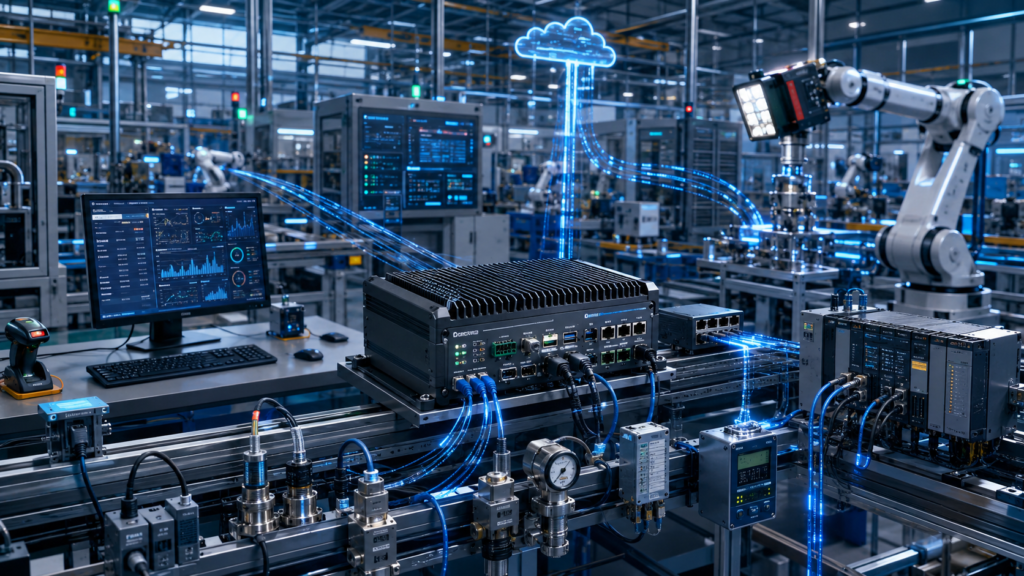
Industrial data aggregation provides the computing foundation for collecting, normalizing, buffering, 加工, and forwarding data from machines, PLC, 传感器, 米, 机器人, 相机, 检查系统, 和工厂软件平台.
Modern factories generate data from many different sources. Production lines may include legacy machines, Ethernet-based PLCs, serial sensors, industrial meters, 条形码阅读器, 视觉系统, 测试设备, 监控与数据采集系统, 制造执行系统平台, and cloud-connected industrial IoT applications.
Without a reliable aggregation layer, data may remain fragmented across machines, spreadsheets, local controllers, isolated databases, or disconnected systems.
An industrial data aggregation platform built on an industrial computer or embedded computer can collect data from multiple devices, align timestamps, filter unnecessary records, buffer information locally, run edge processing tasks, and send structured data to SCADA, 制造执行系统, 企业资源计划, 云平台, historians, or analytics systems.
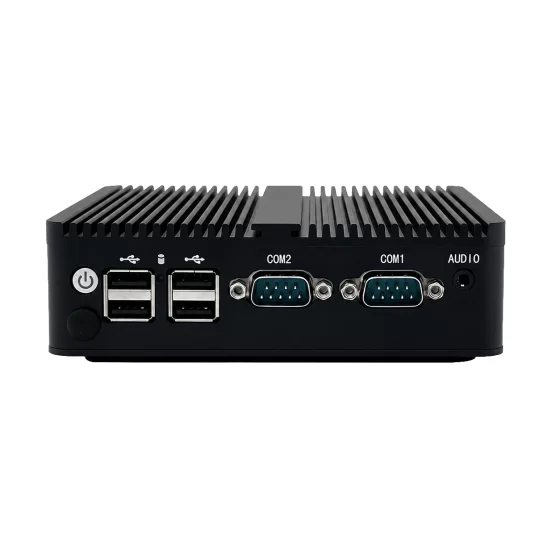
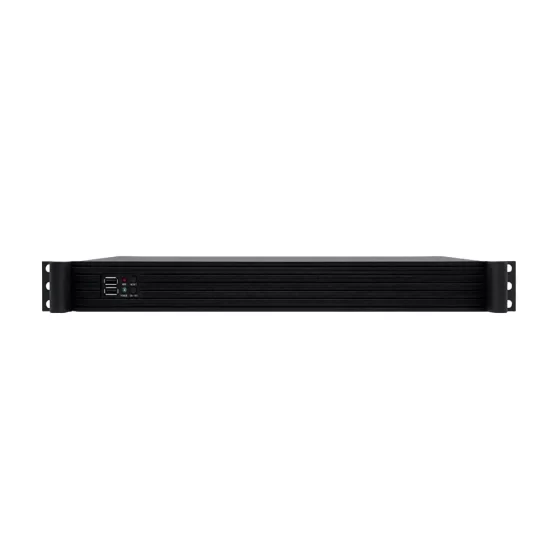
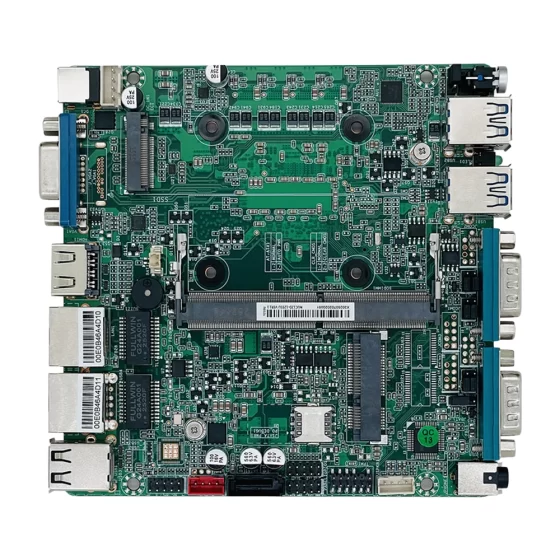
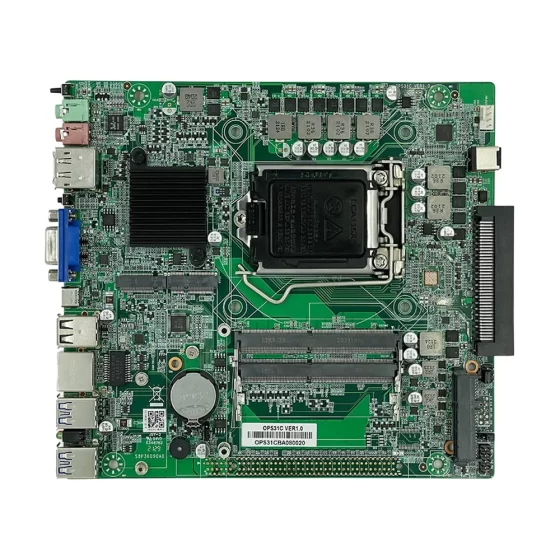
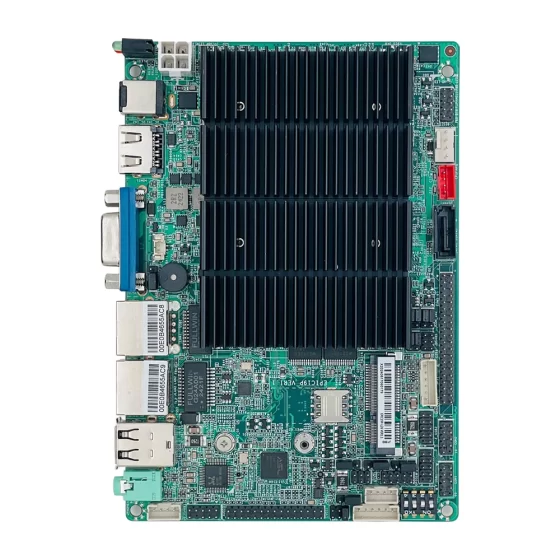
Compared with basic converters or office PCs, industrial computers provide a more reliable hardware foundation for shop floor deployment. 它们支持坚固的外壳, 多个 LAN 端口, 串行接口, 本地存储, 无风扇设计选项, 工业电源输入, 灵活的输入/输出, 和长生命周期可用性.
This article explains how industrial data aggregation platforms support smart manufacturing, what deployment challenges appear in real factories, 解决方案架构如何运作, and which hardware features matter when selecting an industrial computer or embedded computer for factory data aggregation applications.

Industrial data aggregation platforms collect and organize machine, sensor, 质量, production, and energy data.
行业概况
Factories Need Unified Data Visibility
Smart manufacturing depends on reliable data.
生产团队需要了解机器状态, 停机原因, 生产数量, 报警历史记录, 能源使用, 高质量的结果, 过程值, maintenance conditions, and equipment performance.
然而, factory data is often distributed across many systems.
Some machines store data locally. Some PLCs only communicate with nearby HMIs. Some meters use serial communication. Some inspection machines export files. Some systems send data to SCADA, while others report to MES or cloud dashboards.
This creates disconnected information.
An industrial data aggregation platform helps bring these data sources together.
Data Aggregation Is Different from Simple Data Collection
Basic data collection captures values from devices.
Industrial data aggregation goes further.
A practical aggregation platform may need to support:
- Multi-device data acquisition
- Protocol bridging
- Data normalization
- Timestamp alignment
- 本地缓冲
- 数据过滤
- 边缘处理
- Quality data consolidation
- Alarm and event collection
- Energy data aggregation
- Remote access logging
- Platform integration
The goal is to create structured and usable industrial data, not only raw values.
工业计算是硬件基础
Industrial data aggregation platforms are often deployed near production equipment.
它们可以安装在控制柜内, 机器外壳, production line panels, 杂物间, 仓库系统, or edge computing stations.
这些环境可能包括灰尘, 振动, 温度变化, 电源不稳定, 电噪声, 气流受限, 电缆应力, 并连续运行.
工业计算机和嵌入式计算机提供了这些条件所需的硬件基础.
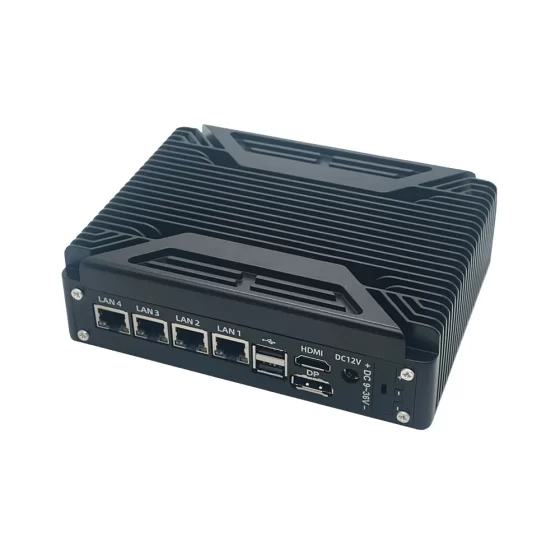
They support multi-LAN networking, 串行通讯, 本地存储, 无风扇设计, 工业安装, flexible expansion, and stable long-term deployment.

混合接口, 遗留设备, protocol diversity, data volume, buffering, and network segmentation affect aggregation deployment.
主要挑战
Collecting Data from Mixed Equipment
Factories often contain equipment from different vendors and generations.
一条生产线可能包含 PLC, 米, 传感器, 机器人, 条形码阅读器, 测试系统, 相机, 人机界面, and legacy machines.
These devices may use different interfaces, 数据格式, and communication methods.
A data aggregation platform must support practical connectivity, 包括:
- Ethernet-based devices
- Serial devices
- PLC网络
- Sensor systems
- Meter networks
- USB-connected equipment
- Local files or databases
- 工业网关
- 机器控制器
- Inspection equipment
Flexible I/O is important because every factory site is different.
Normalizing Data into Usable Formats
Raw factory data is often inconsistent.
Different machines may use different tag names, units, 时间戳, alarm codes, sampling rates, and record structures.
An industrial data aggregation platform should help convert this raw data into a more consistent structure.
This may include:
- Tag mapping
- Unit conversion
- Timestamp alignment
- 数据过滤
- 赛事分类
- Alarm grouping
- Production count formatting
- Machine status standardization
- Local data validation
Structured data is easier to use in MES, 监控与数据采集系统, historian, cloud, and analytics systems.
Avoiding Data Loss During Network Interruptions
工厂网络并不总是稳定.
Connections to MES, 监控与数据采集系统, 云仪表板, or remote servers may be interrupted.
If the aggregation platform only forwards live data without local buffering, important records may be lost.
Local storage and buffering are important for:
- 报警历史记录
- 生产数量
- 优质结果
- Energy records
- 维护日志
- Sensor trends
- Machine status changes
- Batch or process records
A reliable industrial computer can store data locally and forward it when the network connection recovers.
Managing High Device Count and Data Volume
Industrial data aggregation workload depends on the number of connected devices and the update rate.
A small machine gateway may collect a few signals. A factory-level aggregation platform may process data from many machines, 传感器, 米, 相机, and software systems.
The system must be sized according to:
- 设备数量
- Data point count
- Sampling frequency
- 协议工作量
- 本地数据库大小
- Upload frequency
- Edge processing needs
- Storage retention period
- Dashboard requirements
- Network bandwidth
Hardware selection should reflect the actual data workload.
Maintaining Network Segmentation
Industrial data aggregation platforms often sit between machine networks and higher-level systems.
This creates a security boundary.
A flat network can expose machines, PLC, 相机, and local systems unnecessarily.
The aggregation platform may need to separate:
- 机器网络
- PLC网络
- 传感器网络
- 摄像头网络
- 工厂IT网络
- 工业物联网网络
- 远程维护网络
- 管理网络
Multiple LAN ports help create cleaner segmentation and controlled data flow.
Supporting Long-Term Factory Deployment
Factory data systems often remain in use for many years.
频繁的硬件更改可能会导致软件验证问题, driver problems, 备件挑战, 和维护复杂性.
Industrial computing platforms with lifecycle planning help manufacturers and system integrators maintain consistent aggregation systems across production lines, 植物, 和设备世代.

Industrial data aggregation platforms connect shop-floor devices with local databases, 工厂软件, IIoT systems, 和云平台.
Industrial Data Aggregation Solution Architecture
Device and Machine Layer
The device and machine layer includes the equipment that generates data.
该层可能包括:
- PLC控制器
- 传感器
- 电能表
- 机器人
- 条码阅读器
- 工业相机
- 测试设备
- 人机界面
- 驱动器
- 运动控制器
- 远程I/O模块
- 传统串行设备
These systems provide raw production, 质量, 活力, 维护, 和处理数据.
The industrial data aggregation platform connects to these sources and collects selected information.
Edge Aggregation Layer
The edge aggregation layer is the core of the solution.
在这一层, 工业计算机或嵌入式计算机可以:
- Collect data from multiple devices
- 转换协议
- Normalize tag values
- Align timestamps
- 存储本地记录
- 网络问题期间缓冲数据
- Filter unnecessary values
- Aggregate alarms and events
- Run local processing logic
- Forward structured data to higher-level systems
This layer turns disconnected shop floor data into usable industrial information.
Local Processing Layer
The local processing layer improves data quality before upload.
The platform may process:
- Machine status changes
- 报警事件
- 生产数量
- Cycle time records
- Energy consumption values
- Quality inspection results
- 环境数据
- 维护指标
- Equipment health signals
- 停机事件
通过本地处理数据, the platform can reduce bandwidth usage and improve response time.
平台集成层
The aggregation platform connects local data with factory and enterprise systems.
It may send selected information to:
- 监控与数据采集系统
- 制造执行系统
- 企业资源计划
- 工业物联网平台
- 云仪表板
- Local historian databases
- 维护系统
- 质量数据库
- 能源管理系统
- Remote monitoring platforms
Instead of sending every raw value, the platform can deliver structured data, 事件记录, 摘要, trends, 警报, 和选定的日志.
安全和管理层
Industrial data aggregation must be controlled and maintainable.
安全和管理层可能包括:
- 网络分段
- 防火墙策略
- 安全的远程访问
- 用户权限
- 本地日志记录
- 配置备份
- 设备健康监测
- Storage status monitoring
- 远程诊断
- 更新管理
This layer helps keep data collection reliable and secure over the full system lifecycle.
主要特点
多设备连接
An industrial data aggregation platform must connect with many types of factory devices.
有用的接口可能包括:
- 局域网
- USB
- RS232
- RS485
- 通用输入输出接口
- 数字输入
- 数字输出
- HDMI
- 显示端口
- M.2
- PCIe
- SATA 或 NVMe 存储
Native industrial interfaces reduce the need for external converters and simplify cabinet wiring.
This improves reliability and makes the platform easier to deploy across different machines.
多LAN网络设计
Multiple LAN ports are valuable for separating different networks.
有用的配置可能包括:
- PLC网络
- 机器网络
- 传感器网络
- 摄像头网络
- 工厂IT网络
- 工业物联网网络
- 远程维护网络
- 管理网络
Multi-LAN design improves security, routing clarity, and traffic organization.
It also allows data aggregation without exposing machine networks directly to higher-level systems.
可靠的本地存储
Local storage is critical for aggregation systems.
The platform may store:
- Machine data
- 报警日志
- Event records
- 生产数量
- 优质结果
- Energy trends
- 本地数据库
- 上传缓冲区
- 配置文件
- Security logs
SSD 或 NVMe 存储通常是首选,因为它比机械驱动器提供快速访问和更好的抗震性.
Storage design should consider retention time, 写耐力, 备份工作流程, and data recovery needs.
Data Buffering and Store-and-Forward
A strong aggregation platform should continue collecting data even when the network connection is interrupted.
Store-and-forward capability helps protect factory records.
When the connection recovers, buffered data can be uploaded to MES, 监控与数据采集系统, cloud, or historian systems.
This is useful for production reporting, quality traceability, energy monitoring, and remote facility operations.
Edge Processing Performance
The platform may need to collect, normalize, 过程, store, and forward data at the same time.
硬件选型应考虑:
- CPU性能
- 内存容量
- 设备数量
- Data point count
- Polling frequency
- Local database workload
- 存储速度
- Protocol conversion workload
- Dashboard requirements
- 操作系统支持
对于更大规模的部署, the system should be tested with real data rates and device connections.
坚固耐用的无风扇设计
Fanless industrial computers are well suited for factory data aggregation.
它们减少灰尘摄入并消除一个常见的机械故障点.
坚固的外壳有助于防止振动, cabinet installation stress, 电缆应变, 并连续运行.
热设计仍应仔细审查, especially when the platform handles many devices, local storage writes, and continuous data processing.
Secure Remote Management
Distributed aggregation platforms need practical maintenance.
Secure remote management can help engineers update configurations, review logs, monitor system health, and troubleshoot data issues.
Remote management should be controlled through authentication, access permissions, 记录, 和网络分段.
This helps reduce on-site maintenance workload while protecting factory systems.
长生命周期可用性
Industrial aggregation systems often become part of long-term production infrastructure.
一致的硬件有助于维护软件映像, data collection templates, 司机, 备件, 和验证程序.
Long lifecycle availability is especially important for machine builders, 系统集成商, and manufacturers deploying aggregation platforms across multiple sites.
部署场景
Production Line Data Aggregation
A production line may include PLCs, 传感器, 条形码阅读器, 检查系统, 机器人, and local HMIs.
An industrial data aggregation platform can collect selected data from these devices and create structured records for MES, 监控与数据采集系统, 或本地仪表板.
This improves line visibility and production reporting.
Multi-Machine Data Collection
Factories often need to collect data from many machines in one area.
An embedded computer can aggregate machine status, 周期计数, 警报, and process values from multiple devices.
This supports centralized monitoring without replacing existing equipment.
Quality Data Aggregation
Quality systems may need data from inspection machines, 条形码阅读器, 测试站, 视觉系统, 及生产设备.
An aggregation platform can combine these records locally and forward structured data to quality databases or traceability platforms.
This supports better production quality analysis.
Energy Data Aggregation
Factories may monitor energy usage from meters, 压缩机, 暖通空调系统, 公用事业, 及生产设备.
A data aggregation platform can collect energy records, align timestamps, store trends, and forward selected values to energy management systems.
This supports efficiency improvement and abnormal consumption detection.
Industrial IoT Data Hub
An industrial data aggregation platform can act as a local IIoT data hub.
It can collect machine and sensor data, 本地处理记录, buffer information, and send selected data to cloud dashboards or local industrial IoT systems.
This supports connected factory deployment.
SCADA and MES Integration
SCADA and MES systems often require reliable data from production equipment.
The aggregation platform can collect local device data, normalize it, and forward structured records to these systems.
This improves integration between the shop floor and factory management platforms.
Remote Facility Monitoring
Remote facilities may include utility rooms, 泵站, energy systems, 环境监测站, or small production sites.
An embedded computer can collect data locally, 缓冲记录, and send information to central platforms when the network is available.
This improves visibility for distributed operations.
OEM Data Aggregation Appliance
Machine builders and system integrators can integrate industrial computers into custom aggregation appliances.
The platform can provide device connectivity, protocol handling, 本地存储, edge processing, 远程访问, and secure data forwarding for customer-ready systems.
商业效益
Unified Factory Data
Industrial data aggregation helps bring machine, sensor, 质量, 活力, and production data into a more unified structure.
This improves visibility across production lines and reduces information silos.
Unified data supports better decision-making.
减少手动报告
Many factories still rely on manual data entry or disconnected machine records.
A data aggregation platform can automate collection and forwarding.
This reduces manual workload, improves data consistency, and supports more reliable reporting.
Better Production Traceability
Aggregated data can support traceability across machines, 运营商, batches, processes, inspections, 和时间戳.
This is valuable for quality management, troubleshooting, compliance workflows, 和持续改进.
Improved Equipment Monitoring
Aggregated machine data helps teams understand equipment status, 警报, 停机时间, and operating conditions.
This supports maintenance planning and faster problem diagnosis.
When data is collected consistently, abnormal patterns are easier to identify.
Stronger System Integration
Factories often use multiple systems that need shared data.
Industrial data aggregation helps connect machines with SCADA, 制造执行系统, 企业资源计划, 云仪表板, 质量数据库, and energy management platforms.
This improves the value of existing factory software.
Scalable Smart Manufacturing Deployment
A standardized industrial data aggregation platform makes it easier to deploy across many machines, 生产线, 和工厂.
一致的硬件简化了软件映像, 配置模板, 备件计划, 训练, 和生命周期管理.
This supports scalable smart manufacturing and industrial IoT programs.
为什么选择CoreIPC
CoreIPC为工业物联网提供工业计算平台, 工厂自动化, 机器视觉, 边缘人工智能, 网络安全, 和嵌入式系统集成. For industrial data aggregation applications, CoreIPC专注于可靠的工业计算机硬件, 嵌入式计算机解决方案, 多 LAN 配置, 串行通讯, 灵活的输入/输出, 紧凑的系统设计, 无风扇部署选项, 本地存储能力, 和OEM/ODM定制支持. CoreIPC帮助系统集成商, 机器制造商, 制造商选择符合实际部署需求的计算平台, 包括设备接口, data workload, LAN端口数, 存储需求, 安装方法, 电源输入, 热条件, 和生命周期规划.
常见问题解答
1. What is industrial data aggregation?
Industrial data aggregation is the process of collecting data from multiple factory devices and systems, then organizing it into a more usable structure.
It may include data from PLCs, 传感器, 米, 机器, 机器人, 相机, inspection equipment, 监控与数据采集系统, and industrial IoT gateways. The goal is to make factory data easier to store, analyze, and share.
2. Why use an industrial computer for data aggregation?
工业计算机为工厂部署提供坚固的硬件和灵活的连接.
可支持多个LAN口, 串行通讯, USB, 通用输入输出接口, 可靠的存储, 无风扇运行, 工业安装, 和长生命周期可用性. These features make it suitable for collecting and processing data near production equipment.
3. How is an embedded computer used as a data aggregation platform?
An embedded computer can be installed inside a control cabinet, 机器外壳, or factory edge node.
它可以从本地设备收集数据, normalize values, 存储记录, 缓冲数据, 运行网关软件, and send structured information to MES, 监控与数据采集系统, 云平台, 或本地数据库.
4. What devices can an industrial data aggregation platform connect?
A platform can connect PLCs, 传感器, 米, 人机界面, 机器人, 条形码阅读器, 工业相机, 测试系统, 驱动器, 远程I/O模块, legacy serial devices, and local gateways.
确切的设备支持取决于硬件接口, 软件驱动程序, 通讯协议, and integration requirements.
5. Why is local storage important for data aggregation?
Local storage helps prevent data loss during network interruptions.
The platform can continue collecting machine records, 警报, 质量数据, energy values, and production counts locally. When the connection to MES, 监控与数据采集系统, or cloud platforms recovers, buffered data can be uploaded.
6. Why are multiple LAN ports important for aggregation platforms?
Multiple LAN ports help separate machine networks, PLC网络, 工厂IT网络, 相机网络, 工业物联网系统, and remote maintenance networks.
This improves security, reduces unnecessary traffic exposure, and supports cleaner network organization.
7. Can industrial data aggregation support legacy equipment?
是的. Many aggregation platforms support legacy equipment through RS232, RS485, USB, 数字输入/输出, 或协议转换软件.
This allows older machines and devices to contribute data to modern factory systems without immediate equipment replacement.
8. Can data aggregation platforms support industrial IoT?
是的. Industrial data aggregation platforms are commonly used as local industrial IoT data hubs.
They can collect data from machines and sensors, 本地处理记录, 缓冲数据, and forward selected information to cloud dashboards, local IIoT systems, 监控与数据采集系统, or MES platforms.
9. What hardware features matter for industrial data aggregation?
重要功能包括多个 LAN 端口, RS232, RS485, USB, 通用输入输出接口, 数字输入/输出, 可靠的记忆, SSD 或 NVMe 存储, 坚固的外壳, 无风扇设计, 工业电源输入, 显示输出, M.2, PCIe, 和扩展选项.
最终配置应与设备数量匹配, data workload, 存储需求, 及安装环境.
10. 部署前应该测试什么?
部署前, the platform should be tested with real devices, 网络拓扑, data rates, 协议工作量, 本地存储行为, buffering logic, 上传行为, 和长时间运行的操作.
热稳定性, recovery procedures, 远程管理, 数据准确性, and integration with MES, 监控与数据采集系统, or cloud systems should also be validated.
结论
Industrial data aggregation is a practical foundation for smart manufacturing, factory visibility, 工业物联网部署, 生产追溯, energy monitoring, quality data consolidation, and machine data integration.
By placing an industrial computer or embedded computer near production equipment, 制造商, 机器制造商, and system integrators can collect data from PLCs, 传感器, 米, 机器人, 相机, inspection equipment, 遗留设备, 监控与数据采集系统, 制造执行系统平台, and cloud dashboards through controlled and reliable communication paths.
The right industrial data aggregation platform should be selected according to real deployment requirements, 包括设备接口, data point count, polling frequency, LAN端口数, 串行通讯, 存储设计, buffering requirements, 安装方法, 电源输入, 热条件, 操作系统支持, 和生命周期规划.
CoreIPC supports industrial data aggregation projects with industrial computing platforms designed for practical shop floor, 机器端, 内阁, 和 OEM 部署. 拥有正确的硬件基础, 工业运营商和设备制造商可以构建可靠的, 可扩展, and data-driven factory aggregation systems.
联系我们
寻找工业计算机, 嵌入式计算机, or multi-LAN platform for industrial data aggregation deployment?
联系 CoreIPC 讨论您的项目需求, 包括设备接口, LAN端口数, 串行通讯, data workload, 存储配置, 安装方法, 电源输入, 运行环境, 生命周期需求, 和 OEM/ODM 定制选项.
CoreIPC工业计算解决方案