销售查询
|
获取报价


UTM Hardware Platform for Industrial Security | 核心IPC

UTM硬件平台: 用于工业网络安全的 UTM 硬件

UTM硬件平台: 用于工业网络安全的 UTM 硬件

执行摘要

UTM hardware provides the industrial computing foundation for unified threat management, 安全远程访问, firewall deployment, VPN 连接, 入侵防御, 网络分段, and protected industrial communication.

Modern industrial networks are becoming more connected. 工厂, 能源站点, 仓库, 交通系统, and remote facilities now rely on PLCs, 监控与数据采集系统, 工业电脑, 嵌入式计算机, 相机, 传感器, 工业物联网网关, 云平台, 和远程维护工具.

This connectivity improves visibility and efficiency, but it also increases network security risk.

A UTM hardware platform can consolidate multiple security functions into one industrial network appliance. It may support firewall rules, VPN 隧道, 入侵检测, 入侵防御, traffic filtering, 记录, network routing, 远程访问, and controlled communication between IT and OT systems.

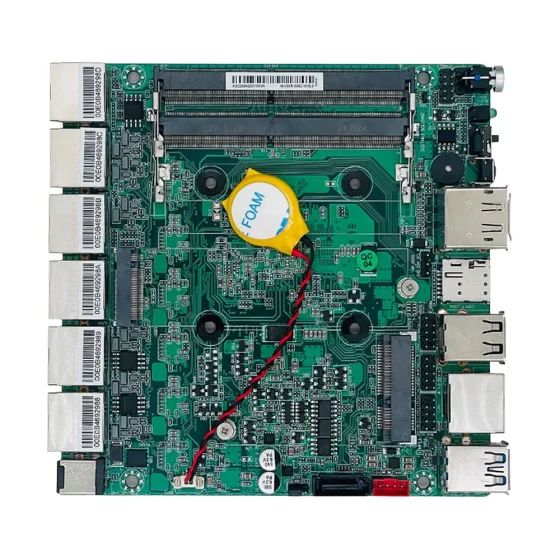
An industrial computer or embedded computer can act as the UTM appliance hardware foundation. It can provide multiple LAN ports, reliable processing performance, 坚固的安装, 本地存储, 无风扇运行选项, 工业电源输入, 和长生命周期支持.

Compared with standard office security devices, industrial UTM hardware must operate reliably in factory cabinets, machine networks, remote sites, 能源设施, 运输柜, and other demanding environments.

This article explains how UTM hardware platforms support industrial network security, what deployment challenges appear in real applications, 解决方案架构的结构如何, and which hardware features matter when selecting an industrial computer or embedded computer for UTM appliance deployment.

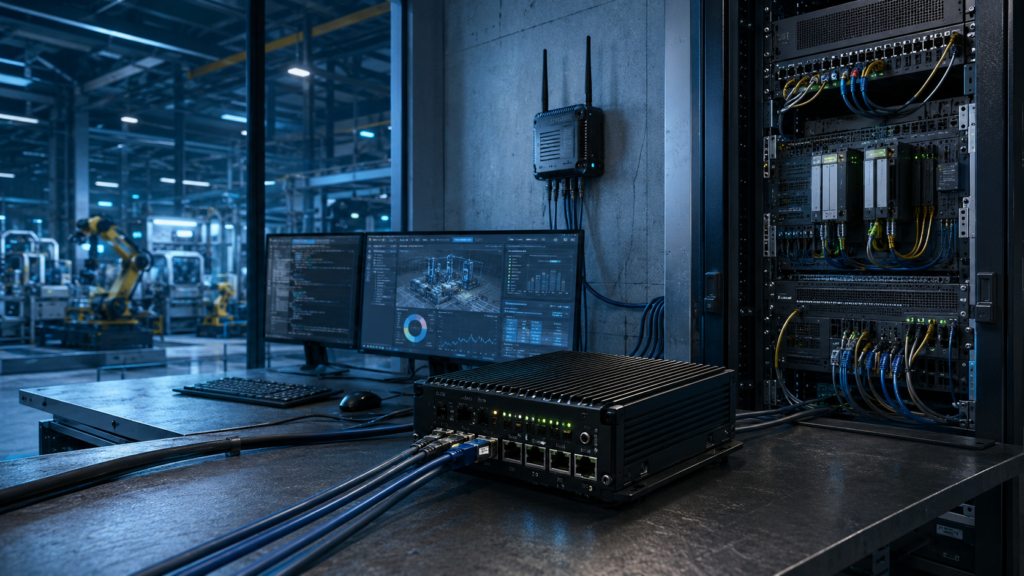
Embedded UTM hardware protecting IT OT PLC SCADA machine networks and remote service access

UTM hardware helps protect factory IT, 奥特, 机器, 可编程逻辑控制器, and remote service networks.

行业概况

Industrial Networks Need Unified Protection

Industrial networks were once more isolated.

今天, many production environments are connected to enterprise systems, 远程服务平台, 工业物联网仪表板, cloud applications, and multi-site networks.

This creates practical security requirements.

Industrial operators may need to protect:

  • PLC网络
  • 监控与数据采集系统
  • Machine networks
  • 工业物联网网关
  • 远程维护访问
  • Factory IT and OT boundaries
  • Camera networks
  • Energy monitoring systems
  • Warehouse automation systems
  • Transportation infrastructure
  • Remote utility facilities

A UTM hardware platform helps provide a unified security layer at key network boundaries.

UTM Appliances Combine Multiple Security Functions

Unified threat management is designed to bring several network security functions into one platform.

取决于软件配置, a UTM appliance may support:

  • Firewall
  • VPN
  • 入侵检测
  • 入侵防御
  • Gateway filtering
  • Application control
  • 流量监控
  • Network address translation
  • Routing
  • Logging
  • Remote access control
  • Security policy enforcement

在工业环境中, 这些功能必须认真执行.

The goal is not to block production traffic randomly, but to protect networks while maintaining reliable machine communication.

Industrial Hardware Is Different from Office Network Hardware

Office security appliances are usually installed in controlled network rooms.

Industrial UTM platforms may be deployed in harsher conditions.

They may operate inside production cabinets, machine rooms, 仓库, 路边箱子, 变电站, 远程公用设施站点, or equipment enclosures.

这些环境可能包括灰尘, 振动, 气流受限, 温度变化, 电噪声, 以及营业时间长.

Industrial computers and embedded computers provide a stronger hardware foundation for this type of deployment.

它们支持坚固耐用的设计, 多 LAN 配置, 无风扇运行, 本地存储, 灵活的输入/输出, 和长生命周期可用性.

Industrial UTM deployment challenges with WAN firewall VPN PLC machine networks and multi-LAN computer

Network zones, firewall boundaries, VPN access, PLC网络, machine networks, and IIoT gateways affect UTM deployment planning.

主要挑战

Protecting IT and OT Boundaries

A major challenge in industrial security is separating IT and OT networks correctly.

IT networks may include office systems, enterprise software, cloud access, 用户设备, 和商业应用. OT networks may include PLCs, 机器, 机器人, 监控与数据采集系统, 人机界面, 工业相机, and sensors.

These networks often need to exchange selected data, but they should not become one flat network.

A UTM hardware platform can help define boundaries between:

  • 工厂IT网络
  • 机器网络
  • PLC网络
  • 监控与数据采集网络
  • 工业物联网网络
  • 摄像头网络
  • Remote service network
  • Cloud access network

Multiple LAN ports and clear security policies are important for practical segmentation.

保持生产连续性

Industrial networks cannot be treated exactly like office networks.

A security appliance must protect the network without interrupting critical production communication.

Some industrial protocols are sensitive to delay, unstable routing, or unexpected filtering.

System designers must understand which traffic is required for production and which traffic should be restricted.

A practical UTM deployment should consider:

  • PLC通讯
  • SCADA polling
  • HMI access
  • Machine control traffic
  • Remote maintenance traffic
  • Alarm communication
  • Industrial IoT data upload
  • Camera data streams
  • Engineering workstation access

Security policies should be tested before full production deployment.

Processing Encrypted and Filtered Traffic

A UTM appliance may need to process multiple security workloads at the same time.

These workloads may include VPN encryption, 防火墙规则, 交通检查, 入侵检测, 记录, 路由, and network address translation.

Hardware requirements depend on real traffic volume.

重要因素包括:

  • Number of LAN ports
  • Port speed
  • VPN 隧道数
  • Encrypted throughput
  • Firewall rule complexity
  • IDS or IPS workload
  • Logging volume
  • Remote user count
  • Site-to-site traffic
  • Industrial protocol traffic

A small machine gateway may need moderate performance. A central industrial security appliance may require a more powerful industrial computer.

Deploying in Harsh Environments

Industrial UTM hardware may be installed close to machines or infrastructure equipment.

These locations may not provide ideal operating conditions.

Deployment challenges may include:

  • 灰尘
  • 振动
  • Limited cabinet space
  • 电缆应力
  • 电噪声
  • Unstable power
  • Limited maintenance access
  • Long continuous operation
  • Remote site service difficulty

Industrial hardware design helps reduce these risks.

Managing Logs and Security Records

Security visibility depends on reliable logging.

A UTM platform may need to store access logs, tunnel records, firewall events, 入侵警报, system events, 和诊断数据.

Local storage is important when the network connection is unstable or when logs must be retained locally.

Storage design should consider capacity, 写耐力, 保留政策, 备份方法, and maintenance workflow.

UTM appliance connected to WAN factory LAN PLC network SCADA IIoT gateway cloud and logging database

UTM appliances connect industrial networks, security policies, 远程访问, and monitoring platforms.

UTM Hardware Platform Solution Architecture

工业网络层

The industrial network layer includes all local systems that need protection and controlled communication.

该层可能包括:

  • PLC
  • 人机界面
  • SCADA服务器
  • 工业电脑
  • 嵌入式控制器
  • 机器控制器
  • 机器人
  • 传感器
  • 相机
  • 电能表
  • 工业物联网网关
  • Engineering workstations

These systems may be divided into different network zones.

The UTM appliance sits between zones and applies security policies.

UTM Security Appliance Layer

The UTM security appliance layer is the core of the deployment.

在这一层, 工业计算机或嵌入式计算机可以:

  • 应用防火墙规则
  • Manage network routing
  • 建立 VPN 隧道
  • 检查交通
  • Detect abnormal network behavior
  • 分段网络区域
  • Record security logs
  • Control remote access
  • Support local dashboards
  • Connect with monitoring platforms

This layer helps protect industrial systems while maintaining required communication paths.

安全策略层

The security policy layer defines what traffic is allowed, restricted, 检查过的, 或已登录.

政策可能基于:

  • 网络专区
  • Device group
  • 用户角色
  • 远程访问目的
  • Application type
  • 工业协议
  • 站点位置
  • 时间窗口
  • Security risk level
  • Maintenance requirement

A strong policy design avoids unnecessary open access.

适用于工业环境, policies should be reviewed with both IT security teams and OT engineering teams.

Remote Access and VPN Layer

Remote access is a common function of industrial UTM appliances.

The platform may provide secure VPN access for engineers, OEM service teams, 系统集成商, or central monitoring teams.

The remote access layer may support:

  • Remote machine maintenance
  • 站点到站点 VPN
  • Factory-to-cloud connectivity
  • SCADA远程监控
  • 工业物联网数据传输
  • Remote troubleshooting
  • Secure engineering workstation access

Access should be limited to required systems and documented according to site policy.

监控和管理层

UTM appliances need visibility for long-term operation.

监控层可能包括本地仪表板, 日志, alert records, 系统健康信息, tunnel status, and traffic statistics.

有用的监测数据可能包括:

  • 防火墙事件
  • VPN 隧道状态
  • Blocked traffic records
  • 入侵警报
  • 网络流量
  • CPU和内存使用情况
  • 存储状态
  • 设备温度
  • Uplink status
  • 远程访问历史记录

This helps teams maintain security, investigate events, and troubleshoot connectivity issues.

主要特点

多LAN网络分段

Multiple LAN ports are one of the most important hardware requirements for UTM appliances.

They allow the platform to separate different network zones.

有用的配置可能包括:

  • 广域网上行链路
  • 工厂IT网络
  • PLC网络
  • 机器网络
  • 摄像头网络
  • 工业物联网网络
  • 远程维护网络
  • 管理网络

Multi-LAN design improves network organization and supports stronger security architecture.

Security Processing Performance

UTM workloads can be CPU and memory intensive.

The platform should be selected according to real traffic and security requirements.

选型时应考虑:

  • CPU性能
  • 内存容量
  • Port speed
  • Encrypted throughput
  • Firewall workload
  • VPN 隧道数
  • IDS or IPS workload
  • 记录要求
  • Storage capacity
  • 操作系统支持

对于更大规模的部署, the system should be validated with real traffic patterns before production rollout.

可靠的本地存储

Local storage supports system files, 日志, 配置备份, 证书, 事件记录, 和诊断数据.

SSD or NVMe storage is commonly preferred because it provides faster access and better shock resistance than mechanical drives.

存储规划应考虑:

  • 日志保留
  • 安全事件记录
  • 系统恢复
  • 配置备份
  • VPN certificate storage
  • Diagnostic records
  • 写入耐力
  • 备份工作流程

可靠的存储提高了可审核性和维护效率.

灵活的工业I/O

Although UTM platforms are mainly network appliances, industrial I/O can still be useful.

重要的 I/O 选项可能包括:

  • 局域网
  • USB
  • RS232
  • RS485
  • 通用输入输出接口
  • 数字输入
  • 数字输出
  • HDMI
  • 显示端口
  • M.2
  • PCIe
  • SATA 或 NVMe

Serial ports may support legacy device access or service functions. GPIO may support alarm integration. Expansion slots may support additional LAN modules, 无线模块, or storage devices.

坚固耐用的无风扇设计

Fanless industrial computers are useful for security appliances deployed in cabinets or dusty environments.

它们减少灰尘摄入并消除一个常见的机械故障点.

坚固的外壳有助于防止振动, 压力增加, 电缆应变, and long-term industrial operation.

热设计仍应仔细审查.

Security workloads, encrypted traffic, and continuous logging can create processing and heat load.

Industrial Power and Mounting Options

UTM appliances may be installed in control cabinets, network racks, 路边箱子, 机器外壳, or remote equipment rooms.

Practical deployment may require:

  • Wall mounting
  • DIN rail mounting
  • Rack mounting
  • Compact enclosure design
  • Industrial DC input
  • Stable power protection
  • Secure cable routing
  • Accessible maintenance ports

Mechanical and power design should match the actual installation site.

长生命周期和可维护性

Security appliances may remain in service for many years.

Frequent hardware changes can create issues with operating systems, security software, 司机, configuration images, 备件, and validation.

Industrial computing platforms with lifecycle planning help system integrators and operators maintain consistent UTM deployments across many machines, 工厂, 和远程站点.

部署场景

Factory Network Security Gateway

A UTM hardware platform can be deployed at the boundary between factory IT and OT networks.

It can apply firewall rules, manage routing, control remote access, and log traffic between zones.

This helps protect production networks while still allowing required data exchange.

机器网络保护

Machine builders can integrate UTM hardware into equipment networks.

The appliance can protect machine controllers, 人机界面, 工业电脑, 和远程维护访问.

This is useful for OEM equipment delivered to customer sites.

工业物联网安全网关

Industrial IoT systems often connect machines and sensors to dashboards or cloud platforms.

A UTM appliance can help segment machine networks, secure data transfer, and control access between IIoT gateways and external systems.

This improves security for connected factory data.

SCADA Network Protection

SCADA systems may connect remote devices, control rooms, engineering workstations, and monitoring platforms.

A UTM appliance can help control traffic entering and leaving the SCADA network.

Industrial hardware is important when these systems operate in utility, 活力, 水, or transportation environments.

Remote Maintenance Security

Remote maintenance is useful, but it must be controlled.

A UTM appliance can provide VPN access, firewall policy, 记录, 以及授权工程师的网络分段.

This helps reduce unnecessary exposure while supporting service efficiency.

Multi-Site Industrial Connectivity

Companies with multiple factories or remote facilities may use UTM platforms to secure communication between sites.

The appliance can support encrypted tunnels, 路由, 防火墙规则, and monitoring.

This helps connect distributed industrial systems more securely.

仓储物流安全

Warehouses may include barcode systems, sorting lines, industrial computers, 相机, 访问控制, and WMS platforms.

A UTM appliance can help protect these systems and segment automation networks from business networks.

This supports secure logistics operations.

OEM Security Appliance Development

System integrators can build custom security appliances using industrial computers or embedded boards.

The hardware platform can support firewall software, VPN applications, 交通监控, 记录, and secure network segmentation.

This supports OEM industrial cybersecurity products.

商业效益

Unified Security Functions

A UTM hardware platform can combine multiple security functions in one appliance.

This may include firewall, VPN, 入侵检测, 入侵防御, 路由, 记录, and traffic control.

A unified platform can simplify deployment compared with using many separate devices.

Stronger Industrial Network Segmentation

Multi-LAN UTM appliances help divide industrial networks into controlled zones.

This supports better separation between IT, 奥特, 机器, 相机, 工业物联网, and remote service networks.

Network segmentation reduces unnecessary exposure and improves security planning.

More Secure Remote Access

UTM hardware can provide controlled VPN access for remote engineers and service teams.

Access can be limited according to role, device, site, or maintenance purpose.

This helps support remote service without opening broad access to the entire industrial network.

提高安全可见性

本地日志, tunnel status, firewall events, and system health data help operators understand what is happening at the network boundary.

This supports troubleshooting, 审计审查, and security investigation.

Better visibility is especially important for distributed industrial sites.

可靠的现场部署

Industrial computers provide rugged hardware for security appliances deployed outside office environments.

无风扇设计, 稳定存储, 工业安装, 长生命周期支持有助于降低维护风险.

这对工厂很重要, 能源站点, transportation nodes, 仓库, 和远程设施.

Scalable Security Appliance Deployment

A standardized UTM hardware platform makes it easier to deploy network security across many machines, 生产线, 网站, and OEM systems.

一致的硬件简化了软件映像, 配置模板, 备件计划, 验证, 和生命周期管理.

This supports scalable industrial cybersecurity deployment.

为什么选择CoreIPC

CoreIPC为网络安全提供工业计算平台, 工业物联网, 工厂自动化, 远程监控, 和嵌入式系统集成. For UTM hardware applications, CoreIPC专注于可靠的工业计算机硬件, 嵌入式计算机解决方案, 多 LAN 配置, 灵活的输入/输出, 紧凑的系统设计, 无风扇部署选项, 和OEM/ODM定制支持. CoreIPC帮助系统集成商, 安全解决方案提供商, 机器制造商, 和行业运营商选择符合实际部署需求的计算平台, 包括 LAN 端口数, 防火墙工作负载, VPN性能, 存储需求, 安装方法, 电源输入, 热条件, 和生命周期规划.

常见问题解答

1. What is UTM hardware?

UTM hardware is a computing platform used to run unified threat management functions.

It may support firewall, VPN, 入侵检测, 入侵防御, 路由, 记录, traffic filtering, and access control. 在工业环境中, UTM hardware is commonly used to protect factory networks, machine networks, 远程访问, and industrial IoT systems.

2. Why use an industrial computer for UTM appliances?

An industrial computer provides rugged hardware and flexible connectivity for factory and field deployment.

可支持多个LAN口, 无风扇运行, 本地存储, 工业安装, 稳定的电源输入, 和长生命周期可用性. These features make it suitable for UTM appliances deployed in cabinets, 机器, 仓库, remote sites, 和基础设施系统.

3. How is an embedded computer used as UTM hardware?

An embedded computer can act as a compact UTM appliance inside a control cabinet, 机器外壳, remote facility, or OEM security gateway.

它可以运行防火墙, VPN, 路由, 记录, and network segmentation functions while providing a smaller form factor for space-limited deployments.

4. What is the difference between a UTM appliance and a firewall?

A firewall mainly controls network traffic according to rules.

A UTM appliance may include firewall functions plus additional security features such as VPN, 入侵检测, 入侵防御, traffic filtering, 记录, and gateway security. 在工业部署中, these functions often work together to protect network boundaries.

5. Why are multiple LAN ports important for UTM hardware?

Multiple LAN ports allow the appliance to separate network zones.

例如, one port may connect to WAN, 另一个到工厂IT, 另一个到 PLC 网络, 另一个机器网络, 另一个用于远程维护或管理网络. This supports better segmentation and security policy design.

6. Can fanless industrial computers support UTM appliances?

是的. Fanless industrial computers can support many UTM appliance deployments because they reduce dust intake and remove one mechanical failure point.

然而, firewall, VPN, and inspection workloads can create heat. CPU性能, 外壳设计, 环境温度, 部署前应检查机柜气流.

7. What hardware features matter for industrial UTM platforms?

重要功能包括多个 LAN 端口, 足够的CPU性能, 可靠的记忆, SSD 或 NVMe 存储, 坚固的外壳, 无风扇设计, 工业电源输入, USB, 串口, 通用输入输出接口, 显示输出, 和扩展选项.

The final configuration should match traffic volume, VPN 工作负载, firewall policy, logging needs, 及安装环境.

8. Can UTM hardware protect industrial IoT systems?

是的. UTM hardware can help protect industrial IoT systems by segmenting machine networks, controlling traffic to cloud platforms, 确保远程访问安全, and logging communication events.

It can sit between IIoT gateways, 机器, 工厂网络, 和外部平台提供受控的安全边界.

9. Can UTM appliances support remote maintenance?

是的. UTM appliances can support secure remote maintenance by combining VPN access, 防火墙规则, 记录, 和网络分段.

This allows authorized engineers to access required systems while limiting unnecessary exposure to other parts of the industrial network.

10. What should be tested before deploying a UTM appliance?

部署前, the system should be tested with real network topology, 防火墙策略, VPN 隧道数, 交通量, industrial protocols, logging workload, 存储行为, 和长时间运行的操作.

热稳定性, 远程访问工作流程, recovery procedures, 配置备份, and network segmentation should also be validated.

结论

UTM hardware is a practical foundation for unified industrial network security, 安全远程访问, firewall deployment, VPN 连接, 入侵检测, traffic control, 和网络分段.

By placing an industrial computer or embedded computer at key network boundaries, 制造商, 机器制造商, 系统集成商, and infrastructure operators can protect machine networks, 工业物联网系统, SCADA平台, and distributed facilities more effectively.

The right UTM hardware platform should be selected according to real deployment requirements, 包括 LAN 端口数, 防火墙工作负载, VPN 隧道数, inspection performance, 网络分段, 存储需求, 安装方法, 电源输入, 热条件, 操作系统支持, 安全政策, 和生命周期规划.

CoreIPC supports UTM hardware projects with industrial computing platforms designed for practical factory, 机器端, 和现场部署. 拥有正确的硬件基础, 工业运营商和设备制造商可以构建可靠的, 可扩展, and secure industrial network protection systems.

联系我们

寻找工业计算机, 嵌入式计算机, or multi-LAN platform for UTM appliance deployment?

联系 CoreIPC 讨论您的项目需求, 包括 LAN 端口数, 防火墙工作负载, VPN性能, 网络分段, 存储设计, 安装方法, 电源输入, 运行环境, 生命周期需求, 和 OEM/ODM 定制选项.
留言


    安全检查: