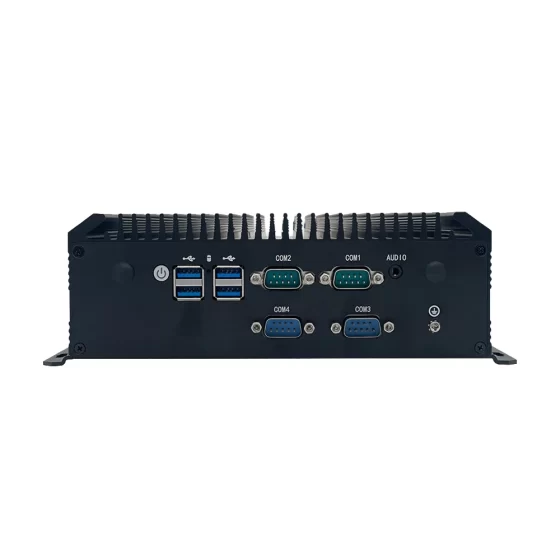
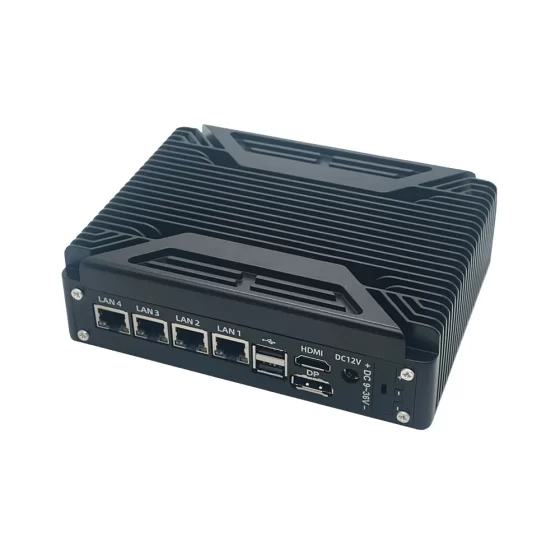
حلول الحوسبة الصناعية CoreIPC

روبوت فيجن إيدج للكمبيوتر: روبوت رؤية الكمبيوتر للأتمتة الذكية
ملخص تنفيذي
A robot vision computer provides the industrial computing foundation for robotic perception, معالجة الصور بالذكاء الاصطناعي, التعرف على الكائنات, التوجيه البصري, كشف العيب, تحديد المواقع, تقتيش, واتخاذ القرار في الوقت الحقيقي في بيئات الإنتاج الآلي.
لم تعد الأنظمة الروبوتية الحديثة تعتمد فقط على مسارات الحركة الثابتة. في المصانع الذكية, تحتاج الروبوتات بشكل متزايد إلى الرؤية, تحليل, والاستجابة لمحيطهم. يمكنهم تحديد الأجزاء, تحديد موقع الكائنات, فحص الأسطح, عمليات اختيار الدليل, التحقق من جودة التجميع, دعم بن قطف, أو التنسيق مع أنظمة الرؤية الآلية على خطوط الإنتاج.
يستطيع كمبيوتر الذكاء الاصطناعي ذو الرؤية الروبوتية المبني على كمبيوتر صناعي أو كمبيوتر مدمج معالجة بيانات الكاميرا محليًا بالقرب من الروبوت. يمكنه تشغيل نماذج استدلال الذكاء الاصطناعي, ربط الكاميرات الصناعية, التواصل مع وحدات التحكم الروبوتية, تبادل البيانات مع PLCs, وإرسال النتائج إلى MES, سكادا, أو أنظمة مراقبة المصنع.
بالمقارنة مع أجهزة الكمبيوتر القياسية, industrial computers are better suited for robot vision deployment because they support rugged installation, تصميم حراري مستقر, multiple LAN and USB interfaces, التخزين المحلي, خيارات التوسع, خيارات التصميم بدون مروحة, وتوافر دورة حياة طويلة.
This article explains how robot vision edge AI computers support intelligent automation, ما هي تحديات النشر التي تظهر في المصانع الحقيقية, كيف تعمل بنية الحل, and which hardware features matter when selecting an industrial computer or embedded computer for robot vision applications.
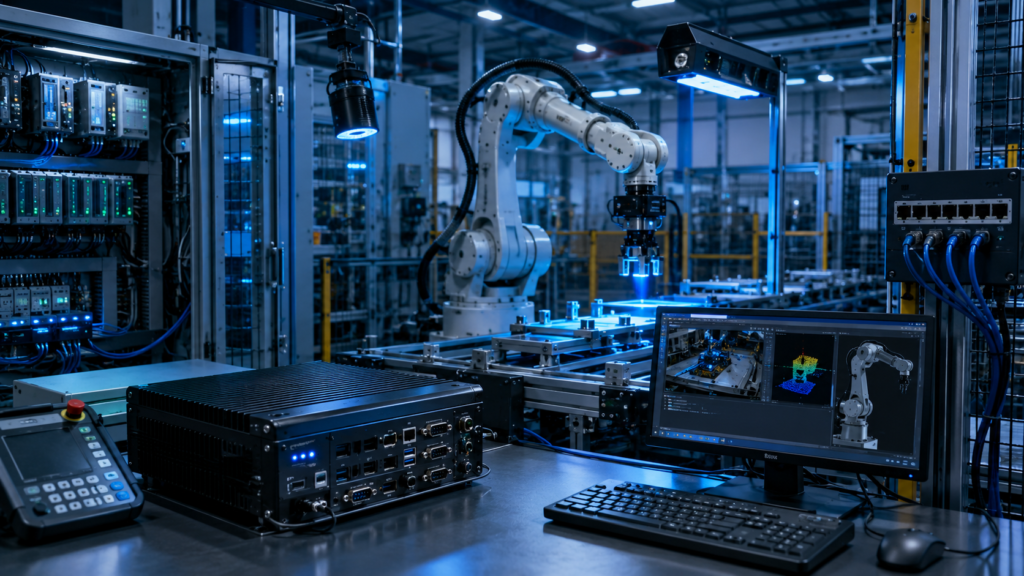
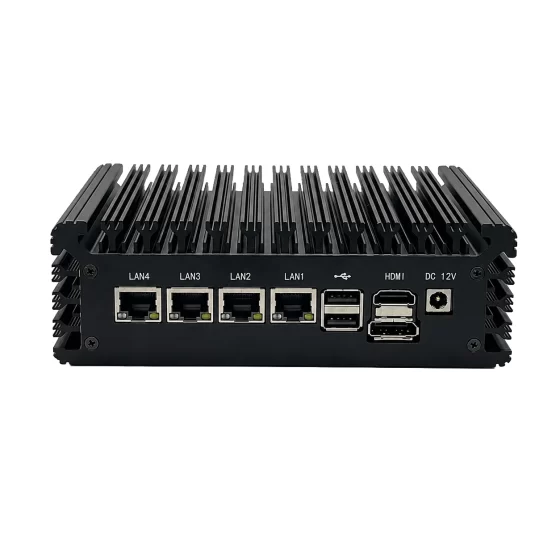
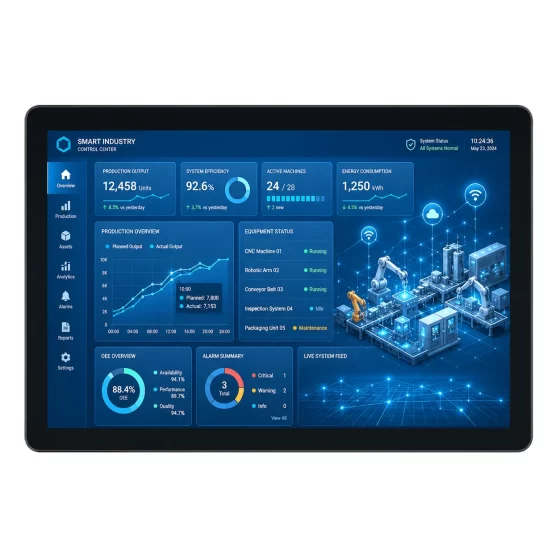
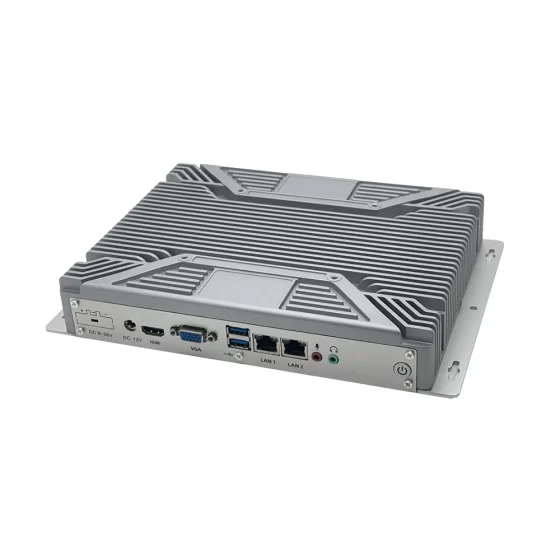
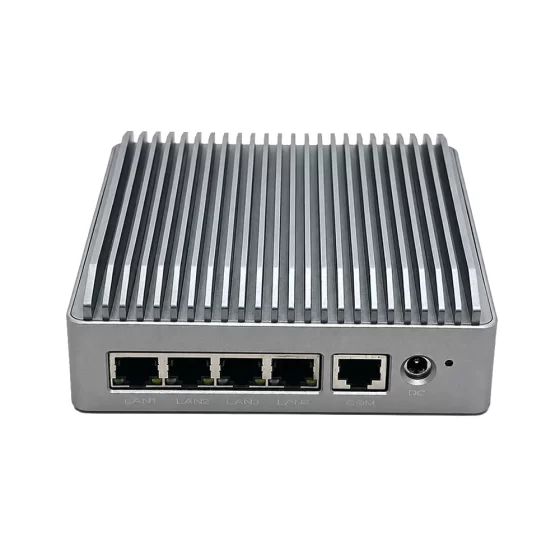
Robot vision computers process camera data locally for robotic picking, تقتيش, recognition, and guidance.
نظرة عامة على الصناعة
Robots Are Becoming More Vision-Driven
Industrial robots were traditionally programmed to repeat fixed motions.
That model works well when parts are always positioned in the same place and conditions do not change. لكن, modern production environments are more flexible. Parts may arrive in different positions, products may vary by batch, and quality requirements may become more detailed.
Vision systems help robots adapt.
Robot vision can support:
- التعرف على الكائنات
- تحديد موضع الجزء
- بن قطف
- Assembly guidance
- فحص السطح
- Barcode and label reading
- Pick-and-place verification
- Robotic welding guidance
- فحص التغليف
- Palletizing and depalletizing
- كشف الخلل
- Safety zone awareness
A robot vision computer processes visual information and turns it into usable data for robotic control and factory systems.
Edge AI Improves Local Decision-Making
Sending every image to a remote server can increase latency and bandwidth usage.
Robot vision often needs fast response. A robot may need to adjust its position, reject a defective part, or stop an operation within a short time window.
Edge AI computing allows visual data to be processed close to the robot.
The edge computer can run AI inference locally, generate position data, تصنيف العيوب, and send compact results to robot controllers or PLCs.
This improves response time and reduces dependence on cloud or central server availability.
الحوسبة الصناعية هي مؤسسة الأجهزة
Robot vision computers are often installed near production equipment.
They may be mounted in robot cells, خزائن التحكم, محطات التفتيش, assembly lines, welding systems, logistics lines, or packaging machines.
قد تشمل هذه البيئات الاهتزاز, تراب, الضوضاء الكهربائية, حرارة, limited cabinet space, والتشغيل المستمر.
Industrial computers and embedded computers provide the hardware foundation for reliable deployment. إنهم يدعمون التصميم القوي, الإدخال/الإخراج المرن, اتصال الكاميرا, تخزين, توسع, واستقرار المنصة على المدى الطويل.

الكاميرات, 3D sensors, إضاءة, مشغلات PLC, وقت الدورة, وحدات تحكم الروبوت, and AI workloads affect robot vision deployment.
التحديات الرئيسية
Processing High-Resolution Camera Data
Robot vision systems often use one or more industrial cameras.
Camera data can be large, especially when using high resolution, معدلات إطارات عالية, or multiple viewpoints.
The computer must process image streams reliably while also handling AI inference, robot communication, تسجيل البيانات, وتكامل نظام المصنع.
وتشمل عوامل عبء العمل الهامة:
- عدد الكاميرا
- دقة الصورة
- معدل الإطار
- تعقيد نموذج الذكاء الاصطناعي
- زمن دورة التفتيش
- Robot response time
- احتياجات التخزين المحلية
- عرض النطاق الترددي للشبكة
- متطلبات وقت تشغيل البرنامج
The platform should be selected based on real camera and AI workload, not only CPU model or port count.
Meeting Real-Time Response Requirements
Robot vision applications often require low latency.
A delay in object positioning or defect detection may reduce production speed or cause incorrect robot movement.
The robot vision computer must process images, run algorithms, and send results quickly.
Latency-sensitive applications may include:
- بن قطف
- Robotic sorting
- High-speed pick-and-place
- Vision-guided assembly
- Conveyor tracking
- Robotic inspection
- التحقق من التغليف
- Welding seam tracking
الأجهزة, برمجة, واجهة الكاميرا, تصميم الشبكة, and robot communication must be evaluated together.
Integrating with Robot Controllers and PLCs
A robot vision computer does not work alone.
يجب أن يتواصل مع وحدات تحكم الروبوت, الشركات المحدودة العامة, أنظمة الحركة, أجهزة الاستشعار, أجهزة السلامة, HMI stations, وبرامج المصنع.
قد تشمل متطلبات التكامل المشتركة:
- Sending object coordinates to robot controllers
- Receiving trigger signals from PLCs
- Reporting inspection results to MES
- Storing image records locally
- Displaying status on HMI
- Sending alarms to SCADA
- Supporting remote diagnostics
- Synchronizing with conveyor systems
Flexible I/O and stable communication are important for practical deployment.
العمل في البيئات الصناعية
Robot cells can be demanding environments.
The computer may be exposed to vibration, تراب, oil mist, التغيرات في درجات الحرارة, الضوضاء الكهربائية, والتشغيل المستمر.
A standard office PC may not be suitable.
Industrial design helps improve reliability through rugged enclosure options, تصميم بدون مروحة, تخزين موثوق, تركيب آمن, and stable power input.
Thermal design is especially important when the system runs AI workloads or GPU acceleration continuously.
Supporting Long Lifecycle Deployment
Robot vision systems may remain in production for years.
Frequent hardware changes can create driver issues, software validation problems, تحديات قطع الغيار, وتعقيد الصيانة.
Industrial computing platforms with lifecycle planning help system integrators and manufacturers maintain stable vision systems across multiple robot cells and factory sites.

Robot vision computers connect cameras, معالجة الذكاء الاصطناعي, وحدات تحكم الروبوت, الشركات المحدودة العامة, زارة التربية والعلم, سكادا, وأنظمة الجودة.
Robot Vision Computer Solution Architecture
Vision Sensor Layer
The vision sensor layer includes the devices that capture visual data.
قد تشمل هذه الطبقة:
- الكاميرات الصناعية
- 3كاميرات D
- كاميرات مسح الخط
- كاميرات مسح المنطقة
- Depth sensors
- قارئات الباركود
- وحدات تحكم الإضاءة
- أجهزة الاستشعار الزناد
- التشفير
- Presence sensors
These devices provide raw visual and position data for the robot vision system.
The robot vision computer collects and processes this data locally.
طبقة حوسبة Edge AI
The edge AI computing layer is the core of the system.
عند هذه الطبقة, قد يكون الكمبيوتر الصناعي أو الكمبيوتر المدمج:
- Capture image streams
- Run AI inference
- Process 2D or 3D vision data
- Detect objects
- Locate part position
- Classify defects
- Calculate robot coordinates
- تخزين سجلات الصور
- Generate pass/fail results
- Send results to robot controllers
This layer transforms raw camera data into useful automation decisions.
طبقة تكامل التحكم في الروبوت
The robot control layer connects vision results with robot motion.
The robot vision computer may communicate with:
- وحدات تحكم الروبوت
- الشركات المحدودة العامة
- وحدات تحكم الحركة
- أنظمة المؤازرة
- Conveyor controllers
- أنظمة السلامة
- HMI panels
- مفاتيح صناعية
The system may send position data, نتائج التفتيش, object classes, orientation values, or alarm events.
Reliable communication is essential for stable robotic automation.
طبقة تكامل نظام المصنع
Robot vision data may also be sent to higher-level factory systems.
قد تشمل هذه الأنظمة:
- زارة التربية والعلم
- سكادا
- تخطيط موارد المؤسسات
- قواعد بيانات الجودة
- منصات إنترنت الأشياء الصناعية
- لوحات المعلومات المحلية
- أنظمة التتبع
- منصات الصيانة
- أنظمة مراقبة السحابة
This allows manufacturers to connect robotic vision results with production records, تحليل الجودة, والرؤية التشغيلية.
طبقة الأمن والإدارة
Robot vision systems need secure and maintainable deployment.
قد تشمل هذه الطبقة:
- تجزئة الشبكة
- التشخيص عن بعد
- التحكم في وصول المستخدم
- التسجيل المحلي
- Image record management
- النسخ الاحتياطي التكوين
- مراقبة صحة النظام
- إدارة تحديث البرامج
- Secure remote support
This helps keep the robot vision platform stable across long-term production use.
الميزات الرئيسية
أداء الاستدلال بالذكاء الاصطناعي
Robot vision often depends on AI models.
The computer may need to run object detection, التجزئة, تصنيف الخلل, pose estimation, التعرف الضوئي على الحروف, التعرف على الباركود, or anomaly detection.
ينبغي النظر في اختيار الأجهزة:
- أداء وحدة المعالجة المركزية
- دعم GPU أو مسرع AI
- سعة الذاكرة
- عدد الكاميرا
- دقة الصورة
- حجم النموذج
- Inference speed
- دعم نظام التشغيل
- التوافق مع إطار الذكاء الاصطناعي
- Thermal performance
For demanding applications, the system should be tested with the actual model and production cycle time.
Camera Connectivity
Camera connectivity is one of the most important requirements.
اعتمادا على التطبيق, the platform may need:
- جيجا لان
- USB 3.0
- Multiple camera ports
- تخزين عالي السرعة
- إدخال الزناد
- Lighting control connection
- Expansion for additional interfaces
The interface must match the camera system.
For multi-camera robot vision, تخطيط عرض النطاق الترددي مهم بشكل خاص.
تصميم شبكات LAN متعددة
Multiple LAN ports help separate traffic.
A robot vision computer may use different networks for:
- شبكة الكاميرا
- Robot controller network
- شبكة PLC
- شبكة تكنولوجيا المعلومات في المصنع
- شبكة إنترنت الأشياء الصناعية
- شبكة الصيانة عن بعد
- شبكة الإدارة
Network separation improves reliability, حماية, and traffic organization.
It also helps prevent camera data from interfering with robot control communication.
تخزين محلي موثوق
Robot vision systems may need local storage for images, سجلات, models, ملفات التكوين, سجلات التفتيش, and troubleshooting data.
يُفضل عادةً تخزين SSD أو NVMe لأنه يوفر وصولاً سريعًا ومقاومة أفضل للصدمات مقارنة بمحركات الأقراص الميكانيكية.
ينبغي النظر في تصميم التخزين:
- Image retention period
- Inspection record volume
- تخزين نماذج الذكاء الاصطناعي
- الاحتفاظ بالسجل
- اكتب التحمل
- سير عمل النسخ الاحتياطي
- Failure recovery
Reliable storage is important for traceability and maintenance.
الإدخال/الإخراج الصناعي المرن
Robot vision computers may need many types of I/O.
قد تشمل الخيارات المفيدة:
- لان
- USB
- RS232
- RS485
- جيبيو
- الإدخال الرقمي
- الإخراج الرقمي
- اتش دي ام اي
- منفذ العرض
- م.2
- بكيي
- ساتا أو NVMe
يمكن لـ GPIO والإدخال/الإخراج الرقمي دعم المشغلات, إنذار, lighting signals, وحالة الجهاز. يمكن للمنافذ التسلسلية دعم الأجهزة القديمة. Expansion interfaces can support AI accelerators, extra LAN cards, or storage modules.
تصميم متين وبدون مروحة
Robot cells may expose computers to dust, اهتزاز, and heat.
Fanless industrial computers can reduce dust intake and remove one common mechanical failure point.
لكن, AI workloads may generate sustained heat.
يجب مراجعة التصميم الحراري بعناية, especially when using high-performance processors, GPUs, or accelerators.
The final design should consider enclosure type, موقع التركيب, تدفق الهواء, درجة الحرارة المحيطة, and workload duration.
دورة حياة طويلة وقابلية الصيانة
Robot vision systems often require software validation.
Changing hardware too frequently may require retesting drivers, SDKs الكاميرا, أوقات تشغيل الذكاء الاصطناعي, and robot communication tools.
Long lifecycle industrial computers help reduce redesign work and simplify spare parts planning.
هذا مهم لبناة الآلات, robot system integrators, and manufacturers deploying multiple similar systems.
سيناريوهات النشر
Vision-Guided Pick-and-Place
Robot vision computers can detect object position and orientation for pick-and-place applications.
The system processes images locally and sends coordinates to the robot controller.
This is useful when parts arrive in different positions or orientations.
Bin Picking
Bin picking requires robots to identify objects in random positions.
The robot vision computer may process 3D vision data, estimate object pose, and guide the robot to pick parts from a bin.
AI inference and 3D processing performance are important for stable operation.
Robotic Assembly Guidance
Assembly robots may use vision to align parts, verify position, or check component placement.
The edge AI computer can compare camera images with expected conditions and provide guidance to the robot controller.
This improves assembly accuracy and reduces manual adjustment.
Robotic Quality Inspection
Robots can move cameras around products for flexible inspection.
The robot vision computer can detect defects, تصنيف النتائج, تخزين الصور, and send quality records to MES or quality databases.
This supports traceability and automated quality control.
Packaging and Palletizing
Robot vision can support package recognition, التحقق من التسمية, pallet positioning, and product counting.
An embedded computer can process visual data near the robot and provide real-time feedback.
This improves logistics and packaging automation.
Welding and Processing Guidance
In welding, قطع, الاستغناء, or surface treatment, vision can help locate edges, seams, or target positions.
The robot vision computer processes images and sends guidance data to the robot or motion controller.
This supports more flexible robotic processing.
AMR and Mobile Robot Vision
Mobile robots may use cameras and sensors for navigation, كشف العوائق, لرسو السفن, and object recognition.
An embedded computer can process local vision data and communicate with fleet management or control systems.
This supports intelligent warehouse and factory logistics.
OEM Robot Vision System Integration
Robot system integrators can build custom vision computers using industrial computers or embedded boards.
The platform can support camera input, استنتاج الذكاء الاصطناعي, robot communication, التخزين المحلي, الوصول عن بعد, والانتشار الوعرة.
This helps create repeatable robot vision solutions for different industries.
فوائد الأعمال
تحسين مرونة الروبوت
Robot vision allows robots to handle variation in part position, توجيه, شكل, وتدفق الإنتاج.
This reduces dependence on fixed fixtures and improves flexibility for modern manufacturing.
اتخاذ قرارات محلية أسرع
Edge AI processing enables visual decisions near the robot.
This reduces latency and avoids sending every image to a remote server.
Fast local processing supports real-time inspection, تحديد المواقع, فرز, and guidance.
مراقبة الجودة بشكل أفضل
Robot vision systems can inspect parts during or after robotic operations.
They can detect defects, verify assembly, check labels, and store inspection records.
This improves quality consistency and supports traceability.
تقليل التدخل اليدوي
Robots with vision can adapt to changing conditions more effectively.
This reduces manual repositioning, تقتيش, and adjustment work.
It also helps improve production efficiency.
Stronger System Integration
A robot vision computer can connect cameras, الروبوتات, الشركات المحدودة العامة, أجهزة الاستشعار, زارة التربية والعلم, سكادا, وأنظمة الجودة.
This turns robotic vision from an isolated inspection tool into part of the factory data infrastructure.
نشر أتمتة قابلة للتطوير
A standardized robot vision computer platform makes it easier to deploy similar systems across multiple robot cells and production lines.
تعمل الأجهزة المتسقة على تبسيط صور البرامج, AI model deployment, التحقق من صحة السائق, تخطيط قطع الغيار, وإدارة دورة الحياة.
لماذا كورIPC
توفر CoreIPC منصات حوسبة صناعية لرؤية الآلة, الروبوتات, حافة الذكاء الاصطناعي, الأتمتة الصناعية, إنترنت الأشياء الصناعية, وتكامل النظام المدمج. For robot vision computer applications, يركز CoreIPC على أجهزة الكمبيوتر الصناعية الموثوقة, حلول الكمبيوتر المدمجة, اتصال الكاميرا, تكوينات متعددة LAN, الإدخال/الإخراج المرن, تصميم نظام مدمج, خيارات النشر بدون مروحة, القدرة على التخزين المحلي, ودعم التخصيص OEM/ODM. CoreIPC helps robot system integrators, بناة الآلة, ويختار المصنعون منصات الحوسبة التي تتوافق مع متطلبات النشر الحقيقية, بما في ذلك عدد الكاميرا, عبء عمل الذكاء الاصطناعي, robot communication, احتياجات التخزين, طرق التركيب, مدخلات الطاقة, الظروف الحرارية, وتخطيط دورة الحياة.
الأسئلة المتداولة
1. What is a robot vision computer?
A robot vision computer is an industrial computing platform used to process camera and sensor data for robotic applications.
It can run image processing, استنتاج الذكاء الاصطناعي, كشف الكائن, defect inspection, pose estimation, and visual guidance software. The results are sent to robot controllers, الشركات المحدودة العامة, أنظمة MES, أو لوحات المصنع.
2. Why use an industrial computer for robot vision?
يوفر الكمبيوتر الصناعي أجهزة قوية واتصالاً مرنًا للنشر في المصنع.
يمكنه دعم منافذ LAN المتعددة, كاميرات يو اس بي, التخزين المحلي, خيارات التوسع, التركيب الصناعي, مدخلات الطاقة مستقرة, وتوافر دورة حياة طويلة. These features make it suitable for robot cells, محطات التفتيش, خطوط التعبئة والتغليف, وأنظمة رؤية الآلة.
3. How is an embedded computer used in robot vision?
An embedded computer can be installed near a robot cell or inside a control cabinet.
It can collect camera data, تشغيل نماذج الذكاء الاصطناعي, calculate object positions, سجلات فحص المتجر, and communicate with robot controllers or PLCs. Its compact size makes it useful for space-limited automation equipment.
4. What applications use robot vision computers?
Applications include pick-and-place, قطف بن, robotic assembly, فحص الجودة, welding guidance, التحقق من التعبئة والتغليف, palletizing, قراءة التسمية, AMR navigation, and robotic sorting.
The exact hardware depends on camera count, دقة الصورة, عبء عمل الذكاء الاصطناعي, and robot communication requirements.
5. Does robot vision require AI acceleration?
ليس دائما.
Some simple vision tasks may run on CPU-based industrial computers. More demanding tasks, such as deep learning inspection, 3D pose estimation, multi-camera analysis, or high-speed object detection, may require GPU or AI accelerator support.
6. Why are multiple LAN ports important for robot vision systems?
Multiple LAN ports help separate camera traffic, robot controller communication, شبكات PLC, تكنولوجيا المعلومات في المصنع, والوصول إلى الصيانة عن بعد.
This improves reliability and prevents high-bandwidth camera streams from interfering with control communication.
7. What hardware features matter for robot vision computers?
تتضمن الميزات المهمة أداءً كافيًا لوحدة المعالجة المركزية, GPU or AI accelerator support when required, منافذ LAN متعددة, USB 3.0, ذاكرة موثوقة, تخزين SSD أو NVMe, الضميمة وعرة, خيارات التصميم بدون مروحة, مدخلات الطاقة الصناعية, جيبيو, الإدخال/الإخراج الرقمي, م.2, بكيي, وعرض المخرجات.
The final configuration should match the actual vision workload.
8. Can fanless industrial computers support robot vision?
نعم, fanless industrial computers can support many robot vision applications.
لكن, AI inference and high-resolution camera processing can create sustained heat. اختيار المعالج, تصميم العلبة, درجة الحرارة المحيطة, طريقة التركيب, and airflow should be validated before deployment.
9. Can robot vision computers connect with MES or SCADA?
نعم. Robot vision computers can send inspection results, pass/fail records, image references, أحداث التنبيه, and production data to MES, سكادا, قواعد بيانات الجودة, أو منصات إنترنت الأشياء الصناعية.
This supports traceability and factory-wide visibility.
10. ما الذي يجب اختباره قبل النشر?
قبل النشر, يجب اختبار النظام بكاميرات حقيقية, إضاءة, وحدات تحكم الروبوت, إشارات PLC, نماذج الذكاء الاصطناعي, دقة الصورة, production cycle time, عبء عمل التخزين, وتشغيل طويل الأمد.
الاستقرار الحراري, الكمون الاتصالات, result accuracy, سير عمل الوصول عن بعد, ويجب أيضًا التحقق من صحة إجراءات الاسترداد.
خاتمة
A robot vision computer is a practical foundation for intelligent automation, robotic perception, استنتاج حافة الذكاء الاصطناعي, التوجيه البصري, defect inspection, التعرف على الكائنات, and flexible manufacturing.
By placing an industrial computer or embedded computer near robot cells and vision systems, manufacturers and system integrators can process camera data locally, guide robot motion, inspect products, تخزين السجلات, and connect results with PLCs, زارة التربية والعلم, سكادا, ومنصات إنترنت الأشياء الصناعية.
The right robot vision computer should be selected according to real deployment requirements, بما في ذلك عدد الكاميرا, دقة الصورة, معدل الإطار, عبء عمل الذكاء الاصطناعي, robot communication, تصميم منفذ LAN, احتياجات الإدخال/الإخراج, تكوين التخزين, طريقة التركيب, مدخلات الطاقة, الظروف الحرارية, دعم نظام التشغيل, وتخطيط دورة الحياة.
CoreIPC supports robot vision edge AI computer projects with industrial computing platforms designed for practical robot cell, جانب الآلة, مجلس الوزراء, ونشر OEM. مع أساس الأجهزة الصحيح, robot system integrators and manufacturers can build reliable, قابلة للتطوير, and intelligent vision-guided automation systems.
اتصل بنا
أبحث عن جهاز كمبيوتر صناعي, الكمبيوتر المدمج, or edge AI platform for robot vision deployment?
تواصل مع CoreIPC لمناقشة متطلبات مشروعك, بما في ذلك عدد الكاميرا, عبء عمل الذكاء الاصطناعي, robot communication, تكوين منفذ LAN, احتياجات الإدخال/الإخراج, تصميم التخزين, طريقة التركيب, مدخلات الطاقة, بيئة التشغيل, احتياجات دورة الحياة, وخيارات التخصيص OEM/ODM.