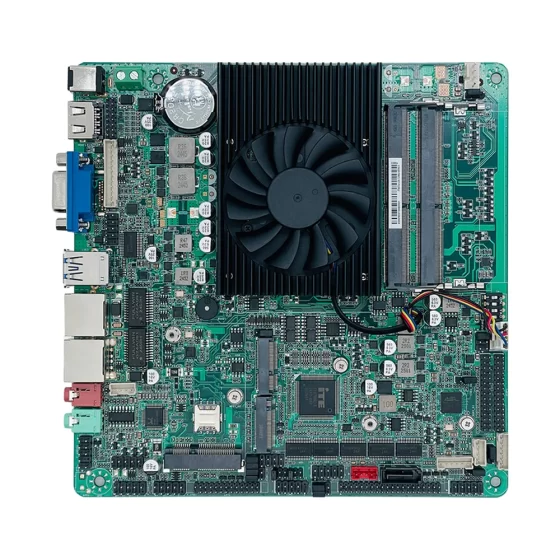
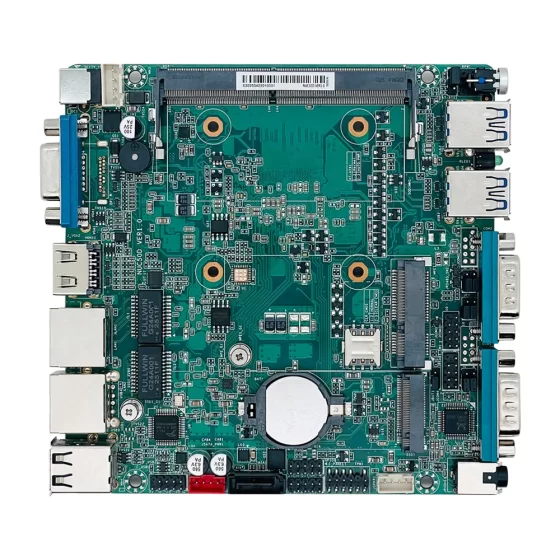
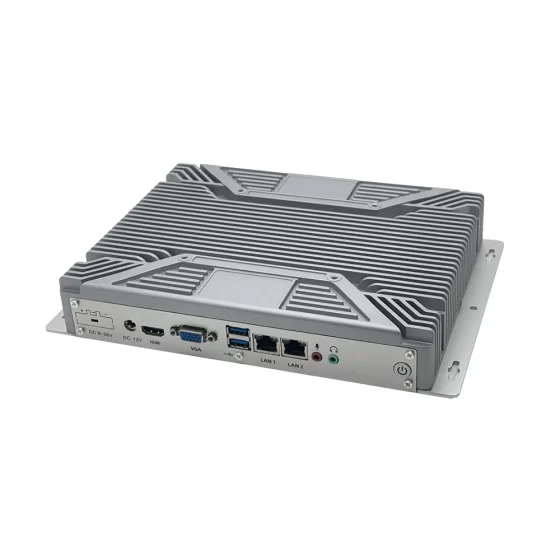
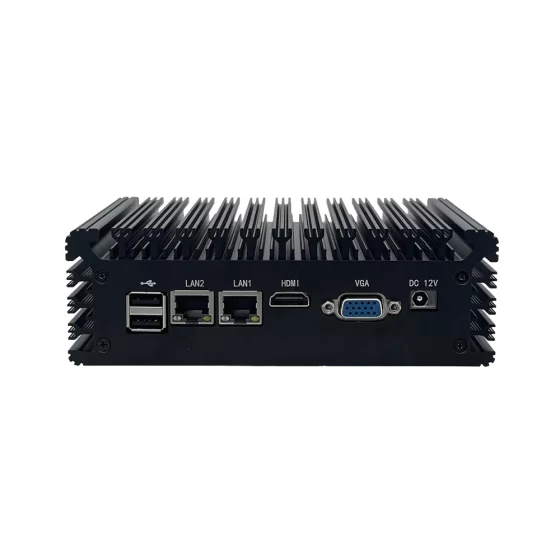
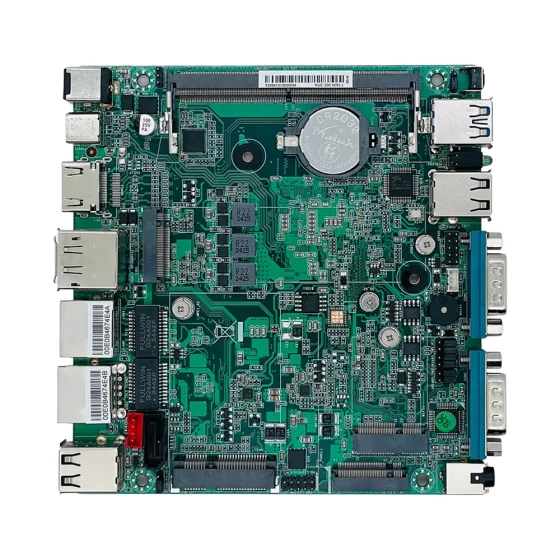
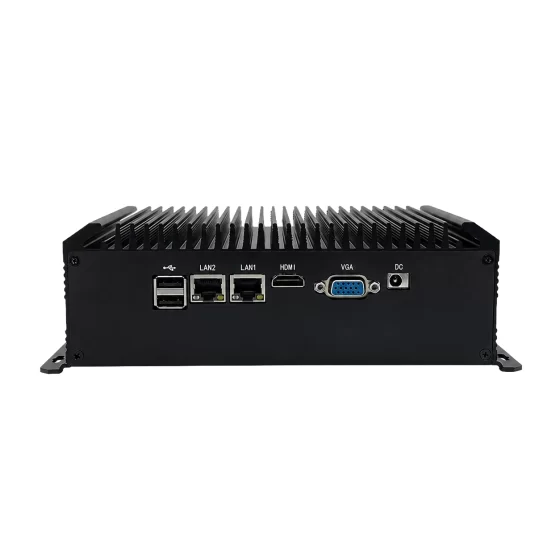
CoreIPC Industrial Computing-Lösungen

Lüfterloser Industriecomputer für SPS-Schaltschränke
Zusammenfassung
A Lüfterloser Industriecomputer für SPS-Schaltschränke ist zu einer entscheidenden Komponente in modernen industriellen Automatisierungssystemen geworden. Da die Produktionsanlagen weiterhin die Industrie übernehmen 4.0 Technologien, Industrielles Internet der Dinge (IIoT) Plattformen, Edge-Computing, und intelligente Produktionsüberwachung, Herkömmliche SPS-basierte Steuerungssysteme erfordern zunehmend zusätzliche Rechenressourcen, die über die deterministische Maschinensteuerung hinausgehen.
Während SPS weiterhin die Grundlage der industriellen Automatisierung bilden, Moderne Fabriken erfordern erweiterte Funktionen wie Echtzeit-Datenvisualisierung, Industrielle Vernetzung, Protokollkonvertierung, Bildverarbeitungsintegration, vorausschauende Wartung, MES-Konnektivität, und Cloud-Kommunikation. Ein lüfterloser Industriecomputer, der in einem SPS-Schaltschrank installiert ist, stellt die erforderliche Rechenleistung zur Unterstützung dieser Funktionen bereit und sorgt gleichzeitig für eine industrietaugliche Zuverlässigkeit.
Im Gegensatz zu kommerziellen Computern, Lüfterlose Industriecomputer sind speziell für den Einsatz in rauen Industrieumgebungen konzipiert, einschließlich hoher Temperaturen, Vibration, Staub, Luftfeuchtigkeit, und kontinuierlich 24/7 Betrieb. Ihr kompakter Formfaktor, flexible I/O-Schnittstellen, und das wartungsfreie Design machen sie ideal für den Einbau in Schaltschränken, wo Platz vorhanden ist, Zuverlässigkeit, und thermische Leistung sind entscheidende Überlegungen.
In diesem Artikel wird die Rolle lüfterloser Industriecomputer in SPS-Schaltschrankanwendungen untersucht, Erörtert die wichtigsten Herausforderungen bei der Bereitstellung, untersucht die Systemarchitektur, und hebt die geschäftlichen Vorteile der Implementierung industrietauglicher Embedded-Computing-Plattformen in modernen Automatisierungssystemen hervor.
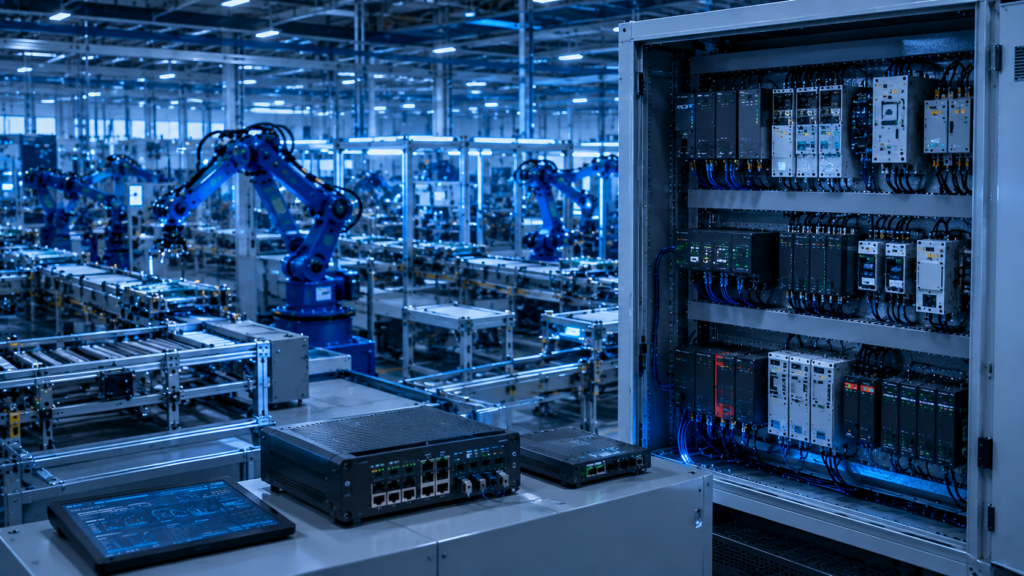
Moderne Smart Factorys kombinieren SPS-Schaltschränke, Industriecomputer, Robotik, und automatisierte Produktionssysteme für eine effiziente und intelligente Fertigung.
Branchenüberblick
Die industrielle Automatisierung hat sich im letzten Jahrzehnt erheblich weiterentwickelt. Herkömmliche SPS-Steuerungssysteme wurden ursprünglich hauptsächlich für die Maschinensteuerung entwickelt, Prozessautomatisierung, Sicherheitsmanagement, und I/O-Handling. Heute, Hersteller stehen zunehmend unter Druck, ihre Produktivität zu verbessern, Ausfallzeiten reduzieren, den Energieverbrauch optimieren, und gewinnen Sie tiefere Einblicke in die Produktionsabläufe.
Der Aufstieg der Industrie 4.0 hat die Nachfrage nach beschleunigt:
- Industrielle IoT-Konnektivität
- Edge-Computing
- Vorausschauende Wartung
- Bildverarbeitungsinspektion
- Fertigungsausführungssysteme (MES)
- Cloud-Integration
- Produktionsanalysen in Echtzeit
- Fernüberwachung
- Industrielle Cybersicherheit
Moderne Fabriken generieren riesige Mengen an Betriebsdaten:
- SPS
- Sensoren
- Antriebe
- Roboter
- Vision-Systeme
- HMIs
- SCADA-Plattformen
Um diese Daten effektiv zu nutzen, Hersteller benötigen Rechenplattformen, die Daten sammeln können, Verarbeitung, analysieren, und Übertragung von Informationen über mehrere Systeme hinweg.
Ein lüfterloser Industriecomputer, der in einem SPS-Schaltschrank installiert ist, dient als intelligenter Edge-Computing-Knoten, der die betriebliche Technologie verbindet (OT) und Informationstechnologie (ES). Diese Systeme unterstützen die Datenerfassung, Industrielle Kommunikation, Visualisierung, Analytik, und Unternehmensintegration bei gleichzeitiger Aufrechterhaltung eines zuverlässigen Betriebs in anspruchsvollen Industrieumgebungen.
Infolge, Lüfterlose Industriecomputer sind zu einem wesentlichen Bestandteil moderner Schaltschrankarchitekturen in Branchen wie der Fertigung geworden, Logistik, Verpackung, Lebensmittelverarbeitung, Energiemanagement, Wasseraufbereitung, Transport, und intelligente Infrastruktur.
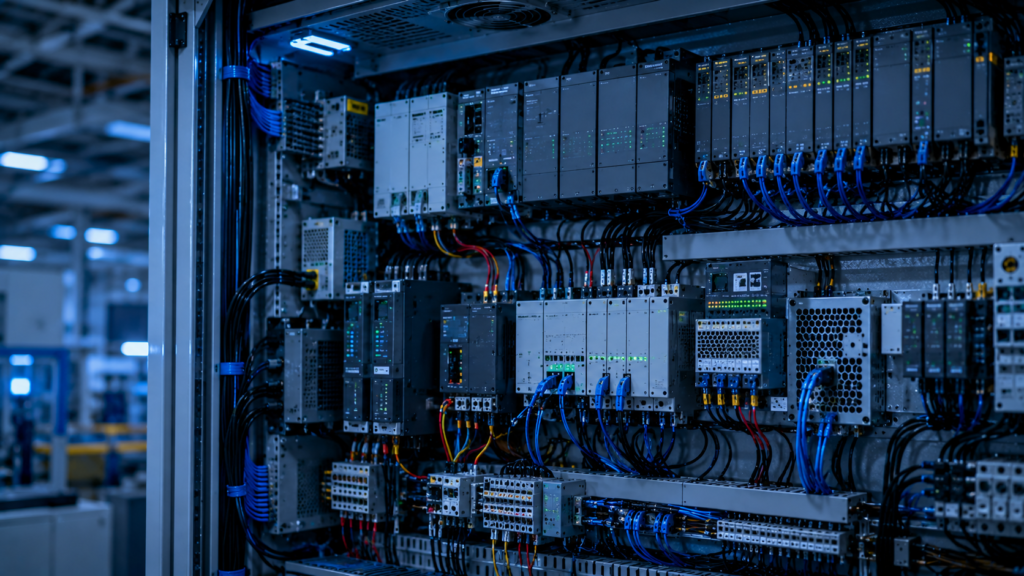
Moderne SPS-Schaltschränke müssen Steuerungen aufnehmen, Netzwerkgeräte, Energiesysteme, und umfangreiche Verkabelung bei begrenztem Einbauraum.
Wichtigste Herausforderungen
Begrenzter Platz in Schaltschränken
SPS-Schaltschränke verfügen häufig über begrenzten Einbauraum.
Zu den typischen Schrankkomponenten gehören::
- SPS-Steuerungen
- Netzteile
- Leistungsschalter
- Relais
- Industrielle Schalter
- Antriebe
- Sicherheitssteuerungen
- Klemmenblöcke
Jede im Schrank eingesetzte Computerplattform muss eine hohe Leistung bei gleichzeitig kompakter Stellfläche bieten.
Einschränkungen des Wärmemanagements
Schaltschränke werden häufig in Umgebungen mit erhöhten Temperaturen betrieben.
Zu den weiteren Herausforderungen gehören::
- Begrenzter Luftstrom
- Hohe Ausstattungsdichte
- Von Antrieben und Netzteilen erzeugte Wärme
- Geschlossene Schrankstrukturen
Bei herkömmlichen Computern mit aktiven Lüftern kann es unter diesen Bedingungen zu einer verminderten Zuverlässigkeit kommen.
Staub und Verschmutzung
In industriellen Umgebungen sind Geräte ausgesetzt:
- Staub
- Metallpartikel
- Ölnebel
- Feuchtigkeit
- Chemische Verunreinigungen
Lüfterbasierte Systeme können Verunreinigungen in das Gehäuse ziehen, Der Wartungsaufwand steigt und die Betriebssicherheit sinkt.
Steigende Anforderungen an die Datenverarbeitung
Moderne Automatisierungssysteme erzeugen große Mengen an Betriebsdaten.
Hersteller benötigen Computerplattformen, die dies unterstützen können:
- SCADA-Anwendungen
- Datenbankverwaltung
- Protokollkonvertierung
- Produktionsanalytik
- Edge-Computing
- Industrielle IoT-Gateways
SPS allein stellen möglicherweise nicht genügend Verarbeitungsressourcen für diese Arbeitslasten bereit.
Langfristige Zuverlässigkeitserwartungen
Industrielle Steuerungssysteme sind oft jahrelang im Dauerbetrieb.
Hersteller erwarten:
- 24/7 Betrieb
- Minimaler Wartungsaufwand
- Hohe Systemverfügbarkeit
- Langfristiger Support für den Produktlebenszyklus
Kommerzielle Computerhardware ist für diese Anforderungen in der Regel nicht ausgelegt.
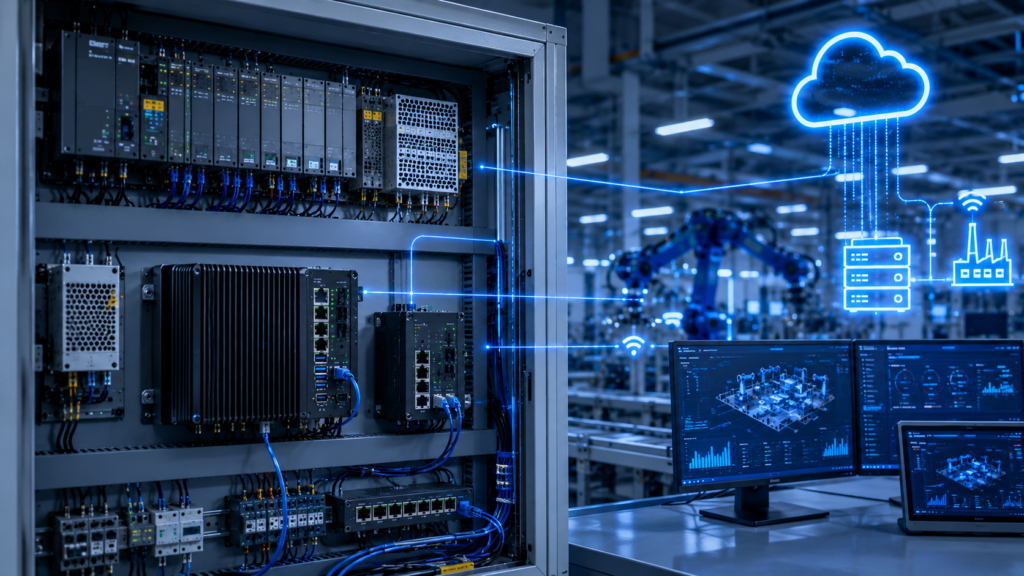
Ein lüfterloser Industriecomputer erweitert die Möglichkeiten von SPS-Schaltschränken durch die Möglichkeit der SCADA-Integration, Edge-Computing, Industrielle Vernetzung, und Cloud-Konnektivität.
Lösungsarchitektur
Eine moderne SPS-Schaltschrankarchitektur kombiniert deterministische Steuerung mit fortschrittlichen industriellen Rechenfunktionen.
Schicht 1: Feldgeräte
Die Feldschicht umfasst:
- Sensoren
- Encoder
- Aktuatoren
- Frequenzumrichter
- Sicherheitsvorrichtungen
- Servosysteme
- Vision-Sensoren
Diese Geräte erzeugen Betriebsdaten und führen Steueraktionen aus.
Schicht 2: SPS-Steuerungsschicht
Die SPS-Schicht übernimmt die Leistung:
- Maschinensteuerung
- Bewegungssteuerung
- Prozessautomatisierung
- Alarmbearbeitung
- Sicherheitsfunktionen
- Reihenfolge der Ausrüstung
Die SPS bleibt die primäre deterministische Steuerungsplattform.
Schicht 3: Lüfterlose industrielle Computerschicht
Der lüfterlose Industriecomputer fungiert als intelligente Edge-Computing-Plattform.
Zu den typischen Aufgaben gehören::
- Datenerfassung
- Protokollkonvertierung
- Industrielle Vernetzung
- HMI-Hosting
- SCADA-Integration
- Datenbankverwaltung
- Analytische Verarbeitung
- Edge-Computing
- Unterstützung für maschinelles Sehen
Kommunikationsprotokolle können Folgendes umfassen::
- Modbus TCP
- EtherNet/IP
- PROFINET
- OPC UA
- MQTT
- BACnet
- REST-APIs
Schicht 4: Fertigungsbetriebsschicht
Diese Ebene umfasst:
- SCADA-Systeme
- MES-Plattformen
- Qualitätsmanagement-Software
- Wartungssysteme
- Tools zur Produktionsberichterstattung
Der Industrierechner aggregiert und verarbeitet Daten aus der SPS-Ebene.
Schicht 5: Unternehmens- und Cloud-Schicht
Unternehmensintegration ermöglicht:
- ERP-Konnektivität
- Cloud-Analyse
- Vorausschauende Wartung
- Überwachung mehrerer Standorte
- Zentralisierte Berichterstattung
Der Industriecomputer fungiert als sicheres Gateway, das Fertigungssysteme mit Unternehmensanwendungen verbindet.
Hauptmerkmale
Lüfterloses Kühldesign
Das wichtigste Merkmal eines lüfterlosen Industriecomputers ist seine passive Kühlarchitektur.
Zu den Vorteilen gehören::
- Keine beweglichen Teile
- Reduzierter Wartungsaufwand
- Verbesserte Zuverlässigkeit
- Leiser Betrieb
- Bessere Beständigkeit gegen Staubverschmutzung
Dadurch sind lüfterlose Systeme ideal für den Schaltschrankeinbau geeignet.
Kompakter Formfaktor
Der Platz im Schaltschrank ist oft begrenzt.
Lüfterlose Industriecomputer sind in kompakten Designs erhältlich, die dies unterstützen:
- DIN-Schienenmontage
- Wandmontage
- VESA-Montage
- Schrankintegration
Kompakte Systeme maximieren den verfügbaren Schrankraum bei gleichzeitiger Beibehaltung der Funktionalität.
Betrieb bei weitem Temperaturbereich
In industriellen Umgebungen können erhebliche Temperaturschwankungen auftreten.
Normalerweise werden lüfterlose Computer in Industriequalität unterstützt:
- Breiter Betriebstemperaturbereich
- Thermische Stabilität
- Dauerbetrieb unter anspruchsvollen Bedingungen
Dies gewährleistet eine zuverlässige Leistung in anspruchsvollen Bereitstellungsumgebungen.
Umfangreiche industrielle Konnektivität
Industrielle Anwendungen erfordern umfangreiche Anschlussmöglichkeiten.
Zu den typischen Schnittstellen gehören::
- Mehrere Ethernet-Ports
- USB-Anschlüsse
- RS232
- RS422
- RS485
- Digitale I/O
- CAN-Bus
- WLAN- und Mobilfunkoptionen
Diese Schnittstellen vereinfachen die Integration mit SPS und Industrieanlagen.
Edge-Computing-Fähigkeit
Edge Computing ermöglicht eine Datenverarbeitung nahe der Produktionsquelle.
Zu den Vorteilen gehören::
- Reduzierte Latenz
- Schnellere Reaktionszeiten
- Geringerer Netzwerkverkehr
- Erhöhte Zuverlässigkeit
Dies unterstützt die industrielle Entscheidungsfindung in Echtzeit.
Industrielle IoT-Unterstützung
Moderne lüfterlose Industriecomputer unterstützen industrielle IoT-Bereitstellungen durch:
- MQTT-Kommunikation
- Cloud-Konnektivität
- Datenaggregation
- Fernverwaltung
Diese Funktionen helfen Unternehmen bei der Umsetzung von Initiativen zur digitalen Transformation.
Lange Verfügbarkeit über den gesamten Lebenszyklus
Industrielle Automatisierungsprojekte bleiben oft über viele Jahre hinweg betriebsbereit.
Industriecomputer bieten typischerweise:
- Langfristige Verfügbarkeit
- Stabile Hardwareplattformen
- Konsistenter Software-Support
- Verlängerte Produktlebenszyklen
Dadurch werden Neukonstruktions- und Wartungskosten minimiert.
Bereitstellungsszenarien
Maschinenautomatisierung
Lüfterlose Industriecomputer werden üblicherweise in Maschinensteuerschränken eingesetzt.
Zu den Anwendungen gehören:
- Datenprotokollierung
- Rezeptverwaltung
- Bedienerschnittstellen
- Produktionsüberwachung
Intelligente Fertigung
Hersteller nutzen Industriecomputer, um Produktionsdaten von SPS-Systemen zu sammeln und zu analysieren.
Zu den Anwendungen gehören:
- OEE-Überwachung
- Produktionsanalytik
- Qualitätsverfolgung
- Analyse der Gerätenutzung
SCADA-Systeme
Lüfterlose Industriecomputer können SCADA-Anwendungen direkt in Schaltschränken hosten.
Zu den Vorteilen gehören::
- Lokale Visualisierung
- Echtzeitüberwachung
- Alarmmanagement
- Historische Datenspeicherung
Industrielle IoT-Gateways
Schaltschrankrechner dienen häufig als Industrial IoT-Gateways.
Zu den Funktionen gehören:
- Datenerfassung
- Cloud-Konnektivität
- Protokollkonvertierung
- Fernüberwachung
Bildverarbeitungsinspektion
Industriecomputer unterstützen Bildverarbeitungsaufgaben wie z:
- Fehlererkennung
- Barcode-Lesung
- OCR-Inspektion
- Qualitätsüberprüfung
Prüfergebnisse können direkt an SPS-Systeme übermittelt werden.
Energiemanagementsysteme
Industriecomputer helfen Unternehmen dabei, den Energieverbrauch zu überwachen und zu optimieren:
- Versorgungsüberwachung
- Analyse der Netzqualität
- Energieberichterstattung
- Nachhaltigkeitsinitiativen
Geschäftsvorteile
Erhöhte Systemzuverlässigkeit
Lüfterlose Designs machen Kühlventilatoren überflüssig, die zu den häufigsten Fehlerquellen herkömmlicher Computer zählen.
Dies verbessert die Gesamtzuverlässigkeit und Betriebszeit des Systems.
Reduzierte Wartungskosten
Ohne Ventilatoren oder Luftfilter, Der Wartungsaufwand wird deutlich reduziert.
Unternehmen profitieren von geringeren Betriebskosten und weniger Serviceunterbrechungen.
Verbesserte operative Transparenz
Industriecomputer ermöglichen den Echtzeitzugriff auf Produktions- und Anlagendaten.
Dies unterstützt eine fundierte Entscheidungsfindung und Prozessoptimierung.
Verbesserte Skalierbarkeit
Zusätzliche Softwareanwendungen und Kommunikationsprotokolle können ohne größere Hardwareänderungen bereitgestellt werden.
Dies ermöglicht zukünftige Erweiterungen und Modernisierungen.
Niedrigere Gesamtbetriebskosten
Hardware in Industriequalität, Unterstützung für einen langen Lebenszyklus, und geringere Wartungsanforderungen tragen zu niedrigeren Gesamtbetriebskosten bei.
Unterstützung für die Industrie 4.0 Initiativen
Lüfterlose Industriecomputer bilden die Grundlage dafür:
- Industrielles IoT
- Edge-Computing
- Vorausschauende Wartung
- KI-Analyse
- Digitale Transformation
Diese Technologien helfen Herstellern, in sich entwickelnden Industriemärkten wettbewerbsfähig zu bleiben.
Warum CoreIPC
CoreIPC bietet industrielle Computerplattformen, die speziell für den Einsatz in SPS-Schaltschränken entwickelt wurden. Unsere lüfterlosen Industriecomputer, eingebettete Computer, und Industrie-Motherboards liefern zuverlässige Leistung, flexible I/O-Konfigurationen, lange Produktlebenszyklen, und Haltbarkeit in Industriequalität. Ob zur Unterstützung der Maschinenautomatisierung, Industrielles IoT, SCADA-Systeme, Edge-Computing, oder intelligente Fertigungsanwendungen, CoreIPC-Lösungen helfen Systemintegratoren und Geräteherstellern, zuverlässig zu bauen, skalierbar, und zukunftsfähige Automatisierungssysteme.
Häufig gestellte Fragen
Was ist ein lüfterloser SPS-Computer??
Ein lüfterloser SPS-Computer ist ein Industriecomputer, der für den Betrieb in SPS-Schaltschränken ohne Verwendung von Kühlventilatoren konzipiert ist. Es basiert auf passiver Wärmeableitung und ist für Industrieumgebungen optimiert, die hohe Zuverlässigkeit und minimalen Wartungsaufwand erfordern.
Warum werden lüfterlose Computer in Schaltschränken bevorzugt??
Lüfterlose Systeme machen bewegliche Teile überflüssig und verhindern, dass Staub in das Gehäuse eindringt. Dies verbessert die Zuverlässigkeit, reduziert den Wartungsaufwand, und unterstützt den Dauerbetrieb in rauen Industrieumgebungen.
Kann ein lüfterloser Industriecomputer eine SPS ersetzen??
Allgemein, NEIN. SPS bleiben die bevorzugte Plattform für die deterministische Maschinensteuerung. Typischerweise werden lüfterlose Industriecomputer neben SPS für die Datenverarbeitung eingesetzt, Visualisierung, Vernetzung, und Edge-Computing-Funktionen.
Welche Betriebstemperaturen können lüfterlose Industriecomputer unterstützen??
Lüfterlose Computer in Industriequalität unterstützen üblicherweise große Betriebstemperaturbereiche und sind für den zuverlässigen Betrieb in anspruchsvollen Industrieumgebungen ausgelegt.
Welche Kommunikationsprotokolle werden unterstützt??
Die meisten Industriecomputer unterstützen Protokolle wie Modbus TCP, EtherNet/IP, PROFINET, OPC UA, MQTT, und andere industrielle Kommunikationsstandards.
Können lüfterlose Industriecomputer SCADA-Software ausführen??
Ja. Viele lüfterlose Industriecomputer werden als SCADA-Server eingesetzt, HMI-Plattformen, oder lokale Visualisierungssysteme innerhalb industrieller Schaltschränke.
Sind lüfterlose Industriecomputer für industrielle IoT-Anwendungen geeignet??
Ja. Sie werden häufig als industrielle IoT-Gateways eingesetzt, Unterstützung der Cloud-Konnektivität, Datenaggregation, Protokollkonvertierung, und Fernüberwachungsanwendungen.
Können diese Systeme maschinelles Sehen unterstützen??
Ja. Hochleistungsfähige lüfterlose Industriecomputer können die Bilderfassung unterstützen, KI-Schlussfolgerung, Barcode-Lesung, OCR-Inspektion, und Fehlererkennungsanwendungen.
Wie lange bleiben Industriecomputer typischerweise verfügbar??
Industrielle Computerplattformen bieten häufig deutlich längere Produktlebenszyklen als Verbraucher-PCs, Dies trägt dazu bei, die Neukonstruktionskosten zu senken und die langfristige Wartung zu vereinfachen.
Was ist bei der Auswahl eines Schaltschrankrechners zu beachten??
Zu den Schlüsselfaktoren gehört die Verarbeitungsleistung, Betriebstemperatur, Montagemöglichkeiten, Kommunikationsschnittstellen, Umweltspezifikationen, Lebenszyklusverfügbarkeit, und Bewerbungsvoraussetzungen.
Abschluss
A Lüfterloser Industriecomputer für SPS-Schaltschränke stellt die für moderne industrielle Automatisierungssysteme erforderliche Rechengrundlage bereit. Während SPS weiterhin deterministische Steuerungsfunktionen ausführen, Industriecomputer ermöglichen erweiterte Funktionen wie Edge Computing, Industrielle IoT-Konnektivität, SCADA-Integration, Bildverarbeitung, und Echtzeitanalysen.
Durch die Kombination einer zuverlässigen SPS-Steuerung mit industrietauglichen Embedded-Computing-Plattformen, Hersteller können die Betriebstransparenz verbessern, den Wartungsaufwand reduzieren, Unterstützung der Industrie 4.0 Initiativen, und bauen Sie skalierbare Automatisierungssysteme auf, die für zukünftige technologische Fortschritte gerüstet sind.
Kontaktieren Sie uns
Suchen Sie einen lüfterlosen Industriecomputer für Ihr SPS-Schaltschrankprojekt?
CoreIPC bietet Industriecomputer an, eingebettete Computer, Industrie-Motherboards, und maßgeschneiderte Embedded-Computing-Lösungen für die industrielle Automatisierung, Industrielles IoT, maschinelles Sehen, SCADA-Systeme, und intelligente Fertigungsumgebungen.
Kontaktieren Sie unser Engineering-Team, um Ihre Anwendungsanforderungen zu besprechen und die ideale Industrie-Computing-Plattform für Ihren Einsatz zu ermitteln.