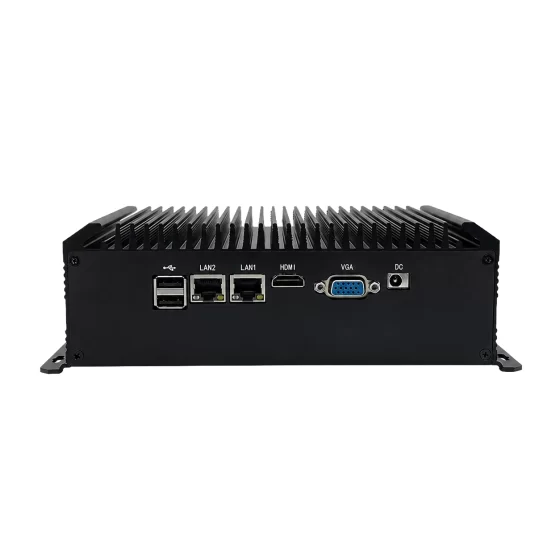
CoreIPC Industrial Computing-Lösungen

Zusammenfassung
Ein intelligent transportation computer is a specialized industrial computing platform designed to support Intelligent Transportation Systems (ES IST) by delivering reliable data processing, Kommunikation, Kontrolle, and analytics capabilities in demanding transportation environments. From traffic signal control and electronic toll collection to smart intersections, highway monitoring, railway systems, and urban traffic management centers, industrial computers play a critical role in enabling real-time transportation intelligence.
As transportation infrastructure becomes increasingly connected, transportation operators require computing platforms capable of handling large volumes of sensor data, Videostreams, KI-Workloads, and network communications while maintaining long-term reliability. Traditional commercial computers often struggle with vibration, Temperaturschwankungen, Staub, Luftfeuchtigkeit, and continuous operation requirements commonly found in transportation deployments.
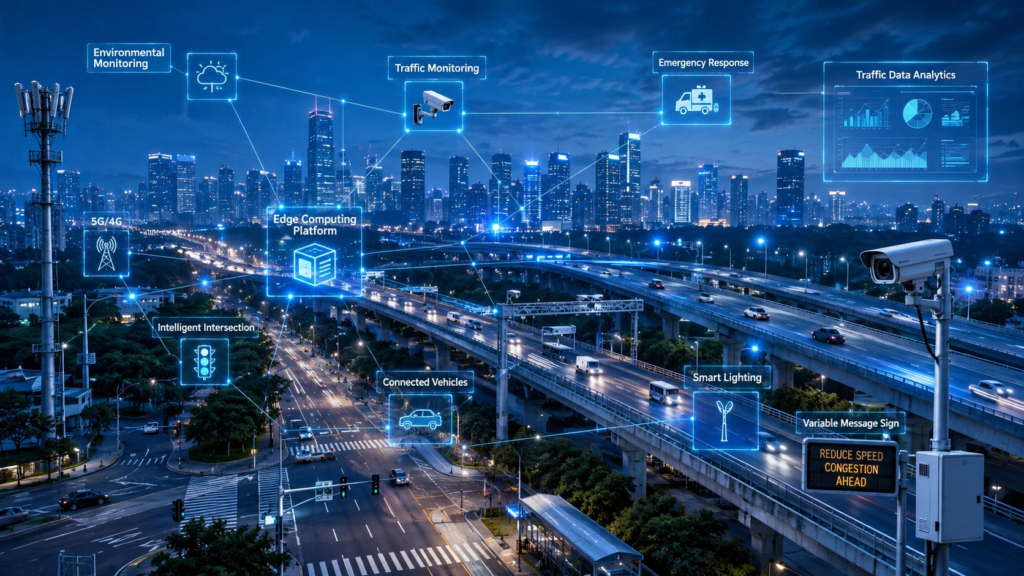
Smart City Nightscapes and Digital Networks
Modern industrial computers and embedded computers provide robust hardware platforms optimized for transportation applications. With fanless designs, wide-temperature operation, industrial-grade connectivity, und langen Lebenszyklus-Support, they serve as the foundation of smart transportation systems worldwide.
This article explores the role of industrial computers in ITS environments, Hauptherausforderungen bei der Bereitstellung, system architecture, kritische Funktionen, Einsatzszenarien, and how CoreIPC industrial computing solutions help transportation integrators build reliable and scalable intelligent transportation infrastructure.
Branchenüberblick
The Evolution of Intelligent Transportation Systems
Cities worldwide are investing heavily in Intelligent Transportation Systems (ES IST) to improve traffic efficiency, road safety, sustainability, und betriebliche Sichtbarkeit. Increasing urbanization, growing vehicle ownership, and expanding transportation networks have created significant pressure on existing infrastructure.
Modern ITS solutions leverage:
- Real-time traffic monitoring
- Traffic signal optimization
- Vehicle detection systems
- Electronic toll collection
- Smart parking systems
- Public transportation management
- Highway surveillance
- Incident detection systems
- Connected transportation infrastructure
At the heart of these systems lies the intelligent transportation computer, which acts as the processing and communication hub connecting field devices, Steuerungssysteme, und Cloud-Plattformen.
Industrie 4.0 and Smart Mobility
The transportation sector is increasingly adopting Industry 4.0 principles, einschließlich:
- Edge-Computing
- Künstliche Intelligenz
- IoT connectivity
- Big data analytics
- Vorausschauende Wartung
- Digitale Zwillinge
- Echtzeitüberwachung
Industrial computers deployed at the edge allow transportation operators to process data locally, Latenz reduzieren, improve response times, and minimize network bandwidth consumption.
Growth of Edge Computing in Transportation
Transportation networks generate massive amounts of data from:
- Traffic cameras
- Radar systems
- LiDAR-Sensoren
- Vehicle detection loops
- Umweltsensoren
- Variable message signs
- Vernetzte Fahrzeuge
Processing this data at the edge using industrial and embedded computers enables faster decision-making and more reliable operation compared to cloud-only architectures.

Junction of Mixed Weather and Roads
Wichtigste Herausforderungen
Deploying computing systems in transportation environments presents several unique challenges.
Harsh Outdoor Conditions
Transportation equipment is often installed in:
- Roadside cabinets
- Traffic control boxes
- Bahnhöfe
- Highway monitoring sites
- Toll plazas
These locations may experience:
- Extreme Temperaturen
- Staubexposition
- Luftfeuchtigkeit
- Rain
- Solar heat gain
Kontinuierlich 24/7 Betrieb
Transportation infrastructure must operate continuously without interruption.
Zu den Herausforderungen gehören:
- System uptime requirements
- Hardware-Zuverlässigkeit
- Langfristige Wartung
- Failure prevention
Datenverarbeitung in Echtzeit
ITS applications require:
- Immediate traffic analysis
- Vehicle detection
- Incident response
- Signal control decisions
Any processing delay can impact safety and traffic efficiency.
Multiprotokoll-Konnektivität
Transportation systems must connect with:
- SPS
- Traffic controllers
- Kameras
- Sensoren
- Kontrollzentren
- Cloud systems
This requires extensive industrial communication support.
Integration bestehender Infrastruktur
Many transportation networks contain equipment that has been operating for decades.
Industrial computers must support:
- Ältere serielle Geräte
- Proprietary protocols
- Existing traffic management systems
Cybersicherheitsrisiken
Connected transportation infrastructure faces increasing cybersecurity threats.
Zu den Hauptanliegen gehören::
- Unbefugter Zugriff
- Network attacks
- Datenschutz
- Critical infrastructure security
Skalierbarkeitsanforderungen
Smart city deployments often expand over time.
Computing platforms must support:
- Additional sensors
- KI-Anwendungen
- Network expansion
- Future technology upgrades

Future Transportation Monitoring and Control Center
Lösungsarchitektur
Typical Intelligent Transportation System Architecture
A modern ITS deployment typically consists of multiple layers working together.
Datenerfassungsschicht
Field devices collect real-time transportation data:
- Traffic cameras
- ANPR cameras
- Radar sensors
- LiDAR systems
- Weather sensors
- Vehicle detectors
- Traffic signal controllers
Kantenverarbeitungsschicht
Industrial computers and embedded computers perform:
- Datenaggregation
- Videoverarbeitung
- KI-Schlussfolgerung
- Ereigniserkennung
- Verkehrsanalyse
- Local control logic
The edge layer minimizes latency and ensures continuous operation even during network disruptions.
Kommunikationsschicht
Industrial networking technologies connect field equipment:
- Ethernet
- Glasfasernetze
- 4G/5G communication
- W-lan
- Serielle Kommunikation
- Industrial protocols
Kontrollschicht
Traffic management applications provide:
- Signal control
- Traffic optimization
- Vorfallmanagement
- Geräteverwaltung
- Leistungsüberwachung
Cloud and Data Center Layer
Centralized platforms support:
- Historische Datenspeicherung
- Fleet-wide analytics
- Vorausschauende Wartung
- KI-Modelltraining
- System-wide reporting
Data Flow Example
- Cameras capture traffic video.
- Edge industrial computer analyzes traffic conditions.
- Vehicle counts and incidents are detected.
- Local traffic controllers receive optimization commands.
- Processed data is transmitted to transportation management centers.
- Cloud systems generate long-term operational insights.

Intelligent Transportation Systems and Urban Nightscapes
Key Features of Industrial Computers for ITS
Hochleistungsverarbeitung
Transportation applications often require simultaneous processing of:
- Videostreams
- AI algorithms
- Sensor data
- Communication tasks
Industrial computers provide sufficient computing resources for these workloads.
Lüfterloses Industriedesign
Fanless systems offer several advantages:
- Reduzierter Wartungsaufwand
- Verbesserte Zuverlässigkeit
- Staubbeständigkeit
- Quiet operation
This is particularly important for roadside and outdoor deployments.
Betrieb bei weitem Temperaturbereich
Transportation equipment frequently encounters:
- Summer heat
- Winter cold
- Direct sunlight
Industrial-grade systems are designed to operate reliably across wide temperature ranges.
Industrielle Konnektivität
A transportation computer may need to connect to multiple device types simultaneously.
Zu den gängigen Schnittstellen gehören:
- Gigabit-Ethernet
- Serielle Schnittstellen
- USB
- Digitale I/O
- Wireless communication modules
Edge-KI-Fähigkeit
Modern ITS deployments increasingly utilize AI for:
- Fahrzeugklassifizierung
- Verkehrsflussanalyse
- Erkennung von Vorfällen
- Pedestrian detection
- License plate recognition
Industrial edge computers enable local AI inference with low latency.
Langer Lebenszyklus-Support
Transportation infrastructure projects often remain operational for many years.
Industrielle Plattformen bieten:
- Langfristige Verfügbarkeit
- Stable hardware revisions
- Vereinfachte Wartungsplanung
Cybersicherheitsunterstützung
Secure transportation systems require:
- Sicherer Start
- Trusted platform technologies
- Zugangskontrolle
- Verschlüsselte Kommunikation
Industrial computers provide the hardware foundation for implementing these protections.
Fernverwaltung
Transportation devices may be distributed across large geographic areas.
Remote management capabilities enable:
- Systemüberwachung
- Software-Updates
- Diagnose
- Wartungsplanung
Modular Scalability
Transportation systems evolve continuously.
Modular industrial computers support:
- Erweiterungsmodule
- Additional networking
- KI-Beschleunigung
- Storage upgrades

Night View of the Intelligent Traffic Command Center
Empfohlene CoreIPC-Produkte
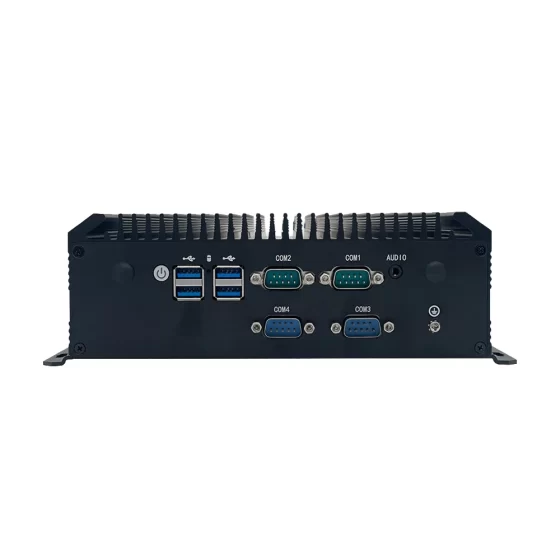
Industrie-PCs
Geeignet für:
- Traffic management centers
- Control rooms
- Transportation monitoring systems
Vorteile:
- High computing performance
- Multiple expansion options
- Langfristige Zuverlässigkeit
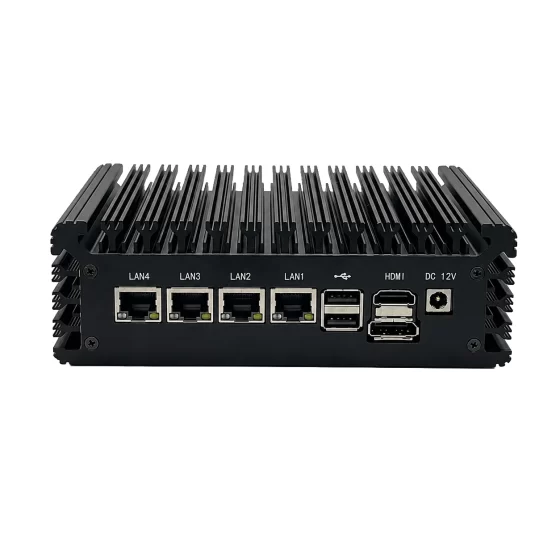
Lüfterlose Industrie-PCs
Geeignet für:
- Roadside cabinets
- Smart intersections
- Highway monitoring stations
Vorteile:
- Wartungsfreier Betrieb
- High environmental tolerance
- Verbesserte Systemzuverlässigkeit
Eingebettete Computer
Geeignet für:
- Compact ITS installations
- Transportation edge processing
Vorteile:
- Space-saving design
- Flexibler Einsatz
- Energy-efficient operation
Embedded-Box-PCs
Geeignet für:
- Videoanalyse
- Traffic control systems
- Smart transportation gateways
Vorteile:
- Robuste Konstruktion
- Industrial connectivity
- Zuverlässiger Betrieb
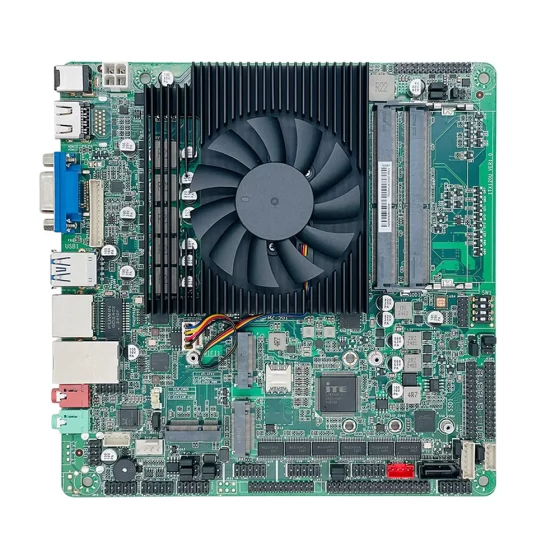
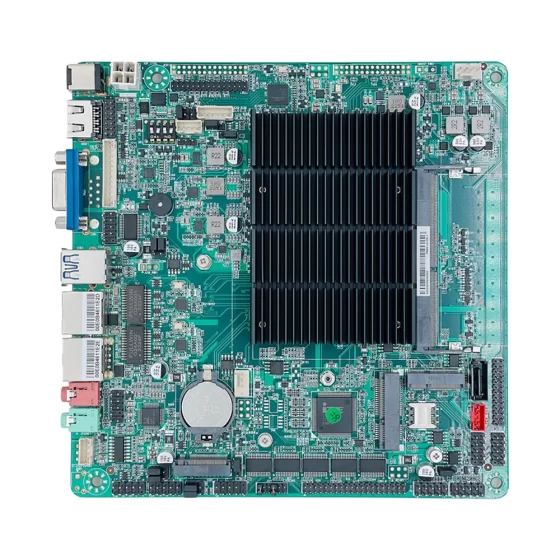
Mini-ITX-Motherboards
Geeignet für:
- Transportation OEM systems
- Custom ITS platforms
Vorteile:
- Compact footprint
- Flexible system integration
- Langer Lebenszyklus-Support
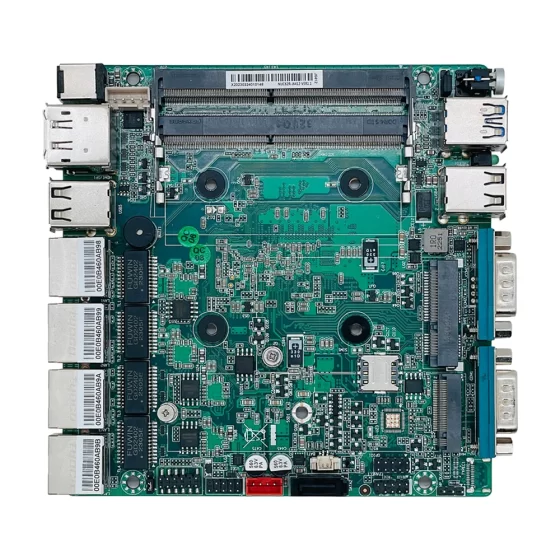
3.5-Zoll-SBCs
Geeignet für:
- Compact transportation controllers
- Embedded monitoring devices
Vorteile:
- Kleiner Formfaktor
- Geringer Stromverbrauch
- Zuverlässigkeit auf Industrieniveau
EPISCHE SBCs
Geeignet für:
- Advanced transportation systems
- Edge processing applications
Vorteile:
- Expanded I/O capability
- Flexible Integration
- Hohe Leistung
Edge-KI-Computer
Geeignet für:
- Intelligent video analytics
- AI traffic management
- Smart city applications
Vorteile:
- KI-Beschleunigung
- Echtzeit-Inferenz
- Reduced cloud dependency
Bereitstellungsszenarien
Smart Traffic Intersections
Industrial computers process:
- Traffic camera feeds
- Vehicle detection
- Signal timing optimization
Result:
- Improved traffic flow
- Reduced congestion
Highway Traffic Monitoring
Transportation computers support:
- Traffic surveillance
- Erkennung von Vorfällen
- Variable message signs
Result:
- Faster incident response
- Enhanced road safety
Electronic Toll Collection
Embedded computers manage:
- Fahrzeugidentifikation
- Zahlungsabwicklung
- Lane control
Result:
- Reduced congestion
- Efficient toll operations
Smart Parking Systems
Industrial computers coordinate:
- Space occupancy detection
- Guidance systems
- Payment integration
Result:
- Improved parking efficiency
Railway Signaling Systems
Unterstützung für Industrieplattformen:
- Signal control
- Track monitoring
- Kommunikationssysteme
Result:
- Enhanced operational safety
Public Transportation Management
Transportation computers provide:
- Flottenüberwachung
- Fahrgastinformationssysteme
- Vehicle communication
Result:
- Improved service quality
Intelligent Video Surveillance
Edge AI computers perform:
- Objekterkennung
- Incident recognition
- Verhaltensanalyse
Result:
- Enhanced security and safety
Smart City Transportation Networks
Industrial computing platforms integrate:
- Multiple transportation subsystems
- Centralized management
- Echtzeitanalysen
Result:
- Greater operational visibility
Geschäftsvorteile
Organizations deploying industrial computers for ITS can achieve significant operational improvements.
Reduzierte Ausfallzeiten
Industrial-grade hardware improves reliability and minimizes unexpected failures.
Erhöhte Produktivität
Real-time automation reduces manual intervention requirements.
Niedrigere Wartungskosten
Fanless designs and industrial-grade components reduce maintenance frequency.
Verbesserte operative Transparenz
Centralized monitoring enables better system oversight.
Schnellere Entscheidungsfindung
Edge computing reduces latency and accelerates response times.
Bessere Skalierbarkeit
Modular architectures support future system expansion.
Erhöhte Sicherheit
Real-time monitoring improves transportation safety outcomes.
Improved Resource Utilization
Traffic optimization helps maximize infrastructure efficiency.
Warum CoreIPC
CoreIPC specializes in industrial computing platforms designed for demanding embedded and transportation applications.
Our strengths include:
Fachwissen im Bereich Industrie-Computing
Extensive experience in industrial motherboard and embedded computing development.
OEM and ODM Support
Flexible customization services for transportation system integrators and equipment manufacturers.
Entwicklung eingebetteter Hardware
Support for custom transportation computing platforms.
Lange Verfügbarkeit über den gesamten Lebenszyklus
Designed for long-term industrial deployment requirements.
Industrial Quality Design
Built to support demanding transportation environments.
Produktanpassung
Flexible hardware configurations for project-specific requirements.
Global Deployment Readiness
Solutions designed to support transportation projects worldwide.
Häufig gestellte Fragen
1. What is an intelligent transportation computer?
An intelligent transportation computer is an industrial-grade computing platform used in Intelligent Transportation Systems to process traffic data, manage communications, control devices, and support real-time transportation applications.
2. Why use an industrial computer instead of a commercial PC for ITS?
Industriecomputer bieten eine höhere Zuverlässigkeit, größere Betriebstemperaturbereiche, improved durability, and longer product lifecycles compared to commercial PCs.
3. Can industrial computers operate outdoors?
Ja. Many industrial computers are designed for deployment in roadside cabinets and outdoor transportation environments when properly installed within suitable enclosures.
4. What communication interfaces are commonly required in ITS systems?
Zu den gängigen Schnittstellen gehört Ethernet, serielle Schnittstellen, USB, wireless communication modules, digitale I/O, and fiber networking.
5. Can industrial computers support AI-based traffic analysis?
Ja. Modern industrial computers and edge AI computers can run AI models for vehicle detection, Verkehrsanalyse, incident detection, and license plate recognition.
6. What is the role of edge computing in transportation?
Edge computing enables local processing of transportation data, Reduzierung der Latenz, Verbesserung der Zuverlässigkeit, and minimizing bandwidth usage.
7. Are fanless computers suitable for transportation applications?
Ja. Fanless systems are widely used because they improve reliability and reduce maintenance requirements.
8. How long do transportation computer systems typically remain in service?
Many transportation systems remain operational for 5–15 years or longer, making long lifecycle support an important consideration.
9. Can industrial computers integrate with legacy transportation equipment?
Ja. Industrial computers often provide serial communication and flexible connectivity options for integrating legacy systems.
10. How do industrial computers improve transportation safety?
Sie ermöglichen eine Echtzeitüberwachung, rapid incident detection, intelligent control systems, and advanced analytics that support safer transportation operations.
11. Can industrial computers support smart city initiatives?
Ja. They serve as key infrastructure components within smart city transportation networks.
12. What factors should be considered when selecting an ITS computer?
Important considerations include performance, environmental tolerance, Konnektivität, Lebenszyklusunterstützung, Erweiterungsfähigkeit, and cybersecurity requirements.
Abschluss
The modern Intelligent Transportation System depends on reliable computing infrastructure capable of processing data, controlling equipment, and supporting real-time decision-making. As transportation networks become increasingly connected and data-driven, the role of the intelligent transportation computer continues to expand.
Industrial computers, eingebettete Computer, and edge AI platforms provide the performance, Zuverlässigkeit, Konnektivität, and scalability required to support smart transportation initiatives. By selecting industrial-grade computing solutions specifically designed for transportation environments, system integrators and transportation operators can improve safety, Effizienz, and long-term operational performance.
Kontaktieren Sie uns
Looking for the right industrial computer for ITS Anwendungen?
CoreIPC bietet industrielle Computerplattformen für:
- Intelligente Transportsysteme
- Traffic Management
- Smart Intersections
- Videoanalyse
- Transport-Edge-Computing
- OEM Transportation Equipment
- ODM Transportation Platforms
- Kundenspezifische Entwicklung eingebetteter Hardware
Contact our engineering team today to discuss your transportation project requirements and discover the most suitable CoreIPC solution.