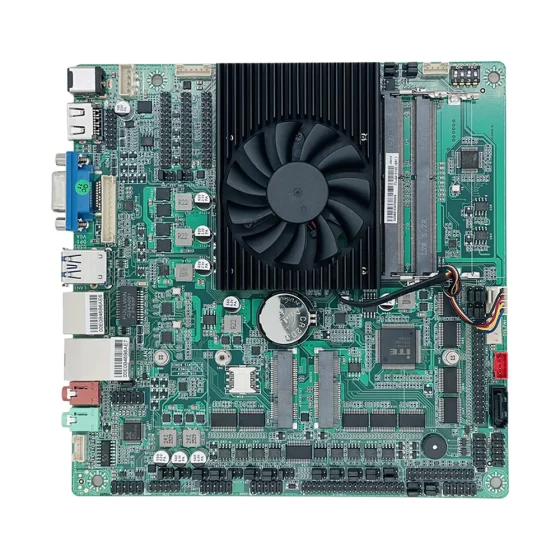
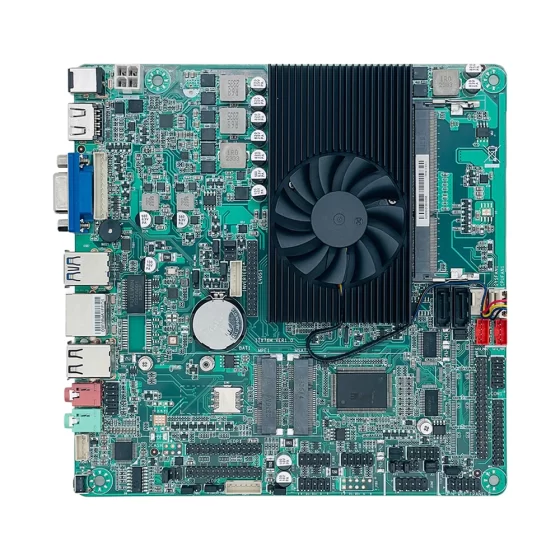
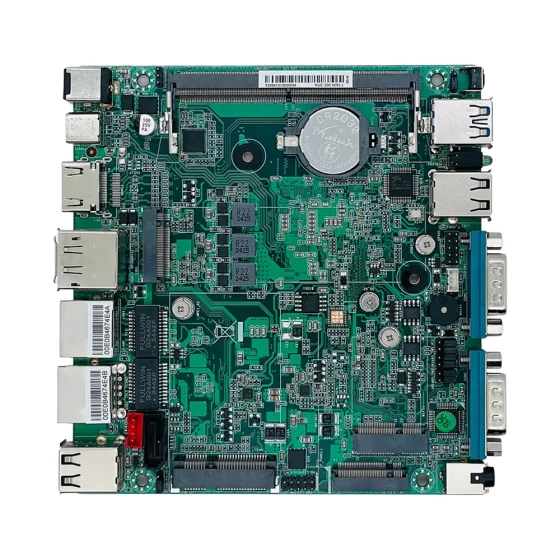
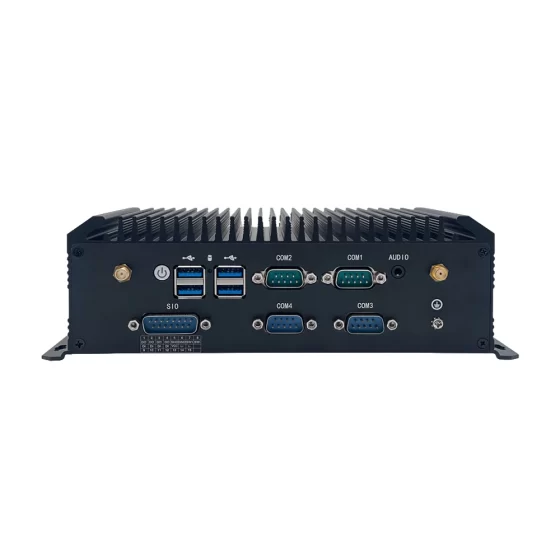
CoreIPC Industrial Computing-Lösungen

Zero Trust Security Appliance: Zero Trust Appliance für industriellen Netzwerkschutz
Zusammenfassung
A zero trust appliance provides the industrial computing foundation for identity-based access control, secure remote maintenance, least-privilege networking, policy enforcement, industrial segmentation, and protected communication across modern connected factories.
Industrial networks are becoming more distributed and more connected. Fabriken, Maschinenbauer, Lagerhäuser, Energiestandorte, Transportsysteme, and remote infrastructure environments now rely on PLCs, SCADA-Systeme, Industrie-PCs, eingebettete Computer, IIoT-Gateways, Kameras, Sensoren, Roboter, Cloud-Plattformen, and remote service tools.
Traditional network security often assumes that users and devices inside a trusted network are safe. In modern industrial environments, this assumption is increasingly risky.
Zero trust security follows a different principle: never automatically trust a user, device, application, or network connection. Every access request should be verified, limited, monitored, and controlled according to policy.
A zero trust security appliance built on an industrial computer or embedded computer can provide the local hardware platform for secure access control, Netzwerksegmentierung, remote engineering access, Verkehrskontrolle, Protokollierung, and policy-based connectivity.
Compared with standard office IT devices, industrial zero trust appliances must operate reliably in real factory and field conditions. Sie können in Schaltschränken eingebaut werden, Maschinengehäuse, abgelegene Standorte, Transportschränke, utility facilities, or warehouse network rooms.
This article explains how zero trust appliances support industrial cybersecurity, welche Herausforderungen bei der Bereitstellung in realen Anwendungen auftreten, wie die Lösungsarchitektur funktioniert, and which hardware features matter when selecting an industrial computer or embedded computer for zero trust appliance deployment.
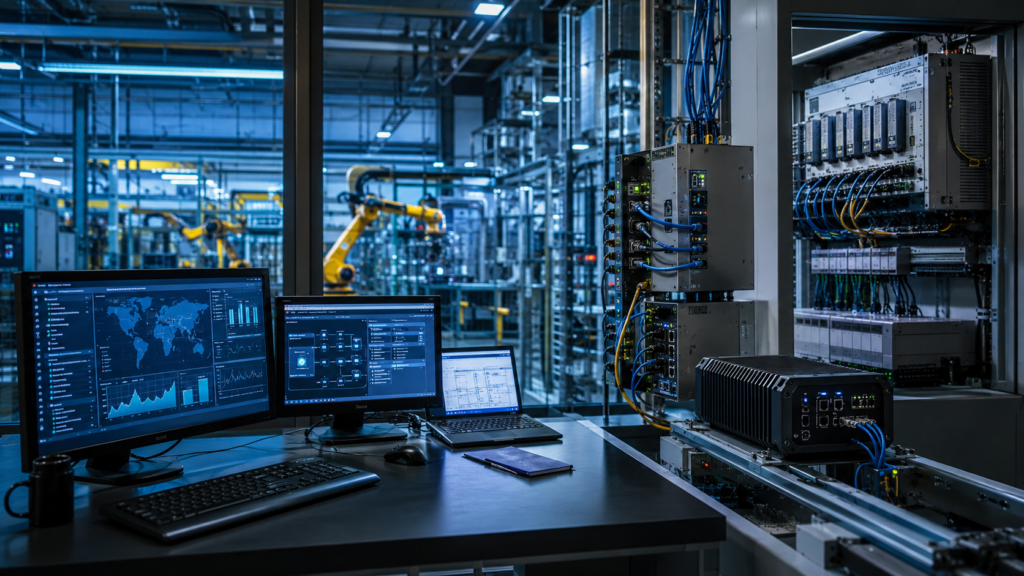
Zero trust appliances help control remote access to factory IT, OT, SPS, SCADA, und Maschinennetzwerke.
Branchenüberblick
Industrial Networks Need Stronger Access Control
Industrial networks were once more isolated.
Heute, many production environments are connected to enterprise systems, Remote-Service-Plattformen, Cloud-Dashboards, Industrielle IoT-Gateways, and multi-site infrastructure.
This connectivity creates new operational value, but it also increases risk.
Industrial operators may need to protect:
- SPS-Netzwerke
- SCADA-Systeme
- Maschinennetzwerke
- Remote maintenance connections
- Industrielle IoT-Gateways
- Ingenieurarbeitsplätze
- Kameranetzwerke
- Energieüberwachungssysteme
- Lagerautomatisierungssysteme
- Verkehrsinfrastruktur
- Utility facilities
A zero trust appliance helps control access to these systems more carefully.
Why Zero Trust Matters in OT Environments
Operational technology networks are different from office IT networks.
Production systems often require stable communication, predictable timing, and long lifecycle equipment. Some industrial devices may not support modern authentication or security controls directly.
Zero trust architecture helps by placing a controlled security layer between users, devices, Anwendungen, and critical systems.
Instead of allowing broad network access after a VPN login, a zero trust appliance can support more specific access rules.
Zum Beispiel:
- Only authorized users can access selected machines.
- Remote service access can be limited by role and time window.
- Factory IT traffic can be separated from PLC networks.
- Industrial IoT data can be routed through controlled paths.
- Unverified devices can be blocked or isolated.
- Access events can be logged for review.
This improves security without requiring every legacy device to support advanced security features by itself.
Industrial Hardware Is Required for Real Deployment
Zero trust appliances are often placed at important network boundaries.
In industriellen Umgebungen, these locations may include machine-side cabinets, Produktionszellen, remote utility rooms, transportation nodes, Energiestandorte, or distributed facilities.
Diese Umgebungen können Staub enthalten, Vibration, Hitze, begrenzter Luftstrom, instabile Macht, Kabelspannung, und Dauerbetrieb.
Industrial computers and embedded computers provide a practical hardware foundation for this type of deployment.
They support multi-LAN configurations, robuste Gehäuse, lüfterlose Betriebsmöglichkeiten, zuverlässige Lagerung, flexible I/O, Industriemontage, und lange Verfügbarkeit über den gesamten Lebenszyklus.

Legacy devices, Netzwerkzonen, access policies, remote service sessions, and IIoT gateways affect zero trust deployment planning.
Wichtigste Herausforderungen
Replacing Broad Trust with Policy-Based Access
A major challenge is moving from broad network trust to controlled access.
Traditional remote access may allow a user to connect to a large network segment after authentication. This can expose more systems than necessary.
A zero trust appliance should help limit access based on:
- User identity
- Device status
- Role
- Standort der Website
- Anwendung
- Machine group
- Netzwerkzone
- Maintenance purpose
- Zeitfenster
- Security policy
This requires careful planning.
The goal is to give users access only to the systems required for their task, not to the entire industrial network.
Schutz älterer Industriegeräte
Many industrial devices were designed for reliability and long service life, not modern cybersecurity.
Einige SPS, HMIs, Laufwerke, Controller, and meters may not support advanced authentication, Verschlüsselung, or access control.
A zero trust appliance can help protect these assets by enforcing policies at the network boundary.
It can control who reaches the device, which traffic is allowed, and how access is logged.
This approach is useful when replacing legacy equipment is not practical.
Aufrechterhaltung der Produktionskontinuität
Industrial security controls must not interrupt production communication.
A zero trust appliance may sit between network zones, Remote-Benutzer, Cloud-Plattformen, and machine systems. If policies are too strict or poorly tested, required production traffic may be blocked.
Designers must understand normal communication patterns, einschließlich:
- PLC polling
- SCADA-Kommunikation
- HMI-Zugriff
- Engineering workstation access
- Remote maintenance sessions
- Industrial IoT data upload
- Alarm communication
- Camera and monitoring traffic
- Machine-to-machine communication
Policies should be validated before full enforcement.
Identity and Device Verification
Zero trust depends on verification.
In office IT environments, identity providers and endpoint management tools may already exist. In industriellen Umgebungen, users, service laptops, remote engineers, Maschinenbauer, and site devices may be more diverse.
A practical zero trust system should consider:
- Benutzerauthentifizierung
- Device identification
- Rollenbasierter Zugriff
- Remote service approval
- Sitzungsprotokollierung
- Wartungsfenster
- Access review
- Integration with existing security tools
The appliance hardware must support the software environment required for these functions.
Zuverlässiger Feldeinsatz
A zero trust appliance may become critical security infrastructure.
Wenn es fehlschlägt, Fernwartung, site communication, industrial IoT data transfer, or protected access may be interrupted.
Industrial deployment requires reliable hardware design, including rugged construction, stabile strom eingang, Wärmeplanung, lokaler Speicher, und langen Lebenszyklus-Support.

Zero trust appliances connect industrial networks, identity systems, access logs, und Sicherheitsüberwachungsplattformen.
Zero Trust Appliance Solution Architecture
Industrial Asset Layer
The industrial asset layer includes the systems that need protection.
Diese Schicht kann umfassen:
- SPS
- HMIs
- SCADA-Server
- Industrie-PCs
- Eingebettete Controller
- Maschinensteuerungen
- Roboter
- Kameras
- Sensoren
- Energiezähler
- IIoT-Gateways
- Ingenieurarbeitsplätze
These assets may be grouped into different zones based on function, Risiko, and access requirements.
Zero Trust Appliance Layer
The zero trust appliance layer is the core enforcement point.
Auf dieser Ebene, B. der Industriecomputer oder der eingebettete Computer:
- Enforce access policies
- Netzwerkzonen segmentieren
- Verify users and devices
- Control remote maintenance sessions
- Route approved traffic
- Wenden Sie Firewall-Regeln an
- Support VPN or secure tunnel functions
- Log access events
- Überwachen Sie den Systemzustand
- Senden Sie Ereignisse an Sicherheitsplattformen
This layer helps replace broad network access with controlled, policy-based connectivity.
Identity and Policy Layer
The identity and policy layer defines who can access which systems and under what conditions.
Richtlinien können auf basieren:
- Benutzerrolle
- Device identity
- Netzwerkzone
- Anwendungstyp
- Machine group
- Standort der Website
- Maintenance task
- Zeitfenster
- Approval status
- Sicherheitsrisikostufe
Für industrielle Umgebungen, policies should be designed with both IT security and OT engineering input.
This helps protect systems while maintaining required operational workflows.
Network Segmentation Layer
Network segmentation is a key part of zero trust deployment.
The appliance may separate:
- Fabrik-IT-Netzwerk
- SPS-Netzwerk
- Maschinennetzwerk
- SCADA-Netzwerk
- Kameranetzwerk
- Industrielles IoT-Netzwerk
- Remote service network
- Managementnetzwerk
Multiple LAN ports and clear routing policies help create controlled boundaries between these zones.
Segmentation reduces unnecessary exposure and improves network organization.
Monitoring and Logging Layer
Zero trust requires visibility.
The appliance may collect logs and send security events to local dashboards, SIEM-Plattform, SOC-Systeme, monitoring tools, or cloud management systems.
Useful records may include:
- User login events
- Device access attempts
- Approved sessions
- Blocked traffic
- Richtlinienverstöße
- VPN-Tunnelstatus
- Remote maintenance activity
- Network traffic events
- System health data
- Konfigurationsänderungen
This visibility supports audit review, Untersuchung des Vorfalls, and long-term security improvement.
Hauptmerkmale
Multi-LAN-Netzwerkdesign
Multiple LAN ports are important for zero trust appliances.
They allow the platform to separate traffic between different network zones.
Nützliche Konfigurationen können sein::
- WAN-Uplink
- Fabrik-IT-Netzwerk
- SPS-Netzwerk
- Maschinennetzwerk
- SCADA-Netzwerk
- Kameranetzwerk
- IIoT gateway network
- Fernwartungsnetzwerk
Multi-LAN design supports least-privilege networking and clearer policy enforcement.
Security Processing Performance
A zero trust appliance may process authentication workflows, secure tunnels, Firewall-Richtlinien, routing rules, Verkehrsfilterung, Protokollierung, and monitoring data.
Die Auswahl der Hardware sollte berücksichtigt werden:
- CPU-Leistung
- Speicherkapazität
- Anzahl der LAN-Ports
- Portgeschwindigkeit
- Anzahl der Tunnel
- Verschlüsselter Durchsatz
- Firewall workload
- Protokollierungsvolumen
- Speichergeschwindigkeit
- Betriebssystemunterstützung
The appliance should be tested with realistic traffic and access patterns before deployment.
Zuverlässiger lokaler Speicher
Der lokale Speicher unterstützt Protokolle, Konfigurationssicherungen, Zertifikate, access records, policy data, Diagnosedateien, and system recovery.
SSD- oder NVMe-Speicher werden häufig bevorzugt, da sie einen schnelleren Zugriff und eine bessere Stoßfestigkeit als mechanische Laufwerke bieten.
Das Speicherdesign sollte berücksichtigt werden:
- Protokollaufbewahrung
- Access event records
- Zertifikatsspeicher
- Konfigurationssicherung
- Systemwiederherstellung
- Diagnostic records
- Schreiben Sie Ausdauer
- Backup-Workflow
Zuverlässiger Speicher verbessert die Prüfbarkeit und Wartungseffizienz.
Robustes und lüfterloses Design
Lüfterlose Industriecomputer eignen sich für Sicherheitsgeräte, die in Schränken eingesetzt werden, abgelegene Einrichtungen, and dusty environments.
Sie reduzieren die Staubaufnahme und beseitigen eine häufige mechanische Fehlerquelle.
Robuste Gehäuse schützen vor Vibrationen, zunehmender Stress, Kabelbelastung, and continuous industrial operation.
Thermal design should still be reviewed carefully because encrypted traffic, Routenführung, security inspection, and logging can create sustained processing load.
Flexible industrielle I/O
Although zero trust appliances mainly focus on networking, industrial I/O can still be useful.
Zu den wichtigen E/A-Optionen können gehören:
- LAN
- USB
- RS232
- RS485
- GPIO
- Digitaler Eingang
- Digitaler Ausgang
- HDMI
- DisplayPort
- M.2
- PCIe
- SATA oder NVMe
GPIO kann die Alarmausgabe unterstützen. Serial ports may support maintenance access. USB- und Display-Anschlüsse können lokale Dienste unterstützen. Expansion slots can support additional LAN modules, Funkmodule, oder Lagerung.
Remote Management Support
Many zero trust appliances are deployed across distributed industrial sites.
Remote management is important.
The platform may need to support secure configuration updates, status monitoring, log export, health reporting, and controlled access review.
Remote management should be designed carefully so that it does not become an uncontrolled access path.
Lange Lebensdauer und Wartbarkeit
Industrial security appliances may stay in service for many years.
Konsistente Hardware hilft bei der Pflege von Software-Images, Kompatibilität mit Sicherheitssoftware, Fahrervalidierung, Ersatzteilplanung, und Konfigurationsvorlagen.
This is important for system integrators, Maschinenbauer, and industrial operators deploying zero trust appliances across multiple machines, Fabriken, und abgelegene Standorte.
Bereitstellungsszenarien
Remote Machine Maintenance
Machine builders can use zero trust appliances to provide controlled remote service access.
Instead of giving broad VPN access to a full machine network, the appliance can limit access to selected devices and specific maintenance tasks.
This helps OEMs support customers while reducing unnecessary exposure.
IT and OT Boundary Control
A zero trust appliance can be deployed between factory IT and OT networks.
It can control which users, Anwendungen, and systems are allowed to communicate across the boundary.
This helps protect production systems while still allowing required data exchange.
SCADA Access Protection
SCADA networks often connect operators, Engineering-Arbeitsplätze, Remote-Geräte, und Überwachungsplattformen.
A zero trust appliance can enforce access rules before users or systems reach SCADA assets.
Dies ist nützlich für die Energie, Wasser, Transport, und Anlageninfrastruktur.
Industrial IoT Gateway Security
Industrial IoT gateways collect data from machines and send selected information to platforms or cloud systems.
A zero trust appliance can help control gateway communication, segment machine networks, and log data access events.
Dies unterstützt eine sicherere IIoT-Bereitstellung.
Warehouse and Logistics Networks
Lager können Förderbänder umfassen, Barcode-Stationen, WMS-Plattformen, Kameras, Industriecomputer, and remote support tools.
A zero trust appliance can help control access between automation systems, business systems, and service networks.
This supports secure logistics operations.
Verkehrsinfrastruktur
Transportsysteme können straßenseitige Ausrüstung umfassen, Verkehrsleiter, Parksysteme, Bahnhofsnetze, und Überwachungsplattformen.
Zero trust appliances can help protect remote access and segment infrastructure networks across distributed sites.
Energy and Utility Facilities
Energy and utility sites may require remote monitoring, SCADA access, maintenance communication, and secure data transfer.
An industrial zero trust appliance can provide controlled connectivity for substations, Pumpstationen, meter networks, utility cabinets, und abgelegene Einrichtungen.
OEM Security Appliance Development
Security solution providers and system integrators can build zero trust security appliances using industrial computers or embedded boards.
The platform can support multi-LAN networking, secure access control, policy enforcement, Protokollierung, Fernverwaltung, und robuste Bereitstellung im Appliance-Stil.
Geschäftsvorteile
Least-Privilege Access
Zero trust appliances help enforce least-privilege access.
Users and devices are granted only the access required for a specific task.
This reduces unnecessary exposure and helps protect critical industrial assets from broad network access.
More Secure Remote Maintenance
Remote maintenance is valuable, aber es muss kontrolliert werden.
A zero trust appliance can limit access by user, device, role, system, time window, and policy.
This helps machine builders and industrial operators support remote service more securely.
Stärkere Netzwerksegmentierung
Multi-LAN zero trust appliances help divide industrial networks into controlled zones.
Dies unterstützt die Trennung zwischen IT, OT, SPS, Maschine, Kamera, IIoT, Fernwartung, und Managementnetzwerke.
Better segmentation improves security and network clarity.
Better Visibility and Auditability
Zero trust appliances can record access attempts, approved sessions, blockierter Verkehr, user activity, and policy events.
These records support audit review, Untersuchung des Vorfalls, Fehlerbehebung, and long-term security improvement.
Reliable local storage helps preserve important logs.
Reduced Risk for Legacy Devices
Many legacy industrial devices cannot enforce modern security policies by themselves.
A zero trust appliance can protect them by controlling access at the network boundary.
This allows operators to improve security without immediately replacing all existing equipment.
Scalable Industrial Security Deployment
A standardized zero trust appliance platform makes it easier to deploy secure access control across multiple factories, Maschinen, abgelegene Standorte, und OEM-Systeme.
Konsistente Hardware vereinfacht Software-Images, Richtlinienvorlagen, Ersatzteilplanung, Validierung, und Lebenszyklusmanagement.
This supports scalable industrial cybersecurity improvement.
Warum CoreIPC
CoreIPC bietet industrielle Computerplattformen für Netzwerksicherheit, Industrielles IoT, Fabrikautomation, Fernüberwachung, und eingebettete Systemintegration. For zero trust appliance applications, CoreIPC konzentriert sich auf zuverlässige industrielle Computerhardware, Embedded-Computer-Lösungen, Multi-LAN-Konfigurationen, flexible I/O, kompaktes Systemdesign, lüfterlose Bereitstellungsoptionen, und OEM/ODM-Anpassungsunterstützung. CoreIPC hilft Systemintegratoren, Anbieter von Sicherheitslösungen, Maschinenbauer, und Industriebetreiber wählen Computerplattformen aus, die den tatsächlichen Einsatzanforderungen entsprechen, einschließlich Anzahl der LAN-Ports, access control workload, Netzwerksegmentierung, Speicherbedarf, Montagemethoden, Leistungsaufnahme, thermische Bedingungen, und Lebenszyklusplanung.
Häufig gestellte Fragen
1. What is a zero trust appliance?
A zero trust appliance is a hardware platform used to enforce identity-based and policy-based access control.
In industriellen Umgebungen, it may control access to machine networks, SPS, SCADA-Systeme, Industrielle IoT-Gateways, remote maintenance systems, and factory network zones. It helps reduce broad trust and limits access to approved users, devices, and tasks.
2. Why use an industrial computer for a zero trust appliance?
Ein Industriecomputer bietet robuste Hardware und flexible Konnektivität für den Einsatz in Fabriken und vor Ort.
Es kann mehrere LAN-Ports unterstützen, lüfterloser Betrieb, lokaler Speicher, Industriemontage, stabile strom eingang, und lange Verfügbarkeit über den gesamten Lebenszyklus. These features make it suitable for zero trust deployment in cabinets, Maschinen, abgelegene Standorte, und Infrastruktursysteme.
3. How is an embedded computer used as a zero trust appliance?
An embedded computer can act as a compact zero trust gateway inside a control cabinet, Maschinengehäuse, abgelegene Anlage, or OEM security appliance.
It can enforce access policies, Segmentnetzwerke, log sessions, manage secure tunnels, and control communication between users and industrial systems.
4. What is the difference between VPN and zero trust access?
A VPN often gives a user network access after connection.
Zero trust access is more specific. It verifies identity and applies policies to determine which systems, Anwendungen, or devices the user can access. In many deployments, VPN and zero trust functions may work together, but zero trust focuses more strongly on least-privilege access.
5. Why are multiple LAN ports important for zero trust appliances?
Multiple LAN ports allow the appliance to separate different network zones.
Ein Port kann eine Verbindung zum WAN herstellen, ein weiterer zur Fabrik-IT, ein anderer zu SPS-Netzwerken, ein anderer zu Maschinennetzwerken, und ein weiteres zu Fernwartungs- oder Verwaltungsnetzwerken. This supports segmentation and precise policy enforcement.
6. Can fanless industrial computers support zero trust appliances?
Ja. Fanless industrial computers can support many zero trust appliance deployments because they reduce dust intake and remove one mechanical failure point.
Jedoch, secure tunnels, Firewall-Regeln, Protokollierung, and traffic processing can create sustained CPU and thermal load. Gehäusedesign, Umgebungstemperatur, und der Luftstrom im Schrank sollten vor dem Einsatz überprüft werden.
7. What hardware features matter for zero trust appliances?
Zu den wichtigen Features gehören mehrere LAN-Ports, ausreichende CPU-Leistung, zuverlässiges Gedächtnis, SSD- oder NVMe-Speicher, robustes Gehäuse, lüfterloses Design, industrieller Stromeingang, USB, Ausgabe anzeigen, GPIO, serielle Schnittstellen, und Erweiterungsmöglichkeiten.
The final configuration should match access control workload, Netzwerksegmentierung, logging needs, und Installationsumgebung.
8. Can zero trust appliances protect industrial IoT systems?
Ja. Zero trust appliances can help protect industrial IoT systems by controlling access between IIoT gateways, Maschinen, Cloud-Plattformen, und Fabriknetzwerke.
Sie können Richtlinien durchsetzen, restrict unnecessary communication, and log access events at key network boundaries.
9. Does zero trust replace firewalls?
NEIN. Zero trust does not replace firewalls.
It adds stronger identity-based and policy-based access control. Firewalls, VPNs, Segmentierung, Protokollierung, and zero trust policies often work together in a complete industrial security architecture.
10. Was sollte vor der Bereitstellung getestet werden??
Vor der Bereitstellung, Das System sollte mit einer realen Netzwerktopologie getestet werden, user roles, device groups, access policies, remote maintenance workflows, Verkehrsaufkommen, Protokollierungsverhalten, und langlebigen Betrieb.
Thermische Stabilität, Wiederherstellungsverfahren, Konfigurationssicherung, access review, und Produktionskommunikation sollten ebenfalls validiert werden.
Abschluss
A zero trust appliance is a practical foundation for industrial access control, secure remote maintenance, least-privilege networking, Netzwerksegmentierung, and protected communication across connected industrial environments.
Durch die Platzierung eines Industriecomputers oder eingebetteten Computers an wichtigen Netzwerkgrenzen, Hersteller, Maschinenbauer, Systemintegratoren, and infrastructure operators can control who accesses PLC networks, SCADA-Systeme, Maschinennetzwerke, industrielle IoT-Plattformen, and remote maintenance connections.
The right zero trust security appliance should be selected according to real deployment requirements, einschließlich Anzahl der LAN-Ports, access control workload, tunnel count, Netzwerksegmentierung, Speicherbedarf, Montagemethode, Leistungsaufnahme, thermische Bedingungen, Betriebssystemunterstützung, Sicherheitspolitik, und Lebenszyklusplanung.
CoreIPC supports zero trust appliance projects with industrial computing platforms designed for practical factory, maschinenseitig, und Feldeinsatz. Mit der richtigen Hardware-Grundlage, Industriebetreiber und Anbieter von Sicherheitslösungen können zuverlässig bauen, skalierbar, and production-ready zero trust security systems.
Kontaktieren Sie uns
Auf der Suche nach einem Industriecomputer, eingebetteter Computer, or multi-LAN platform for zero trust appliance deployment?
Kontaktieren Sie CoreIPC, um Ihre Projektanforderungen zu besprechen, einschließlich Anzahl der LAN-Ports, Netzwerkzonen, access control workload, Speicherdesign, Montagemethode, Leistungsaufnahme, Betriebsumgebung, Lebenszyklusanforderungen, und OEM/ODM-Anpassungsoptionen.