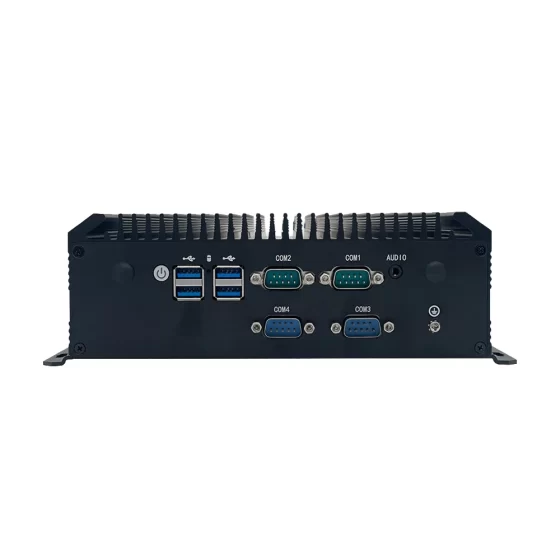
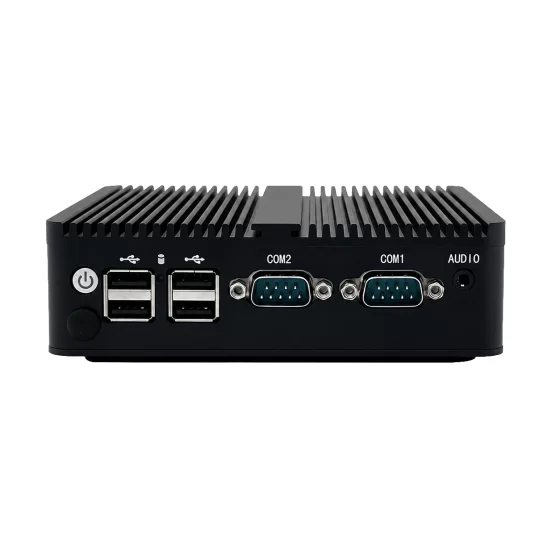
Soluciones de informática industrial CoreIPC

Computadora Robot Vision Edge AI: Computadora de visión robótica para automatización inteligente
Resumen ejecutivo
A robot vision computer provides the industrial computing foundation for robotic perception, AI image processing, reconocimiento de objetos, visual guidance, detección de defectos, positioning, inspección, and real-time decision-making in automated production environments.
Modern robotic systems no longer rely only on fixed motion paths. En fábricas inteligentes, robots increasingly need to see, analizar, and respond to their surroundings. They may identify parts, localizar objetos, inspect surfaces, guide picking operations, verificar la calidad del ensamblaje, support bin picking, or coordinate with machine vision systems on production lines.
A robot vision edge AI computer built on an industrial computer or embedded computer can process camera data locally near the robot. It can run AI inference models, connect industrial cameras, communicate with robot controllers, exchange data with PLCs, and send results to MES, SCADA, or factory monitoring systems.
En comparación con las PC estándar, industrial computers are better suited for robot vision deployment because they support rugged installation, diseño térmico estable, multiple LAN and USB interfaces, almacenamiento local, opciones de expansión, opciones de diseño sin ventilador, y disponibilidad de ciclo de vida prolongado.
This article explains how robot vision edge AI computers support intelligent automation, what deployment challenges appear in real factories, cómo funciona la arquitectura de la solución, and which hardware features matter when selecting an industrial computer or embedded computer for robot vision applications.
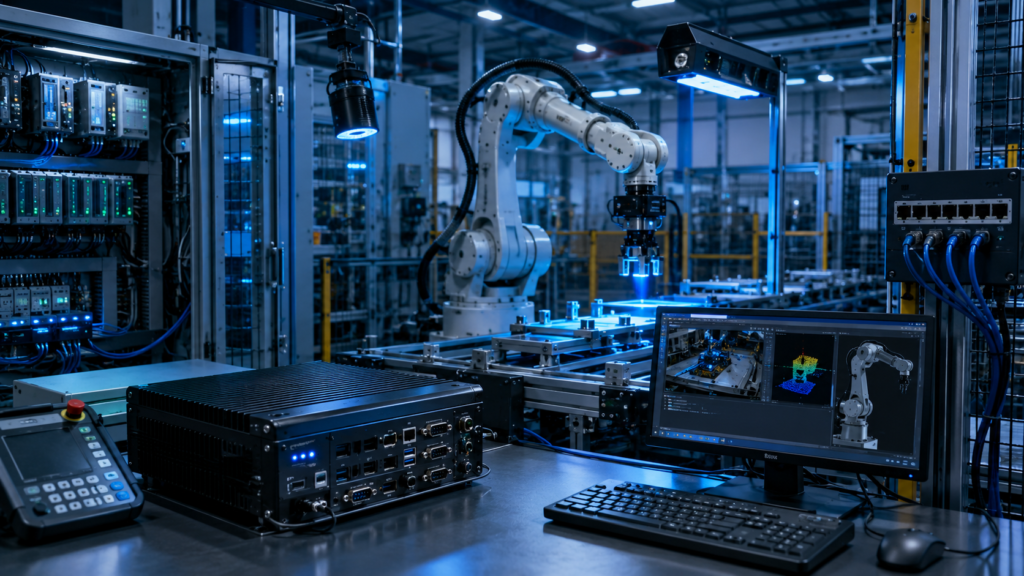
Robot vision computers process camera data locally for robotic picking, inspección, reconocimiento, and guidance.
Descripción general de la industria
Robots Are Becoming More Vision-Driven
Industrial robots were traditionally programmed to repeat fixed motions.
That model works well when parts are always positioned in the same place and conditions do not change. Sin embargo, modern production environments are more flexible. Parts may arrive in different positions, products may vary by batch, and quality requirements may become more detailed.
Vision systems help robots adapt.
Robot vision can support:
- Reconocimiento de objetos
- Posicionamiento de piezas
- Recogida de contenedores
- Assembly guidance
- Inspección de superficies
- Barcode and label reading
- Pick-and-place verification
- Robotic welding guidance
- Inspección de embalaje
- Palletizing and depalletizing
- Detección de defectos
- Safety zone awareness
A robot vision computer processes visual information and turns it into usable data for robotic control and factory systems.
Edge AI Improves Local Decision-Making
Sending every image to a remote server can increase latency and bandwidth usage.
Robot vision often needs fast response. A robot may need to adjust its position, reject a defective part, or stop an operation within a short time window.
Edge AI computing allows visual data to be processed close to the robot.
The edge computer can run AI inference locally, generate position data, clasificar defectos, and send compact results to robot controllers or PLCs.
This improves response time and reduces dependence on cloud or central server availability.
La informática industrial es la base del hardware
Robot vision computers are often installed near production equipment.
They may be mounted in robot cells, gabinetes de control, estaciones de inspección, assembly lines, welding systems, logistics lines, or packaging machines.
Estos entornos pueden incluir vibraciones., polvo, ruido electrico, calor, limited cabinet space, y funcionamiento continuo.
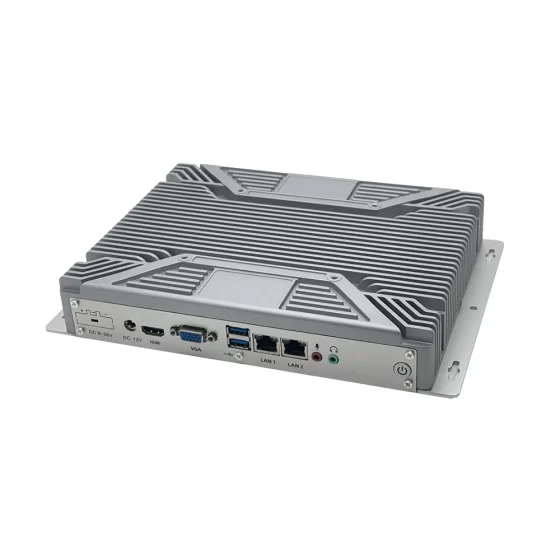
Industrial computers and embedded computers provide the hardware foundation for reliable deployment. Admiten un diseño robusto, E/S flexibles, conectividad de la cámara, almacenamiento, expansión, and long-term platform stability.

Cámaras, 3sensores D, iluminación, Disparadores del PLC, tiempo de ciclo, controladores de robots, and AI workloads affect robot vision deployment.
Desafíos clave
Processing High-Resolution Camera Data
Robot vision systems often use one or more industrial cameras.
Camera data can be large, especially when using high resolution, altas velocidades de fotogramas, or multiple viewpoints.
The computer must process image streams reliably while also handling AI inference, comunicación robótica, registro de datos, and factory system integration.
Los factores importantes de la carga de trabajo incluyen:
- Recuento de cámaras
- Resolución de imagen
- Velocidad de fotogramas
- Complejidad del modelo de IA
- Tiempo del ciclo de inspección
- Robot response time
- Necesidades de almacenamiento local
- Ancho de banda de red
- Requisitos de tiempo de ejecución del software
The platform should be selected based on real camera and AI workload, not only CPU model or port count.
Meeting Real-Time Response Requirements
Robot vision applications often require low latency.
A delay in object positioning or defect detection may reduce production speed or cause incorrect robot movement.
The robot vision computer must process images, run algorithms, and send results quickly.
Latency-sensitive applications may include:
- Recogida de contenedores
- Robotic sorting
- High-speed pick-and-place
- Vision-guided assembly
- Conveyor tracking
- Robotic inspection
- Verificación de embalaje
- Welding seam tracking
Hardware, software, interfaz de la cámara, diseño de red, and robot communication must be evaluated together.
Integrating with Robot Controllers and PLCs
A robot vision computer does not work alone.
Debe comunicarse con los controladores del robot., PLC, sistemas de movimiento, sensores, dispositivos de seguridad, HMI stations, y software de fábrica.
Los requisitos de integración comunes pueden incluir:
- Sending object coordinates to robot controllers
- Receiving trigger signals from PLCs
- Reporting inspection results to MES
- Storing image records locally
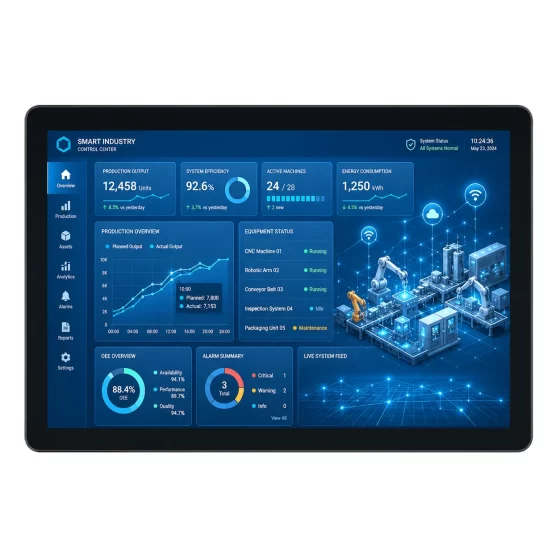
- Displaying status on HMI
- Sending alarms to SCADA
- Supporting remote diagnostics
- Synchronizing with conveyor systems
Flexible I/O and stable communication are important for practical deployment.
Operando en entornos industriales
Robot cells can be demanding environments.
The computer may be exposed to vibration, polvo, oil mist, cambios de temperatura, ruido electrico, y funcionamiento continuo.
A standard office PC may not be suitable.
Industrial design helps improve reliability through rugged enclosure options, diseño sin ventilador, almacenamiento confiable, montaje seguro, and stable power input.
Thermal design is especially important when the system runs AI workloads or GPU acceleration continuously.
Supporting Long Lifecycle Deployment
Robot vision systems may remain in production for years.
Frequent hardware changes can create driver issues, software validation problems, desafíos de repuestos, y complejidad del mantenimiento.
Industrial computing platforms with lifecycle planning help system integrators and manufacturers maintain stable vision systems across multiple robot cells and factory sites.

Robot vision computers connect cameras, Procesamiento de IA, controladores de robots, PLC, MES, SCADA, y sistemas de calidad.
Robot Vision Computer Solution Architecture
Vision Sensor Layer
The vision sensor layer includes the devices that capture visual data.
Esta capa puede incluir:
- Cámaras industriales
- 3cámaras D
- Cámaras de escaneo de línea
- Cámaras de escaneo de área
- Depth sensors
- Lectores de códigos de barras
- Controladores de iluminación
- Sensores de disparo
- Codificadores
- Presence sensors
These devices provide raw visual and position data for the robot vision system.
The robot vision computer collects and processes this data locally.
Capa informática de IA perimetral
The edge AI computing layer is the core of the system.
en esta capa, el ordenador industrial o el ordenador integrado pueden:
- Capture image streams
- Run AI inference
- Process 2D or 3D vision data
- Detect objects
- Locate part position
- Classify defects
- Calculate robot coordinates
- Store image records
- Generate pass/fail results
- Send results to robot controllers
This layer transforms raw camera data into useful automation decisions.
Capa de integración de control de robots
The robot control layer connects vision results with robot motion.
The robot vision computer may communicate with:
- Controladores de robots
- PLC
- Controladores de movimiento
- Servosistemas
- Controladores de transportador
- Sistemas de seguridad
- Paneles HMI
- interruptores industriales
The system may send position data, resultados de la inspección, object classes, orientation values, or alarm events.
Reliable communication is essential for stable robotic automation.
Capa de integración del sistema de fábrica
Robot vision data may also be sent to higher-level factory systems.
Estos sistemas pueden incluir:
- MES
- SCADA
- ERP
- Bases de datos de calidad
- Plataformas industriales de IoT
- Paneles locales
- Sistemas de trazabilidad
- Plataformas de mantenimiento
- Sistemas de monitoreo en la nube
This allows manufacturers to connect robotic vision results with production records, análisis de calidad, y visibilidad operativa.
Capa de seguridad y gestión
Robot vision systems need secure and maintainable deployment.
Esta capa puede incluir:
- Segmentación de red
- Diagnóstico remoto
- control de acceso de usuarios
- Registro local
- Image record management
- Copia de seguridad de configuración
- Monitoreo del estado del sistema
- Gestión de actualizaciones de software.
- Secure remote support
This helps keep the robot vision platform stable across long-term production use.
Características clave
Rendimiento de inferencia de IA
Robot vision often depends on AI models.
The computer may need to run object detection, segmentación, defect classification, pose estimation, LOC, reconocimiento de código de barras, or anomaly detection.
La selección de hardware debe considerar:
- rendimiento de la CPU
- Compatibilidad con GPU o acelerador de IA
- Capacidad de memoria
- Recuento de cámaras
- Resolución de imagen
- Model size
- Inference speed
- Soporte del sistema operativo
- Compatibilidad con el marco de IA
- Thermal performance
For demanding applications, the system should be tested with the actual model and production cycle time.
Camera Connectivity
Camera connectivity is one of the most important requirements.
Dependiendo de la aplicación, the platform may need:
- LAN GIGE
- USB 3.0
- Multiple camera ports
- Almacenamiento de alta velocidad
- Entrada de disparador
- Lighting control connection
- Expansion for additional interfaces
The interface must match the camera system.
For multi-camera robot vision, La planificación del ancho de banda es especialmente importante..
Diseño de red multiLAN
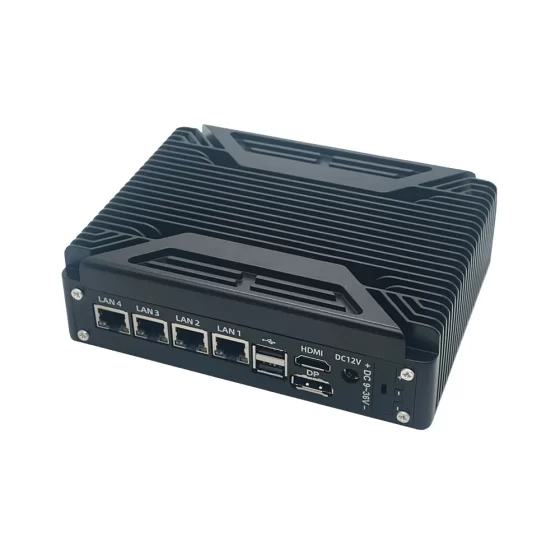
Multiple LAN ports help separate traffic.
A robot vision computer may use different networks for:
- Red de cámaras
- Robot controller network
- Red PLC
- Red informática de fábrica
- Red industrial de IoT
- Red de mantenimiento remoto
- Red de gestión
Network separation improves reliability, seguridad, and traffic organization.
It also helps prevent camera data from interfering with robot control communication.
Almacenamiento local confiable
Robot vision systems may need local storage for images, registros, models, archivos de configuración, registros de inspección, and troubleshooting data.
Generalmente se prefiere el almacenamiento SSD o NVMe porque proporciona un acceso rápido y una mejor resistencia a los golpes que las unidades mecánicas..
El diseño de almacenamiento debe considerar:
- Image retention period
- Volumen récord de inspección
- Almacenamiento de modelos de IA
- Retención de registros
- Escribir resistencia
- Flujo de trabajo de respaldo
- Failure recovery
Reliable storage is important for traceability and maintenance.
E/S industriales flexibles
Robot vision computers may need many types of I/O.
Las opciones útiles pueden incluir:
- LAN
- USB
- RS232
- RS485
- GPIO
- Entrada digital
- Salida digital
- hdmi
- DisplayPort
- M.2
- PCIe
- SATA o NVMe
GPIO y E/S digitales pueden admitir activadores, alarmas, lighting signals, y estado de la máquina. Los puertos serie pueden admitir dispositivos heredados. Expansion interfaces can support AI accelerators, extra LAN cards, or storage modules.
Diseño robusto y sin ventilador
Robot cells may expose computers to dust, vibración, and heat.
Fanless industrial computers can reduce dust intake and remove one common mechanical failure point.
Sin embargo, AI workloads may generate sustained heat.
El diseño térmico debe revisarse cuidadosamente, especially when using high-performance processors, GPUs, or accelerators.
The final design should consider enclosure type, ubicación de montaje, flujo de aire, temperatura ambiente, and workload duration.
Largo ciclo de vida y mantenibilidad
Robot vision systems often require software validation.
Changing hardware too frequently may require retesting drivers, SDK de cámara, Tiempos de ejecución de IA, and robot communication tools.
Long lifecycle industrial computers help reduce redesign work and simplify spare parts planning.
Esto es importante para los fabricantes de máquinas., robot system integrators, and manufacturers deploying multiple similar systems.
Escenarios de implementación
Vision-Guided Pick-and-Place
Robot vision computers can detect object position and orientation for pick-and-place applications.
The system processes images locally and sends coordinates to the robot controller.
This is useful when parts arrive in different positions or orientations.
Bin Picking
Bin picking requires robots to identify objects in random positions.
The robot vision computer may process 3D vision data, estimate object pose, and guide the robot to pick parts from a bin.
AI inference and 3D processing performance are important for stable operation.
Robotic Assembly Guidance
Assembly robots may use vision to align parts, verify position, or check component placement.
The edge AI computer can compare camera images with expected conditions and provide guidance to the robot controller.
This improves assembly accuracy and reduces manual adjustment.
Robotic Quality Inspection
Robots can move cameras around products for flexible inspection.
The robot vision computer can detect defects, clasificar resultados, almacenar imágenes, and send quality records to MES or quality databases.
This supports traceability and automated quality control.
Packaging and Palletizing
Robot vision can support package recognition, verificación de etiqueta, pallet positioning, y conteo de productos.
An embedded computer can process visual data near the robot and provide real-time feedback.
This improves logistics and packaging automation.
Welding and Processing Guidance
In welding, cutting, dispensando, or surface treatment, vision can help locate edges, seams, or target positions.
The robot vision computer processes images and sends guidance data to the robot or motion controller.
This supports more flexible robotic processing.
AMR and Mobile Robot Vision
Mobile robots may use cameras and sensors for navigation, detección de obstáculos, unión cósmica, and object recognition.
An embedded computer can process local vision data and communicate with fleet management or control systems.
This supports intelligent warehouse and factory logistics.
OEM Robot Vision System Integration
Robot system integrators can build custom vision computers using industrial computers or embedded boards.
The platform can support camera input, inferencia de IA, comunicación robótica, almacenamiento local, acceso remoto, y despliegue robusto.
This helps create repeatable robot vision solutions for different industries.
Beneficios comerciales
Flexibilidad mejorada del robot
Robot vision allows robots to handle variation in part position, orientación, forma, y flujo de producción.
This reduces dependence on fixed fixtures and improves flexibility for modern manufacturing.
Toma de decisiones locales más rápida
Edge AI processing enables visual decisions near the robot.
This reduces latency and avoids sending every image to a remote server.
Fast local processing supports real-time inspection, positioning, clasificación, and guidance.
Better Quality Control
Robot vision systems can inspect parts during or after robotic operations.
They can detect defects, verify assembly, check labels, and store inspection records.
This improves quality consistency and supports traceability.
Intervención manual reducida
Robots with vision can adapt to changing conditions more effectively.
This reduces manual repositioning, inspección, and adjustment work.
It also helps improve production efficiency.
Stronger System Integration
A robot vision computer can connect cameras, robots, PLC, sensores, MES, SCADA, y sistemas de calidad.
This turns robotic vision from an isolated inspection tool into part of the factory data infrastructure.
Implementación de automatización escalable
A standardized robot vision computer platform makes it easier to deploy similar systems across multiple robot cells and production lines.
El hardware consistente simplifica las imágenes de software, AI model deployment, validación del conductor, planificación de repuestos, y gestión del ciclo de vida.
Por qué CoreIPC
CoreIPC proporciona plataformas informáticas industriales para visión artificial, robótica, IA de vanguardia, automatización industrial, IoT industrial, e integración de sistemas integrados. For robot vision computer applications, CoreIPC se centra en hardware informático industrial confiable, soluciones informáticas integradas, conectividad de la cámara, configuraciones de LAN múltiple, E/S flexibles, diseño de sistema compacto, opciones de implementación sin ventilador, capacidad de almacenamiento local, y soporte de personalización OEM/ODM. CoreIPC helps robot system integrators, constructores de maquinaria, y los fabricantes seleccionan plataformas informáticas que coincidan con los requisitos de implementación reales, incluyendo el recuento de cámaras, Carga de trabajo de IA, comunicación robótica, necesidades de almacenamiento, métodos de montaje, entrada de energía, condiciones termicas, y planificación del ciclo de vida.
Preguntas frecuentes
1. What is a robot vision computer?
A robot vision computer is an industrial computing platform used to process camera and sensor data for robotic applications.
It can run image processing, inferencia de IA, detección de objetos, defect inspection, pose estimation, and visual guidance software. The results are sent to robot controllers, PLC, sistemas MES, o tableros de fábrica.
2. Why use an industrial computer for robot vision?
An industrial computer provides rugged hardware and flexible connectivity for factory deployment.
Puede admitir múltiples puertos LAN, cámaras USB, almacenamiento local, opciones de expansión, montaje industrial, entrada de energía estable, y disponibilidad de ciclo de vida prolongado. These features make it suitable for robot cells, estaciones de inspección, líneas de embalaje, y sistemas de visión artificial.
3. How is an embedded computer used in robot vision?
An embedded computer can be installed near a robot cell or inside a control cabinet.
It can collect camera data, ejecutar modelos de IA, calculate object positions, registros de inspección de la tienda, and communicate with robot controllers or PLCs. Its compact size makes it useful for space-limited automation equipment.
4. What applications use robot vision computers?
Applications include pick-and-place, recogida de contenedores, robotic assembly, inspección de calidad, welding guidance, verificación de embalaje, paletizar, lectura de etiquetas, AMR navigation, and robotic sorting.
The exact hardware depends on camera count, resolución de imagen, Carga de trabajo de IA, and robot communication requirements.
5. Does robot vision require AI acceleration?
No siempre.
Some simple vision tasks may run on CPU-based industrial computers. More demanding tasks, such as deep learning inspection, 3D pose estimation, multi-camera analysis, or high-speed object detection, may require GPU or AI accelerator support.
6. Why are multiple LAN ports important for robot vision systems?
Multiple LAN ports help separate camera traffic, robot controller communication, Redes de PLC, TI de fábrica, y acceso de mantenimiento remoto.
This improves reliability and prevents high-bandwidth camera streams from interfering with control communication.
7. What hardware features matter for robot vision computers?
Las características importantes incluyen un rendimiento suficiente de la CPU, GPU or AI accelerator support when required, múltiples puertos LAN, USB 3.0, memoria confiable, Almacenamiento SSD o NVMe, recinto resistente, opciones de diseño sin ventilador, entrada de energía industrial, GPIO, E/S digitales, M.2, PCIe, y mostrar salidas.
The final configuration should match the actual vision workload.
8. Can fanless industrial computers support robot vision?
Sí, fanless industrial computers can support many robot vision applications.
Sin embargo, AI inference and high-resolution camera processing can create sustained heat. Selección de procesador, diseño de recinto, temperatura ambiente, método de montaje, and airflow should be validated before deployment.
9. Can robot vision computers connect with MES or SCADA?
Sí. Robot vision computers can send inspection results, pass/fail records, image references, eventos de alarma, and production data to MES, SCADA, bases de datos de calidad, o plataformas industriales de IoT.
This supports traceability and factory-wide visibility.
10. Qué se debe probar antes de la implementación?
Antes del despliegue, El sistema debe probarse con cámaras reales., iluminación, controladores de robots, Señales PLC, Modelos de IA, resolución de imagen, production cycle time, carga de trabajo de almacenamiento, y operación de larga duración.
Estabilidad térmica, latencia de comunicación, result accuracy, flujo de trabajo de acceso remoto, y los procedimientos de recuperación también deben validarse.
Conclusión
A robot vision computer is a practical foundation for intelligent automation, robotic perception, inferencia de IA de borde, visual guidance, defect inspection, reconocimiento de objetos, and flexible manufacturing.
By placing an industrial computer or embedded computer near robot cells and vision systems, manufacturers and system integrators can process camera data locally, guide robot motion, inspect products, almacenar registros, and connect results with PLCs, MES, SCADA, y plataformas industriales de IoT.
The right robot vision computer should be selected according to real deployment requirements, incluyendo el recuento de cámaras, resolución de imagen, velocidad de fotogramas, Carga de trabajo de IA, comunicación robótica, Diseño de puerto LAN, Necesidades de E/S, configuración de almacenamiento, método de montaje, entrada de energía, condiciones termicas, soporte del sistema operativo, y planificación del ciclo de vida.
CoreIPC supports robot vision edge AI computer projects with industrial computing platforms designed for practical robot cell, lado de la máquina, gabinete, y despliegue OEM. Con la base de hardware adecuada, robot system integrators and manufacturers can build reliable, escalable, and intelligent vision-guided automation systems.
Contáctenos
Busco ordenador industrial, computadora integrada, or edge AI platform for robot vision deployment?
Póngase en contacto con CoreIPC para analizar los requisitos de su proyecto., incluyendo el recuento de cámaras, Carga de trabajo de IA, comunicación robótica, Configuración del puerto LAN, Necesidades de E/S, diseño de almacenamiento, método de montaje, entrada de energía, entorno operativo, necesidades del ciclo de vida, y opciones de personalización OEM/ODM.