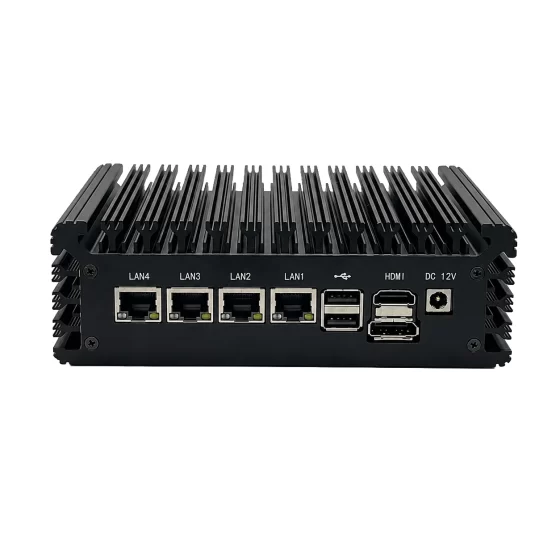
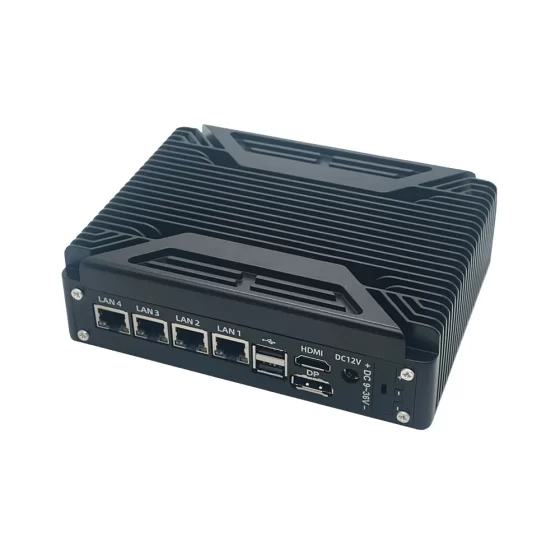
CoreIPC 산업용 컴퓨팅 솔루션

임베디드 GPU 컴퓨터: AI용 산업용 컴퓨터 플랫폼, 비전, 및 엣지 가속
요약
An embedded GPU computer is an industrial computing platform designed to process graphics, 비전, AI 추론, 엣지에서의 병렬 컴퓨팅 워크로드. 더 빠른 이미지 처리가 필요한 애플리케이션을 위해 임베디드 컴퓨터의 컴팩트한 폼 팩터와 GPU 가속을 결합합니다., 딥러닝 추론, 비디오 분석, 3D 데이터 처리, 또는 다중 디스플레이 시각화.
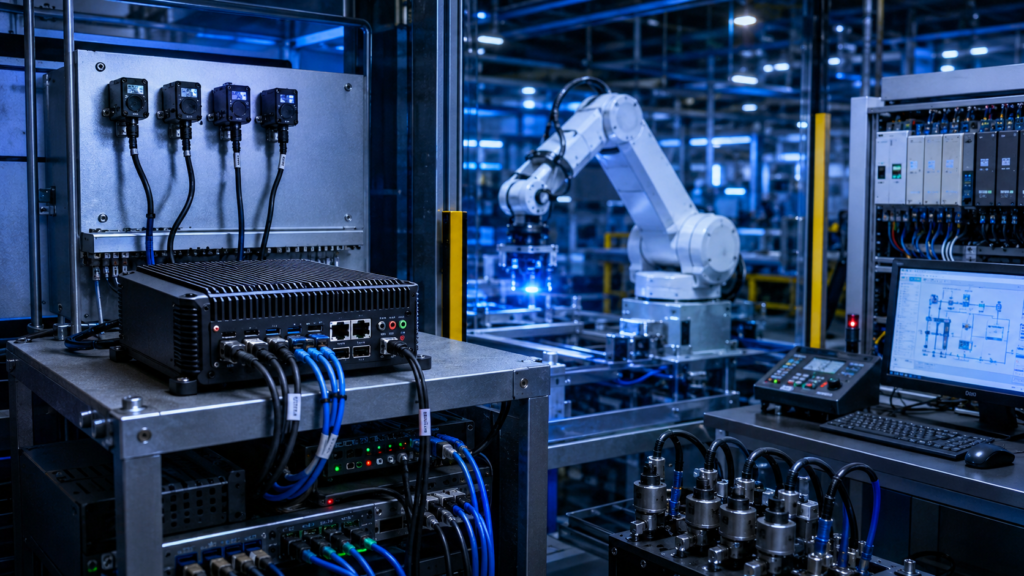
산업 환경에서, 임베디드 GPU 컴퓨터는 종종 기계 가까이에 설치됩니다., 카메라, 로봇, 차량, 검사소, 또는 자동화 장비. 이를 통해 모든 이미지를 전송하는 대신 데이터를 로컬에서 처리할 수 있습니다., 비디오 스트림, 또는 원격 서버에 대한 센서 신호.
시스템 통합업체 및 OEM용, 이 아키텍처는 대기 시간을 줄일 수 있습니다, 네트워크 부하 감소, 현지 의사결정 개선, 보다 유연한 산업 자동화 시스템을 지원합니다..
임베디드 GPU 애플리케이션에 적합한 산업용 컴퓨터는 다음을 제공해야 합니다.:
- GPU acceleration for AI inference and visual computing
- Reliable CPU, 메모리, and storage performance
- Stable camera, 감지기, 및 네트워크 연결
- Compact and rugged mechanical design
- Fanless or optimized thermal architecture
- Long-term availability for machine and equipment integration
- Flexible I/O for industrial control and edge deployment
CoreIPC provides industrial computer and embedded computer platforms for machine vision, 엣지 AI, 로봇공학, intelligent transportation, 오토메이션, and OEM hardware integration. For GPU-based workloads, the right hardware platform helps transform visual and sensor data into practical real-time decisions.
 산업 개요
산업 개요
Industrial computing is moving from centralized processing toward distributed edge intelligence. In many applications, 카메라, 센서, and machines generate large volumes of data that must be analyzed quickly and reliably.
Sending all data to a cloud server or central data center is not always practical. Network bandwidth may be limited. Latency may be too high. Data privacy may be a concern. Some systems must continue operating even when the external connection is unstable.
This is where an embedded GPU computer becomes valuable.
Unlike a standard embedded computer that mainly depends on CPU processing, an embedded GPU system can accelerate workloads that involve parallel computation. This is especially useful for image analysis, video processing, AI 추론, 3D vision, 물체 감지, and multi-camera inspection.
Common application areas include:
- 머신 비전 검사
- 엣지 AI 추론
- Robotic perception
- Autonomous mobile robots
- Intelligent transportation systems
- Medical imaging equipment
- Security and surveillance analytics
- Automated optical inspection
- Smart manufacturing
- Multi-display industrial visualization
In these applications, the GPU is not used only for display output. It becomes a computing engine that helps process complex visual and sensor data closer to the source.
산업 배치용, 하지만, GPU performance alone is not enough. The platform must also be reliable, 콤팩트, serviceable, thermally stable, and compatible with industrial communication requirements.
This is why embedded GPU systems require careful hardware selection. The best platform is not always the highest-performance system. It is the computer that matches the workload, installation environment, software stack, power budget, and long-term deployment plan.
 주요 과제
주요 과제
Embedded GPU deployment introduces both computing and industrial integration challenges. A successful project must balance performance, 열 설계, 입출력, software compatibility, and long-term reliability.
| Challenge | What Happens in Real Deployment | Hardware Requirement |
|---|---|---|
| AI and vision workload | Cameras and sensors generate large data streams that require fast processing. | GPU 가속, sufficient CPU resources, memory bandwidth, and stable storage. |
| Thermal pressure | GPUs can generate more heat than standard embedded platforms. | Efficient thermal design, 견고한 인클로저, and suitable installation planning. |
| Camera connectivity | Vision systems may use USB3, GigE, MIPI, GMSL, or frame grabber interfaces. | High-speed I/O, stable bandwidth, and expansion capability. |
| Edge environment | Systems may operate near machines, 차량, 로봇, or outdoor equipment. | Industrial-grade design, vibration resistance, and reliable power input. |
| Software stack | AI frameworks, GPU drivers, vision libraries, and operating systems must work together. | Verified OS support, driver stability, and long-term software image control. |
| Lifecycle management | OEM and industrial projects often run for years. | Stable platform supply, consistent I/O layout, and documentation support. |
GPU Performance Is Only One Part of the System
Many projects focus first on GPU specifications. That is understandable, but it is not enough.
A stable embedded GPU computer also needs the right CPU, 메모리, 저장, 전원 입력, cooling design, and I/O interfaces. If the camera interface is unstable, the GPU cannot process reliable data. If thermal design is weak, performance may become inconsistent. If the software driver stack changes unexpectedly, long-term deployment becomes difficult.
Industrial Environments Create Real Constraints
Embedded GPU systems may be installed inside machines, mobile robots, 길가 캐비닛, 검사소, or industrial enclosures. These spaces may have limited airflow and strict power limits.
Compared with standard office GPU computers, industrial GPU platforms must be designed for continuous operation and predictable maintenance.
Edge AI Requires Stable Data Flow
AI inference depends on clean and consistent input data. A vision system may include multiple cameras, 조명 컨트롤러, 센서, 인코더, 및 트리거 신호.
The embedded GPU computer must collect this data reliably, process it quickly, and return results to PLCs, 로봇, HMI, or factory systems.
 Solution Architecture for an Embedded GPU Computer
An embedded GPU computer is usually deployed as an edge acceleration node. It connects field devices, performs local computing, and communicates results to automation or enterprise systems.
1. Data Acquisition Layer
This layer collects input data from the physical environment.
Typical devices include:
- 산업용 카메라
- 3D depth cameras
- Line-scan cameras
- LiDAR sensors
- Thermal cameras
- 바코드 판독기
- 인코더
- Motion sensors
- Environmental sensors
- Machine signals
The data acquisition layer must be stable because poor input data reduces the value of GPU acceleration. Camera bandwidth, 조명, 트리거 타이밍, and sensor synchronization should be considered during system design.
2. Edge GPU Computing Layer
This is where the embedded GPU computer operates.
The platform may run:
- AI 추론 모델
- Machine vision software
- Video analytics applications
- 3D reconstruction tools
- Sensor fusion algorithms
- Image preprocessing pipelines
- Object detection systems
- 로컬 데이터베이스
- HMI 소프트웨어
- Remote maintenance tools
The GPU accelerates parallel computing tasks, while the CPU handles system logic, 장치 통신, application control, and data management.
3. Industrial Control Layer
In industrial applications, the computer rarely works alone.
It may communicate with:
- PLC
- 로봇 컨트롤러
- 모션 컨트롤러
- I/O 모듈
- 안전 시스템
- 컨베이어 시스템
- Machine controllers
- 산업용 게이트웨이
The embedded GPU computer may send results such as object position, defect status, classification data, 알람 이벤트, 측정값, or movement instructions.
4. Network and System Integration Layer
The platform may connect to higher-level systems, 포함:
- MES 플랫폼
- SCADA 시스템
- WMS systems
- 품질 데이터베이스
- Cloud monitoring platforms
- Maintenance dashboards
- 공장 네트워크
This allows edge results to support production traceability, 품질 개선, 원격 진단, 및 프로세스 최적화.
5. Maintenance and Lifecycle Layer
Long-term deployment requires more than initial performance.
Engineers need to manage software images, GPU drivers, operating system updates, 로그, model versions, 예비 부품, and replacement procedures.
A consistent embedded computer platform helps reduce maintenance complexity across multiple machines or deployment sites.
주요 특징
A reliable embedded GPU computer should be selected according to workload type, 환경 조건, I/O 요구 사항, software compatibility, and lifecycle expectations.
GPU Acceleration
The GPU is the core feature of the platform. It helps accelerate workloads such as:
- AI 추론
- Object detection
- Image classification
- Video analytics
- 3D vision processing
- Point cloud analysis
- Multi-camera image processing
- Graphics visualization
The required GPU level depends on the model size, 카메라 수, 해결, 프레임 속도, and latency target.
Balanced CPU and Memory
The GPU does not replace the CPU. The CPU still handles system control, 의사소통, scheduling, operating system tasks, and application logic.
Memory capacity and bandwidth also matter. AI and vision applications may require enough RAM to handle image buffers, 모델 파일, temporary data, and parallel processing workflows.
High-Speed Camera Interfaces
Many embedded GPU applications depend on cameras.
Common camera interfaces may include:
- USB3 Vision
- GigE 비전
- PoE camera networks
- MIPI camera modules
- GMSL camera links
- Frame grabber expansion
- HDMI or SDI capture through add-on modules
The platform should provide enough bandwidth and stable driver support for the selected camera architecture.
Multi-LAN Connectivity
Multiple LAN ports are useful for separating data traffic.
One LAN port may connect to cameras. Another may connect to PLCs or robots. A third may connect to the factory network, remote maintenance system, or cloud gateway.
This helps reduce traffic conflicts and improves troubleshooting.
Industrial I/O Support
Embedded GPU computers used in automation may require more than camera and network ports.
유용한 인터페이스에는 다음이 포함될 수 있습니다.:
- RS-232
- RS-485
- CAN
- USB
- 디지털 I/O
- GPIO
- Audio I/O
- Display outputs
- Expansion headers
Native industrial I/O reduces dependency on external adapters and helps simplify cabinet or equipment integration.
Thermal Design
GPU workloads can increase heat output. Thermal design is therefore critical.
Depending on the performance level, systems may use passive cooling, fanless heatsink design, controlled airflow, or rugged active cooling. The correct approach depends on power consumption, 인클로저 디자인, 주변 온도, and mounting location.
For industrial projects, predictable thermal behavior is more important than peak benchmark performance.
Reliable Storage
Embedded GPU systems may store:
- AI model files
- Image records
- Video clips
- Inspection logs
- Event data
- Calibration files
- Application software
- 로컬 데이터베이스
Industrial SSDs, M.2 NVMe storage, or SATA storage can be selected based on data volume, write frequency, temperature conditions, and retention requirements.
Expansion Capability
Many GPU-based systems require customization.
Expansion may be needed for additional camera interfaces, wireless modules, 저장, CAN communication, 직렬 포트, I/O boards, or dedicated acceleration modules.
M.2, 미니 PCIe, PCIe, and custom embedded board design can help system integrators adapt one platform to multiple application types.
OS and Software Compatibility
An embedded GPU computer must support the selected software environment.
This may include:
- 윈도우
- 리눅스
- GPU drivers
- AI frameworks
- Vision libraries
- Camera SDKs
- Robot SDKs
- Industrial communication tools
- Containerized deployment environments
대량 배포 전, integrators should verify driver stability, framework compatibility, operating system update policies, and long-term software image control.
배포 시나리오
Embedded GPU computers can be used in many industrial and edge computing environments where local acceleration is required.
Machine Vision Inspection
In automated inspection systems, cameras capture images of products, surfaces, 라벨, 구성 요소, or assemblies.
The embedded GPU computer can process images locally to detect defects, classify objects, read codes, 측정값 차원, or verify assembly conditions. GPU acceleration is useful when image resolution, 프레임 속도, or algorithm complexity is high.
Edge AI Inference
AI models are increasingly used for industrial detection, 분류, prediction, and anomaly recognition.
An embedded GPU computer allows AI inference to run close to the production line, machine, vehicle, or sensor. This helps reduce network dependency and enables faster local decision-making.
Robotics and Autonomous Machines
Robots and autonomous machines often need perception systems.
The GPU computer may process data from cameras, 깊이 센서, LiDAR, or other sensors. It can support object recognition, navigation support, picking guidance, 장애물 감지, and sensor fusion.
Intelligent Transportation
Transportation systems may use embedded GPU computers for roadside perception, 교통 모니터링, vehicle detection, 번호판 인식, tunnel monitoring, or railway platform analytics.
These applications often require multi-camera processing and rugged field deployment.
Medical and Laboratory Equipment
Some medical and laboratory systems require image processing, multi-display visualization, or AI-assisted analysis.
An embedded GPU platform can support localized computing inside diagnostic devices, laboratory automation equipment, or medical imaging support systems. Hardware selection should consider regulatory project requirements and long-term supply planning.
Security and Video Analytics
Video analytics systems may need to process multiple camera streams locally.
The embedded GPU computer can support motion detection, object classification, perimeter monitoring, behavior analysis, and event filtering before sending selected data to a central platform.
비즈니스 이점
A suitable embedded GPU computer can help OEMs, 시스템 통합업체, and industrial users build more capable and maintainable edge systems.
Lower Latency
Local GPU processing reduces the need to send raw data to a remote server. This helps applications respond faster to visual, 감지기, or machine events.
Reduced Network Load
Video, image, and sensor data can be processed locally. Only results, 경보, or selected records need to be transmitted to higher-level systems.
Better System Autonomy
Edge GPU computing allows machines and field systems to keep operating even when external network connections are limited or temporarily unavailable.
Easier Integration
An industrial computer with GPU acceleration, 카메라 인터페이스, LAN 포트, 직렬 통신, 저장, and expansion options can serve as one integrated platform for edge applications.
Improved Data Value
Instead of storing large volumes of raw data without context, the system can generate useful results such as defect categories, object counts, event records, or AI inference outputs.
확장 가능한 배포
A stable embedded computer platform helps OEMs and integrators deploy similar systems across machines, 공장, 차량, or field locations.
Long-Term Maintainability
Consistent hardware design, driver support, thermal behavior, and I/O layout help reduce redesign work and simplify software image management over the project lifecycle.
왜 CoreIPC인가?
CoreIPC provides industrial computers, 임베디드 컴퓨터, edge computing platforms, and customized embedded hardware for industrial automation, 머신 비전, 엣지 AI, 운송, and OEM equipment integration. For embedded GPU computer projects, CoreIPC focuses on stable computing performance, practical I/O configuration, 견고한 기계 설계, 열 신뢰성, and long-term integration support. CoreIPC works with system integrators, equipment manufacturers, and solution providers that require dependable hardware platforms for GPU-accelerated edge applications. With ODM and OEM capability, CoreIPC can support project-specific interfaces, enclosure customization, branding requirements, and long-term supply planning.
자주 묻는 질문
1. What is an embedded GPU computer?
An embedded GPU computer is a compact industrial computing platform that includes GPU acceleration for visual, AI, graphics, or parallel computing workloads. It is designed to process data locally at the edge, often near cameras, 로봇, 기계, 차량, or industrial sensors. Compared with a standard embedded computer, it can handle more demanding tasks such as AI inference, 비디오 분석, 머신 비전, and 3D processing.
2. Why use an embedded GPU computer instead of a standard industrial computer?
A standard industrial computer can handle many control and data tasks, but GPU acceleration is useful when the application requires image processing, 비디오 스트림, AI 모델, or large parallel workloads. An embedded GPU computer provides more computing capability for these tasks while keeping an industrial form factor. It is suitable when low latency, local decision-making, or high visual processing performance is required.
3. What applications need embedded GPU acceleration?
Embedded GPU acceleration is commonly used in machine vision inspection, 엣지 AI 추론, 로봇공학, intelligent transportation, security analytics, medical imaging support, and automated optical inspection. It is also useful in systems that process multiple camera streams, 3D data, LiDAR information, or deep learning models. The need depends on algorithm complexity, data volume, 프레임 속도, and response-time requirements.
4. Is GPU performance the only factor when selecting the system?
아니요. GPU performance is important, but the complete platform must also provide suitable CPU performance, 메모리, 저장, 입출력, 열 설계, 전원 입력, and software support. A powerful GPU is not useful if the system lacks camera bandwidth, stable drivers, or reliable cooling. Industrial deployment requires a balanced system that matches the real operating environment and application workload.
5. Can an embedded GPU computer run AI models locally?
예. Embedded GPU computers are often used to run AI inference models locally at the edge. This allows the system to analyze images, video, or sensor data without sending all raw data to a cloud server. Local AI inference can reduce latency, lower network bandwidth usage, and improve system autonomy. The hardware must match the model size, framework, input data rate, 및 성능 요구 사항.
6. What camera interfaces are important for embedded GPU systems?
Common camera interfaces include USB3, GigE, PoE Ethernet, MIPI, GMSL, and frame grabber expansion. The best interface depends on camera type, cable length, 해결, 프레임 속도, 및 설치 환경. Multi-camera systems may require multiple LAN ports, USB controllers, or expansion slots to maintain stable bandwidth. Driver and software compatibility should also be verified before deployment.
7. Why is thermal design important for embedded GPU computers?
GPU workloads can generate significant heat, especially during continuous AI inference or image processing. If the thermal design is weak, performance may become unstable or the system may require more maintenance. Industrial embedded GPU computers need carefully designed cooling, 견고한 인클로저, and proper installation planning. The correct thermal solution depends on GPU power, 주변 온도, 기류, and mounting method.
8. Can embedded GPU computers be used in fanless systems?
예, some embedded GPU computers can use fanless or passive thermal designs, especially when the GPU power level is moderate. Higher-performance systems may require controlled airflow or rugged active cooling. Fanless design is useful in dusty or maintenance-limited environments, but thermal capacity must match the actual workload. Integrators should evaluate heat dissipation, 인클로저 디자인, and ambient temperature before deployment.
9. How should OEMs choose an embedded GPU computer?
OEMs should evaluate workload type, GPU requirement, 카메라 인터페이스, software stack, 운영 체제, thermal limits, power budget, mounting design, I/O layout, and lifecycle expectations. The selected platform should be stable across production batches and compatible with the OEM’s software image. 장기 가용성, documentation, and customization support are especially important for equipment manufacturers.
10. What is the difference between an edge AI computer and an embedded GPU computer?
The terms are related but not identical. An edge AI computer is usually focused on running AI inference locally. An embedded GPU computer is a broader hardware category that provides GPU acceleration for AI, 비전, video, graphics, and parallel computing. Many edge AI computers are embedded GPU computers, but an embedded GPU platform may also be used for non-AI workloads such as visualization, video processing, or 3D imaging.
결론
An embedded GPU computer is an important platform for industrial systems that require local acceleration for AI, 비전, video, graphics, and sensor processing. It allows data to be analyzed close to the source, reducing latency, lowering network load, and supporting more autonomous edge applications.
For machine vision, 로봇공학, intelligent transportation, security analytics, 의료 장비, and industrial automation, the hardware platform must provide more than GPU performance. It must also deliver stable I/O, 안정적인 스토리지, thermal control, software compatibility, and long-term maintainability.
By selecting the right industrial computer or embedded computer for GPU-accelerated workloads, system integrators and OEMs can build edge systems that are practical, 확장 가능, and suitable for long-term industrial deployment. CoreIPC provides embedded GPU computer platforms and customization support for companies developing advanced edge computing and intelligent automation solutions.
문의하기
If you are developing an embedded GPU computer project or need an industrial computing platform for AI, 머신 비전, 로봇공학, 비디오 분석, or edge acceleration, CoreIPC can help evaluate your hardware requirements. Contact the CoreIPC team to discuss GPU performance, 카메라 인터페이스, I/O 구성, 열 설계, 운영 체제 지원, ODM/OEM customization, and long-term supply planning for your next industrial edge computing project.