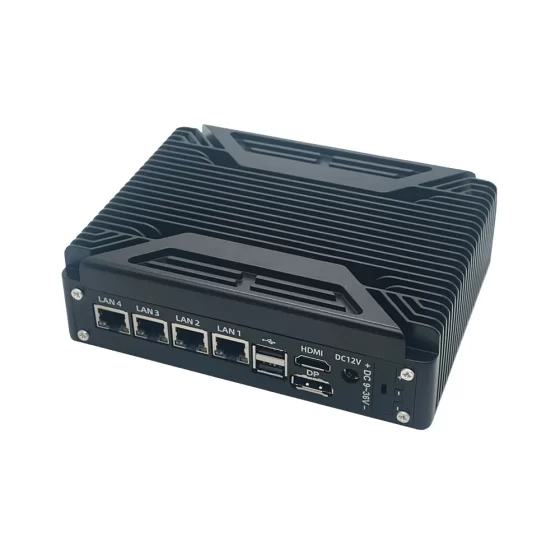
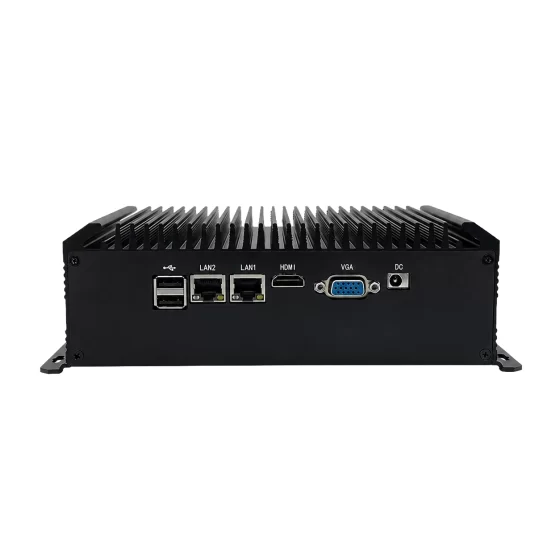
CoreIPC 산업용 컴퓨팅 솔루션

모바일 로봇 산업용 PC: AGV 및 AMR 엣지 컴퓨팅을 위한 모바일 로봇 IPC
요약
A mobile robot ipc provides the industrial computing foundation for AGV and AMR navigation, 센서 융합, 로봇 제어 지원, 엣지 AI 인식, 함대 통신, 안전 모니터링, 데이터 로깅, 모바일 자동화 시스템의 실시간 의사결정.
현대 모바일 로봇은 창고에서 널리 사용됩니다., 공장, 물류센터, 병원, 실험실, 스마트 리테일 시설, 및 산업 서비스 환경. AGV 및 AMR은 자재 이동을 돕습니다., 물건을 배달하다, 생산 라인 지원, 내부 물류 자동화, 수동 운송 작업을 줄입니다..
이러한 로봇에는 안정적인 온보드 컴퓨팅이 필요합니다..
산업용 컴퓨터나 임베디드 컴퓨터에 구축된 모바일 로봇 산업용 PC는 LiDAR의 데이터를 처리할 수 있습니다., 카메라, 인코더, IMU, 깊이 센서, 초음파 센서, 모터 컨트롤러, 배터리 시스템, 및 무선 통신 모듈. 그것은 항법 소프트웨어를 지원할 수 있습니다, SLAM 알고리즘, 엣지 AI 추론, 로봇 작업 실행, 원격 진단, 및 차량 관리 통신.
Compared with standard consumer computers or office PCs, industrial computers are better suited for mobile robot deployment because they support rugged design, 컴팩트한 설치, low-power operation, vibration resistance, 팬리스 옵션, wide power input, 유연한 I/O, 안정적인 스토리지, 긴 수명주기 가용성.
This article explains how mobile robot IPC platforms support AGV and AMR applications, what deployment challenges appear in real robot systems, 솔루션 아키텍처의 작동 방식, and which hardware features matter when selecting an industrial computer or embedded computer for mobile robot applications.
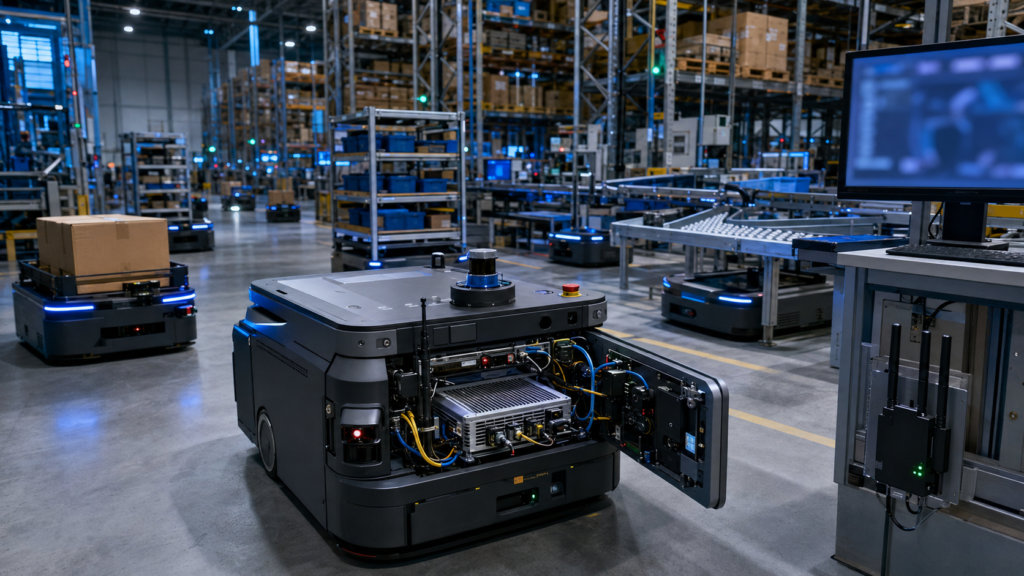
Mobile Robot Onboard Edge Computing
산업 개요
Mobile Robots Are Expanding Across Industries
Mobile robots are becoming a major part of automation.
창고에서, AMRs support picking, 채움, 수송, 정렬, and inventory operations. 공장에서, AGVs and AMRs move materials between production lines, 창고, 조립 셀, 그리고 검사소. In hospitals and laboratories, mobile robots can transport supplies, 샘플, medicine, and equipment.
Common mobile robot applications include:
- AGV material transport
- AMR warehouse logistics
- Autonomous cart systems
- Mobile inspection robots
- Hospital delivery robots
- Laboratory transport robots
- Factory line feeding
- Smart retail service robots
- Mobile security robots
- Autonomous cleaning robots
- Robot fleet management
- Smart transportation support systems
These applications require stable onboard computing and reliable communication with robot sensors, 컨트롤러, and fleet platforms.
Mobile Robots Need Local Edge Computing
Mobile robots cannot depend entirely on remote servers.
They need to make local decisions while moving through dynamic environments. A robot may need to avoid obstacles, update its route, detect people, identify objects, dock at a charging station, or stop safely when a risk appears.
A mobile robot ipc can process these tasks onboard.
지원할 수도 있습니다:
- SLAM navigation
- Sensor fusion
- Path planning
- Obstacle detection
- Camera processing
- LiDAR data handling
- Motor control communication
- Battery status monitoring
- Wireless connectivity
- Fleet management communication
- Local event logging
- 원격 진단
This local computing capability improves robot autonomy and operational reliability.
Industrial Computers Provide the Robot Hardware Foundation
Mobile robots operate in real environments.
They may move across warehouse floors, factory aisles, loading areas, hospital corridors, cleanroom zones, 물류센터, or outdoor-adjacent spaces.
이러한 환경에는 진동이 포함될 수 있습니다., 충격, 먼지, 온도 변화, unstable power, limited space, electromagnetic noise, and continuous motion.
Industrial computers and embedded computers provide the rugged hardware foundation required for mobile robot deployment.
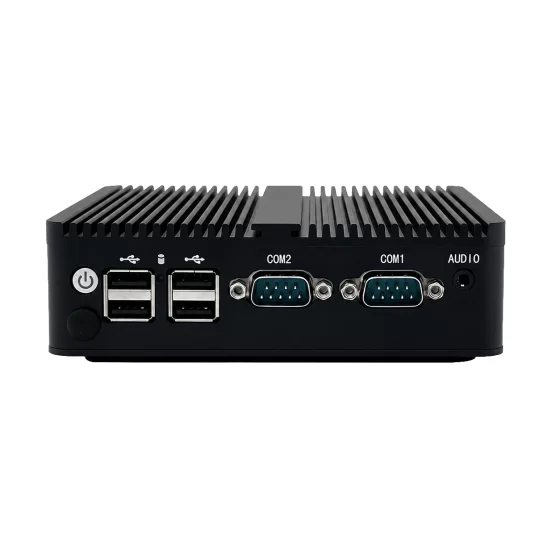
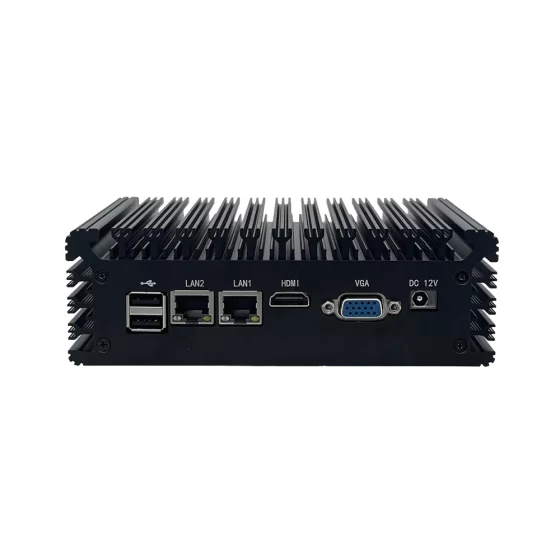
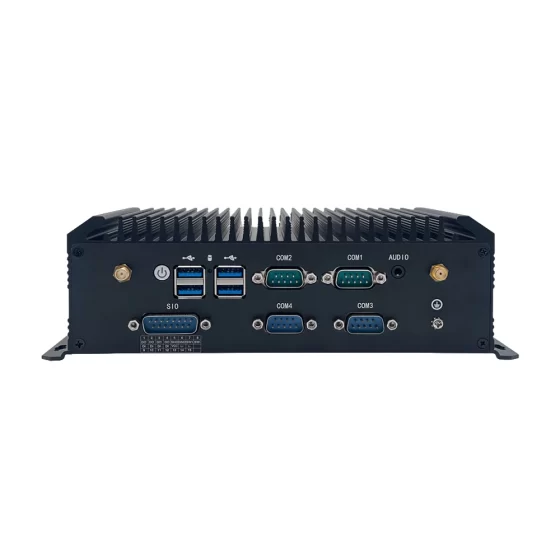
They support compact form factors, 안정적인 스토리지, 팬리스 디자인 옵션, 유연한 I/O, multi-network communication, 및 장기 가용성.

Mobile Robot IPC Deployment Challenges
주요 과제
Processing Multiple Sensors Onboard
Mobile robots rely on many sensors.
A typical robot may include LiDAR, 카메라, 깊이 센서, IMU modules, wheel encoders, 초음파 센서, bumper sensors, safety scanners, battery controllers, and motor drivers.
The mobile robot IPC must collect and process these signals reliably.
Sensor workload may include:
- LiDAR point cloud data
- Camera image streams
- Depth information
- Position feedback
- Motor status
- Battery status
- Safety signals
- Wireless communication data
- Environmental sensor records
- Robot health information
The platform must provide enough performance and I/O flexibility for the full sensor system.
Supporting Navigation and SLAM
Autonomous mobile robots often rely on SLAM and localization algorithms.
These functions help the robot understand its position, build or update maps, avoid obstacles, and follow routes.
Navigation workloads may require:
- Real-time sensor fusion
- Map processing
- Obstacle detection
- Route planning
- Localization updates
- Docking support
- Dynamic path adjustment
- Fleet task communication
Hardware must be selected according to the actual navigation software, robot speed, map size, 센서 수, and response requirements.
Managing Power and Thermal Constraints
Mobile robots have limited onboard power.
The IPC must provide enough computing performance while keeping power consumption under control.
Battery-powered systems need careful balance between performance, 열, runtime, and reliability.
Important design questions include:
- How much power can the IPC consume?
- Does the robot have enough battery capacity?
- Is the enclosure ventilated?
- Is fanless operation required?
- Will the robot run continuously?
- Is GPU or AI acceleration needed?
- What is the ambient temperature range?
- How will heat be removed from the enclosure?
Power and thermal planning are critical for mobile robot IPC deployment.
Handling Vibration and Motion
Mobile robots are constantly moving.
They may travel over uneven floors, ramps, joints, thresholds, and warehouse surfaces. The onboard computer must withstand vibration, 충격, and cable movement.
Reliable hardware design should consider:
- Rugged enclosure
- Secure mounting
- Lockable connectors
- Cable strain relief
- SSD 또는 NVMe 스토리지
- Fanless design
- Stable power input
- Electrical noise protection
A standard PC is usually not suitable for this environment.
Integrating Robot Control and Fleet Systems
A mobile robot does not work alone.
로봇 컨트롤러와 통신해야 합니다., motor drivers, 배터리 시스템, 센서, wireless networks, fleet management platforms, warehouse software, 공장 시스템, 및 원격 유지 관리 도구.
The onboard IPC may exchange:
- Task commands
- Route updates
- Robot location
- Battery data
- Error codes
- Sensor status
- Safety events
- Charging status
- Maintenance logs
- Fleet coordination messages
Stable communication is essential for reliable robot operation.
Supporting Long-Term Robot Product Deployment
Mobile robot products may be manufactured and deployed over many years.
Frequent computer hardware changes can create problems with operating systems, 드라이버, robot software, sensor SDKs, AI 런타임, wireless modules, and certification workflows.
Industrial computing platforms with lifecycle planning help robot manufacturers maintain consistent robot designs across product generations and customer sites.

Mobile Robot IPC Architecture
Mobile Robot IPC Solution Architecture
Robot Sensor Layer
The robot sensor layer includes all devices that help the robot perceive and measure its environment.
이 레이어에는 다음이 포함될 수 있습니다.:
- LiDAR sensors
- 산업용 카메라
- Depth cameras
- IMU modules
- Wheel encoders
- Ultrasonic sensors
- 안전 스캐너
- Bumper sensors
- 온도 센서
- Battery monitoring devices
- Motor feedback systems
These sensors provide raw data for navigation, safety, perception, and robot health monitoring.
Mobile Robot IPC Edge Layer
The mobile robot IPC edge layer is the onboard computing layer.
이 레이어에서는, 산업용 컴퓨터나 임베디드 컴퓨터는:
- 센서 데이터 수집
- Run navigation software
- Process camera streams
- Handle LiDAR data
- Perform sensor fusion
- Execute edge AI models
- Store logs
- Communicate with motor controllers
- Send status to fleet systems
- 원격 진단 지원
This layer provides the robot with local intelligence and stable computing performance.
로봇 제어 통합 계층
The robot control integration layer connects the IPC with motion and control systems.
It may communicate with:
- Motor controllers
- Drive systems
- Battery management systems
- 로봇 컨트롤러
- 안전장치
- Charging station interfaces
- PLC
- Conveyor or dock systems
- Local HMI panels
The IPC may send commands, receive status data, monitor faults, and coordinate robot behavior with external equipment.
Communication and Fleet Layer
Mobile robots usually connect to a larger fleet or operation platform.
The communication layer may include:
- Wi-Fi modules
- 4G or 5G modules
- Ethernet service ports
- Fleet management systems
- 창고 관리 시스템
- Warehouse control systems
- Factory dashboards
- Cloud monitoring platforms
- Remote maintenance tools
This layer allows operators to assign tasks, monitor robot location, review alarms, and manage multiple robots.
Data and Security Layer
Mobile robot systems need local records and controlled access.
The IPC may store:
- Robot logs
- 센서 기록
- Navigation events
- Error messages
- Battery history
- Charging records
- Task records
- Remote access logs
- Software configuration files
- Diagnostic data
Security features may include network segmentation, 접근 제어, secure remote service, encrypted communication, and configuration backup.
주요 특징
Compact and Rugged Design
Mobile robot IPC systems must fit inside limited robot enclosures.
A compact embedded computer can be installed inside the robot body, control compartment, battery area, or service module.
The enclosure should support reliable mounting and protection from vibration.
Compact hardware helps robot manufacturers reduce mechanical complexity while maintaining enough computing performance for navigation and communication.
Low-Power Edge Computing
Power efficiency is important for mobile robots.
The IPC must support onboard computing without reducing robot runtime too much.
하드웨어 선택을 고려해야 합니다.:
- Processor power consumption
- AI accelerator requirements
- Sensor workload
- Battery capacity
- Thermal dissipation
- Operating temperature
- Continuous runtime
- Standby behavior
A well-selected embedded computer helps balance autonomy and computing performance.
Sensor and Device Connectivity
Mobile robots require many device interfaces.
유용한 I/O 옵션은 다음과 같습니다.:
- 랜
- USB
- RS232
- RS485
- CAN or expansion interface
- GPIO
- 디지털 입력
- 디지털 출력
- HDMI
- 디스플레이포트
- M.2
- PCIe
- SATA 또는 NVMe 스토리지
The final configuration should match the robot sensor suite, motor system, battery system, and communication modules.
카메라 및 비전 지원
Many mobile robots use cameras for perception, 항해, 도킹, 물체 감지, 바코드 판독, or remote monitoring.
The IPC may connect cameras through USB, 기가 랜, or expansion interfaces.
Camera planning should consider:
- 카메라 수
- 해결
- 프레임 속도
- Field of view
- Lighting conditions
- Storage needs
- AI model requirements
- Data bandwidth
- Processing latency
For AI-based perception, the platform may need GPU or AI accelerator support.
LiDAR and Sensor Fusion Support
LiDAR is commonly used for AMR navigation and safety-aware movement.
The IPC may process LiDAR data together with camera, IMU, encoder, and safety sensor information.
Sensor fusion helps improve localization and obstacle detection.
The computing platform should be validated with the actual robot navigation stack and sensor configuration.
안정적인 로컬 스토리지
Local storage supports robot software, maps, 로그, 진단, AI 모델, route data, and event records.
SSD 또는 NVMe 스토리지는 기계식 드라이브보다 빠른 액세스와 더 나은 충격 저항을 제공하기 때문에 일반적으로 선호됩니다..
스토리지 계획에서는 고려해야 할 사항:
- Map file size
- 로그 보존
- 진단 기록
- AI 모델 스토리지
- Task history
- 지구력 쓰기
- 복구 워크플로
- Software update process
Reliable storage improves maintainability and field support.
Wireless and Expansion Options
Mobile robots often require wireless communication.
M.2 and PCIe expansion can support Wi-Fi, 블루투스, 4G, 5G, additional LAN, AI acceleration, or custom modules.
Expansion support helps robot manufacturers adapt the same computing platform to different robot models and customer environments.
This flexibility is valuable for OEM and ODM robot development.
Fanless Operation and Thermal Stability
Fanless computers are preferred in many robot systems because they reduce dust intake and remove one mechanical failure point.
하지만, fanless operation requires good thermal planning.
The design should consider:
- Processor heat output
- AI 워크로드
- Robot enclosure material
- Heat conduction path
- Ambient temperature
- 연속운전
- Battery area temperature
- Mounting surface
Thermal validation should be performed under real robot workloads.
긴 수명주기 가용성
Mobile robot products need stable supply.
Long lifecycle industrial computers help robot manufacturers maintain consistent hardware designs, 소프트웨어 이미지, 드라이버, sensor support, 및 예비 부품.
This reduces redesign work and supports multi-year robot product deployment.

AGV and AMR Fleet Operations
배포 시나리오
AMR Navigation Computer
An embedded computer can serve as the navigation computer for autonomous mobile robots.
It can process LiDAR, camera, IMU, encoder, and map data.
It can support localization, 장애물 감지, 경로 계획, 함대 통신, 원격 진단.
AGV Control Support Platform
AGVs may follow fixed paths, magnetic strips, QR 코드, markers, or guided routes.
A mobile robot IPC can support onboard communication, task logging, 센서 통합, battery monitoring, and connection with control systems.
This improves AGV visibility and maintainability.
Mobile Robot Vision Processing
Some robots use vision for object detection, 도킹, 바코드 판독, shelf recognition, or navigation assistance.
An industrial computer can process camera data locally and send results to the robot control system.
For AI vision, edge AI computing performance may be required.
Warehouse AMR Fleet System
Warehouses may deploy many AMRs for picking, 수송, 채움, and sorting support.
The onboard IPC communicates with fleet management systems and warehouse software.
It can report robot status, task completion, battery state, route events, and diagnostic information.
Factory Material Handling Robot
Factories use mobile robots to move parts, 도구, carts, and materials between production lines.
An embedded computer can connect the robot with PLCs, 컨베이어, docking stations, and factory monitoring systems.
This supports more integrated production logistics.
Hospital and Service Robot
Service robots may operate in hospitals, 부엌, 실험실, or public facilities.
The IPC can support navigation, 장애물 감지, task communication, camera processing, and remote monitoring.
The final system should be selected according to application-specific safety and compliance requirements.
Outdoor-Adjacent Inspection Robot
Some mobile robots inspect facilities, equipment rooms, utility areas, or semi-outdoor environments.
Industrial computers support rugged operation, 로컬 데이터 처리, 센서 통합, and remote communication.
Environmental and power design should be reviewed carefully for these deployments.
OEM Mobile Robot Computing Platform
Robot manufacturers can integrate industrial computers or custom embedded boards into mobile robot products.
The platform can support navigation, perception, 의사소통, data storage, 원격 진단, wireless modules, 및 고객별 I/O.
This helps create scalable mobile robot product lines.
비즈니스 이점
Improved Robot Autonomy
A mobile robot IPC gives robots local computing power for navigation, perception, 센서 융합, 그리고 의사결정.
This reduces dependence on remote systems and improves robot responsiveness.
Better onboard computing supports more capable AGV and AMR systems.
Better Operational Visibility
The IPC can collect and store robot status, location records, task data, battery information, error logs, and sensor events.
This information can be sent to fleet platforms, 창고 시스템, factory dashboards, or maintenance tools.
Better visibility helps operators manage robot fleets more effectively.
More Reliable Field Operation
Industrial computers provide rugged hardware for moving systems.
팬리스 설계 옵션, 안정적인 스토리지, 안전한 장착, 안정적인 전원 입력, and vibration-resistant design help reduce downtime risk.
This is important for mobile robots operating long hours.
Easier Robot System Integration
A mobile robot IPC can connect sensors, motor systems, battery modules, 카메라, wireless modules, and fleet software.
This helps robot manufacturers and system integrators build complete mobile robot systems with fewer integration gaps.
Flexible I/O supports different robot designs.
Scalable Robot Product Development
A standardized industrial computing platform makes it easier to develop multiple robot models.
일관된 하드웨어로 소프트웨어 이미지가 단순화됩니다., 드라이버, navigation stack validation, 예비 부품 계획, 및 수명주기 관리.
This supports OEM mobile robot product development.
Stronger Maintenance and Diagnostics
Local logs, 원격 액세스, health monitoring, and diagnostic records help engineers troubleshoot issues faster.
This reduces service cost and improves customer support.
Reliable storage and remote diagnostics are especially valuable for deployed robot fleets.
왜 CoreIPC인가?
CoreIPC는 로봇공학을 위한 산업용 컴퓨팅 플랫폼을 제공합니다., 엣지 AI, 머신 비전, 산업용 IoT, 스마트 교통, 및 임베디드 시스템 통합. For mobile robot IPC applications, CoreIPC는 안정적인 산업용 컴퓨터 하드웨어에 중점을 둡니다., 임베디드 컴퓨터 솔루션, 컴팩트한 임베디드 디자인, 유연한 I/O, 다중 LAN 구성, camera and sensor connectivity, 팬리스 배포 옵션, 로컬 저장 기능, 및 OEM/ODM 맞춤형 지원. CoreIPC helps robot manufacturers, 시스템 통합업체, and automation providers select computing platforms that match real deployment requirements, including sensor count, navigation workload, AI 추론 요구 사항, 전원 입력, 장착 방법, 열적 조건, wireless expansion, 및 수명주기 계획.
자주 묻는 질문
1. What is a mobile robot IPC?
A mobile robot IPC is an industrial computing platform installed onboard an AGV, AMR, or service robot.
It can process sensor data, support navigation, communicate with motor controllers, connect cameras and LiDAR, 로그 저장, manage wireless communication, and exchange data with fleet management or warehouse software systems.
2. Why use an industrial computer for mobile robots?
An industrial computer provides rugged hardware for moving robot platforms.
컴팩트한 설치를 지원할 수 있습니다., vibration-resistant storage, 팬리스 작동, 유연한 I/O, multiple LAN and USB ports, 안정적인 전원 입력, 긴 수명주기 가용성. These features make it suitable for mobile robots operating in warehouses, 공장, 병원, and service environments.
3. How is an embedded computer used in AGV and AMR systems?
An embedded computer can act as the onboard computing node.
It may run navigation software, process LiDAR and camera data, communicate with motor controllers, monitor battery status, connect wireless modules, store maps, and report robot status to fleet management platforms.
4. What sensors can a mobile robot IPC connect?
A mobile robot IPC may connect LiDAR, 카메라, 깊이 센서, IMU, 인코더, 초음파 센서, safety scanners, bumper sensors, 배터리 시스템, 모터 컨트롤러, wireless modules, and local service interfaces.
The exact support depends on hardware interfaces, software drivers, and robot system design.
5. Does mobile robot IPC hardware need AI acceleration?
항상 그런 것은 아니다.
Basic AGV control and simple data logging may not need AI acceleration. Advanced AMR perception, 물체 감지, vision-based navigation, 도킹, and obstacle classification may benefit from GPU or AI accelerator support.
The final choice should be based on the actual AI workload.
6. Why is low power consumption important for mobile robot IPC systems?
Mobile robots run on batteries.
A high-power computer may reduce runtime, increase heat, and require larger batteries or more complex thermal design.
The IPC should provide enough computing performance while staying within the robot power budget.
7. Why are fanless computers useful for mobile robots?
Fanless computers reduce dust intake and remove one mechanical failure point.
They are useful in warehouses, 공장, and service environments where robots may operate for long hours. 하지만, fanless thermal design must be validated under real navigation, 감지기, and AI workloads.
8. What hardware features matter for mobile robot IPC platforms?
Important features include compact size, low power consumption, 충분한 CPU 성능, optional AI acceleration, 다중 LAN 포트, USB, RS232, RS485, GPIO, expansion interfaces, SSD 또는 NVMe 스토리지, 견고한 인클로저, 팬리스 디자인, 안정적인 전원 입력, and wireless module support.
The final configuration should match robot workload and mechanical design.
9. Can mobile robot IPC platforms support fleet management?
예. A mobile robot IPC can exchange robot status, task information, location data, battery level, 경보, and diagnostic records with fleet management systems.
It can also support remote monitoring and software updates depending on system design.
10. 배포 전에 테스트해야 할 사항?
배포 전, the platform should be tested with real robot sensors, 모터 컨트롤러, 배터리 시스템, navigation software, wireless networks, robot workloads, 저장 동작, 그리고 장기 실행 작업.
열 안정성, vibration performance, power behavior, 통신 대기 시간, 원격 진단, 복구 절차도 검증해야 합니다..
결론
A mobile robot ipc is a practical foundation for AGV and AMR navigation, onboard edge computing, 센서 융합, robot perception, wireless communication, fleet integration, local data storage, 원격 진단.
By placing an industrial computer or embedded computer inside the robot platform, robot manufacturers and system integrators can connect LiDAR, 카메라, IMU, 인코더, 모터 컨트롤러, 배터리 시스템, safety sensors, wireless modules, fleet platforms, 창고 시스템, and monitoring dashboards through reliable onboard computing.
The right mobile robot industrial PC should be selected according to real deployment requirements, including sensor count, navigation workload, AI 추론 요구 사항, power budget, battery runtime, I/O 요구 사항, wireless expansion, 스토리지 구성, 장착 방법, 진동 조건, 열 설계, 운영 체제 지원, 및 수명주기 계획.
CoreIPC supports mobile robot IPC projects with industrial computing platforms designed for practical AGV, AMR, service robot, warehouse robot, 및 OEM 배포. 올바른 하드웨어 기반을 갖춘 경우, robot manufacturers and automation providers can build reliable, 확장 가능, and intelligent mobile robot systems.
문의하기
산업용 컴퓨터를 찾고 계시다면, 임베디드 컴퓨터, or compact IPC platform for mobile robot deployment?
프로젝트 요구 사항을 논의하려면 CoreIPC에 문의하세요., 센서 인터페이스 포함, navigation workload, AI performance, 전원 입력, wireless expansion, I/O 요구 사항, 스토리지 디자인, 장착 방법, 진동 환경, 열적 조건, 수명주기 요구 사항, 및 OEM/ODM 사용자 정의 옵션.