CoreIPC 산업용 컴퓨팅 솔루션

창고 로봇 플랫폼: 자동화된 물류 운영을 위한 창고 로봇 컴퓨터
요약
A warehouse robotics computer provides the industrial computing foundation for AGV and AMR coordination, 로봇 함대 통신, 지역 내비게이션 지원, 센서 데이터 처리, 창고 자동화 통합, 실시간 물류 가시성.
현대 창고는 피킹을 개선하기 위해 로봇 시스템에 점점 더 의존하고 있습니다., 정렬, 수송, 채움, 재고 처리, 팔레트 이동, 그리고 주문 이행. AGV, AMR, 로봇 팔, 컨베이어, 바코드 시스템, RFID 리더, 산업용 카메라, 센서, WMS 플랫폼, WCS 시스템, 클라우드 대시보드에는 모두 안정적인 컴퓨팅과 커뮤니케이션이 필요합니다..
산업용 컴퓨터 또는 임베디드 컴퓨터를 기반으로 구축된 창고 로봇 컴퓨터는 로봇을 창고 인프라와 연결할 수 있습니다., 로컬 데이터 처리, 함대 조정 지원, 장치 상태 수집, 세그먼트 네트워크, 버퍼 레코드, 더 높은 수준의 창고 소프트웨어와 통신.
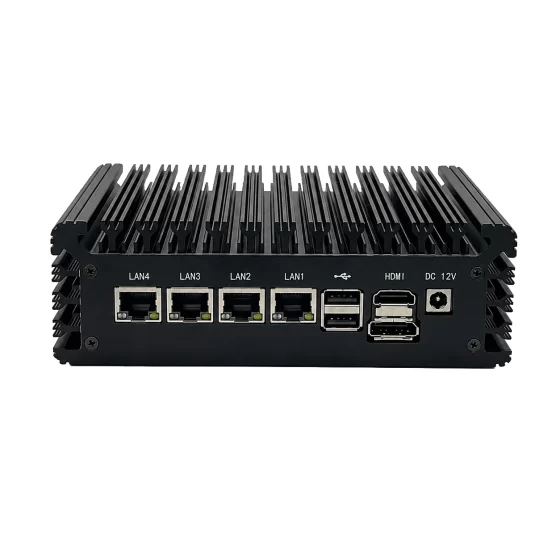
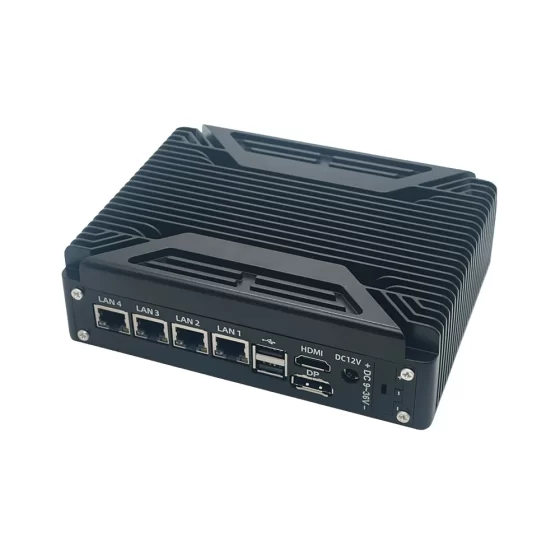
표준 사무용 PC 또는 소비자 게이트웨이와 비교, 산업용 컴퓨터는 창고 로봇 환경에 더 적합합니다.. 견고한 설치를 지원합니다., 다중 LAN 포트, 직렬 통신, USB, GPIO, 로컬 저장소, 팬리스 디자인 옵션, 안정적인 전원 입력, 긴 수명주기 가용성.
This article explains how warehouse robotics platforms work, what deployment challenges appear in automated logistics environments, 솔루션 아키텍처의 구조, and which hardware features matter when selecting an industrial computer or embedded computer for warehouse robotics applications.
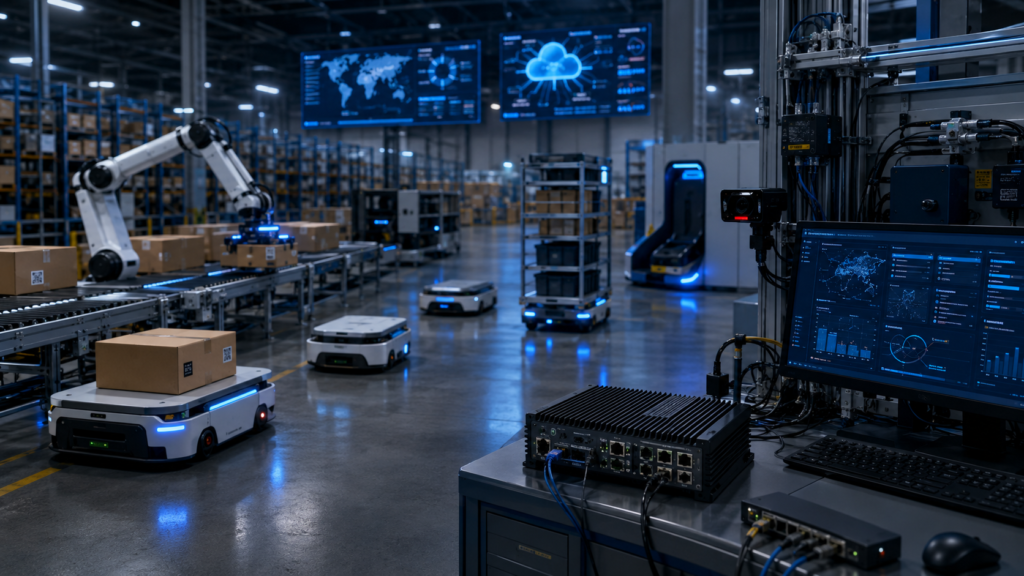
Warehouse robotics computers collect robot, conveyor, scanner, RFID, and equipment data for smart logistics platforms.
산업 개요
Warehouses Are Moving Toward Robotic Automation
Warehouse operations are becoming faster, denser, and more data-driven.
Traditional manual handling is increasingly supported by robots, 컨베이어, 스캐너, and smart warehouse software. These systems help improve efficiency, reduce walking distance, support flexible picking, and increase order processing speed.
Common warehouse robotics systems include:
- AGV
- AMR
- Robotic picking systems
- Robotic palletizing systems
- Conveyor robots
- Sorting robots
- Mobile inspection robots
- Forklift assistance systems
- Automated storage systems
- Robot charging stations
- Fleet management platforms
These systems need reliable edge computing and real-time data exchange.
Warehouse Robots Need Local Computing Infrastructure
Robots do not operate in isolation.
They need to communicate with warehouse control systems, task management platforms, charging stations, 바코드 스캐너, 센서, 카메라, traffic control zones, access gates, and safety systems.
A warehouse robotics computer can act as a local edge platform that connects these systems.
It can support:
- Robot status monitoring
- Fleet data aggregation
- Task communication
- Sensor integration
- Local event processing
- 네트워크 세분화
- 원격 진단
- Data buffering
- Warehouse software integration
- Security logging
This makes the computing platform an important part of the robotics infrastructure.
Industrial Computers Support Real Warehouse Deployment
Warehouse environments are not always clean or stable.
Computers may be installed near conveyors, robot charging areas, loading docks, 라인 정렬, 장비 캐비닛, or warehouse racks.
These areas may include dust, 진동, 온도 변화, unstable power, 케이블 스트레스, 제한된 공기 흐름, 지속적인 작동.
Industrial computers and embedded computers provide the rugged hardware foundation required for these conditions.
They help warehouse automation providers build reliable, maintainable, and scalable robot-connected systems.

Multiple robots, 컨베이어, 스캐너, RFID gates, charging stations, camera streams, and LAN zones affect warehouse robotics deployment.
주요 과제
Coordinating Multiple Robots and Devices
A smart warehouse may include many robots operating at the same time.
Each robot may report position, task status, battery level, fault messages, 센서 데이터, and communication status.
The warehouse robotics platform may also need to connect conveyors, gates, 바코드 리더기, 카메라, chargers, and WMS or WCS systems.
This creates a complex data environment.
The computing platform must support stable communication between robots, infrastructure, and warehouse software.
Supporting Real-Time Operational Response
Warehouse robotics often requires fast local response.
A delay in task assignment, zone control, obstacle event handling, or conveyor coordination may reduce efficiency or create operational risk.
Time-sensitive data may include:
- Robot location
- Task status
- Battery status
- Charging availability
- Conveyor state
- Safety zone events
- Dock activity
- Barcode scan records
- Traffic congestion
- Fault alarms
Edge computing allows important logic to run close to warehouse equipment.
This reduces dependence on remote systems and improves responsiveness.
Integrating with WMS and WCS Platforms
Warehouse robots must work with warehouse software.
A WMS may manage inventory, orders, picking tasks, receiving, and shipment records. A WCS may coordinate conveyors, sorters, 로봇, 스캐너, and automation equipment.
The warehouse robotics computer may need to exchange structured data with both systems.
This may include:
- Robot task requests
- Pick and place results
- Inventory movement records
- Conveyor status
- Sorting events
- Barcode scan data
- Robot fault logs
- Charging station data
- Operation performance records
Reliable software integration depends on stable hardware, 로컬 저장소, network connectivity, and protocol support.
Handling Mixed Interfaces and Systems
Warehouse robotics environments often include equipment from multiple vendors.
Different systems may use Ethernet, USB, 직렬 통신, GPIO, 디지털 I/O, or wireless modules.
The platform may need to connect:
- Robot fleet controllers
- AGV charging stations
- AMR gateways
- 바코드 판독기
- RFID 리더
- Conveyor PLCs
- 산업용 카메라
- Safety sensors
- Access control devices
- 로컬 대시보드
Flexible industrial I/O helps reduce the need for external converters and simplifies deployment.
Maintaining Network Segmentation
Warehouse robotics networks should not always share one flat network.
Robots, 스캐너, 카메라, WMS servers, office IT devices, remote maintenance systems, and management tools may require separate network zones.
A warehouse robotics computer with multiple LAN ports can help separate:
- Robot network
- Scanner network
- 카메라 네트워크
- WMS or WCS network
- Warehouse equipment network
- 원격 유지보수 네트워크
- 관리 네트워크
- Cloud uplink
Segmentation improves security, 교통 조직, and system stability.
Ensuring Continuous Operation
Warehouse robotics systems often run for long hours.
If the computing platform fails, robots may stop receiving tasks, conveyors may lose coordination, dashboards may lose visibility, and maintenance teams may lose diagnostic data.
Reliable deployment requires:
- Rugged enclosure
- 팬리스 설계 옵션
- Stable power input
- Reliable storage
- Secure mounting
- 열 안정성
- Local recovery access
- 구성 백업
- Remote monitoring
- Long lifecycle support
Industrial-grade hardware helps reduce downtime risk.

Warehouse robotics computers connect robot fleets, 컨베이어, WMS, WCS, fleet platforms, 클라우드 시스템, 및 로컬 데이터베이스.
Warehouse Robotics Computer Solution Architecture
Robot and Equipment Layer
The robot and equipment layer includes all physical systems involved in warehouse automation.
이 레이어에는 다음이 포함될 수 있습니다.:
- AGV
- AMR
- Robotic arms
- 컨베이어
- Sorting lines
- 바코드 판독기
- RFID 리더
- 산업용 카메라
- Charging stations
- Safety sensors
- Access gates
- PLC 컨트롤러
- 로컬 HMI
These systems generate real-time operational data and require stable communication.
Edge Computing Layer
The edge computing layer is where the industrial computer or embedded computer operates.
이 레이어에서는, 플랫폼은 아마도:
- Collect robot status
- Receive scanner data
- Monitor charging stations
- 지역 이벤트 처리
- Store logs
- Buffer records
- 원격 진단 지원
- Segment networks
- Forward structured data
- Connect automation devices with warehouse software
This layer provides local computing close to warehouse operations.
Robot Coordination Layer
The robot coordination layer supports communication between robots and control systems.
The platform may exchange:
- Task assignments
- Robot location data
- Battery status
- Route events
- Fault alarms
- Charging requests
- Zone access status
- Conveyor handoff signals
- Pick and delivery confirmations
The goal is to help robots work smoothly with warehouse infrastructure.
Warehouse Software Integration Layer
The warehouse robotics computer may connect with higher-level platforms, 포함:
- WMS
- WCS
- ERP
- Fleet management systems
- 클라우드 대시보드
- 로컬 데이터베이스
- 유지관리 시스템
- Security monitoring systems
- 산업용 IoT 플랫폼
This integration allows warehouse managers to track robot activity, inventory movement, 장비상태, and operational performance.
보안 및 관리 계층
The security and management layer helps keep the robotics platform controlled and maintainable.
여기에는 다음이 포함될 수 있습니다.:
- 네트워크 세분화
- 안전한 원격 액세스
- Firewall policies
- 사용자 권한
- 로컬 로깅
- 구성 백업
- 장치 상태 모니터링
- 스토리지 모니터링
- 원격 진단
- Update management
This layer supports long-term system reliability and safer remote maintenance.
주요 특징
Multi-Robot Connectivity
A warehouse robotics platform must support communication with multiple robots and infrastructure systems.
Important connectivity requirements may include:
- Robot fleet network
- Charging station connection
- Conveyor controller connection
- Scanner and RFID integration
- Camera data connection
- WMS or WCS communication
- Remote maintenance access
- Cloud dashboard connection
The system should be sized according to the number of robots, 장치, and data flows.
다중 LAN 네트워크 설계
Multiple LAN ports are valuable for warehouse robotics deployment.
They allow different networks to remain separated and controlled.
Useful configurations may include:
- Robot LAN
- WMS or WCS LAN
- Camera LAN
- Scanner LAN
- Equipment LAN
- Management LAN
- Remote service LAN
- WAN or cloud uplink
This improves network organization and helps prevent high-volume traffic from affecting critical robot communication.
엣지 처리 성능
The platform may need to collect, 프로세스, 가게, and forward data continuously.
하드웨어 선택을 고려해야 합니다.:
- CPU 성능
- 메모리 용량
- Robot count
- Data point count
- Scanner event rate
- Camera workload
- Local database workload
- Network throughput
- 저장 속도
- 운영 체제 지원
For larger warehouses, the platform should be tested with real robot traffic and warehouse software.
안정적인 로컬 스토리지
Local storage supports system files, 로그, robot status records, task events, diagnostic data, upload buffers, 및 로컬 데이터베이스.
SSD 또는 NVMe 스토리지는 기계식 드라이브보다 빠른 액세스와 더 나은 충격 저항을 제공하기 때문에 일반적으로 선호됩니다..
스토리지 계획에서는 고려해야 할 사항:
- 로그 보존
- Robot event records
- Task history
- Fault data
- 로컬 데이터 버퍼링
- 구성 백업
- 지구력 쓰기
- 복구 워크플로
Reliable storage improves traceability and maintenance efficiency.
유연한 산업용 I/O
Warehouse robotics systems may require different I/O configurations.
유용한 옵션은 다음과 같습니다.:
- 랜
- USB
- RS232
- RS485
- GPIO
- 디지털 입력
- 디지털 출력
- HDMI
- 디스플레이포트
- M.2
- PCIe
- SATA 또는 NVMe
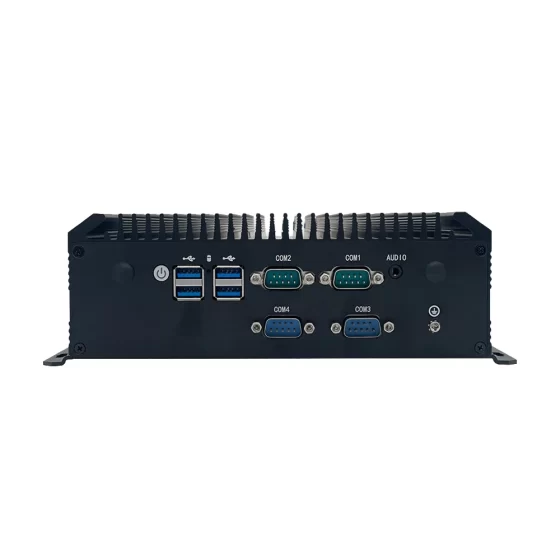
직렬 포트는 레거시 장치를 지원할 수 있습니다.. USB can connect service tools or scanners. GPIO and digital I/O can support alarms, 트리거, and device status signals. M.2 and PCIe can support expansion.
견고하고 팬이 없는 디자인
Warehouse robotics platforms may be installed in dusty, 진동이 발생하기 쉬운, or enclosed areas.
팬이 없는 산업용 컴퓨터는 먼지 유입을 줄이고 일반적인 기계 고장 지점 하나를 제거합니다..
견고한 인클로저로 진동으로부터 보호, 케이블 스트레스, installation impact, 지속적인 작동.
Thermal design should still be reviewed carefully when the system handles continuous communication, local storage writes, and edge processing.
Secure Remote Access
Warehouse automation providers often need remote diagnostics.
A warehouse robotics computer can support controlled remote access for engineers, integrators, and maintenance teams.
Remote access should include:
- User authentication
- VPN or secure tunnel support
- Access permissions
- Session logging
- Maintenance windows
- 네트워크 세분화
- 구성 백업
- Emergency access procedures
This supports faster troubleshooting while limiting unnecessary exposure.
긴 수명주기 가용성
Warehouse robotics systems may be deployed across many sites and remain in operation for years.
일관된 하드웨어는 소프트웨어 이미지 유지에 도움이 됩니다., robot communication drivers, fleet system integration, 예비 부품, 검증 절차.
Long lifecycle availability is important for warehouse automation providers, 시스템 통합업체, and logistics operators.
배포 시나리오
AGV Fleet Integration
AGV fleets need communication with task systems, traffic rules, charging stations, and warehouse software.
A warehouse robotics computer can collect AGV status, buffer task records, connect infrastructure devices, and forward information to fleet management or WMS systems.
This improves AGV visibility and operational coordination.
AMR Operation Support
AMRs may operate more flexibly than fixed-route AGVs.
They may report maps, positions, tasks, battery levels, and obstacle events.
An embedded computer can support local data exchange between AMRs, 센서, warehouse platforms, 및 모니터링 대시보드.
This supports safer and more reliable AMR deployment.
Robotic Picking Workstations
Robotic picking systems may use cameras, 그리퍼, 컨베이어, 바코드 리더기, and local control systems.
An industrial computer can process equipment data, connect inspection devices, 기록을 저장하다, and communicate with WMS or WCS platforms.
This improves picking automation and traceability.
Conveyor and Robot Handoff
Robots often interact with conveyors, sorters, loading points, and storage areas.
The warehouse robotics computer can support data exchange between robots and fixed automation systems.
This helps coordinate handoff points and reduces timing conflicts.
Robot Charging Station Monitoring
Robot charging areas are critical to continuous operation.
The platform can monitor charging station status, robot battery events, charger alarms, and usage records.
This helps operators understand fleet readiness and maintenance needs.
Warehouse Safety and Zone Monitoring
Robotic warehouses may require controlled zones for people, 로봇, 지게차, and equipment.
A computer platform can collect signals from sensors, access controls, 안전 장치, and robot systems.
This helps improve visibility into zone status and operational events.
Multi-Site Robot Operations
Large logistics operators may deploy robots across many warehouses.
A standardized warehouse robotics platform can collect local site data and send selected information to centralized dashboards.
This supports consistent monitoring, 유지, and performance analysis.
OEM Warehouse Robotics Appliance
Warehouse automation providers can build custom robotics appliances using industrial computers or embedded boards.
The platform can support robot connectivity, 장치 통합, 로컬 저장소, 원격 액세스, 견고한 배포.
This helps create repeatable solutions for different customer environments.
비즈니스 이점
Better Robot Visibility
A warehouse robotics computer helps collect robot status, task progress, battery level, fault records, and operational events.
This gives operators better visibility into robotic warehouse activity.
Improved visibility supports faster decisions and better resource planning.
Improved Automation Coordination
Robots must work with conveyors, 스캐너, WMS, WCS, charging stations, and warehouse infrastructure.
A local computing platform helps connect these systems and coordinate data exchange.
This improves automation flow and reduces integration gaps.
Faster Local Response
Edge computing allows important events to be processed near the warehouse floor.
Robot alerts, scanner events, charging issues, and equipment status changes can be handled locally.
This reduces response delay and improves operational stability.
다운타임 위험 감소
Industrial computers provide rugged hardware for long-running warehouse robotics systems.
팬리스 설계 옵션, 안정적인 스토리지, 안정적인 전원 입력, and secure mounting help reduce maintenance risk.
This supports continuous logistics operations.
Stronger Network Organization
Multi-LAN warehouse robotics platforms help separate robot networks, scanner networks, camera networks, WMS or WCS systems, 원격 유지 관리 액세스.
This improves security and reduces unnecessary traffic interference.
A structured network supports scalable automation.
Scalable Robotics Deployment
A standardized warehouse robotics computer platform makes it easier to deploy similar systems across many zones, 창고, 및 고객 사이트.
일관된 하드웨어로 소프트웨어 이미지가 단순화됩니다., 구성 템플릿, 예비 부품 계획, 유지 보수 훈련, 및 수명주기 관리.
This supports long-term warehouse robotics expansion.
왜 CoreIPC인가?
CoreIPC는 로봇공학을 위한 산업용 컴퓨팅 플랫폼을 제공합니다., 산업용 IoT, 머신 비전, 엣지 AI, 산업 자동화, 및 임베디드 시스템 통합. For warehouse robotics computer applications, CoreIPC는 안정적인 산업용 컴퓨터 하드웨어에 중점을 둡니다., 임베디드 컴퓨터 솔루션, 다중 LAN 구성, 직렬 통신, 유연한 I/O, 컴팩트한 시스템 디자인, 팬리스 배포 옵션, 로컬 저장 기능, 및 OEM/ODM 맞춤형 지원. CoreIPC helps warehouse automation providers, 로봇 시스템 통합업체, and logistics operators select computing platforms that match real deployment requirements, including robot count, 장치 인터페이스, 데이터 워크로드, LAN port count, 저장 요구 사항, 장착 방법, 전원 입력, 열적 조건, 및 수명주기 계획.
자주 묻는 질문
1. What is a warehouse robotics computer?
A warehouse robotics computer is an industrial computing platform used to connect, 감시 장치, and support robotic warehouse systems.
It may communicate with AGVs, AMR, 컨베이어, 스캐너, charging stations, 센서, WMS 플랫폼, WCS 시스템, 및 로컬 대시보드. It helps collect data, process events, 로그 저장, and support automation coordination.
2. Why use an industrial computer for warehouse robotics?
An industrial computer provides rugged hardware and flexible connectivity for warehouse deployment.
여러 LAN 포트를 지원할 수 있습니다., 직렬 통신, USB, GPIO, 로컬 저장소, 팬리스 작동, 산업용 장착, 안정적인 전원 입력, 긴 수명주기 가용성. These features make it suitable for robot zones, conveyor areas, 캐비닛, and warehouse edge systems.
3. How is an embedded computer used in warehouse robotics?
An embedded computer can act as a compact local edge platform near robots or automation equipment.
It can collect robot data, 지역 이벤트 처리, connect scanners and sensors, 기록을 저장하다, communicate with WMS or WCS systems, and support remote diagnostics.
4. What robots can be supported by a warehouse robotics platform?
A warehouse robotics platform may support AGVs, AMR, robotic picking systems, 로봇 팔, conveyor robots, sorting robots, mobile inspection robots, and automated transport systems.
The exact support depends on robot communication interfaces, software integration, 네트워크 설계, and application requirements.
5. Why are multiple LAN ports important for warehouse robotics?
Multiple LAN ports help separate robot networks, warehouse equipment, 스캐너, 카메라, WMS or WCS systems, management traffic, 원격 유지 관리 액세스.
This improves network clarity and reduces the chance that high-volume or non-critical traffic affects robot communication.
6. Can warehouse robotics computers support AGV and AMR systems?
예. Warehouse robotics computers can support AGV and AMR systems by collecting status data, connecting fleet systems, monitoring charging stations, exchanging task records, and forwarding operational data to warehouse platforms.
They can also support local buffering and remote maintenance.
7. What hardware features matter for warehouse robotics computers?
Important features include multiple LAN ports, RS232, RS485, USB, GPIO, 디지털 I/O, 안정적인 메모리, SSD 또는 NVMe 스토리지, 견고한 인클로저, 팬리스 디자인, 산업용 전원 입력, 디스플레이 출력, M.2, PCIe, 및 확장 옵션.
The final configuration should match robot count, 장치 인터페이스, 데이터 워크로드, 및 설치 환경.
8. Can warehouse robotics computers connect with WMS and WCS platforms?
예. A warehouse robotics computer can exchange structured data with WMS and WCS platforms.
It may send robot status, task results, scanner records, 컨베이어 이벤트, charging data, fault logs, and equipment status records to warehouse software systems.
9. Can fanless computers support warehouse robotics workloads?
예. Fanless industrial computers can support many warehouse robotics workloads because they reduce dust intake and remove one common mechanical failure point.
하지만, thermal design should be reviewed when the system handles continuous robot communication, 로컬 데이터베이스, 카메라 데이터, or edge processing.
10. 배포 전에 테스트해야 할 사항?
배포 전, the platform should be tested with real robots, 스캐너, 컨베이어, charging stations, 네트워크 토폴로지, warehouse software, 데이터 속도, 저장 동작, 그리고 장기 실행 작업.
열 안정성, 원격 진단, 네트워크 세분화, 복구 절차, and integration with WMS or WCS should also be validated.
결론
A warehouse robotics computer is a practical foundation for AGV and AMR coordination, robot fleet visibility, smart warehouse automation, conveyor integration, scanner data collection, charging station monitoring, and warehouse software connectivity.
By placing an industrial computer or embedded computer near warehouse robotics systems, automation providers and logistics operators can connect robots, 스캐너, 컨베이어, 센서, charging stations, WMS 플랫폼, WCS 시스템, 클라우드 대시보드, and maintenance tools through reliable and controlled communication paths.
The right warehouse robotics platform should be selected according to real deployment requirements, including robot count, 장치 인터페이스, LAN 포트 설계, 데이터 워크로드, 스토리지 구성, remote access policy, 장착 방법, 전원 입력, 열적 조건, 운영 체제 지원, 및 수명주기 계획.
CoreIPC supports warehouse robotics computer projects with industrial computing platforms designed for practical logistics, robot, edge, 내각, 및 OEM 배포. 올바른 하드웨어 기반을 갖춘 경우, warehouse operators and automation providers can build reliable, 확장 가능, and data-driven robotic logistics systems.
문의하기
산업용 컴퓨터를 찾고 계시다면, 임베디드 컴퓨터, or edge platform for warehouse robotics deployment?
프로젝트 요구 사항을 논의하려면 CoreIPC에 문의하세요., including robot count, 장치 인터페이스, LAN 포트 구성, WMS or WCS integration, 데이터 워크로드, 스토리지 디자인, 장착 방법, 전원 입력, 운영 환경, 수명주기 요구 사항, 및 OEM/ODM 사용자 정의 옵션.