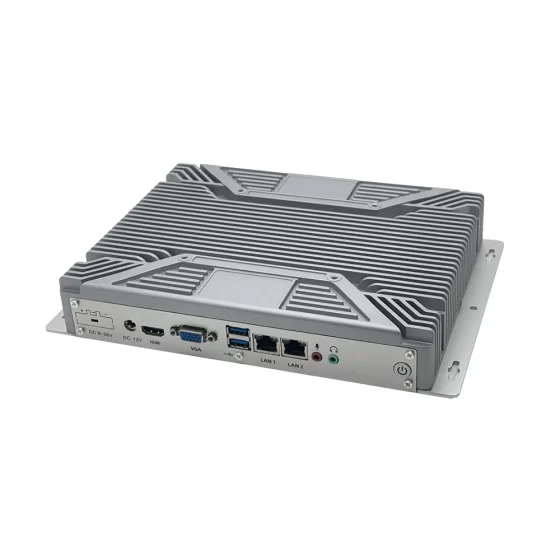
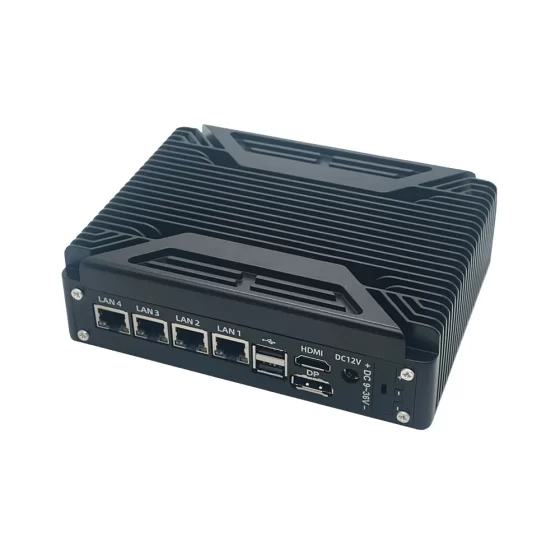
CoreIPC Industrial Computing Solutions

Vision Platform for Logistics Sorting: Logistics Sorting Vision Computer for Automated Parcel Identification
Executive Summary
A logistics sorting vision platform provides the industrial computing foundation for automated parcel identification, barcode recognition, dimension checking, label verification, routing control, and sorting data integration in modern logistics environments.
In warehouses, distribution centers, e-commerce fulfillment centers, and parcel hubs, sorting systems must process large volumes of items quickly and accurately. Packages may vary in size, shape, label position, surface condition, and movement speed. A reliable logistics sorting vision system helps identify each item, verify its information, and send sorting results to automation equipment and warehouse management systems.
An industrial computer or embedded computer acts as the local vision processing platform. It connects cameras, barcode readers, lighting systems, sensors, conveyors, PLCs, sorting mechanisms, weighing systems, and factory or warehouse networks.
Compared with standard commercial PCs, industrial computers are better suited for continuous logistics operation. They provide stable image acquisition, flexible I/O, rugged design, reliable networking, fanless options, and long lifecycle support.
For logistics automation integrators, warehouse operators, and OEM sorting equipment builders, selecting the right industrial computing platform affects sorting accuracy, system uptime, traceability, and long-term maintainability.
This article explains how logistics sorting vision systems work, what challenges appear in real deployment, how the solution architecture is structured, and which hardware features matter most when selecting an industrial computer for logistics sorting vision applications.
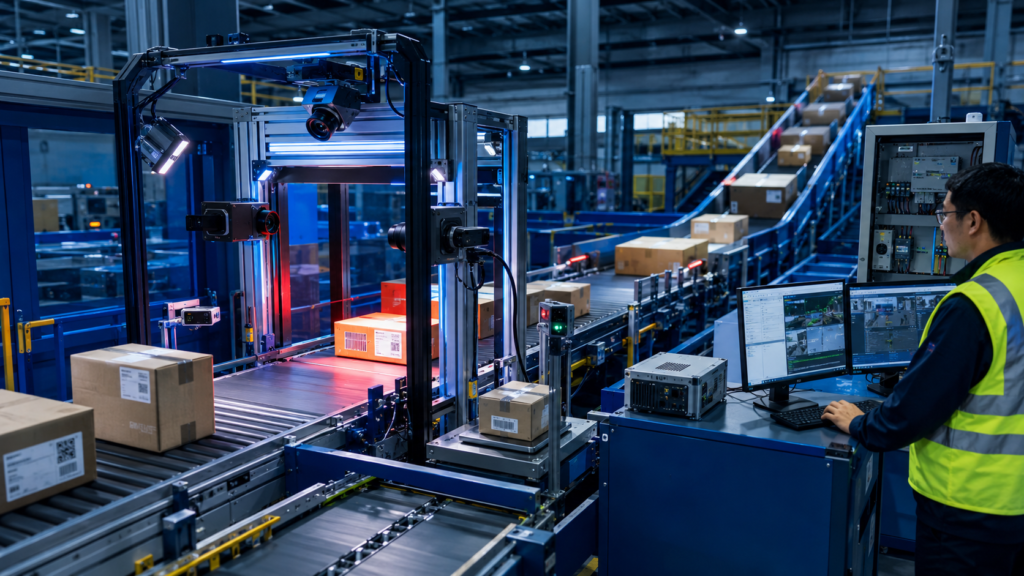
Industrial computers process parcel images and barcode data for automated identification and sorting.
Industry Overview
Logistics Sorting Is Becoming More Automated
Modern logistics operations depend on speed, accuracy, and real-time data.
E-commerce growth, same-day delivery expectations, and complex supply chains have increased the need for automated sorting systems. Manual sorting is difficult to scale because it is labor-intensive, error-prone, and limited by operator speed.
Logistics sorting vision systems can support:
- Parcel barcode recognition
- QR code and label reading
- Package dimension checking
- Label position verification
- Address label inspection
- Sorting route confirmation
- Package presence detection
- Conveyor flow monitoring
- Carton and bag identification
- Sorting error reduction
- WMS and tracking data integration
A reliable logistics sorting vision computer helps convert visual data into actionable sorting decisions.
Why Vision Systems Are Used in Logistics Sorting
A logistics sorting system must identify packages quickly while they move on conveyors.
Traditional barcode scanners can work well when labels are clean and correctly positioned. However, real logistics environments are more complex. Labels may be wrinkled, tilted, partially damaged, poorly printed, or placed on different sides of the package.
Vision systems provide more flexibility because they can capture a wider field of view and process image data from multiple angles.
A logistics sorting vision platform can inspect labels, read codes, verify package orientation, check package condition, and support automated routing decisions.
Industrial Computing Is the Local Processing Layer
Logistics sorting requires local processing near conveyors and scanning stations.
Sending every image to a remote server may increase latency and network load. A local industrial computer can process images close to the sorting line, communicate with PLCs, and send sorting decisions quickly.
Embedded computers are useful when the system must be installed inside compact scanning tunnels, sorting machines, control cabinets, or OEM logistics equipment.
Industrial computers provide the reliability and interface flexibility needed for continuous warehouse and distribution center operation.

Mixed packages, label variation, conveyor speed, camera coverage, and trigger timing affect sorting reliability.
Key Challenges
High Package Volume and Fast Conveyor Speed
Logistics sorting systems often operate at high speed.
Packages may move continuously through scanning tunnels, conveyor junctions, diverters, or automated sorting lanes. The vision system must capture images, process code information, and send sorting results before the package reaches the decision point.
Important performance factors include:
- Conveyor speed
- Camera resolution
- Number of cameras
- Barcode recognition speed
- Image processing workload
- Trigger timing
- Sorting mechanism response time
- WMS communication latency
The logistics sorting vision computer must provide stable sustained performance under continuous workload.
Package Shape and Label Variation
Packages are not uniform.
A sorting system may process cartons, envelopes, poly mailers, bags, tubes, trays, irregular packages, and returned goods. Labels can appear on different sides, at different angles, or on uneven surfaces.
Common label and package challenges include:
- Wrinkled labels
- Torn labels
- Low-contrast printing
- Curved or uneven surfaces
- Reflective tape or film
- Damaged cartons
- Dirty package surfaces
- Multiple barcodes on one package
- Incorrect label placement
- Fast-moving items
The vision platform must handle this variation while maintaining sorting accuracy.
Multi-Camera Image Acquisition
Logistics sorting often requires multiple cameras.
A single top camera may not read side labels or tilted packages. Many sorting systems use top, side, and angled cameras to increase read rate.
This creates higher bandwidth and synchronization requirements.
The industrial computer must support enough camera interfaces, network bandwidth, processing performance, and storage capacity for the actual camera configuration.
Integration with Sorting Equipment
Vision results must be connected with sorting action.
The computer may need to communicate with PLCs, conveyor controllers, diverters, sorters, weighing systems, label applicators, alarms, and warehouse management systems.
A practical logistics sorting vision platform may need:
- LAN
- USB
- RS232
- RS485
- GPIO
- Digital input
- Digital output
- Multiple display outputs
- Expansion interfaces
Without reliable industrial I/O, sorting decisions may not reach the equipment at the right time.
Continuous Operation and Maintenance
Logistics facilities may operate for long hours with limited downtime.
Vision computers may be installed near conveyors, scanning tunnels, sorters, control cabinets, or warehouse automation equipment. These locations may include dust, vibration, cable movement, heat, electrical noise, and continuous mechanical activity.
A hardware failure can stop barcode recognition, delay sorting, or create routing errors.
Industrial-grade computing hardware helps reduce this risk and supports long-term system stability.

Industrial computers connect sorting cameras, conveyors, PLCs, diverters, warehouse software, and parcel tracking systems.
Logistics Sorting Vision Solution Architecture
Image Acquisition Layer
The image acquisition layer captures visual data from parcels, labels, barcodes, and conveyor zones.
This layer may include industrial cameras, lenses, lighting modules, trigger sensors, barcode readers, and package presence sensors.
Depending on the application, the system may capture:
- Top label images
- Side label images
- Barcode images
- QR code images
- Package surface images
- Carton condition images
- Package dimension images
- Conveyor flow images
- Sorting lane images
Stable image quality is essential before recognition software can make reliable decisions.
Industrial Vision Computing Layer
The industrial vision computing layer is where the logistics sorting vision computer performs local processing.
At this layer, the industrial computer or embedded computer may:
- Receive images from cameras
- Run barcode recognition software
- Process OCR or label data
- Identify package orientation
- Match package data with routing rules
- Store image records or exception images
- Communicate with PLCs
- Send sorting results to diverters
- Upload data to WMS or databases
- Display local system status
This edge layer allows recognition and routing decisions to happen close to the sorting equipment.
Automation Control Layer
The automation control layer connects the vision system with physical sorting equipment.
A PLC, conveyor controller, diverter controller, or sorting machine may send trigger signals and receive sorting results.
For example, after a package barcode is recognized, the industrial computer can send the destination lane information to the PLC. The PLC then activates the correct diverter or sorting mechanism at the right time.
This closed-loop communication is essential for high-speed sorting accuracy.
Data Management Layer
Sorting data must be connected with warehouse and logistics systems.
The industrial computer may send records to WMS, TMS, ERP, tracking platforms, parcel databases, or local monitoring systems.
Data may include:
- Tracking number
- Barcode value
- Package ID
- Destination lane
- Sorting result
- Timestamp
- Station ID
- Image evidence
- Read failure record
- Reject status
This supports traceability, shipment tracking, exception handling, and operational analytics.
User Interface and Monitoring Layer
Operators and engineers need a local interface for monitoring and maintenance.
The industrial computer may connect to a monitor, touchscreen, keyboard, or control panel. The interface can show live camera views, read rates, exception images, system status, sorting counts, alarm messages, and network connection status.
A clear interface helps maintenance teams respond quickly when recognition performance changes.

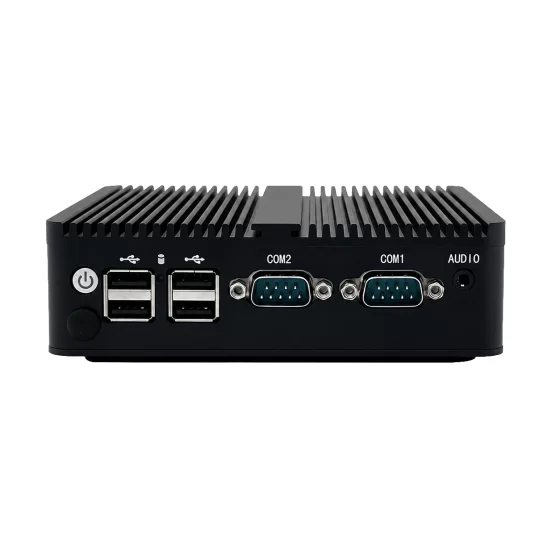
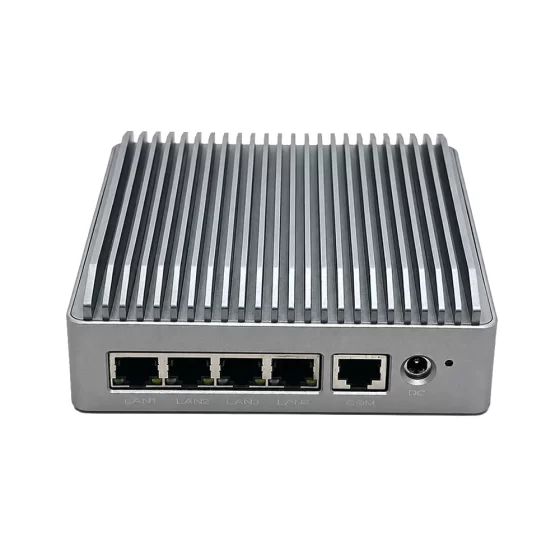
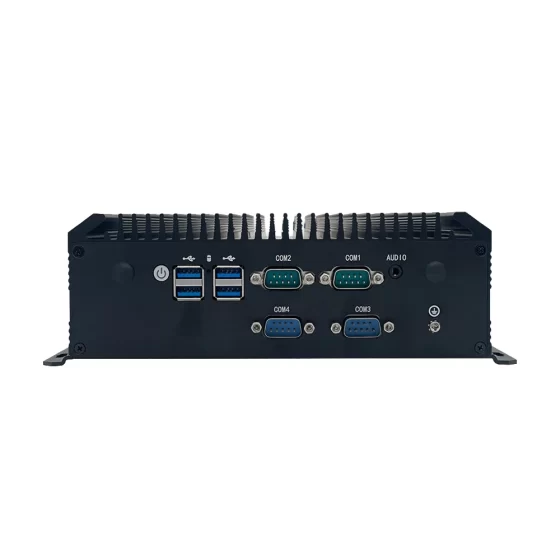
Fanless industrial computers support reliable logistics sorting vision deployment inside warehouse control cabinets.
Key Features
Stable Image Processing Performance
A logistics sorting vision computer must process image data reliably under continuous operation.
Different systems require different computing levels. A single-camera barcode reading station may use a compact embedded computer. A high-speed multi-camera sorting tunnel may require a more powerful industrial PC.
Selection should consider:
- Camera resolution
- Number of cameras
- Conveyor speed
- Barcode recognition workload
- OCR or AI model complexity
- Trigger timing
- Storage workload
- WMS communication
- Local display requirements
Stable sustained performance is more important than short benchmark peaks.
Camera and Vision Interface Support
Logistics sorting vision systems commonly use USB or Ethernet cameras.
The computer should support the required camera interfaces and bandwidth. In multi-camera systems, interface planning is especially important.
Useful hardware features may include:
- USB 3.0 ports
- Multiple LAN ports
- 2.5GbE or higher-speed LAN options
- M.2 expansion
- PCIe expansion
- HDMI or DisplayPort
- High-speed SSD support
- Stable power design
Camera traffic may need to be separated from warehouse network traffic to improve system stability.
Industrial I/O for Sorting Control
The vision computer must connect with real logistics automation equipment.
Important I/O options may include:
- LAN
- USB
- RS232
- RS485
- GPIO
- Digital input
- Digital output
- HDMI
- DisplayPort
These interfaces can support cameras, sensors, PLCs, lighting controllers, barcode readers, alarms, diverters, conveyors, and local operator displays.
Flexible I/O reduces external converters and improves deployment reliability.
Reliable Networking
Networking is critical in logistics sorting.
The computer may need to communicate with WMS, parcel databases, PLCs, monitoring dashboards, and remote maintenance systems.
Multiple LAN ports can support network separation. One port may connect to camera or machine networks, while another connects to warehouse IT systems.
This improves network organization and reduces traffic conflicts.
Fanless and Rugged Design
Fanless industrial computers are useful in logistics environments.
They reduce dust intake and remove one common mechanical failure point. This is valuable in warehouse and parcel sorting areas where systems may run continuously and maintenance windows are limited.
A rugged enclosure helps protect the computer from vibration, cable stress, and installation impact.
Thermal design should still be reviewed carefully, especially for multi-camera and AI-based recognition workloads.
Storage for Images and Exception Records
Logistics sorting systems may need to store images, failed-read events, exception records, logs, and sorting data.
SSD storage is commonly preferred because it provides fast response and better shock resistance than mechanical drives.
For systems that store many package images, storage capacity, write endurance, backup methods, and retention policy should be reviewed during design.

Logistics sorting vision platforms improve barcode read rates, parcel routing, traceability, exception handling, and warehouse throughput.
Deployment Scenarios
Parcel Barcode Recognition
Parcel barcode recognition is one of the main logistics sorting vision applications.
The system captures images of moving packages and reads barcodes or QR codes automatically. The industrial computer processes the image and sends the tracking data to WMS or sorting control systems.
This helps automate package identification and reduce manual scanning.
Multi-Side Label Reading
Some packages may have labels on different sides.
A multi-camera vision platform can capture top, side, and angled views. The computer processes images from multiple cameras and identifies the best readable code.
This improves read rate for mixed parcel flows.
Conveyor Sorting Control
Logistics sorting vision systems can support conveyor-based routing.
After the package is identified, the computer sends sorting information to the PLC or conveyor controller. The system can then direct the package to the correct lane, chute, or sorting area.
This supports faster and more accurate distribution center operation.
Package Dimension and Shape Verification
Vision systems may support dimension checking or package shape analysis.
The computer can process camera data to estimate package size, detect abnormal shapes, or verify whether a package meets handling requirements.
This helps reduce equipment jams and supports better sorting decisions.
Label and Print Verification
Logistics operations depend on readable labels.
A vision system can verify that the label is present, readable, and correctly positioned. It can also detect damaged labels, low-contrast printing, or multiple conflicting codes.
This helps reduce sorting exceptions and manual intervention.
E-Commerce Fulfillment Sorting
E-commerce fulfillment centers process a wide variety of package types.
A logistics sorting vision computer can help identify parcels, verify labels, read order codes, and send routing information to warehouse systems.
This improves sorting speed and shipment accuracy.
Airport and Courier Hub Sorting
Courier hubs and airport logistics systems require high throughput and reliable package identification.
Industrial computers can support vision tunnels, conveyor sorters, barcode reading stations, and exception handling systems.
Stable computing hardware helps keep sorting systems running during high-volume operations.
OEM Sorting Equipment Integration
Equipment builders can integrate embedded computers or industrial motherboards into sorting machines, scanning tunnels, or automated conveyor systems.
The computing platform can provide image acquisition, barcode recognition, PLC communication, local storage, HMI display, and data output.
This helps OEMs deliver sorting systems ready for warehouse automation.
Business Benefits
Improved Sorting Accuracy
A logistics sorting vision system improves package identification and routing accuracy.
By reading barcodes and labels automatically, the system reduces manual scanning errors and supports faster sorting decisions.
Accurate sorting helps reduce misrouted parcels and improves delivery reliability.
Higher Throughput
Automated vision systems can process packages continuously on conveyors.
A properly selected industrial computer helps maintain stable image processing and communication performance.
This supports higher sorting throughput without depending entirely on manual labor.
Reduced Manual Intervention
Manual sorting and exception handling can slow down logistics operations.
Vision systems reduce manual work by identifying packages automatically and sending routing data to sorting equipment.
Operators can focus on exceptions, system monitoring, and maintenance instead of repetitive scanning tasks.
Stronger Traceability
Sorting data can be linked with package IDs, timestamps, images, station IDs, routing decisions, and exception records.
This creates stronger traceability across warehouse and logistics workflows.
Reliable traceability supports shipment tracking, claims investigation, and operational analysis.
Faster Exception Handling
When the system detects unreadable labels, conflicting barcodes, or abnormal package conditions, it can send packages to an exception lane.
Image records and system logs help operators investigate problems faster.
This reduces delays and improves sorting process control.
Scalable Logistics Automation
A standardized industrial computing platform makes it easier to deploy vision systems across multiple sorting lines, hubs, and warehouses.
Consistent hardware simplifies software images, driver management, spare parts planning, maintenance training, and long-term technical support.
This supports scalable logistics automation and smart warehouse development.
Why CoreIPC
CoreIPC provides industrial computing platforms for machine vision, logistics automation, industrial IoT, and embedded system integration. For logistics sorting vision applications, CoreIPC focuses on reliable industrial computer hardware, embedded computer solutions, flexible I/O configurations, compact system design, and OEM/ODM customization support. CoreIPC helps system integrators, sorting equipment builders, and warehouse automation teams select computing platforms that match real deployment requirements, including camera interfaces, recognition workload, automation communication, mounting methods, power input, thermal design, storage needs, and lifecycle planning.
Frequently Asked Questions
1. What is a logistics sorting vision platform?
A logistics sorting vision platform uses cameras, lighting, sensors, vision software, and industrial computing hardware to identify and route packages automatically.
It can read barcodes, QR codes, labels, and package information while items move on conveyors. The system sends sorting data to PLCs, WMS platforms, databases, or conveyor control systems.
2. Why use an industrial computer for logistics sorting vision?
An industrial computer provides the local processing and connectivity required for high-speed sorting systems.
It can receive camera images, run barcode recognition software, communicate with PLCs, store exception records, and upload data to warehouse systems. It is designed for continuous operation in logistics environments where vibration, dust, and long operating hours are common.
3. How is an embedded computer used in sorting equipment?
An embedded computer can be installed inside scanning tunnels, sorting machines, control cabinets, or compact conveyor systems.
It can process camera data, communicate with sensors and PLCs, display local system status, and send sorting results to warehouse software. Its compact size makes it useful for OEM logistics automation equipment.
4. What interfaces are important for logistics sorting vision computers?
Important interfaces may include USB 3.0, multiple LAN ports, RS232, RS485, GPIO, digital input, digital output, HDMI, DisplayPort, M.2, and PCIe expansion.
Camera interfaces are important for image acquisition. Industrial I/O is useful for trigger sensors, PLC communication, diverters, conveyor systems, lighting control, and alarms.
5. Can vision systems improve barcode read rates?
Yes. Vision systems can improve barcode read rates by capturing larger image areas and using multiple camera angles.
They can read labels from different package positions and help handle tilted, wrinkled, or partially difficult labels. However, performance depends on camera placement, lighting, package speed, software capability, and computing hardware.
6. Do logistics sorting systems need multiple cameras?
Many logistics sorting systems use multiple cameras to increase read coverage.
Top, side, and angled cameras can help read labels on different package surfaces. Multi-camera systems require more bandwidth and processing power, so the industrial computer must be selected carefully.
7. Is a fanless industrial computer suitable for logistics sorting?
A fanless industrial computer can be suitable for many logistics sorting applications because it reduces dust intake and removes one mechanical failure point.
However, multi-camera recognition and AI-based inspection may require stronger thermal planning. CPU workload, cabinet airflow, ambient temperature, and mounting location should be reviewed before final selection.
8. How does logistics sorting vision support traceability?
The system can record package IDs, barcode values, sorting decisions, timestamps, station IDs, images, and exception events.
This data can be uploaded to WMS, tracking platforms, or logistics databases. Complete traceability helps operators investigate misroutes, failed reads, and shipment disputes.
9. What should be tested before deployment?
Before deployment, the system should be tested with real packages, real labels, actual conveyor speed, camera resolution, lighting conditions, barcode software, PLC communication, sorting timing, storage workload, and network connection.
Long-running stability and thermal performance should also be tested to reduce production risk.
10. Can logistics sorting vision connect with WMS systems?
Yes. Industrial computers can send sorting data to WMS platforms, tracking databases, ERP systems, or monitoring dashboards.
The uploaded data may include tracking numbers, barcode values, destination lanes, read results, timestamps, images, and exception records. This helps connect physical sorting with digital logistics management.
Conclusion
A logistics sorting vision platform is a practical foundation for automated parcel identification, barcode recognition, label verification, sorting control, and warehouse traceability.
By placing industrial computing hardware close to cameras, sensors, conveyors, PLCs, diverters, and sorting equipment, logistics operators can process package data locally and send routing decisions quickly.
The right industrial computer or embedded computer should be selected according to real deployment requirements, including camera interface, recognition workload, conveyor speed, I/O configuration, network design, storage needs, mounting method, power input, thermal conditions, operating system support, and lifecycle planning.
CoreIPC supports logistics sorting vision projects with industrial computing platforms designed for practical warehouse and equipment deployment. With the right hardware foundation, system integrators and logistics operators can improve sorting accuracy, reduce manual scanning, strengthen traceability, and build scalable logistics automation systems.
Contact Us
Looking for an industrial computer, embedded computer, or industrial motherboard for logistics sorting vision?
Contact CoreIPC to discuss your project requirements, including camera interface, barcode recognition workload, I/O configuration, sorting control communication, mounting method, power input, operating environment, lifecycle needs, and OEM/ODM customization options.