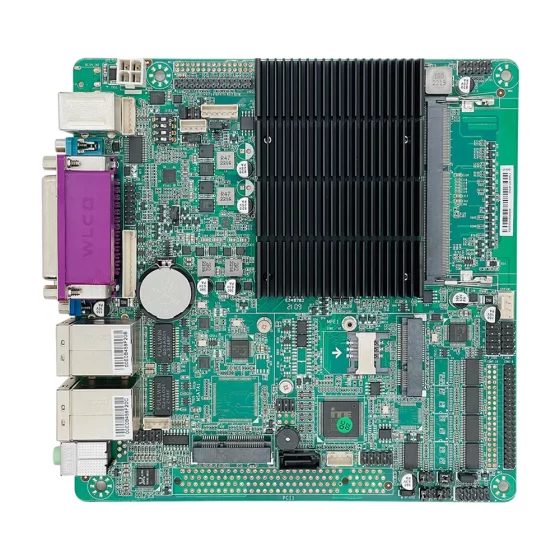
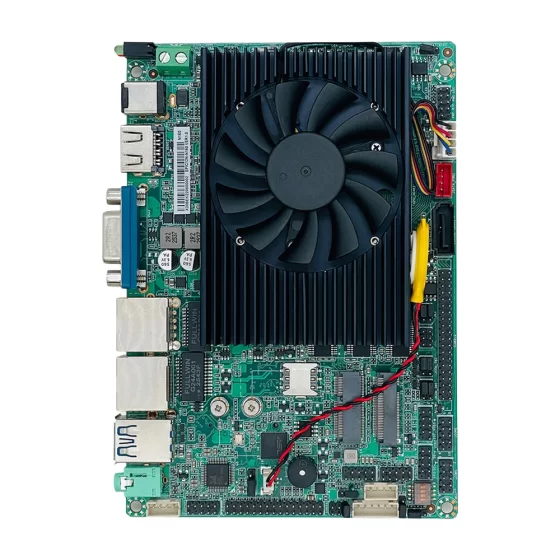
CoreIPC Industrial Computing Solutions

Industrial Computer for Predictive Maintenance: Predictive Maintenance Computer for Smart Equipment Monitoring
Executive Summary
A predictive maintenance computer provides the industrial computing foundation for machine health monitoring, sensor data collection, vibration analysis, temperature monitoring, edge analytics, anomaly detection, equipment diagnostics, and maintenance decision support.
Modern factories, warehouses, energy systems, transportation facilities, and industrial infrastructure rely on machines that must operate continuously. Motors, pumps, compressors, conveyors, CNC machines, robots, fans, turbines, gearboxes, production lines, and utility equipment all generate signals that can reveal early signs of failure.
Predictive maintenance uses these signals to detect abnormal behavior before equipment failure occurs.
An industrial computer or embedded computer can be deployed near machines to collect sensor data, process equipment signals locally, store historical records, run edge analytics, and send structured information to SCADA, MES, industrial IoT platforms, cloud dashboards, or maintenance systems.
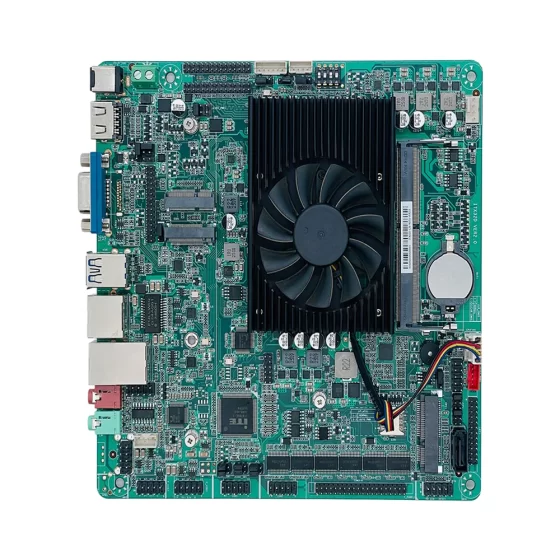
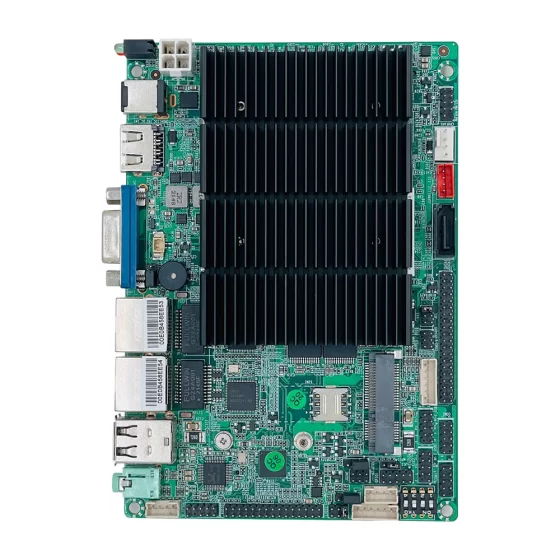
Compared with standard office PCs or consumer gateways, industrial computers are better suited for predictive maintenance deployment because they support rugged enclosures, multiple LAN ports, serial communication, GPIO, local storage, fanless design options, stable power input, and long lifecycle availability.
This article explains how predictive maintenance computers support smart equipment monitoring, what deployment challenges appear in real industrial environments, how the solution architecture works, and which hardware features matter when selecting an industrial computer or embedded computer for predictive maintenance applications.
 Industry Overview
Maintenance Is Moving from Reactive to Predictive
Traditional maintenance often follows two models.
Reactive maintenance repairs equipment after failure. Preventive maintenance services equipment according to a fixed schedule.
Both approaches have limits.
Reactive maintenance can cause unexpected downtime. Preventive maintenance may replace parts too early or miss problems that develop between scheduled inspections.
Predictive maintenance uses data to improve maintenance timing.
It monitors real equipment conditions and helps maintenance teams identify early warning signs.
Common monitored signals include:
- Vibration
- Temperature
- Motor current
- Pressure
- Flow
- Speed
- Acoustic signals
- Power consumption
- Runtime
- Alarm history
- Cycle counts
- Environmental conditions
A predictive maintenance computer collects and processes this data near the equipment.
Edge Computing Improves Equipment Monitoring
Predictive maintenance data can be large and time-sensitive.
Vibration sensors, high-frequency data acquisition modules, cameras, and current sensors may generate continuous streams of information. Sending all raw data to the cloud may increase bandwidth cost and latency.
Edge computing allows important processing to happen locally.
The industrial computer can filter signals, calculate features, detect anomalies, store selected records, and forward only meaningful results.
This helps reduce network load while improving response speed.
Industrial Computers Provide the Reliable Hardware Layer
Predictive maintenance systems are often installed close to machines.
They may be mounted inside control cabinets, machine enclosures, pump rooms, compressor rooms, production lines, utility areas, or remote field sites.
These environments may include vibration, dust, heat, electrical noise, unstable power, limited airflow, and continuous operation.
Industrial computers and embedded computers provide the hardware foundation required for these conditions.
They support rugged deployment, flexible I/O, reliable storage, multi-network communication, fanless operation, and long-term availability.

Predictive Maintenance Deployment Challenges
Key Challenges
Collecting Data from Many Equipment Types
Predictive maintenance systems must monitor many types of equipment.
A single factory may include pumps, motors, compressors, conveyors, robots, CNC machines, fans, gearboxes, HVAC systems, and utility equipment.
Each equipment type may require different sensors and data sources.
Common inputs may include:
- Vibration sensors
- Temperature sensors
- Current sensors
- Pressure sensors
- Flow meters
- Acoustic sensors
- PLC data
- Motor drive data
- Energy meters
- Machine alarms
- Runtime counters
- Maintenance logs
The computing platform must support flexible connectivity for different equipment and sensor configurations.
Handling High-Frequency Sensor Data
Some predictive maintenance applications require high-frequency data.
Vibration monitoring is a common example. It may require fast sampling, local processing, and feature extraction.
The computer may need to calculate values such as RMS, peak level, frequency spectrum, trend changes, and anomaly indicators.
Hardware selection should consider:
- Sensor count
- Sampling frequency
- Data acquisition method
- Local processing workload
- Storage write speed
- Retention period
- Upload frequency
- Analytics requirements
- Network bandwidth
The platform must be sized according to the real data workload.
Detecting Abnormal Conditions Locally
Predictive maintenance is more valuable when abnormal behavior can be detected early.
The edge computer may run local analytics to detect changes in vibration, temperature, current, pressure, or operating cycles.
Local detection can help generate faster alerts.
It may support:
- Threshold monitoring
- Trend analysis
- Signal feature extraction
- Anomaly detection
- Equipment health scoring
- Pattern comparison
- Maintenance event logging
- Edge AI inference
Local processing improves response time and reduces dependence on remote platforms.
Integrating with Existing Factory Systems
Maintenance data should not remain isolated.
A predictive maintenance computer may need to connect with SCADA, MES, ERP, CMMS, industrial IoT dashboards, cloud platforms, and local databases.
This requires structured data output and stable communication.
Integration may include:
- Equipment health status
- Sensor trends
- Alarm records
- Maintenance recommendations
- Runtime history
- Failure warning events
- Diagnostic logs
- Asset identifiers
- Work order triggers
- Historical data export
The computer should support both machine-side connectivity and higher-level platform integration.
Maintaining Data Continuity
Network interruptions can occur in industrial environments.
If a predictive maintenance system loses data during a network outage, long-term trend analysis may become incomplete.
Local storage and buffering are important.
The system should continue collecting equipment data locally and upload records when the network recovers.
This is especially important for remote sites, utility equipment, warehouse automation, and critical production machines.
Operating Reliably Near Machinery
Predictive maintenance computers are often installed near rotating equipment, motors, drives, and power systems.
These environments may include vibration, electrical noise, heat, dust, and cable stress.
Industrial-grade hardware helps reduce instability.
Important reliability factors include:
- Rugged enclosure
- Fanless design options
- Reliable SSD or NVMe storage
- Stable power input
- Secure mounting
- Cable strain relief
- Thermal stability
- Long lifecycle support
The hardware must remain stable while monitoring equipment continuously.

Predictive Maintenance Computer Solution Architecture
Predictive Maintenance Computer Solution Architecture
Equipment and Sensor Layer
The equipment and sensor layer includes the machines being monitored and the devices that collect condition data.
This layer may include:
- Motors
- Pumps
- Compressors
- Conveyors
- Gearboxes
- Fans
- CNC machines
- Robots
- HVAC systems
- Production equipment
- Vibration sensors
- Temperature sensors
- Current sensors
- Pressure sensors
- Flow meters
- PLCs and drives
These devices generate condition data that can reveal equipment health.
Edge Data Collection Layer
The edge data collection layer is where the industrial computer or embedded computer collects machine information.
At this layer, the platform may:
- Collect sensor signals
- Read PLC data
- Connect meters and drives
- Receive alarm records
- Store machine data
- Buffer local records
- Process high-frequency signals
- Normalize equipment data
- Forward structured information
- Support remote diagnostics
This layer provides the local computing foundation for predictive maintenance.
Edge Analytics Layer
The edge analytics layer processes raw data into useful maintenance indicators.
The platform may calculate:
- Vibration features
- Temperature trends
- Motor current patterns
- Runtime changes
- Pressure variations
- Flow anomalies
- Equipment health scores
- Alarm frequency
- Cycle count changes
- Early warning events
This helps maintenance teams focus on meaningful changes instead of raw data streams.
Platform Integration Layer
The predictive maintenance computer may connect with higher-level systems such as:
- SCADA
- MES
- ERP
- CMMS
- Industrial IoT platforms
- Cloud dashboards
- Local historian databases
- Maintenance systems
- Energy management systems
- Quality monitoring systems
This integration allows equipment health data to become part of the broader factory data infrastructure.
Security and Management Layer
Predictive maintenance systems need controlled access and reliable management.
This layer may include:
- Network segmentation
- Secure remote access
- User permissions
- Local logging
- Configuration backup
- Storage monitoring
- Device health monitoring
- Remote diagnostics
- Software update management
- Data access control
These functions help keep the system stable and maintainable.
Key Features
Multi-Sensor Connectivity
A predictive maintenance computer must support many types of sensor and device connections.
Useful I/O options may include:
- LAN
- USB
- RS232
- RS485
- GPIO
- Digital input
- Digital output
- HDMI
- DisplayPort
- M.2
- PCIe
- SATA or NVMe storage
Native industrial interfaces reduce external converter requirements and simplify cabinet wiring.
This improves reliability in machine-side deployment.
Data Acquisition and Signal Processing
Predictive maintenance may require continuous data acquisition.
The platform should support the required data rate, sensor count, and processing workload.
For vibration monitoring, the system may need to process high-frequency data. For temperature, pressure, or energy monitoring, the data rate may be lower but long-term trend storage may be more important.
The hardware should match the actual monitoring strategy.
Local Storage and Data Buffering
Local storage is critical for predictive maintenance.
The platform may store:
- Sensor records
- Vibration data
- Temperature trends
- Alarm logs
- Equipment health history
- Local analytics results
- Diagnostic files
- Upload buffers
- Configuration files
- Remote access logs
SSD or NVMe storage is commonly preferred because it provides fast access and better shock resistance than mechanical drives.
Storage design should consider retention period, write endurance, backup workflow, and recovery procedures.
Edge AI and Anomaly Detection
Some predictive maintenance systems use edge AI or machine learning.
The computer may run models for anomaly detection, equipment health classification, fault pattern recognition, or remaining-useful-life estimation.
Hardware selection should consider:
- CPU performance
- Optional GPU or AI accelerator
- Memory capacity
- Model size
- Inference frequency
- Sensor data volume
- Operating system support
- Framework compatibility
- Thermal design
Edge AI can improve early warning capability when properly trained and validated.
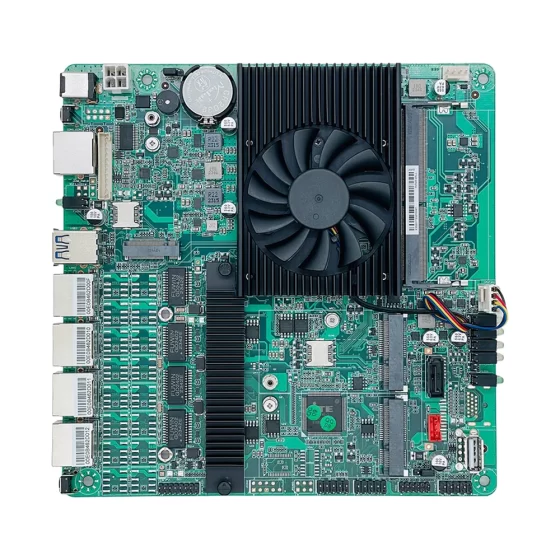
Multi-LAN Network Design
Multiple LAN ports help separate different traffic paths.
A predictive maintenance platform may use separate networks for:
- Sensor network
- PLC network
- Machine network
- Factory IT network
- Industrial IoT network
- Remote maintenance network
- Management network
- Cloud uplink
Network separation improves stability, security, and traffic organization.
It also helps prevent high-volume sensor data from interfering with control or factory communication.
Rugged and Fanless Design
Predictive maintenance systems are often placed near equipment.
Fanless industrial computers reduce dust intake and remove one common mechanical failure point.
Rugged enclosures help protect against vibration, cable stress, cabinet installation impact, and continuous operation.
Thermal design should still be reviewed carefully, especially when the system handles continuous data acquisition, analytics, local storage writes, and remote communication.
Secure Remote Diagnostics
Maintenance teams often need remote access to review data, update analytics settings, inspect logs, and troubleshoot equipment issues.
Secure remote access should include:
- User authentication
- VPN or secure tunnel support
- Access permissions
- Session logging
- Network segmentation
- Configuration backup
- Controlled update workflow
- Emergency access procedures
This supports efficient maintenance while protecting industrial networks.
Long Lifecycle Availability
Predictive maintenance systems may remain in service for many years.
Consistent hardware helps maintain software images, data acquisition drivers, sensor interfaces, analytics models, spare parts, and validation procedures.
Long lifecycle availability is important for manufacturers, system integrators, and OEM monitoring solution providers.

Predictive Maintenance Computer Solution Architecture
Deployment Scenarios
Motor Health Monitoring
Motors are widely used in factories, utilities, HVAC systems, conveyors, and production equipment.
A predictive maintenance computer can collect vibration, current, temperature, and runtime data.
It can detect abnormal trends and send maintenance alerts to local dashboards or central systems.
Pump and Compressor Monitoring
Pumps and compressors are critical assets in manufacturing, water systems, energy facilities, and process industries.
An embedded computer can monitor pressure, flow, temperature, vibration, and operating cycles.
This helps maintenance teams detect early signs of wear, imbalance, leakage, or abnormal load.
Conveyor System Monitoring
Conveyors operate continuously in factories and warehouses.
A predictive maintenance platform can collect motor status, belt speed, vibration, current, load, and fault signals.
This supports early detection of mechanical problems and reduces unexpected stoppages.
CNC and Machine Tool Monitoring
Machine tools require high uptime and precision.
A predictive maintenance computer can monitor spindle vibration, motor current, temperature, axis behavior, alarms, and cycle data.
This helps identify wear patterns and supports planned maintenance.
Robot and Automation Equipment Monitoring
Robots and automated systems generate useful health data.
The platform can collect motor data, joint status, error logs, cycle counts, tool status, and environmental information.
This helps improve robotic workcell reliability.
Energy and Utility Asset Monitoring
Utility systems often include pumps, motors, inverters, fans, batteries, and distributed field equipment.
An industrial computer can collect equipment health data locally and send structured information to monitoring platforms.
This supports remote predictive maintenance.
HVAC and Facility Equipment Monitoring
Large facilities use chillers, fans, pumps, compressors, and HVAC equipment.
An embedded computer can monitor operating conditions and detect abnormal trends.
This supports facility maintenance and energy efficiency.
OEM Predictive Maintenance Appliance
Machine builders and system integrators can build custom predictive maintenance appliances using industrial computers or embedded boards.
The platform can support sensor connectivity, local analytics, data storage, remote access, and integration with customer systems.
Business Benefits
Reduced Unplanned Downtime
Predictive maintenance helps detect early signs of equipment problems.
By monitoring vibration, temperature, current, pressure, and runtime data, maintenance teams can respond before failures cause production stoppages.
This helps improve equipment availability.
Better Maintenance Planning
Condition-based data helps maintenance teams plan service activities more effectively.
Instead of relying only on fixed schedules, teams can prioritize equipment based on actual operating condition.
This improves resource allocation and reduces unnecessary maintenance.
Improved Equipment Visibility
A predictive maintenance computer collects machine health data and turns it into usable information.
Operators can review trends, alarms, diagnostics, and equipment status from local dashboards, SCADA systems, or cloud platforms.
Better visibility supports faster decision-making.
Lower Data Transfer Load
Edge processing reduces the need to upload every raw signal.
The computer can calculate useful features locally and send selected events, summaries, and alerts.
This reduces bandwidth usage and improves response time.
Stronger Production Reliability
Industrial computers provide rugged hardware for continuous equipment monitoring.
Fanless design options, reliable storage, stable power input, secure mounting, and long lifecycle availability help reduce maintenance system failures.
This supports long-term monitoring reliability.
Scalable Predictive Maintenance Deployment
A standardized predictive maintenance computer platform makes it easier to deploy monitoring across many machines, lines, and sites.
Consistent hardware simplifies software images, sensor integration, configuration templates, spare parts planning, and lifecycle management.
This supports scalable smart maintenance programs.
Why CoreIPC
CoreIPC provides industrial computing platforms for industrial IoT, edge AI, industrial automation, machine vision, energy management, and embedded system integration. For predictive maintenance computer applications, CoreIPC focuses on reliable industrial computer hardware, embedded computer solutions, flexible I/O, multi-LAN configurations, compact system design, fanless deployment options, local storage capability, and OEM/ODM customization support. CoreIPC helps system integrators, machine builders, and manufacturers select computing platforms that match real deployment requirements, including sensor count, data workload, analytics needs, storage design, mounting methods, power input, thermal conditions, and lifecycle planning.
Frequently Asked Questions
1. What is a predictive maintenance computer?
A predictive maintenance computer is an industrial computing platform used to collect and process equipment condition data.
It may monitor vibration, temperature, current, pressure, flow, runtime, alarms, and machine status. It can process data locally, detect abnormal trends, store records, and send maintenance information to SCADA, MES, CMMS, cloud platforms, or local dashboards.
2. Why use an industrial computer for predictive maintenance?
An industrial computer provides rugged hardware and flexible connectivity for machine-side deployment.
It can support multiple LAN ports, serial communication, USB, GPIO, reliable storage, fanless operation, industrial mounting, stable power input, and long lifecycle availability. These features make it suitable for continuous equipment monitoring near production machines.
3. How is an embedded computer used in predictive maintenance?
An embedded computer can be installed inside a control cabinet, machine enclosure, utility room, or remote monitoring station.
It can collect sensor data, process equipment signals, store records, buffer data, run analytics, and forward structured information to maintenance or industrial IoT platforms.
4. What equipment can be monitored?
Predictive maintenance systems can monitor motors, pumps, compressors, conveyors, fans, gearboxes, CNC machines, robots, HVAC systems, production machines, utility equipment, and automation systems.
The exact equipment support depends on sensors, data acquisition methods, software, and integration requirements.
5. What sensor data is commonly used?
Common data includes vibration, temperature, motor current, pressure, flow, acoustic signals, speed, runtime, cycle counts, alarms, PLC values, and energy consumption.
Different equipment types require different sensor strategies.
6. Why is local storage important for predictive maintenance?
Local storage helps preserve data during network interruptions.
The computer can continue collecting sensor records, alarms, trends, and diagnostic data locally. When communication recovers, buffered records can be uploaded to central systems.
Storage is also useful for long-term trend analysis and troubleshooting.
7. Can predictive maintenance computers support edge AI?
Yes. Some predictive maintenance computers can run edge AI or machine learning models for anomaly detection, fault classification, or equipment health scoring.
The hardware should be selected according to model size, inference frequency, data volume, and thermal conditions.
8. Why are multiple LAN ports useful?
Multiple LAN ports help separate sensor networks, machine networks, PLC networks, factory IT, industrial IoT, remote maintenance, and management traffic.
This improves security, traffic organization, and system stability.
9. What hardware features matter for predictive maintenance platforms?
Important features include sufficient CPU performance, reliable memory, multiple LAN ports, USB, RS232, RS485, GPIO, digital I/O, SSD or NVMe storage, rugged enclosure, fanless design, industrial power input, M.2, PCIe, and expansion options.
The final configuration should match sensor count, data workload, analytics needs, and installation environment.
10. What should be tested before deployment?
Before deployment, the platform should be tested with real sensors, PLCs, data acquisition devices, network topology, data rates, analytics workload, storage behavior, and long-running operation.
Thermal stability, vibration conditions, communication recovery, remote access workflow, and integration with SCADA, MES, CMMS, or cloud platforms should also be validated.
Conclusion
A predictive maintenance computer is a practical foundation for smart equipment monitoring, condition-based maintenance, vibration analysis, edge analytics, anomaly detection, remote diagnostics, local data storage, and industrial IoT integration.
By placing an industrial computer or embedded computer near machines, manufacturers and system integrators can collect data from motors, pumps, compressors, conveyors, robots, CNC machines, sensors, PLCs, drives, meters, and utility equipment through reliable and controlled communication paths.
The right predictive maintenance computer should be selected according to real deployment requirements, including sensor count, data rate, analytics workload, storage retention, LAN port design, serial communication, edge AI needs, mounting method, power input, vibration environment, thermal conditions, operating system support, and lifecycle planning.
CoreIPC supports predictive maintenance computer projects with industrial computing platforms designed for practical machine-side, cabinet, utility, factory, and OEM deployment. With the right hardware foundation, industrial operators and equipment builders can build reliable, scalable, and data-driven maintenance systems.
Contact Us
Looking for an industrial computer, embedded computer, or edge platform for predictive maintenance deployment?
Contact CoreIPC to discuss your project requirements, including sensor interfaces, data workload, vibration monitoring, analytics needs, LAN port configuration, storage design, mounting method, power input, operating environment, lifecycle needs, and OEM/ODM customization options.