CoreIPC工业计算解决方案

物流分拣视觉平台: 用于自动包裹识别的物流分拣视觉计算机
执行摘要
A logistics sorting vision platform provides the industrial computing foundation for automated parcel identification, 条码识别, 尺寸检查, 标签验证, 路由控制, 现代物流环境中的分拣数据集成.
在仓库里, 配送中心, 电子商务履行中心, 和包裹枢纽, 分拣系统必须快速准确地处理大量物品. 包裹的尺寸可能有所不同, 形状, 标签位置, 表面状况, 和移动速度. 可靠的物流分拣视觉系统有助于识别每件物品, 验证其信息, 并将分拣结果发送至自动化设备和仓库管理系统.
工业计算机或嵌入式计算机作为本地视觉处理平台. 它连接相机, 条形码阅读器, 照明系统, 传感器, 输送机, PLC, 排序机制, 称重系统, 以及工厂或仓库网络.
与标准商用 PC 相比, 工业计算机更适合连续的物流作业. They provide stable image acquisition, 灵活的输入/输出, 坚固耐用的设计, 可靠的网络, 无风扇选项, 和长生命周期支持.
For logistics automation integrators, warehouse operators, and OEM sorting equipment builders, selecting the right industrial computing platform affects sorting accuracy, 系统正常运行时间, 可追溯性, 和长期可维护性.
This article explains how logistics sorting vision systems work, 实际部署中会遇到哪些挑战, 解决方案架构的结构如何, and which hardware features matter most when selecting an industrial computer for logistics sorting vision applications.
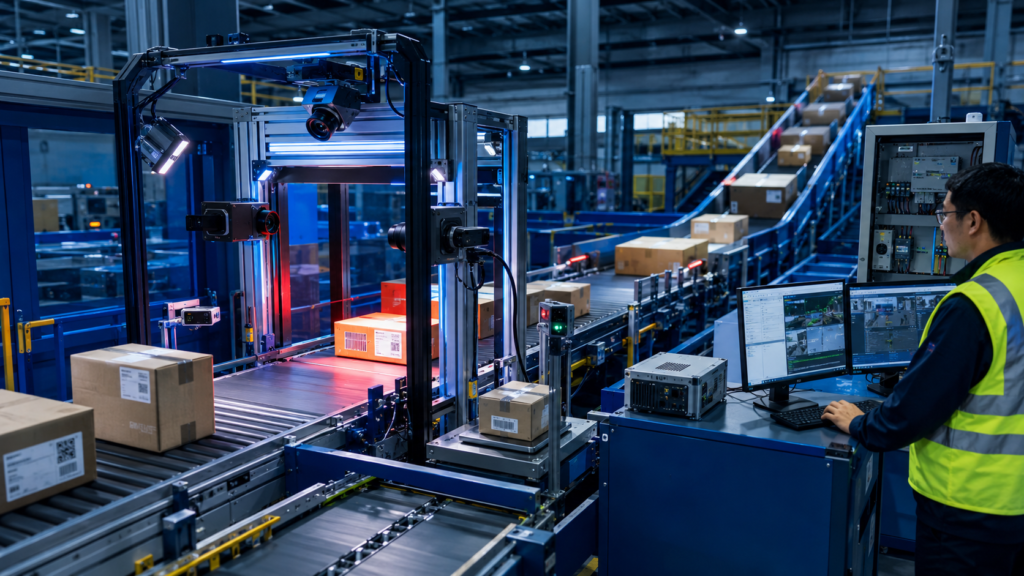
Industrial computers process parcel images and barcode data for automated identification and sorting.
行业概况
Logistics Sorting Is Becoming More Automated
Modern logistics operations depend on speed, accuracy, and real-time data.
E-commerce growth, same-day delivery expectations, and complex supply chains have increased the need for automated sorting systems. Manual sorting is difficult to scale because it is labor-intensive, error-prone, and limited by operator speed.
Logistics sorting vision systems can support:
- Parcel barcode recognition
- QR code and label reading
- Package dimension checking
- Label position verification
- Address label inspection
- Sorting route confirmation
- Package presence detection
- Conveyor flow monitoring
- Carton and bag identification
- Sorting error reduction
- WMS and tracking data integration
A reliable logistics sorting vision computer helps convert visual data into actionable sorting decisions.
Why Vision Systems Are Used in Logistics Sorting
A logistics sorting system must identify packages quickly while they move on conveyors.
Traditional barcode scanners can work well when labels are clean and correctly positioned. 然而, real logistics environments are more complex. Labels may be wrinkled, tilted, partially damaged, poorly printed, or placed on different sides of the package.
Vision systems provide more flexibility because they can capture a wider field of view and process image data from multiple angles.
A logistics sorting vision platform can inspect labels, 读取代码, verify package orientation, check package condition, and support automated routing decisions.
工业计算是本地处理层
Logistics sorting requires local processing near conveyors and scanning stations.
Sending every image to a remote server may increase latency and network load. A local industrial computer can process images close to the sorting line, 与 PLC 通信, and send sorting decisions quickly.
Embedded computers are useful when the system must be installed inside compact scanning tunnels, sorting machines, 控制柜, or OEM logistics equipment.
Industrial computers provide the reliability and interface flexibility needed for continuous warehouse and distribution center operation.

Mixed packages, label variation, conveyor speed, camera coverage, and trigger timing affect sorting reliability.
主要挑战
High Package Volume and Fast Conveyor Speed
Logistics sorting systems often operate at high speed.
Packages may move continuously through scanning tunnels, conveyor junctions, diverters, or automated sorting lanes. The vision system must capture images, process code information, and send sorting results before the package reaches the decision point.
重要的性能因素包括:
- 输送速度
- 相机分辨率
- 摄像头数量
- 条码识别速度
- Image processing workload
- 触发时机
- Sorting mechanism response time
- WMS communication latency
The logistics sorting vision computer must provide stable sustained performance under continuous workload.
Package Shape and Label Variation
Packages are not uniform.
A sorting system may process cartons, envelopes, poly mailers, bags, tubes, 托盘, irregular packages, and returned goods. Labels can appear on different sides, at different angles, or on uneven surfaces.
Common label and package challenges include:
- 皱纹标签
- Torn labels
- 低对比度打印
- Curved or uneven surfaces
- Reflective tape or film
- Damaged cartons
- Dirty package surfaces
- Multiple barcodes on one package
- Incorrect label placement
- Fast-moving items
The vision platform must handle this variation while maintaining sorting accuracy.
Multi-Camera Image Acquisition
Logistics sorting often requires multiple cameras.
A single top camera may not read side labels or tilted packages. Many sorting systems use top, side, and angled cameras to increase read rate.
This creates higher bandwidth and synchronization requirements.
The industrial computer must support enough camera interfaces, network bandwidth, 加工性能, and storage capacity for the actual camera configuration.
Integration with Sorting Equipment
Vision results must be connected with sorting action.
The computer may need to communicate with PLCs, conveyor controllers, diverters, 有点, 称重系统, 标签粘贴器, 警报, and warehouse management systems.
A practical logistics sorting vision platform may need:
- 局域网
- USB
- RS232
- RS485
- 通用输入输出接口
- 数字输入
- 数字输出
- Multiple display outputs
- 扩展接口
Without reliable industrial I/O, sorting decisions may not reach the equipment at the right time.
持续运行和维护
Logistics facilities may operate for long hours with limited downtime.
Vision computers may be installed near conveyors, scanning tunnels, 有点, 控制柜, 或仓库自动化设备. 这些位置可能含有灰尘, 振动, 电缆运动, 热, 电噪声, and continuous mechanical activity.
A hardware failure can stop barcode recognition, delay sorting, or create routing errors.
Industrial-grade computing hardware helps reduce this risk and supports long-term system stability.

Industrial computers connect sorting cameras, 输送机, PLC, diverters, 仓库软件, and parcel tracking systems.
Logistics Sorting Vision Solution Architecture
图像采集层
The image acquisition layer captures visual data from parcels, 标签, 条形码, and conveyor zones.
该层可能包括工业相机, 镜片, 照明模块, 触发传感器, 条形码阅读器, and package presence sensors.
取决于应用, 系统可能会捕获:
- Top label images
- Side label images
- Barcode images
- QR code images
- Package surface images
- Carton condition images
- Package dimension images
- Conveyor flow images
- Sorting lane images
Stable image quality is essential before recognition software can make reliable decisions.
Industrial Vision Computing Layer
The industrial vision computing layer is where the logistics sorting vision computer performs local processing.
在这一层, 工业计算机或嵌入式计算机可以:
- 接收来自相机的图像
- 运行条形码识别软件
- Process OCR or label data
- Identify package orientation
- Match package data with routing rules
- Store image records or exception images
- 与 PLC 通讯
- Send sorting results to diverters
- Upload data to WMS or databases
- Display local system status
This edge layer allows recognition and routing decisions to happen close to the sorting equipment.
自动化控制层
The automation control layer connects the vision system with physical sorting equipment.
一个PLC, 输送控制器, diverter controller, or sorting machine may send trigger signals and receive sorting results.
例如, after a package barcode is recognized, the industrial computer can send the destination lane information to the PLC. The PLC then activates the correct diverter or sorting mechanism at the right time.
This closed-loop communication is essential for high-speed sorting accuracy.
数据管理层
Sorting data must be connected with warehouse and logistics systems.
The industrial computer may send records to WMS, TMS, 企业资源计划, tracking platforms, parcel databases, or local monitoring systems.
数据可能包括:
- Tracking number
- 条形码值
- 封装ID
- Destination lane
- Sorting result
- 时间戳
- 站号
- 图像证据
- Read failure record
- 拒绝状态
这支持可追溯性, shipment tracking, 异常处理, and operational analytics.
User Interface and Monitoring Layer
Operators and engineers need a local interface for monitoring and maintenance.
工控机可连接显示器, 触摸屏, 键盘, or control panel. The interface can show live camera views, read rates, exception images, 系统状态, sorting counts, 报警信息, and network connection status.
A clear interface helps maintenance teams respond quickly when recognition performance changes.

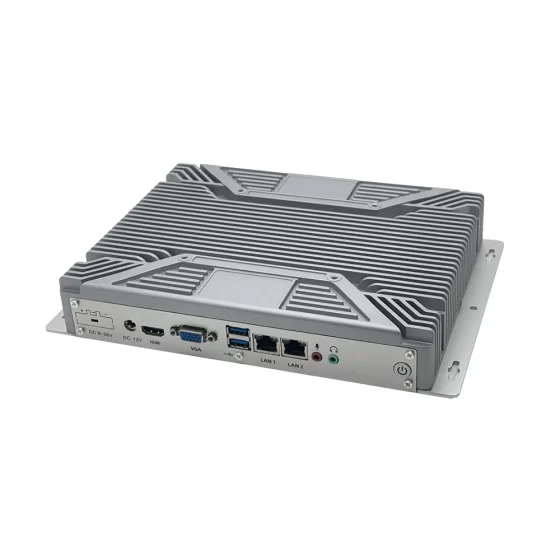
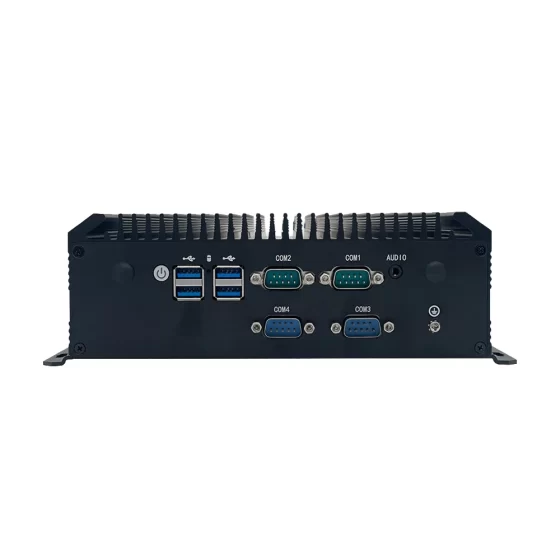
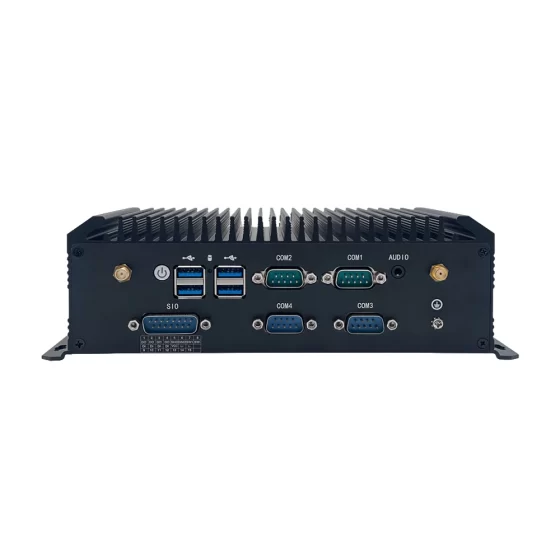
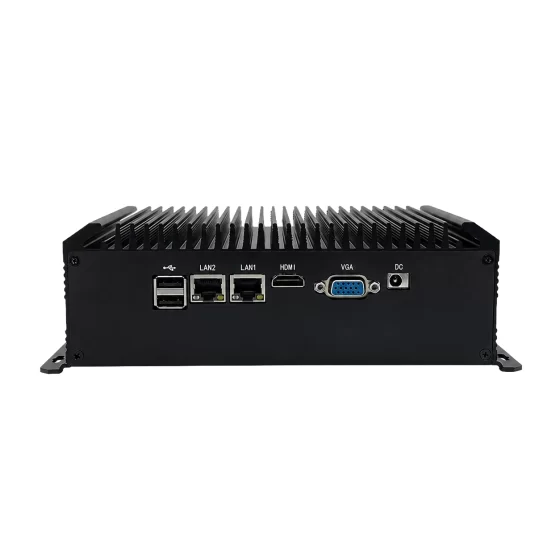
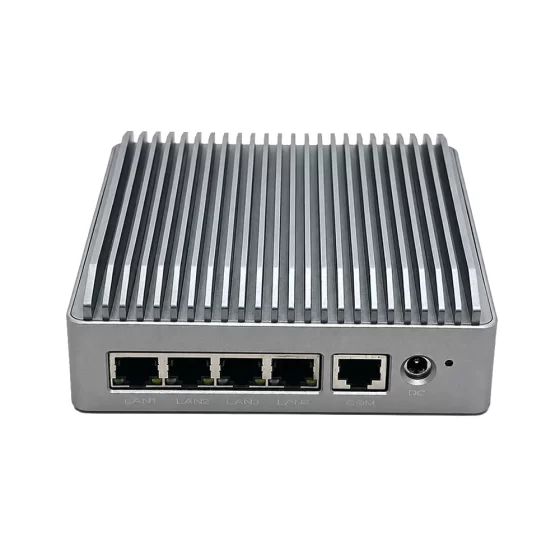
Fanless industrial computers support reliable logistics sorting vision deployment inside warehouse control cabinets.
主要特点
稳定的图像处理性能
A logistics sorting vision computer must process image data reliably under continuous operation.
Different systems require different computing levels. A single-camera barcode reading station may use a compact embedded computer. A high-speed multi-camera sorting tunnel may require a more powerful industrial PC.
选型时应考虑:
- 相机分辨率
- 摄像头数量
- 输送速度
- Barcode recognition workload
- OCR or AI model complexity
- 触发时机
- 存储工作负载
- WMS communication
- Local display requirements
稳定持续的性能比短暂的基准峰值更重要.
相机和视觉接口支持
Logistics sorting vision systems commonly use USB or Ethernet cameras.
The computer should support the required camera interfaces and bandwidth. In multi-camera systems, interface planning is especially important.
有用的硬件功能可能包括:
- USB 3.0 端口
- 多个 LAN 端口
- 2.5GbE 或更高速 LAN 选项
- M.2扩展
- PCIe扩展
- HDMI 或 DisplayPort
- 高速SSD支持
- 稳定的电源设计
Camera traffic may need to be separated from warehouse network traffic to improve system stability.
Industrial I/O for Sorting Control
The vision computer must connect with real logistics automation equipment.
重要的 I/O 选项可能包括:
- 局域网
- USB
- RS232
- RS485
- 通用输入输出接口
- 数字输入
- 数字输出
- HDMI
- 显示端口
这些接口可以支持摄像头, 传感器, PLC, 照明控制器, 条形码阅读器, 警报, diverters, 输送机, and local operator displays.
灵活的 I/O 减少了外部转换器并提高了部署可靠性.
Reliable Networking
Networking is critical in logistics sorting.
The computer may need to communicate with WMS, parcel databases, PLC, 监控仪表板, 和远程维护系统.
Multiple LAN ports can support network separation. One port may connect to camera or machine networks, while another connects to warehouse IT systems.
This improves network organization and reduces traffic conflicts.
无风扇且坚固的设计
Fanless industrial computers are useful in logistics environments.
它们减少灰尘摄入并消除一个常见的机械故障点. This is valuable in warehouse and parcel sorting areas where systems may run continuously and maintenance windows are limited.
坚固的外壳有助于保护计算机免受振动, 电缆应力, 和安装影响.
热设计仍应仔细审查, especially for multi-camera and AI-based recognition workloads.
Storage for Images and Exception Records
Logistics sorting systems may need to store images, failed-read events, exception records, 日志, and sorting data.
SSD 存储通常是首选,因为它比机械驱动器提供快速响应和更好的抗震性.
For systems that store many package images, 存储容量, 写耐力, backup methods, 设计期间应审查保留政策.

Logistics sorting vision platforms improve barcode read rates, parcel routing, 可追溯性, 异常处理, and warehouse throughput.
部署场景
Parcel Barcode Recognition
Parcel barcode recognition is one of the main logistics sorting vision applications.
The system captures images of moving packages and reads barcodes or QR codes automatically. The industrial computer processes the image and sends the tracking data to WMS or sorting control systems.
This helps automate package identification and reduce manual scanning.
Multi-Side Label Reading
Some packages may have labels on different sides.
A multi-camera vision platform can capture top, side, and angled views. The computer processes images from multiple cameras and identifies the best readable code.
This improves read rate for mixed parcel flows.
Conveyor Sorting Control
Logistics sorting vision systems can support conveyor-based routing.
After the package is identified, the computer sends sorting information to the PLC or conveyor controller. The system can then direct the package to the correct lane, chute, or sorting area.
This supports faster and more accurate distribution center operation.
Package Dimension and Shape Verification
Vision systems may support dimension checking or package shape analysis.
The computer can process camera data to estimate package size, detect abnormal shapes, or verify whether a package meets handling requirements.
This helps reduce equipment jams and supports better sorting decisions.
Label and Print Verification
Logistics operations depend on readable labels.
视觉系统可以验证标签是否存在, 可读的, and correctly positioned. It can also detect damaged labels, low-contrast printing, or multiple conflicting codes.
This helps reduce sorting exceptions and manual intervention.
E-Commerce Fulfillment Sorting
E-commerce fulfillment centers process a wide variety of package types.
A logistics sorting vision computer can help identify parcels, 验证标签, read order codes, and send routing information to warehouse systems.
This improves sorting speed and shipment accuracy.
Airport and Courier Hub Sorting
Courier hubs and airport logistics systems require high throughput and reliable package identification.
Industrial computers can support vision tunnels, conveyor sorters, barcode reading stations, and exception handling systems.
Stable computing hardware helps keep sorting systems running during high-volume operations.
OEM Sorting Equipment Integration
Equipment builders can integrate embedded computers or industrial motherboards into sorting machines, scanning tunnels, or automated conveyor systems.
计算平台可提供图像采集, 条码识别, PLC通讯, 本地存储, 人机界面显示, 和数据输出.
This helps OEMs deliver sorting systems ready for warehouse automation.
商业效益
Improved Sorting Accuracy
A logistics sorting vision system improves package identification and routing accuracy.
By reading barcodes and labels automatically, the system reduces manual scanning errors and supports faster sorting decisions.
Accurate sorting helps reduce misrouted parcels and improves delivery reliability.
Higher Throughput
Automated vision systems can process packages continuously on conveyors.
A properly selected industrial computer helps maintain stable image processing and communication performance.
This supports higher sorting throughput without depending entirely on manual labor.
Reduced Manual Intervention
Manual sorting and exception handling can slow down logistics operations.
Vision systems reduce manual work by identifying packages automatically and sending routing data to sorting equipment.
Operators can focus on exceptions, system monitoring, and maintenance instead of repetitive scanning tasks.
更强的可追溯性
Sorting data can be linked with package IDs, 时间戳, 图片, 站ID, routing decisions, and exception records.
This creates stronger traceability across warehouse and logistics workflows.
Reliable traceability supports shipment tracking, claims investigation, and operational analysis.
Faster Exception Handling
When the system detects unreadable labels, conflicting barcodes, or abnormal package conditions, it can send packages to an exception lane.
Image records and system logs help operators investigate problems faster.
This reduces delays and improves sorting process control.
Scalable Logistics Automation
A standardized industrial computing platform makes it easier to deploy vision systems across multiple sorting lines, hubs, and warehouses.
一致的硬件简化了软件映像, 司机管理, 备件计划, 维护培训, 和长期的技术支持.
This supports scalable logistics automation and smart warehouse development.
为什么选择CoreIPC
CoreIPC为机器视觉提供工业计算平台, 物流自动化, 工业物联网, 和嵌入式系统集成. For logistics sorting vision applications, CoreIPC专注于可靠的工业计算机硬件, 嵌入式计算机解决方案, 灵活的 I/O 配置, 紧凑的系统设计, 和OEM/ODM定制支持. CoreIPC帮助系统集成商, sorting equipment builders, and warehouse automation teams select computing platforms that match real deployment requirements, 包括相机接口, recognition workload, 自动化通讯, 安装方法, 电源输入, 热设计, 存储需求, 和生命周期规划.
常见问题解答
1. What is a logistics sorting vision platform?
A logistics sorting vision platform uses cameras, 灯光, 传感器, vision software, and industrial computing hardware to identify and route packages automatically.
It can read barcodes, 二维码, 标签, and package information while items move on conveyors. The system sends sorting data to PLCs, 仓库管理系统平台, 数据库, or conveyor control systems.
2. Why use an industrial computer for logistics sorting vision?
An industrial computer provides the local processing and connectivity required for high-speed sorting systems.
它可以接收相机图像, run barcode recognition software, 与 PLC 通信, store exception records, and upload data to warehouse systems. It is designed for continuous operation in logistics environments where vibration, 灰尘, and long operating hours are common.
3. How is an embedded computer used in sorting equipment?
扫描隧道内可安装嵌入式计算机, sorting machines, 控制柜, or compact conveyor systems.
它可以处理相机数据, communicate with sensors and PLCs, display local system status, and send sorting results to warehouse software. Its compact size makes it useful for OEM logistics automation equipment.
4. What interfaces are important for logistics sorting vision computers?
重要的接口可能包括USB 3.0, 多个 LAN 端口, RS232, RS485, 通用输入输出接口, 数字输入, 数字输出, HDMI, 显示端口, M.2, 和 PCIe 扩展.
相机接口对于图像采集很重要. Industrial I/O is useful for trigger sensors, PLC通讯, diverters, conveyor systems, 照明控制, 和警报.
5. Can vision systems improve barcode read rates?
是的. Vision systems can improve barcode read rates by capturing larger image areas and using multiple camera angles.
They can read labels from different package positions and help handle tilted, 皱, or partially difficult labels. 然而, performance depends on camera placement, 灯光, package speed, 软件能力, 和计算硬件.
6. Do logistics sorting systems need multiple cameras?
Many logistics sorting systems use multiple cameras to increase read coverage.
Top, side, and angled cameras can help read labels on different package surfaces. Multi-camera systems require more bandwidth and processing power, so the industrial computer must be selected carefully.
7. Is a fanless industrial computer suitable for logistics sorting?
A fanless industrial computer can be suitable for many logistics sorting applications because it reduces dust intake and removes one mechanical failure point.
然而, multi-camera recognition and AI-based inspection may require stronger thermal planning. CPU工作负载, 机柜气流, 环境温度, 在最终选择之前应审查安装位置.
8. How does logistics sorting vision support traceability?
The system can record package IDs, 条形码值, sorting decisions, 时间戳, 站ID, 图片, and exception events.
This data can be uploaded to WMS, tracking platforms, or logistics databases. Complete traceability helps operators investigate misroutes, failed reads, and shipment disputes.
9. 部署前应该测试什么?
部署前, 系统应该用真实的包进行测试, 真实标签, 实际输送速度, 相机分辨率, 照明条件, barcode software, PLC通讯, sorting timing, 存储工作负载, and network connection.
还应测试长期运行稳定性和热性能,以降低生产风险.
10. Can logistics sorting vision connect with WMS systems?
是的. Industrial computers can send sorting data to WMS platforms, tracking databases, 企业资源计划系统, 或监控仪表板.
The uploaded data may include tracking numbers, 条形码值, destination lanes, read results, 时间戳, 图片, and exception records. This helps connect physical sorting with digital logistics management.
结论
A logistics sorting vision platform is a practical foundation for automated parcel identification, 条码识别, 标签验证, sorting control, and warehouse traceability.
通过将工业计算硬件放置在靠近摄像头的位置, 传感器, 输送机, PLC, diverters, and sorting equipment, logistics operators can process package data locally and send routing decisions quickly.
应根据实际部署需求选择合适的工控机或嵌入式计算机, 包括相机接口, recognition workload, conveyor speed, 输入/输出配置, 网络设计, 存储需求, 安装方法, 电源输入, 热条件, 操作系统支持, 和生命周期规划.
CoreIPC supports logistics sorting vision projects with industrial computing platforms designed for practical warehouse and equipment deployment. 拥有正确的硬件基础, system integrators and logistics operators can improve sorting accuracy, 减少手动扫描, 加强可追溯性, and build scalable logistics automation systems.
联系我们
寻找工业计算机, 嵌入式计算机, or industrial motherboard for logistics sorting vision?
联系 CoreIPC 讨论您的项目需求, 包括相机接口, barcode recognition workload, 输入/输出配置, sorting control communication, 安装方法, 电源输入, 运行环境, 生命周期需求, 和 OEM/ODM 定制选项.