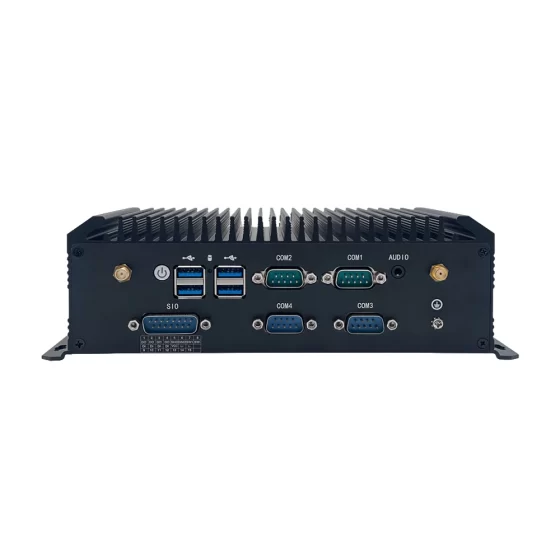
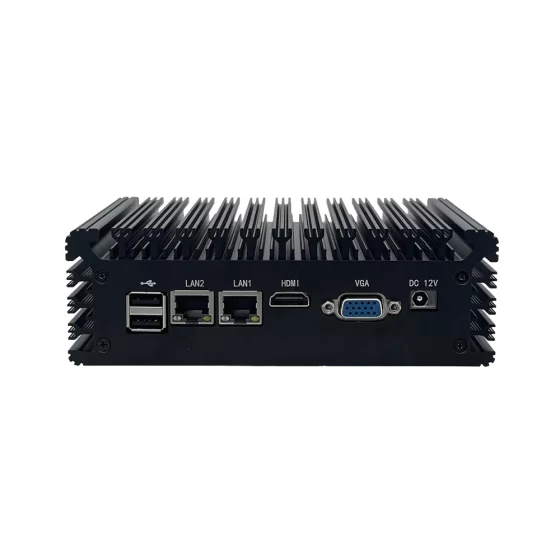
CoreIPC Industrial Computing-Lösungen

Industrie-PC für die FTS-Navigation
Zusammenfassung
Automated Guided Vehicles (AGVs) sind zu wesentlichen Bestandteilen moderner Smart Factorys geworden, Lagerhäuser, logistics centers, and manufacturing facilities. Als Industrie 4.0 initiatives accelerate worldwide, AGVs are increasingly deployed to automate material transportation, improve operational efficiency, reduce labor costs, and enhance workplace safety.
At the core of every AGV system is a reliable industrial computing platform responsible for navigation, Sensorverarbeitung, path planning, Hindernisvermeidung, fleet communication, und Entscheidungsfindung in Echtzeit. Unlike traditional consumer computing systems, AGV applications require industrial-grade reliability, Unterstützung für einen langen Lebenszyklus, robuste Konstruktion, and continuous operation capabilities.
An AGV Industrial PC provides the computing foundation necessary to support autonomous navigation technologies such as LiDAR, maschinelles Sehen, SLAM (Simultaneous Localization and Mapping), Sensorfusion, and wireless communication. These systems process large volumes of environmental data in real time while maintaining stable operation in challenging industrial environments.
This article explores AGV navigation technologies, Herausforderungen bei der Bereitstellung, architecture design, key computing requirements, and how industrial PCs enable intelligent autonomous vehicle operation across modern industrial environments.
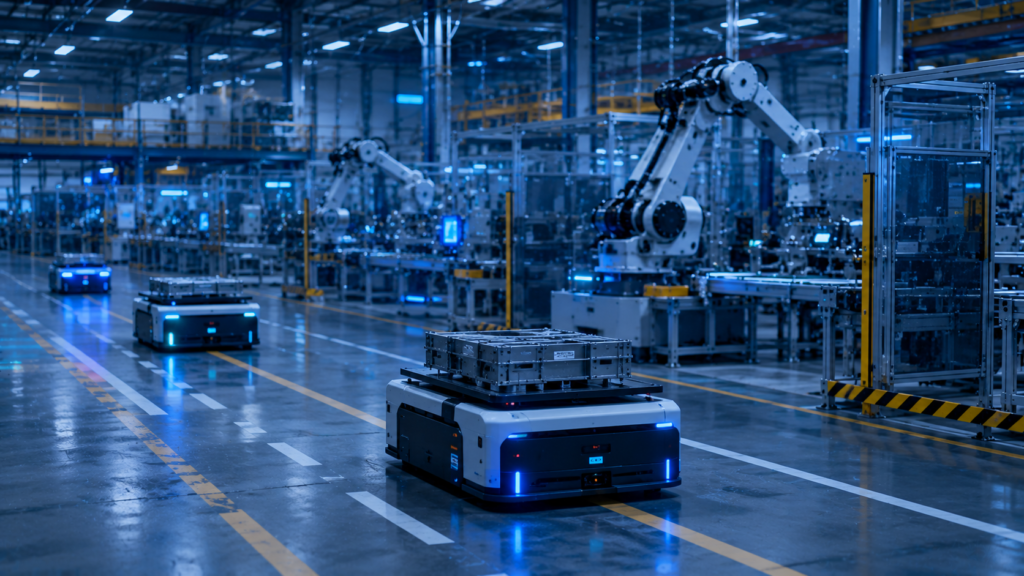
AGV industrial PCs support autonomous navigation, Flottenkoordination, and intelligent material handling in smart manufacturing and warehouse automation environments.
Branchenüberblick
The Rise of AGV Automation
Manufacturers and logistics providers increasingly rely on AGVs to automate material movement and streamline operations.
Zu den gängigen Anwendungen gehören::
- Warehouse logistics
- Manufacturing material transport
- Production line delivery
- Vertriebszentren
- Healthcare logistics
- Flughafenlogistik
- E-commerce fulfillment centers
AGVs help organizations improve efficiency while reducing operational costs.
Evolution Toward Autonomous Systems
Traditional AGVs followed fixed routes using magnetic strips or predefined paths.
Modern AGV systems now incorporate:
- LiDAR navigation
- Maschinelles Sehen
- AI algorithms
- Dynamic route planning
- Autonome Entscheidungsfindung
- Flottenmanagement
These technologies require significantly more computing power than previous generations.
Industrie 4.0 and Smart Logistics
Industrie 4.0 betont:
- Connected systems
- Real-time visibility
- Intelligente Automatisierung
- Autonomous operation
- Data-driven decision-making
AGVs have become a critical component of smart factory ecosystems.
Wichtigste Herausforderungen
Real-Time Navigation Requirements
AGVs continuously process environmental information while moving.
Navigation systems must support:
- Millisecond-level response times
- Dynamic route updates
- Real-time localization
- Kollisionsvermeidung
Computing delays can directly impact safety and productivity.
Komplexität der Sensorfusion
Modern AGVs typically utilize:
- LiDAR-Sensoren
- Industriekameras
- Ultraschallsensoren
- IMUs
- Encoder
- GPS-Systeme
Integrating and processing data from multiple sources requires powerful industrial computing platforms.
Obstacle Avoidance
Industrial facilities are dynamic environments containing:
- Personal
- Gabelstapler
- Ausrüstung
- Paletten
- Vorübergehende Hindernisse
AGVs must identify and react to changing conditions instantly.
Wireless Communication Requirements
AGVs require continuous communication with:
- Flottenmanagementsysteme
- Lagerverwaltungssysteme
- Fertigungsausführungssysteme
- Cloud-Plattformen
Reliable networking is essential.
Harsh Operating Environments
Industrial deployments may involve:
- Staub
- Vibration
- Temperaturschwankungen
- Elektromagnetische Störungen
Consumer-grade computers often cannot withstand these conditions.
Kontinuierlicher Betrieb
AGVs frequently operate:
- 24/7
- Mehrschichtumgebungen
- Mission-critical logistics operations
Reliability is a primary requirement.
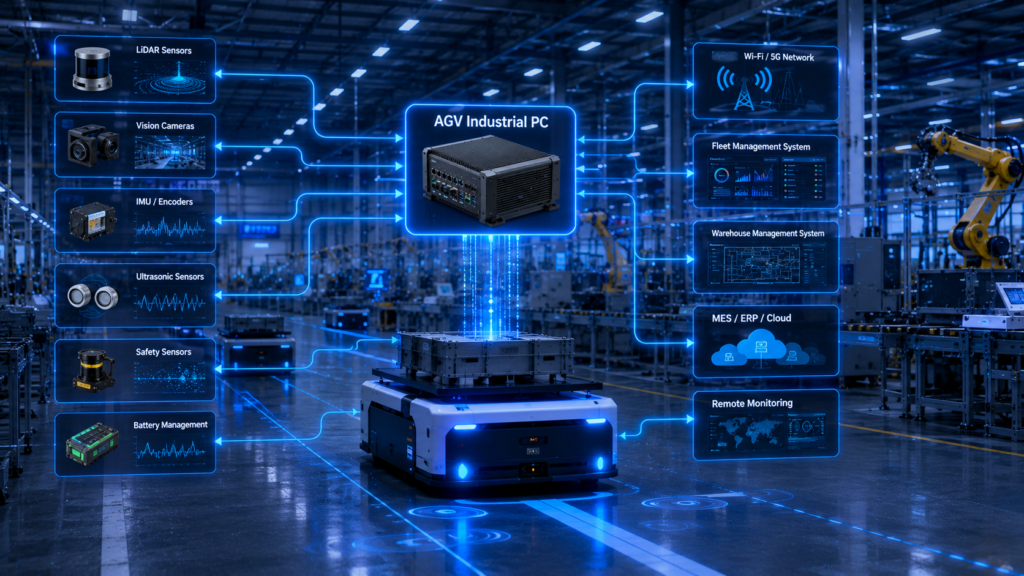
AGV industrial PC architecture integrating LiDAR, maschinelles Sehen, Sensorfusion, Flottenmanagement, and enterprise systems for autonomous vehicle navigation.
Lösungsarchitektur
AGV Navigation System Architecture
Wahrnehmungsschicht
Environmental data is collected through:
- LiDAR-Sensoren
- Stereokameras
- Tiefenkameras
- Ultraschallsensoren
- IMUs
These devices continuously monitor surroundings.
Industrielle Computerschicht
The AGV Industrial PC performs:
- Sensorfusion
- Lokalisierung
- Wegplanung
- Navigationssteuerung
- Obstacle detection
- KI-Schlussfolgerung
This layer serves as the brain of the AGV.
Bewegungssteuerungsebene
Processed navigation decisions are transmitted to:
- Motorsteuerungen
- Lenksysteme
- Sicherheitssysteme
- Vehicle actuators
for vehicle movement.
Konnektivitätsschicht
Kommunikationsprotokolle können Folgendes umfassen::
- Ethernet
- W-lan
- 5G
- MQTT
- OPC UA
These networks connect AGVs to facility infrastructure.
Verwaltungsschicht
Enterprise systems include:
- Flottenmanagementsoftware
- WMS-Plattformen
- MES-Systeme
- ERP-Systeme
providing centralized operational control.
Hauptmerkmale
1. Hochleistungsverarbeitung
AGV Industrial PCs provide the computational resources required for:
- Navigation algorithms
- Sensor processing
- Real-time control
2. Sensor Fusion Support
Industrial computers integrate information from multiple sensors to improve navigation accuracy.
3. LiDAR Processing
LiDAR systems generate large amounts of environmental data that require real-time analysis.
4. Fähigkeit zur maschinellen Bildverarbeitung
AGVs increasingly utilize cameras for:
- Navigation
- Objekterkennung
- Sicherheitsüberwachung
- Barcode-Lesung
5. Entscheidungsfindung in Echtzeit
Industrial PCs enable immediate responses to changing environmental conditions.
6. Drahtlose Konnektivität
Support for Wi-Fi and industrial networking enables seamless fleet communication.
7. Lüfterlose Zuverlässigkeit
Fanless designs improve reliability by eliminating moving parts and reducing maintenance requirements.
8. Kompaktes eingebettetes Design
Compact form factors simplify installation inside AGV chassis.
9. Langer Lebenszyklus-Support
Industrial deployments require stable hardware availability and lifecycle management.
Empfohlene CoreIPC-Produkte
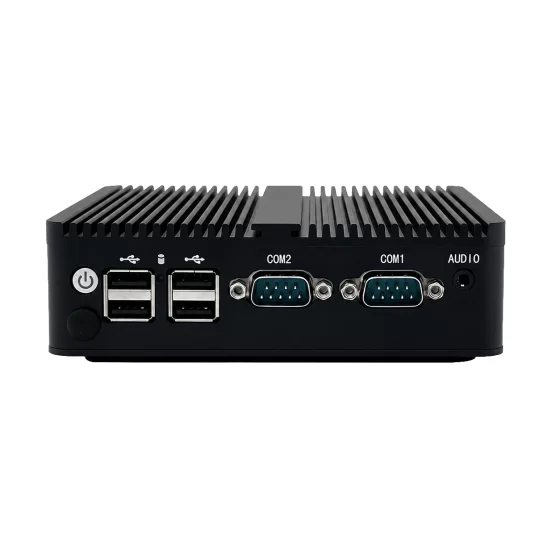
Eingebettete Computer
Ideal für:
- Compact AGV systems
- Mobile Robotik
- Space-constrained installations
Vorteile:
- Geringer Platzbedarf
- Geringer Stromverbrauch
- Flexible Integration
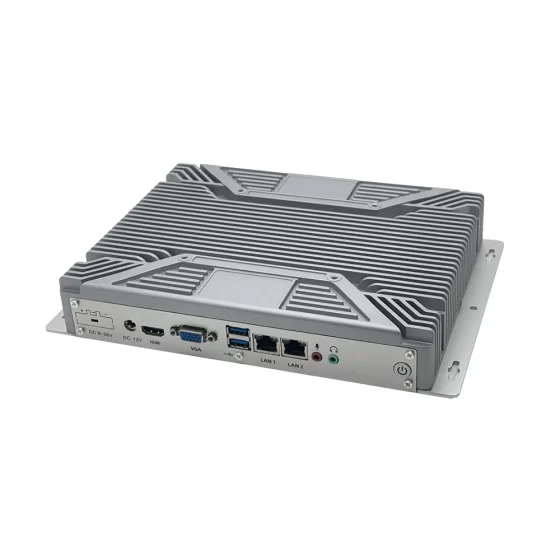
Lüfterlose Industrie-PCs
Ideal für:
- AGV navigation systems
- Autonome Fahrzeuge
- Mobile automation
Vorteile:
- Robuste Konstruktion
- Hohe Zuverlässigkeit
- Wartungsfreier Betrieb
Edge-KI-Computer
Ideal für:
- Vision-guided navigation
- Objekterkennung
- AI-powered robotics
Vorteile:
- GPU-Beschleunigung
- AI inference capability
- Echtzeitanalysen
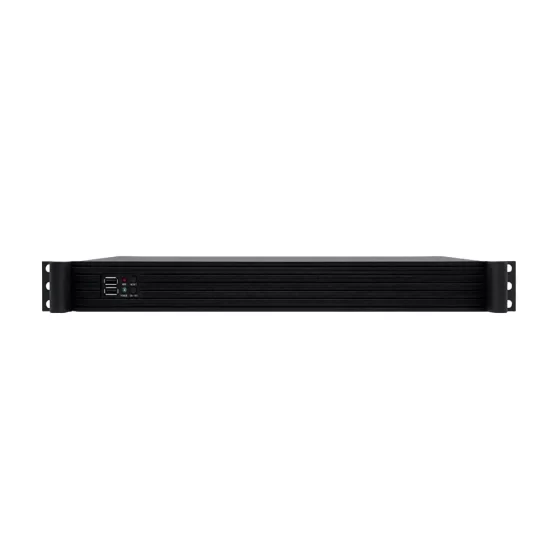
Industrie-PCs
Ideal für:
- High-performance AGV platforms
- Multi-sensor systems
- Complex navigation applications
Vorteile:
- Erweiterungsfähigkeit
- Verarbeitungsleistung
- Umfangreiche Konnektivität
Mini-ITX-Motherboards
Ideal für:
- Custom AGV controller development
- Robotik-OEM-Projekte
Vorteile:
- Flexibles Systemdesign
- Langer Lebenszyklus-Support
Bereitstellungsszenarien
Intelligente Fertigung
AGVs transport:
- Komponenten
- Rohstoffe
- Fertige Produkte
between production areas.
Lagerautomatisierung
AGVs automate storage and retrieval processes to improve logistics efficiency.
E-Commerce-Fulfillment
Distribution centers use AGVs for:
- Kommissionierung
- Lagerbewegung
- Package transportation
Gesundheitslogistik
Hospitals deploy AGVs to transport:
- Medizinische Versorgung
- Laborproben
- Arzneimittel
Flughafenbetrieb
AGVs support:
- Gepäckabfertigung
- Gerätetransport
- Ground logistics
Smart Logistics Centers
AGVs improve material flow and operational visibility.
Geschäftsvorteile
Erhöhte Produktivität
Automated transportation reduces manual handling activities.
Reduzierte Arbeitskosten
AGVs help address labor shortages while lowering operational expenses.
Verbesserte Sicherheit
Autonomous navigation minimizes risks associated with manual transportation.
Bessere operative Transparenz
Fleet management systems provide real-time monitoring capabilities.
Higher Scalability
Organizations can expand AGV fleets as business requirements grow.
Enhanced Efficiency
Optimized routing improves material movement and facility throughput.
Warum CoreIPC
CoreIPC bietet industrielle Computerplattformen für die Robotik, AGV navigation, autonomous systems, und intelligente Automatisierungsanwendungen.
Zu den CoreIPC-Funktionen gehören::
- Industrielle Computerentwicklung
- Design eingebetteter Systeme
- OEM-Fertigung
- ODM-Anpassung
- Langer Lebenszyklus-Support
- Zuverlässigkeit auf Industrieniveau
- Globale Bereitstellungserfahrung
Whether building AGV navigation systems, warehouse automation solutions, or autonomous mobile robots, CoreIPC delivers reliable computing platforms for demanding mobile robotics environments.
Häufig gestellte Fragen
1. What is an AGV Industrial PC?
An AGV Industrial PC is an industrial-grade computing platform used for autonomous navigation, Sensorverarbeitung, fleet communication, and real-time decision-making within AGV systems.
2. Why do AGVs require industrial computers?
Industriecomputer sorgen für die Zuverlässigkeit, Leistung, and environmental durability required for continuous operation.
3. What sensors are commonly used in AGVs?
LiDAR, Kameras, Ultraschallsensoren, IMUs, Encoder, and GPS systems are commonly deployed.
4. What is sensor fusion?
Sensor fusion combines information from multiple sensors to improve navigation accuracy and environmental awareness.
5. Can AGV systems use machine vision?
Ja. Machine vision is widely used for navigation, Objekterkennung, and safety applications.
6. What role does LiDAR play?
LiDAR provides precise environmental mapping and obstacle detection capabilities.
7. Are fanless industrial PCs suitable for AGVs?
Ja. Fanless systems improve reliability and reduce maintenance requirements.
8. Can AGV Industrial PCs support AI applications?
Ja. Many AGV systems use AI for navigation, Objekterkennung, and route optimization.
9. How do AGVs communicate with management systems?
Through Wi-Fi, Ethernet, MQTT, OPC UA, and other industrial communication technologies.
10. What industries use AGVs?
Herstellung, Logistik, Gesundheitspflege, Flughäfen, Lagerung, and e-commerce industries commonly deploy AGVs.
11. Was ist SLAM??
SLAM steht für Simultaneous Localization and Mapping, enabling AGVs to navigate and map environments simultaneously.
12. What should be considered when selecting an AGV Industrial PC?
Verarbeitungsleistung, Konnektivität, Zuverlässigkeit, Erweiterungsfähigkeit, Lebenszyklusunterstützung, and environmental durability are key considerations.
Abschluss
AGV Industrial PCs serve as the intelligent control center of modern autonomous vehicle systems. By supporting sensor fusion, LiDAR processing, maschinelles Sehen, wireless communication, and real-time navigation, these industrial computing platforms enable AGVs to operate safely and efficiently in dynamic industrial environments. As automation continues to expand across manufacturing, Logistik, Gesundheitspflege, and transportation sectors, selecting a reliable industrial computing platform becomes increasingly critical for successful AGV deployments.
Kontaktieren Sie uns
Looking for an AGV Industrial PC solution?
CoreIPC bietet industrielle Computerplattformen für:
- AGV-Navigation
- AMR Systems
- Robotik
- Lagerautomatisierung
- Maschinelles Sehen
- Edge-KI
- Intelligente Fertigung
- OEM-Projekte
- ODM-Projekte
Contact CoreIPC today to discuss your AGV navigation requirements and identify the ideal industrial computing platform for your autonomous vehicle project.