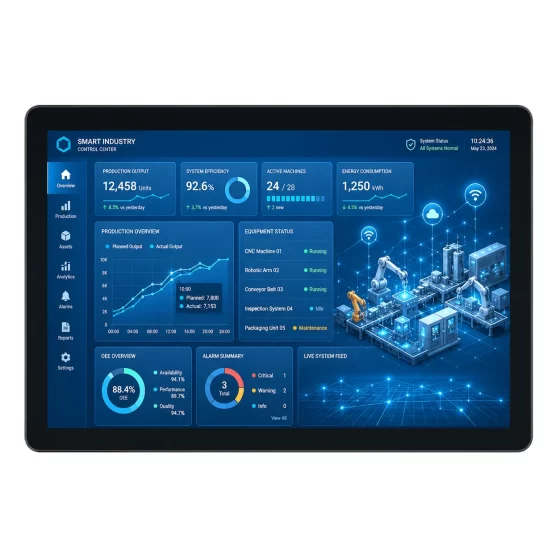
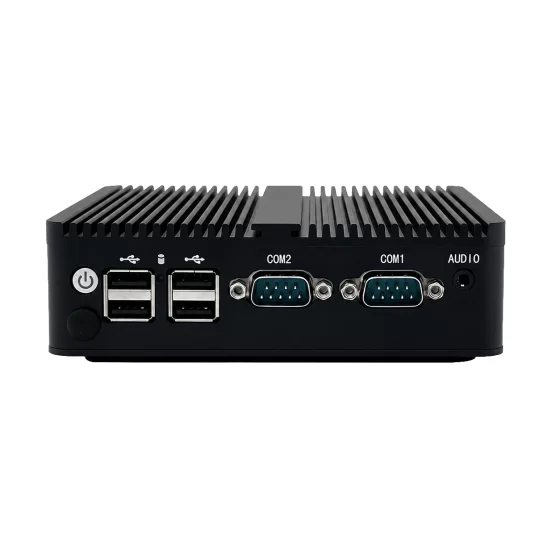
CoreIPC Industrial Computing-Lösungen

Roboterarm-Controller IPC für industrielle Automatisierung und intelligente Robotik
1. Zusammenfassung
Der Industriecomputer mit Roboterarmsteuerung spielt in modernen automatisierten Fertigungsumgebungen eine entscheidende Rolle, Ermöglicht eine Echtzeit-Bewegungssteuerung, Mehrachssynchronisation, Bildverarbeitungsintegration, und deterministisches Edge Computing. Da Robotersysteme intelligenter und vernetzter werden, Traditionelle SPS-basierte Steuerungsarchitekturen werden zunehmend durch Hochleistungssteuerungsarchitekturen ersetzt Industriecomputer und eingebettete Computer ist in der Lage, komplexe Steueralgorithmen und Hochgeschwindigkeitsdatenverarbeitung zu verarbeiten.
In diesem Artikel wird untersucht, wie ein Industriecomputer zur Roboterarmsteuerung erhöht die Präzision, Flexibilität, und Skalierbarkeit in Robotikanwendungen. Außerdem wird die Systemarchitektur erklärt, Schlüsselherausforderungen in der Roboterautomatisierung, und wie CoreIPC-Embedded-Computing-Plattformen zuverlässige Lösungen für industrielle Robotersteuerungssysteme bieten.
 2. Branchenüberblick
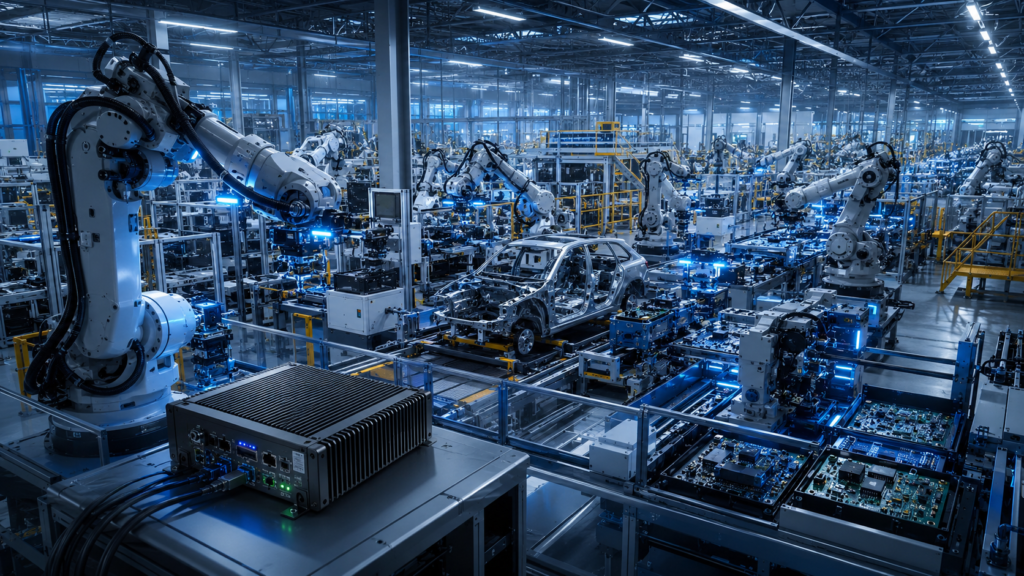
Die Industrierobotik breitet sich rasant in Branchen wie der Automobilherstellung aus, Elektronikbaugruppe, Logistik, und Präzisionsbearbeitung. Der Kern dieser Systeme ist die Roboterarm-Controller, welches Bewegungsbahnen koordiniert, Sensor-Feedback, und Sicherheitsmechanismen.
Moderne Roboterarme erfordern mehr als herkömmliche Steuereinheiten. Sie fordern:
- Bewegungsplanung in Echtzeit
- Mehrachsinterpolation
- Hochgeschwindigkeits-I/O-Verarbeitung
- Synchronisierung maschineller Bildverarbeitung
- KI-gestützte Entscheidungsfindung
Diese Entwicklung treibt den Wandel von SPS-zentrierten Steuerungssystemen hin zu industrielle computerbasierte Robotersteuerungen, insbesondere eingebettete Computer und Edge-Computing-Plattformen.
In der Regel ist ein Industriecomputer mit Roboterarmsteuerung integriert:
- CPU-Verarbeitung in Echtzeit (Integrierte Intel/AMD-Plattformen)
- Deterministische I/O-Schnittstellen
- EtherCAT / PROFINET / Ethernet/IP-Kommunikation
- GPU-Beschleunigung für visionsbasierte Robotik
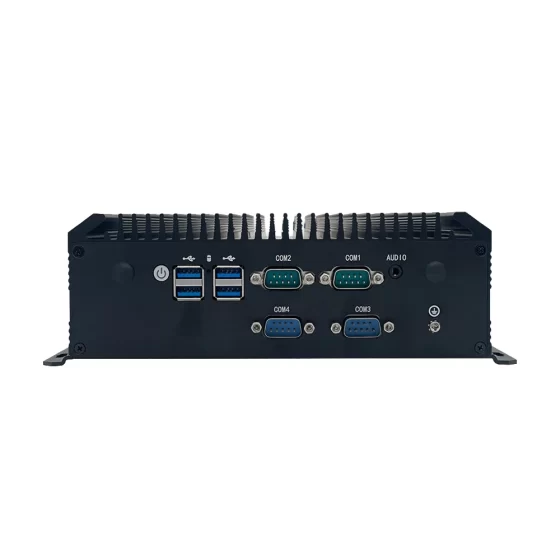
- Lüfterloses, robustes Design für Industrieumgebungen
3. Wichtigste Herausforderungen
Trotz rasanter Fortschritte, Roboterautomatisierungssysteme stehen immer noch vor mehreren technischen Herausforderungen:
3.1 Deterministische Echtzeitsteuerung
Roboterarme erfordern eine Synchronisation zwischen den Achsen im Mikrosekundenbereich. Allzweck-Computersysteme haben oft Schwierigkeiten, das deterministische Timing bei hoher Arbeitslast aufrechtzuerhalten.
3.2 Komplexität der Multiprotokoll-Kommunikation
Industrieroboter müssen mit SPS kommunizieren, Sensoren, Vision-Systeme, und MES-Plattformen, die mehrere Industrieprotokolle gleichzeitig nutzen.
3.3 Hochgeschwindigkeits-Datenverarbeitung
Bildverarbeitungs- und KI-Inspektionssysteme erzeugen große Datenmengen, die in Echtzeit ohne Latenz verarbeitet werden müssen.
3.4 Systemstabilität in rauen Umgebungen
Staub, Vibration, Temperaturschwankungen, und elektrisches Rauschen kann die Systemzuverlässigkeit in Fabrikumgebungen beeinträchtigen.
3.5 Skalierbarkeit und Integration
Hersteller benötigen modulare Systeme, die von einzelnen Roboterarmen bis hin zu Produktionslinien mit mehreren Robotern skalierbar sind.
 4. Lösungsarchitektur
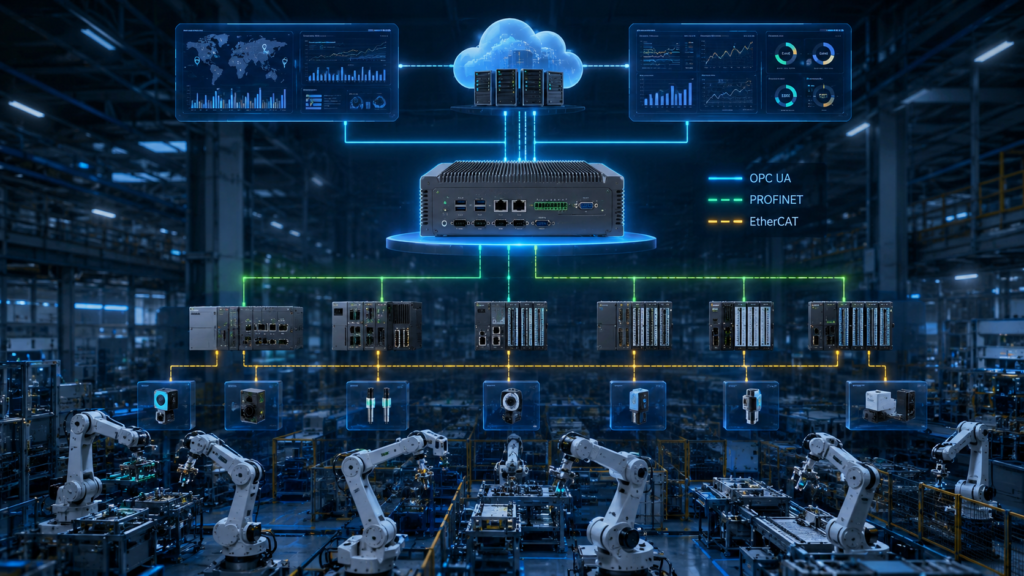
Ein moderner Roboterarmsteuerung basierend auf industrieller Computerarchitektur umfasst typischerweise eine mehrschichtige Edge-Computing-Struktur:
4.1 Kantenkontrollschicht
Im Kern steht ein eingebetteter Industriecomputer, verantwortlich für:
- Ausführung der Bewegungssteuerung
- Echtzeit-OS- oder RT-Linux-Verarbeitung
- Koordination der Servoantriebe
- Ausführung der Sicherheitslogik
4.2 Geräteschicht
Inklusive:
- Servomotoren für Roboterarme
- Autofahrer
- Encoder
- Kraftsensoren
- Sicherheitsverriegelungen
4.3 Kommunikationsschicht
Unterstützt industrielle Vernetzung:
- EtherCAT für Echtzeit-Bewegungssteuerung
- PROFINET für die Fabrikautomation
- Modbus TCP für Legacy-Integration
- OPC UA für den Datenaustausch
4.4 Intelligenzschicht
Inklusive:
- Bildverarbeitungssysteme
- KI-basierte Qualitätsprüfung
- Vorausschauende Wartungsanalysen
- Edge-KI-Beschleunigungsmodule
4.5 Wolke / MES-Schicht
Griffe:
- Produktionsüberwachung
- Datenanalyse
- Ferndiagnose
- Fabrikweite Orchestrierung
5. Hauptmerkmale
Eine Hochleistungsleistung Industriecomputer zur Roboterarmsteuerung bietet normalerweise die folgenden Funktionen:
5.1 Echtzeitverarbeitungsfähigkeit
Unterstützt die deterministische Ausführung für Bewegungssteuerung und Servosynchronisierung.
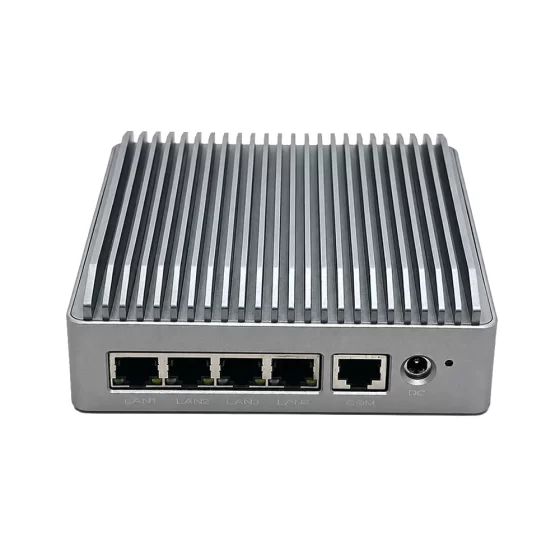
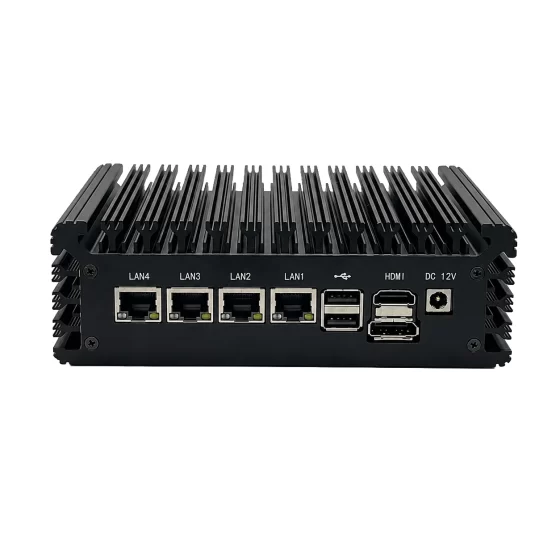
5.2 Industrielle Multi-LAN-Vernetzung
Ermöglicht die parallele Kommunikation mit SPSen, Roboter, und Bildverarbeitungssysteme.
5.3 Lüfterloses, robustes Design
Gewährleistet einen stabilen Betrieb in staubigen Umgebungen und Umgebungen mit hohen Temperaturen.
5.4 Erweiterbare I/O-Schnittstellen
Unterstützt COM-Ports, digitale I/O, CAN-Bus, und Feldbusmodule.
5.5 Unterstützung für Edge-KI-Beschleunigung
Optionale GPU- oder KI-Module ermöglichen eine intelligente Roboter-Entscheidungsfindung.
5.6 Weitspannungseingang
Gewährleistet einen stabilen Betrieb in industriellen Stromumgebungen mit Schwankungen.
 6. Bereitstellungsszenarien
6.1 Automobilbau
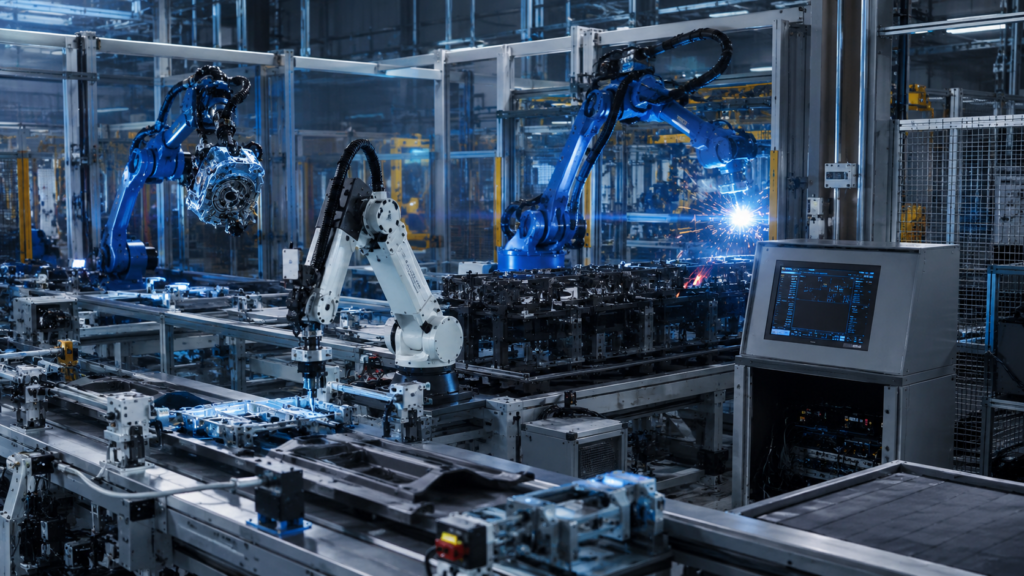
Roboterarme zum Schweißen, Malerei, und Montagelinien sind für die synchronisierte Bewegungssteuerung auf Industriecomputer angewiesen.
6.2 Elektronikmontage
Hochpräzise Pick-and-Place-Systeme erfordern eingebettete Controller für eine Genauigkeit im Mikrosekundenbereich.
6.3 Logistikautomatisierung
Roboter-Sortier- und Verpackungssysteme nutzen IPCs zur Echtzeit-Pfadplanung und Objekterkennung.
6.4 CNC- und Bearbeitungsautomatisierung
Industriecomputer koordinieren Roboterarme für die Werkzeughandhabung und Materialbeladung.
6.5 Halbleiterfertigung
Hochpräzise Roboterarme erfordern eine deterministische Steuerung und reinraumkompatible eingebettete Systeme.
7. Geschäftsvorteile
Implementierung einer Industrielle computerbasierte Roboterarmsteuerung bietet erhebliche Vorteile:
- Verbesserte Bewegungsgenauigkeit und Wiederholbarkeit
- Reduzierte Systemlatenz in Regelkreisen
- Höhere Produktionseffizienz
- Flexible Systemintegration mit Fabrikautomation
- Verbesserte Skalierbarkeit für Systeme mit mehreren Robotern
- Geringere Wartungskosten durch robustes Design
- Unterstützung für KI-gesteuerte Automatisierungs-Upgrades
8. Warum CoreIPC
Die industriellen Computing-Plattformen von CoreIPC sind speziell für anspruchsvolle Automatisierungs- und Robotikanwendungen konzipiert.
Zu den wichtigsten Vorteilen gehören::
- Industrietaugliche Embedded-Computing-Architektur, optimiert für Echtzeit-Workloads
- Lüfterloses Design gewährleistet 24/7 stabiler Betrieb
- Flexible Erweiterung für I/O, Kommunikation, und KI-Module
- Unterstützung für mehrere Industrieprotokolle, die in Robotersystemen erforderlich sind
- Robuste Zuverlässigkeit für raue Fabrikumgebungen
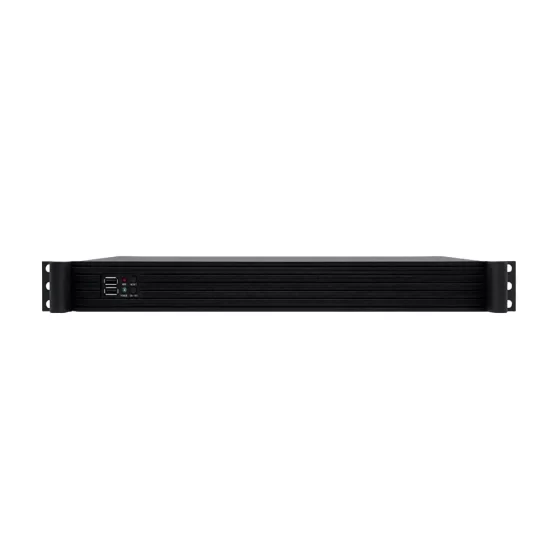
- Skalierbare Produktpalette von Edge-Controllern bis hin zu Embedded-Box-PCs
CoreIPC-Plattformen eignen sich weitgehend für die nächste Generation Roboterarmsteuerung IPC-Systeme, Ermöglicht eine nahtlose Integration zwischen Bewegungssteuerung, maschinelles Sehen, und industrielle Vernetzung.
9. Häufig gestellte Fragen (FAQ)
Q1: Was ist ein Industriecomputer mit Roboterarmsteuerung??
Ein Industriecomputer mit Roboterarmsteuerung ist ein Computersystem, das die Bewegungssteuerung von Robotern verwaltet, Sensor-Feedback, und Kommunikation in automatisierten Produktionsumgebungen, Ersetzt herkömmliche SPS-basierte Steuerungen.
Q2: Warum einen Industriecomputer anstelle einer SPS verwenden??
Industriecomputer bieten eine höhere Rechenleistung, bessere Skalierbarkeit, und Unterstützung für KI und maschinelles Sehen, wodurch sie besser für fortgeschrittene Robotikanwendungen geeignet sind.
Q3: Kann der IPC die Echtzeit-Robotersteuerung übernehmen??
Ja, mit Echtzeit-Linux- oder RTOS-Konfigurationen und deterministischen Feldbusschnittstellen wie EtherCAT, IPCs können die Bewegungssteuerung in Echtzeit übernehmen.
Q4: In welchen Branchen werden IPC-Systeme mit Roboterarmsteuerung eingesetzt??
Sie werden häufig im Automobilbau eingesetzt, Elektronikbaugruppe, Logistikautomatisierung, CNC-Bearbeitung, und Halbleiterproduktion.
F5: Wie lässt sich maschinelles Sehen in die Robotersteuerung IPC integrieren??
Bildverarbeitungssysteme senden Bildverarbeitungsdaten an den IPC, die die Bewegung des Roboterarms in Echtzeit für die Inspektion anpasst, Ausrichtung, oder Sortieraufgaben.
F6: Welche Kommunikationsprotokolle werden unterstützt??
Zu den gängigen Protokollen gehört EtherCAT, PROFINET, Modbus TCP, OPC UA, und CAN-Bus.
F7: Ist lüfterloses Design wichtig??
Ja, Das lüfterlose Design verbessert die Zuverlässigkeit, indem es das Eindringen von Staub verhindert und mechanische Ausfälle in Industrieumgebungen reduziert.
F8: Können IPC-Systeme KI-Robotik unterstützen??
Ja, Moderne IPCs können GPU- oder KI-Beschleunigungsmodule für intelligente Robotik und vorausschauende Steuerung integrieren.
10. Abschluss
Die Entwicklung der industriellen Automatisierung treibt die schnelle Einführung von voran Industriecomputer mit Roboterarmsteuerung als Kern moderner Robotiksysteme. Im Vergleich zu herkömmlichen SPS-basierten Architekturen, Industriecomputer bieten eine überragende Leistung, Flexibilität, und Intelligenz, die für die Fertigung der nächsten Generation erforderlich sind.
Mit Echtzeit-Steuerungsmöglichkeiten, Multiprotokoll-Kommunikation, und KI-Integrationspotenzial, IPC-basierte Roboterarmsteuerungen werden weltweit zur Grundlage intelligenter Fabriken.
CoreIPC liefert robuste Embedded-Computing-Plattformen, die diesen Anforderungen gerecht werden, Dies ermöglicht zuverlässige und skalierbare Roboterautomatisierungslösungen.
11. Kontaktieren Sie uns
CoreIPC bietet eingebettete Computer und Robotersteuerungsplattformen in Industriequalität für globale Automatisierungsanwendungen.
Kontaktieren Sie unser Engineering-Team, um Ihre Anforderungen an das Roboterarm-Steuerungssystem und maßgeschneiderte IPC-Lösungen zu besprechen.