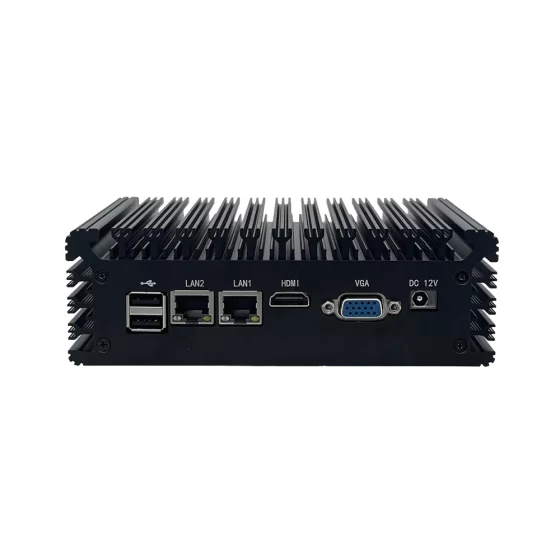
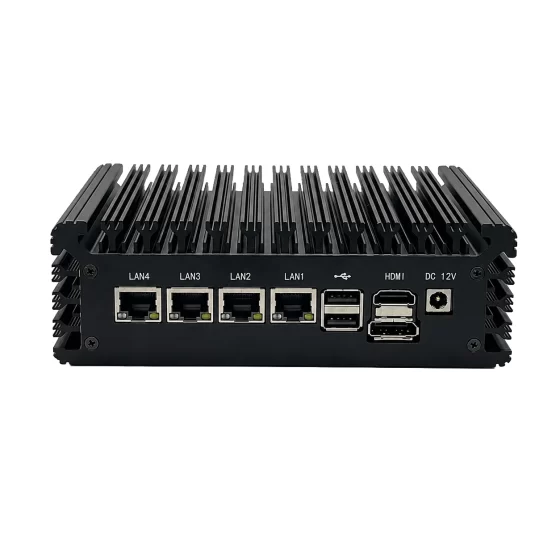
CoreIPC Industrial Computing-Lösungen

Robot Vision Edge KI-Computer: Robot Vision Computer für intelligente Automatisierung
Zusammenfassung
Ein Roboter-Vision-Computer bildet die industrielle Computergrundlage für die Roboterwahrnehmung, KI-Bildverarbeitung, Objekterkennung, visuelle Führung, Fehlererkennung, Positionierung, Inspektion, und Echtzeit-Entscheidungsfindung in automatisierten Produktionsumgebungen.
Moderne Robotersysteme verlassen sich nicht mehr nur auf feste Bewegungspfade. In smarten Fabriken, Roboter müssen zunehmend sehen, analysieren, und reagieren auf ihre Umgebung. Sie können Teile identifizieren, Objekte lokalisieren, Oberflächen prüfen, Kommissionierungsvorgänge leiten, Überprüfen Sie die Montagequalität, Unterstützung beim Bin Picking, oder mit Bildverarbeitungssystemen in Produktionslinien koordinieren.
Ein Roboter-Vision-Edge-KI-Computer, der auf einem Industriecomputer oder einem eingebetteten Computer aufgebaut ist, kann Kameradaten lokal in der Nähe des Roboters verarbeiten. Es kann KI-Inferenzmodelle ausführen, Industriekameras anschließen, Kommunikation mit Robotersteuerungen, Daten mit SPSen austauschen, und Ergebnisse an MES senden, SCADA, oder Fabriküberwachungssysteme.
Im Vergleich zu Standard-PCs, Industriecomputer eignen sich besser für den Einsatz von Robot Vision, da sie eine robuste Installation unterstützen, stabiles thermisches Design, mehrere LAN- und USB-Schnittstellen, lokaler Speicher, Erweiterungsmöglichkeiten, lüfterlose Designoptionen, und lange Verfügbarkeit über den gesamten Lebenszyklus.
In diesem Artikel wird erläutert, wie Robot-Vision-Edge-KI-Computer die intelligente Automatisierung unterstützen, welche Herausforderungen bei der Bereitstellung in realen Fabriken auftreten, wie die Lösungsarchitektur funktioniert, und welche Hardwaremerkmale bei der Auswahl eines Industriecomputers oder Embedded-Computers für Robot-Vision-Anwendungen wichtig sind.
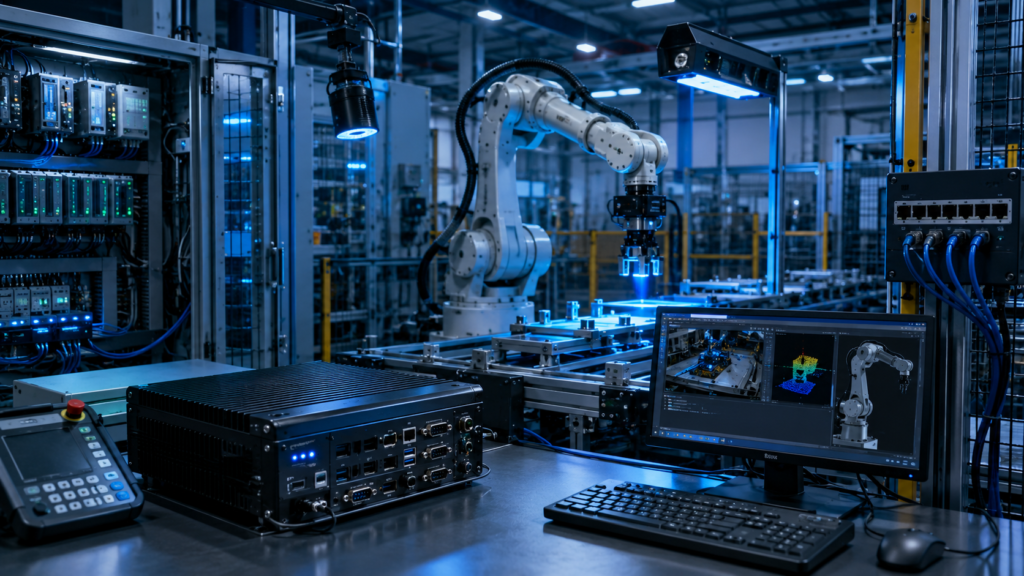
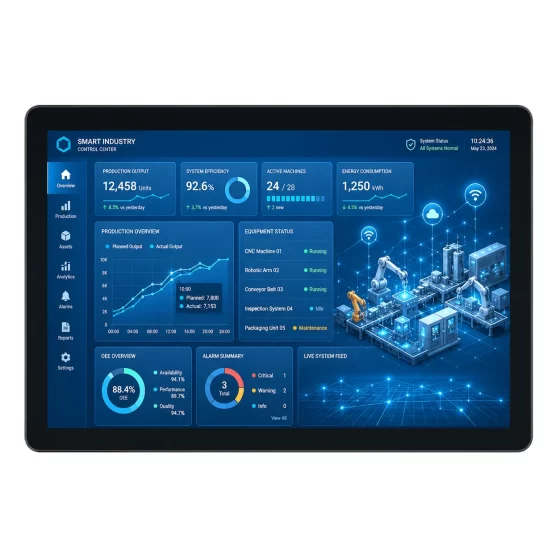
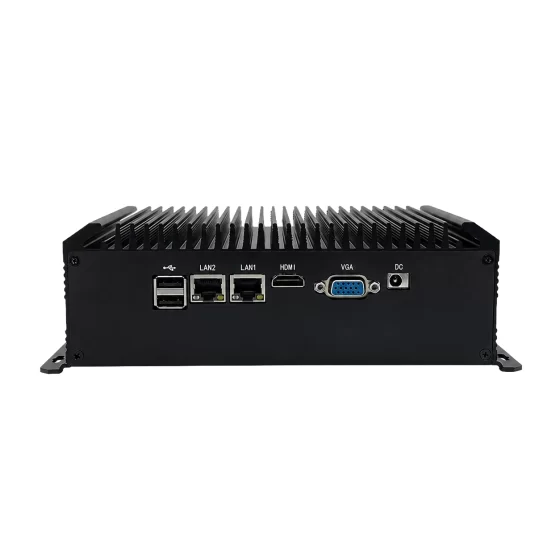
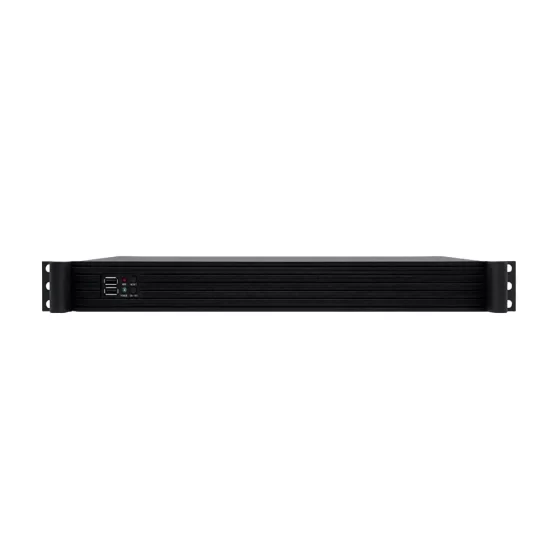
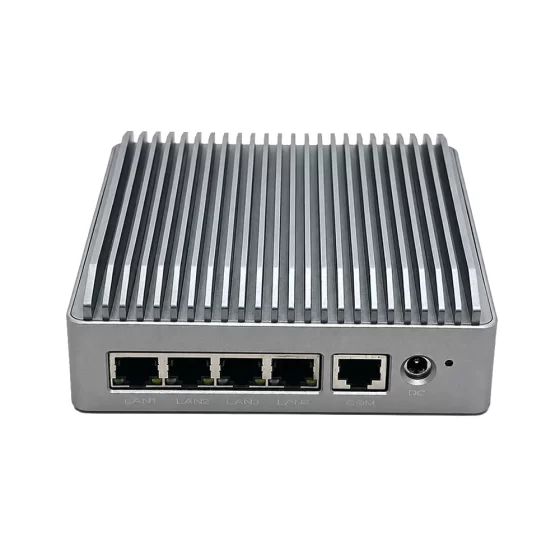
Roboter-Vision-Computer verarbeiten Kameradaten lokal für die Roboterkommissionierung, Inspektion, Erkennung, und Anleitung.
Branchenüberblick
Roboter werden immer visionärer
Industrieroboter wurden traditionell so programmiert, dass sie feste Bewegungen wiederholen.
Dieses Modell funktioniert gut, wenn Teile immer an der gleichen Stelle positioniert sind und sich die Bedingungen nicht ändern. Jedoch, Moderne Produktionsumgebungen sind flexibler. Teile können in unterschiedlichen Positionen ankommen, Produkte können je nach Charge variieren, und Qualitätsanforderungen können detaillierter werden.
Vision-Systeme helfen Robotern, sich anzupassen.
Robot Vision kann unterstützen:
- Objekterkennung
- Teilepositionierung
- Bin-Picking
- Montageanleitung
- Oberflächeninspektion
- Lesen von Barcodes und Etiketten
- Pick-and-Place-Verifizierung
- Roboterschweißführung
- Verpackungsinspektion
- Palettieren und Depalettieren
- Fehlererkennung
- Bewusstsein für Sicherheitszonen
Ein Roboter-Vision-Computer verarbeitet visuelle Informationen und wandelt sie in nutzbare Daten für Robotersteuerungs- und Fabriksysteme um.
Edge AI verbessert die lokale Entscheidungsfindung
Das Senden jedes Bildes an einen Remote-Server kann die Latenz und die Bandbreitennutzung erhöhen.
Robot Vision erfordert oft eine schnelle Reaktion. Ein Roboter muss möglicherweise seine Position anpassen, ein defektes Teil ablehnen, oder einen Vorgang innerhalb eines kurzen Zeitfensters stoppen.
Edge AI Computing ermöglicht die Verarbeitung visueller Daten nahe am Roboter.
Der Edge-Computer kann KI-Inferenz lokal ausführen, Positionsdaten generieren, Mängel klassifizieren, und kompakte Ergebnisse an Robotersteuerungen oder SPS senden.
Dies verbessert die Reaktionszeit und verringert die Abhängigkeit von der Verfügbarkeit der Cloud oder eines zentralen Servers.
Industrial Computing ist die Hardware-Grundlage
Roboter-Vision-Computer werden häufig in der Nähe von Produktionsanlagen installiert.
Sie können in Roboterzellen montiert werden, Schaltschränke, Inspektionsstationen, Montagelinien, Schweißsysteme, Logistiklinien, oder Verpackungsmaschinen.
In diesen Umgebungen kann es zu Vibrationen kommen, Staub, elektrisches Rauschen, Hitze, begrenzter Schrankraum, und Dauerbetrieb.
Industriecomputer und eingebettete Computer bilden die Hardware-Grundlage für einen zuverlässigen Einsatz. Sie unterstützen ein robustes Design, flexible I/O, Kamera-Konnektivität, Lagerung, Erweiterung, und langfristige Plattformstabilität.

Kameras, 3D-Sensoren, Beleuchtung, SPS-Trigger, Zykluszeit, Robotersteuerungen, und KI-Arbeitslasten wirken sich auf den Einsatz von Robot Vision aus.
Wichtigste Herausforderungen
Verarbeitung hochauflösender Kameradaten
Roboter-Vision-Systeme nutzen häufig eine oder mehrere Industriekameras.
Kameradaten können umfangreich sein, insbesondere bei Verwendung einer hohen Auflösung, hohe Bildraten, oder mehrere Standpunkte.
Der Computer muss Bildströme zuverlässig verarbeiten und gleichzeitig KI-Inferenz verarbeiten, Roboterkommunikation, Datenprotokollierung, und Fabriksystemintegration.
Wichtige Arbeitsbelastungsfaktoren sind::
- Anzahl der Kameras
- Bildauflösung
- Bildrate
- Komplexität des KI-Modells
- Inspektionszykluszeit
- Reaktionszeit des Roboters
- Lokaler Speicherbedarf
- Netzwerkbandbreite
- Anforderungen an die Softwarelaufzeit
Die Plattform sollte basierend auf der realen Kamera- und KI-Arbeitslast ausgewählt werden, nicht nur CPU-Modell oder Portanzahl.
Erfüllung der Anforderungen an Echtzeitreaktionen
Roboter-Vision-Anwendungen erfordern oft eine geringe Latenz.
Eine Verzögerung bei der Objektpositionierung oder Fehlererkennung kann die Produktionsgeschwindigkeit verringern oder zu falschen Roboterbewegungen führen.
Der Roboter-Vision-Computer muss Bilder verarbeiten, Algorithmen ausführen, und Ergebnisse schnell senden.
Latenzempfindliche Anwendungen können Folgendes umfassen::
- Bin-Picking
- Robotersortierung
- Hochgeschwindigkeits-Pick-and-Place
- Visiongesteuerte Montage
- Förderbandverfolgung
- Roboterinspektion
- Verpackungsüberprüfung
- Schweißnahtverfolgung
Hardware, Software, Kameraschnittstelle, Netzwerkdesign, und Roboterkommunikation müssen gemeinsam bewertet werden.
Integration mit Robotersteuerungen und SPSen
Ein Roboter-Vision-Computer funktioniert nicht alleine.
Es muss mit Robotersteuerungen kommunizieren, SPS, Bewegungssysteme, Sensoren, Sicherheitsvorrichtungen, HMI-Stationen, und Fabriksoftware.
Zu den allgemeinen Integrationsanforderungen können gehören::
- Senden von Objektkoordinaten an Robotersteuerungen
- Empfang von Triggersignalen von SPSen
- Meldung der Inspektionsergebnisse an MES
- Bilddatensätze lokal speichern
- Statusanzeige auf HMI
- Senden von Alarmen an SCADA
- Unterstützung der Ferndiagnose
- Synchronisierung mit Fördersystemen
Für den praktischen Einsatz sind flexible I/O und stabile Kommunikation wichtig.
Betrieb in industriellen Umgebungen
Roboterzellen können anspruchsvolle Umgebungen sein.
Der Computer kann Vibrationen ausgesetzt sein, Staub, Ölnebel, Temperaturänderungen, elektrisches Rauschen, und Dauerbetrieb.
Ein Standard-Büro-PC ist möglicherweise nicht geeignet.
Das Industriedesign trägt durch robuste Gehäuseoptionen zur Verbesserung der Zuverlässigkeit bei, lüfterloses Design, zuverlässige Lagerung, sichere Montage, und stabile Leistungsaufnahme.
Das thermische Design ist besonders wichtig, wenn das System kontinuierlich KI-Workloads oder GPU-Beschleunigung ausführt.
Unterstützung einer Bereitstellung mit langem Lebenszyklus
Roboter-Vision-Systeme bleiben möglicherweise jahrelang in Produktion.
Häufige Hardwareänderungen können zu Treiberproblemen führen, Probleme bei der Softwarevalidierung, Ersatzteil-Herausforderungen, und Wartungskomplexität.
Industrielle Computerplattformen mit Lebenszyklusplanung helfen Systemintegratoren und Herstellern, stabile Bildverarbeitungssysteme über mehrere Roboterzellen und Fabrikstandorte hinweg aufrechtzuerhalten.

Roboter-Vision-Computer verbinden Kameras, KI-Verarbeitung, Robotersteuerungen, SPS, MES, SCADA, und Qualitätssysteme.
Robot Vision Computer-Lösungsarchitektur
Vision-Sensorschicht
Die Vision-Sensor-Schicht umfasst die Geräte, die visuelle Daten erfassen.
Diese Schicht kann umfassen:
- Industriekameras
- 3D-Kameras
- Zeilenkameras
- Flächenkameras
- Tiefensensoren
- Barcode-Lesegeräte
- Beleuchtungssteuerungen
- Triggersensoren
- Encoder
- Präsenzsensoren
Diese Geräte liefern visuelle Rohdaten und Positionsdaten für das Roboter-Vision-System.
Der Robot-Vision-Computer sammelt und verarbeitet diese Daten lokal.
Edge AI Computing-Schicht
Die Edge-KI-Computing-Schicht ist der Kern des Systems.
Auf dieser Ebene, B. der Industriecomputer oder der eingebettete Computer:
- Erfassen Sie Bildströme
- Führen Sie eine KI-Inferenz aus
- Verarbeiten Sie 2D- oder 3D-Vision-Daten
- Objekte erkennen
- Lokalisieren Sie die Position des Teils
- Mängel klassifizieren
- Berechnen Sie Roboterkoordinaten
- Bildaufzeichnungen speichern
- Generieren Sie Pass/Fail-Ergebnisse
- Senden Sie Ergebnisse an Robotersteuerungen
Diese Ebene wandelt Kamerarohdaten in nützliche Automatisierungsentscheidungen um.
Robotersteuerungs-Integrationsschicht
Die Robotersteuerungsschicht verbindet Vision-Ergebnisse mit Roboterbewegungen.
Der Roboter-Vision-Computer kann mit kommunizieren:
- Robotersteuerungen
- SPS
- Motion-Controller
- Servosysteme
- Förderbandsteuerungen
- Sicherheitssysteme
- HMI-Panels
- Industrielle Schalter
Das System sendet möglicherweise Positionsdaten, Inspektionsergebnisse, Objektklassen, Orientierungswerte, oder Alarmereignisse.
Eine zuverlässige Kommunikation ist für eine stabile Roboterautomatisierung unerlässlich.
Ebene der Fabriksystemintegration
Roboter-Vision-Daten können auch an übergeordnete Fabriksysteme gesendet werden.
Zu diesen Systemen können gehören:
- MES
- SCADA
- ERP
- Qualitätsdatenbanken
- Industrielle IoT-Plattformen
- Lokale Dashboards
- Rückverfolgbarkeitssysteme
- Wartungsplattformen
- Cloud-Überwachungssysteme
Dies ermöglicht es Herstellern, Roboter-Vision-Ergebnisse mit Produktionsaufzeichnungen zu verknüpfen, Qualitätsanalyse, und betriebliche Sichtbarkeit.
Sicherheits- und Verwaltungsschicht
Roboter-Vision-Systeme müssen sicher und wartbar eingesetzt werden.
Diese Schicht kann umfassen:
- Netzwerksegmentierung
- Ferndiagnose
- Benutzerzugriffskontrolle
- Lokale Protokollierung
- Bilddatensatzverwaltung
- Konfigurationssicherung
- Überwachung des Systemzustands
- Software-Update-Management
- Sicherer Remote-Support
Dies trägt dazu bei, die Robot-Vision-Plattform über den langfristigen Produktionseinsatz hinweg stabil zu halten.
Hauptmerkmale
KI-Inferenzleistung
Das Sehen von Robotern hängt oft von KI-Modellen ab.
Möglicherweise muss der Computer eine Objekterkennung ausführen, Segmentierung, Fehlerklassifizierung, Posenschätzung, OCR, Barcode-Erkennung, oder Anomalieerkennung.
Die Auswahl der Hardware sollte berücksichtigt werden:
- CPU-Leistung
- GPU- oder KI-Beschleunigerunterstützung
- Speicherkapazität
- Anzahl der Kameras
- Bildauflösung
- Modellgröße
- Inferenzgeschwindigkeit
- Betriebssystemunterstützung
- Kompatibilität mit KI-Frameworks
- Wärmeleistung
Für anspruchsvolle Anwendungen, Das System sollte mit dem tatsächlichen Modell und der Produktionszykluszeit getestet werden.
Kamerakonnektivität
Die Konnektivität der Kamera ist eine der wichtigsten Anforderungen.
Abhängig von der Anwendung, Die Plattform benötigt möglicherweise:
- GIGE LAN
- USB 3.0
- Mehrere Kameraanschlüsse
- Hochgeschwindigkeitsspeicher
- Triggereingang
- Anschluss für Lichtsteuerung
- Erweiterung für zusätzliche Schnittstellen
Die Schnittstelle muss zum Kamerasystem passen.
Für Robotersicht mit mehreren Kameras, Besonders wichtig ist die Bandbreitenplanung.
Multi-LAN-Netzwerkdesign
Mehrere LAN-Ports helfen dabei, den Datenverkehr zu trennen.
Ein Roboter-Vision-Computer kann dafür unterschiedliche Netzwerke verwenden:
- Kameranetzwerk
- Robotersteuerungsnetzwerk
- SPS-Netzwerk
- Fabrik-IT-Netzwerk
- Industrielles IoT-Netzwerk
- Fernwartungsnetzwerk
- Managementnetzwerk
Die Netzwerktrennung verbessert die Zuverlässigkeit, Sicherheit, und Verkehrsorganisation.
Es trägt auch dazu bei, zu verhindern, dass Kameradaten die Kommunikation der Robotersteuerung beeinträchtigen.
Zuverlässiger lokaler Speicher
Roboter-Vision-Systeme benötigen möglicherweise einen lokalen Speicher für Bilder, Protokolle, Modelle, Konfigurationsdateien, Inspektionsprotokolle, und Fehlerbehebungsdaten.
SSD- oder NVMe-Speicher werden häufig bevorzugt, da sie einen schnellen Zugriff und eine bessere Stoßfestigkeit als mechanische Laufwerke bieten.
Das Speicherdesign sollte berücksichtigt werden:
- Aufbewahrungsfrist für Bilder
- Umfang der Inspektionsaufzeichnungen
- Speicherung von KI-Modellen
- Protokollaufbewahrung
- Schreiben Sie Ausdauer
- Backup-Workflow
- Fehlerbehebung
Eine zuverlässige Lagerung ist wichtig für die Rückverfolgbarkeit und Wartung.
Flexible industrielle I/O
Roboter-Vision-Computer benötigen möglicherweise viele Arten von E/A.
Nützliche Optionen können sein::
- LAN
- USB
- RS232
- RS485
- GPIO
- Digitaler Eingang
- Digitaler Ausgang
- HDMI
- DisplayPort
- M.2
- PCIe
- SATA oder NVMe
GPIO und digitale I/O können Trigger unterstützen, Alarm, Lichtsignale, und Maschinenstatus. Serielle Anschlüsse können ältere Geräte unterstützen. Erweiterungsschnittstellen können KI-Beschleuniger unterstützen, zusätzliche LAN-Karten, oder Speichermodule.
Robustes und lüfterloses Design
Roboterzellen können Computer Staub aussetzen, Vibration, und Hitze.
Lüfterlose Industriecomputer können die Staubaufnahme reduzieren und eine häufige mechanische Fehlerquelle beseitigen.
Jedoch, KI-Arbeitslasten können anhaltende Hitze erzeugen.
Das thermische Design muss sorgfältig geprüft werden, insbesondere beim Einsatz leistungsstarker Prozessoren, GPUs, oder Beschleuniger.
Beim endgültigen Entwurf sollte der Gehäusetyp berücksichtigt werden, Montageort, Luftstrom, Umgebungstemperatur, und Arbeitsbelastungsdauer.
Lange Lebensdauer und Wartbarkeit
Roboter-Vision-Systeme erfordern häufig eine Softwarevalidierung.
Bei einem zu häufigen Wechsel der Hardware kann es erforderlich sein, die Treiber erneut zu testen, Kamera-SDKs, KI-Laufzeiten, und Roboterkommunikationstools.
Industriecomputer mit langer Lebensdauer tragen dazu bei, den Neukonstruktionsaufwand zu reduzieren und die Ersatzteilplanung zu vereinfachen.
Das ist wichtig für Maschinenbauer, Robotersystemintegratoren, und Hersteller, die mehrere ähnliche Systeme einsetzen.
Bereitstellungsszenarien
Vision-gesteuertes Pick-and-Place
Roboter-Vision-Computer können die Position und Ausrichtung von Objekten für Pick-and-Place-Anwendungen erkennen.
Das System verarbeitet Bilder lokal und sendet Koordinaten an die Robotersteuerung.
Dies ist nützlich, wenn Teile in unterschiedlichen Positionen oder Ausrichtungen ankommen.
Bin-Picking
Beim Bin Picking müssen Roboter Objekte an zufälligen Positionen identifizieren.
Der Roboter-Vision-Computer kann 3D-Vision-Daten verarbeiten, Schätzen Sie die Pose des Objekts, und führen Sie den Roboter dazu, Teile aus einem Behälter aufzunehmen.
KI-Inferenz und 3D-Verarbeitungsleistung sind wichtig für einen stabilen Betrieb.
Anleitung zur Robotermontage
Montageroboter können die Bildverarbeitung nutzen, um Teile auszurichten, Position überprüfen, oder überprüfen Sie die Platzierung der Komponenten.
Der Edge-KI-Computer kann Kamerabilder mit erwarteten Bedingungen vergleichen und der Robotersteuerung Anweisungen geben.
Dies verbessert die Montagegenauigkeit und reduziert manuelle Anpassungen.
Roboter-Qualitätsprüfung
Roboter können Kameras zur flexiblen Inspektion um Produkte herum bewegen.
Der Roboter-Vision-Computer kann Fehler erkennen, Ergebnisse einordnen, Bilder speichern, und Qualitätsdatensätze an MES oder Qualitätsdatenbanken senden.
Dies unterstützt die Rückverfolgbarkeit und die automatisierte Qualitätskontrolle.
Verpacken und Palettieren
Robot Vision kann die Paketerkennung unterstützen, Etikettenüberprüfung, Palettenpositionierung, und Produktzählung.
Ein eingebetteter Computer kann visuelle Daten in der Nähe des Roboters verarbeiten und Echtzeit-Feedback geben.
Dies verbessert die Logistik und Verpackungsautomatisierung.
Schweiß- und Verarbeitungshinweise
Beim Schweißen, Schneiden, Abgabe, oder Oberflächenbehandlung, Das Sehen kann dabei helfen, Kanten zu lokalisieren, Nähte, oder Zielpositionen.
Der Roboter-Vision-Computer verarbeitet Bilder und sendet Führungsdaten an den Roboter oder die Bewegungssteuerung.
Dies unterstützt eine flexiblere Roboterverarbeitung.
AMR und Mobile Robot Vision
Mobile Roboter können Kameras und Sensoren zur Navigation nutzen, Hinderniserkennung, Docking, und Objekterkennung.
Ein eingebetteter Computer kann lokale Sichtdaten verarbeiten und mit Flottenmanagement- oder Steuerungssystemen kommunizieren.
Dies unterstützt eine intelligente Lager- und Fabriklogistik.
Integration von OEM-Roboter-Vision-Systemen
Robotersystemintegratoren können mithilfe von Industriecomputern oder eingebetteten Platinen maßgeschneiderte Vision-Computer bauen.
Die Plattform kann Kameraeingaben unterstützen, KI-Schlussfolgerung, Roboterkommunikation, lokaler Speicher, Fernzugriff, und robusten Einsatz.
Dies trägt dazu bei, wiederholbare Roboter-Vision-Lösungen für verschiedene Branchen zu schaffen.
Geschäftsvorteile
Verbesserte Roboterflexibilität
Robot Vision ermöglicht es Robotern, Variationen in der Teileposition zu bewältigen, Orientierung, Form, und Produktionsfluss.
Dies verringert die Abhängigkeit von festen Vorrichtungen und erhöht die Flexibilität für die moderne Fertigung.
Schnellere lokale Entscheidungsfindung
Edge-KI-Verarbeitung ermöglicht visuelle Entscheidungen in der Nähe des Roboters.
Dies reduziert die Latenz und vermeidet das Senden jedes Bildes an einen Remote-Server.
Die schnelle lokale Verarbeitung unterstützt die Echtzeitprüfung, Positionierung, Sortierung, und Anleitung.
Bessere Qualitätskontrolle
Roboter-Vision-Systeme können Teile während oder nach Roboteroperationen prüfen.
Sie können Mängel erkennen, Montage überprüfen, Überprüfen Sie die Etiketten, und Prüfprotokolle aufzubewahren.
Dies verbessert die Qualitätskonsistenz und unterstützt die Rückverfolgbarkeit.
Reduzierter manueller Eingriff
Roboter mit Vision können sich besser an veränderte Bedingungen anpassen.
Dies reduziert die manuelle Neupositionierung, Inspektion, und Anpassungsarbeiten.
Es trägt auch zur Verbesserung der Produktionseffizienz bei.
Stärkere Systemintegration
Ein Roboter-Vision-Computer kann Kameras anschließen, Roboter, SPS, Sensoren, MES, SCADA, und Qualitätssysteme.
Dadurch wird die robotergestützte Bildverarbeitung von einem isolierten Inspektionswerkzeug zu einem Teil der Fabrikdateninfrastruktur.
Skalierbare Automatisierungsbereitstellung
Eine standardisierte Roboter-Vision-Computerplattform erleichtert den Einsatz ähnlicher Systeme in mehreren Roboterzellen und Produktionslinien.
Konsistente Hardware vereinfacht Software-Images, Bereitstellung von KI-Modellen, Fahrervalidierung, Ersatzteilplanung, und Lebenszyklusmanagement.
Warum CoreIPC
CoreIPC bietet industrielle Computerplattformen für die maschinelle Bildverarbeitung, Robotik, Kanten-KI, Industrielle Automatisierung, Industrielles IoT, und eingebettete Systemintegration. Für Roboter-Vision-Computeranwendungen, CoreIPC konzentriert sich auf zuverlässige industrielle Computerhardware, Embedded-Computer-Lösungen, Kamera-Konnektivität, Multi-LAN-Konfigurationen, flexible I/O, kompaktes Systemdesign, lüfterlose Bereitstellungsoptionen, lokale Speicherfähigkeit, und OEM/ODM-Anpassungsunterstützung. CoreIPC unterstützt Robotersystemintegratoren, Maschinenbauer, und Hersteller wählen Computerplattformen aus, die den tatsächlichen Bereitstellungsanforderungen entsprechen, einschließlich Kameraanzahl, KI-Arbeitsbelastung, Roboterkommunikation, Speicherbedarf, Montagemethoden, Leistungsaufnahme, thermische Bedingungen, und Lebenszyklusplanung.
Häufig gestellte Fragen
1. Was ist ein Roboter-Vision-Computer??
Ein Robot Vision Computer ist eine industrielle Computerplattform zur Verarbeitung von Kamera- und Sensordaten für Roboteranwendungen.
Es kann eine Bildverarbeitung ausführen, KI-Schlussfolgerung, Objekterkennung, Mängelinspektion, Posenschätzung, und visuelle Führungssoftware. Die Ergebnisse werden an Robotersteuerungen gesendet, SPS, MES-Systeme, oder Werks-Dashboards.
2. Warum einen Industriecomputer für die Robotersicht verwenden??
Ein Industriecomputer bietet robuste Hardware und flexible Konnektivität für den Werkseinsatz.
Es kann mehrere LAN-Ports unterstützen, USB-Kameras, lokaler Speicher, Erweiterungsmöglichkeiten, Industriemontage, stabile strom eingang, und lange Verfügbarkeit über den gesamten Lebenszyklus. Diese Eigenschaften machen es für Roboterzellen geeignet, Inspektionsstationen, Verpackungslinien, und Bildverarbeitungssysteme.
3. Wie wird ein eingebetteter Computer in der Roboter-Vision eingesetzt??
Ein eingebetteter Computer kann in der Nähe einer Roboterzelle oder in einem Schaltschrank installiert werden.
Es kann Kameradaten sammeln, Führen Sie KI-Modelle aus, Objektpositionen berechnen, Prüfprotokolle aufbewahren, und mit Robotersteuerungen oder SPS kommunizieren. Aufgrund seiner kompakten Größe eignet es sich für Automatisierungsgeräte mit begrenztem Platzangebot.
4. Welche Anwendungen verwenden Roboter-Vision-Computer??
Zu den Anwendungen gehört Pick-and-Place, Bin-Picking, Robotermontage, Qualitätsprüfung, Schweißanleitung, Verpackungsüberprüfung, Palettieren, Etikettenlesung, AMR-Navigation, und Robotersortierung.
Die genaue Hardware hängt von der Anzahl der Kameras ab, Bildauflösung, KI-Arbeitsbelastung, und Roboterkommunikationsanforderungen.
5. Erfordert Robot Vision eine KI-Beschleunigung??
Nicht immer.
Einige einfache Bildverarbeitungsaufgaben können auf CPU-basierten Industriecomputern ausgeführt werden. Anspruchsvollere Aufgaben, wie Deep-Learning-Inspektion, 3D Installationsvoranschlag, Multikamera-Analyse, oder schnelle Objekterkennung, Möglicherweise ist GPU- oder KI-Beschleunigerunterstützung erforderlich.
6. Warum sind mehrere LAN-Ports für Roboter-Vision-Systeme wichtig??
Mehrere LAN-Ports helfen dabei, den Kameraverkehr zu trennen, Kommunikation der Robotersteuerung, SPS-Netzwerke, Fabrik-IT, und Fernwartungszugriff.
Dies verbessert die Zuverlässigkeit und verhindert, dass Kameraströme mit hoher Bandbreite die Steuerungskommunikation beeinträchtigen.
7. Welche Hardwarefunktionen sind für Roboter-Vision-Computer wichtig??
Wichtige Features sind eine ausreichende CPU-Leistung, GPU- oder KI-Beschleunigerunterstützung bei Bedarf, mehrere LAN-Ports, USB 3.0, zuverlässiges Gedächtnis, SSD- oder NVMe-Speicher, robustes Gehäuse, lüfterlose Designoptionen, industrieller Stromeingang, GPIO, digitale I/O, M.2, PCIe, und Anzeigeausgänge.
Die endgültige Konfiguration sollte der tatsächlichen Vision-Arbeitslast entsprechen.
8. Können lüfterlose Industriecomputer die Robotersicht unterstützen??
Ja, Lüfterlose Industriecomputer können viele Roboter-Vision-Anwendungen unterstützen.
Jedoch, KI-Inferenz und hochauflösende Kameraverarbeitung können anhaltende Hitze erzeugen. Prozessorauswahl, Gehäusedesign, Umgebungstemperatur, Montagemethode, und der Luftstrom sollten vor dem Einsatz validiert werden.
9. Können Roboter-Vision-Computer mit MES oder SCADA verbunden werden??
Ja. Roboter-Vision-Computer können Inspektionsergebnisse senden, Pass/Fail-Datensätze, Bildverweise, Alarmereignisse, und Produktionsdaten an MES, SCADA, Qualitätsdatenbanken, oder industrielle IoT-Plattformen.
Dies unterstützt die Rückverfolgbarkeit und werksweite Sichtbarkeit.
10. Was sollte vor der Bereitstellung getestet werden??
Vor der Bereitstellung, Das System sollte mit echten Kameras getestet werden, Beleuchtung, Robotersteuerungen, SPS-Signale, KI-Modelle, Bildauflösung, Produktionszykluszeit, Speicherauslastung, und langlebigen Betrieb.
Thermische Stabilität, Kommunikationslatenz, Ergebnisgenauigkeit, Remote-Zugriffs-Workflow, und Wiederherstellungsverfahren sollten ebenfalls validiert werden.
Abschluss
Ein Roboter-Vision-Computer ist eine praktische Grundlage für intelligente Automatisierung, Roboterwahrnehmung, Edge-KI-Inferenz, visuelle Führung, Mängelinspektion, Objekterkennung, und flexible Fertigung.
Durch die Platzierung eines Industriecomputers oder eingebetteten Computers in der Nähe von Roboterzellen und Bildverarbeitungssystemen, Hersteller und Systemintegratoren können Kameradaten lokal verarbeiten, Führung der Roboterbewegung, Produkte prüfen, Aufzeichnungen speichern, und Ergebnisse mit SPSen verknüpfen, MES, SCADA, und industrielle IoT-Plattformen.
Der richtige Roboter-Vision-Computer sollte entsprechend den tatsächlichen Einsatzanforderungen ausgewählt werden, einschließlich Kameraanzahl, Bildauflösung, Bildrate, KI-Arbeitsbelastung, Roboterkommunikation, LAN-Port-Design, I/O-Anforderungen, Speicherkonfiguration, Montagemethode, Leistungsaufnahme, thermische Bedingungen, Betriebssystemunterstützung, und Lebenszyklusplanung.
CoreIPC unterstützt Roboter-Vision-Edge-KI-Computerprojekte mit industriellen Computerplattformen, die für praktische Roboterzellen entwickelt wurden, maschinenseitig, Kabinett, und OEM-Bereitstellung. Mit der richtigen Hardware-Grundlage, Robotersystemintegratoren und -hersteller können zuverlässig bauen, skalierbar, und intelligente visionsgesteuerte Automatisierungssysteme.
Kontaktieren Sie uns
Auf der Suche nach einem Industriecomputer, eingebetteter Computer, oder Edge-KI-Plattform für den Einsatz von Robot Vision?
Kontaktieren Sie CoreIPC, um Ihre Projektanforderungen zu besprechen, einschließlich Kameraanzahl, KI-Arbeitsbelastung, Roboterkommunikation, LAN-Port-Konfiguration, I/O-Anforderungen, Speicherdesign, Montagemethode, Leistungsaufnahme, Betriebsumgebung, Lebenszyklusanforderungen, und OEM/ODM-Anpassungsoptionen.