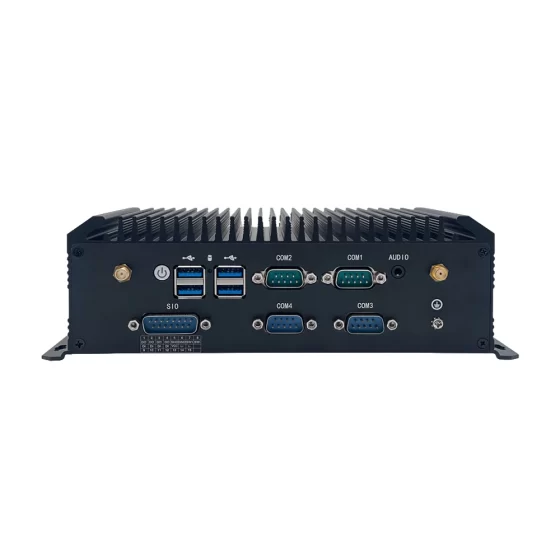
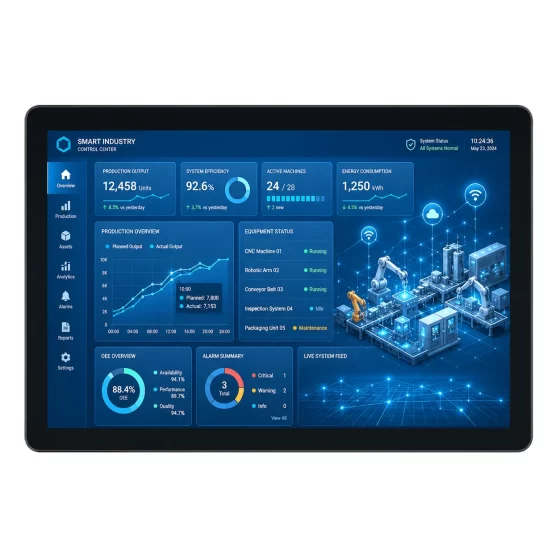
CoreIPC Industrial Computing-Lösungen

Bildverarbeitungscomputer für SMT: SMT-Vision-Computer für zuverlässige Inspektion der Elektronikfertigung
Zusammenfassung
Ein SMT-Vision-Computer bildet die industrielle Computergrundlage für die automatisierte optische Inspektion, Lotpasteninspektion, Barcode-Erkennung, Komponentenüberprüfung, und Qualitätsdatenerfassung in der SMT-Elektronikfertigung.
Bei der Produktion mit oberflächenmontierter Technologie erfolgt die Bestückung mit hoher Geschwindigkeit, dichte PCB-Layouts, kleine Komponenten, Lotpastenkontrolle, Reflow-Prozesse, Inspektionsstationen, und Rückverfolgbarkeitsanforderungen. Jeder Schritt kann kritische Bilddaten generieren, Testdaten, Barcode-Daten, und Produktionsaufzeichnungen.
Ein Bildverarbeitungsrechner für SMT muss Daten in der Nähe der Produktionslinie zuverlässig verarbeiten. Es kann an Industriekameras angeschlossen werden, Beleuchtungssteuerungen, Barcode-Lesegeräte, SPS, Sensoren, Prüfgeräte, MES-Systeme, und Fabrikdatenbanken.
Im Vergleich zu handelsüblichen PCs, Industriecomputer und eingebettete Computer eignen sich besser für SMT-Umgebungen, da sie einen kontinuierlichen Betrieb unterstützen, stabile I/O, kompakte Installation, lüfterlose Optionen, Robustes mechanisches Design, und eine lange Lebenszyklusplanung.
Für SMT-Gerätebauer, Elektronikhersteller, und Systemintegratoren, Die Auswahl der richtigen industriellen Computerplattform wirkt sich auf die Prüfgenauigkeit aus, Produktionsverfügbarkeit, Rückverfolgbarkeit, und langfristige Wartbarkeit.
In diesem Artikel wird erläutert, wie SMT-Vision-Computer die Elektronikfertigung unterstützen, welche Herausforderungen bei der Bereitstellung in realen Fabriken auftreten, wie die Lösungsarchitektur funktioniert, und welche Hardware-Features für zuverlässige SMT-Bildverarbeitungssysteme wichtig sind.
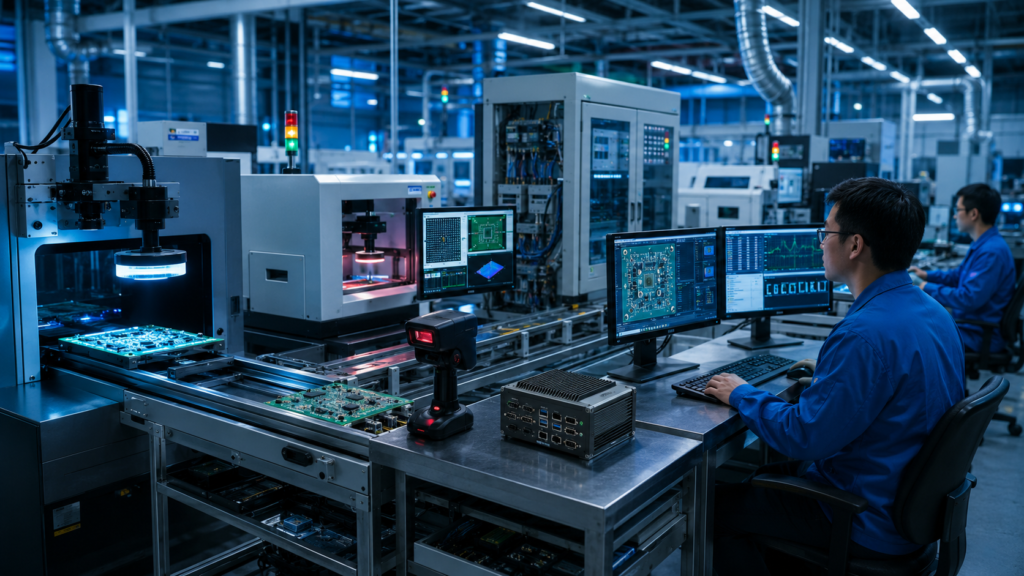
Industriecomputer verarbeiten SMT-Inspektionsdaten von Kameras, AOI-Systeme, SPI-Ausrüstung, Leiterplattenförderer, und Barcodescanner.
Branchenüberblick
Die SMT-Fertigung erfordert eine präzise Inspektion
Bei der SMT-Fertigung werden elektronische Bauteile mit hoher Geschwindigkeit und hoher Dichte auf Leiterplatten platziert.
Da Leiterplattenlayouts immer kompakter werden, Inspektion wird immer wichtiger. Kleinere Lötfehler, fehlende Komponenten, falsche Ausrichtung, schlechte Platzierung, oder unleserliche Codes können die Produktqualität und die nachgelagerte Zuverlässigkeit beeinträchtigen.
SMT-Inspektionssysteme können Folgendes umfassen::
- Inspektion von Lotpasten
- Automatisierte optische Inspektion
- Prüfung der Komponentenanwesenheit
- Überprüfung der Polarität und Ausrichtung
- PCB-Barcode- und QR-Code-Erkennung
- Unterstützung bei der Reflow-Inspektion
- Erfassung von Reparatur- und Nacharbeitsdaten
- Abschließende Sichtprüfung
- Integration von Teststationsdaten
- Aufzeichnungen zur Produktionsrückverfolgbarkeit
Ein zuverlässiger Bildverarbeitungscomputer bietet die erforderliche Verarbeitungsplattform, um diese Inspektionsaufgaben mit den Qualitätssystemen des Werks zu verbinden.
Bildverarbeitungssysteme rücken näher an die Linie
Die SMT-Inspektion ist nicht mehr auf eigenständige Geräte beschränkt.
Moderne Elektronikfabriken binden zunehmend AOI ein, SPI, Barcode-Erkennung, Reparaturstationen, und Testgeräte in MES- und Qualitätsmanagementsysteme. Dafür sind lokale Rechenplattformen erforderlich, die Bilder verarbeiten und Ergebnisse in Echtzeit übertragen können.
Ein Industriecomputer kann in der Nähe von SMT-Linien installiert werden, Inneninspektionsmaschinen, an Reparaturstationen, oder in Produktionsschränken.
Es kann Inspektionssoftware ausführen, Kamerabilder sammeln, Barcode-Lesegeräte verwalten, Fehlerdaten verarbeiten, und Ergebnisse in zentrale Systeme hochladen.
Warum industrielles Computing wichtig ist
Kommerzielle PCs funktionieren möglicherweise in Büroumgebungen, Die SMT-Produktion erfordert jedoch eine stabilere Hardware.
SMT-Linien können kontinuierlich über mehrere Schichten laufen. Inspektionscomputer können in der Nähe von Förderbändern betrieben werden, Reflow-Öfen, Bestückungsautomaten, Testvorrichtungen, und Produktionsarbeitsplätze.
In diesen Bereichen kann es zu Vibrationen kommen, Hitze, Staub, elektrisches Rauschen, begrenzter Platz, und ständige Datenkommunikation.
Industriecomputer und Embedded Computer sind für diese Einsatzbedingungen konzipiert. Sie sorgen für die Zuverlässigkeit, Schnittstellenflexibilität, und mechanische Integration, die für langfristige SMT-Inspektionssysteme erforderlich ist.

Dichte PCB-Layouts, Lötpaste, reflektierende Gelenke, kleine Codes, und Komponentendetails wirken sich auf die Zuverlässigkeit der SMT-Bildverarbeitung aus.
Wichtigste Herausforderungen
Kleine Komponenten und hohe Inspektionsdetails
Die SMT-Inspektion befasst sich mit sehr kleinen Bauteilen und feinen Leiterplattenmerkmalen.
Möglicherweise muss ein Bildverarbeitungssystem die Lotpastenabdeckung prüfen, Komponentenausrichtung, Polaritätsmarkierungen, fehlende Teile, Überbrückung, Grabsteinung, unzureichendes Lot, oder Etikettenqualität.
Für diese Inspektionsaufgaben sind möglicherweise hochauflösende Kameras erforderlich, präzise Beleuchtung, und stabile Bildverarbeitung.
Die Computerplattform muss eine konsistente Leistung unterstützen, insbesondere wenn Inspektionsgeschwindigkeit und Bildauflösung zunehmen.
Hochgeschwindigkeits-Produktionslinien
SMT-Linien arbeiten mit hoher Geschwindigkeit.
Inspektionssysteme müssen mit dem Produktionszyklus Schritt halten. Wenn die Bildverarbeitung zu langsam ist, Die Prüfstation kann zu einem Engpass werden oder die Produktionsrückmeldung verzögern.
Zu den wichtigsten Leistungsfaktoren gehören::
- Kameraauflösung
- Anzahl der Kameras
- Bildfrequenz
- Komplexität des Inspektionsalgorithmus
- Geschwindigkeit der Barcode-Erkennung
- Arbeitslast des lokalen Speichers
- Datenbankkommunikation
- MES-Upload-Häufigkeit
Ein richtig ausgewählter SMT-Vision-Computer trägt dazu bei, einen stabilen Inspektionsdurchsatz aufrechtzuerhalten.
Kamera- und Beleuchtungsintegration
SMT-Bildverarbeitungssysteme hängen stark vom Kamera- und Lichtdesign ab.
Reflektierende Lötstellen, Farben der Leiterplattenoberfläche, Bauteilmarkierungen, kleine QR-Codes, und ungleichmäßige Beleuchtung kann die Bildqualität beeinträchtigen.
Möglicherweise muss der Industriecomputer Kameraschnittstellen unterstützen, Kommunikation der Lichtsteuerung, Triggersignale, und lokale Anzeigeausgabe für technische Anpassungen.
Eine gute Computerhardware kann eine schlechte Bildaufnahme nicht beheben, Instabile Computerhardware kann jedoch den Wert eines gut konzipierten Bildverarbeitungssystems mindern.
Rückverfolgbarkeit und Datenverbindung
Elektronikhersteller benötigen häufig eine vollständige Rückverfolgbarkeit von der Leiterplattenbestückung bis zum endgültigen Versand.
Prüfergebnisse sollten mit Leiterplatten-Seriennummern verknüpft werden, Arbeitsaufträge, Komponentenchargen, Prüfprotokolle, Reparaturmaßnahmen, und endgültiger Qualitätsstatus.
Dies erfordert eine stabile Datenkommunikation zwischen Inspektionscomputern, MES-Software, Barcode-Systeme, Qualitätsdatenbanken, und Produktions-Dashboards.
Wenn der Inspektionscomputer die Aufzeichnungen nicht konsistent hochlädt, Die Rückverfolgbarkeit wird unvollständig.
Langfristige Wartbarkeit
SMT-Geräte und Inspektionsplattformen können viele Jahre lang in Produktion bleiben.
Häufige Änderungen bei Computermodellen, Fahrer, Häfen, oder Erweiterungsoptionen können zu Validierungs- und Wartungsproblemen führen.
Fabriken und Gerätebauer benötigen stabile Hardwareplattformen, die eine wiederholbare Bereitstellung unterstützen können, Ersatzteilplanung, und konsistente Software-Images über mehrere Produktionslinien hinweg.

Industriecomputer verbinden SMT-Kameras, Inspektionsausrüstung, SPS, MES, Reparaturstationen, und Fabrikqualitätssysteme.
SMT Vision Computer-Lösungsarchitektur
Bilderfassungsebene
Die Bilderfassungsebene umfasst Kameras, Linsen, Beleuchtungsmodule, Auslöser, und mechanische Montagestrukturen.
In SMT-Anwendungen, Diese Ebene kann erfassen:
- Bilder von Lötpasten
- Bilder von Leiterplattenoberflächen
- Bilder zur Komponentenplatzierung
- Polaritätsmarkierungen
- Barcode- oder QR-Code-Bilder
- Defektbilder
- Bilder von Reparaturstationen
- Etiketteninspektionsbilder
Eine gleichbleibende Bildqualität ist unerlässlich. Kameraauswahl, Beleuchtungswinkel, Belichtung, Arbeitsabstand, und Montagestabilität wirken sich alle auf die Prüfergebnisse aus.
Industrielle Computerschicht
In der Industrial Computing-Schicht führt der Industriecomputer oder eingebettete Computer die lokale Verarbeitung durch.
Auf dieser Ebene, Der Computer kann:
- Bilder von Kameras empfangen
- Führen Sie AOI- oder SPI-Software aus
- Verarbeiten Sie Barcode- und QR-Code-Daten
- Erkennen Sie fehlende oder verlegte Komponenten
- Bewahren Sie Inspektionsprotokolle auf
- Kommunizieren Sie mit SPSen
- Inspektionsstatus anzeigen
- Ergebnisse in MES hochladen
- Stellen Sie eine Verbindung zu hochwertigen Datenbanken her
- Unterstützen Sie die Fernwartung
Diese Schicht muss stabil sein, da sie sich direkt auf die Inspektionsgeschwindigkeit auswirkt, Datenqualität, und Produktionskontinuität.
Ebene der Automatisierungssteuerung
Die Automatisierungssteuerungsschicht verbindet das Bildverarbeitungssystem mit SMT-Geräten und Produktionssteuerungsgeräten.
Eine SPS, Förderbandsteuerung, Inspektionsmaschinensteuerung, oder der Sensor kann die Bildaufnahme auslösen. Nach der Bearbeitung, Der Industriecomputer kann Pass senden, scheitern, Alarm, oder überprüfen Sie die Signale zurück zum Gerät.
Zum Beispiel, wenn ein PCB-Barcode nicht mit dem erwarteten Arbeitsauftrag übereinstimmt, Das System stoppt möglicherweise die Platine, einen Alarm auslösen, oder fordern Sie eine Betreiberbewertung an.
Diese geschlossene Kommunikation trägt dazu bei, Produktionsfehler zu reduzieren.
Datenverwaltungsschicht
Inspektionsergebnisse sind am wertvollsten, wenn sie mit Produktionsaufzeichnungen verknüpft werden.
Der SMT-Vision-Computer kann Daten an MES senden, Qualitätsmanagementsysteme, Reparatursysteme, Produktions-Dashboards, oder Fabrikdatenbanken.
Typische Daten können sein::
- Seriennummer der Leiterplatte
- Arbeitsauftrag
- Inspektionsergebnis
- Fehlertyp
- Defektbild
- Stations-ID
- Zeitstempel
- Bedieneraktion
- Reparaturstatus
- Endgültige Testverknüpfung
Dies unterstützt die Rückverfolgbarkeit, Qualitätsanalyse, und Prozessverbesserung.
Benutzeroberflächenschicht
Betreiber und Ingenieure benötigen eine praktische lokale Schnittstelle.
Der Industriecomputer kann an einen Monitor angeschlossen werden, Touch-Screen, Tastatur, oder HMI-Panel. Die Schnittstelle kann Livebilder anzeigen, Inspektionsstatus, Defektstellen, Produktion zählt, Alarm, und Softwareprotokolle.
Eine übersichtliche lokale Schnittstelle hilft Ingenieuren dabei, Inspektionseinstellungen anzupassen und schnell auf ungewöhnliche Bedingungen zu reagieren.
Hauptmerkmale
Stabile Bildverarbeitungsleistung
Die Computerplattform muss eine stabile Verarbeitungsleistung für die Inspektionsarbeitslast bieten.
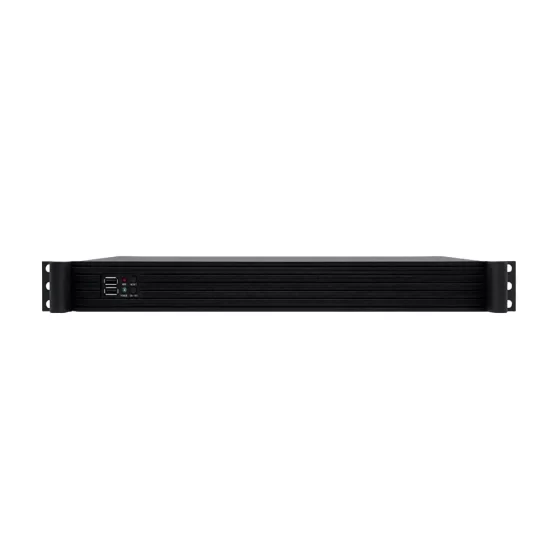
Unterschiedliche SMT-Anwendungen erfordern unterschiedliche Leistungsniveaus. Eine einfache Barcode-Erkennungsstation kann einen kompakten eingebetteten Computer verwenden. Ein AOI-System mit mehreren Kameras erfordert möglicherweise einen leistungsstärkeren Industrie-PC.
Die Auswahl sollte berücksichtigt werden:
- Kameraauflösung
- Anzahl der Kameras
- Inspektionsgeschwindigkeit
- Software-Auslastung
- Lokale Bildspeicherung
- MES-Kommunikation
- Anzeigeanforderungen
- Langzeitstabilität
Eine stabile Dauerleistung ist wichtiger als kurze Benchmark-Spitzen.
Unterstützung der Kameraschnittstelle
SMT-Bildverarbeitungssysteme verwenden üblicherweise USB- oder Ethernet-Kameras.
Der Industrierechner sollte über die erforderlichen Kameraschnittstellen und genügend Bandbreite für eine stabile Bildübertragung verfügen.
Zu den nützlichen Hardwarefunktionen können gehören:
- USB 3.0 Häfen
- Mehrere LAN-Ports
- M.2-Erweiterung
- PCIe-Erweiterung
- Hochgeschwindigkeitsspeicher
- HDMI- oder DisplayPort-Ausgang
- Stabiles Power-Design
Für Mehrkamerasysteme, Der Kameraverkehr muss möglicherweise von der Netzwerkkommunikation im Werk getrennt werden.
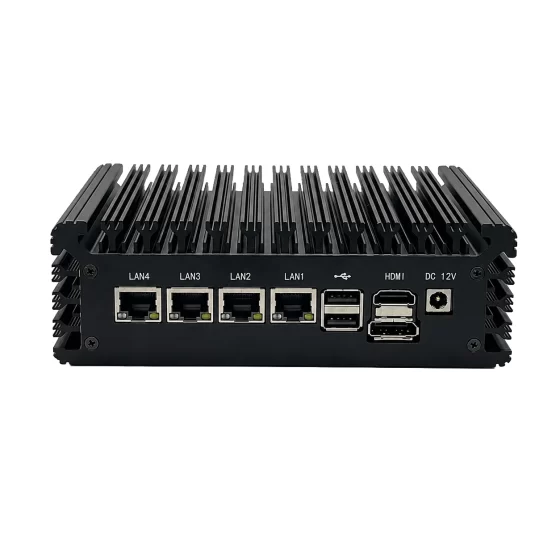
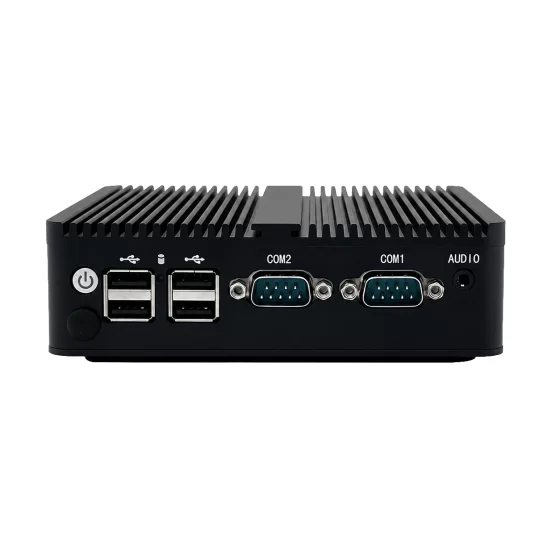
Industrielle I/O für die Geräteintegration
Der SMT-Vision-Computer muss mit realen Produktionsanlagen verbunden sein.
Zu den wichtigen E/A-Optionen können gehören:
- LAN
- USB
- RS232
- RS485
- GPIO
- Digitaler Eingang
- Digitaler Ausgang
- HDMI
- DisplayPort
Diese Schnittstellen können Kameras unterstützen, Barcode-Lesegeräte, Beleuchtungssteuerungen, SPS, Sensoren, Drucker, Testinstrumente, und Produktionsnetzwerke.
Flexible I/O trägt zur Reduzierung externer Adapter bei und verbessert die Bereitstellungszuverlässigkeit.
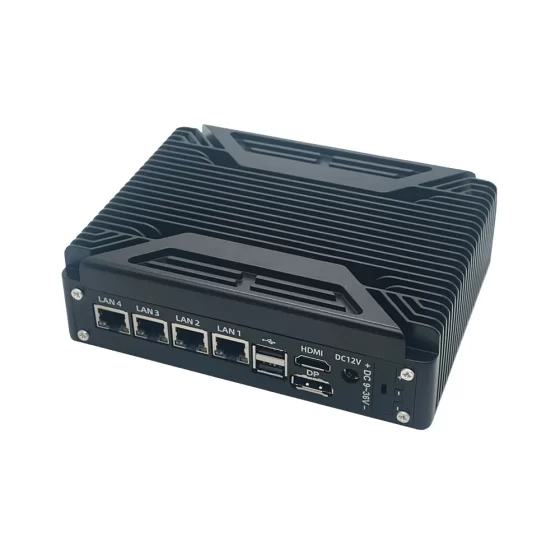
Lüfterloses und kompaktes Design
Lüfterlose Industriecomputer sind in vielen SMT-Umgebungen nützlich.
Sie reduzieren die Staubaufnahme und beseitigen eine häufige mechanische Fehlerquelle. Dies ist für Inspektionssysteme wertvoll, die kontinuierlich arbeiten und einen geringen Wartungsaufwand erfordern.
Kompakte eingebettete Computer sind auch nützlich, wenn das System in Inspektionsgeräten installiert werden muss, Schaltschränke, oder Produktionsarbeitsplätze.
Das thermische Design sollte dennoch sorgfältig überprüft werden, insbesondere für Hochleistungs-Vision-Workloads.
Zuverlässige Speicherung von Inspektionsdaten
SMT-Inspektionssysteme können viele Dateien und Aufzeichnungen generieren.
Der Computer kann Inspektionsbilder speichern, Defektbilder, Barcode-Protokolle, Softwareprotokolle, Produktionsberichte, und lokale Datenbankdateien.
SSD-Speicher werden häufig bevorzugt, da sie eine schnellere Reaktion und eine bessere Stoßfestigkeit als mechanische Laufwerke bieten.
Für bildlastige Anwendungen, Speicherkapazität und Schreibausdauer sollten vor der Bereitstellung überprüft werden.
Langer Lebenszyklus und Systemkonsistenz
SMT-Produktionslinien erfordern häufig eine stabile Hardwareverfügbarkeit.
Eine langlebige industrielle Computerplattform trägt dazu bei, den Arbeitsaufwand für die Softwarevalidierung zu reduzieren, Komplexität der Ersatzteile, und Wartungsrisiko.
Dies ist besonders wichtig für OEM-Gerätehersteller, die wiederholbare Hardwareplattformen für Inspektionsmaschinen benötigen, die an mehrere Kunden verkauft werden.

Lüfterlose Industriecomputer unterstützen den zuverlässigen SMT-Vision-Einsatz in Inspektionsschränken und Elektronikproduktionslinien.
Bereitstellungsszenarien
Automatisierte optische Inspektion
Die automatisierte optische Inspektion ist eine der wichtigsten SMT-Vision-Anwendungen.
Ein Industriecomputer kann von AOI-Kameras aufgenommene Bilder verarbeiten und dabei helfen, fehlende Komponenten zu erkennen, falsche Teile, Polaritätsfehler, Lötfehler, oder Platzierungsprobleme.
Das System kann Inspektionsergebnisse lokal anzeigen und Aufzeichnungen in MES oder Qualitätsdatenbanken hochladen.
Inspektion von Lotpasten
Bei der Lotpasteninspektion wird das Pastenvolumen überprüft, Bereich, Höhe, Position, und Druckqualität vor der Komponentenplatzierung.
Ein Bildverarbeitungsrechner kann SPI-Bilddaten verarbeiten und Prüfergebnisse mit Prozessleitsystemen verknüpfen.
Dies trägt dazu bei, Druckprobleme früher zu erkennen und nachgelagerte Fehler zu reduzieren.
PCB-Barcode- und QR-Code-Erkennung
Die Rückverfolgbarkeit von Leiterplatten beginnt oft mit einem Barcode, QR-Code, or Data Matrix recognition.
An embedded computer can process camera images and read codes on PCBs, Paneele, Tabletts, or labels.
The recognized data can be linked with work orders, Inspektionsergebnisse, Prüfprotokolle, und Verpackungsinformationen.
Component Presence and Orientation Verification
SMT vision systems can verify whether components are present, correctly oriented, and placed in the expected position.
This is useful for detecting missing parts, reversed components, shifted components, and incorrect assembly conditions.
The industrial computer processes images and sends results to the inspection software or production system.
Reparatur- und Nacharbeitsstationen
Repair stations need access to defect information and production records.
An industrial computer can display AOI results, show defect images, record repair actions, scan PCB IDs, and update repair status.
Dies trägt dazu bei, den Kreis zwischen Inspektionen zu schließen, reparieren, and final quality validation.
Test Station Data Integration
IKT, FCT, und andere Elektronikprüfplätze generieren wichtige Qualitätsdaten.
Ein Bildverarbeitungscomputer kann auch eine Barcode-Erkennung anschließen, Prüfgeräte, und MES-Software, um sicherzustellen, dass jedes Testergebnis mit der richtigen Leiterplatte oder dem richtigen Produkt verknüpft wird.
Dies verbessert die Datenkonsistenz über Inspektions- und Testabläufe hinweg.
Endgültige Etiketten- und Verpackungsüberprüfung
Vor dem Versand, Für Produkte ist möglicherweise eine Etikettenüberprüfung erforderlich, Barcode-Erkennung, Verpackungsinspektion, und abschließende Qualitätsbestätigung.
Ein Industriecomputer kann Etikettenbilder verarbeiten, Codes überprüfen, Ergebnisse speichern, und Daten an MES senden, WMS, oder Qualitätssysteme.
Dies trägt dazu bei, Versandfehler zu reduzieren und die Rückverfolgbarkeit zu verbessern.
Geschäftsvorteile
Verbesserte Inspektionszuverlässigkeit
Ein stabiler SMT-Vision-Computer trägt dazu bei, dass Inspektionssysteme über Produktionsschichten hinweg konsistent funktionieren.
Zuverlässige Computerhardware reduziert verpasste Bildaufnahmen, verzögerte Bearbeitung, Software-Instabilität, und Kommunikationsunterbrechungen.
Dies unterstützt eine konsistentere Qualitätskontrolle und Produktionsrückmeldung.
Stärkere PCB-Rückverfolgbarkeit
Die Rückverfolgbarkeit hängt von der genauen Datenerfassung bei jedem Prozessschritt ab.
Industriecomputer helfen bei der Verknüpfung von PCB-IDs, Inspektionsergebnisse, Defektbilder, Prüfprotokolle, Reparaturmaßnahmen, Zeitstempel, und Stationsinformationen.
Dies unterstützt Kundenaudits, Qualitätsuntersuchung, Garantieanalyse, und kontinuierliche Verbesserung.
Reduzierter manueller Inspektionsaufwand
Die manuelle Prüfung kann langsam und inkonsistent sein.
Bildverarbeitungssysteme automatisieren viele Inspektions- und Verifizierungsaufgaben. Industriecomputer verarbeiten Bilder und verknüpfen Ergebnisse mit Produktionssystemen.
Dies reduziert die Arbeitsbelastung des Bedieners und verbessert die Inspektionskonsistenz über mehrere Schichten hinweg.
Schnelleres Fehler-Feedback
SMT-Defekte sollten so früh wie möglich erkannt werden.
Wenn Inspektionsdaten in der Nähe der Linie verarbeitet werden, Ingenieure können Druckprobleme identifizieren, Platzierungsprobleme, Lötfehler, oder Barcode-Fehler schneller.
Frühzeitiges Feedback trägt dazu bei, Nacharbeit zu reduzieren und zu verhindern, dass sich Fehler weiterverbreiten.
Bessere Prozessverbesserung
Inspektionsdaten können Prozesstrends aufdecken.
Hersteller können wiederkehrende Mängel analysieren, Maschinenleistung, Probleme mit der Lötpaste, Genauigkeit der Komponentenplatzierung, und Reparaturhäufigkeit.
Ein zuverlässiger Industriecomputer trägt dazu bei, dass die für die Analyse verwendeten Daten vollständig und konsistent sind.
Skalierbare SMT-Linienbereitstellung
Eine standardisierte industrielle Computerplattform kann über mehrere SMT-Linien hinweg eingesetzt werden, Inspektionsstationen, und Fabriken.
Dies vereinfacht die Software-Image-Verwaltung, Ersatzteilplanung, Fahrervalidierung, Wartungsschulung, und langfristigen technischen Support.
Für Gerätebauer und Elektronikhersteller, Eine skalierbare Hardwareplanung reduziert das Projektrisiko.
Warum CoreIPC
CoreIPC bietet industrielle Computerplattformen für die maschinelle Bildverarbeitung, Elektronikfertigung, Fabrikautomation, und eingebettete Systemintegration. Für SMT-Vision-Computeranwendungen, CoreIPC konzentriert sich auf zuverlässige Industrie-PC-Hardware, Embedded-Computer-Lösungen, flexible I/O-Konfigurationen, kompaktes Systemdesign, und OEM/ODM-Anpassungsunterstützung. CoreIPC hilft Systemintegratoren, Hersteller von SMT-Geräten, und Elektronikhersteller wählen Computerplattformen aus, die den tatsächlichen Prüfanforderungen entsprechen, einschließlich Kameraschnittstellen, I/O-Konfiguration, Montagemethoden, Leistungsaufnahme, thermisches Design, Speicherbedarf, und Lebenszyklusplanung.
Häufig gestellte Fragen
1. Was ist ein SMT-Vision-Computer??
Ein SMT-Vision-Computer ist ein Industriecomputer, der zur Unterstützung von Bildverarbeitungsaufgaben in der Produktion mit oberflächenmontierter Technologie eingesetzt wird.
Es kann Kamerabilder verarbeiten, Führen Sie AOI- oder SPI-Software aus, Lesen Sie PCB-Barcodes, Komponenten überprüfen, mit SPS kommunizieren, und laden Sie Prüfergebnisse in MES oder Qualitätssysteme hoch. Es ist für Fabrikumgebungen konzipiert, in denen Zuverlässigkeit gefragt ist, I/O-Flexibilität, und Dauerbetrieb sind wichtig.
2. Warum einen Industriecomputer für SMT-Bildverarbeitungssysteme verwenden??
SMT-Bildverarbeitungssysteme werden häufig in der Nähe von Produktionslinien betrieben, Inspektionsmaschinen, Förderer, und Teststationen.
Ein Industriecomputer eignet sich besser als ein Büro-PC, da er eine robuste Installation ermöglicht, stabiles thermisches Design, industrielle I/O, Kamera-Konnektivität, und Bereitstellung über einen langen Lebenszyklus. Diese Funktionen tragen dazu bei, dass Inspektionssysteme während der kontinuierlichen Elektronikfertigung zuverlässig bleiben.
3. Wie wird ein eingebetteter Computer bei der SMT-Inspektion verwendet??
Ein eingebetteter Computer kann in AOI-Geräten installiert werden, SPI-Maschinen, Reparaturstationen, Schaltschränke, oder kompakte Inspektionssysteme.
Es kann Bilder erfassen, Ergebnisse der Prozessinspektion, Barcode-Daten lesen, mit SPS kommunizieren, und Datensätze an MES-Systeme senden. Aufgrund seiner kompakten Größe eignet es sich für OEM-Geräte und SMT-Linieninstallationen mit begrenztem Platzangebot.
4. Welche Schnittstellen sind für einen SMT-Vision-Computer wichtig??
Wichtige Schnittstellen können USB sein 3.0, mehrere LAN-Ports, RS232, RS485, GPIO, HDMI, DisplayPort, M.2, und PCIe-Erweiterung.
USB- und LAN-Anschlüsse werden häufig für Kameras und Peripheriegeräte verwendet. GPIO- oder serielle Ports unterstützen möglicherweise Trigger, Beleuchtungssteuerungen, Sensoren, SPS, und Produktionsanlagen. Display-Ausgaben sind für die lokale Überwachung nützlich.
5. Können SMT-Vision-Computer AOI-Systeme unterstützen??
Ja. SMT-Vision-Computer können AOI-Systeme unterstützen, wenn sie entsprechend der Kameraauflösung ausgewählt werden, Anzahl der Kameras, Arbeitsbelastung der Inspektionssoftware, und Produktionsgeschwindigkeit.
Einfache AOI-Stationen können kompakte eingebettete Computer verwenden, wohingegen hochauflösende Systeme oder Systeme mit mehreren Kameras möglicherweise leistungsstärkere Industrie-PCs erfordern. Vor der endgültigen Auswahl sind echte Produktionstests wichtig.
6. Wie unterstützt ein SMT-Vision-Computer die Rückverfolgbarkeit??
Der Computer verknüpft Prüfergebnisse mit Leiterplatten-Seriennummern, Arbeitsaufträge, Defektbilder, Zeitstempel, Informationen zum Sender, und Reparaturaufzeichnungen.
Diese Daten können in MES oder Qualitätssysteme hochgeladen werden. Die lückenlose Rückverfolgbarkeit hilft Elektronikherstellern bei der Fehlersuche, Unterstützung bei Kundenaudits, Analysieren Sie Prozesstrends, und die Produktionsqualität verbessern.
7. Ist ein lüfterloser Industrie-PC, der für SMT-Vision-Anwendungen geeignet ist?
Ein lüfterloser Industrie-PC kann für viele SMT-Vision-Anwendungen geeignet sein, insbesondere wenn es auf geringen Wartungsaufwand und Staubreduzierung ankommt.
Jedoch, Seharbeitsbelastungen können erhebliche Hitze erzeugen. Bei der endgültigen Auswahl sollte die Prozessorleistung berücksichtigt werden, Anzahl der Kameras, Gehäusedesign, Umgebungstemperatur, Montageort, und verfügbarer Luftstrom.
8. Welcher Speicher wird für SMT-Inspektionssysteme benötigt??
Der Speicherbedarf hängt davon ab, ob das System nur Protokolle oder auch Inspektionsbilder und Fehleraufzeichnungen speichert.
SSD-Speicher werden in der Regel bevorzugt, da sie eine schnelle Reaktion und eine bessere Stoßfestigkeit bieten. Für Systeme, die viele Bilder speichern, Speicherkapazität, schreibe Ausdauer, und Backup-Strategie sollten sorgfältig überprüft werden.
9. Können SMT-Vision-Computer mit MES-Systemen verbunden werden??
Ja. Industriecomputer können Inspektionsdaten über Fabriknetzwerke an MES-Systeme senden, Datenbanken, Middleware, oder Softwareschnittstellen.
Hochgeladene Daten können PCB-IDs enthalten, Inspektionsergebnisse, Fehlerkategorien, Bilder, Zeitstempel, Informationen zum Sender, und Reparaturstatus. Dies trägt dazu bei, Inspektionsabläufe mit der Rückverfolgbarkeit der Produktion zu verbinden.
10. Was sollte vor dem Einsatz eines SMT-Vision-Computers getestet werden??
Vor der Bereitstellung, Der Computer sollte mit echten Kameras getestet werden, Inspektionssoftware, Beleuchtungssteuerungen, SPS-Kommunikation, Barcode-Lesegeräte, Speicherauslastung, MES-Anbindung, und Produktionszykluszeit.
Auch die Langzeitstabilität und die thermische Leistung sollten getestet werden. Dies hilft zu bestätigen, dass das System in der tatsächlichen SMT-Produktion zuverlässig arbeiten kann.
Abschluss
Ein SMT-Vision-Computer ist eine wichtige Hardware-Grundlage für die automatisierte optische Inspektion, Lotpasteninspektion, PCB-Barcode-Erkennung, Komponentenüberprüfung, Reparaturverfolgung, und hochwertige Datenintegration.
Durch die Platzierung industrieller Computerhardware in der Nähe von SMT-Linien, Kameras, Beleuchtungssteuerungen, SPS, Barcode-Systeme, und Inspektionsausrüstung, Elektronikhersteller können Prüfdaten lokal verarbeiten und Ergebnisse mit MES- und Qualitätssystemen verknüpfen.
Der richtige Industriecomputer oder Embedded Computer sollte entsprechend den tatsächlichen Anwendungsanforderungen ausgewählt werden, einschließlich Kameraschnittstellen, Bearbeitungsaufwand, I/O-Konfiguration, Speicherkapazität, Netzwerkdesign, Montagemethode, Leistungsaufnahme, thermische Bedingungen, Betriebssystemkompatibilität, und Lebenszyklusplanung.
CoreIPC unterstützt SMT-Vision-Computerprojekte mit industriellen Computerplattformen, die für den praktischen Einsatz in der Elektronikfertigung konzipiert sind. Mit der richtigen Hardware-Grundlage, Hersteller und Gerätebauer können die Inspektionszuverlässigkeit verbessern, Stärkung der Rückverfolgbarkeit, Reduzieren Sie den manuellen Arbeitsaufwand, und skalierbare SMT-Qualitätskontrollsysteme aufzubauen.
Kontaktieren Sie uns
Auf der Suche nach einem Industriecomputer, eingebetteter Computer, oder Industrie-Motherboard für ein SMT-Bildverarbeitungssystem?
Kontaktieren Sie CoreIPC, um Ihre Projektanforderungen zu besprechen, inklusive Kameraschnittstelle, Inspektionsaufwand, I/O-Konfiguration, MES-Integration, Montagemethode, Leistungsaufnahme, Betriebsumgebung, Lebenszyklusanforderungen, und OEM/ODM-Anpassungsoptionen.