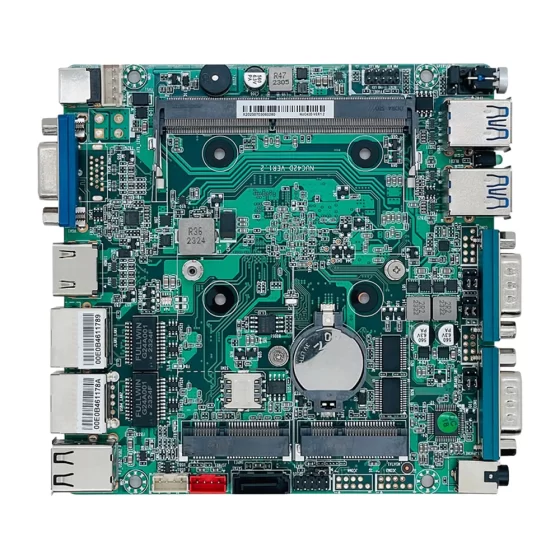
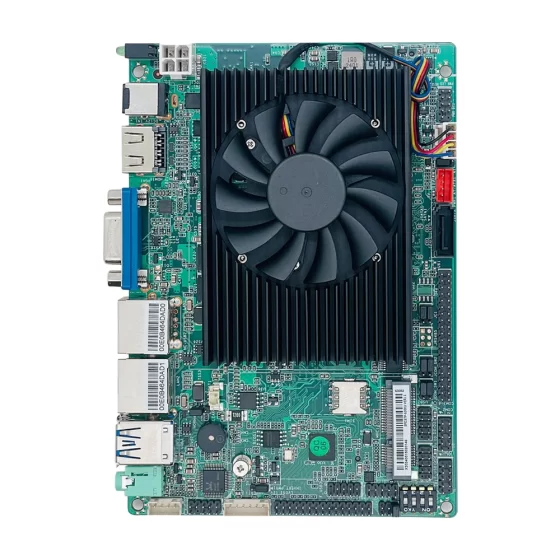
CoreIPC Industrial Computing-Lösungen

VPN-Bereitstellungsplattform: VPN-Appliance für sichere industrielle Netzwerkkonnektivität
Zusammenfassung
A VPN appliance provides the secure computing foundation for industrial remote access, Site-to-Site-Konnektivität, machine maintenance, factory network segmentation, and protected data communication across distributed industrial environments.
Moderne Fabriken, Gerätebauer, Energiestandorte, Transportsysteme, Lagerhäuser, and remote facilities often need secure access between machines, Steuerungssysteme, Ingenieure, service teams, and central management platforms. Jedoch, exposing industrial networks directly to the public internet creates serious operational and cybersecurity risks.
A VPN deployment platform built on an industrial computer or embedded computer can provide a controlled network access layer. It can connect remote engineers, factory sites, Maschinennetzwerke, Industrielle IoT-Gateways, SCADA-Systeme, and maintenance platforms through encrypted tunnels and managed access policies.
Compared with standard office network hardware, an industrial VPN appliance must operate reliably in real deployment environments. It may be installed inside control cabinets, factory network rooms, Maschinengehäuse, Transportschränke, Energieanlagen, or remote equipment sites.
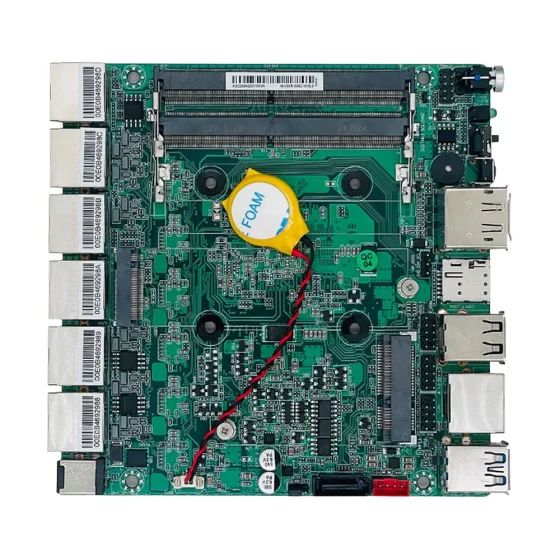
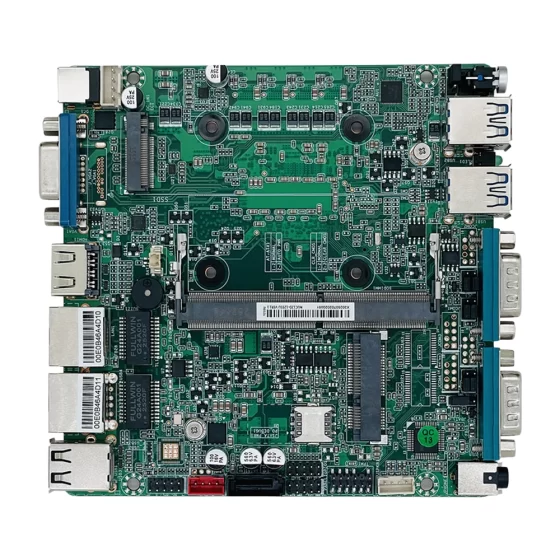
Industrial computers and embedded computers provide rugged hardware, flexible LAN configurations, serial connectivity options, lokaler Speicher, lüfterloses Design, stabile strom eingang, und langen Lebenszyklus-Support.
This article explains how VPN deployment platforms support industrial network security, what challenges manufacturers and system integrators face, wie die Lösungsarchitektur funktioniert, and which hardware features are important when selecting an industrial computer or embedded computer for VPN appliance applications.
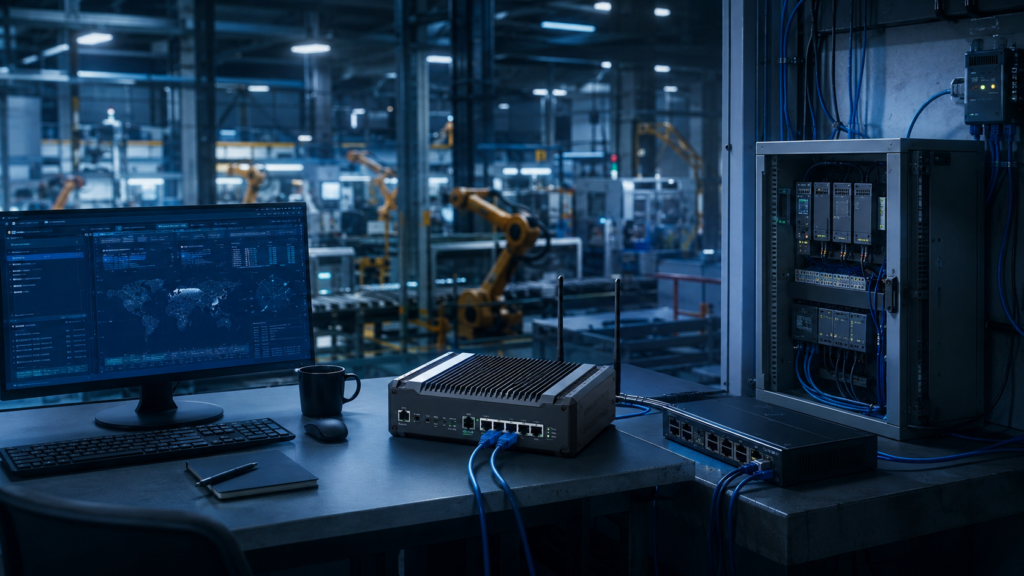
VPN appliances help secure remote engineering access to machines and industrial networks.
Branchenüberblick
Industrial Networks Need Secure Remote Connectivity
Remote access has become a normal requirement in industrial operations.
Machine builders need to support equipment after delivery. Factory engineers need to monitor remote production lines. System integrators need to troubleshoot control systems. Multi-site companies need secure communication between factories, Lagerhäuser, und Rechenzentren.
Common remote connectivity needs include:
- Remote machine maintenance
- Site-to-site factory connection
- Industrial IoT gateway access
- SCADA network access
- Remote monitoring dashboards
- Equipment service support
- Secure engineering access
- Data transfer between facilities
- Remote alarm review
- Cloud or data center connectivity
A VPN appliance helps provide controlled access without exposing industrial systems directly.
VPN Appliances Are More Than Network Routers
A VPN deployment platform is not only a basic router.
In industriellen Umgebungen, it may need to support network segmentation, Firewall-Richtlinien, mehrere LAN-Ports, sichere Tunnel, lokale Protokollierung, Verkehrsmanagement, redundant network paths, and remote service control.
It may also need to connect both modern Ethernet devices and older industrial systems.
A practical industrial VPN appliance may sit between:
- Maschinennetzwerke
- SPS-Netzwerke
- Factory IT networks
- Remote service networks
- Industrielle IoT-Plattformen
- Cloud systems
- Monitoring centers
- Unternehmensnetzwerke
The role of the appliance is to create a secure and manageable network boundary.
Industrial Computing ist die Hardware-Grundlage
Many VPN appliances are deployed outside clean office environments.
They may operate near machines, in Schränken, in remote sites, or in infrastructure facilities. Diese Orte können Staub enthalten, Vibration, Temperaturschwankungen, elektrisches Rauschen, begrenzter Platz, und lange Betriebsstunden.
Industrial computers and embedded computers provide a stronger foundation for this type of deployment.
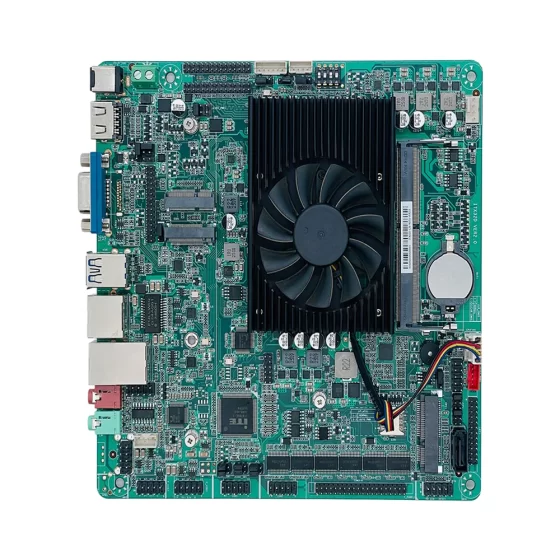
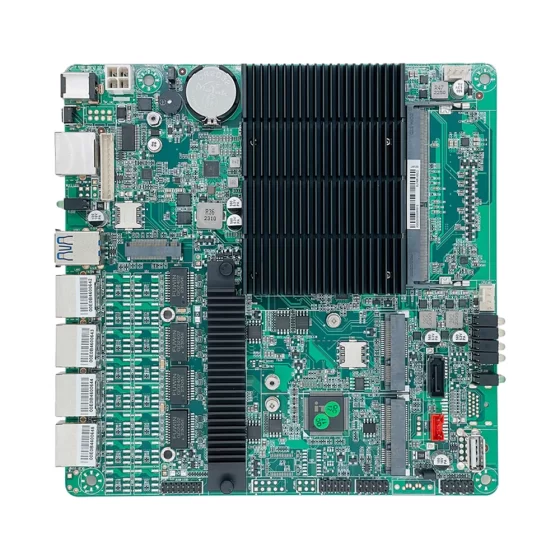
They support reliable operation, flexible I/O, mehrere LAN-Ports, kompaktes Design, fanless enclosures, und lange Verfügbarkeit über den gesamten Lebenszyklus.

Network zones, uplinks, SPS-Netzwerke, Maschinennetzwerke, and IIoT gateways affect VPN deployment planning.
Wichtigste Herausforderungen
Securing Remote Access Without Exposing Industrial Systems
Remote access is useful, but it must be controlled carefully.
Industrial systems often include PLCs, HMIs, Controller, Sensoren, Roboter, Gateways, and SCADA equipment. These systems may not be designed for direct internet exposure.
A VPN appliance helps create a protected access layer.
Jedoch, the deployment must still consider:
- Benutzerauthentifizierung
- Zugriffsberechtigungen
- Netzwerksegmentierung
- Firewall-Regeln
- Remote maintenance windows
- Logging and audit needs
- Device identity
- Secure update policy
- Internal routing design
The goal is to provide remote access only to the required systems, not to open the whole factory network unnecessarily.
Multiple Network Zones
Industrial sites usually contain several network zones.
A factory may separate office IT networks, Maschinennetzwerke, Kameranetzwerke, SPS-Netzwerke, maintenance networks, and cloud gateway connections.
A VPN deployment platform must support this structure.
Multiple LAN ports are often important because they allow better separation between different network areas.
Zum Beispiel:
- One LAN port for WAN or uplink
- One LAN port for factory IT
- One LAN port for machine network
- One LAN port for PLC or automation network
- One LAN port for remote service or management
Good network segmentation improves security and operational stability.
Reliability for Continuous Operation
A VPN appliance may become a critical part of the industrial network.
Wenn das Gerät ausfällt, Fernzugriff, data transfer, Überwachung, and service support may be interrupted.
Industrial deployment requires reliable hardware design.
Wichtige Zuverlässigkeitsfaktoren sind::
- Fanless enclosure
- Stabiles thermisches Design
- Rugged mounting
- Industrieller Stromeingang
- Cable retention
- SSD-Speicher
- Komponenten mit langem Lebenszyklus
- Local system logging
- Recovery planning
Reliable hardware helps reduce maintenance workload and unexpected downtime.
Performance and Encrypted Traffic Load
VPN traffic requires processing power.
The required performance depends on the number of users, tunnel types, Verschlüsselungsaufwand, Verkehrsaufkommen, number of sites, and firewall rules.
A small machine service gateway may need moderate performance. A multi-site factory VPN hub may require stronger CPU, Erinnerung, and network capability.
System designers should consider:
- Anzahl der VPN-Tunnel
- Verschlüsselter Durchsatz
- Firewall-Verarbeitung
- Routing rules
- Remote-Benutzersitzungen
- Site-to-site traffic
- Industrieller Protokollverkehr
- Monitoring data volume
- Arbeitslast protokollieren
The appliance should be selected according to real network requirements, not only port count.
Integration with Industrial and IT Systems
Industrial VPN platforms often connect operational technology and information technology systems.
This requires careful planning.
The appliance may need to communicate with PLC networks, SCADA-Server, Industrielle IoT-Gateways, Firewalls, switches, Cloud-Plattformen, authentication systems, und Fernwartungstools.
A practical platform must be flexible enough for both industrial and IT requirements.

VPN appliances connect remote users, Fabriknetzwerke, machine systems, and cloud platforms securely.
VPN Appliance Solution Architecture
Industrial Device Network Layer
The device network layer includes the equipment that needs secure connectivity.
Dies kann Folgendes umfassen::
- SPS
- HMIs
- SCADA-Systeme
- Industrie-PCs
- Eingebettete Controller
- Roboter
- Maschinensteuerungen
- Industriekameras
- Gateways
- Energiezähler
- Sensoren
- Fernausrüstung
These systems should not be exposed directly to external networks.
The VPN appliance provides a controlled access path.
Industrial VPN Appliance Layer
The VPN appliance layer is the core of the deployment.
Auf dieser Ebene, B. der Industriecomputer oder der eingebettete Computer:
- Establish encrypted VPN tunnels
- Manage site-to-site connectivity
- Support remote engineering access
- Apply firewall policies
- Segment internal networks
- Leiten Sie den Verkehr zwischen Zonen weiter
- Log access events
- Monitor connection status
- Support local management interfaces
- Connect to higher-level security systems
This layer protects industrial systems while still enabling necessary connectivity.
Network Security and Policy Layer
The security policy layer defines who can access what.
It may include access control rules, Netzwerkzonen, Firewall-Richtlinien, authentication methods, traffic restrictions, and maintenance permissions.
A secure industrial VPN design should avoid broad unrestricted access.
Stattdessen, access should be limited according to:
- Benutzerrolle
- Gerätetyp
- Standort der Website
- Maintenance purpose
- Zeitfenster
- Network segment
- Application requirement
- Security policy
This improves control and reduces unnecessary exposure.
Remote Access and Site Connectivity Layer
The remote access layer supports external users and distributed locations.
Je nach Projekt, es kann beinhalten:
- Fernzugriff für Techniker
- OEM machine service access
- Site-to-Site-VPN
- Verbindung zwischen Fabrik und Rechenzentrum
- Fernüberwachung von Anlagen
- Cloud platform communication
- Maintenance platform access
- Multi-branch secure connectivity
This layer allows distributed industrial systems to communicate securely.
Überwachungs- und Verwaltungsebene
VPN deployments need visibility.
Die Appliance stellt möglicherweise lokale Dashboards bereit, Protokolle, connection status, traffic information, device health data, und Alarmaufzeichnungen.
It may also connect to centralized monitoring systems.
Zu den nützlichen Überwachungsinformationen können gehören::
- Tunnelstatus
- User login records
- Netzwerkverkehr
- System temperature
- Speicherstatus
- CPU-Auslastung
- Uplink status
- Firewall-Ereignisse
- Verlauf des Fernzugriffs
Good visibility helps operators maintain secure and reliable network connectivity.
Hauptmerkmale
Multiple LAN Ports
Multiple LAN ports are one of the most important features for an industrial VPN appliance.
They allow the system to separate WAN, LAN, Maschine, service, und Managementnetzwerke.
Useful LAN configurations may support:
- WAN-Uplink
- Fabrik-IT-Netzwerk
- SPS-Netzwerk
- Maschinennetzwerk
- Kameranetzwerk
- Fernwartungsnetzwerk
- Cloud gateway connection
- Redundante Netzwerkpfade
This improves traffic organization and supports better cybersecurity planning.
VPN and Network Processing Performance
VPN appliances must process encrypted traffic reliably.
The hardware should be selected according to real throughput and tunnel requirements.
Die Auswahl sollte berücksichtigt werden:
- CPU-Leistung
- Speicherkapazität
- Number of VPN tunnels
- Verschlüsselter Durchsatz
- Firewall-Auslastung
- Routing complexity
- Protokollierungsanforderungen
- Storage needs
- Geschwindigkeit des Netzwerkports
For small machine access, Ein eingebetteter Computer kann ausreichen. Für größere Bereitstellungen an mehreren Standorten, a higher-performance industrial PC may be required.
Flexible industrielle I/O
Industrial VPN platforms may need more than Ethernet ports.
Zu den nützlichen E/A-Optionen können gehören:
- LAN
- USB
- RS232
- RS485
- GPIO
- Digitaler Eingang
- Digitaler Ausgang
- HDMI
- DisplayPort
- M.2
- PCIe
- SATA- oder NVMe-Speicher
Serial ports may support legacy equipment access or service functions. GPIO can support alarm integration. USB and display outputs can support local maintenance.
Flexible I/O improves system adaptability.
Lüfterloses und robustes Design
Fanless design is valuable for industrial network appliances.
Es reduziert die Staubaufnahme und beseitigt eine häufige mechanische Fehlerquelle. Rugged enclosures help protect the device from vibration, Auswirkungen auf die Installation, und Kabelbeanspruchung.
This is useful for cabinet-mounted VPN appliances, machine-side network gateways, remote facility nodes, and infrastructure deployments.
Das thermische Design sollte dennoch sorgfältig überprüft werden, especially when the appliance handles continuous encrypted traffic.
Zuverlässiger lokaler Speicher
VPN appliances may need local storage for logs, Systemdateien, Konfigurationssicherungen, Zertifikate, monitoring records, und Diagnosedaten.
SSD storage is commonly preferred because it provides better shock resistance and faster access than mechanical drives.
Die Lagerungsplanung sollte berücksichtigt werden:
- Protokollaufbewahrung
- Konfigurationssicherung
- Systemwiederherstellung
- Aufzeichnungen zu Sicherheitsereignissen
- Local monitoring data
- Schreiben Sie Ausdauer
- Wartungsworkflow
Reliable storage helps support auditability and troubleshooting.
Lange Lebensdauer und Wartbarkeit
Industrial network appliances may stay in service for many years.
Häufige Hardwareänderungen können zu Problemen mit der Softwarekompatibilität führen, Ersatzteilprobleme, und Wartungskomplexität.
Industrielle Computerplattformen mit Lebenszyklusplanung unterstützen Systemintegratoren, OEMs, and factory operators maintain consistent VPN deployment platforms across multiple machines, Websites, and infrastructure projects.
Bereitstellungsszenarien
Fernwartung von Maschinen
Machine builders often need secure access to equipment after delivery.
A VPN appliance can provide controlled remote access to machine HMIs, SPS, Industrie-PCs, or diagnostic systems.
This helps OEM service teams support customers without requiring open public access to machine networks.
Site-to-Site Factory Connectivity
Companies with multiple factories may need secure communication between sites.
A VPN appliance can support site-to-site connectivity for production data, Überwachungssysteme, engineering access, und zentralisierte Verwaltung.
This helps connect distributed facilities while maintaining network separation.
Industrial IoT Gateway Security
Industrial IoT systems often collect data from machines and send selected information to platforms or cloud services.
A VPN appliance can protect communication between local IIoT gateways and remote systems.
It can also segment machine networks from external connections.
SCADA and Utility Network Access
Energie, Wasser, Transport, and facility systems may require remote monitoring and maintenance.
An industrial VPN appliance can provide secure access to SCADA networks, remote equipment, Umspannwerke, Pumpstationen, or utility cabinets.
Rugged hardware is important for these distributed environments.
Warehouse and Logistics Network Connectivity
Warehouses may use VPN appliances to connect sorting systems, Barcode-Stationen, Industriecomputer, Überwachungssysteme, and remote management platforms.
This supports secure access to distributed logistics infrastructure and improves maintenance efficiency.
Verkehrsinfrastruktur
Transportsysteme können straßenseitige Ausrüstung umfassen, Stationsanlagen, Parkplattformen, Verkehrsleiter, and monitoring nodes.
A VPN appliance can provide secure connectivity between remote devices and management centers.
Industrial computers are useful where rugged deployment and stable networking are required.
OEM Security Appliance Integration
System integrators and equipment builders can integrate industrial computers into custom VPN appliances or security gateways.
The platform can provide multi-LAN networking, firewall capability, Sicherer Fernzugriff, lokale Überwachung, Lagerung, and appliance-style deployment.
This supports OEM network security products for industrial customers.
Fernüberwachung von Anlagen
Remote facilities may have limited local staff.
A VPN appliance can help central teams access monitoring systems, data gateways, Kameras, Versorgungsausrüstung, and control systems securely.
Local logs and remote management support improve operational visibility.
Geschäftsvorteile
Sichererer Fernzugriff
A VPN appliance creates a controlled access layer between remote users and industrial networks.
This reduces the need to expose machine systems directly.
Mit der richtigen Politikgestaltung, remote access can be limited to the required equipment, user roles, and service tasks.
Better Support for OEM Service
Machine builders can use VPN deployment platforms to support customer equipment remotely.
This can reduce travel needs, shorten troubleshooting time, and improve service response.
A stable industrial computer platform helps keep remote service access reliable over the equipment lifecycle.
Verbesserte Netzwerksegmentierung
Multiple LAN ports and firewall policies help separate factory networks.
This can reduce unnecessary communication between IT, OT, Maschine, Kamera, and maintenance networks.
Better segmentation supports both operational stability and security planning.
Reduced Downtime During Troubleshooting
Secure remote access helps engineers diagnose problems faster.
Instead of waiting for on-site support, authorized engineers can review logs, Systemstatus, Gerätekommunikation, and machine data remotely.
This can reduce troubleshooting delays and improve maintenance efficiency.
Stronger Operational Visibility
A VPN appliance can provide logs, Tunnelstatus, system health data, and connection information.
This helps network and maintenance teams understand remote access activity and appliance status.
Better visibility supports audit review, Fehlerbehebung, und langfristiges Netzwerkmanagement.
Scalable Multi-Site Deployment
A standardized VPN appliance platform makes it easier to deploy secure connectivity across multiple machines, Fabriken, Lagerhäuser, und abgelegene Einrichtungen.
Konsistente Hardware vereinfacht Software-Images, Konfigurationsvorlagen, Ersatzteilplanung, Wartungsschulung, und Lebenszyklusunterstützung.
This helps system integrators and industrial operators scale secure connectivity more efficiently.
Warum CoreIPC
CoreIPC bietet industrielle Computerplattformen für Netzwerksicherheit, Industrielles IoT, Fabrikautomation, Fernüberwachung, und eingebettete Systemintegration. For VPN appliance applications, CoreIPC konzentriert sich auf zuverlässige industrielle Computerhardware, Embedded-Computer-Lösungen, Multi-LAN-Konfigurationen, flexible I/O, kompaktes Systemdesign, lüfterlose Bereitstellungsoptionen, und OEM/ODM-Anpassungsunterstützung. CoreIPC hilft Systemintegratoren, Maschinenbauer, und Industriebetreiber wählen Computerplattformen aus, die den tatsächlichen Einsatzanforderungen entsprechen, including VPN workload, Anzahl der LAN-Ports, Netzwerksegmentierung, Speicherbedarf, Montagemethoden, Leistungsaufnahme, thermische Bedingungen, und Lebenszyklusplanung.
Häufig gestellte Fragen
1. What is a VPN appliance?
A VPN appliance is a network device or industrial computing platform used to create secure encrypted connections between users, Websites, Maschinen, or networks.
In industriellen Umgebungen, it can support remote maintenance, Site-to-Site-Konnektivität, machine network access, Industrielle IoT-Kommunikation, and secure monitoring. It helps provide controlled access instead of exposing equipment directly.
2. Why use an industrial computer as a VPN appliance?
An industrial computer provides rugged hardware and flexible connectivity for factory or field deployment.
Es kann mehrere LAN-Ports unterstützen, lokaler Speicher, Industriemontage, lüfterloser Betrieb, serial communication options, und lange Verfügbarkeit über den gesamten Lebenszyklus. These features make it suitable for industrial VPN deployment where reliability and network segmentation are important.
3. How is an embedded computer used in VPN deployment?
An embedded computer can act as a compact VPN gateway inside machines, Schaltschränke, abgelegene Einrichtungen, or OEM security appliances.
It can establish secure tunnels, route traffic, apply access policies, log events, and connect machine networks with remote service platforms or factory systems.
4. What applications need a VPN appliance?
Applications include remote machine maintenance, site-to-site factory connectivity, industrial IoT gateway security, SCADA access, utility monitoring, Verkehrsinfrastruktur, warehouse networking, and OEM security appliance integration.
Any industrial system that needs secure remote or distributed connectivity may benefit from a properly designed VPN appliance.
5. Why are multiple LAN ports important for a VPN appliance?
Mehrere LAN-Ports ermöglichen eine Netzwerktrennung.
Ein Port kann eine Verbindung zum WAN herstellen, ein weiterer zur Fabrik-IT, ein anderer zu Maschinennetzwerken, and another to maintenance or management networks. This helps organize traffic, reduce exposure between zones, and support better security architecture.
6. Can fanless industrial computers support VPN appliances?
Ja. Fanless industrial computers are suitable for many VPN appliance deployments because they reduce dust intake and remove one mechanical failure point.
Jedoch, continuous encrypted traffic can create processing and thermal load. CPU-Leistung, Gehäusedesign, Umgebungstemperatur, Luftzirkulation im Schrank, und Montagemethode sollten vor der Bereitstellung überprüft werden.
7. What hardware features matter for industrial VPN platforms?
Zu den wichtigen Features gehören mehrere LAN-Ports, ausreichende CPU-Leistung, zuverlässiges Gedächtnis, SSD-Speicher, robustes Gehäuse, lüfterloses Design, industrieller Stromeingang, USB, serielle Schnittstellen, GPIO, Ausgabe anzeigen, und Erweiterungsmöglichkeiten.
The final configuration should match VPN throughput, Tunnelanzahl, Firewall-Auslastung, Protokollierungsanforderungen, und Installationsumgebung.
8. Can a VPN appliance connect industrial IoT systems to cloud platforms?
Ja. A VPN appliance can protect communication between local industrial IoT gateways and remote platforms or cloud systems.
It can also help segment machine networks from external systems and provide a controlled communication path for selected data transfer.
9. Is a VPN appliance the same as a firewall?
Not exactly. A VPN appliance focuses on secure encrypted connectivity, while a firewall focuses on traffic filtering and access control.
Many industrial security appliances combine both functions. In practical deployments, VPN, Firewall, Routenführung, Protokollierung, and segmentation features often work together.
10. Was sollte vor der Bereitstellung getestet werden??
Vor der Bereitstellung, Die Plattform sollte mit einer echten Netzwerktopologie getestet werden, VPN-Arbeitslast, Tunnelanzahl, Firewall-Richtlinien, Remote-Zugriffs-Workflow, site-to-site traffic, lokale Protokollierung, Speicherverhalten, und langlebigen Betrieb.
Thermische Stabilität, network failover behavior, remote management access, und Wiederherstellungsverfahren sollten ebenfalls validiert werden.
Abschluss
A VPN appliance is a practical foundation for secure remote access, Site-to-Site-Konnektivität, Industrielle IoT-Kommunikation, SCADA access, and protected machine network deployment.
By placing an industrial computer or embedded computer at the network edge, Hersteller, Maschinenbauer, and system integrators can create controlled connectivity between remote users, factory sites, Maschinennetzwerke, und Managementplattformen.
The right VPN deployment platform should be selected according to real requirements, including VPN workload, Tunnelanzahl, Anzahl der LAN-Ports, Netzwerksegmentierung, Firewall-Regeln, Speicherbedarf, Montagemethode, Leistungsaufnahme, thermische Bedingungen, Betriebssystemunterstützung, Sicherheitspolitik, und Lebenszyklusplanung.
CoreIPC supports VPN appliance projects with industrial computing platforms designed for practical factory, maschinenseitig, und Feldeinsatz. Mit der richtigen Hardware-Grundlage, Industriebetreiber und Anlagenbauer können zuverlässig bauen, skalierbar, and secure connectivity solutions.
Kontaktieren Sie uns
Auf der Suche nach einem Industriecomputer, eingebetteter Computer, or multi-LAN platform for VPN appliance deployment?
Kontaktieren Sie CoreIPC, um Ihre Projektanforderungen zu besprechen, einschließlich Anzahl der LAN-Ports, VPN-Arbeitslast, Netzwerksegmentierung, Speicherdesign, Montagemethode, Leistungsaufnahme, Betriebsumgebung, Lebenszyklusanforderungen, und OEM/ODM-Anpassungsoptionen.