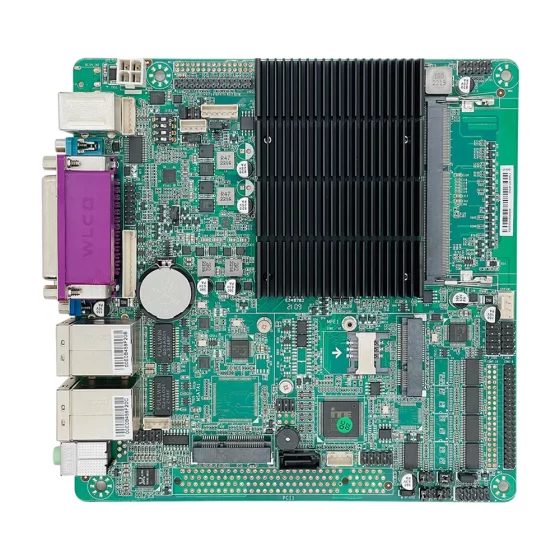
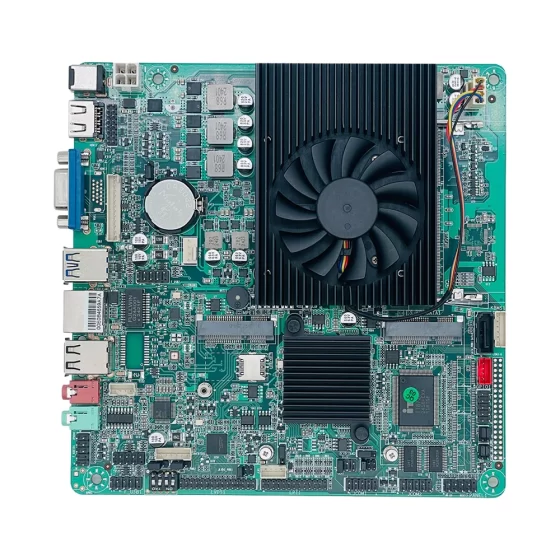
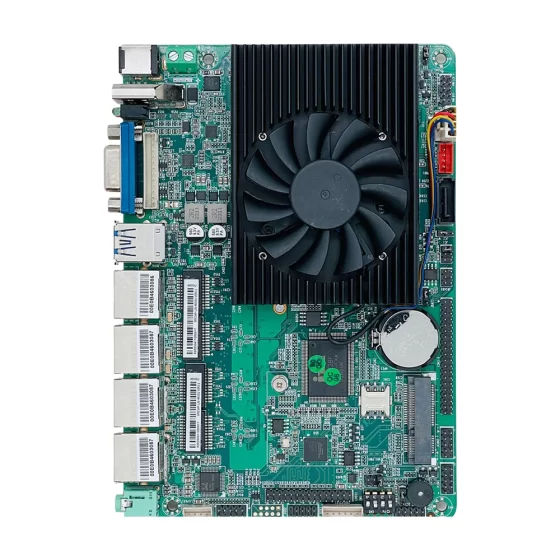
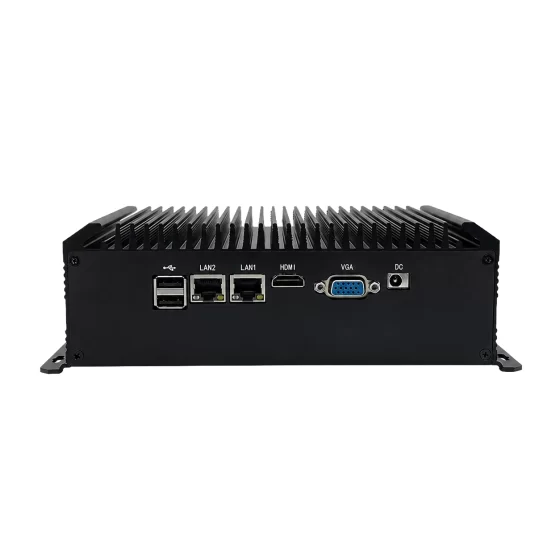
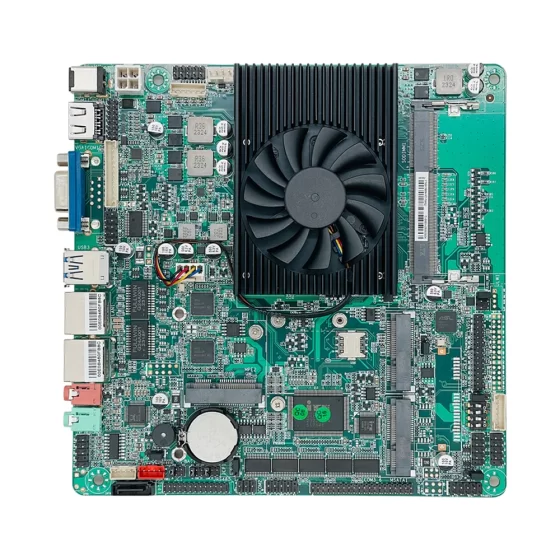
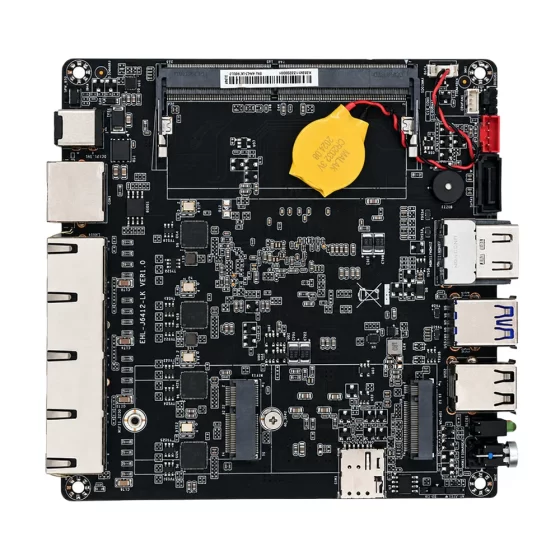
Soluciones de informática industrial CoreIPC

Resumen ejecutivo
Internet industrial de las cosas (IIoT) Las tecnologías están transformando la forma en que los fabricantes recolectan, proceso, y utilizar datos operativos. A medida que las instalaciones industriales están cada vez más conectadas, Las organizaciones enfrentan desafíos crecientes relacionados con la latencia., consumo de ancho de banda, ciberseguridad, y toma de decisiones en tiempo real. Las arquitecturas tradicionales centradas en la nube a menudo tienen dificultades para cumplir con los requisitos de rendimiento de los entornos industriales modernos, donde los milisegundos pueden afectar significativamente la productividad., calidad, y eficiencia operativa.
Una plataforma IIoT Edge Computing aborda estos desafíos al acercar el procesamiento de datos, analítica, y toma de decisiones inteligente más cerca de los equipos industriales y las fuentes de datos. En lugar de transmitir todos los datos a servidores remotos en la nube, Las plataformas informáticas de borde realizan procesamiento local., filtración, y análisis, Permitir respuestas en tiempo real y al mismo tiempo reducir el tráfico de red y la dependencia de la nube..
Las modernas plataformas informáticas de borde IIoT combinan computadoras industriales, sistemas informáticos integrados, tecnologías de redes industriales, y capacidades de análisis inteligente en una infraestructura unificada. Estas plataformas sirven como base para la fabricación inteligente, mantenimiento predictivo, automatización industrial, visión artificial, gestión de energía, e implementaciones de IoT industrial.
Este artículo explora la arquitectura., beneficios, escenarios de implementación, y consideraciones clave de las plataformas informáticas de borde IIoT en la industria 4.0 entornos.
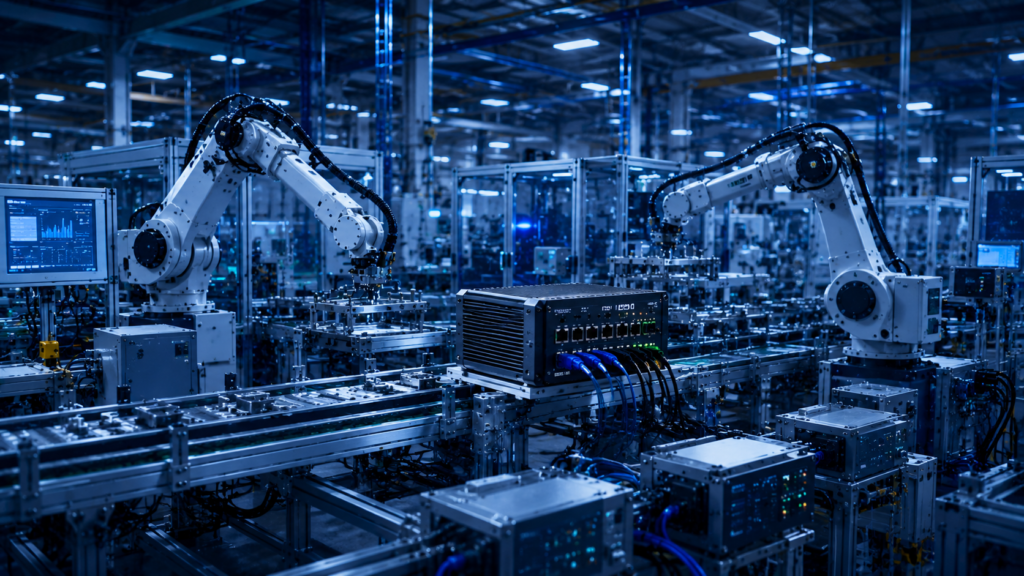
Plataforma informática de borde industrial IIoT que permite conectividad en tiempo real, análisis de borde, automatización industrial, y operaciones de fabricación inteligentes.
Descripción general de la industria
La evolución del IoT industrial
Las operaciones industriales tradicionalmente se han basado en sistemas de automatización aislados diseñados para control y monitoreo local.. Si bien estos sistemas proporcionaron confiabilidad y estabilidad, a menudo carecían de conectividad y visibilidad a nivel empresarial.
Las organizaciones industriales actuales buscan lograr:
- Visibilidad del equipo en tiempo real
- Automatización inteligente
- Mantenimiento predictivo
- Optimización de la producción
- Eficiencia energética
- Monitoreo de activos
- Transformación digital
Estos objetivos requieren acceso continuo a datos operativos y capacidades de procesamiento inteligente..
El desafío de la explosión de datos
Los entornos industriales modernos generan enormes volúmenes de datos de:
- PLC
- Sensores industriales
- Sistemas de visión artificial
- Robótica
- Sistemas SCADA
- Medidores de energía
- Equipo de producción
Una sola instalación de fabricación puede generar millones de puntos de datos cada día..
Sin arquitecturas de procesamiento eficientes, las organizaciones enfrentan:
- Altos costos de ancho de banda
- Sobrecarga de datos
- Análisis retrasados
- Mayores gastos en la nube
Esto ha acelerado la adopción de arquitecturas informáticas de punta..
Por qué es importante la informática de punta
Edge Computing procesa datos más cerca de la fuente en lugar de depender completamente de plataformas de nube centralizadas..
Las ventajas clave incluyen:
- Menor latencia
- Tiempos de respuesta más rápidos
- Fiabilidad mejorada
- Tráfico de red reducido
- Seguridad mejorada
- Mejor escalabilidad
Estos beneficios hacen que la informática de punta sea un componente crítico de las infraestructuras IIoT modernas..
Desafíos clave
Requisitos de decisión en tiempo real
Los procesos industriales a menudo requieren respuestas inmediatas.
Los ejemplos incluyen:
- control de línea de producción
- Detección de defectos
- Monitoreo de seguridad
- Protección de equipos
- Navegación robótica
El procesamiento basado en la nube por sí solo puede provocar retrasos inaceptables.
Complejidad de la red industrial
Las instalaciones modernas frecuentemente contienen:
- PLC heredados
- Múltiples protocolos de comunicación
- Equipo distribuido
- Diversos proveedores de automatización
La conexión de estos sistemas requiere plataformas informáticas de borde flexibles.
Preocupaciones de ciberseguridad
A medida que los sistemas industriales se vuelven más conectados, Los riesgos de ciberseguridad aumentan.
Las organizaciones deben proteger:
- Datos operativos
- Configuraciones de equipos
- Sistemas de producción
- Redes empresariales
Las arquitecturas informáticas de vanguardia seguras ayudan a reducir la exposición.
Limitaciones de ancho de banda
La transmisión continua de datos industriales sin procesar a plataformas en la nube puede resultar costosa e ineficiente.
Las fuentes de datos comunes incluyen:
- Cámaras de alta resolución
- Sensores de vibración
- Sensores ambientales
- Equipo de producción
El procesamiento local reduce la transmisión de datos innecesaria.
Requisitos de confiabilidad
Demanda de entornos industriales:
- Operación continua
- Alta disponibilidad del sistema
- Rendimiento estable
- Apoyo a largo plazo
Las plataformas informáticas de borde de grado industrial están diseñadas para cumplir con estos requisitos.
Arquitectura de la solución
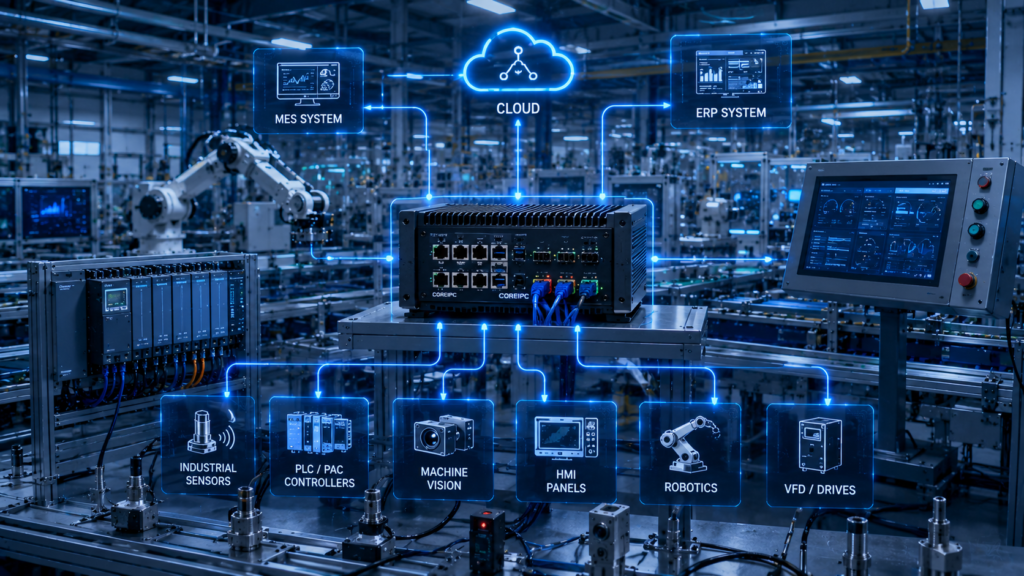
Arquitectura informática de borde IIoT que permite la adquisición de datos en tiempo real, conectividad industrial, análisis de borde, e integración entre equipos de fábrica y sistemas empresariales.
Arquitectura típica de computación de borde IIoT
Una plataforma informática de borde IIoT normalmente consta de varias capas.
Capa de dispositivo
Los dispositivos conectados incluyen:
- Sensores industriales
- Controladores PLC
- Cámaras industriales
- Sistemas RFID
- Medidores inteligentes
- Sistemas robóticos
Estos dispositivos generan datos operativos..
Capa de conectividad
Las redes industriales pueden incluir:
- Modbus TCP
- PROFINET
- Ethernet/IP
- OPC-UA
- MQTT
- Autobús CAN
La plataforma perimetral sirve como centro de comunicación..
Capa de computación perimetral
La plataforma informática de borde realiza:
- Adquisición de datos
- Filtrado de datos
- Conversión de protocolo
- Procesamiento de eventos
- Análisis locales
- inferencia de IA
Esto reduce la dependencia de la nube al tiempo que mejora la capacidad de respuesta..
Capa empresarial
Los datos procesados se integran con:
- sistemas MES
- plataformas ERP
- Sistemas SCADA
- Plataformas gemelas digitales
- Aplicaciones analíticas
Esto proporciona visibilidad en toda la empresa..
Capa de nubes
Soporte de plataformas en la nube:
- Almacenamiento a largo plazo
- Análisis histórico
- Informes avanzados
- Gestión de flotas
- Monitoreo centralizado
La plataforma perimetral determina qué datos deben transmitirse.
Características clave
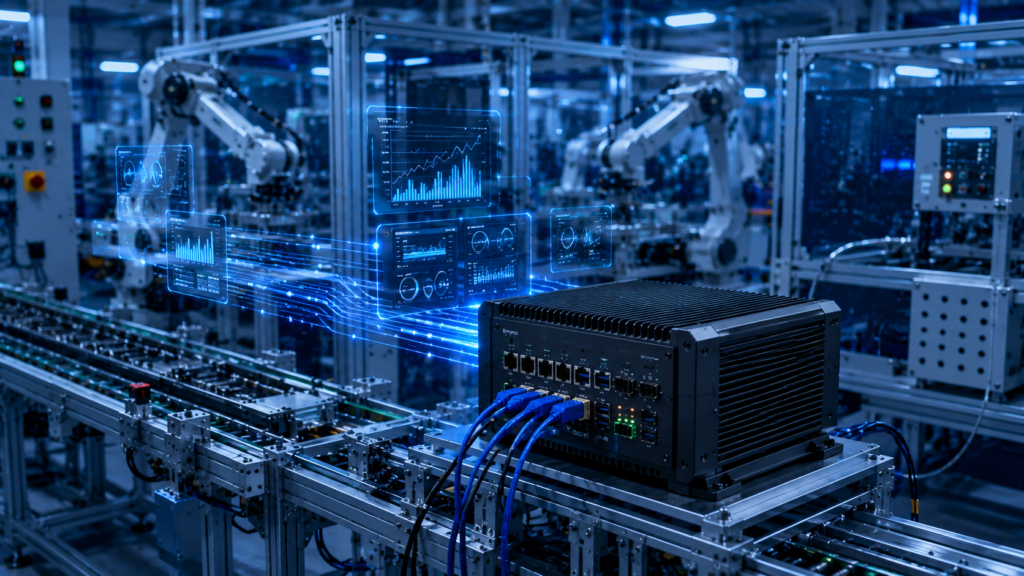
Plataforma informática de borde industrial IIoT que permite análisis en tiempo real, procesamiento local, mantenimiento predictivo, y operaciones de fabricación inteligentes.
1. Procesamiento de datos en tiempo real
Las plataformas informáticas de borde IIoT analizan datos operativos localmente para respaldar la toma de decisiones inmediata.
2. Integración de protocolo
Los entornos industriales suelen contener dispositivos que utilizan múltiples estándares de comunicación..
Las plataformas perimetrales simplifican la interoperabilidad mediante la conversión e integración de protocolos.
3. Conectividad industrial
Soporte para:
- Ethernet
- comunicación en serie
- Redes inalámbricas
- Sistemas de bus de campo industriales
permite una implementación flexible.
4. Análisis de borde
Las capacidades de análisis local proporcionan:
- Monitoreo de equipos
- Optimización de la producción
- Visibilidad del proceso
- Inteligencia operativa
sin latencia en la nube.
5. Soporte de mantenimiento predictivo
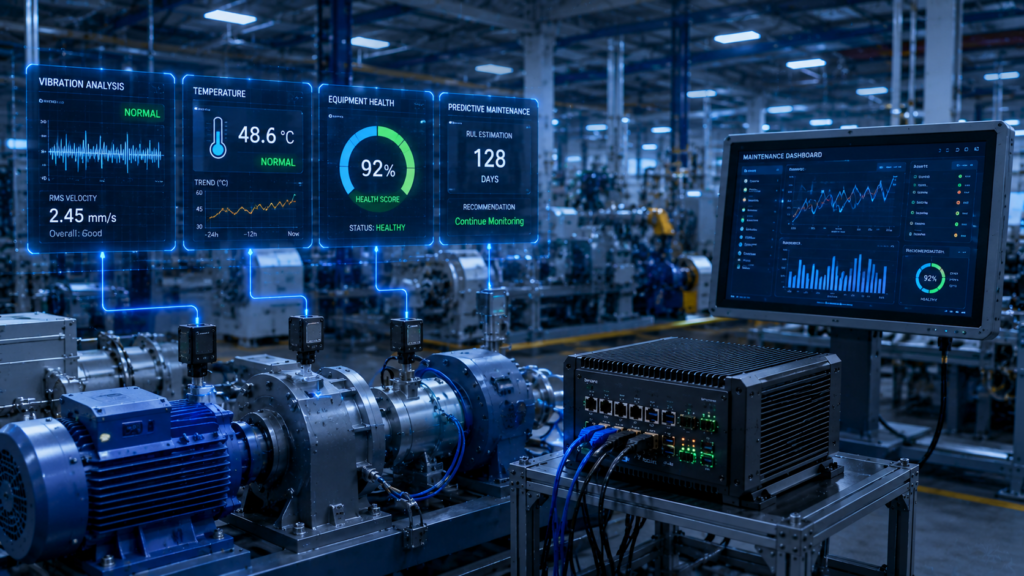
Plataforma informática de borde IIoT que permite el mantenimiento predictivo a través del monitoreo de equipos en tiempo real, análisis de borde, y evaluación inteligente de la salud.
Las plataformas perimetrales recopilan y analizan datos sobre el estado del equipo para identificar posibles fallas antes de que ocurran..
6. Integración de IA y visión artificial
Compatibilidad con plataformas IIoT modernas:
- inferencia de IA
- Inspección OCR
- Detección de defectos
- Aplicaciones de visión artificial
para la automatización inteligente.
7. Monitoreo remoto
Los operadores pueden monitorear remotamente:
- Estado del equipo
- Métricas de producción
- Consumo de energía
- Rendimiento del sistema
desde ubicaciones centralizadas.
8. Seguridad Industrial
Las características de seguridad avanzadas pueden incluir:
- Comunicación segura
- Autenticación de usuario
- Cifrado de datos
- Segmentación de red
para proteger la infraestructura crítica.
9. Arquitectura escalable
Las organizaciones pueden ampliar las implementaciones a medida que evolucionan los requisitos comerciales.
Productos CoreIPC recomendados
Computadoras integradas
Ideal para:
- Puertas de enlace IIoT
- Procesamiento de bordes
- Monitoreo remoto
Beneficios:
- Diseño compacto
- Bajo consumo de energía
- Instalación flexible
PC industriales sin ventilador
Ideal para:
- Ambientes hostiles
- Operación continua
- Instalaciones sensibles al mantenimiento
Beneficios:
- Refrigeración sin ventilador
- Fiabilidad mejorada
- Funcionamiento silencioso
PC industriales
Ideal para:
- Procesamiento de borde centralizado
- Implementaciones de IIoT a gran escala
- Integración multidispositivo
Beneficios:
- Rendimiento alto
- Capacidad de expansión
- Rica conectividad
Computadoras de IA de borde
Ideal para:
- Análisis inteligente
- Visión artificial
- Mantenimiento predictivo
Beneficios:
- aceleración de la IA
- Inferencia en tiempo real
- Toma de decisiones locales
Placas base Mini-ITX
Ideal para:
- Electrodomésticos de borde personalizados
- Proyectos OEM
- Sistemas industriales integrados
Beneficios:
- Integración flexible
- Soporte de ciclo de vida prolongado
- Ricas interfaces de E/S
Escenarios de implementación
Fabricación inteligente
Las plataformas informáticas de borde IIoT conectan equipos de producción, sensores, y sistemas empresariales para mejorar la visibilidad y la eficiencia operativas.
Mantenimiento predictivo
Los análisis de borde monitorean continuamente los indicadores de estado del equipo, como:
- Vibración
- Temperatura
- Consumo actual
- Presión
para identificar anomalías tempranamente.
Inspección por visión artificial
Las cámaras industriales y los algoritmos de IA funcionan:
- Detección de defectos
- reconocimiento OCR
- Verificación de código de barras
- inspección de calidad
directamente en el borde.
Gestión Energética
Las organizaciones monitorean y optimizan:
- Consumo de energía
- Eficiencia del equipo
- Utilización de servicios públicos
a través de análisis en tiempo real.
Automatización Industrial
Las plataformas perimetrales admiten la comunicación entre:
- PLC
- Sistemas SCADA
- Dispositivos HMI
- Aplicaciones empresariales
para la automatización inteligente.
Monitoreo remoto de activos
Los activos industriales distribuidos se pueden monitorear y administrar desde ubicaciones centralizadas.
Transporte inteligente
Las aplicaciones incluyen:
- Monitoreo de flota
- Gestión del tráfico
- Diagnóstico del vehículo
- Monitoreo de infraestructura
Beneficios comerciales
Tiempos de respuesta más rápidos
El procesamiento local permite respuestas inmediatas a eventos operativos.
Costos de ancho de banda reducidos
Solo se transmite información relevante a las plataformas en la nube.
Confiabilidad mejorada del equipo
El monitoreo continuo ayuda a prevenir fallas inesperadas.
Mejor visibilidad operativa
Las organizaciones obtienen acceso a información en tiempo real sobre todas las operaciones.
Seguridad mejorada
El procesamiento local reduce la exposición de datos operativos confidenciales.
Transformación digital acelerada
La computación perimetral permite a las organizaciones implementar la industria 4.0 iniciativas más eficazmente.
Por qué CoreIPC
CoreIPC proporciona plataformas informáticas industriales diseñadas para IIoT, computación de borde, automatización industrial, y aplicaciones de conectividad inteligente.
Las capacidades de CoreIPC incluyen:
- diseño de computadoras industriales
- Experiencia en informática integrada
- Fabricación OEM
- desarrollo ODM
- Personalización del producto
- Soporte de ciclo de vida prolongado
- Calidad de grado industrial
- Experiencia de implementación global
Si se construye una puerta de enlace IIoT, Implementación de análisis de borde, integración de sistemas de visión artificial, o implementar Industria 4.0 infraestructura, CoreIPC ofrece plataformas informáticas confiables para entornos industriales exigentes.
Preguntas frecuentes
1. ¿Qué es la informática de punta IIoT??
La computación de borde IIoT procesa datos industriales localmente cerca de equipos y dispositivos en lugar de depender completamente de la infraestructura de la nube..
2. ¿Por qué es importante la informática de punta en la industria? 4.0?
Reduce la latencia, mejora la confiabilidad, reduce los costos de ancho de banda, y permite la toma de decisiones en tiempo real.
3. ¿Qué es una plataforma informática de borde IIoT??
Es un sistema informático que combina la adquisición de datos., procesamiento local, redes industriales, analítica, e integración empresarial.
4. ¿Qué industrias utilizan la informática de punta IIoT??
Fabricación, energía, transporte, cuidado de la salud, logística, y las empresas de servicios públicos suelen implementar soluciones informáticas de vanguardia.
5. ¿Puede la informática de punta reducir los costos de la nube??
Sí. El procesamiento local reduce la cantidad de datos transmitidos y almacenados en entornos de nube.
6. ¿Qué protocolos de comunicación se admiten comúnmente??
Modbus, OPC-UA, MQTT, PROFINET, Ethernet/IP, y CAN Bus son ampliamente utilizados.
7. ¿Pueden las plataformas de borde IIoT soportar aplicaciones de IA??
Sí. Muchas plataformas admiten la inferencia de IA, visión artificial, Inspección OCR, y análisis predictivo.
8. ¿Cómo mejora la seguridad la informática de punta??
Los datos operativos confidenciales se pueden procesar localmente, reducir la exposición a redes externas.
9. ¿Cuál es la diferencia entre una puerta de enlace IIoT y una plataforma informática de punta??
Una puerta de enlace IIoT se centra principalmente en la conectividad y la conversión de protocolos., mientras que una plataforma perimetral agrega análisis locales, tratamiento, y toma de decisiones inteligente.
10. ¿Pueden las plataformas perimetrales integrarse con los sistemas MES y ERP??
Sí. La integración empresarial es una característica clave de las arquitecturas modernas de IIoT.
11. ¿Son las computadoras industriales adecuadas para la informática de punta??
Sí. Los ordenadores industriales proporcionan la fiabilidad, conectividad, y soporte de ciclo de vida requerido para implementaciones perimetrales.
12. ¿Cómo apoya la informática de punta el mantenimiento predictivo??
Analizando continuamente los datos de condición del equipo localmente e identificando fallas potenciales antes de que ocurra el tiempo de inactividad..
Conclusión
Las plataformas informáticas de borde IIoT se han convertido en la piedra angular de la industria 4.0 transformación digital. Acercando la inteligencia a los equipos industriales, estas plataformas permiten análisis en tiempo real, visibilidad operativa mejorada, mantenimiento predictivo, y automatización inteligente. Desde la fabricación inteligente y la visión artificial hasta la gestión energética y la monitorización remota, La informática de punta ofrece el rendimiento, fiabilidad, y escalabilidad requerida por los entornos industriales modernos. Seleccionar la plataforma informática industrial adecuada es esencial para construir sistemas seguros, eficiente, e infraestructuras IIoT preparadas para el futuro.
Contáctenos
Buscando una plataforma informática de borde IIoT?
CoreIPC proporciona soluciones informáticas industriales para:
- Aplicaciones IIoT
- Computación de borde
- Fabricación inteligente
- Automatización Industrial
- Visión artificial
- Mantenimiento predictivo
- Proyectos OEM
- Proyectos ODM
- Desarrollo de hardware integrado personalizado
Póngase en contacto con CoreIPC hoy para analizar sus requisitos de informática de punta e identificar la plataforma ideal para su implementación de IoT industrial..