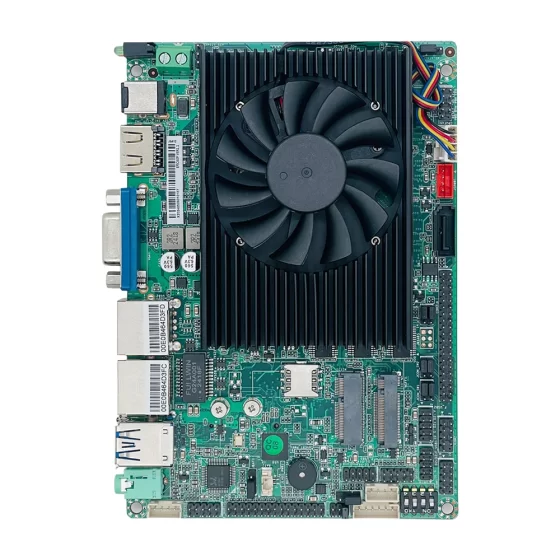
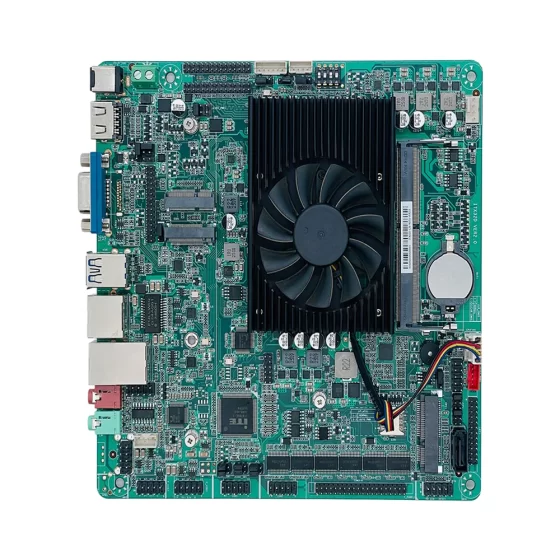
Soluciones de informática industrial CoreIPC

Monitoreo de infraestructura de servicios públicos: Plataforma de monitoreo de servicios públicos para operaciones de infraestructura crítica
Resumen ejecutivo
Una plataforma de monitoreo de servicios públicos proporciona la base informática industrial para monitorear la energía., agua, gas, aguas residuales, energía renovable, estaciones de bombeo, subestaciones, equipo de campo distribuido, y activos de infraestructura remotos.
La infraestructura de servicios públicos está cada vez más conectada y basada en datos. Los operadores necesitan visibilidad en tiempo real del estado del equipo, flujo de energía, presión de agua, funcionamiento de la bomba, lecturas del medidor, condiciones ambientales, alarmas, eventos de seguridad, y disponibilidad de sitios remotos.
Sin embargo, Los entornos de servicios públicos a menudo se distribuyen en muchas ubicaciones.. Algunos sitios están ubicados en subestaciones., estaciones de bombeo, gabinetes de carretera, cuartos de servicio, granjas solares, instalaciones de tratamiento de agua, o recintos de campo remotos. Estos sitios pueden operar continuamente con personal limitado en el sitio y condiciones ambientales desafiantes..
Una plataforma de monitoreo de servicios públicos construida sobre una computadora industrial o una computadora integrada puede recopilar datos de sensores, metros, PLC, RTU, Sistemas SCADA, camaras, puertas de enlace, y dispositivos de comunicación. Puede procesar datos localmente, registros de buffer durante interrupciones de la red, Admite acceso remoto seguro, y enviar información estructurada a SCADA, paneles de control en la nube, sistemas de mantenimiento, o centros de operación de servicios públicos.
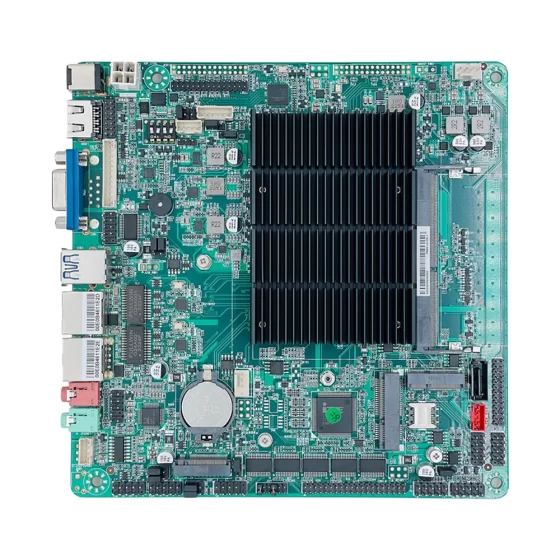
En comparación con las PC de oficina o las pasarelas de consumo, Las computadoras industriales brindan mayor confiabilidad para la implementación de servicios públicos.. Soportan recintos resistentes, múltiples puertos LAN, comunicación en serie, GPIO, almacenamiento local, opciones de diseño sin ventilador, entrada de energía estable, y disponibilidad de ciclo de vida prolongado.
Este artículo explica cómo funciona el monitoreo de la infraestructura de servicios públicos., ¿Qué desafíos aparecen en los entornos de servicios públicos distribuidos?, cómo está estructurada la arquitectura de la solución, y qué características de hardware son importantes al seleccionar una computadora industrial o una computadora integrada para la implementación de una plataforma de monitoreo de servicios públicos.
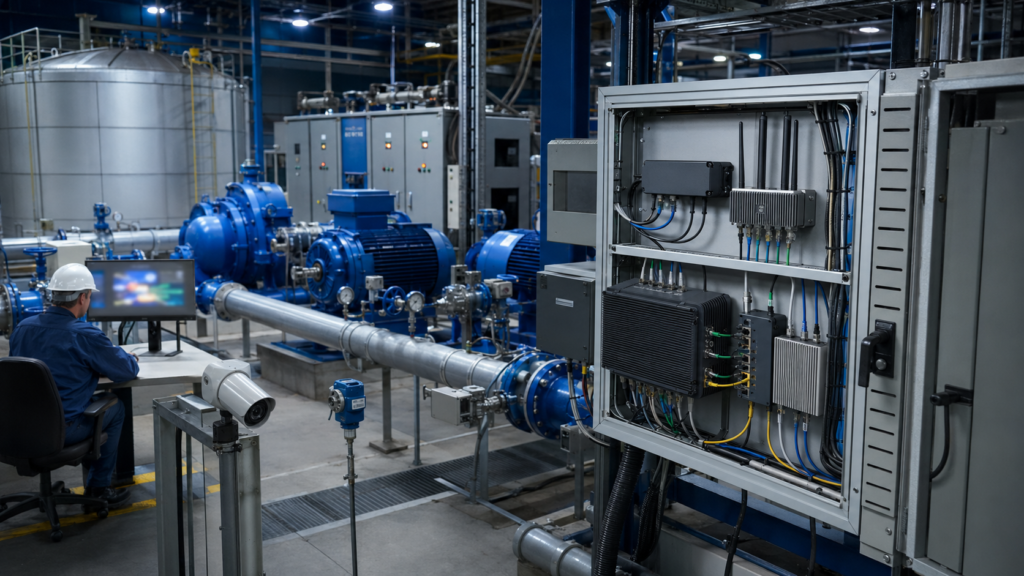
Monitoreo de datos de campo de servicios públicos
Descripción general de la industria
Los sistemas de servicios públicos necesitan visibilidad continua
La infraestructura de servicios públicos debe funcionar de manera confiable.
Distribución de energía, suministro de agua, tratamiento de aguas residuales, redes de gas, sistemas de energía renovable, y las estaciones de bombeo requieren un monitoreo continuo.
Los operadores necesitan saber:
- ¿Está el sitio en línea??
- ¿Los medidores informan normalmente??
- ¿Las bombas funcionan correctamente??
- ¿Son estables los sistemas de energía??
- ¿Están activas las alarmas??
- ¿Están las temperaturas dentro de los límites??
- ¿Las puertas o gabinetes son seguros??
- ¿Son saludables los vínculos de comunicación??
- ¿Los activos remotos funcionan como se esperaba??
Sin un seguimiento fiable, Los problemas pueden permanecer ocultos hasta que la calidad del servicio se vea afectada..
Una plataforma de monitoreo de servicios públicos ayuda a los operadores a detectar problemas antes y administrar la infraestructura distribuida de manera más eficiente.
Los activos de campo están cada vez más conectados
La infraestructura de servicios públicos tradicional a menudo utilizaba sistemas de control local e inspecciones manuales periódicas..
Hoy, más activos están conectados a sistemas SCADA, plataformas industriales de IoT, paneles de control en la nube, y centros de operaciones centralizados.
Los activos conectados pueden incluir:
- Medidores inteligentes
- Controladores de bombas
- RTU
- PLC
- medidores de potencia
- Contadores de agua
- Sensores de flujo
- Sensores de presión
- Sensores de temperatura
- Sensores ambientales
- Camaras de seguridad
- Sistemas de baterías
- Inversores solares
- Pasarelas de comunicación
Esta conectividad mejora la visibilidad., pero también crea requisitos para una informática de punta confiable y una comunicación segura..
La informática industrial respalda la implementación remota de servicios públicos
Los equipos de monitoreo de servicios públicos a menudo se instalan fuera de entornos de oficina limpios..
Puede instalarse en armarios de control., subestaciones, estaciones de bombeo, refugios para equipos, recintos al borde de la carretera, cuartos de servicio remotos, sitios de energía renovable, e instalaciones de tratamiento de agua.
Estos ambientes pueden incluir polvo., vibración, variación de temperatura, humedad, poder inestable, interferencia electromagnética, flujo de aire limitado, y acceso de mantenimiento limitado.
Las computadoras industriales y las computadoras integradas proporcionan la base de hardware para estas condiciones..
Admiten un despliegue robusto, E/S flexibles, almacenamiento local, comunicación multired, operación sin ventilador, y disponibilidad de la plataforma a largo plazo.

Desafíos del monitoreo remoto de servicios públicos
Desafíos clave
Monitoreo de sitios remotos distribuidos
Los sistemas de servicios públicos a menudo están dispersos en amplias áreas geográficas..
Un único operador puede gestionar muchas subestaciones, estaciones de bombeo, tanques, tuberías, sitios solares, sistemas de almacenamiento, o gabinetes de campo.
Cada sitio puede tener equipos diferentes, calidad de la red, condiciones de potencia, y cronogramas de mantenimiento.
Una plataforma de monitoreo de servicios públicos debe admitir la operación distribuida.
Debería recopilar datos locales., informar el estado a los sistemas centrales, y continuar funcionando incluso cuando las condiciones de la red sean inestables.
Conexión de dispositivos de servicios públicos mixtos
Los sitios de servicios públicos a menudo contienen equipos de diferentes proveedores y generaciones..
Es posible que sea necesario conectar una plataforma de monitoreo:
- PLC
- RTU
- Medidores inteligentes
- medidores de potencia
- medidores de flujo
- Controladores de bombas
- Inversores
- Sistemas de baterías
- Sensores ambientales
- Dispositivos de seguridad
- Cámaras
- Equipos en serie heredados
Estos dispositivos pueden utilizar diferentes interfaces y métodos de comunicación..
El hardware flexible es importante para una integración práctica.
Compatible con comunicación serie y Ethernet
Muchos sistemas de servicios públicos todavía utilizan comunicación en serie..
Se pueden utilizar RS232 y RS485 para medidores., RTU, sensores, controladores, y dispositivos de campo heredados.
Los sistemas modernos pueden usar Ethernet, interruptores industriales, enrutadores celulares, o enlaces ascendentes de fibra.
Una plataforma de monitoreo de servicios públicos debe admitir comunicación serial y Ethernet para reducir la necesidad de convertidores externos..
El soporte de interfaz nativa mejora la confiabilidad y simplifica el cableado de campo.
Mantenimiento de la operación durante interrupciones de la red
Los sitios de servicios públicos remotos pueden experimentar enlaces de comunicación inestables.
Conexiones celulares, Ethernet de larga distancia, enlaces inalámbricos, o las redes de campo pueden fallar temporalmente.
La plataforma de monitoreo debe continuar recopilando datos localmente durante estas interrupciones..
El almacenamiento en búfer local ayuda a preservar:
- Lecturas del medidor
- Registros de alarma
- Estado de la bomba
- Datos ambientales
- Eventos de seguridad
- Registros de calidad de energía
- Tendencias de flujo y presión.
- Registros de mantenimiento
Cuando se recupera la conexión, Los registros almacenados en buffer se pueden reenviar a SCADA., paneles de control en la nube, o bases de datos centrales.
Asegurar el acceso remoto y la transferencia de datos
Las plataformas de monitoreo de servicios públicos a menudo conectan infraestructura crítica con sistemas remotos.
Esto crea requisitos de seguridad..
Es posible que la plataforma necesite soporte:
- Segmentación de red
- Políticas de firewall
- Acceso remoto seguro
- VPN o túneles cifrados
- Permisos de usuario
- Registro local
- Copia de seguridad de configuración
- Comunicación controlada en la nube
La seguridad debe diseñarse cuidadosamente porque los sistemas de servicios públicos son importantes desde el punto de vista operativo..
El acceso remoto debería ayudar a los equipos de mantenimiento sin exponer innecesariamente los activos de campo críticos.
Operando de manera confiable durante muchos años
Los sistemas de infraestructura de servicios públicos pueden permanecer en servicio durante años.
Los cambios frecuentes de hardware pueden crear problemas de validación de software, problemas de repuestos, problemas de compatibilidad de controladores, y complejidad del mantenimiento.
Las plataformas informáticas industriales con disponibilidad de ciclo de vida prolongado ayudan a los operadores e integradores de sistemas a mantener sistemas de monitoreo consistentes en muchos sitios.

Arquitectura de monitoreo de servicios públicos
Arquitectura de la solución de la plataforma de monitoreo de servicios públicos
Capa de dispositivo de campo
La capa de dispositivo de campo incluye el equipo que se está monitoreando..
Esta capa puede incluir:
- Medidores inteligentes
- medidores de potencia
- Contadores de agua
- Sensores de flujo
- Sensores de presión
- Sensores de temperatura
- Controladores de bombas
- PLC
- RTU
- Inversores solares
- Sistemas de baterías
- Camaras de seguridad
- Sensores ambientales
- Dispositivos de control de acceso
Estos dispositivos generan datos operativos que ayudan a los operadores de servicios públicos a comprender las condiciones del sitio..
Capa de monitoreo de borde
La capa de monitoreo de borde es la capa informática local..
en esta capa, el ordenador industrial o el ordenador integrado pueden:
- Recopilar datos del medidor
- Monitorear el estado de la bomba
- Recibir lecturas de sensores
- Conecte PLC y RTU
- Almacenar registros locales
- Almacenar datos durante problemas de red
- Aplicar lógica de alarma
- Procesar eventos locales
- Controlar el reenvío de datos
- Admite diagnóstico remoto
Esta capa proporciona inteligencia local en el sitio de servicios públicos..
Capa de comunicación
La capa de comunicación conecta el sitio remoto con los sistemas centrales..
Puede incluir:
- enlace ascendente ethernet
- enrutador celular
- Red de fibra
- interruptor industrial
- túnel vpn
- Acceso remoto seguro
- comunicación SCADA
- Conexión de plataforma en la nube
- Enlace de red de sitio a sitio
La plataforma de monitoreo de servicios públicos debe admitir una comunicación estable y una separación clara de la red..
Capa de procesamiento de datos
La capa de procesamiento de datos mejora la usabilidad de los datos antes de cargarlos.
La plataforma podrá procesar:
- Lecturas del medidor
- Eventos de alarma
- Tiempo de funcionamiento de la bomba
- Tendencias de flujo
- Valores de presión
- Consumo de energía
- Estado de la batería
- Condiciones ambientales
- Salud del equipo
- Estado de la comunicación
El procesamiento local reduce el ancho de banda innecesario y ayuda a los operadores a centrarse en eventos significativos..
Capa de integración de plataforma
La plataforma de monitoreo conecta los datos de campo con sistemas de nivel superior.
Puede enviar información estructurada a:
- SCADA
- Centros de operación de servicios públicos
- Paneles de control en la nube
- Plataformas de mantenimiento
- Sistemas de gestión de energía.
- Sistemas de gestión del agua
- Sistemas de gestión de alarmas.
- Bases de datos de historiadores locales
- Plataformas de monitoreo remoto
- Sistemas de gestión de activos
Esta integración ayuda a los operadores de servicios públicos a gestionar la infraestructura distribuida de forma más eficiente..
Capa de seguridad y gestión
La capa de seguridad y gestión ayuda a proteger la comunicación de los servicios públicos y simplificar la operación..
Puede incluir:
- Segmentación de red
- Políticas de firewall
- Acceso remoto seguro
- Autenticación de usuario
- Registro local
- Copia de seguridad de configuración
- Monitoreo del estado del dispositivo
- Monitoreo de almacenamiento
- Gestión remota de actualizaciones
- Gestión de registros de acceso
Esta capa ayuda a mantener la confiabilidad del sistema a largo plazo y el acceso controlado..
Características clave
Conectividad multidispositivo
Una plataforma de monitoreo de servicios públicos debe conectarse con muchos tipos de equipos de campo..
Las interfaces útiles pueden incluir:
- LAN
- USB
- RS232
- RS485
- GPIO
- Entrada digital
- Salida digital
- hdmi
- DisplayPort
- M.2
- PCIe
- Almacenamiento SATA o NVMe
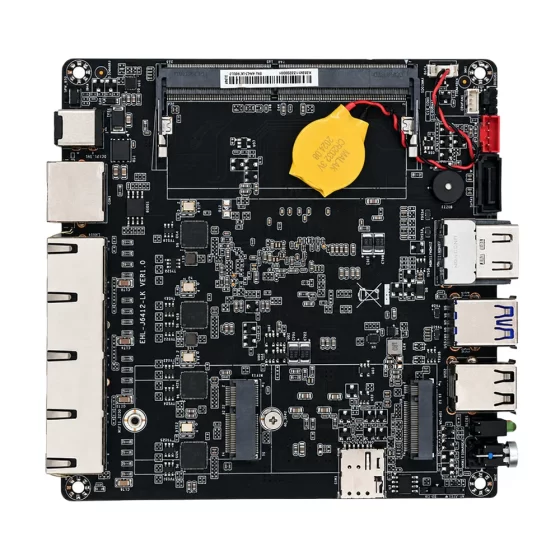
Las interfaces industriales nativas reducen la necesidad de convertidores externos y mejoran la confiabilidad de la instalación en campo..
Soporte de comunicación en serie
La comunicación en serie sigue siendo importante en la infraestructura de servicios públicos.
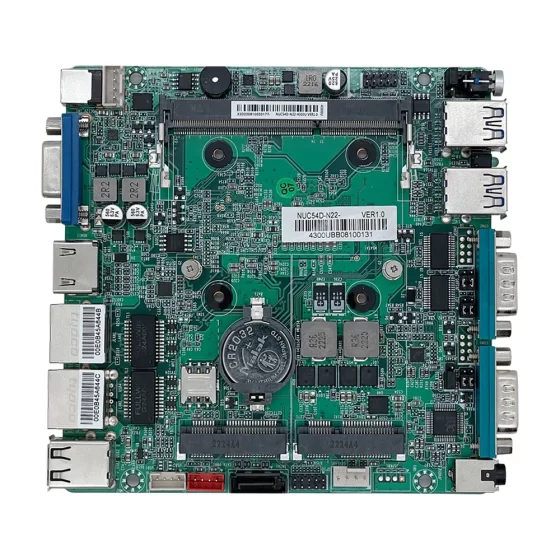
muchos metros, RTU, controladores, y los sensores utilizan RS232 o RS485.
Una computadora integrada con puertos serie nativos se puede conectar directamente a estos dispositivos.
Esto simplifica el cableado del gabinete y mejora la capacidad de mantenimiento del sistema..
Diseño de red multiLAN
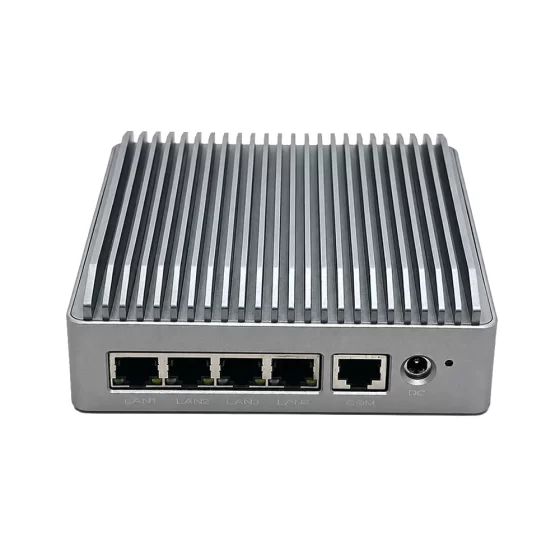
Múltiples puertos LAN son útiles para separar diferentes redes.
Una plataforma de monitoreo de servicios públicos puede usar conexiones separadas para:
- Red de dispositivos de campo
- Red SCADA
- Red de cámaras
- Red de mantenimiento remoto
- Red de gestión local
- Enlace ascendente WAN o nube
- Red industrial de IoT
- Red de seguridad
El diseño de LAN múltiple mejora la claridad de la red y admite límites de seguridad más sólidos.
Almacenamiento local y almacenamiento en búfer de datos
El almacenamiento local es fundamental para el monitoreo de servicios públicos.
La plataforma puede almacenar:
- Lecturas del medidor
- Registros de alarma
- Registros de eventos
- Historial de estado de la bomba
- Tendencias de sensores
- Bases de datos locales
- Cargar buffers
- Archivos de configuración
- Registros de acceso remoto
- Registros de diagnóstico
Generalmente se prefiere el almacenamiento SSD o NVMe porque proporciona un acceso rápido y una mejor resistencia a los golpes que las unidades mecánicas..
El diseño del almacenamiento debe considerar el tiempo de retención., escribe resistencia, flujo de trabajo de respaldo, y comportamiento de interrupción de la red.
Rendimiento del procesamiento perimetral
Una plataforma de monitoreo de servicios públicos puede recopilar, proceso, almacenar, y reenviar datos continuamente.
La selección de hardware debe considerar:
- rendimiento de la CPU
- Capacidad de memoria
- Recuento de dispositivos
- Tasa de actualización del sensor
- Carga de trabajo del protocolo
- Tamaño de la base de datos local
- Velocidad de almacenamiento
- Ancho de banda de red
- Carga de trabajo de seguridad
- Soporte del sistema operativo
Para sitios más grandes, La plataforma debe probarse con velocidades de datos reales y dispositivos de campo..
Diseño robusto y sin ventilador
Los sistemas de monitoreo de servicios públicos pueden instalarse en entornos hostiles..
Las computadoras industriales sin ventilador reducen la entrada de polvo y eliminan un punto común de falla mecánica.
Los gabinetes resistentes ayudan a proteger contra las vibraciones, tensión de instalación del gabinete, tensión del cable, y funcionamiento continuo.
El diseño térmico aún debe revisarse cuidadosamente, especialmente en gabinetes al aire libre o cuartos de servicio mal ventilados.
Acceso remoto seguro
El acceso remoto es importante para el mantenimiento de los servicios públicos.
Es posible que los ingenieros necesiten revisar los registros, ajustar configuraciones, diagnosticar problemas de comunicación, o inspeccionar el estado del sistema.
El acceso remoto debe controlarse mediante:
- Autenticación de usuario
- Soporte VPN o túnel seguro
- Permisos de acceso
- Registro de sesión
- Ventanas de mantenimiento
- Segmentación de red
- Copia de seguridad de configuración
- Procedimientos de acceso de emergencia
Esto respalda el mantenimiento eficiente sin una amplia exposición de la red..
Disponibilidad de ciclo de vida prolongado
Las plataformas de monitoreo de servicios públicos a menudo se convierten en parte de la infraestructura a largo plazo..
El hardware consistente ayuda a mantener las imágenes del software, diseños de cableado de campo, conductores, piezas de repuesto, plantillas de configuración, y procedimientos de validación.
La disponibilidad del ciclo de vida prolongado es especialmente importante para las empresas de servicios públicos., integradores de sistemas, y proveedores de dispositivos de monitoreo OEM.

Operaciones de infraestructura de servicios públicos
Escenarios de implementación
Monitoreo de distribución de energía
Los sitios de distribución de energía pueden incluir medidores., transformadores, aparamenta, dispositivos de protección, y equipos de comunicación.
Una plataforma de monitoreo de servicios públicos puede recopilar datos eléctricos, monitorear el estado del sitio, registros de buffer, y reenviar eventos a centros de operación o sistemas SCADA.
Esto respalda una mejor visibilidad en toda la infraestructura eléctrica distribuida..
Monitoreo de estaciones de bombeo de agua
Las estaciones de bombeo necesitan un monitoreo continuo del estado de la bomba, presión, fluir, nivel del tanque, uso de energía, y alarmas.
Una computadora integrada puede recopilar datos de los PLC, metros, sensores, y controladores.
Puede almacenar registros locales y reportar información estructurada a los sistemas centrales de gestión del agua..
Monitoreo de instalaciones de aguas residuales
Las instalaciones de aguas residuales pueden requerir monitoreo de bombas, motores, medidores de flujo, sistemas quimicos, tanques, y condiciones ambientales.
Una plataforma de monitoreo puede recopilar y procesar datos localmente, generar alarmas, y soporte de mantenimiento remoto.
Esto mejora la visibilidad operativa y la planificación del mantenimiento..
Monitoreo del sitio de energía renovable
Granjas solares, sitios de viento, y los sistemas de almacenamiento de baterías requieren monitoreo de los inversores, metros, sensores ambientales, y equipos de potencia.
Una computadora industrial puede recopilar datos localmente, conectarse a paneles de control en la nube, y soporte de diagnóstico remoto.
Esto ayuda a los operadores a gestionar los activos de energía renovable distribuida..
Recopilación de datos de medidores de servicios públicos
Los medidores inteligentes y los medidores industriales pueden informar energía, agua, gas, o uso de energía.
Una plataforma de monitoreo de servicios públicos puede agregar datos de medidores, alinear marcas de tiempo, registros de buffer, y enviar información a sistemas de gestión de energía o servicios públicos..
Esto respalda la generación de informes y análisis precisos..
Monitoreo remoto de gabinetes y equipos de campo
Los gabinetes remotos pueden contener equipos de comunicación., fuentes de alimentación, sensores, dispositivos de control de acceso, y controladores de campo.
Una computadora integrada puede monitorear la temperatura del gabinete, estado de la puerta, estado de energía, comunicación salud, y eventos de seguridad.
Esto ayuda a reducir los puntos ciegos en la infraestructura distribuida..
Monitoreo de borde SCADA
Los sistemas SCADA a menudo dependen de datos remotos de los activos de servicios públicos..
Una plataforma de seguimiento puede recopilar datos locales, gestionar la comunicación, almacenar registros, y enviar información seleccionada a plataformas SCADA.
Esto mejora la visibilidad del sitio y admite operaciones remotas más confiables..
Dispositivo de monitoreo de servicios públicos OEM
Los integradores de sistemas y fabricantes de equipos pueden construir dispositivos de monitoreo de servicios públicos personalizados utilizando computadoras industriales o placas integradas..
La plataforma puede soportar la recopilación de datos de campo., almacenamiento local, comunicación segura, acceso remoto, y despliegue robusto.
Beneficios comerciales
Mejor visibilidad de la infraestructura
Una plataforma de monitoreo de servicios públicos ayuda a los operadores a ver lo que sucede en los sitios distribuidos.
Puede recopilar datos de medidores., sensores, PLC, RTU, zapatillas, inversores, y dispositivos de campo.
Esto mejora la visibilidad del estado de los activos y las condiciones operativas..
Detección de fallos más rápida
La monitorización local ayuda a detectar condiciones anormales antes.
Los ejemplos incluyen fallas de la bomba., cambios de presión, alarmas de temperatura, problemas de poder, fallas de comunicacion, eventos de acceso al gabinete, y cambios de estado del equipo.
La detección temprana ayuda a reducir el tiempo de inactividad y la interrupción del servicio.
Inspección manual reducida
El monitoreo remoto puede reducir la dependencia de las visitas manuales al sitio.
Los operadores pueden revisar el estado., registros, alarmas, y tendencias de los sistemas centrales.
Esto mejora la eficiencia del mantenimiento y reduce la carga de trabajo del servicio de campo..
Continuidad de datos mejorada
El almacenamiento local y el almacenamiento en búfer ayudan a prevenir la pérdida de datos durante interrupciones de la red..
La plataforma puede seguir recopilando registros y subirlos cuando se recupere la comunicación..
Esto mejora la precisión de los informes y la trazabilidad a largo plazo..
Mantenimiento remoto más sólido
El acceso remoto seguro ayuda a los ingenieros a solucionar problemas de los sistemas de campo de manera más eficiente.
Con control de acceso y registro adecuados, El mantenimiento remoto puede reducir los viajes y mejorar el tiempo de respuesta al mismo tiempo que protege las redes de infraestructura crítica..
Implementación escalable de monitoreo de servicios públicos
Una plataforma de monitoreo de servicios públicos estandarizada facilita la implementación en muchos sitios.
El hardware consistente simplifica las imágenes de software, cableado de campo, plantillas de configuración, planificación de repuestos, entrenamiento de mantenimiento, y gestión del ciclo de vida.
Esto respalda programas de monitoreo de infraestructura escalables..
Por qué CoreIPC
CoreIPC proporciona plataformas informáticas industriales para la gestión energética, IoT industrial, monitoreo remoto, seguridad de red, transporte inteligente, e integración de sistemas integrados. Para aplicaciones de plataforma de monitoreo de servicios públicos, CoreIPC se centra en hardware informático industrial confiable, soluciones informáticas integradas, configuraciones de LAN múltiple, comunicación en serie, E/S flexibles, diseño de sistema compacto, opciones de implementación sin ventilador, capacidad de almacenamiento local, y soporte de personalización OEM/ODM. CoreIPC ayuda a los integradores de sistemas, operadores de servicios públicos, y los fabricantes de equipos seleccionan plataformas informáticas que coincidan con los requisitos de implementación reales, incluyendo interfaces de dispositivos, carga de trabajo de datos, Recuento de puertos LAN, necesidades de almacenamiento, métodos de montaje, entrada de energía, condiciones termicas, y planificación del ciclo de vida.
Preguntas frecuentes
1. ¿Qué es una plataforma de monitoreo de servicios públicos??
Una plataforma de monitoreo de servicios públicos es un sistema informático industrial que se utiliza para recopilar, proceso, almacenar, y reenviar datos desde la infraestructura de servicios públicos.
Puede monitorear la energía, agua, gas, aguas residuales, energía renovable, estaciones de bombeo, subestaciones, gabinetes de campo, metros, sensores, PLC, RTU, y equipos remotos.
2. ¿Por qué utilizar una computadora industrial para monitorear servicios públicos??
Una computadora industrial proporciona hardware resistente y conectividad flexible para implementación en campo.
Puede admitir múltiples puertos LAN, comunicación en serie, USB, GPIO, almacenamiento confiable, operación sin ventilador, montaje industrial, entrada de energía estable, y disponibilidad de ciclo de vida prolongado. Estas características lo hacen adecuado para subestaciones., estaciones de bombeo, cuartos de servicio, gabinetes, y sitios remotos.
3. ¿Cómo se utiliza una computadora integrada en el monitoreo de la infraestructura de servicios públicos??
Se puede instalar una computadora integrada dentro de un gabinete de control o gabinete de campo..
Puede recopilar datos de medidores., sensores, PLC, RTU, camaras, y dispositivos de comunicación. Puede procesar registros localmente, datos del buffer, soporte de acceso remoto, y enviar información a SCADA, paneles de control en la nube, o centros de operaciones.
4. ¿Qué sistemas de servicios públicos se pueden monitorear??
Una plataforma de monitoreo de servicios públicos puede monitorear los sistemas de distribución de energía., estaciones de bombeo de agua, sistemas de aguas residuales, infraestructura gasista, sitios de energía renovable, gabinetes de campo, redes de medidores, sistemas de baterías, sensores ambientales, y equipos de comunicación.
El soporte exacto depende de las interfaces., software, protocolos, y requisitos de integración.
5. ¿Por qué es importante el almacenamiento local para el monitoreo de servicios públicos??
El almacenamiento local ayuda a prevenir la pérdida de datos durante interrupciones de la red.
La plataforma puede seguir registrando lecturas de contadores., alarmas, estado de la bomba, datos ambientales, y registros de eventos localmente. Cuando se recupera la comunicación, Los datos almacenados en buffer se pueden cargar en SCADA., plataformas en la nube, o bases de datos centrales.
6. ¿Por qué son importantes varios puertos LAN para las plataformas de servicios públicos??
Múltiples puertos LAN ayudan a separar los dispositivos de campo, Sistemas SCADA, camaras, mantenimiento remoto, enlaces ascendentes en la nube, y redes de gestión.
Esto mejora la organización de la red., seguridad, y confiabilidad de la comunicación.
7. ¿Pueden las plataformas de monitoreo de servicios públicos admitir equipos heredados??
Sí. Muchos sitios de servicios públicos utilizan medidores heredados, RTU, controladores, y sensores.
Computadoras industriales con RS232, RS485, USB, GPIO, y las E/S digitales pueden conectar estos sistemas y llevar sus datos a plataformas de monitoreo modernas.
8. ¿Pueden las plataformas de monitoreo de servicios públicos soportar el mantenimiento remoto??
Sí. Una plataforma de monitoreo de servicios públicos puede respaldar el mantenimiento remoto a través de VPN o túneles seguros., control de acceso, explotación florestal, y segmentación de red.
Esto permite a los ingenieros autorizados revisar el estado del sistema., actualizar configuraciones, y solucionar problemas de equipos de campo de forma remota.
9. ¿Qué características de hardware son importantes para el monitoreo de servicios públicos??
Las características importantes incluyen múltiples puertos LAN, RS232, RS485, USB, GPIO, E/S digitales, memoria confiable, Almacenamiento SSD o NVMe, recinto resistente, diseño sin ventilador, entrada de energía industrial, salida de pantalla, M.2, PCIe, y opciones de expansión.
La configuración final debe coincidir con el número de dispositivos., interfaces de comunicación, carga de trabajo de datos, y condiciones ambientales.
10. Qué se debe probar antes de la implementación?
Antes del despliegue, El sistema debe probarse con medidores reales., sensores, PLC, RTU, topología de red, tarifas de datos, comportamiento de almacenamiento, lógica de almacenamiento en búfer, flujo de trabajo de acceso remoto, y operación de larga duración.
Estabilidad térmica, condiciones de potencia, recuperación de comunicación, explotación florestal, copia de seguridad de configuración, y también se debe validar la integración con SCADA o plataformas en la nube.
Conclusión
Una plataforma de monitoreo de servicios públicos es una base práctica para la visibilidad de la infraestructura crítica, monitoreo remoto del sitio, recopilación de datos del medidor, monitoreo de estaciones de bombeo, supervisión de distribución de energía, monitoreo de energías renovables, Integración SCADA, y comunicación de campo segura.
Colocando una computadora industrial o una computadora integrada cerca de equipos de servicios públicos, Los operadores e integradores de sistemas pueden recopilar datos de los medidores., sensores, PLC, RTU, zapatillas, inversores, gabinetes de campo, camaras, y sistemas de comunicación a través de rutas de comunicación confiables y controladas.
Se debe seleccionar la plataforma de monitoreo de servicios públicos adecuada de acuerdo con los requisitos de implementación reales., incluyendo interfaces de dispositivos, carga de trabajo de datos, Recuento de puertos LAN, comunicación en serie, diseño de almacenamiento, requisitos de almacenamiento en búfer, método de montaje, entrada de energía, condiciones termicas, soporte del sistema operativo, política de seguridad, y planificación del ciclo de vida.
CoreIPC respalda proyectos de plataformas de monitoreo de servicios públicos con plataformas informáticas industriales diseñadas para el campo práctico, gabinete, sitio remoto, y despliegue OEM. Con la base de hardware adecuada, Los operadores de servicios públicos y los fabricantes de equipos pueden construir sistemas confiables., escalable, y sistemas de monitoreo de infraestructura basados en datos.
Contáctenos
Busco ordenador industrial, computadora integrada, o plataforma multi-LAN para implementación de plataforma de monitoreo de servicios públicos?
Póngase en contacto con CoreIPC para analizar los requisitos de su proyecto., incluyendo interfaces de dispositivos, Recuento de puertos LAN, comunicación en serie, integración del medidor, carga de trabajo de datos, configuración de almacenamiento, método de montaje, entrada de energía, entorno operativo, necesidades del ciclo de vida, y opciones de personalización OEM/ODM.