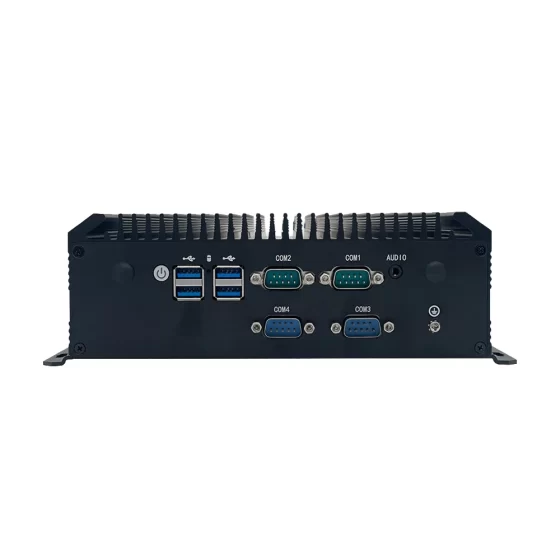
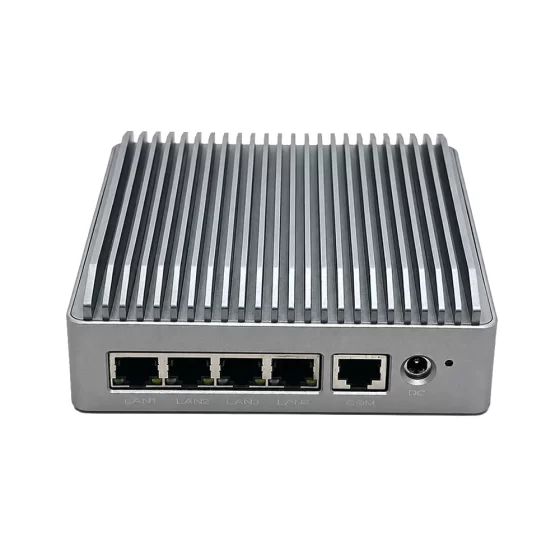
Soluciones de informática industrial CoreIPC

Plataforma AOI de semiconductores: Computación industrial para inspección óptica automatizada
Resumen ejecutivo
Una plataforma semiconductora aoi proporciona la base informática industrial para la inspección óptica automatizada, adquisición de imágenes, detección de defectos, monitoreo de procesos, y trazabilidad de la calidad en la fabricación de semiconductores.
La producción de semiconductores requiere una inspección extremadamente precisa en todo el procesamiento de obleas, inspección de troqueles, inspección del sustrato, inspección de paquetes, verificación de marca, y control de calidad final. Pequeños defectos, partículas superficiales, errores de alineación, grietas del paquete, contaminación, o marcas ilegibles pueden afectar el rendimiento, fiabilidad, y calidad de producción posterior.
Una computadora industrial o una computadora integrada actúa como plataforma de procesamiento local para sistemas AOI de semiconductores.. Recibe imágenes de cámaras de alta resolución., procesa datos de inspección, Se comunica con sistemas de movimiento y PLC., almacena registros de defectos, y carga los resultados en MES, proceso estadístico, bases de datos de calidad, o sistemas de control de equipos.
En comparación con las PC comerciales estándar, Las computadoras industriales son más adecuadas para la implementación de AOI de semiconductores porque proporcionan un funcionamiento estable., E/S flexibles, diseño mecánico robusto, conectividad de cámara de alta velocidad, almacenamiento confiable, opciones sin ventilador, y soporte de ciclo de vida prolongado.
Para fabricantes de equipos semiconductores, integradores de sistemas de inspección, y equipos de fabricación, La selección de la plataforma informática adecuada afecta la velocidad de inspección., calidad de datos defectuosa, tiempo de actividad del sistema, y mantenibilidad a largo plazo.
Este artículo explica cómo funcionan las plataformas semiconductoras AOI., ¿Qué desafíos enfrentan los fabricantes durante la implementación?, cómo está estructurada la arquitectura de la solución, y qué características de hardware son importantes al seleccionar una computadora industrial para la inspección óptica automatizada de semiconductores.
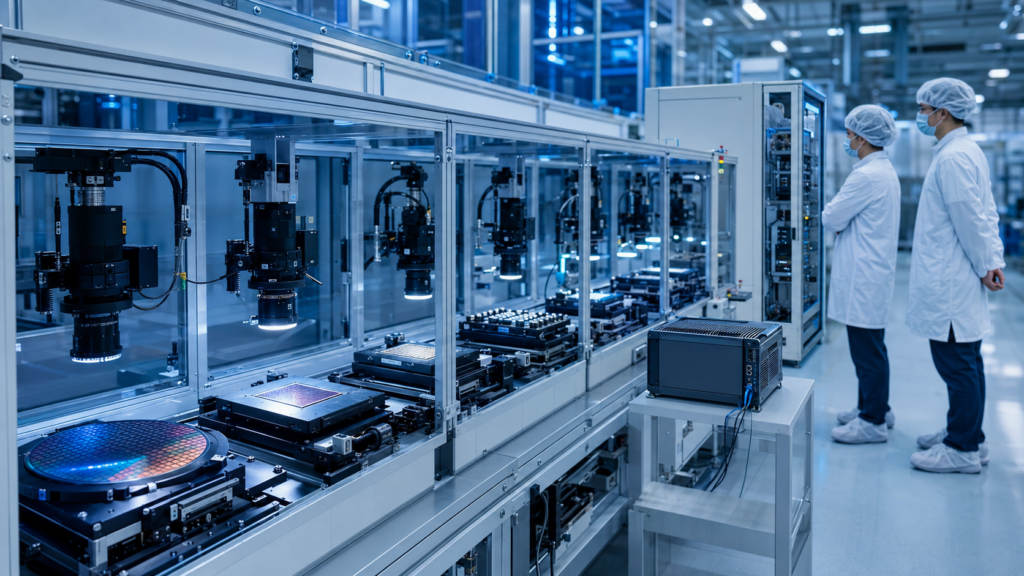
Inspección de producción de semiconductores AOI
Descripción general de la industria
AOI es fundamental en la fabricación de semiconductores
La inspección óptica automatizada se utiliza ampliamente en la fabricación de semiconductores porque pueden aparecer defectos visuales en muchas etapas del proceso..
Es posible que se requiera una inspección durante el procesamiento de obleas., manipulación de troqueles, preparación del sustrato, vinculación, embalaje, calificación, y verificación del producto final.
Los objetivos AOI comunes incluyen:
- Defectos en la superficie de la oblea
- Errores de alineación de matrices
- Contaminación por partículas
- Anormalidades del patrón
- Grietas del paquete
- Defectos del sustrato
- Defectos del marco principal
- Problemas en el área de unión
- Defectos de marcado y código.
- Anormalidades en la apariencia final
Una plataforma AOI de semiconductores ayuda a los fabricantes a identificar estos defectos antes y conectar los resultados de la inspección con los registros de producción..
Los datos de inspección respaldan la mejora del rendimiento
AOI no sólo se utiliza para rechazar unidades defectuosas.
También genera datos valiosos para el análisis de rendimiento., ajuste de proceso, monitoreo de equipos, y mejora de la calidad.
Es posible que los fabricantes necesiten registrar:
- tipo de defecto
- Ubicación del defecto
- ID de oblea
- Coordenadas del troquel
- Número de lote
- ID del paquete
- Imagen de inspección
- ID de estación
- Estado del equipo
- Marca de tiempo
Cuando estos datos se recopilan de manera consistente, Los equipos de ingeniería pueden identificar defectos recurrentes., deriva del proceso, y problemas de calidad relacionados con el equipo.
La informática industrial permite la automatización AOI
Un sistema AOI de semiconductores suele incluir cámaras., óptica, iluminación, etapas de movimiento, manejadores, sensores, PLC, software de inspección, y conexiones de red de fábrica.
El ordenador industrial actúa como capa informática local..
Puede ejecutar el software AOI, Imágenes de proceso, gestionar la adquisición de la cámara, comunicarse con sistemas de movimiento, mostrar los resultados de la inspección, y cargar registros de defectos en los sistemas de fábrica.
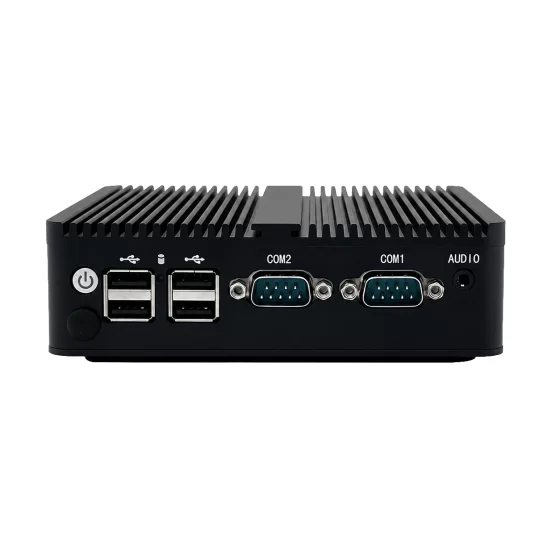
Las computadoras integradas también son útiles cuando el hardware informático AOI debe integrarse en máquinas de inspección compactas., gabinetes para equipos, o plataformas OEM.

Desafíos de la inspección de AOI de semiconductores
Desafíos clave
Procesamiento de imágenes de alta resolución
La AOI de semiconductores a menudo requiere imágenes de alta resolución.
Es posible que los sistemas de inspección necesiten detectar pequeños defectos en las obleas, muere, sustratos, áreas de unión, o superficies del paquete. Esto requiere una adquisición de imágenes estable y un procesamiento rápido..
Los factores clave de la carga de trabajo incluyen:
- Resolución de la cámara
- Número de cámaras
- Velocidad de fotogramas
- Profundidad de bits de la imagen
- Complejidad del algoritmo de inspección
- Reglas de clasificación de defectos
- Requisitos de almacenamiento
- Frecuencia de carga de MES o SPC
La computadora AOI debe proporcionar un rendimiento estable y sostenido para la carga de trabajo de inspección real..
Pequeños defectos y bajo contraste visual
Los defectos de los semiconductores pueden ser extremadamente pequeños.
Algunos defectos pueden aparecer como partículas diminutas., rayones finos, contaminación de la superficie, grietas en los bordes, desviación de alineación, o anomalías sutiles del patrón.
Las superficies reflectantes y de bajo contraste pueden dificultar la detección.
Un sistema AOI confiable depende de una óptica adecuada, iluminación, selección de cámara, algoritmos de software, y hardware informático industrial estable.
Integración de cámara y sistema de movimiento
Las plataformas semiconductoras AOI a menudo necesitan una coordinación precisa entre cámaras, iluminación, etapas de movimiento, y manejadores.
Es posible que la computadora necesite recibir señales de activación., controlar el tiempo de adquisición de imágenes, datos de inspección del proceso, y comunicarse con equipos de automatización.
Los requisitos de integración comunes pueden incluir:
- LAN de alta velocidad
- USB 3.0
- RS232
- RS485
- GPIO
- Entrada digital
- Salida digital
- expansión PCIe
- Expansión M.2
La configuración de E/S incorrecta puede aumentar la complejidad de la integración y reducir la confiabilidad del sistema..
Operación continua y tiempo de actividad del equipo
Los sistemas de inspección de semiconductores pueden funcionar durante largos ciclos de producción.
Si la computadora AOI falla, la estación de inspección puede detenerse, los datos defectuosos pueden perderse, y el control de la calidad de la producción puede verse interrumpido.
El hardware informático de nivel industrial ayuda a reducir el riesgo de tiempo de inactividad al admitir un diseño térmico estable, instalación robusta, almacenamiento confiable, y disponibilidad a largo plazo.
Trazabilidad de datos y conectividad de fábrica
Los resultados de AOI a menudo deben estar conectados con MES, proceso estadístico, sistemas de gestión de calidad, bases de datos de equipos, y paneles de producción.
La computadora de inspección debe manejar tanto el procesamiento local como la comunicación de datos..
Si la imagen graba, categorías de defectos, o la información del lote no se almacena correctamente, la trazabilidad se vuelve incompleta.
Esto puede dificultar la investigación de calidad y la mejora de procesos..

Arquitectura de solución de plataforma Semiconductor AOI
Arquitectura de solución de plataforma Semiconductor AOI
Capa de adquisición de imágenes
La capa de adquisición de imágenes captura datos visuales sin procesar de productos semiconductores y áreas de proceso..
Esta capa puede incluir:
- Cámaras industriales de alta resolución
- Cámaras de escaneo de línea
- Cámaras de escaneo de área
- Lentes y módulos ópticos.
- Sistemas de iluminación de precisión.
- Sensores de disparo
- Etapas de movimiento
- Manipuladores de obleas o paquetes
Dependiendo de la aplicación, esta capa puede capturar imágenes de oblea, Imágenes de morir, Imágenes de sustrato, Imágenes de paquete, Imágenes de marca, o imágenes del área de unión.
La calidad de imagen estable es esencial antes de que el software AOI pueda producir resultados de inspección confiables.
Capa de Computación Industrial
La capa de computación industrial es donde la computadora industrial o la computadora integrada realiza el procesamiento AOI local..
en esta capa, la computadora puede:
- Recibir imágenes de cámaras.
- Ejecute el software AOI
- Imágenes de defectos de proceso
- Comparar imágenes con reglas de inspección
- Clasificar tipos de defectos
- Almacenar registros de inspección
- Mostrar resultados de inspección
- Comunicarse con los PLC
- Cargar datos a sistemas MES o SPC
- Soporte de mantenimiento remoto
Esta capa afecta directamente a la velocidad de inspección., estabilidad del sistema, y calidad de los datos.
Capa de control de automatización
La capa de control de automatización conecta los resultados de AOI con la acción del equipo.
Un PLC, controlador de movimiento, manipulador de obleas, controlador de robot, o el controlador de la máquina puede activar la inspección y recibir resultados de la computadora AOI.
Por ejemplo, si se detecta un defecto en el paquete, La plataforma AOI puede enviar una señal de falla al sistema de control de producción.. El equipo puede entonces rechazar la unidad., márcalo para revisión, o encaminarlo a otro proceso.
Esta comunicación de circuito cerrado convierte los datos de inspección en un control de producción práctico..
Capa de gestión de datos
Los datos AOI deben almacenarse, transferido, and connected with manufacturing records.
The industrial computer may send results to MES, proceso estadístico, bases de datos de calidad, servidores locales, o paneles de producción.
Typical AOI data may include:
- Número de lote
- ID de oblea
- Die coordinate
- ID del paquete
- Categoría de defecto
- Resultado de la inspección
- Prueba de imagen
- ID de estación
- Marca de tiempo
- Estado del equipo
Esto apoya la trazabilidad, análisis de rendimiento, optimización de procesos, y informes de calidad.
Interfaz de usuario y capa de ingeniería
Operators and engineers need a practical interface for monitoring and adjustment.
The AOI computer may connect to a monitor, pantalla táctil, teclado, o panel HMI.
La interfaz puede mostrar imágenes en vivo., defect maps, estado de inspección, alarmas, recuentos de producción, defect history, y registros del sistema.
A clear local interface helps engineers review defects, tune parameters, and troubleshoot abnormal inspection conditions.
Características clave
Stable AOI Processing Performance
Semiconductor AOI requires stable image processing performance.
The required computing power depends on inspection speed, image size, recuento de cámaras, carga de trabajo de software, y requisitos de retención de datos.
La selección debe considerar:
- rendimiento de la CPU
- Capacidad de memoria
- Ancho de banda de la cámara
- Velocidad de almacenamiento
- Aceleración de gráficos o IA
- Procesamiento multicámara
- Requisitos de visualización
- Comunicación de base de datos
For simple inspection stations, una computadora integrada compacta puede ser suficiente. For high-resolution or multi-camera AOI systems, a more powerful industrial PC may be required.
Camera Interface and Bandwidth Support
Camera connectivity is one of the most important hardware factors.
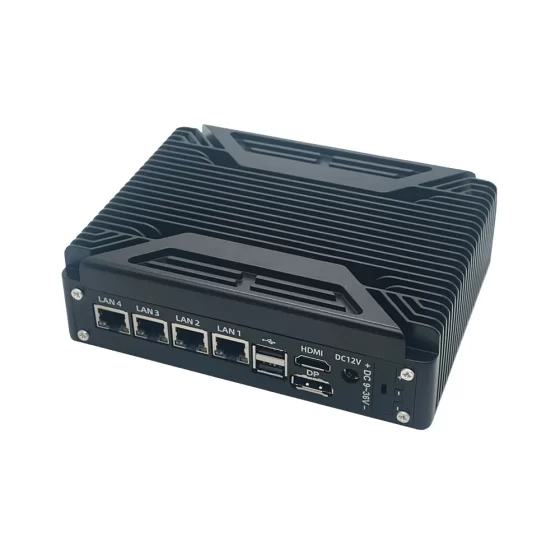
Semiconductor AOI systems may use GigE cameras, cámaras USB, cámaras de escaneo de línea, o interfaces de cámara especializadas a través de tarjetas de expansión.
Las opciones de hardware útiles pueden incluir:
- Múltiples puertos LAN
- USB 3.0 puertos
- expansión PCIe
- Expansión M.2
- Almacenamiento de alta velocidad
- Mostrar salidas
- Diseño de energía estable
Para sistemas AOI multicámara, La planificación del ancho de banda debe completarse antes de la selección del hardware..
E/S industriales para integración de equipos
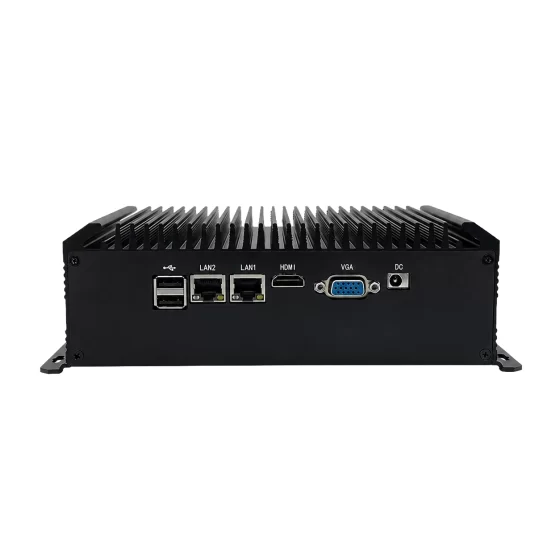
La computadora AOI debe conectarse con equipos de producción de semiconductores reales.
Las opciones de E/S importantes pueden incluir:
- LAN
- USB
- RS232
- RS485
- GPIO
- Entrada digital
- Salida digital
- hdmi
- DisplayPort
Estas interfaces pueden admitir cámaras., controladores de iluminación, sensores, PLC, sistemas de movimiento, lectores de códigos de barras, sistemas de marcado, y redes de equipos.
La E/S flexible reduce los adaptadores externos y mejora la confiabilidad de la implementación.
Almacenamiento confiable para registros de defectos
Los sistemas semiconductores AOI pueden generar grandes cantidades de imágenes y datos de defectos.
Es posible que la computadora necesite almacenar imágenes sin procesar., Imágenes de defecto, registros de inspección, defect maps, informes, archivos de modelo, y registros de bases de datos locales.
Generalmente se prefiere el almacenamiento SSD o NVMe porque admite un acceso más rápido a los datos y una mejor resistencia a los golpes que las unidades mecánicas..
Para aplicaciones AOI con muchas imágenes, capacidad de almacenamiento, escribe resistencia, política de retención, y la estrategia de respaldo debe revisarse cuidadosamente.
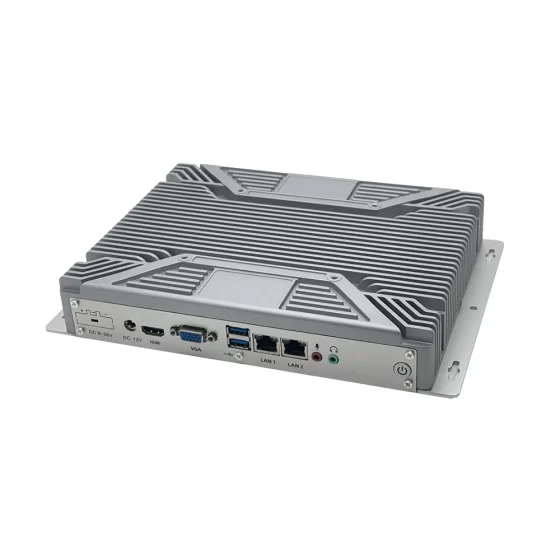
Diseño resistente y sin ventilador
Las computadoras industriales sin ventilador son útiles en muchos entornos de inspección de semiconductores..
Reducen la entrada de polvo y eliminan un punto común de falla mecánica.. Esto puede contribuir a un menor mantenimiento y una mejor estabilidad a largo plazo en gabinetes de equipos o estaciones de inspección..
Sin embargo, Las cargas de trabajo de AOI pueden requerir una potencia de procesamiento significativa.
El diseño térmico debe coincidir con la CPU., tarjetas de expansión, dispositivos de almacenamiento, espacio del recinto, y temperatura ambiente.
Largo ciclo de vida y mantenibilidad
Los equipos de inspección de semiconductores pueden permanecer en producción durante muchos años.
Cambios frecuentes en los modelos de computadora., interfaces, conductores, o las opciones de expansión pueden aumentar la carga de trabajo de validación y el costo de mantenimiento.
Las plataformas informáticas industriales con planificación del ciclo de vida ayudan a los fabricantes de equipos a mantener sistemas AOI consistentes en múltiples líneas de producción y generaciones de equipos..
Escenarios de implementación
AOI de oblea
Wafer AOI se utiliza para inspeccionar defectos de superficie., partículas, rayones, anomalías del patrón, y cuestiones relacionadas con el proceso.
Una computadora industrial puede procesar imágenes de obleas de alta resolución, almacenar mapas de defectos, y enviar datos de inspección a sistemas MES o SPC.
Esto ayuda a los ingenieros de procesos a identificar antes los problemas de rendimiento..
Inspección de matrices
La inspección del troquel puede comprobar la alineación, calidad del borde, daño superficial, contaminación, o anomalías visibles.
La computadora AOI procesa imágenes de cámaras y se comunica con etapas de movimiento o controladores..
Esto respalda la inspección y la trazabilidad automatizadas durante la manipulación o el montaje de matrices..
Inspección de sustrato
La inspección del sustrato puede involucrar la calidad de la superficie., precisión del patrón, contaminación, alineación, o detección de defectos estructurales.
Se puede integrar una computadora integrada en un equipo de inspección compacto para procesar datos de imágenes y cargar los resultados en los sistemas de calidad..
Esto ayuda a evitar que los sustratos defectuosos se muevan aguas abajo..
Paquete AOI
Paquete AOI comprueba los paquetes de semiconductores en busca de grietas, abolladuras, contaminación, marcas de superficie, defectos de plomo, errores de orientación, y problemas de apariencia.
La computadora industrial procesa imágenes y envía resultados de aprobación o falla a equipos de automatización..
Esto ayuda a mejorar la calidad del paquete final..
Verificación de marcas y códigos
Los productos semiconductores suelen incluir marcas láser., códigos QR, Códigos de matriz de datos, o identificadores impresos.
Una plataforma AOI puede verificar la calidad de las marcas, legibilidad, posición, y corrección del código.
El ordenador vincula los resultados del reconocimiento con los datos del lote., ID de producto, y registros de trazabilidad.
Inspección del área de unión
La inspección de unión puede implicar uniones de cables, golpes de soldadura, áreas de contacto, o calidad de conexión.
Una plataforma AOI de semiconductores puede capturar imágenes detalladas y detectar anomalías visibles.
La computadora de inspección puede almacenar evidencia de imágenes y cargar resultados para una revisión de calidad..
Inspección de calidad final
La inspección final comprueba la calidad visible del producto antes del envío o del montaje posterior..
La computadora AOI puede procesar imágenes de apariencia., Imágenes de paquete, marcar resultados de verificación, y registros de inspección.
Esto crea un registro de calidad final vinculado con los datos del producto y del lote..
Integración de equipos OEM AOI
Los fabricantes de máquinas pueden integrar computadoras industriales o placas integradas en equipos semiconductores AOI.
La plataforma informática puede proporcionar adquisición de imágenes., procesamiento de AOI, pantalla HMI, comunicación PLC, almacenamiento, y salida de datos.
Esto ayuda a los OEM a ofrecer equipos listos para inspección para la fabricación de semiconductores..
Beneficios comerciales
Detección de defectos mejorada
Una plataforma AOI de semiconductores ayuda a detectar defectos de manera consistente y temprana en el proceso de fabricación..
El hardware informático industrial confiable admite la adquisición de imágenes estable, tratamiento, y manejo de datos.
Esto mejora la confianza en la inspección y reduce el riesgo de pasar por alto defectos visibles..
Análisis de rendimiento más sólido
Los datos de AOI ayudan a los ingenieros a comprender las tendencias de los defectos y el comportamiento del proceso.
Vinculando imágenes de inspección, categorías de defectos, ID de oblea, coordenadas del troquel, y estado del equipo, Los fabricantes pueden identificar problemas de calidad recurrentes..
El hardware informático confiable ayuda a garantizar que estos datos estén completos y sean utilizables..
Mejor trazabilidad de la producción
La trazabilidad es esencial en la fabricación de semiconductores.
La computadora AOI ayuda a conectar los resultados de la inspección con los números de lote, ID de oblea, coordenadas del troquel, ID de paquete, ID de estación, marcas de tiempo, y evidencia de imagen.
Esto apoya la investigación de calidad., revisión del proceso, y reportes de clientes.
Carga de trabajo de revisión manual reducida
La inspección óptica automatizada reduce la dependencia de la inspección visual manual.
Los ingenieros aún pueden revisar las excepciones, pero la plataforma AOI puede manejar tareas repetitivas de inspección y recopilación de datos.
Esto mejora la coherencia y permite a los equipos centrarse en la mejora de procesos..
Comentarios de calidad más rápidos
El procesamiento local de AOI permite que los resultados de la inspección estén disponibles rápidamente.
Cuando aparecen defectos, el sistema puede enviar alarmas, rechazar resultados, o procesar retroalimentación a los sistemas de fábrica.
Esto ayuda a reducir el riesgo de calidad posterior y respalda una respuesta de ingeniería más rápida..
Implementación escalable de AOI
Se puede implementar una plataforma informática industrial estandarizada en múltiples estaciones AOI, maquinas, y líneas de producción.
El hardware consistente simplifica las imágenes de software, validación del conductor, planificación de repuestos, entrenamiento de mantenimiento, y apoyo a largo plazo.
Esto es valioso tanto para los fabricantes de semiconductores como para los fabricantes de equipos AOI..
Por qué CoreIPC
CoreIPC proporciona plataformas informáticas industriales para visión artificial, inspección de semiconductores, automatización de fábrica, e integración de sistemas integrados. Para aplicaciones de plataforma AOI de semiconductores, CoreIPC se centra en hardware informático industrial confiable, soluciones informáticas integradas, Configuraciones de E/S flexibles, diseño de sistema compacto, y soporte de personalización OEM/ODM. CoreIPC ayuda a los integradores de sistemas, Constructores de equipos AOI, y los equipos de fabricación seleccionan plataformas informáticas que coincidan con los requisitos de implementación reales, incluyendo interfaces de cámara, carga de trabajo de procesamiento, comunicación de automatización, métodos de montaje, entrada de energía, diseño térmico, necesidades de almacenamiento, y planificación del ciclo de vida.
Preguntas frecuentes
1. ¿Qué es una plataforma AOI de semiconductores??
Una plataforma AOI de semiconductores es un sistema de inspección óptica automatizado que se utiliza para inspeccionar obleas., muere, sustratos, paquetes, marcas, y defectos visibles del producto.
Suele incluir cámaras, óptica, iluminación, sistemas de movimiento, software de inspección, y hardware informático industrial. La computadora procesa imágenes., almacena datos de defectos, se comunica con el equipo de automatización, y carga los resultados en MES, proceso estadístico, o sistemas de calidad.
2. ¿Por qué utilizar una computadora industrial para AOI de semiconductores??
Un ordenador industrial proporciona el procesamiento, conectividad, y confiabilidad requerida para la implementación de AOI de semiconductores.
Puede admitir cámaras de alta resolución., software de inspección, comunicación PLC, almacenamiento local, salida de pantalla, e integración de datos de fábrica. En comparación con las PC estándar, Las computadoras industriales son más adecuadas para el funcionamiento continuo., montaje robusto, E/S flexibles, y uso de ciclo de vida prolongado.
3. ¿Cómo se utiliza una computadora integrada en un equipo AOI??
Se puede instalar una computadora integrada dentro de las máquinas AOI, sistemas de inspección compactos, gabinetes para equipos, o plataformas de inspección de semiconductores OEM.
Puede adquirir imágenes de la cámara., ejecutar el software AOI, comunicarse con sistemas de movimiento, resultados de la inspección de la tienda, y cargar datos a los sistemas de fábrica. Su diseño compacto es útil cuando el espacio de instalación es limitado.
4. ¿Qué defectos puede detectar el AOI de semiconductores??
El AOI semiconductor puede respaldar la detección de partículas superficiales, rayones, contaminación, grietas, errores de alineación, defectos del sustrato, defectos del paquete, anomalías en el área de unión, marcar defectos, y problemas de apariencia visibles.
La capacidad de detección exacta depende de la óptica., resolución de la cámara, diseño de iluminación, software de inspección, variación del producto, y pruebas de producción reales.
5. ¿Qué interfaces son importantes para las computadoras AOI??
Las interfaces importantes pueden incluir múltiples puertos LAN, USB 3.0, PCIe, M.2, RS232, RS485, GPIO, entrada digital, salida digital, hdmi, y DisplayPort.
Las interfaces de la cámara son especialmente importantes para la adquisición de imágenes.. Puertos serie, GPIO, y las conexiones LAN pueden admitir controladores de iluminación, sensores de disparo, PLC, sistemas de movimiento, y redes de fábricas.
6. ¿Pueden las computadoras industriales sin ventilador admitir AOI de semiconductores??
Las computadoras industriales sin ventilador pueden admitir algunas aplicaciones AOI de semiconductores, especialmente cuando el bajo mantenimiento y la reducción de la entrada de polvo son importantes.
Sin embargo, procesamiento de imágenes de alta resolución, adquisición multicámara, o la inspección asistida por IA puede generar un calor significativo. Carga de trabajo del procesador, tarjetas de expansión, dispositivos de almacenamiento, diseño de recinto, y la temperatura ambiente deben revisarse antes de la selección final.
7. ¿Cómo apoya AOI la trazabilidad de semiconductores??
AOI respalda la trazabilidad al vincular los resultados de la inspección con los números de lote, ID de oblea, coordenadas del troquel, ID de paquete, categorías de defectos, marcas de tiempo, ID de estación, y evidencia de imagen.
Estos datos se pueden cargar en MES., proceso estadístico, o sistemas de calidad. La trazabilidad completa ayuda a los fabricantes a analizar los defectos, revisar las tendencias del proceso, e investigar problemas de calidad.
8. ¿Pueden las plataformas semiconductoras AOI conectarse con sistemas MES y SPC??
Sí. Las computadoras industriales pueden enviar resultados AOI al MES, proceso estadístico, bases de datos de calidad, o paneles de producción.
Los datos cargados pueden incluir resultados de inspección., defect maps, registros de imagen, ID de producto, marcas de tiempo, información de la estación, y estado del equipo. Esto ayuda a conectar la inspección óptica con el control de calidad de fabricación y la mejora de procesos..
9. ¿Qué se debe probar antes de implementar una computadora AOI??
Antes del despliegue, La computadora debería probarse con cámaras reales., controladores de iluminación, software AOI, sistemas de movimiento, comunicación PLC, carga de trabajo de almacenamiento de imágenes, Carga MES o SPC, y condiciones de producción de larga duración.
Estabilidad térmica, confiabilidad de la adquisición de cuadros, rendimiento de almacenamiento, y la comunicación de red también debe ser validada.
10. ¿Es útil la IA en AOI de semiconductores??
La IA puede ser útil en algunas aplicaciones AOI de semiconductores, especialmente cuando los defectos son complejos, variable, o difícil de definir con reglas fijas.
Sin embargo, El AOI basado en IA todavía depende de una buena adquisición de imágenes, iluminación adecuada, datos de entrenamiento cuidadosamente preparados, y hardware informático industrial estable. Debe validarse con muestras de producción reales antes de su implementación..
Conclusión
Una plataforma semiconductora aoi es una base fundamental de hardware y software para la inspección óptica automatizada., detección de defectos, análisis de rendimiento, y trazabilidad de la calidad en la fabricación de semiconductores.
Colocando hardware informático industrial cerca de las cámaras., óptica, sistemas de iluminación, etapas de movimiento, PLC, manejadores, y equipo de inspección, Los fabricantes pueden procesar datos de imágenes localmente y conectar los resultados de AOI con los sistemas de fábrica..
La computadora industrial o la computadora integrada adecuada deben seleccionarse de acuerdo con los requisitos de la aplicación real., incluyendo interfaz de cámara, resolución de imagen, velocidad de fotogramas, carga de trabajo de procesamiento, configuración de E/S, necesidades de almacenamiento, arquitectura de red, método de montaje, entrada de energía, condiciones termicas, soporte del sistema operativo, y planificación del ciclo de vida.
CoreIPC respalda proyectos de plataformas AOI de semiconductores con plataformas informáticas industriales diseñadas para la implementación práctica de fábricas y equipos.. Con la base de hardware adecuada, Los fabricantes de semiconductores y los fabricantes de equipos AOI pueden mejorar la confiabilidad de la inspección., fortalecer la trazabilidad, reducir la carga de trabajo de revisión manual, y construir sistemas de inspección escalables.
Contáctenos
Busco ordenador industrial, computadora integrada, o placa base industrial para una plataforma AOI de semiconductores?
Póngase en contacto con CoreIPC para analizar los requisitos de su proyecto., incluyendo interfaz de cámara, carga de trabajo AOI, configuración de E/S, comunicación por movimiento o PLC, método de montaje, entrada de energía, entorno operativo, necesidades de almacenamiento, requisitos del ciclo de vida, y opciones de personalización OEM/ODM.