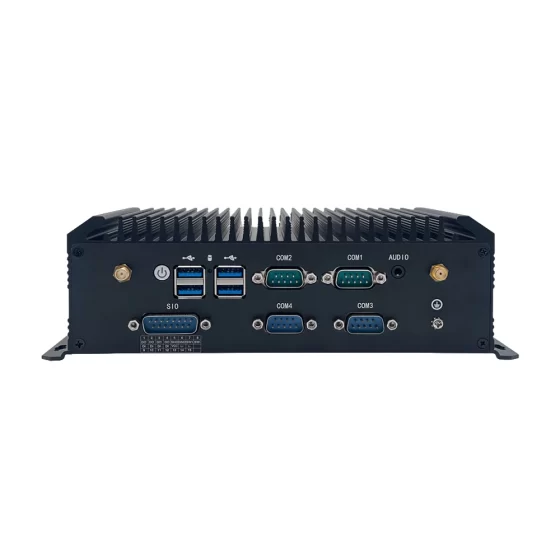
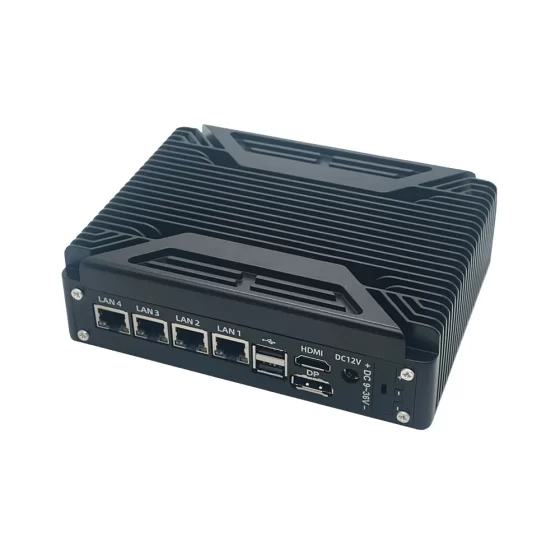
Soluciones de informática industrial CoreIPC

Computadora de visión artificial para SMT: Computadora de visión SMT para una inspección confiable de la fabricación de productos electrónicos
Resumen ejecutivo
An smt vision computer provides the industrial computing foundation for automated optical inspection, solder paste inspection, reconocimiento de código de barras, verificación de componentes, and quality data collection in SMT electronics manufacturing.
Surface mount technology production involves high-speed placement, dense PCB layouts, componentes pequeños, solder paste control, reflow processes, estaciones de inspección, and traceability requirements. Each step can generate critical image data, test data, datos de código de barras, y registros de producción.
A machine vision computer for SMT must process data reliably near the production line. It may connect to industrial cameras, controladores de iluminación, lectores de códigos de barras, PLC, sensores, equipo de prueba, sistemas MES, y bases de datos de fábrica.
En comparación con las PC comerciales estándar, industrial computers and embedded computers are better suited for SMT environments because they support continuous operation, E/S estable, instalación compacta, opciones sin ventilador, diseño mecánico robusto, y planificación de un largo ciclo de vida.
For SMT equipment builders, electronics manufacturers, e integradores de sistemas, selecting the right industrial computing platform affects inspection accuracy, tiempo de actividad de producción, trazabilidad, y mantenibilidad a largo plazo.
This article explains how SMT vision computers support electronics manufacturing, what deployment challenges appear in real factories, cómo funciona la arquitectura de la solución, and which hardware features are important for reliable SMT machine vision systems.
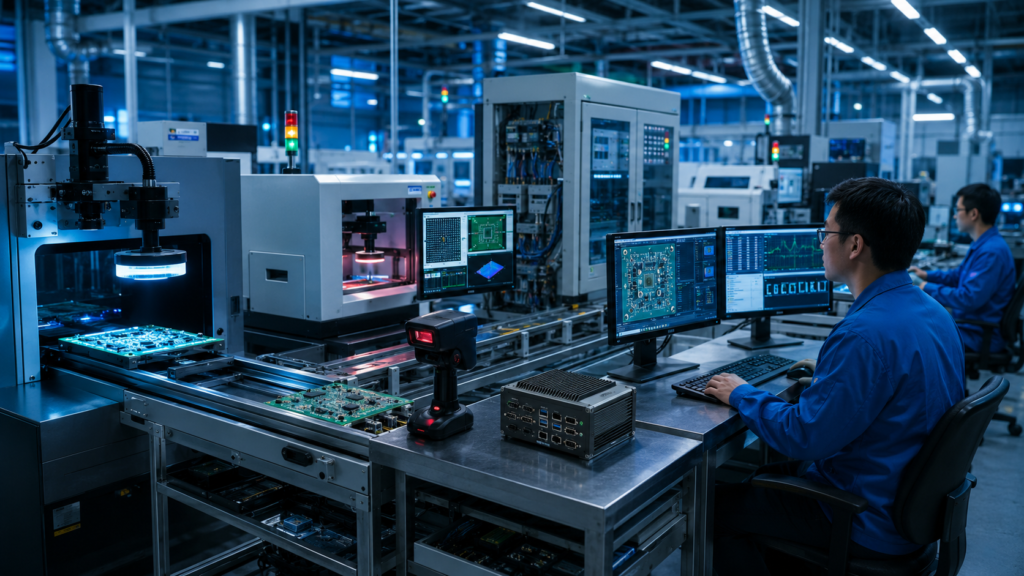
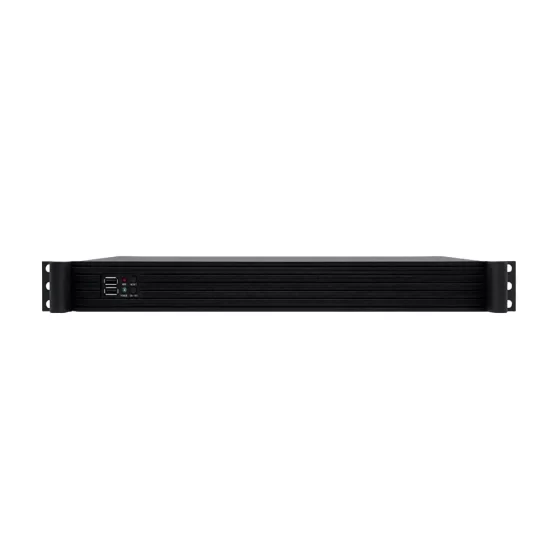
Industrial computers process SMT inspection data from cameras, AOI systems, SPI equipment, PCB conveyors, and barcode scanners.
Descripción general de la industria
SMT Manufacturing Requires Precise Inspection
SMT production places electronic components onto printed circuit boards with high speed and high density.
As PCB layouts become more compact, inspection becomes more important. Small solder defects, componentes faltantes, wrong orientation, poor placement, or unreadable codes can affect product quality and downstream reliability.
SMT inspection systems may include:
- Inspección de pasta de soldadura
- Inspección óptica automatizada
- Component presence inspection
- Polarity and orientation verification
- PCB barcode and QR code recognition
- Reflow inspection support
- Repair and rework data collection
- Final visual inspection
- Test station data integration
- Production traceability records
A reliable machine vision computer provides the processing platform required to connect these inspection tasks with factory quality systems.
Vision Systems Are Moving Closer to the Line
SMT inspection is no longer limited to standalone equipment.
Modern electronics factories increasingly connect AOI, SPI, reconocimiento de código de barras, estaciones de reparación, and test equipment into MES and quality management systems. This requires local computing platforms that can process images and transfer results in real time.
An industrial computer can be installed near SMT lines, máquinas de inspección interior, at repair stations, or in production cabinets.
It may run inspection software, collect camera images, manage barcode readers, process defect data, and upload results to central systems.
Why Industrial Computing Matters
Las PC comerciales pueden funcionar en entornos de oficina, but SMT production requires more stable hardware.
SMT lines may run continuously across multiple shifts. Inspection computers may operate near conveyors, reflow ovens, placement machines, accesorios de prueba, y estaciones de trabajo de producción.
These areas may involve vibration, calor, polvo, ruido electrico, espacio limitado, and constant data communication.
Industrial computers and embedded computers are designed for these deployment conditions. They provide the reliability, interface flexibility, and mechanical integration needed for long-term SMT inspection systems.

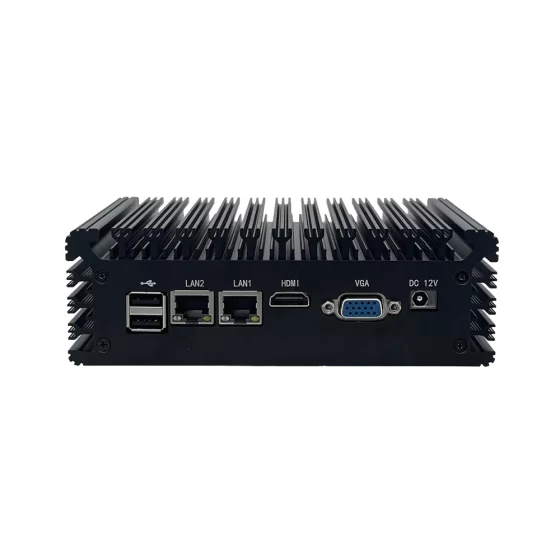
Dense PCB layouts, solder paste, reflective joints, small codes, and component details affect SMT vision reliability.
Desafíos clave
Small Components and High Inspection Detail
SMT inspection deals with very small components and fine PCB features.
A vision system may need to inspect solder paste coverage, component alignment, polarity marks, piezas faltantes, bridging, tombstoning, insufficient solder, or label quality.
These inspection tasks may require high-resolution cameras, precise lighting, and stable image processing.
The computing platform must support consistent performance, especially when inspection speed and image resolution increase.
Líneas de producción de alta velocidad
SMT lines operate at high speed.
Inspection systems must keep up with the production cycle. If image processing is too slow, the inspection station may become a bottleneck or delay production feedback.
Key performance factors include:
- Resolución de la cámara
- Número de cámaras
- Velocidad de cuadros de imagen
- Complejidad del algoritmo de inspección
- Velocidad de reconocimiento de códigos de barras
- Local storage workload
- Comunicación de base de datos
- MES upload frequency
A properly selected smt vision computer helps maintain stable inspection throughput.
Camera and Lighting Integration
SMT vision systems depend heavily on camera and lighting design.
Reflective solder joints, PCB surface colors, component markings, small QR codes, and uneven lighting can affect image quality.
The industrial computer may need to support camera interfaces, lighting controller communication, señales de activación, and local display output for engineering adjustment.
Good computing hardware cannot fix poor image acquisition, but unstable computing hardware can reduce the value of a well-designed vision system.
Traceability and Data Connection
Electronics manufacturers often need complete traceability from PCB assembly to final shipment.
Inspection results should be linked with PCB serial numbers, órdenes de trabajo, component batches, registros de prueba, repair actions, and final quality status.
This requires stable data communication between inspection computers, software MES, sistemas de códigos de barras, bases de datos de calidad, y paneles de producción.
If the inspection computer fails to upload records consistently, la trazabilidad se vuelve incompleta.
Mantenibilidad a largo plazo
SMT equipment and inspection platforms may remain in production for many years.
Cambios frecuentes en los modelos de computadora., conductores, puertos, o las opciones de expansión pueden crear problemas de validación y mantenimiento.
Factories and equipment builders need stable hardware platforms that can support repeatable deployment, planificación de repuestos, and consistent software images across multiple production lines.

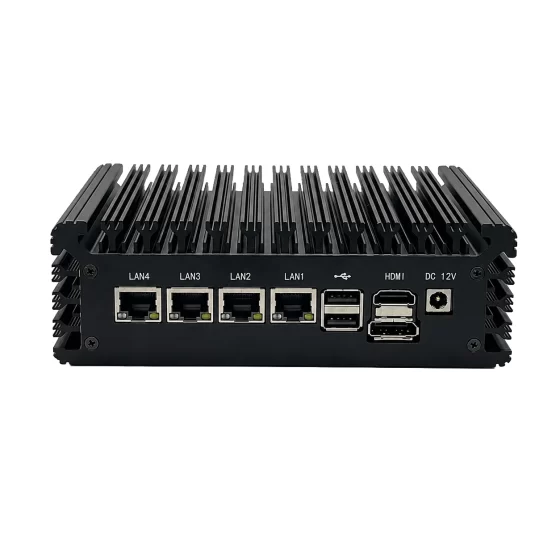
Industrial computers connect SMT cameras, inspection equipment, PLC, MES, estaciones de reparación, y sistemas de calidad de fábrica.
SMT Vision Computer Solution Architecture
Capa de adquisición de imágenes
La capa de adquisición de imágenes incluye cámaras., lentes, módulos de iluminación, desencadenantes, and mechanical mounting structures.
In SMT applications, this layer may capture:
- Solder paste images
- PCB surface images
- Component placement images
- Polarity marks
- Imágenes de códigos de barras o códigos QR
- Imágenes de defectos
- Repair station images
- Label inspection images
Consistent image quality is essential. Selección de cámara, lighting angle, exposure, working distance, and mounting stability all affect inspection results.
Capa de Computación Industrial
The industrial computing layer is where the industrial computer or embedded computer performs local processing.
en esta capa, la computadora puede:
- Recibir imágenes de cámaras.
- Run AOI or SPI software
- Process barcode and QR code data
- Detect missing or misplaced components
- Almacenar registros de inspección
- Comunicarse con los PLC
- Mostrar estado de inspección
- Upload results to MES
- Connect to quality databases
- Soporte de mantenimiento remoto
Esta capa debe ser estable porque afecta directamente a la velocidad de inspección., calidad de los datos, y continuidad de la producción.
Capa de control de automatización
The automation control layer connects the vision system with SMT equipment and production control devices.
Un PLC, controlador del transportador, inspection machine controller, or sensor may trigger image capture. Después del procesamiento, the industrial computer may send pass, fallar, alarma, or review signals back to the equipment.
Por ejemplo, if a PCB barcode does not match the expected work order, the system may stop the board, activar una alarma, or request operator review.
This closed-loop communication helps reduce production errors.
Capa de gestión de datos
Los resultados de la inspección son más valiosos cuando se conectan a los registros de producción..
The SMT vision computer may send data to MES, sistemas de gestión de calidad, sistemas de reparación, paneles de producción, o bases de datos de fábrica.
Los datos típicos pueden incluir:
- PCB serial number
- orden de trabajo
- Resultado de la inspección
- tipo de defecto
- Imagen de defecto
- ID de estación
- Marca de tiempo
- Acción del operador
- Estado de reparación
- Final test linkage
Esto apoya la trazabilidad, análisis de calidad, y mejora de procesos.
Capa de interfaz de usuario
Los operadores e ingenieros necesitan una interfaz local práctica.
La computadora industrial puede conectarse a un monitor., pantalla táctil, teclado, o panel HMI. La interfaz puede mostrar imágenes en vivo., estado de inspección, ubicaciones de defectos, recuentos de producción, alarmas, and software logs.
A clear local interface helps engineers adjust inspection settings and respond quickly to abnormal conditions.
Características clave
Rendimiento de procesamiento de imágenes estable
The computing platform must provide stable processing performance for the inspection workload.
Different SMT applications require different performance levels. A simple barcode recognition station may use a compact embedded computer. A multi-camera AOI system may require a more powerful industrial PC.
La selección debe considerar:
- Resolución de la cámara
- Número de cámaras
- Velocidad de inspección
- Carga de trabajo de software
- Almacenamiento de imágenes locales
- MES communication
- Requisitos de visualización
- Estabilidad a largo plazo
Un rendimiento estable y sostenido es más importante que los picos breves de los índices de referencia.
Soporte de interfaz de cámara
SMT vision systems commonly use USB or Ethernet cameras.
The industrial computer should provide the required camera interfaces and enough bandwidth for stable image transfer.
Las características útiles del hardware pueden incluir:
- USB 3.0 puertos
- Múltiples puertos LAN
- Expansión M.2
- expansión PCIe
- Almacenamiento de alta velocidad
- Salida HDMI o DisplayPort
- Diseño de energía estable
Para sistemas multicámara, camera traffic may need to be separated from factory network communication.
E/S industriales para integración de equipos
The SMT vision computer must connect with real production equipment.
Las opciones de E/S importantes pueden incluir:
- LAN
- USB
- RS232
- RS485
- GPIO
- Entrada digital
- Salida digital
- hdmi
- DisplayPort
Estas interfaces pueden admitir cámaras., lectores de códigos de barras, controladores de iluminación, PLC, sensores, impresoras, instrumentos de prueba, y redes de producción.
Flexible I/O helps reduce external adapters and improves deployment reliability.
Diseño compacto y sin ventilador
Fanless industrial computers are useful in many SMT environments.
Reducen la entrada de polvo y eliminan un punto común de falla mecánica.. This is valuable for inspection systems that operate continuously and require low maintenance.
Compact embedded computers are also useful when the system must be installed inside inspection equipment, gabinetes de control, o estaciones de trabajo de producción.
El diseño térmico aún debe revisarse cuidadosamente, especially for high-performance vision workloads.
Reliable Storage for Inspection Data
SMT inspection systems may generate many files and records.
The computer may store inspection images, Imágenes de defecto, registros de códigos de barras, registros de software, informes de producción, y archivos de bases de datos locales.
Generalmente se prefiere el almacenamiento SSD porque proporciona una respuesta rápida y una mejor resistencia a los golpes que las unidades mecánicas..
Para aplicaciones con muchas imágenes, La capacidad de almacenamiento y la resistencia de escritura deben revisarse antes de la implementación..
Long Lifecycle and System Consistency
SMT production lines often require stable hardware availability.
A long-lifecycle industrial computing platform helps reduce software validation workload, complejidad de los repuestos, and maintenance risk.
This is especially important for OEM equipment builders that need repeatable hardware platforms for inspection machines sold to multiple customers.

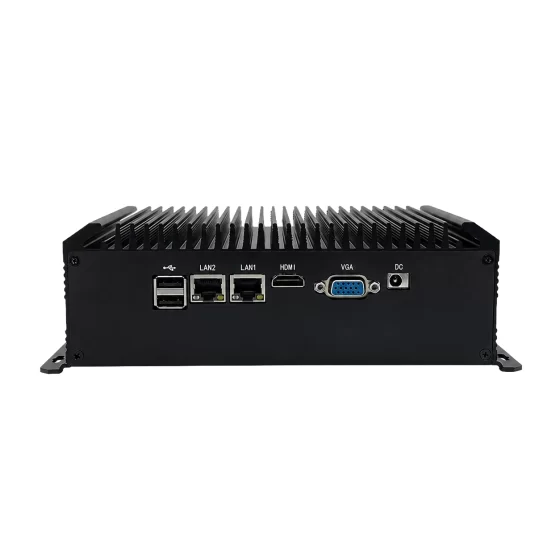
Fanless industrial computers support reliable SMT vision deployment in inspection cabinets and electronics production lines.
Escenarios de implementación
Inspección óptica automatizada
Automated optical inspection is one of the main SMT vision applications.
An industrial computer can process images captured from AOI cameras and help detect missing components, wrong parts, polarity errors, defectos de soldadura, or placement issues.
The system can display inspection results locally and upload records to MES or quality databases.
Solder Paste Inspection
Solder paste inspection checks paste volume, area, altura, posición, and printing quality before component placement.
A machine vision computer can process SPI image data and connect inspection results with process control systems.
This helps identify printing problems earlier and reduce downstream defects.
Reconocimiento de códigos de barras y códigos QR de PCB
PCB traceability often begins with barcode, QR code, or Data Matrix recognition.
An embedded computer can process camera images and read codes on PCBs, paneles, bandejas, or labels.
The recognized data can be linked with work orders, resultados de la inspección, registros de prueba, and packaging information.
Component Presence and Orientation Verification
SMT vision systems can verify whether components are present, correctly oriented, and placed in the expected position.
This is useful for detecting missing parts, reversed components, shifted components, and incorrect assembly conditions.
The industrial computer processes images and sends results to the inspection software or production system.
Estaciones de reparación y retrabajo
Repair stations need access to defect information and production records.
An industrial computer can display AOI results, show defect images, record repair actions, scan PCB IDs, and update repair status.
Esto ayuda a cerrar el círculo entre la inspección, reparar, and final quality validation.
Test Station Data Integration
ICT, FCT, and other electronics test stations generate important quality data.
A machine vision computer may also connect barcode recognition, equipo de prueba, and MES software to ensure each test result is linked with the correct PCB or product.
This improves data consistency across inspection and testing workflows.
Final Label and Packaging Verification
Antes del envío, products may require label verification, reconocimiento de código de barras, inspección de embalaje, and final quality confirmation.
An industrial computer can process label images, verify codes, almacenar resultados, and send data to MES, WMS, o sistemas de calidad.
This helps reduce shipment errors and improves traceability.
Beneficios comerciales
Confiabilidad de inspección mejorada
A stable SMT vision computer helps inspection systems operate consistently across production shifts.
Reliable computing hardware reduces missed image capture, procesamiento retrasado, software instability, and communication interruptions.
This supports more consistent quality control and production feedback.
Stronger PCB Traceability
Traceability depends on accurate data collection at each process step.
Industrial computers help link PCB IDs, resultados de la inspección, Imágenes de defecto, registros de prueba, repair actions, marcas de tiempo, e información de la estación.
This supports customer audits, investigación de calidad, análisis de garantía, y mejora continua.
Carga de trabajo de inspección manual reducida
Manual inspection can be slow and inconsistent.
Machine vision systems automate many inspection and verification tasks. Industrial computers process images and connect results with production systems.
This reduces operator workload and improves inspection consistency across shifts.
Faster Defect Feedback
SMT defects should be detected as early as possible.
When inspection data is processed near the line, engineers can identify printing problems, placement issues, defectos de soldadura, or barcode errors faster.
Early feedback helps reduce rework and prevents defects from moving downstream.
Mejor mejora de procesos
Inspection data can reveal process trends.
Los fabricantes pueden analizar defectos recurrentes, rendimiento de la máquina, solder paste issues, component placement accuracy, y frecuencia de reparación.
A reliable industrial computer helps ensure that the data used for analysis is complete and consistent.
Scalable SMT Line Deployment
A standardized industrial computing platform can be deployed across multiple SMT lines, estaciones de inspección, y fábricas.
Esto simplifica la gestión de imágenes del software., planificación de repuestos, validación del conductor, entrenamiento de mantenimiento, y soporte técnico a largo plazo.
For equipment builders and electronics manufacturers, scalable hardware planning reduces project risk.
Por qué CoreIPC
CoreIPC proporciona plataformas informáticas industriales para visión artificial, fabricación de electrónica, automatización de fábrica, e integración de sistemas integrados. For smt vision computer applications, CoreIPC se centra en hardware de PC industrial confiable, soluciones informáticas integradas, Configuraciones de E/S flexibles, diseño de sistema compacto, y soporte de personalización OEM/ODM. CoreIPC ayuda a los integradores de sistemas, SMT equipment builders, and electronics manufacturers select computing platforms that match real inspection requirements, incluyendo interfaces de cámara, configuración de E/S, métodos de montaje, entrada de energía, diseño térmico, necesidades de almacenamiento, y planificación del ciclo de vida.
Preguntas frecuentes
1. What is an SMT vision computer?
An SMT vision computer is an industrial computer used to support machine vision tasks in surface mount technology production.
Puede procesar imágenes de la cámara., run AOI or SPI software, read PCB barcodes, verify components, comunicarse con PLC, and upload inspection results to MES or quality systems. It is designed for factory environments where reliability, Flexibilidad de E/S, y el funcionamiento continuo son importantes.
2. Why use an industrial computer for SMT vision systems?
SMT vision systems often run near production lines, máquinas de inspección, transportadores, and test stations.
An industrial computer is more suitable than an office PC because it supports rugged installation, diseño térmico estable, E/S industriales, conectividad de la cámara, y una implementación de ciclo de vida prolongado. These features help inspection systems remain reliable during continuous electronics manufacturing.
3. How is an embedded computer used in SMT inspection?
An embedded computer can be installed inside AOI equipment, SPI machines, estaciones de reparación, gabinetes de control, or compact inspection systems.
Puede adquirir imágenes, resultados de la inspección del proceso, read barcode data, comunicarse con PLC, and send records to MES systems. Its compact size makes it useful for OEM equipment and space-limited SMT line installations.
4. What interfaces are important for an SMT vision computer?
Las interfaces importantes pueden incluir USB 3.0, múltiples puertos LAN, RS232, RS485, GPIO, hdmi, DisplayPort, M.2, y expansión PCIe.
USB and LAN ports are commonly used for cameras and peripherals. GPIO or serial ports may support triggers, controladores de iluminación, sensores, PLC, y equipo de producción. Display outputs are useful for local monitoring.
5. Can SMT vision computers support AOI systems?
Sí. SMT vision computers can support AOI systems when selected according to camera resolution, número de cámaras, inspection software workload, and production speed.
Simple AOI stations may use compact embedded computers, while high-resolution or multi-camera systems may require more powerful industrial PCs. Real production testing is important before final selection.
6. How does an SMT vision computer support traceability?
The computer links inspection results with PCB serial numbers, órdenes de trabajo, Imágenes de defecto, marcas de tiempo, información de la estación, and repair records.
Estos datos se pueden cargar en MES o sistemas de calidad.. Complete traceability helps electronics manufacturers investigate defects, apoyar las auditorías de los clientes, analyze process trends, and improve production quality.
7. Is a fanless industrial PC suitable for SMT vision applications?
A fanless industrial PC can be suitable for many SMT vision applications, especialmente cuando el bajo mantenimiento y la reducción del polvo son importantes.
Sin embargo, vision workloads may generate significant heat. The final selection should consider processor performance, recuento de cámaras, diseño de recinto, temperatura ambiente, ubicación de montaje, y flujo de aire disponible.
8. What storage is needed for SMT inspection systems?
Los requisitos de almacenamiento dependen de si el sistema almacena solo registros o también imágenes de inspección y registros de defectos..
SSD storage is usually preferred because it provides fast response and better shock resistance. Para sistemas que almacenan muchas imágenes., capacidad de almacenamiento, escribe resistencia, y la estrategia de respaldo debe revisarse cuidadosamente.
9. Can SMT vision computers connect to MES systems?
Sí. Industrial computers can send inspection data to MES systems through factory networks, bases de datos, software intermedio, or software interfaces.
Uploaded data may include PCB IDs, resultados de la inspección, categorías de defectos, imágenes, marcas de tiempo, información de la estación, and repair status. This helps connect inspection workflows with production traceability.
10. What should be tested before deploying an SMT vision computer?
Antes del despliegue, La computadora debería probarse con cámaras reales., software de inspección, controladores de iluminación, comunicación PLC, lectores de códigos de barras, carga de trabajo de almacenamiento, conexión MES, and production cycle time.
También se deben probar la estabilidad a largo plazo y el rendimiento térmico.. This helps confirm that the system can operate reliably in actual SMT production.
Conclusión
A smt vision computer is a critical hardware foundation for automated optical inspection, solder paste inspection, PCB barcode recognition, verificación de componentes, repair tracking, and quality data integration.
By placing industrial computing hardware close to SMT lines, camaras, controladores de iluminación, PLC, sistemas de códigos de barras, y equipo de inspección, electronics manufacturers can process inspection data locally and connect results with MES and quality systems.
La computadora industrial o la computadora integrada adecuada deben seleccionarse de acuerdo con los requisitos de la aplicación real., incluyendo interfaces de cámara, carga de trabajo de procesamiento, configuración de E/S, capacidad de almacenamiento, diseño de red, método de montaje, entrada de energía, condiciones termicas, compatibilidad del sistema operativo, y planificación del ciclo de vida.
CoreIPC supports SMT vision computer projects with industrial computing platforms designed for practical electronics manufacturing deployment. Con la base de hardware adecuada, Los fabricantes y fabricantes de equipos pueden mejorar la confiabilidad de la inspección., fortalecer la trazabilidad, reducir la carga de trabajo manual, and build scalable SMT quality control systems.
Contáctenos
Busco ordenador industrial, computadora integrada, or industrial motherboard for an SMT machine vision system?
Póngase en contacto con CoreIPC para analizar los requisitos de su proyecto., incluyendo interfaz de cámara, carga de trabajo de inspección, configuración de E/S, integración MES, método de montaje, entrada de energía, entorno operativo, necesidades del ciclo de vida, y opciones de personalización OEM/ODM.