CoreIPC Industrial Computing Solutions

Industry Overview
Modern manufacturing is undergoing a rapid transformation driven by Industry 4.0, smart factories, and digitalized production processes. Traditional automation systems that rely solely on standalone PLCs are increasingly being integrated with industrial computing platforms to support advanced visualization, data analytics, machine connectivity, edge intelligence, and centralized management.

Smart Factory Automation
As factories adopt technologies such as Industrial IoT (IIoT), machine vision, predictive maintenance, MES integration, and real-time production monitoring, the demand for a reliable industrial PC for PLC applications continues to grow.
A modern industrial computer serves as the intelligent control and communication hub within automated production environments. It complements PLC systems by providing enhanced computing power, extensive connectivity, flexible software deployment, and seamless integration with factory information systems.
Whether deployed in automotive manufacturing, electronics assembly, food processing, packaging machinery, pharmaceutical production, or logistics automation, industrial PCs have become a critical component of next-generation factory automation infrastructures.

Automation Challenges
Challenges
Although PLCs remain the backbone of industrial control systems, manufacturers often encounter several limitations when relying exclusively on PLC-based architectures.
Limited Data Processing Capabilities
Traditional PLCs are designed primarily for deterministic control tasks. They are not optimized for handling:
- Large-scale production data
- Machine vision workloads
- Database management
- AI-driven analytics
- Industrial IoT applications
As factories generate increasing volumes of operational data, additional computing resources become necessary.
Complex Multi-System Integration
Modern factories often require integration among:
- PLCs
- SCADA systems
- MES platforms
- ERP systems
- Edge computing devices
- Cloud services
Establishing seamless communication between these systems can be challenging without a dedicated industrial computing platform.
Growing Connectivity Requirements
Industrial automation environments increasingly rely on:
- EtherCAT
- PROFINET
- Modbus TCP
- OPC UA
- CAN Bus
- Ethernet/IP
Traditional controllers may lack sufficient communication interfaces for managing multiple industrial networks simultaneously.
Harsh Industrial Environments
Factory floors expose equipment to:
- High temperatures
- Dust contamination
- Vibration
- Electrical noise
- Continuous 24/7 operation
Commercial-grade computers are often unable to meet the reliability requirements of industrial deployments.
Scalability Challenges
As production lines evolve, manufacturers require scalable computing platforms capable of supporting:
- Additional I/O modules
- More connected machines
- New software applications
- Future AI and edge computing workloads
Conventional automation architectures may struggle to accommodate future expansion.

PLC + IPC Solution Architecture
Solution Architecture
CoreIPC provides a comprehensive Industrial PC for PLC Automation Solution that combines industrial-grade computing hardware with leading industrial control platforms.
The architecture consists of five key layers.
Layer 1: Field Devices
This layer includes:
- Sensors
- Encoders
- Industrial cameras
- Barcode readers
- Actuators
- Servo drives
- VFDs
- Robotics systems
These devices collect production data and execute control commands.
Layer 2: PLC Control Layer
PLCs perform real-time control functions such as:
- Motion control
- Logic processing
- Safety management
- Equipment synchronization
Supported PLC ecosystems may include:
- Siemens
- Beckhoff
- Mitsubishi
- Omron
- Schneider Electric
- Allen-Bradley
Layer 3: CoreIPC Industrial Computing Layer
At the center of the architecture is a CoreIPC industrial computer or embedded computer.
The industrial PC performs:
- HMI visualization
- SCADA operation
- Data acquisition
- Edge analytics
- Soft PLC deployment
- Industrial gateway functions
- Protocol conversion
- Database management
Typical software environments include:
- Windows 10 IoT
- Windows 11 IoT
- Linux
- Ubuntu
- Debian
- Real-time Linux
- CODESYS Runtime
- TwinCAT 3
Layer 4: Manufacturing Management Systems
The industrial PC communicates with:
- MES systems
- Quality management systems
- Production scheduling systems
- Warehouse management systems
- Traceability platforms
This enables real-time production visibility and operational optimization.
Layer 5: Enterprise & Cloud Layer
Factory data can be transmitted securely to:
- ERP systems
- Private clouds
- Public clouds
- AI analytics platforms
- Remote monitoring centers
Supporting predictive maintenance and enterprise-wide decision making.
Key Features
High-Performance Industrial Computing
CoreIPC systems support:
- Intel® Core™ processors
- Intel® Celeron® processors
- Intel® Atom® processors
- AMD Ryzen™ embedded processors
This enables significantly higher computing performance compared with traditional PLC-only architectures.
Soft PLC Compatibility
CoreIPC industrial computers can host popular soft PLC platforms including:
- CODESYS
- TwinCAT 3
- OpenPLC
- PLCnext Runtime
This allows manufacturers to combine control and computing capabilities on a unified platform.
Industrial Protocol Support
CoreIPC solutions support communication protocols such as:
- EtherCAT
- Modbus TCP
- Modbus RTU
- CAN Bus
- OPC UA
- MQTT
- PROFINET
- Ethernet/IP
Facilitating seamless connectivity across diverse industrial devices.
Flexible Expansion
Industrial applications often require customized I/O and communication interfaces.
CoreIPC platforms support:
- PCIe expansion
- M.2 expansion
- Mini PCIe modules
- GPIO interfaces
- Digital I/O cards
- Motion control cards
- Frame grabber cards
Providing exceptional deployment flexibility.

Industrial Reliability
Wide Operating Temperature Design
Industrial-grade designs support operation in demanding environments with:
- Extended temperature tolerance
- Shock resistance
- Vibration resistance
- EMI protection
Ensuring reliable operation on factory floors.
Edge Computing Capability
The industrial PC can process data locally to:
- Reduce network traffic
- Lower latency
- Improve system responsiveness
- Enhance cybersecurity
Supporting modern Industry 4.0 initiatives.
Long Lifecycle Availability
CoreIPC products offer:
- Long-term supply availability
- Stable hardware platforms
- Consistent product revisions
Ideal for industrial automation projects with extended deployment cycles.
Recommended CoreIPC Products
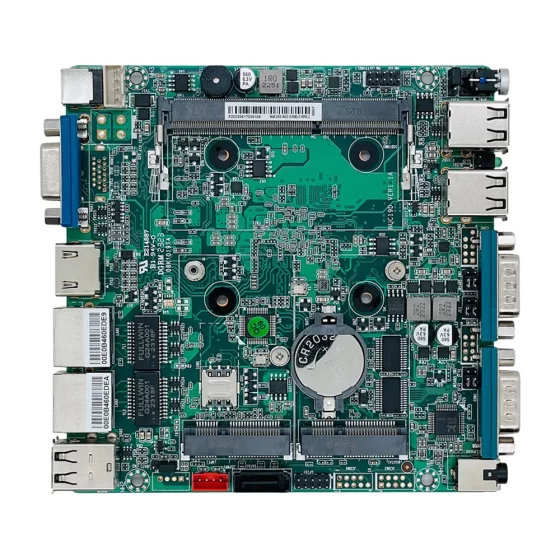
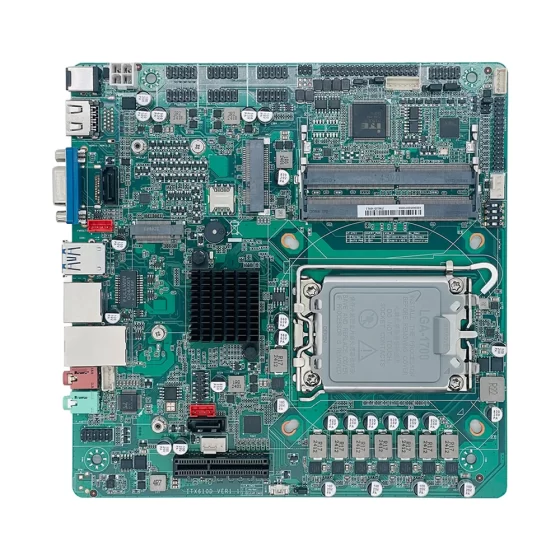
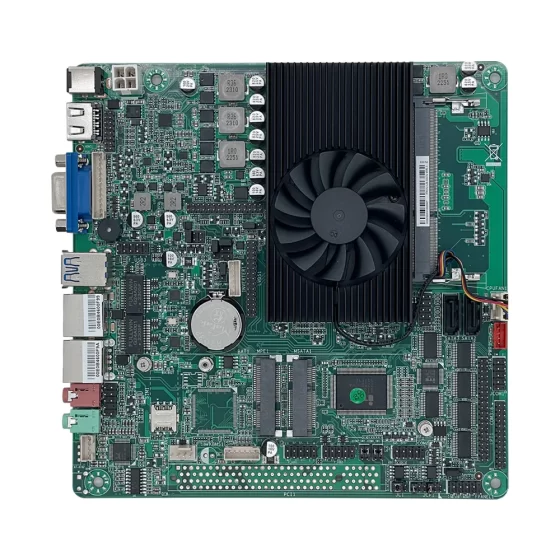
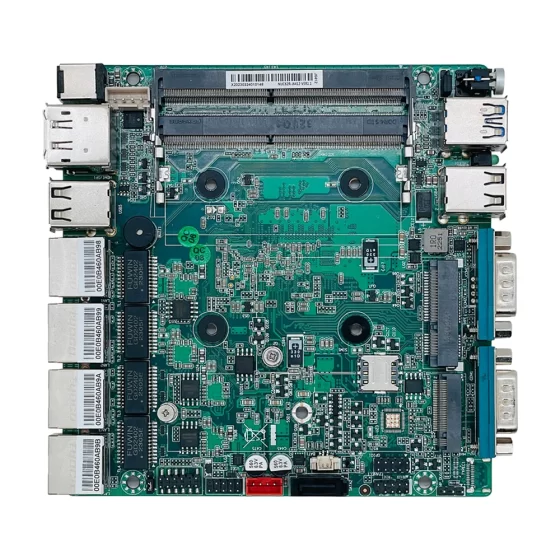
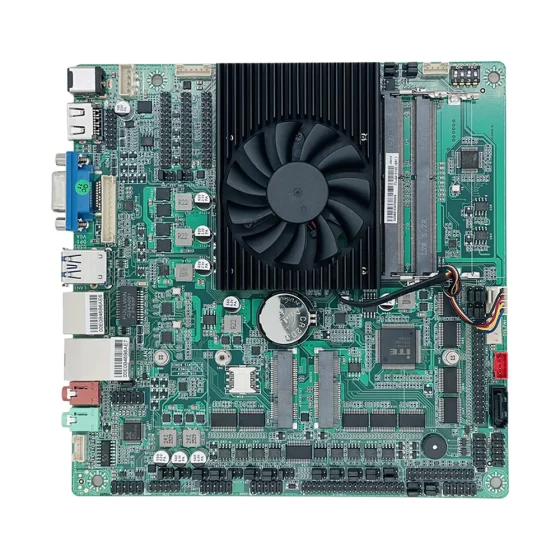
Industrial Motherboards
Recommended for machine builders and automation equipment manufacturers.
Applications:
- PLC controller integration
- Machine automation
- Industrial gateways
- HMI systems
Advantages:
- Compact form factors
- Flexible customization
- Long-term availability
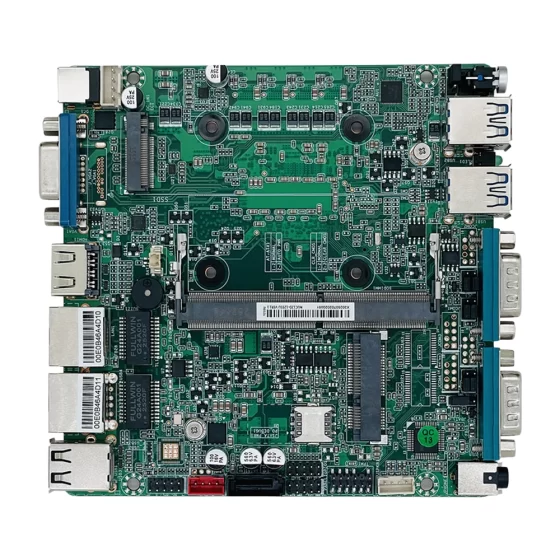
Embedded Boards
Ideal for embedded automation systems requiring space-efficient designs.
Applications:
- Embedded control systems
- Motion control platforms
- Robotics controllers
- Smart manufacturing equipment
Advantages:
- Low power consumption
- High reliability
- Rich industrial interfaces
Fanless Industrial Computers
Designed for factory environments requiring maintenance-free operation.
Applications:
- SCADA stations
- Industrial edge computing
- Soft PLC systems
- Production monitoring
Advantages:
- Silent operation
- Dust-resistant design
- High stability
Industrial AI Edge Computers
Suitable for advanced automation projects.
Applications:
- Machine vision inspection
- Predictive maintenance
- AI quality control
- Autonomous manufacturing systems
Advantages:
- GPU acceleration
- Real-time analytics
- Edge AI processing
Benefits
Enhanced Production Efficiency
Industrial PCs enable:
- Faster data processing
- Improved machine coordination
- Reduced downtime
- Optimized workflows
Resulting in higher overall equipment effectiveness (OEE).
Simplified System Integration
A centralized industrial computing platform simplifies communication among:
- PLCs
- Sensors
- MES systems
- ERP systems
- Cloud services
Reducing engineering complexity.
Greater Flexibility
Manufacturers can easily deploy:
- New software applications
- Additional communication protocols
- Advanced analytics functions
Without replacing existing PLC infrastructure.
Reduced Total Cost of Ownership
By consolidating multiple functions into a single platform, organizations can reduce:
- Hardware costs
- Maintenance requirements
- Energy consumption
- System complexity
Future-Proof Automation Infrastructure
CoreIPC solutions provide a scalable foundation for:
- Industrial IoT
- Smart factories
- Edge computing
- AI deployment
Ensuring long-term investment protection.
Why CoreIPC
CoreIPC specializes in industrial computing platforms designed for automation, embedded computing, and intelligent manufacturing applications.
Customers choose CoreIPC because of:
Extensive Industrial Experience
Years of expertise in:
- Industrial motherboards
- Embedded computing
- Automation hardware
- Edge computing platforms
Flexible OEM/ODM Services
Support for:
- Customized interfaces
- Specialized form factors
- Industry-specific configurations
- Private branding
Reliable Product Quality
All products are engineered for:
- Continuous operation
- Industrial environments
- Long lifecycle deployment
Comprehensive Technical Support
CoreIPC provides:
- Pre-sales consultation
- Hardware customization
- Software integration support
- Long-term project assistance
Global Supply Capability
Supporting automation projects worldwide with stable product availability and responsive service.
FAQ
What is an industrial PC for PLC applications?
An industrial PC for PLC applications is a ruggedized computing platform that works alongside or replaces traditional PLC hardware to provide advanced computing, visualization, communication, and data processing capabilities.
Can an industrial PC replace a PLC?
In some applications, yes. Soft PLC platforms such as CODESYS and TwinCAT allow industrial PCs to perform PLC functions while providing additional computing power and flexibility.
Does CoreIPC support CODESYS?
Yes. CoreIPC industrial computers and embedded platforms can be configured to support CODESYS-based automation solutions.
Does CoreIPC support TwinCAT 3?
Yes. CoreIPC hardware can be deployed with TwinCAT 3 environments for industrial control and EtherCAT-based automation systems.
Which operating systems are supported?
Depending on the hardware platform, CoreIPC solutions support:
- Windows 10 IoT
- Windows 11 IoT
- Linux
- Ubuntu
- Debian
- Real-time Linux
Can CoreIPC support EtherCAT communication?
Yes. CoreIPC industrial computers can support EtherCAT master and slave configurations depending on the software and hardware implementation.
Are fanless industrial PCs suitable for factory environments?
Yes. Fanless industrial PCs are widely used in factories because they offer improved reliability, lower maintenance requirements, and resistance to dust contamination.
Can CoreIPC provide customized industrial computers?
Yes. CoreIPC offers OEM and ODM services including custom motherboard design, interface customization, enclosure modifications, and project-specific hardware development.
Contact Us
Looking for a reliable industrial PC for PLC automation projects?
CoreIPC provides industrial motherboards, embedded boards, fanless industrial computers, and customized automation computing solutions designed for smart factories and Industry 4.0 applications.
Whether you are building automated production equipment, deploying soft PLC systems, integrating MES platforms, or developing intelligent manufacturing solutions, our engineering team is ready to help.
Contact CoreIPC today to discuss your factory automation requirements and discover the ideal industrial computing platform for your project.