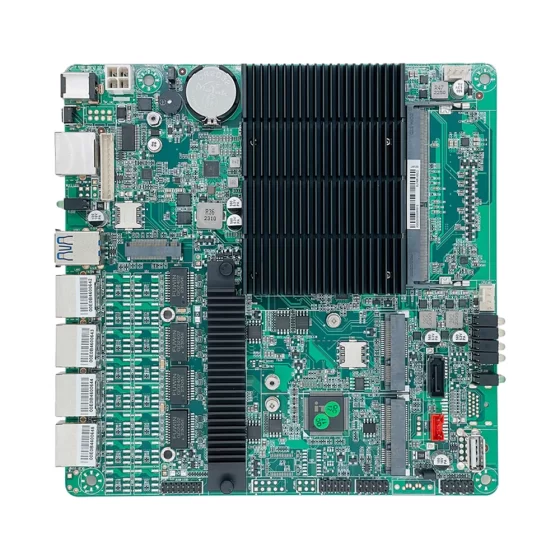
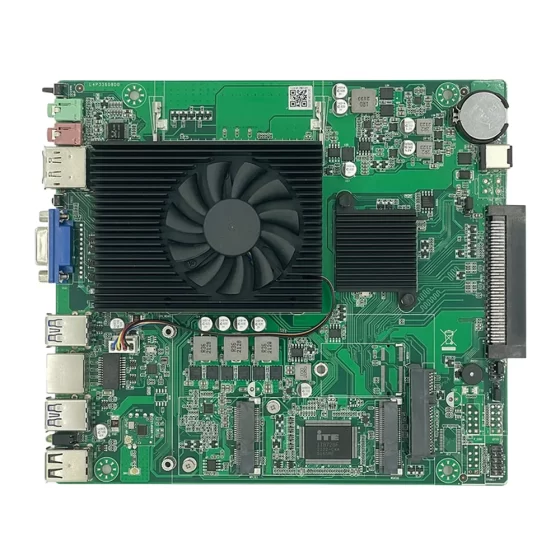
CoreIPC Industrial Computing Solutions

Shop Floor Management Computing Solution: Reliable Shop Floor Management Computer for Connected Production
Executive Summary
A shop floor management computer provides the industrial computing foundation required to connect operators, machines, workstations, production data, and factory management systems on the manufacturing floor.
In modern factories, shop floor management is no longer limited to paper forms, manual reporting, or supervisor walk-throughs. Production teams need real-time visibility into machine status, work order progress, operator activity, material usage, quality records, downtime events, and production output.
This requires reliable computing hardware deployed directly at production sites. An industrial computer or embedded computer can work as an operator terminal, production data collection node, machine communication gateway, quality inspection workstation, or manufacturing dashboard computer.
Compared with standard office PCs, industrial computers are better suited for factory environments. They support continuous operation, flexible I/O, fanless design, stable mounting, machine connectivity, and long-term deployment.
A well-designed shop floor management computer solution helps manufacturers improve production visibility, reduce manual data entry, strengthen traceability, support faster decision-making, and build a practical foundation for digital manufacturing.
This article explains how industrial computers support shop floor management, what deployment challenges manufacturers face, how the solution architecture is structured, and which hardware features are important for reliable production-floor computing.
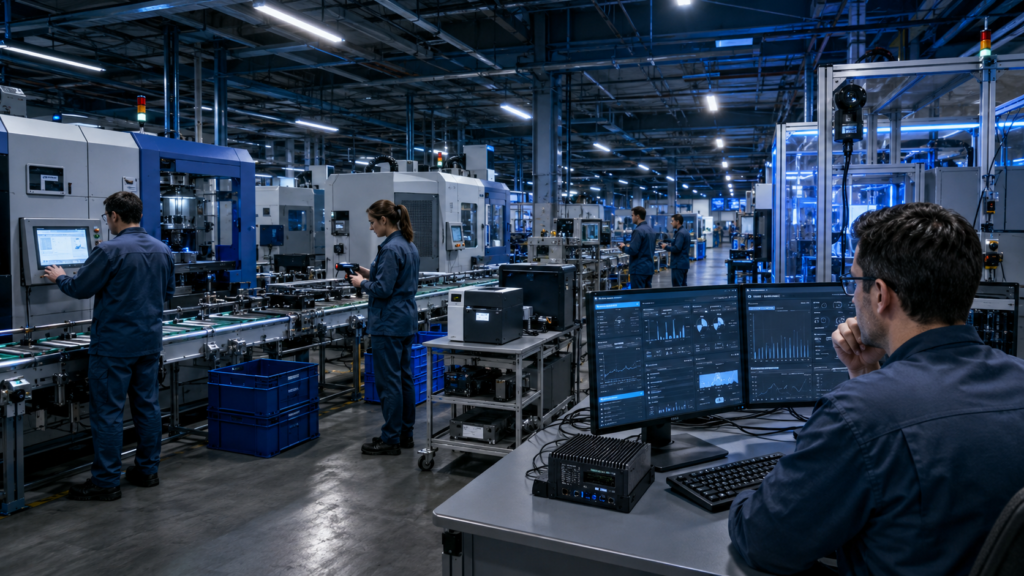
Industrial computers collect operator, machine, scanner, RFID, and production data for shop floor management systems.
Industry Overview
Shop Floor Management Is Becoming Data-Driven
Shop floor management focuses on controlling, monitoring, and improving daily production activities.
In traditional factories, supervisors often rely on whiteboards, paper reports, manual input, and delayed communication. This approach can work for small operations, but it becomes difficult when production lines, machines, operators, materials, and quality requirements increase.
Modern shop floor management requires faster and more accurate data.
Factories need to understand:
- Which work orders are running
- Which machines are active or idle
- Which stations have quality issues
- Which materials are being used
- Which operators are assigned to each process
- Which production targets are delayed
- Which abnormal events require immediate response
A shop floor management computer helps collect and display this information close to the actual production process.
Industrial Computing Connects People, Machines, and Data
Shop floor management is not only a software function. It also depends on reliable hardware.
Industrial computers are used to connect operators, machines, barcode scanners, RFID readers, printers, PLCs, sensors, testing devices, and factory networks. They bring computing power directly to production lines and workstations.
This local computing layer allows production teams to interact with digital systems in real time.
For example, an operator can scan a product ID, view work instructions, confirm process completion, report defects, and print labels through one industrial terminal.
At the same time, the computer can collect machine status, upload records to MES, and display production dashboards.
Why Standard PCs Are Often Not Enough
A commercial PC may be suitable for an office desk, but shop floor environments are different.
Production areas may include dust, vibration, electrical noise, heat, unstable power, and limited installation space. Devices may run continuously for long shifts and connect to industrial peripherals.
A shop floor management computer should be designed for these conditions.
Industrial computers and embedded computers provide more suitable options for factory deployment, especially when reliability, I/O flexibility, mounting design, and lifecycle consistency are important.

Industrial PCs help connect mixed factory equipment, legacy machines, PLCs, serial devices, and barcode stations to shop floor systems.
Key Challenges
Real-Time Production Visibility
Many factories still have delays between production events and management visibility.
A machine may stop, but the supervisor may only know later. A quality issue may appear at one station, but the report may not reach the production manager immediately. A material shortage may slow down a line before the planning system is updated.
This delay affects production efficiency.
A shop floor management computer helps reduce this gap by collecting and displaying information at the point of operation.
Mixed Equipment and Interfaces
Shop floors often contain different types of production equipment.
Some machines support Ethernet communication. Others use serial ports, USB devices, dry contacts, sensors, or manual input. Some production steps depend on barcode scanners, RFID readers, weighing systems, label printers, or testing instruments.
A practical industrial computer must support different interfaces, such as:
- LAN
- USB
- RS232
- RS485
- HDMI or DisplayPort
- GPIO or digital I/O
- Expansion modules
- Wireless connectivity when required
Without suitable I/O, the computing platform may require many adapters, which can reduce reliability.
Harsh Factory Conditions
Shop floor computers may be installed near machines, conveyors, cabinets, operator stations, or inspection benches.
These locations may expose the system to dust, vibration, heat, cable movement, and power fluctuation. If the computer fails, the production station may lose access to work instructions, scanning functions, reporting tools, or quality records.
Industrial computers reduce this risk through rugged mechanical design, fanless options, stable mounting, and industrial power support.
Data Accuracy and Traceability
Shop floor management depends on accurate production data.
If operators enter data manually after production, errors can happen. If barcode scans are missed, traceability becomes incomplete. If quality data is stored locally but not uploaded correctly, analysis becomes difficult.
A shop floor management computer can help capture data during the actual production step.
This improves traceability by linking product IDs, material batches, operator actions, process results, and quality records to the correct production event.
Scaling Across Multiple Lines
Many factories start with a small digital management project on one line.
After the pilot succeeds, the same system may need to expand to many lines, workshops, or factories. If every station uses different hardware, maintenance becomes difficult.
Common problems include:
- Different drivers
- Different power adapters
- Different mounting methods
- Different software images
- Different spare parts
- Different lifecycle schedules
Standardized industrial computing platforms make large-scale deployment easier to manage.

Industrial computers connect machines, operators, peripherals, MES, databases, and production dashboards in shop floor management systems.
Shop Floor Management Computer Solution Architecture
Production Equipment Layer
The production equipment layer includes the machines and devices that generate shop floor data.
This may include PLCs, CNC machines, assembly tools, sensors, meters, conveyors, barcode scanners, RFID readers, label printers, weighing devices, testing instruments, and inspection systems.
These devices generate information such as:
- Machine status
- Output quantity
- Alarm events
- Cycle time
- Product ID
- Material batch
- Operator confirmation
- Defect records
- Test results
- Process parameters
The shop floor management system needs reliable computing hardware to collect this data.
Industrial Edge Computing Layer
The industrial edge computing layer is where the shop floor management computer is deployed.
An industrial computer or embedded computer may be installed at an operator station, production line, machine cabinet, inspection bench, or material handling area.
At this layer, the computer may perform several tasks:
- Display work instructions
- Collect operator input
- Connect scanners and RFID devices
- Communicate with machines or PLCs
- Record process data
- Print labels
- Run MES or shop floor software
- Buffer data during network interruption
- Upload records to servers
- Display local dashboards
This layer improves system reliability because data is handled close to where production actually happens.
Shop Floor Software Layer
The shop floor software layer may include MES, production dashboards, work order systems, quality management software, equipment monitoring platforms, or custom factory applications.
Industrial computers communicate with this layer through factory networks.
For example, the software system may send a work order to a station. The shop floor computer displays the instructions, collects scan results, records completion status, and sends the data back to the system.
This creates a closed-loop workflow between production execution and management visibility.
Factory Network Layer
The factory network connects shop floor computers with servers, databases, monitoring workstations, and enterprise systems.
In many cases, network segmentation is important.
One LAN connection may be used for machine-side communication, while another connects to the production management network. This can improve organization, reduce interference, and support better security design.
Enterprise Integration Layer
Shop floor management data may also be shared with ERP, WMS, PLM, SCADA, or business intelligence systems.
This allows production information to support planning, inventory control, quality analysis, maintenance decisions, and delivery management.
The industrial computer does not replace these systems. It provides the reliable shop-floor data foundation they need.
Key Features
Industrial-Grade Reliability
Reliability is the first requirement for shop floor computing.
The system may need to run continuously across multiple shifts and remain stable in demanding production environments.
Important reliability features include:
- Industrial motherboard design
- Fanless system options
- Rugged enclosure structure
- SSD storage support
- Stable thermal performance
- Wide-voltage input options
- Secure mounting methods
- Long lifecycle planning
The goal is stable operation in real factory conditions, not only basic computing performance.
Flexible I/O Configuration
Shop floor management computers often connect many peripherals.
A single station may need a display, touchscreen, scanner, RFID reader, printer, keyboard, PLC connection, and LAN connection.
Useful I/O options may include:
- Multiple LAN ports
- USB 2.0 and USB 3.0
- RS232
- RS485
- HDMI
- DisplayPort
- GPIO
- M.2 expansion
- Mini PCIe expansion
The right I/O configuration reduces adapter usage and improves deployment reliability.
Fanless and Low-Maintenance Design
Fanless industrial computers are useful in shop floor environments.
They reduce dust intake and remove one common mechanical failure point. This is important in factories where devices are expected to run for long hours with limited maintenance.
Fanless design should still be matched with workload, ambient temperature, installation position, and enclosure airflow.
Compact Installation Design
Shop floor computers are often installed in space-limited locations.
They may be placed behind monitors, inside cabinets, under benches, on machine frames, or beside production lines.
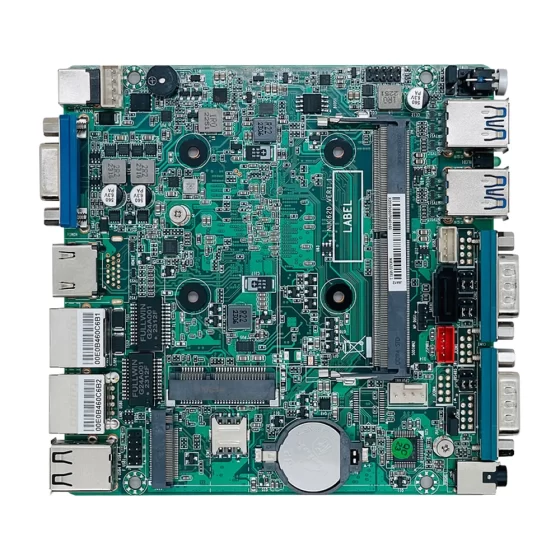
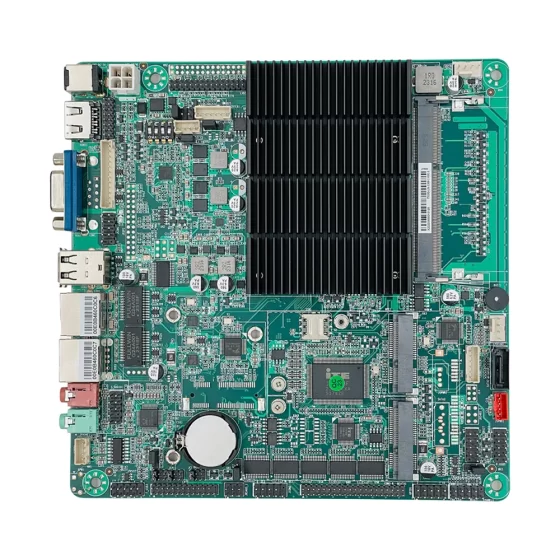
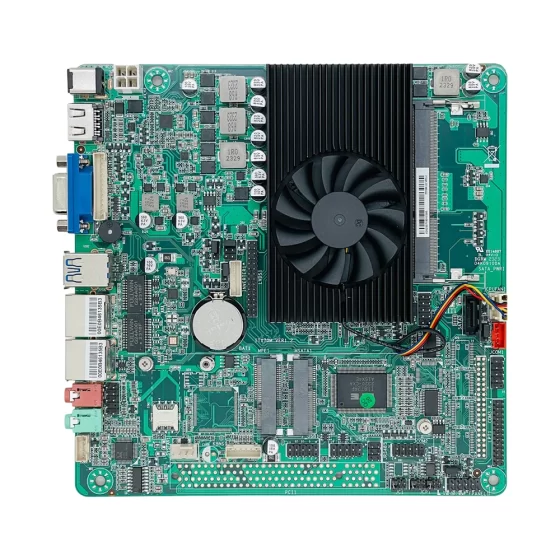
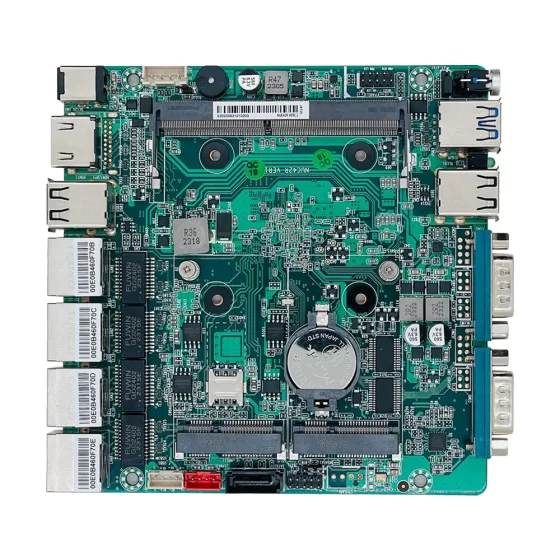
Compact embedded computers and industrial box PCs provide flexible installation options. For OEM equipment, embedded boards can be integrated directly into custom machines or terminals.
Storage and Data Protection
Shop floor systems may store operating system files, local applications, logs, temporary records, label files, quality data, or inspection images.
SSD storage is usually preferred because it provides faster response and better shock resistance than mechanical storage.
For applications with frequent logging or local image storage, storage capacity and write endurance should be reviewed before deployment.
Software and Peripheral Compatibility
Shop floor management software may run on Windows, Linux, browser-based applications, or custom factory systems.
Before mass deployment, the hardware should be validated with the operating system, drivers, scanners, printers, RFID devices, PLC communication tools, remote access software, and cybersecurity settings.
This reduces integration risk during factory rollout.
Deployment Scenarios
Operator Workstations
Operator workstations are one of the most common shop floor management applications.
An industrial computer can connect to a touchscreen, scanner, RFID reader, keyboard, and label printer. Operators can view work instructions, scan products, confirm process steps, report defects, and submit production results.
This helps reduce paper-based workflows and improves process consistency.
Production Line Monitoring
Industrial computers can be used to monitor production line status.
They can display output quantity, machine status, work order progress, downtime events, and quality alerts.
This allows supervisors and operators to respond faster when production conditions change.
Machine Data Collection
A shop floor management computer can collect data directly from machines.
It may connect to PLCs, CNC machines, sensors, meters, or controllers. The collected data may include running status, cycle time, alarm events, output count, or process values.
This helps factories move from manual reporting to data-driven production management.
Quality Inspection Stations
Quality inspection stations often need reliable computing hardware.
An industrial computer may connect to cameras, measurement tools, test instruments, barcode scanners, and printers. It can record inspection data, link results to product IDs, and upload records to quality or MES systems.
This supports traceability and root cause analysis.
Material Handling and Warehouse Areas
Shop floor management also includes material movement.
Industrial computers can be used in receiving areas, line-side storage, material preparation zones, and finished goods stations.
By connecting barcode scanners, RFID readers, weighing equipment, and label printers, the system can improve material tracking and reduce manual input errors.
Andon and Visual Management Systems
Factories may use shop floor computers to support visual management systems.
These systems display line status, production targets, alarms, downtime reasons, and support requests. They help supervisors understand problems quickly and coordinate response actions.
Industrial computers provide stable hardware for these real-time display and data collection tasks.
OEM Equipment Integration
Machine builders can integrate embedded computers or industrial motherboards into equipment that requires shop floor data connectivity.
This allows machines to support operator interface, production reporting, remote diagnostics, and connection to factory management systems.
For OEMs, built-in computing can increase machine value and simplify customer integration.
Business Benefits
Improved Production Visibility
A shop floor management computer helps manufacturers see production activity more clearly.
By collecting real-time data from operators, machines, scanners, and inspection stations, factory teams can monitor work order progress, machine status, output quantity, quality issues, and downtime events.
This improves decision-making and reduces response delays.
Reduced Manual Reporting
Manual reporting takes time and often introduces errors.
Industrial computers allow production data to be captured at the source. Operators can scan, confirm, report, and submit data during the actual process.
This reduces paperwork and improves reporting accuracy.
Stronger Traceability
Traceability requires complete records across production steps.
Shop floor computers help capture product IDs, material batches, operator actions, machine parameters, inspection results, and process completion data.
This supports quality control, audits, warranty analysis, and continuous improvement.
Faster Response to Problems
When production data is available in real time, teams can respond faster.
Supervisors can identify downtime, material shortages, abnormal quality results, or line delays sooner. This reduces the time between problem occurrence and corrective action.
Better Use of Existing Equipment
Factories do not always need to replace existing equipment to improve shop floor management.
Industrial computers can connect legacy machines through serial ports, Ethernet, USB, sensors, or external gateways. This allows manufacturers to digitalize existing assets gradually.
Scalable Factory Management
A standardized industrial computer platform helps factories scale shop floor management systems across multiple lines and sites.
Using consistent hardware simplifies software deployment, maintenance, spare parts planning, training, and technical support.
This supports long-term digital manufacturing development.
Why CoreIPC
CoreIPC provides industrial computing platforms for manufacturing, automation, machine connectivity, and embedded system integration. For shop floor management applications, CoreIPC focuses on reliable industrial computer hardware, embedded computer solutions, flexible I/O configurations, compact system design, and OEM/ODM customization support. CoreIPC helps system integrators, equipment builders, and manufacturing teams select computing platforms that match real production environments, including machine interfaces, operator terminals, mounting methods, power input, thermal design, and long-term deployment needs.
Frequently Asked Questions
1. What is a shop floor management computer?
A shop floor management computer is an industrial computer used to support production-floor management tasks.
It may work as an operator terminal, production monitoring station, machine data collection node, quality inspection workstation, or dashboard computer. It connects operators, machines, scanners, printers, and software systems to improve production visibility and data accuracy.
2. Why use an industrial computer for shop floor management?
Industrial computers are designed for factory environments where standard office PCs may not be reliable enough.
They can support continuous operation, rugged installation, fanless design, flexible I/O, and connection to industrial devices. This makes them suitable for production lines, machine cabinets, inspection stations, and operator workstations.
3. How is an embedded computer used on the shop floor?
An embedded computer can be installed near machines, inside cabinets, behind displays, or inside custom equipment.
It can collect data from PLCs, sensors, scanners, RFID readers, or test instruments. It may also run local applications, display work instructions, buffer data, or upload production records to factory software systems.
4. What interfaces are important for shop floor computers?
Common interfaces include LAN, USB, RS232, RS485, HDMI, DisplayPort, GPIO, M.2, and Mini PCIe.
USB is often used for scanners, RFID readers, printers, keyboards, and cameras. Serial ports are useful for legacy machines, meters, or controllers. Multiple LAN ports can help separate machine communication from factory network communication.
5. Can shop floor computers connect legacy machines?
Yes. Industrial computers are often used to connect legacy machines that do not directly support modern digital systems.
They can collect data through RS232, RS485, Ethernet, USB, sensors, or gateway modules. This allows factories to improve shop floor management without replacing all existing equipment.
6. Is a fanless computer suitable for shop floor deployment?
A fanless industrial computer is often suitable for shop floor deployment because it reduces dust intake and removes a common mechanical failure point.
This is useful in production environments with dust, particles, vibration, or long operating hours. However, thermal conditions, CPU workload, mounting position, and enclosure airflow should be reviewed before selection.
7. How does a shop floor management computer improve traceability?
It improves traceability by collecting data at each production step.
The computer can capture product IDs, material batches, operator actions, machine status, inspection results, and process completion records. When this data is uploaded to MES or quality systems, manufacturers can build more complete production history.
8. Do shop floor computers need multiple LAN ports?
Multiple LAN ports are useful when the computer must connect to both machine networks and factory management networks.
One LAN port may connect to PLCs or equipment, while another connects to MES, databases, or production dashboards. This separation can improve network organization and support better security design.
9. What should be considered before selecting shop floor hardware?
Important factors include CPU performance, memory, storage, I/O interfaces, operating system support, mounting method, power input, ambient temperature, peripheral compatibility, and lifecycle requirements.
It is also important to test the hardware with actual software, scanners, printers, PLC communication, and network settings before large-scale deployment.
10. Can OEM equipment builders integrate shop floor computing functions?
Yes. OEM equipment builders can integrate embedded computers, industrial PCs, or industrial motherboards into machines or custom terminals.
This allows equipment to support operator interface, production reporting, remote diagnostics, data logging, and factory management system connectivity. It also helps make equipment more suitable for digital manufacturing environments.
Conclusion
A shop floor management computer is a practical foundation for connected production management.
It brings reliable industrial computing close to operators, machines, scanners, inspection systems, material stations, and production networks. This helps manufacturers improve visibility, reduce manual reporting, strengthen traceability, and respond faster to shop-floor problems.
The right industrial computer or embedded computer should be selected according to real deployment requirements, including I/O configuration, mounting method, power input, thermal conditions, storage needs, operating system compatibility, network design, and long-term lifecycle planning.
CoreIPC supports shop floor management computer projects with industrial computing platforms designed for practical factory environments. With the right hardware foundation, manufacturers can build more stable, scalable, and data-driven production management systems.
Contact Us
Looking for an industrial computer, embedded computer, or industrial motherboard for shop floor management?
Contact CoreIPC to discuss your project requirements, including operator terminals, machine interfaces, I/O configuration, mounting method, power input, operating environment, lifecycle needs, and OEM/ODM customization options.