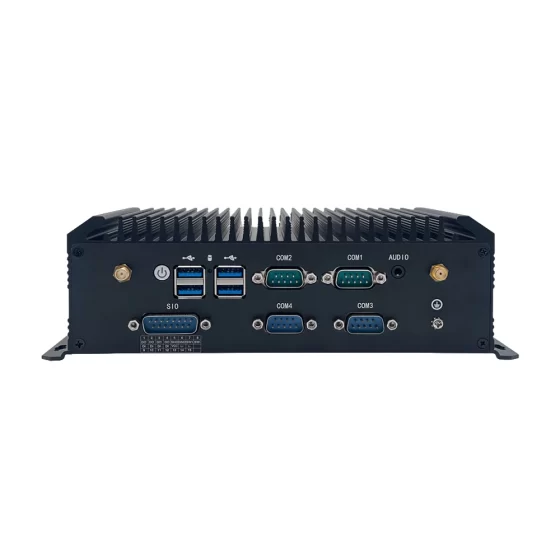
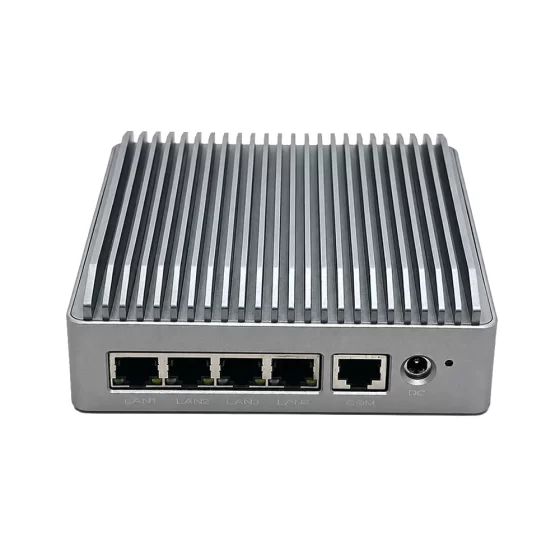
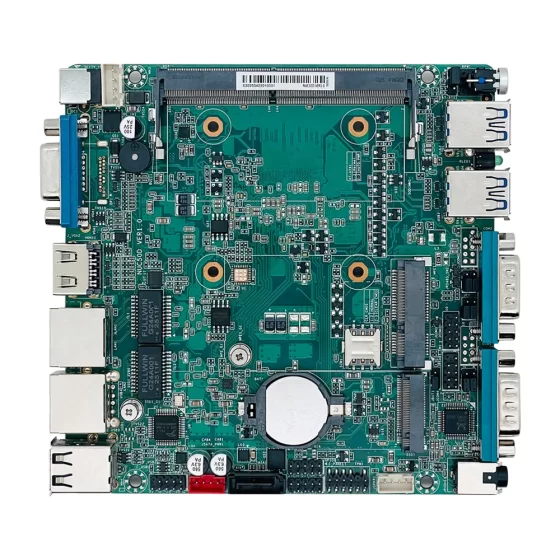
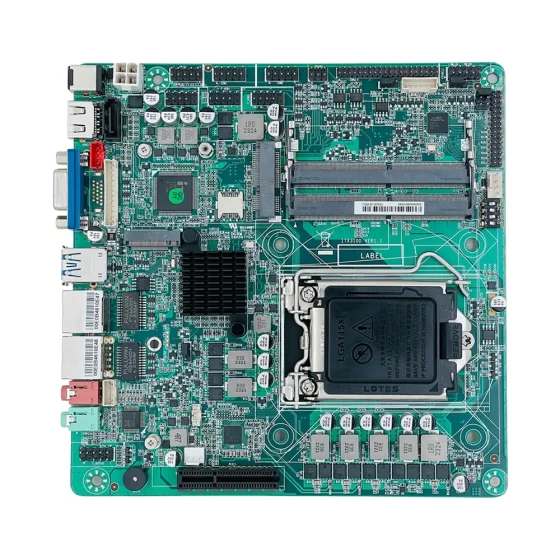
CoreIPC Industrial Computing-Lösungen

Lüfterloser Industrie-PC für HMI-Anwendungen: HMI-Industrie-PC für Bedienschnittstellen
Zusammenfassung
Ein HMI-Industrie-PC bildet die industrielle Computergrundlage für Bedienerschnittstellensysteme, Maschinenvisualisierung, Produktionsüberwachung, Alarmmanagement, Rezeptsteuerung, Datenanzeige, Wartungszugang, und Fabriksystemkommunikation.
Mensch-Maschine-Schnittstellenanwendungen sind in der modernen Automatisierung unverzichtbar. Betreiber müssen klar sein, zuverlässig, und reaktionsschneller Zugriff auf den Maschinenstatus, Prozesswerte, Alarm, Produktionsaufzeichnungen, Gerätebedingungen, und Systemsteuerungen. Ob in einer Produktionslinie eingesetzt, Verpackungsmaschine, CNC-Maschine, Roboter-Arbeitszelle, Versorgungsstation, oder Industrieschaltschrank, Die HMI-Plattform muss im Dauerbetrieb stabil bleiben.
Auf einem lüfterlosen Industrie-PC oder Embedded-Computer kann HMI-Software ausgeführt werden, verbinden SPS und Steuerungen, Echtzeit-Maschinendaten anzeigen, Speichern Sie lokale Datensätze, Unterstützung der Ferndiagnose, und mit SCADA kommunizieren, MES, industrielle IoT-Plattformen, oder Cloud-Überwachungssysteme.
Im Vergleich zu Standard-Büro-PCs, Lüfterlose Industriecomputer eignen sich besser für HMI-Anwendungen, da sie die Staubaufnahme reduzieren, Beseitigen Sie einen häufigen mechanischen Fehlerpunkt, unterstützen eine robuste Installation, stellen mehrere Industrieschnittstellen bereit, und bieten eine lange Verfügbarkeit über den gesamten Lebenszyklus.
In diesem Artikel wird erläutert, wie lüfterlose HMI-Industrie-PC-Plattformen industrielle Bedienoberflächen unterstützen, welche Herausforderungen bei der Bereitstellung in realen Automatisierungsumgebungen auftreten, wie die Lösungsarchitektur funktioniert, und welche Hardwaremerkmale bei der Auswahl eines Industriecomputers oder Embedded-Computers für HMI-Anwendungen wichtig sind.
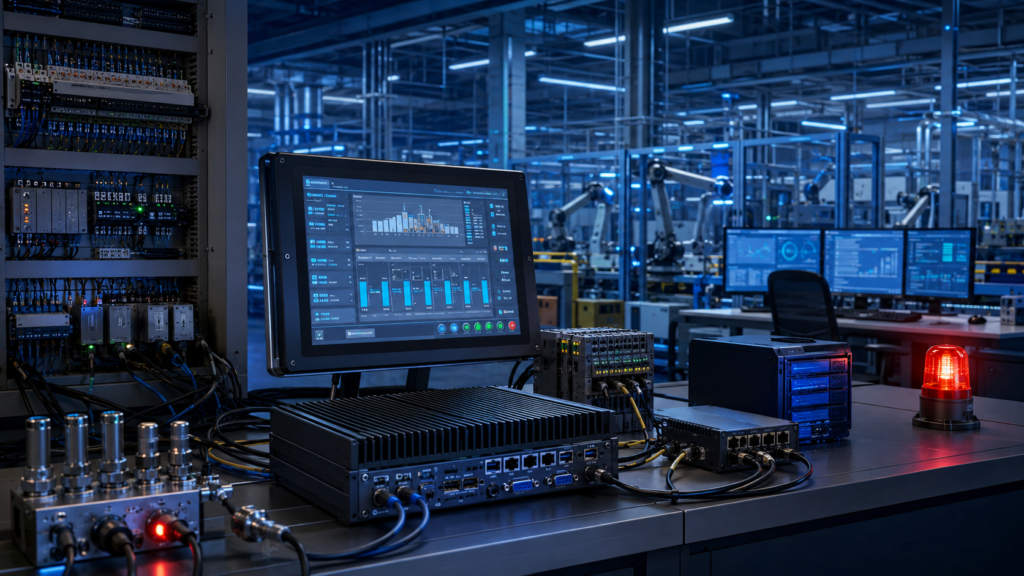
HMI-Industrie-PCs zeigen den Maschinenstatus an, Alarm, Rezepte, Produktionsaufzeichnungen, und Wartungsdaten für Betreiber.
Branchenüberblick
HMI-Systeme sind für den industriellen Betrieb von zentraler Bedeutung
HMI-Systeme helfen Bedienern, Maschinen zu verstehen und mit ihnen zu interagieren.
Sie zeigen Prozessinformationen an, Maschinenstatus, Alarmmeldungen, Produktion zählt, Rezepte, Wartungsbildschirme, und Bedienungsanleitung. In vielen Fabriken, Das HMI ist die wichtigste tägliche Schnittstelle zwischen Menschen und Geräten.
Zu den gängigen HMI-Anwendungen gehören::
- Maschinenbedienfelder
- Dashboards für Produktionslinien
- Schnittstellen für Verpackungsmaschinen
- CNC-Bedienerbildschirme
- Überwachung der Roboterarbeitszelle
- Kontrollstationen für Versorgungsunternehmen
- SCADA-Terminals
- Prozessüberwachungspanels
- Wartungszugangsterminals
- Industrielle IoT-Dashboards
- Qualitätskontrolldisplays
- Gerätestatusbildschirme
Ein zuverlässiger HMI-Industrie-PC hilft Bedienern, Entscheidungen schneller zu treffen und reduziert das Risiko des Maschinenbetriebs.
Lüfterloses Design für industrielle Umgebungen
Viele HMI-Systeme werden in der Nähe von Maschinen installiert, in Schränken, auf Bedienfeldern, oder in staubigen Produktionsbereichen.
Bei Computern mit Lüfter kann Staub in das Gehäuse eindringen. Ventilatoren verfügen außerdem über bewegliche Teile, die mit der Zeit ausfallen können.
Ein lüfterloser Industrie-PC verringert dieses Risiko.
Das lüfterlose Design ist besonders nützlich für:
- Staubige Fabrikböden
- Verpackungsbereiche
- CNC-Werkstätten
- Automatisierungsschränke
- Lagersysteme
- Hauswirtschaftsräume
- Industrieterminals im Kiosk-Stil
- Fernüberwachungsstationen
- Wartungsarme Ausrüstung
In Kombination mit robustem Gehäusedesign und zuverlässiger Lagerung, Lüfterlose IPCs bieten eine stabile Plattform für lang laufende HMI-Anwendungen.
HMI wird zunehmend datengesteuert
Herkömmliche HMI-Bildschirme konzentrierten sich hauptsächlich auf die Maschinenbedienung.
Moderne HMI-Systeme unterstützen zunehmend Datenfunktionen, einschließlich Produktionsanalytik, Alarmverlauf, Qualitätsaufzeichnungen, Wartungsprotokolle, Fernzugriff, und industrielle IoT-Integration.
Möglicherweise muss ein HMI-Industrie-PC angeschlossen werden:
- SPS
- Sensoren
- Antriebe
- Controller
- Barcode-Lesegeräte
- Industriekameras
- MES-Plattformen
- SCADA-Systeme
- Lokale Datenbanken
- Cloud-Dashboards
- Wartungssysteme
Damit ist der HMI-Rechner ein wichtiger Bestandteil der vernetzten Fabrikarchitektur.

Staubige Umgebungen, Touchpanels, SPS-Verkabelung, serielle Schnittstellen, Ethernet-Zonen, und lüfterlose Hardware beeinträchtigen den HMI-Einsatz.
Wichtigste Herausforderungen
Aufrechterhaltung des kontinuierlichen Bedienerzugriffs
HMI-Systeme müssen während des Maschinenbetriebs verfügbar bleiben.
Wenn das HMI einfriert, startet neu, oder die Kommunikation verliert, Bediener verlieren möglicherweise den Zugriff auf Alarme, Statusdaten, Rezepte, und Kontrollbildschirme.
Dies kann die Fehlerbehebung verlangsamen und die Produktion beeinträchtigen.
Ein zuverlässiger HMI-Industrie-PC sollte den Dauerbetrieb unterstützen, stabiles thermisches Design, zuverlässige Lagerung, und robuste Kommunikation mit Maschinensteuerungen.
Betrieb in staubigen und vibrationsanfälligen Umgebungen
HMI-Computer werden häufig in der Nähe von Produktionsanlagen installiert.
Sie können Staub ausgesetzt sein, Vibration, Hitze, elektrisches Rauschen, und Kabelbeanspruchung.
Lüfterlose Industriecomputer tragen dazu bei, die Staubaufnahme zu reduzieren. Robuste Gehäuse und eine sichere Montage schützen die Plattform vor Vibrationen und mechanischer Belastung.
Dies ist wichtig für die langfristige Zuverlässigkeit der Fabrik.
Anschließen verschiedener Industriegeräte
Eine HMI-Plattform muss möglicherweise viele Geräte verbinden.
Dazu können gehören:
- SPS-Steuerungen
- Servoantriebe
- Sensoren
- Barcode-Lesegeräte
- Industriekameras
- I/O-Module
- Robotersteuerungen
- Testausrüstung
- Lokale Datenbanken
- Industrielle Schalter
- MES- oder SCADA-Systeme
Verschiedene Systeme erfordern möglicherweise Ethernet, USB, RS232, RS485, GPIO, oder digitale I/O.
Flexible Konnektivität reduziert Integrationsschwierigkeiten und erleichtert die Bereitstellung der HMI-Plattform auf verschiedenen Maschinen.
Unterstützung reaktionsfähiger Visualisierung
Bediener benötigen eine schnelle und klare Bildschirmreaktion.
Auf einem HMI-Industrie-PC können Dashboards ausgeführt werden, Alarmseiten, Trenddiagramme, Rezeptbildschirme, Wartungsseiten, und Produktionsaufzeichnungen.
Die Plattform muss genügend CPU bereitstellen, Erinnerung, Grafikfähigkeit, Speichergeschwindigkeit, und Display-Unterstützung für die ausgewählte HMI-Software.
Eine langsame HMI-Reaktion kann das Vertrauen des Bedieners und die Bedienbarkeit der Maschine beeinträchtigen.
Lokale Daten bewahren
Viele HMI-Systeme speichern wichtige Datensätze lokal.
Dazu können gehören:
- Alarmverlauf
- Die Produktion zählt
- Rezeptdateien
- Bedieneraktionen
- Wartungsprotokolle
- Qualitätsaufzeichnungen
- Maschinenstatusprotokolle
- Konfigurationssicherungen
- Puffer hochladen
- Diagnosedateien
Lokaler Speicher trägt dazu bei, Datensätze bei Netzwerkunterbrechungen aufzubewahren.
Zuverlässiger SSD- oder NVMe-Speicher verbessert die Systemreaktionsfähigkeit und den Datenschutz.
Unterstützung der Fernwartung
Maschinenbauer und Wartungsteams benötigen häufig Fernzugriff auf HMI-Systeme.
Möglicherweise müssen sie Protokolle überprüfen, Überprüfen Sie die Alarme, Konfiguration aktualisieren, Fehlerbehebung bei der SPS-Kommunikation, oder überprüfen Sie den Systemstatus.
Der Fernzugriff sollte sicher und kontrolliert sein.
Der HMI-Industrie-PC sollte die Netzwerksegmentierung unterstützen, Zugriffsberechtigungen, Protokollierung, und Backup-Workflows zum Schutz von Produktionssystemen.

HMI-Industrie-PCs verbinden SPSen, Sensoren, Controller, Touchscreens, SCADA, MES, Datenbanken, Cloud-Systeme, und Fernwartungstools.
HMI-Industrie-PC-Lösungsarchitektur
Maschinen- und Geräteschicht
Die Maschinen- und Geräteschicht umfasst die an das HMI-System angeschlossenen Geräte.
Diese Schicht kann umfassen:
- SPS
- Sensoren
- Servoantriebe
- Motorsteuerungen
- Robotersteuerungen
- I/O-Module
- Barcode-Lesegeräte
- Industriekameras
- Testausrüstung
- Sicherheitsvorrichtungen
- Meter
- Produktionsmaschinen
Diese Geräte erzeugen die Daten, die Bediener anzeigen und verwalten müssen.
HMI-Industrie-PC-Schicht
Die HMI-Industrie-PC-Schicht ist die lokale Visualisierungs- und Rechenplattform.
Auf dieser Ebene, B. der lüfterlose Industriecomputer oder der eingebettete Computer:
- Führen Sie die HMI-Software aus
- Maschinenstatus anzeigen
- Alarminformationen anzeigen
- Rezepte verwalten
- Speichern Sie lokale Datensätze
- Verbinden Sie SPS und Steuerungen
- Unterstützen Sie die Bedienereingabe
- Stellen Sie Wartungsbildschirme bereit
- Produktionsdaten puffern
- Leiten Sie Informationen an Fabriksysteme weiter
Diese Schicht stellt die bedienerseitige Schnittstelle für Industrieanlagen bereit.
Kontrollkommunikationsschicht
Die Kommunikationsschicht verbindet den HMI-Computer mit Automatisierungsgeräten.
Es kann Folgendes umfassen::
- Ethernet
- USB
- RS232
- RS485
- Digitale I/O
- GPIO
- Industrielles Ethernet
- SPS-Kommunikation
- Industrielle Schalter
- Lokale Service-Ports
Das Kommunikationsdesign hängt von der Maschinenarchitektur ab, Softwareanforderungen, und Fabriknetzwerkstruktur.
Factory-Integrationsschicht
Der HMI-Industrie-PC kann mit übergeordneten Systemen verbunden werden.
Dazu können gehören:
- SCADA
- MES
- ERP
- Qualitätsdatenbanken
- Industrielle IoT-Plattformen
- Lokale Dashboards
- Wartungssysteme
- Cloud-Überwachungssysteme
- Rückverfolgbarkeitsplattformen
Dies trägt dazu bei, dass HMI-Daten Teil der umfassenderen Smart-Factory-Datenumgebung werden.
Sicherheits- und Verwaltungsschicht
Die Sicherheits- und Managementschicht unterstützt den langfristigen Betrieb.
Es kann Folgendes umfassen::
- Benutzerberechtigungen
- Netzwerksegmentierung
- Sicherer Fernzugriff
- Lokale Protokollierung
- Konfigurationssicherung
- Speicherüberwachung
- Überwachung des Systemzustands
- Ferndiagnose
- Software-Update-Management
Dies trägt dazu bei, den Maschinenbetrieb zu schützen und die Wartung zu vereinfachen.
Hauptmerkmale
Lüfterloses Industriedesign
Das lüfterlose Design ist ein großer Vorteil für HMI-Anwendungen.
Es reduziert die Staubaufnahme und beseitigt eine häufige mechanische Fehlerquelle.
Dies ist für den Dauerbetrieb in Fabriken sinnvoll, Maschinenräume, Verpackungslinien, CNC-Werkstätten, Lagersysteme, und Schaltschränke.
Der lüfterlose Betrieb sollte dennoch entsprechend der tatsächlichen Arbeitslast validiert werden, Umgebungstemperatur, Gehäusedesign, und Montageart.
Zuverlässige Display-Unterstützung
HMI-Systeme sind auf eine stabile Anzeigeausgabe angewiesen.
Möglicherweise muss der Industrie-PC lokale Monitore unterstützen, Touchscreens, Panel-Displays, oder externe Bedienbildschirme.
Nützliche Anzeigeoptionen können sein::
- HDMI
- DisplayPort
- VGA in älteren Systemen
- Unterstützung der Touchscreen-Schnittstelle
- Multi-Display-Fähigkeit
- Lokale Dashboard-Ausgabe
Die Stabilität der Anzeige ist wichtig, da das HMI oft die wichtigste Bedienerschnittstelle ist.
Konnektivität für mehrere Geräte
Ein HMI-Industrie-PC sollte praktische I/O für die Maschinenintegration bereitstellen.
Nützliche Schnittstellen können sein:
- LAN
- USB
- RS232
- RS485
- GPIO
- Digitaler Eingang
- Digitaler Ausgang
- HDMI
- DisplayPort
- M.2
- PCIe
- SATA- oder NVMe-Speicher
Diese Schnittstellen unterstützen SPS, Barcode-Lesegeräte, Sensoren, Service-Tools, zeigt an, Controller, und Werksnetzwerkverbindungen.
Multi-LAN-Netzwerkdesign
Mehrere LAN-Ports helfen bei der Trennung von Kommunikationspfaden.
Ein HMI-System kann dafür separate Netzwerke verwenden:
- SPS-Kommunikation
- Maschinennetzwerk
- Fabrik-IT-Netzwerk
- SCADA-Verbindung
- MES-Anbindung
- Fernwartung
- Lokales Management
- Industrielle IoT-Plattform
Die Netzwerktrennung verbessert die Verkehrsorganisation und kann das Risiko verringern, dass unkritischer Verkehr die Maschinenkommunikation beeinträchtigt.
Lokale Speicherung und Datenprotokollierung
Lokaler Speicher unterstützt HMI-Software, Rezepte, Protokolle, Alarm, Betreiberaufzeichnungen, Konfigurationssicherungen, und Diagnosedateien.
SSD- oder NVMe-Speicher werden häufig bevorzugt, da sie einen schnellen Zugriff und eine bessere Stoßfestigkeit als mechanische Laufwerke bieten.
Die Lagerungsplanung sollte berücksichtigt werden:
- Größe der Rezeptdatei
- Alarmverlauf
- Größe der lokalen Datenbank
- Backup-Workflow
- Schreiben Sie Ausdauer
- Wiederherstellungsprozess
- Verhalten bei Netzwerkunterbrechungen
Eine zuverlässige Lagerung verbessert die Rückverfolgbarkeit und die Wartungsfreundlichkeit des Systems.
Robustes Gehäuse und Montage
HMI-Industrie-PCs können in Schränken eingebaut werden, hinter Paneelen, auf Maschinengestellen, oder in kompakten Gehäusen.
Der Computer sollte eine sichere Montage und eine stabile Kabelverbindung unterstützen.
Das robuste Gehäusedesign schützt das System vor Vibrationen, Kabelspannung, und kontinuierlichen Produktionsbetrieb.
Maschinenbauer sollten auch die Luftzirkulation im Schaltschrank berücksichtigen, Wärmeleitung, Einbauspielraum, und Servicezugang.
HMI-Softwarekompatibilität
Die Hardwareplattform sollte zur gewählten HMI-Softwareumgebung passen.
Wichtige Überlegungen sind::
- Betriebssystemunterstützung
- CPU-Leistung
- Speicherkapazität
- Grafikanforderungen
- Unterstützung für Touchscreen-Treiber
- SPS-Kommunikationstreiber
- Datenbankanforderungen
- Fernzugriffstools
- Langfristige Software-Image-Unterstützung
Die endgültige Konfiguration sollte mit der tatsächlichen HMI-Anwendung validiert werden.
Lange Verfügbarkeit über den gesamten Lebenszyklus
HMI-Systeme bleiben oft viele Jahre im Einsatz.
Konsistente Hardware hilft bei der Pflege von Software-Images, Fahrer, Touchscreen-Kompatibilität, SPS-Kommunikationseinstellungen, Ersatzteile, und Serviceabläufe.
Für Maschinenbauer ist eine lange Verfügbarkeit über den gesamten Lebenszyklus wichtig, Systemintegratoren, und Hersteller, die ähnliche HMI-Systeme auf vielen Maschinen einsetzen.
Bereitstellungsszenarien
Maschinenbedienfeld
Als Bedienoberfläche für eine Produktionsmaschine kann ein lüfterloser HMI-Industrie-PC installiert werden.
Es kann den Maschinenstatus anzeigen, Alarmmeldungen, Rezepte, Zyklusdaten, und Wartungsinformationen.
Dies unterstützt eine einfachere Maschinenbedienung und Fehlerbehebung.
HMI-Station für die Produktionslinie
Produktionslinien erfordern häufig Dashboards auf Linienebene.
Ein Industriecomputer kann den Maschinenstatus anzeigen, Produktion zählt, Qualitätsdaten, Ausfallereignisse, und Alarmaufzeichnungen.
Es kann mehrere Geräte verbinden und Daten an MES- oder SCADA-Systeme senden.
HMI für Verpackungsmaschinen
Verpackungsanlagen erfordern eine Rezeptkontrolle, Anzeige der Liniengeschwindigkeit, Etikettenüberprüfungsstatus, Barcode-Datensätze, und Alarmüberprüfung.
Ein lüfterloser eingebetteter Computer kann die HMI ausführen und Produktionsdaten von SPSen sammeln, Kameras, Barcode-Lesegeräte, und Kontrollwaagen.
Dies unterstützt die intelligente Verpackungsautomatisierung.
CNC-Maschinenbedienerschnittstelle
CNC-Maschinen erfordern eine Programmverwaltung, Koordinatenanzeige, Werkzeugdaten, Spindelstatus, Alarm, und Wartungsbildschirme.
Ein HMI-Industrie-PC kann für eine stabile Visualisierung sorgen und die Maschine mit Fabriksystemen verbinden.
Dies verbessert die Benutzerfreundlichkeit und Maschinensichtbarkeit.
Roboter-Arbeitszellenschnittstelle
Roboterzellen benötigen möglicherweise lokale Dashboards für den Roboterstatus, Werkzeuginformationen, Inspektionsergebnisse, Status der Sicherheitszone, und Produktionsaufzeichnungen.
Ein eingebetteter Computer kann das HMI unterstützen und Robotersteuerungen anschließen, SPS, Kameras, und Fabriksoftware.
Dies unterstützt die vernetzte Roboterautomatisierung.
Versorgungs- und Energieüberwachungspanel
Versorgungssysteme benötigen möglicherweise lokale HMI-Bildschirme für Pumpen, Meter, Energiesysteme, Umweltsensoren, oder entfernte Infrastruktur.
Ein lüfterloser Industrie-PC kann Statusdaten anzeigen, Aufzeichnungen speichern, und eine Verbindung zu SCADA- oder Cloud-Überwachungssystemen herstellen.
Dies unterstützt den Feld- und Anlagenbetrieb.
Industrielles IoT-Dashboard-Terminal
Fabriken können lokale Terminals einsetzen, um industrielle IoT-Dashboards anzuzeigen.
Der HMI-Industrie-PC kann den Gerätezustand anzeigen, Produktionstrends, Energiedaten, Alarm, und Remote-Standortstatus.
Dies hilft Betreibern, datengesteuerte Entscheidungen in der Nähe der Ausrüstung zu treffen.
OEM-HMI-Controller-Plattform
Maschinenbauer können lüfterlose Industriecomputer oder eingebettete Platinen in kundenspezifische HMI-Steuerungssysteme integrieren.
Die Plattform kann HMI-Software unterstützen, Gerätekommunikation, Datenprotokollierung, Ferndiagnose, und kundenspezifische I/O.
Dies trägt dazu bei, wiederholbare Maschinenprodukte zu erstellen.
Geschäftsvorteile
Verbesserte Sicht für den Bediener
Ein HMI-Industrie-PC ermöglicht Bedienern einen übersichtlichen Zugriff auf den Maschinenstatus, Alarm, Trends, Rezepte, und Produktionsdaten.
Dies verbessert das Bewusstsein und hilft Betreibern, schneller auf Probleme zu reagieren.
Eine bessere Sicht unterstützt einen sichereren und effizienteren Maschinenbetrieb.
Reduziertes Wartungsrisiko
Das lüfterlose Design reduziert die Staubansaugung und entfernt bewegliche Teile aus dem System.
Kombiniert mit robuster Konstruktion und zuverlässiger Lagerung, Es trägt dazu bei, das Wartungsrisiko in industriellen Umgebungen zu reduzieren.
Dies unterstützt die langfristige HMI-Zuverlässigkeit.
Bessere Rückverfolgbarkeit der Produktion
Die HMI-Plattform kann Produktionsaufzeichnungen sammeln und speichern, Alarmprotokolle, Bedieneraktionen, Rezeptänderungen, und Qualitätsdaten.
Diese Datensätze können an MES weitergeleitet werden, SCADA, oder industrielle IoT-Systeme.
Dies verbessert die Rückverfolgbarkeit und Berichterstattung.
Schnellere Fehlerbehebung
Lokale Protokolle, Alarmverlauf, Ferndiagnose, und Maschinenstatusbildschirme helfen Wartungsteams, Probleme schneller zu erkennen.
Ein zuverlässiger HMI-Industrie-PC kann eine strukturierte Fehlerbehebung unterstützen und Ausfallzeiten reduzieren.
Einfachere Maschinenintegration
Ein lüfterloser Industrie-PC kann SPSen anbinden, Sensoren, Controller, HMIs, Barcode-Lesegeräte, Kameras, und Fabriksoftware.
Dies hilft Maschinenbauern, integrierte Automatisierungssysteme mit weniger externen Geräten zu erstellen.
Flexible I/O unterstützt unterschiedliche Projektanforderungen.
Skalierbare HMI-Bereitstellung
Eine standardisierte HMI-Industrie-PC-Plattform kann maschinenübergreifend eingesetzt werden, Linien, und Kundenstandorte.
Konsistente Hardware vereinfacht Software-Images, Fahrervalidierung, Ersatzteilplanung, Bedienerschulung, und Lebenszyklusmanagement.
Dies unterstützt eine skalierbare Automatisierungsbereitstellung.
Warum CoreIPC
CoreIPC bietet industrielle Computerplattformen für HMI-Anwendungen, Industrielle Automatisierung, maschinelles Sehen, Industrielles IoT, Robotik, und eingebettete Systemintegration. Für HMI-Industrie-PC-Anwendungen, CoreIPC konzentriert sich auf zuverlässige industrielle Computerhardware, Embedded-Computer-Lösungen, lüfterloses Systemdesign, flexible I/O, Multi-LAN-Konfigurationen, kompakte Formfaktoren, lokale Speicherfähigkeit, und OEM/ODM-Anpassungsunterstützung. CoreIPC hilft Maschinenbauern, Systemintegratoren, und Hersteller wählen Computerplattformen aus, die den tatsächlichen Bereitstellungsanforderungen entsprechen, inklusive Display-Unterstützung, SPS-Kommunikation, Geräteschnittstellen, Speicherbedarf, Montagemethoden, Leistungsaufnahme, thermische Bedingungen, und Lebenszyklusplanung.
Häufig gestellte Fragen
1. Was ist ein HMI-Industrie-PC??
Ein HMI-Industrie-PC ist eine industrielle Computerplattform, auf der Mensch-Maschine-Schnittstellensoftware ausgeführt wird.
Es zeigt den Maschinenstatus an, Alarm, Produktionsdaten, Rezepte, Wartungsbildschirme, und Bedienelemente. Es kann auch Daten von SPSen sammeln, Sensoren, Controller, und Fabriksysteme.
2. Warum einen lüfterlosen Industrie-PC für HMI-Anwendungen verwenden??
Ein lüfterloser Industrie-PC reduziert die Staubaufnahme und beseitigt eine häufige mechanische Fehlerquelle.
Dadurch ist es für Fabriken geeignet, Maschinenschränke, Verpackungslinien, CNC-Werkstätten, Lagerhäuser, und industrielle Schalttafeln, bei denen kontinuierlicher Betrieb und geringer Wartungsaufwand wichtig sind.
3. Wie wird ein eingebetteter Computer für HMI-Systeme verwendet??
Ein eingebetteter Computer kann in einem Schrank installiert werden, hinter einer Blende, oder in der Nähe einer Maschine.
Es kann HMI-Software ausführen, verbinden SPS und Steuerungen, Maschinendaten anzeigen, Protokolle speichern, Rezepte verwalten, und Informationen an SCADA senden, MES, oder industrielle IoT-Plattformen.
4. Welche Geräte kann ein HMI-Industrie-PC anschließen??
Ein HMI-Industrie-PC kann SPSen anbinden, Sensoren, Servoantriebe, Barcode-Lesegeräte, Industriekameras, Robotersteuerungen, I/O-Module, Meter, HMIs, lokale Anzeigen, SCADA-Systeme, und MES-Plattformen.
Die genaue Unterstützung hängt von den Schnittstellen ab, Softwaretreiber, und Projektanforderungen.
5. Warum sind mehrere LAN-Ports für HMI-Systeme sinnvoll??
Mehrere LAN-Ports helfen bei der Trennung der SPS-Kommunikation, Maschinennetzwerke, Fabrik-IT, SCADA, MES, Fernwartung, und industriellen IoT-Verkehr.
Dies verbessert die Verkehrsorganisation und trägt dazu bei, unnötige Belastungen zwischen Netzwerken zu reduzieren.
6. Können HMI-Industrie-PCs Produktionsdaten speichern??
Ja. Ein HMI-Industrie-PC kann Alarmprotokolle speichern, Rezeptdateien, Produktionsaufzeichnungen, Bedieneraktionen, Qualitätsdaten, Konfigurationssicherungen, und Diagnosedateien.
SSD- oder NVMe-Speicher werden häufig wegen des schnellen Zugriffs und der besseren Stoßfestigkeit bevorzugt.
7. Kann ein HMI-Industrie-PC mit SCADA oder MES verbunden werden??
Ja. HMI-Industrie-PCs können Daten mit SCADA austauschen, MES, industrielle IoT-Plattformen, lokale Dashboards, und Cloud-Überwachungssysteme.
Dies trägt dazu bei, Informationen auf Maschinenebene mit Managementsystemen auf Fabrikebene zu verbinden.
8. Welche Hardware-Features für HMI-Industrie-PCs wichtig sind?
Zu den wichtigen Merkmalen gehört das lüfterlose Design, zuverlässige CPU-Leistung, ausreichend Speicher, mehrere LAN-Ports, USB, RS232, RS485, GPIO, digitale I/O, HDMI, DisplayPort, SSD- oder NVMe-Speicher, robustes Gehäuse, industrieller Stromeingang, und Montagemöglichkeiten.
Die endgültige Konfiguration sollte zur HMI-Software und Installationsumgebung passen.
9. Können lüfterlose Industrie-PCs Touchscreens unterstützen??
Ja. Lüfterlose Industrie-PCs können bei korrekter Displayausgabe Touchscreen-basierte HMI-Systeme unterstützen, USB-Touch-Schnittstelle, Fahrer, und Betriebssystem ausgewählt sind.
Die Touchscreen-Kompatibilität sollte mit dem tatsächlichen Panel und der HMI-Software validiert werden.
10. Was sollte vor der Bereitstellung getestet werden??
Vor der Bereitstellung, Die Plattform sollte mit der tatsächlichen HMI-Software getestet werden, SPS-Kommunikationstreiber, Touch-Screen, Bildschirmauflösung, Netzwerktopologie, lokales Speicherverhalten, Remote-Zugriffs-Workflow, und langlebigen Betrieb.
Thermische Stabilität, Wiederherstellung der Kommunikation, Sicherungsverfahren, und die Integration mit SCADA oder MES sollte ebenfalls validiert werden.
Abschluss
Ein HMI-Industrie-PC ist eine praktische Grundlage für die Maschinenvisualisierung, Bedienerinteraktion, Alarmmanagement, Rezeptsteuerung, Produktionsüberwachung, Datenprotokollierung, Ferndiagnose, und intelligente Fabrikkonnektivität.
Durch die Platzierung eines lüfterlosen Industriecomputers oder Embedded-Computers im Maschinenschrank, hinter dem Bedienfeld, oder in der Nähe der Produktionslinie, Maschinenbauer und Hersteller können SPSen anbinden, Sensoren, Controller, zeigt an, Barcode-Lesegeräte, Kameras, SCADA-Systeme, MES-Plattformen, und industrielle IoT-Dashboards über zuverlässige und kontrollierte Kommunikationspfade.
Der richtige HMI-Industrie-PC sollte entsprechend den tatsächlichen Einsatzanforderungen ausgewählt werden, inklusive Display-Unterstützung, Touchscreen-Kompatibilität, SPS-Kommunikation, Geräteschnittstellen, LAN-Port-Design, Speicherkonfiguration, Montagemethode, Leistungsaufnahme, thermische Bedingungen, Betriebssystemunterstützung, Anforderungen an die HMI-Software, und Lebenszyklusplanung.
CoreIPC unterstützt lüfterlose Industrie-PC-Projekte für HMI-Anwendungen mit Industrie-Computing-Plattformen, die für die praktische Maschinenseite konzipiert sind, Kabinett, Panel, Produktionslinie, und OEM-Bereitstellung. Mit der richtigen Hardware-Grundlage, Maschinenbauer und Hersteller können zuverlässig bauen, skalierbar, und bedienerfreundliche HMI-Systeme.
Kontaktieren Sie uns
Auf der Suche nach einem lüfterlosen Industriecomputer, eingebetteter Computer, oder kompakte IPC-Plattform für HMI-Anwendungen?
Kontaktieren Sie CoreIPC, um Ihre Projektanforderungen zu besprechen, inklusive Displayausgabe, Touchscreen-Unterstützung, SPS-Kommunikation, Geräteschnittstellen, LAN-Port-Konfiguration, Speicherdesign, Montagemethode, Leistungsaufnahme, Betriebsumgebung, Lebenszyklusanforderungen, und OEM/ODM-Anpassungsoptionen.