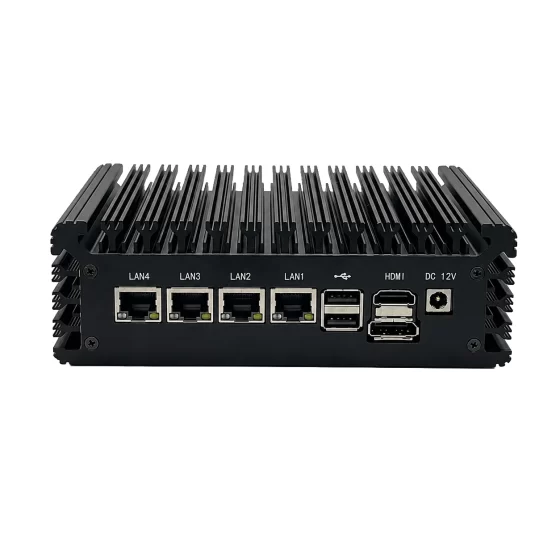
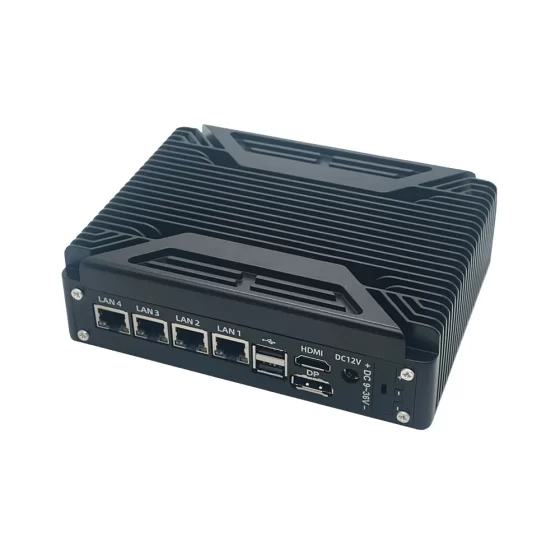
Soluciones de informática industrial CoreIPC

Plataforma informática de visión AI: Plataforma AI Vision para inspección y automatización industrial
Resumen ejecutivo
Una plataforma de visión de IA proporciona la base informática industrial para la inspección por visión artificial, detección de defectos, reconocimiento de objetos, guía robótica, verificación de embalaje, y control de calidad de la producción.
Las fábricas modernas utilizan más cámaras, sensores, Modelos de IA, y sistemas de automatización para mejorar la precisión de la inspección y la visibilidad de la producción. En lugar de depender únicamente de la inspección manual o de simples sistemas de visión basados en reglas, Los fabricantes pueden utilizar la visión de IA para detectar defectos complejos., clasificar productos, reconocer etiquetas, robots guía, y conectar los resultados de la inspección con el software de fábrica.
Una computadora industrial o una computadora integrada actúa como plataforma informática de visión de IA local.. Recibe datos de imagen de las cámaras., ejecuta modelos de inferencia de IA, Se comunica con PLC y robots., almacena registros de inspección, y carga los resultados seleccionados en MES, bases de datos de calidad, Sistemas SCADA, o plataformas en la nube.
En comparación con las PC comerciales estándar, Las computadoras industriales son más adecuadas para la implementación en fábrica porque ofrecen un diseño resistente., E/S flexibles, redes estables, opciones sin ventilador, almacenamiento confiable, y soporte de ciclo de vida prolongado.
Se puede implementar una plataforma informática de visión con IA en la fabricación de productos electrónicos, inspección de semiconductores, producción de baterías, líneas de embalaje, procesamiento de alimentos, inspección farmacéutica, clasificación logística, células robóticas, y automatización industrial en general.
Este artículo explica cómo funcionan las plataformas de visión de IA., ¿Qué desafíos de implementación enfrentan los fabricantes?, cómo está estructurada la arquitectura de la solución, y qué características de hardware son importantes al seleccionar una computadora industrial o una computadora integrada para aplicaciones de visión de IA.
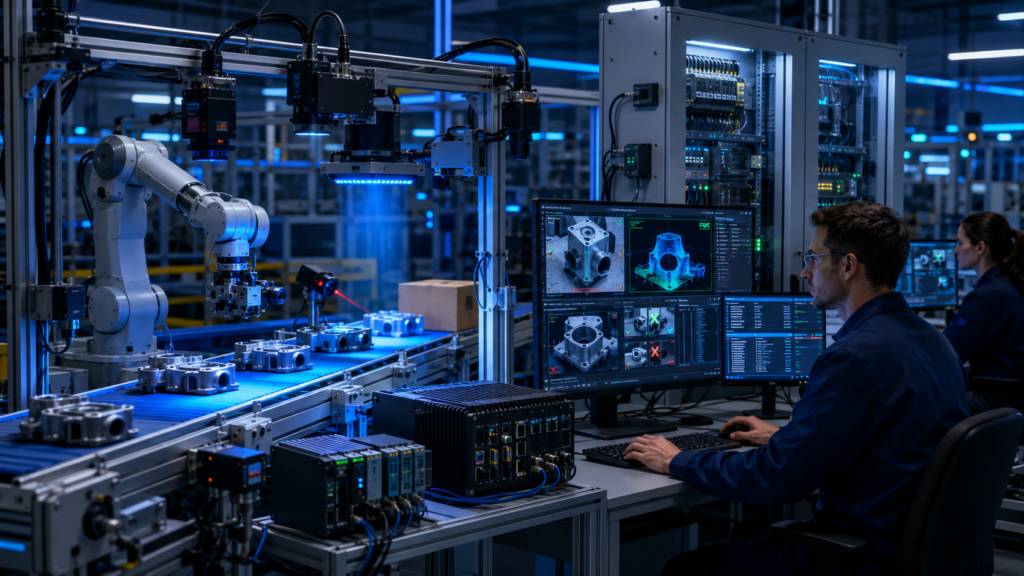
Las plataformas de visión de IA procesan imágenes de cámaras para su inspección, reconocimiento, guía robótica, verificación de embalaje, y automatización.
Descripción general de la industria
La visión artificial se está volviendo más inteligente
La visión artificial tradicional se utiliza desde hace muchos años en la inspección industrial..
Puede comprobar la presencia del producto., medir dimensiones simples, leer códigos de barras, verificar etiquetas, y detectar defectos claros. Estas aplicaciones suelen basarse en reglas fijas., umbrales, detección de bordes, coincidencia de patrones, o lógica de inspección predefinida.
Sin embargo, Muchos defectos de producción reales no son simples..
Arañazos, abolladuras, grietas, manchas, piezas faltantes, problemas de soldadura, daños en el embalaje, contaminación de la superficie, Y los errores de montaje pueden aparecer en diferentes formas., tamaños, bandera, y condiciones de iluminación.
La visión de la IA ayuda a abordar estos desafíos mediante el uso de modelos entrenados para identificar patrones que son difíciles de definir únicamente mediante reglas fijas..
La visión de la IA se está moviendo hacia el límite
Los sistemas de visión de IA a menudo necesitan un procesamiento local cerca de los equipos de producción.
Enviar todas las imágenes a un servidor remoto o a una plataforma en la nube puede generar latencia, presión de la red, costo de almacenamiento, y dependencia de conexiones externas.
Una plataforma de visión de IA local puede procesar imágenes en el lado de la máquina y devolver resultados rápidamente.
Esto es importante para:
- Rechazo de defectos
- Guiado de robots
- Verificación de código de barras
- Inspección de embalaje
- Ordenar decisiones
- Alarmas de producción
- Trazabilidad de la calidad
- Monitoreo en tiempo real
La computación de vanguardia industrial permite que los sistemas de visión de IA se conviertan en herramientas de producción prácticas en lugar de solo sistemas de análisis fuera de línea..
La informática industrial es la base del hardware
Los sistemas de visión con IA requieren más que cámaras y modelos.
Necesitan hardware informático industrial estable que pueda conectar cámaras, Imágenes de proceso, comunicarse con el equipo de automatización, almacenar registros, y operar continuamente en entornos de fábrica.
Los ordenadores industriales y los ordenadores integrados proporcionan esta base..
Admiten interfaces de cámara, múltiples puertos LAN, Conectividad USB, comunicación en serie, GPIO, almacenamiento SSD, salida de pantalla, módulos de expansión, y montaje robusto.
Esto los hace adecuados para la inspección por IA en el lado de la máquina, Sistemas de visión OEM, células robóticas, y plataformas de fabricación inteligentes.

Datos multicámara, iluminación, reflexión de la superficie, variación de defecto, presión de ancho de banda, y la integración de la automatización afectan la confiabilidad de la visión de la IA.
Desafíos clave
Alta carga de trabajo de procesamiento de imágenes
Las plataformas de visión de IA suelen procesar imágenes de alta resolución, múltiples transmisiones de cámara, o modelos complejos de aprendizaje profundo.
La carga de trabajo informático depende de:
- Resolución de la cámara
- Número de cámaras
- Velocidad de fotogramas
- Complejidad del modelo de IA
- Tiempo del ciclo de inspección
- Preprocesamiento de imágenes
- Clasificación de defectos
- Almacenamiento de imágenes locales
- Carga de datos de fábrica
Si la computadora tiene poca potencia, el sistema puede experimentar un retraso en el procesamiento, marcos caídos, velocidad de inspección inestable, o tiempo de producción perdido.
Un rendimiento estable y sostenido es más importante que un rendimiento de referencia máximo y breve.
Interfaz de cámara y planificación de ancho de banda
Los sistemas de visión con IA pueden utilizar cámaras USB, Cámaras GigE, 2.5cámaras GbE, 10cámaras GbE, 3cámaras D, o interfaces de visión industrial especializadas.
Cada configuración de cámara tiene diferentes requisitos de ancho de banda.
Una sola cámara de baja resolución puede ser fácil de soportar. Una plataforma de inspección multicámara puede requerir una cuidadosa separación de la red, capacidad de expansión, y almacenamiento de alta velocidad.
Una mala planificación de la interfaz puede limitar todo el sistema.
Incluso un procesador potente no puede resolver un cuello de botella en los datos de la cámara si la computadora industrial no proporciona la interfaz de cámara o el ancho de banda correctos..
Calidad de imagen y estabilidad de iluminación
La precisión de la visión de la IA depende en gran medida de la calidad de la imagen.
La mala iluminación puede crear sombras, deslumbramiento, reflexiones, bajo contraste, desenfoque de movimiento, o inconsistencia del color. Estos problemas pueden reducir la precisión del modelo y aumentar el falso rechazo..
Un sistema de visión de IA confiable requiere coordinación entre:
- Selección de cámara
- Diseño de lentes
- Método de iluminación
- Posicionamiento del producto
- Sincronización del disparador
- Montaje mecánico
- Entrenamiento de modelos de IA
- hardware informático
La computadora industrial debe admitir una adquisición de imágenes estable y una conexión confiable con las cámaras., controladores de iluminación, y sensores de activación.
Integración con equipos de automatización
Los resultados de la visión de la IA deben conectarse con la acción de producción real.
Es posible que el sistema necesite comunicarse con los PLC., transportadores, robots, mecanismos de rechazo, sensores, lectores de códigos de barras, alarmas, sistemas MES, y bases de datos de calidad.
Es posible que se necesite una plataforma práctica de visión de IA:
- LAN
- USB
- RS232
- RS485
- GPIO
- Entrada digital
- Salida digital
- hdmi
- DisplayPort
- M.2
- PCIe
Sin E/S industriales adecuadas, La integración del sistema se vuelve más compleja y menos confiable..
Confiabilidad de fábrica a largo plazo
Los sistemas de visión de IA a menudo operan en múltiples turnos.
Pueden instalarse cerca de líneas de producción., máquinas de inspección interior, en armarios de control, al lado de transportadores, o dentro de células robóticas.
Estos entornos pueden incluir vibraciones., polvo, calor, ruido electrico, movimiento de cables, y flujo de aire limitado.
El hardware de calidad industrial ayuda a reducir el riesgo de tiempo de inactividad al admitir un diseño mecánico resistente, rendimiento térmico estable, almacenamiento confiable, montaje seguro, y continuidad del ciclo de vida.

Las computadoras industriales conectan cámaras de visión con IA, equipo de automatización, robots, software de fábrica, y sistemas de calidad.
Arquitectura de la solución AI Vision Platform
Capa de adquisición de imágenes
La capa de adquisición de imágenes captura datos visuales de los productos., regiones, paquetes, etiquetas, o procesos de producción.
Esta capa puede incluir:
- Cámaras industriales
- 3cámaras D
- Cámaras de alta velocidad
- Lentes
- Módulos de iluminación
- Sensores de disparo
- Lectores de códigos de barras
- Sensores de posición
- Sistemas de movimiento
Dependiendo de la aplicación, el sistema puede capturar imágenes de la superficie, Imágenes de asamblea, Imágenes de etiquetas, Imágenes de código de barras, Imágenes de paquete, Imágenes de defecto, o datos de profundidad 3D.
La calidad de imagen estable y repetible es la base de un rendimiento de visión de IA confiable.
Capa informática de IA industrial
La capa informática de IA industrial es donde la plataforma de visión de IA realiza el procesamiento local..
en esta capa, el ordenador industrial o el ordenador integrado pueden:
- Recibir datos de imágenes de cámaras.
- Ejecute modelos de inferencia de IA
- Procesar algoritmos de visión artificial.
- Detectar defectos o anormalidades
- Clasificar productos o tipos de defectos.
- Almacenar imágenes y registros de inspección
- Mostrar estado de inspección
- Enviar señales de pasa o falla
- Comunicarse con PLC o robots
- Cargar datos seleccionados a los sistemas de fábrica
Esta capa permite que las decisiones de inspección y reconocimiento se tomen cerca del equipo de producción..
Capa de control de automatización
La capa de control de automatización conecta los resultados de la visión de la IA con la acción del equipo físico.
Un PLC, controlador de robot, controlador del transportador, sistema de movimiento, o el mecanismo de rechazo puede activar la captura de imágenes y recibir resultados de la computadora de visión AI.
Por ejemplo, después de detectar un paquete defectuoso, La computadora industrial puede enviar una señal de falla a un PLC.. El PLC puede activar un mecanismo de rechazo.
En aplicaciones robóticas, La plataforma de visión de IA puede identificar la posición del objeto y enviar datos de coordenadas al controlador del robot..
Capa de gestión de datos
Los resultados de la visión de IA se vuelven más valiosos cuando se conectan con los registros de producción.
La computadora industrial puede enviar datos al MES, SCADA, bases de datos de calidad, WMS, ERP, o plataformas en la nube.
Los datos de inspección pueden incluir:
- ID del producto
- orden de trabajo
- Número de lote
- Resultado de la inspección
- Categoría de defecto
- Prueba de imagen
- Puntuación de confianza
- ID de estación
- Marca de tiempo
- Acción del operador
- Estado de retrabajo
Esto apoya la trazabilidad, análisis de calidad, mejora de procesos, y responsabilidad de producción.
Interfaz de usuario y capa de mantenimiento
Los operadores e ingenieros necesitan una interfaz local práctica.
La computadora de visión AI puede conectarse a un monitor, pantalla táctil, Panel HMI, o estación de trabajo de ingeniería.
La interfaz puede mostrar:
- Imágenes de cámara en vivo
- Resultados de la detección de IA
- Ubicaciones de defectos
- La producción cuenta
- Rechazar estadísticas
- Estado de la cámara
- Modelo de estado de IA
- Estado de la red
- Mensajes de alarma
- Registros del sistema
Una interfaz local clara ayuda a los ingenieros a ajustar los parámetros, revisar los resultados de la inspección, y solucionar problemas del sistema rápidamente.
Características clave
Rendimiento de inferencia de IA
Las plataformas de visión de IA requieren un rendimiento de inferencia estable.
El hardware adecuado depende de la complejidad del modelo, resolución de la cámara, recuento de cámaras, velocidad de producción, y requisitos de tiempo de respuesta.
La selección debe considerar:
- rendimiento de la CPU
- Compatibilidad con GPU o acelerador de IA
- Capacidad de memoria
- Velocidad de almacenamiento
- Ancho de banda de la cámara
- Marco de software
- Soporte del sistema operativo
- Diseño térmico
- Estabilidad a largo plazo
Una computadora integrada compacta puede soportar cargas de trabajo moderadas de IA. Una plataforma de inspección con IA multicámara puede requerir una computadora con IA de vanguardia o una PC industrial de mayor rendimiento.
Compatibilidad con cámara e interfaz de visión
La conectividad de la cámara es uno de los requisitos de hardware más importantes.
Las opciones de interfaz útiles pueden incluir:
- USB 3.0
- Múltiples puertos LAN
- 2.5Opciones GbE o 10GbE
- expansión PCIe
- Expansión M.2
- hdmi
- DisplayPort
- Almacenamiento SSD o NVMe de alta velocidad
Para sistemas multicámara, El tráfico de cámaras debe planificarse cuidadosamente..
En muchas implementaciones, Una red puede conectar cámaras mientras que otra conecta el sistema de fábrica.. Esto ayuda a reducir los conflictos de tráfico y mejora la estabilidad del sistema..
E/S industriales flexibles
Las computadoras de visión con IA deben conectarse con equipos de fábrica reales.
Las opciones de E/S importantes pueden incluir:
- LAN
- USB
- RS232
- RS485
- GPIO
- Entrada digital
- Salida digital
- Salida de pantalla
- Ranuras de expansión
Estas interfaces pueden admitir cámaras., controladores de iluminación, sensores, lectores de códigos de barras, PLC, transportadores, robots, alarmas, y mecanismos de rechazo.
La E/S flexible reduce los adaptadores externos y mejora la confiabilidad de la implementación.
Diseño robusto y sin ventilador
Las computadoras industriales sin ventilador son útiles en muchas aplicaciones de visión de IA.
Reducen la entrada de polvo y eliminan un punto común de falla mecánica.. Esto admite un menor mantenimiento en entornos de producción donde los sistemas funcionan continuamente..
Una carcasa resistente ayuda a proteger la computadora de las vibraciones., tensión del cable, y condiciones de instalación del gabinete.
Sin embargo, Las cargas de trabajo de IA pueden generar calor.
Para sistemas de visión de IA de alto rendimiento, El diseño térmico debe revisarse cuidadosamente.. Carga de trabajo del procesador, Uso de GPU o acelerador, flujo de aire del gabinete, temperatura ambiente, y el método de montaje afectan la estabilidad a largo plazo.
Almacenamiento confiable para datos de visión
Los sistemas de visión de IA pueden generar muchas imágenes y registros.
La computadora puede almacenar:
- Imágenes de defectos
- Muestras de imágenes aceptadas
- Registros de inspección
- Archivos de modelo de IA
- Bases de datos locales
- Informes de producción
- Videoclips
- Amortiguadores temporales
Generalmente se prefiere el almacenamiento SSD o NVMe porque proporciona un acceso más rápido y una mejor resistencia a los golpes que las unidades mecánicas..
Para sistemas con muchas imágenes, capacidad de almacenamiento, velocidad de escritura sostenida, escribe resistencia, método de copia de seguridad, y la política de retención debe revisarse durante el diseño.
Largo ciclo de vida y mantenibilidad
Los sistemas de visión con IA pueden permanecer en producción durante muchos años.
Los cambios frecuentes de hardware pueden crear problemas de validación de software, problemas de compatibilidad de controladores, desafíos de repuestos, y costo de mantenimiento.
Las plataformas informáticas industriales con planificación del ciclo de vida ayudan a los fabricantes y fabricantes de máquinas a mantener implementaciones consistentes en múltiples líneas de producción., maquinas, y sitios de fábrica.
Esto es especialmente importante para la implementación escalable de la visión de IA..
Escenarios de implementación
Detección de defectos visuales por IA
Las plataformas de visión de IA se utilizan ampliamente para la detección de defectos.
El sistema puede inspeccionar superficies., componentes, asambleas, paquetes, etiquetas, y productos terminados.
Puede detectar rayones, abolladuras, grietas, manchas, piezas faltantes, montaje incorrecto, contaminación, embalaje dañado, y anomalías visuales.
El ordenador industrial procesa imágenes localmente y envía los resultados a PLC o sistemas de calidad.
Inspección electrónica y SMT
La fabricación de productos electrónicos puede utilizar la visión de IA para la inspección de PCB, verificación de componentes, revisión de soldadura, reconocimiento de código de barras, inspección del conector, y reparar la recopilación de datos.
Se puede instalar una computadora integrada cerca de las líneas SMT, Equipo AOI, estaciones de prueba, o reparar bancos.
Los resultados de la inspección se pueden vincular con los números de serie de PCB, órdenes de trabajo, y registros MES.
Inspección de semiconductores
La inspección de semiconductores puede requerir imágenes de alta resolución para obleas, muere, sustratos, paquetes, y marcas láser.
Una plataforma de visión de IA puede respaldar la clasificación de defectos, verificación de marca, inspección de paquetes, y trazabilidad de la calidad.
El ordenador industrial procesa datos de imágenes y conecta los resultados con MES, proceso estadístico, o bases de datos de calidad.
Inspección de fabricación de baterías
La producción de baterías puede utilizar la visión AI para la inspección de la superficie de los electrodos, control de apariencia celular, inspección de soldadura de pestañas, verificación del ensamblaje del módulo, inspección de cableado, control de etiquetas, e inspección de paquetes.
La computadora de visión con IA procesa imágenes localmente y envía los resultados a los sistemas de producción..
Esto respalda el control de calidad y la trazabilidad en la fabricación de baterías..
Inspección de embalaje
Las plataformas de visión de IA pueden inspeccionar etiquetas, códigos de barras, códigos de fecha, sellos, gorras, cajas de cartón, bolsas, botellas, y paquetes finales.
La computadora industrial puede detectar defectos de empaque y activar mecanismos de rechazo a través de comunicación PLC.
Esto ayuda a reducir los errores de envío y mejorar la calidad del embalaje..
Inspección Alimentaria y Farmacéutica
La producción de alimentos y productos farmacéuticos a menudo requiere una inspección visual de los productos., paquetes, etiquetas, códigos, sellos, y embalaje final.
Las plataformas de visión de IA pueden respaldar la inspección de la apariencia, control de nivel de llenado, verificación de etiqueta, reconocimiento de código de barras, y detección de defectos.
El hardware informático industrial ayuda a conectar los resultados de la inspección con los registros de calidad y de lotes.
Clasificación logística y reconocimiento de códigos de barras
Los sistemas de logística pueden utilizar la visión de IA para la identificación de paquetes, reconocimiento de código de barras, verificación de etiqueta, control de clasificación, y manejo de excepciones.
Se puede instalar una computadora integrada dentro de los túneles de escaneo., sistemas transportadores, o equipo de clasificación.
El sistema puede enviar los resultados de la clasificación a plataformas WMS y desviadores controlados por PLC..
Guía de visión robótica
Los robots a menudo necesitan datos de visión para identificar objetos., localizar piezas, y ajustar el movimiento.
Una plataforma de visión de IA puede procesar datos de cámaras 2D o 3D y enviar información de posición a controladores de robots.
Esto admite la recogida de contenedores, asamblea, clasificación, inspección, y automatización flexible.
Beneficios comerciales
Consistencia de inspección mejorada
Las plataformas de visión de IA ayudan a los fabricantes a inspeccionar los productos de manera más consistente en todos los turnos de producción..
El sistema procesa imágenes según modelos entrenados y lógica de inspección.. Esto reduce la dependencia del juicio manual y ayuda a mantener un control de calidad estable..
El hardware informático industrial confiable admite la adquisición de imágenes consistente y la inferencia de IA.
Decisiones de producción más rápidas
El procesamiento de IA local permite una respuesta más rápida.
El ordenador industrial puede detectar defectos, clasificar resultados, y enviar señales de aprobación o falla a PLC o robots cerca de la línea de producción.
Esto ayuda a respaldar acciones de rechazo más rápidas., enrutamiento de retrabajo, decisiones de clasificación, y respuesta de automatización.
Carga de trabajo de inspección manual reducida
La inspección manual puede ser repetitiva, lento, e inconsistente.
La visión por IA automatiza muchas tareas de inspección visual y permite a los operadores centrarse en las excepciones., mantenimiento, configuración, y mejora de procesos.
Esto mejora la eficiencia y reduce los defectos perdidos causados por la fatiga..
Mayor trazabilidad de la calidad
Los datos de visión de IA se pueden vincular con ID de productos, órdenes de trabajo, categorías de defectos, imágenes, marcas de tiempo, información de la estación, y acciones del operador.
Esto crea registros de calidad más sólidos para las auditorías de los clientes., investigación de garantía, revisión del proceso, y análisis de causa raíz.
La trazabilidad se vuelve más valiosa cuando los datos de inspección se recopilan de manera consistente y se conectan con los sistemas de la fábrica..
Mejor mejora de procesos
Las plataformas de visión de IA generan datos de producción útiles.
Los fabricantes pueden analizar defectos recurrentes, deriva del proceso, problemas de calidad relacionados con la máquina, rechazar tendencias, y variación del producto.
Los ordenadores industriales fiables ayudan a garantizar que estos datos se almacenen, transferido, y se muestra consistentemente.
Implementación escalable de fabricación inteligente
Una plataforma de visión de IA estandarizada facilita la implementación de sistemas de inspección y reconocimiento en múltiples máquinas, pauta, y fábricas.
El hardware consistente simplifica las imágenes de software, gestión del controlador de cámara, planificación de repuestos, entrenamiento de mantenimiento, y soporte del ciclo de vida.
Esto ayuda a los fabricantes a pasar de proyectos piloto de visión de IA a una implementación de producción escalable..
Por qué CoreIPC
CoreIPC proporciona plataformas informáticas industriales para visión artificial, IA de vanguardia, automatización de fábrica, robótica, e integración de sistemas integrados. Para aplicaciones de plataforma de visión de IA, CoreIPC se centra en hardware informático industrial confiable, soluciones informáticas integradas, Configuraciones de E/S flexibles, diseño de sistema compacto, y soporte de personalización OEM/ODM. CoreIPC ayuda a los integradores de sistemas, constructores de maquinaria, y los equipos de fabricación seleccionan plataformas informáticas que coincidan con los requisitos de implementación reales, incluyendo interfaces de cámara, Cargas de trabajo de IA, comunicación de automatización, diseño de red, necesidades de almacenamiento, métodos de montaje, entrada de energía, condiciones termicas, y planificación del ciclo de vida.
Preguntas frecuentes
1. ¿Qué es una plataforma de visión de IA??
Una plataforma de visión de IA es un sistema informático industrial que se utiliza para procesar imágenes de cámaras y ejecutar software de inspección o reconocimiento basado en IA..
Puede detectar defectos, clasificar productos, leer etiquetas, verificar códigos de barras, robots guía, y conectar resultados con sistemas de fábrica. Suele incluir cámaras, iluminación, Modelos de IA, software de visión artificial, y una computadora industrial o computadora integrada.
2. ¿Por qué utilizar una computadora industrial para la visión con IA??
Una computadora industrial está diseñada para entornos de fábrica..
Soporta funcionamiento continuo, montaje robusto, E/S industriales, conectividad de la cámara, almacenamiento estable, múltiples puertos de red, y una implementación de ciclo de vida prolongado. Estas características lo hacen más adecuado que una PC de oficina estándar para sistemas de visión de IA instalados cerca de máquinas., transportadores, robots, y estaciones de inspección.
3. ¿Cómo se utiliza una computadora integrada en los sistemas de visión de IA??
Se puede instalar una computadora integrada dentro de las máquinas de inspección., células robóticas, sistemas de embalaje, túneles de escaneo, o armarios de control.
Puede recibir datos de la cámara., ejecutar inferencia de IA, comunicarse con PLC, mostrar resultados locales, y cargar registros de inspección. Su diseño compacto lo hace útil para equipos OEM y para implementación en el lado de la máquina con espacio limitado..
4. ¿Qué aplicaciones puede admitir una plataforma informática de visión con IA??
Las plataformas de visión de IA pueden respaldar la detección de defectos visuales, verificación de montaje, reconocimiento de código de barras, inspección de embalaje, inspección de alimentos, inspección farmacéutica, inspección de batería, inspección de semiconductores, Inspección SMT, clasificación logística, y guía robótica.
La aplicación exacta depende de la configuración de la cámara., Diseño de modelos de IA, velocidad de producción, Necesidades de E/S, y requisitos de integración del sistema.
5. ¿Una plataforma de visión de IA necesita una GPU??
Algunas aplicaciones de visión de IA necesitan compatibilidad con GPU o acelerador de IA, especialmente para imágenes de alta resolución, múltiples cámaras, análisis de vídeo, 3visión D, o modelos complejos de aprendizaje profundo.
Se pueden ejecutar otras aplicaciones en computadoras industriales basadas en CPU si el modelo es liviano y el tiempo de ciclo es moderado.. El hardware debe seleccionarse basándose en pruebas de modelos reales..
6. ¿Qué interfaces son importantes para las computadoras de visión con IA??
Las interfaces importantes pueden incluir USB 3.0, múltiples puertos LAN, 2.5Llevar, 10Llevar, RS232, RS485, GPIO, entrada digital, salida digital, hdmi, DisplayPort, M.2, y expansión PCIe.
Las interfaces de la cámara son fundamentales. Las E/S industriales también son importantes para la comunicación PLC, control de iluminación, sensores, desencadenantes, robots, transportadores, y mecanismos de rechazo.
7. ¿Pueden las computadoras industriales sin ventilador soportar la visión de IA??
Las computadoras industriales sin ventilador pueden admitir muchas aplicaciones de visión de IA, Implementaciones especialmente moderadas con una sola cámara o de bajo mantenimiento..
Sin embargo, inferencia de IA de alto rendimiento, inspección multicámara, o las cargas de trabajo basadas en GPU pueden generar un calor significativo. Carga de trabajo del procesador, uso de acelerador, flujo de aire del gabinete, temperatura ambiente, y la posición de montaje deben revisarse antes del despliegue.
8. ¿Cómo apoya la visión de la IA la trazabilidad??
La visión de IA respalda la trazabilidad al vincular los resultados de la inspección con las identificaciones de los productos, órdenes de trabajo, categorías de defectos, registros de imagen, marcas de tiempo, ID de estación, y acciones del operador.
Estos datos se pueden cargar en MES., bases de datos de calidad, WMS, SCADA, o plataformas en la nube. Los registros completos ayudan a los fabricantes a analizar los defectos, auditorías de soporte, y mejorar los procesos de producción.
9. ¿Puede una plataforma de visión de IA conectarse con PLC y robots??
Sí. Una computadora de visión con IA puede comunicarse con los PLC, controladores de robots, transportadores, mecanismos de rechazo, sensores, y otros dispositivos de automatización.
El sistema puede recibir disparadores., Imágenes de proceso, y enviar pase, fallar, posición, clasificación, o resultados de alarma de vuelta al equipo. Esto hace que la visión de IA sea útil para el control real de la producción..
10. Qué se debe probar antes de la implementación?
Antes del despliegue, El sistema debe probarse con cámaras reales., productos reales, iluminación de producción, velocidad de línea real, Modelos de IA, comunicación PLC, integración de robots, carga de trabajo de almacenamiento, y condiciones de la red.
Estabilidad a largo plazo, rendimiento térmico, confiabilidad de la adquisición de cuadros, y el comportamiento de carga de datos también debe validarse para reducir el riesgo de producción..
Conclusión
Una plataforma de visión de IA es una base práctica para la inspección por visión artificial, Detección de defectos de IA, guía robótica, reconocimiento de código de barras, verificación de embalaje, clasificación logística, y trazabilidad de la producción.
Colocando una computadora industrial o una computadora integrada cerca de las cámaras, sensores, PLC, transportadores, robots, y equipo de inspección, Los fabricantes pueden procesar datos visuales localmente., reducir la latencia, mejorar la consistencia de la inspección, y conectar resultados con sistemas de fábrica.
La plataforma informática de visión de IA adecuada debe seleccionarse de acuerdo con los requisitos de implementación reales., incluyendo interfaz de cámara, Carga de trabajo de IA, resolución de imagen, configuración de E/S, arquitectura de red, necesidades de almacenamiento, requisitos de expansión, método de montaje, entrada de energía, condiciones termicas, soporte del sistema operativo, y planificación del ciclo de vida.
CoreIPC respalda proyectos de plataformas de visión de IA con plataformas informáticas industriales diseñadas para la implementación práctica de fábricas y equipos.. Con la base de hardware adecuada, Los fabricantes y fabricantes de maquinaria pueden construir sistemas fiables., escalable, y sistemas de visión de IA basados en datos para la fabricación inteligente.
Contáctenos
Busco ordenador industrial, computadora integrada, o plataforma de IA de vanguardia para un proyecto de computación de visión de IA?
Póngase en contacto con CoreIPC para analizar los requisitos de su proyecto., incluyendo interfaz de cámara, Carga de trabajo de IA, configuración de E/S, comunicación robot o PLC, diseño de red, necesidades de almacenamiento, método de montaje, entrada de energía, entorno operativo, necesidades del ciclo de vida, y opciones de personalización OEM/ODM.