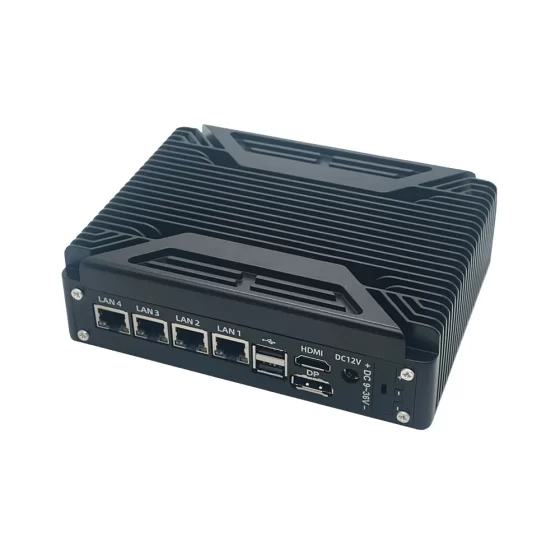
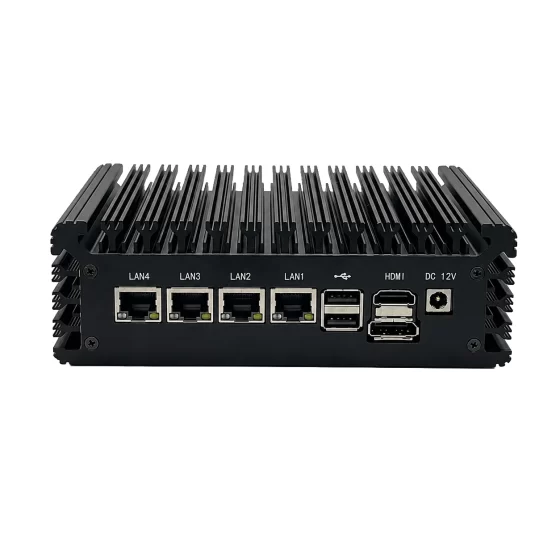
Soluciones de informática industrial CoreIPC

IA industrial para análisis predictivo: Análisis de IA industrial para la toma de decisiones inteligentes en fábricas
Resumen ejecutivo
El análisis de IA industrial se está convirtiendo en una base clave para el mantenimiento predictivo, optimización de procesos, mejora de la calidad, monitoreo de energía, y toma de decisiones inteligentes en las fábricas.
Las fábricas modernas generan grandes cantidades de datos a partir de máquinas., sensores, PLC, camaras, robots, metros, sistemas de inspección, y software de producción. Cuando estos datos solo se almacenan para informes posteriores, Las fábricas pueden pasar por alto las primeras señales de alerta, patrones de calidad recurrentes, anomalías energéticas, y cambios de proceso.
La IA industrial para análisis predictivo ayuda a convertir los datos del lado de la máquina en información útil. Puede analizar el comportamiento del equipo., detectar patrones anormales, pronosticar posibles fallas, identificar la deriva del proceso, y respaldar decisiones de producción más rápidas.
Una computadora industrial o una computadora integrada proporciona la plataforma informática local para estas cargas de trabajo.. Puede recopilar datos de PLC., sensores, camaras, puertas de enlace, medidores de energía, y sistemas de producción, luego ejecute modelos analíticos cerca del equipo.
En comparación con las PC comerciales estándar, Las computadoras industriales son más adecuadas para entornos de fábrica porque admiten una implementación robusta., E/S flexibles, redes estables, almacenamiento local, opciones de diseño sin ventilador, y disponibilidad de ciclo de vida prolongado.
Este artículo explica cómo funciona el análisis de IA industrial., ¿Qué desafíos aparecen en el despliegue real?, cómo está estructurada la arquitectura de la solución, and which hardware features are important when selecting an industrial computer or embedded computer for predictive analytics applications.
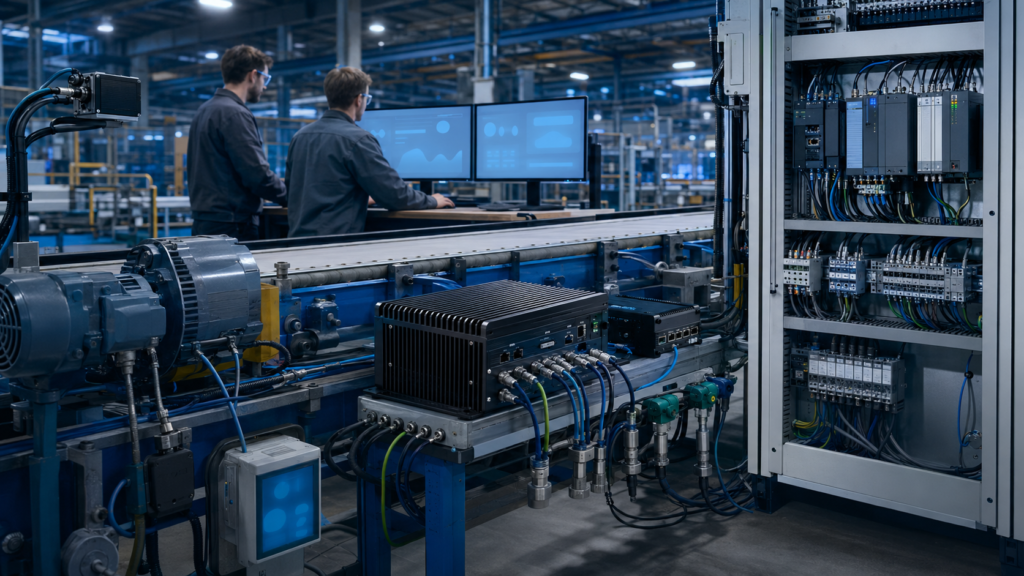
Industrial AI Analytics Factory Deployment
Descripción general de la industria
Factories Need Predictive Insight
Traditional factory monitoring often focuses on current status.
Operators may see alarms, machine states, recuentos de producción, and maintenance records. These signals are useful, but they may not reveal what is likely to happen next.
Predictive analytics adds another layer of intelligence.
It helps factories analyze historical and real-time data to identify early warning signs, hidden correlations, and abnormal trends.
Industrial AI analytics can support:
- Mantenimiento predictivo
- Equipment health monitoring
- Análisis de tendencias de calidad.
- Detección de anomalías en el proceso
- Energy usage optimization
- Production bottleneck analysis
- Machine utilization analysis
- Yield improvement
- Reconocimiento de patrones de falla
- Planificación de mantenimiento
El objetivo es ayudar a los equipos a pasar de una respuesta reactiva a una respuesta más temprana., acción respaldada por datos.
El análisis de IA se está moviendo hacia el límite
Las plataformas en la nube pueden soportar el almacenamiento de datos a gran escala, tableros, y análisis a nivel empresarial.
Sin embargo, Muchas tareas de análisis industrial se benefician del procesamiento de borde local.. Es posible que sea necesario analizar rápidamente los datos de la máquina, almacenado en búfer durante las interrupciones de la red, o filtrado antes de subir.
Una computadora industrial instalada cerca de equipos de producción puede procesar datos localmente.
Esto ayuda a reducir la latencia., menor uso de ancho de banda, proteger datos de producción confidenciales, y mantener el funcionamiento local cuando la red es inestable.
El análisis de IA industrial basado en el borde es especialmente útil cuando las fábricas necesitan alertas rápidas, paneles locales, o recopilación continua de datos desde máquinas distribuidas.
La informática industrial es la base del hardware
El análisis predictivo requiere más que modelos de software.
Necesita hardware informático confiable que pueda recopilar datos de dispositivos industriales., ejecutar cargas de trabajo de análisis, almacenar registros locales, y comunicarse con los sistemas de fábrica.
Los ordenadores industriales y los ordenadores integrados proporcionan esta base..
Pueden admitir múltiples puertos LAN, comunicación en serie, GPIO, E/S digitales, dispositivos USB, almacenamiento SSD, salida de pantalla, y módulos de expansión.
Esto los hace adecuados para el análisis del lado de la máquina., Pasarelas industriales de IoT, nodos de mantenimiento predictivo, sistemas de monitoreo de energía, y plataformas de fábricas inteligentes.

Desafíos de implementación de análisis de IA industrial
Desafíos clave
Datos de diferentes máquinas y sistemas
Los datos industriales suelen estar fragmentados.
Una sola fábrica puede incluir máquinas heredadas, PLC modernos, sensores, medidores de energía, robots, camaras, sistemas de inspección, y plataformas de software de diferentes proveedores.
Cada sistema puede utilizar diferentes interfaces., formatos de datos, tasas de actualización, y métodos de comunicación.
Las fuentes de datos comunes incluyen:
- PLC
- Sensores
- Controladores de máquinas
- Robots
- Motores y variadores
- Medidores de energía
- Sistemas de visión
- Equipo de prueba
- Pasarelas industriales
- Sistemas MES y SCADA
Una plataforma de análisis de IA industrial debe recopilar y organizar estos datos de manera confiable antes de poder realizar predicciones útiles..
Calidad y coherencia de los datos
El análisis predictivo depende de la calidad de los datos.
Si faltan valores del sensor, las marcas de tiempo son inconsistentes, Los estados de la máquina no están claros., o los datos se recopilan sólo ocasionalmente, Los modelos de IA pueden producir resultados débiles.
Los factores importantes de calidad de los datos incluyen:
- Frecuencia de muestreo
- Precisión de la marca de tiempo
- Calibración de sensores
- Contexto del estado de la máquina
- Integridad de los datos
- Filtrado de ruido
- Etiquetado de eventos
- Información del lote de producción
- Historial de mantenimiento
- Registros de calidad
La computadora industrial debe admitir una adquisición de datos estable y un almacenamiento en búfer local para reducir las lagunas de datos..
Requisitos de alerta en tiempo real
El análisis predictivo se vuelve valioso cuando puede respaldar la adopción de medidas oportunas.
Si una máquina muestra signos tempranos de vibración anormal, calentamiento excesivo, fluctuación actual, deriva de calidad, o desperdicio de energía, el sistema debería detectar el patrón temprano y generar una alerta útil.
Los análisis retrasados pueden reducir el valor del sistema.
Los requisitos en tiempo real o casi en tiempo real pueden aparecer en:
- Mantenimiento predictivo
- Detección de desviación del proceso
- Monitoreo de tendencias de calidad
- Alertas de anomalía energética
- Production bottleneck analysis
- Monitoreo de utilización de equipos
- Soporte de monitoreo relacionado con la seguridad
La plataforma informática debe proporcionar un rendimiento estable y sostenido en funcionamiento continuo..
Implementación y mantenimiento del modelo
Los modelos de análisis de IA industrial pueden necesitar ajustes continuos.
Las máquinas se desgastan con el tiempo., las recetas de producción cambian, cambios en el comportamiento del sensor, y nuevos modelos de productos entran en producción. Un modelo predictivo que funciona durante un proyecto piloto puede necesitar mantenimiento durante su uso a largo plazo..
Los diseñadores de sistemas deben considerar:
- Flujo de trabajo de actualización del modelo
- Almacenamiento de modelos locales
- Control de versiones
- Registro de datos
- Revisión de alerta
- Manejo de falsas alarmas
- Comentarios de mantenimiento
- Validación a largo plazo
La computadora industrial de IA debe admitir un entorno de software práctico para la implementación y el mantenimiento de modelos..
Confiabilidad del entorno de fábrica
Los sistemas de análisis predictivo a menudo se implementan cerca de máquinas o dentro de gabinetes de control..
Estas ubicaciones pueden incluir vibraciones., polvo, calor, ruido electrico, flujo de aire limitado, movimiento de cables, y horarios de funcionamiento continuo.
Si la computadora de análisis falla, la recopilación de datos puede detenerse y los registros de predicción pueden quedar incompletos.
El hardware de calidad industrial ayuda a reducir este riesgo al admitir una instalación robusta, diseño térmico estable, almacenamiento confiable, y planificación de un largo ciclo de vida.

Arquitectura de análisis predictivo de IA industrial
Arquitectura de la solución de análisis de IA industrial
Capa de dispositivo y sensor
La capa de dispositivos y sensores incluye las máquinas y fuentes de datos que se monitorean..
Esta capa puede incluir PLC, sensores, motores, conduce, camaras, robots, medidores de energía, instrumentos de prueba, y equipo de producción.
Los datos típicos pueden incluir:
- Valores de vibración
- Datos de temperatura
- Corriente del motor
- Valores de presión
- Velocidad y tiempo de ciclo
- Estado de la máquina
- Historial de alarmas
- Consumo de energía
- Registros de calidad del producto.
- Resultados de la inspección
- Eventos de mantenimiento
Estos datos sin procesar proporcionan información para el análisis de IA industrial..
Capa de computación de borde industrial
La capa de computación de borde industrial es donde la computadora industrial o la computadora integrada recopila, procesos, y almacena datos localmente.
en esta capa, el sistema puede:
- Recopilar datos de sensores
- Leer registros de PLC
- Procesar eventos de la máquina
- Almacenar la historia local
- Ejecutar modelos analíticos
- Detectar patrones anormales
- Generar alertas predictivas
- Almacenar datos durante problemas de red
- Mostrar paneles locales
- Cargar datos seleccionados a los sistemas de fábrica
Esta capa ayuda a acercar la inteligencia predictiva a los equipos de producción.
Capa de análisis de IA
La capa de análisis de IA contiene los modelos y la lógica utilizados para convertir datos en conocimiento..
Dependiendo de la aplicación, puede incluir:
- Detección de anomalías
- Modelos de mantenimiento predictivo
- Análisis de tendencias
- Reconocimiento de patrones de falla
- Predicción de calidad
- Análisis de uso de energía.
- Detección de cuellos de botella en la producción
- Filtrado de alarmas basado en reglas
- Lógica de fusión de sensores
La computadora industrial debe soportar el sistema operativo requerido., herramientas de análisis, Tiempo de ejecución de IA, software de base de datos, y software de comunicación industrial.
Capa de integración de software de fábrica
El análisis predictivo se vuelve más útil cuando se conecta con los sistemas de fábrica.
La computadora industrial puede enviar datos seleccionados a:
- MES
- SCADA
- ERP
- Plataformas de mantenimiento
- Bases de datos de calidad
- Paneles de control de IoT industriales
- Plataformas de análisis en la nube
- Sistemas de historiadores locales.
- Paneles de control de producción
En lugar de cargar todos los datos sin procesar, el sistema puede enviar alarmas, tendencias, resúmenes, eventos anormales, y registros seleccionados.
Esto reduce la presión del ancho de banda y mejora la organización de los datos..
Capa de interfaz de operador y mantenimiento
Los operadores y equipos de mantenimiento necesitan una interfaz práctica.
La computadora industrial con IA puede conectarse a un monitor, pantalla táctil, Panel HMI, o estación de trabajo de panel local.
La interfaz puede mostrar:
- Estado de salud de la máquina
- Alertas predictivas
- Tendencias de sensores
- Uso de energía
- Tendencias de calidad
- Historial de alarmas
- Utilización del equipo
- Estado del modelo
- Estado de la red
- Registros del sistema
Una interfaz clara ayuda a los equipos a comprender las predicciones y responder con acciones de proceso o mantenimiento adecuadas..
Características clave
Rendimiento analítico estable
Los sistemas de análisis de IA industrial deben funcionar continuamente.
El hardware debe seleccionarse según el número de máquinas., tasa de actualización del sensor, Complejidad del modelo de IA, carga de trabajo de base de datos local, y requisitos del tablero.
La selección debe considerar:
- rendimiento de la CPU
- Capacidad de memoria
- Velocidad de almacenamiento
- Ancho de banda de red
- Compatibilidad del software de IA
- Carga de trabajo de base de datos local
- Soporte del sistema operativo
- Diseño térmico
- Estabilidad a largo plazo
Para análisis de sensores ligeros, una computadora integrada puede ser suficiente. Para análisis multilínea más amplios, Es posible que se requiera una PC industrial más potente o una computadora con IA de vanguardia.
Múltiples interfaces industriales
Las plataformas de análisis predictivo deben conectarse con muchos tipos de equipos.
Las opciones de E/S útiles pueden incluir:
- Múltiples puertos LAN
- RS232
- RS485
- USB
- GPIO
- Entrada digital
- Salida digital
- hdmi
- DisplayPort
- M.2
- PCIe
- Almacenamiento SATA o NVMe
Estas interfaces pueden admitir PLC., sensores, puertas de enlace, medidores de energía, camaras, lectores de códigos de barras, exhibiciones locales, y redes industriales.
La E/S flexible reduce el uso de convertidores externos y mejora la confiabilidad de la implementación.
Almacenamiento local confiable
El análisis predictivo depende de datos históricos.
Es posible que la computadora industrial necesite almacenar registros de sensores., historial de estado de la máquina, registros de alarma, archivos de modelo, bases de datos locales, informes, y amortiguadores temporales.
Generalmente se prefiere el almacenamiento SSD o NVMe porque proporciona un acceso más rápido y una mejor resistencia a los golpes que las unidades mecánicas..
El diseño de almacenamiento debe considerar:
- Periodo de conservación de datos
- Tamaño de la base de datos local
- Escribir resistencia
- Estrategia de respaldo
- Comportamiento de interrupción de la red
- Frecuencia de carga
- Requisitos de registro de eventos
El almacenamiento local confiable ayuda a proteger los datos analíticos y respalda la trazabilidad a largo plazo.
Separación de red y conectividad
Los sistemas de análisis de IA industrial a menudo conectan redes de máquinas y sistemas de TI de fábrica..
Múltiples puertos LAN pueden ayudar a separar el tráfico.
Por ejemplo:
- Un puerto LAN para PLC
- Un puerto LAN para sensores o puertas de enlace
- Un puerto LAN para MES o SCADA
- Un puerto LAN para carga en la nube
- Un puerto LAN para mantenimiento remoto
Esto mejora la organización de la red., reduce los conflictos de tráfico, y apoya una mejor planificación de la ciberseguridad.
Diseño robusto y sin ventilador
Las computadoras de análisis industrial a menudo operan en entornos de producción..
El diseño sin ventilador puede reducir la entrada de polvo y eliminar un punto común de falla mecánica. Los gabinetes resistentes ayudan a proteger el sistema de las vibraciones., tensión del cable, y condiciones de instalación del gabinete.
El diseño térmico aún debe revisarse cuidadosamente.
Carga de trabajo del procesador, diseño de recinto, temperatura ambiente, flujo de aire, dispositivos de almacenamiento, y la posición de montaje afectan la confiabilidad a largo plazo.
Largo ciclo de vida y mantenibilidad
Los sistemas de análisis predictivo pueden permanecer en producción durante muchos años.
Los cambios frecuentes de hardware pueden crear problemas de validación de software, problemas de compatibilidad de controladores, y desafíos de mantenimiento.
Las plataformas informáticas industriales con planificación del ciclo de vida ayudan a los fabricantes e integradores de sistemas a mantener implementaciones de análisis consistentes en múltiples máquinas., pauta, y sitios de fábrica.
Esto apoya la implementación escalable de fábrica inteligente..
Escenarios de implementación
Mantenimiento predictivo
El mantenimiento predictivo es una de las aplicaciones de análisis de IA industrial más comunes.
El sistema recoge vibraciones., temperatura, actual, presión, y datos de estado de la máquina.
Los modelos de IA pueden detectar patrones anormales y generar alertas antes de que la falla del equipo se vuelva grave.
Esto ayuda a los equipos de mantenimiento a planificar el servicio de forma más eficaz..
Análisis de tendencias de calidad
El análisis de IA industrial puede ayudar a identificar tendencias de calidad en todas las líneas de producción.
El sistema puede combinar resultados de inspección., parámetros de la máquina, datos del sensor, e información de lotes.
Esto ayuda a los ingenieros a comprender los defectos recurrentes., deriva del proceso, y variación de calidad.
Análisis de energía
Los sistemas de monitoreo de energía pueden utilizar análisis de inteligencia artificial para identificar patrones de consumo anormales.
La plataforma puede recopilar datos de medidores de energía., compresores, equipos de climatización, motores, y líneas de producción.
El análisis de IA puede ayudar a detectar el desperdicio de energía, comportamiento operativo inusual, y la ineficiencia del equipo.
Análisis de cuellos de botella en la producción
Las fábricas pueden utilizar análisis de IA para estudiar los tiempos de ciclo, machine states, eventos de tiempo de inactividad, y flujo de línea.
La computadora industrial puede procesar datos de producción localmente y enviar resúmenes de tendencias a paneles de control..
Esto ayuda a los equipos a identificar cuellos de botella y mejorar la utilización del equipo..
Monitoreo del estado de la máquina
El monitoreo del estado de la máquina se centra en el estado del equipo.
El sistema puede analizar los datos del sensor., historial de alarmas, y patrones operativos para estimar la salud del equipo..
Esto respalda la planificación del mantenimiento y reduce la dependencia de la inspección manual únicamente..
Detección de anomalías en el proceso
Las condiciones del proceso pueden cambiar lentamente antes de que ocurran problemas visibles..
El análisis de IA puede detectar combinaciones anormales de valores de sensores, machine states, velocidad de producción, o resultados de calidad.
Esto ayuda a los ingenieros a responder antes a la inestabilidad del proceso..
Puerta de enlace de análisis de IoT industrial
Una computadora integrada puede actuar como puerta de enlace de análisis para sistemas IIoT distribuidos.
Puede recopilar datos de la máquina., ejecutar análisis local, registros de buffer, y cargar los resultados seleccionados en la nube o en sistemas de fábrica.
Esto respalda la transformación digital escalable en todas las máquinas y líneas..
Integración de análisis de máquinas OEM
Los fabricantes de máquinas pueden integrar análisis de IA industrial en los equipos.
La plataforma informática puede proporcionar recopilación de datos local., lógica de mantenimiento predictivo, pantalla del tablero, salida de alarma, y conectividad de monitoreo remoto.
Esto ayuda a los fabricantes de equipos originales a ofrecer máquinas más inteligentes con capacidad de análisis integrada..
Beneficios comerciales
Detección temprana de problemas
El análisis de IA industrial ayuda a detectar tendencias anormales antes de que se conviertan en fallas graves.
Analizando los datos de la máquina, valores de los sensores, registros de calidad, y patrones de funcionamiento, Las fábricas pueden responder antes a problemas de equipos o procesos..
Esto respalda un mantenimiento y un control de producción más proactivos..
Riesgo de tiempo de inactividad reducido
El análisis predictivo puede ayudar a los equipos de mantenimiento a evitar paradas inesperadas de los equipos.
Cuando el sistema detecta señales tempranas de advertencia, Los equipos pueden planificar inspecciones o servicios durante las ventanas de mantenimiento programadas..
El hardware informático industrial confiable ayuda a mantener la recopilación y el análisis de datos en funcionamiento continuo.
Control de calidad mejorado
El análisis de IA puede conectar resultados de calidad con las condiciones de la máquina y los parámetros del proceso.
Esto ayuda a los ingenieros a comprender por qué ocurren los defectos y qué condiciones operativas están relacionadas con la variación de la calidad..
Un conocimiento de mejor calidad respalda la mejora de los procesos y la optimización del rendimiento.
Mejor eficiencia energética
El análisis energético puede identificar un consumo de energía inusual, comportamiento ineficiente del equipo, y patrones de utilidad anormales.
Las fábricas pueden utilizar estos conocimientos para reducir el desperdicio y mejorar la gestión de la energía..
Esto es especialmente útil para instalaciones con muchas máquinas., compresores, motores, y sistemas de servicios públicos.
Mayor trazabilidad de datos
Los datos de análisis predictivos se pueden vincular con las ID de las máquinas, marcas de tiempo, valores de los sensores, alarmas, resultados de calidad, registros de mantenimiento, y lotes de producción.
Esto crea una trazabilidad más sólida para el análisis de ingeniería., auditorías, investigación de causa raíz, y mejora continua.
El almacenamiento local confiable ayuda a evitar que se pierdan registros importantes.
Análisis de fábrica inteligente escalable
Una plataforma de análisis de IA industrial estandarizada facilita la implementación de análisis predictivos en múltiples máquinas, líneas de producción, y sitios de fábrica.
El hardware consistente simplifica las imágenes de software, gestión de conductores, planificación de repuestos, entrenamiento de mantenimiento, y soporte técnico a largo plazo.
Esto ayuda a los fabricantes a escalar desde proyectos piloto de análisis hasta una implementación más amplia de fábricas inteligentes..
Por qué CoreIPC
CoreIPC proporciona plataformas informáticas industriales para IA de vanguardia, IoT industrial, monitoreo de la máquina, mantenimiento predictivo, automatización de fábrica, e integración de sistemas integrados. Para aplicaciones de análisis de IA industrial, CoreIPC se centra en hardware informático industrial confiable, soluciones informáticas integradas, Configuraciones de E/S flexibles, diseño de sistema compacto, capacidad de almacenamiento local, y soporte de personalización OEM/ODM. CoreIPC ayuda a los integradores de sistemas, constructores de maquinaria, y los fabricantes seleccionan plataformas informáticas que coincidan con los requisitos de implementación reales, incluyendo interfaces de sensores, Carga de trabajo de IA, diseño de red, integración de protocolos, necesidades de almacenamiento, métodos de montaje, entrada de energía, condiciones termicas, y planificación del ciclo de vida.
Preguntas frecuentes
1. ¿Qué es el análisis de IA industrial??
El análisis de IA industrial utiliza datos de máquinas, valores de los sensores, registros de producción, y modelos de IA para identificar patrones, predecir problemas potenciales, y apoyar la toma de decisiones en la fábrica.
Puede soportar el mantenimiento predictivo, análisis de tendencias de calidad, monitoreo de energía, detección de anomalías en el proceso, monitoreo del estado de la máquina, y optimización de la producción.
2. Por qué utilizar una computadora industrial para análisis predictivo?
Una computadora industrial proporciona el procesamiento local y la conectividad necesarios para la implementación de análisis de fábrica..
Puede recopilar datos de PLC., sensores, maquinas, metros, camaras, y puertas de enlace. Puede ejecutar modelos analíticos., almacenar registros locales, generar alertas, y cargar los datos seleccionados en MES, SCADA, plataformas en la nube, o paneles de control.
3. ¿Cómo se utiliza una computadora integrada en el análisis de IA industrial??
Una computadora integrada puede actuar como un nodo de análisis compacto cerca de las máquinas o dentro de gabinetes de control..
Puede recopilar datos de sensores., procesar registros de la máquina, ejecutar modelos de IA locales, almacenar alarmas, y enviar resultados a los sistemas de fábrica. Su diseño compacto es útil para el monitoreo distribuido y la integración de máquinas OEM..
4. ¿Qué datos se necesitan para el análisis predictivo??
El análisis predictivo puede utilizar vibraciones, temperatura, actual, presión, estado de la máquina, historial de alarmas, consumo de energía, tiempo de ciclo, resultados de la inspección, registros de mantenimiento, y datos del lote de producción.
Los mejores datos dependen de la máquina específica., modo de falla, proceso, y objetivo de negocio.
5. ¿El análisis de IA industrial requiere una GPU??
No siempre. Muchas cargas de trabajo de análisis predictivo basadas en datos de sensores se pueden ejecutar en computadoras industriales basadas en CPU..
La compatibilidad con GPU o acelerador de IA puede resultar útil para el análisis de vídeo, análisis basado en imágenes, modelos grandes, o cargas de trabajo más complejas. El hardware debe seleccionarse después de probar los datos reales y los requisitos del modelo..
6. ¿Qué interfaces son importantes para las computadoras analíticas??
Las interfaces importantes pueden incluir múltiples puertos LAN, RS232, RS485, USB, GPIO, entrada digital, salida digital, hdmi, DisplayPort, M.2, PCIe, sata, y soporte de almacenamiento NVMe.
Estas interfaces ayudan a conectar los PLC, sensores, metros, puertas de enlace, camaras, exhibiciones locales, y redes de fábricas.
7. ¿Pueden los análisis de IA industrial conectarse con sistemas MES o SCADA??
Sí. Las computadoras industriales pueden enviar resultados analíticos, alertas, tendencias, estado de la máquina, y registros de producción al MES, SCADA, sistemas de calidad, plataformas de mantenimiento, y paneles de control en la nube.
Esto conecta el análisis del lado de la máquina con flujos de trabajo de fabricación de nivel superior..
8. ¿Cómo apoya el análisis de IA industrial el mantenimiento predictivo??
El sistema recopila datos de la máquina, como la vibración., temperatura, actual, presión, y estado de funcionamiento.
Los modelos de IA analizan patrones y detectan comportamientos anormales antes de que la falla se vuelva grave. La computadora industrial puede generar alertas locales y cargar registros de mantenimiento en tableros o sistemas de mantenimiento..
9. ¿Por qué es importante el almacenamiento local para el análisis predictivo??
El análisis predictivo depende de datos históricos.
El almacenamiento local ayuda a preservar los registros de los sensores, estado de la máquina, alarmas, archivos de modelo, y registros de eventos. También permite que el sistema continúe recopilando datos durante interrupciones temporales de la red..
El almacenamiento confiable mejora la continuidad y la trazabilidad de los datos.
10. Qué se debe probar antes de la implementación?
Antes del despliegue, El sistema debe probarse con PLC reales., sensores, datos de la máquina, Modelos de IA, arquitectura de red, carga de trabajo de almacenamiento, software de tablero, y operación de larga duración.
Estabilidad térmica, almacenamiento en búfer de datos, sincronización de alerta, comportamiento de carga, y el acceso de mantenimiento también debe validarse para reducir el riesgo de producción..
Conclusión
El análisis de IA industrial es una base práctica para el mantenimiento predictivo, detección de anomalías en el proceso, mejora de la calidad, optimización energética, monitoreo del estado de la máquina, y toma de decisiones inteligentes en las fábricas.
Colocando una computadora industrial o una computadora integrada cerca de los PLC, sensores, metros, maquinas, camaras, y sistemas de producción, Los fabricantes pueden procesar datos localmente., detectar tendencias anormales antes, reducir la dependencia de la red, y mejorar la visibilidad operativa.
La plataforma de análisis de IA industrial adecuada debe seleccionarse de acuerdo con los requisitos de implementación reales., incluyendo interfaces de sensores, Carga de trabajo de IA, arquitectura de red, integración de protocolos, configuración de E/S, necesidades de almacenamiento local, método de montaje, entrada de energía, condiciones termicas, soporte del sistema operativo, y planificación del ciclo de vida.
CoreIPC respalda proyectos de análisis de IA industrial con plataformas informáticas industriales diseñadas para la implementación práctica de fábricas y equipos.. Con la base de hardware adecuada, Los fabricantes y fabricantes de maquinaria pueden construir sistemas fiables., escalable, y sistemas de análisis predictivos basados en datos para la fabricación inteligente.
Contáctenos
Busco ordenador industrial, computadora integrada, o plataforma de IA de vanguardia para análisis de IA industrial?
Póngase en contacto con CoreIPC para analizar los requisitos de su proyecto., incluyendo interfaz de sensor, Carga de trabajo de IA, método de recopilación de datos, arquitectura de red, diseño de almacenamiento, método de montaje, entrada de energía, entorno operativo, necesidades del ciclo de vida, y opciones de personalización OEM/ODM.