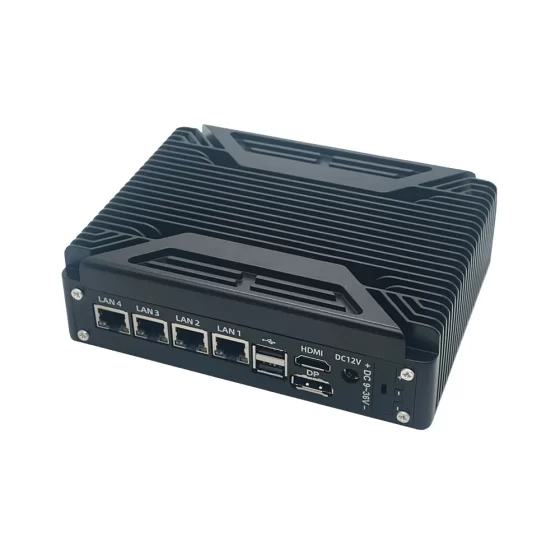
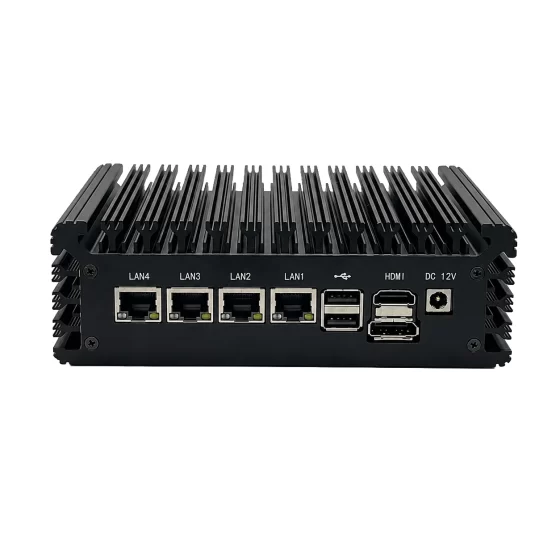
Soluciones de informática industrial CoreIPC

Computadora de IA industrial para monitoreo: Monitoreo industrial de IA para operaciones de fábrica inteligentes
Resumen ejecutivo
El monitoreo industrial de IA se está convirtiendo en una base importante para las fábricas inteligentes, maquinas conectadas, mantenimiento predictivo, control de calidad, y visibilidad de la producción en tiempo real.
Los entornos de fabricación generan grandes volúmenes de datos a partir de cámaras., sensores, PLC, robots, transportadores, motores, metros, y equipo de producción. Si estos datos solo se recopilan manualmente o se envían a sistemas remotos sin procesamiento local, las fábricas pueden enfrentar retrasos en la respuesta, visibilidad limitada, dependencia de la red, y visión operativa incompleta.
Una computadora industrial con IA para monitoreo proporciona potencia informática local cerca de las máquinas y líneas de producción. Puede recopilar datos de dispositivos industriales., ejecutar modelos de inferencia de IA, analizar patrones anormales, procesar transmisiones de cámara, detectar problemas en el equipo, y enviar alertas a operadores o sistemas de fábrica.
Una computadora industrial o una computadora integrada puede actuar como plataforma de monitoreo de borde.. Puede conectarse a cámaras de visión artificial., sensores de vibración, sensores de temperatura, PLC, puertas industriales, medidores de energía, robots, y sistemas MES o SCADA.
En comparación con las PC comerciales estándar, Las computadoras industriales son más adecuadas para la implementación en fábricas porque admiten un funcionamiento robusto., E/S flexibles, redes estables, opciones de diseño sin ventilador, almacenamiento confiable, y disponibilidad de ciclo de vida prolongado.
Este artículo explica cómo funcionan los sistemas de monitorización de IA industrial., ¿Qué desafíos de implementación enfrentan los fabricantes?, cómo está estructurada la arquitectura de la solución, y qué características de hardware son importantes al seleccionar una computadora industrial o una computadora integrada para aplicaciones de monitoreo basadas en IA.
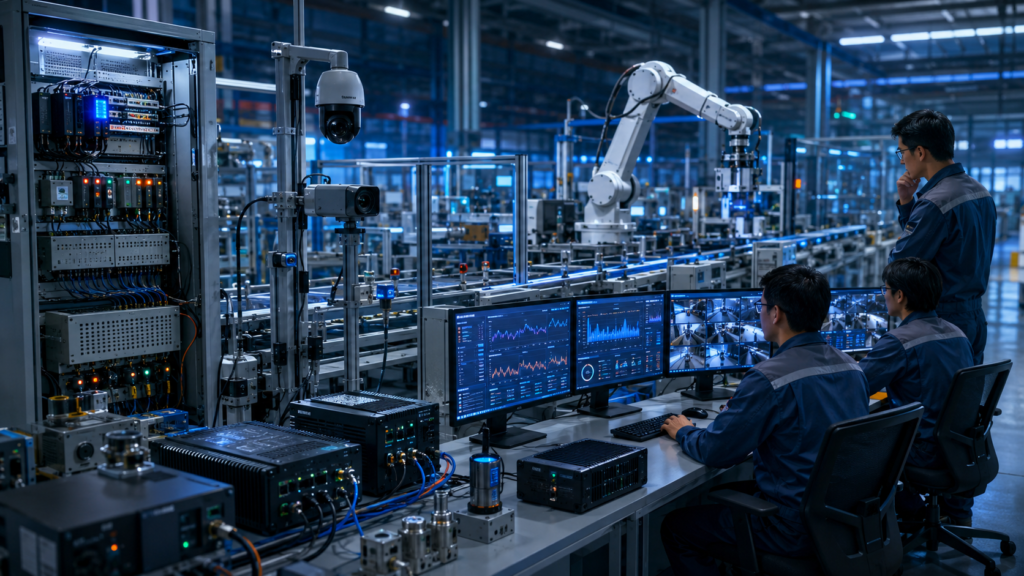
estado de la máquina, datos del sensor, secuencias de vídeo, salud del equipo, y alertas de IA cerca de equipos de producción.
Descripción general de la industria
Las fábricas necesitan una mejor visibilidad en tiempo real
Las fábricas modernas son cada vez más complejas.
Las líneas de producción pueden incluir múltiples máquinas., células robóticas, estaciones de inspección, transportadores, sistemas de servicios públicos, y plataformas de software conectadas. Los operadores e ingenieros deben comprender lo que sucede en estos sistemas en tiempo real..
El monitoreo tradicional a menudo depende de alarmas, controles manuales, Señales de estado del PLC, o informes periódicos. Estos métodos son útiles, pero es posible que no proporcionen suficientes detalles para una optimización avanzada de la producción..
El monitoreo de IA industrial mejora esta situación al agregar inteligencia local cerca de los equipos.
Puede ayudar a monitorear:
- Estado de la máquina
- Salud del equipo
- Resultados de la inspección visual
- Anormalidades del proceso
- Flujo de producción
- Uso de energía
- Condiciones ambientales
- Eventos de seguridad
- Señales de mantenimiento predictivo
- Tendencias de calidad
El objetivo no es sólo recopilar datos., sino convertir los datos en decisiones operativas oportunas.
El monitoreo de IA se está moviendo hacia el límite
Las plataformas en la nube pueden respaldar el análisis histórico, paneles centralizados, y almacenamiento de datos a largo plazo.
Sin embargo, Muchas tareas de monitoreo necesitan respuesta local.. Una anomalía de la máquina, evento de seguridad, defecto de calidad, o el bloqueo de la producción puede requerir acción en segundos.
Enviando cada imagen, registro de vibración, o la lectura del sensor a un servidor en la nube puede crear latencia, presión de ancho de banda, y dependencia de la red.
Una computadora industrial con IA permite que el monitoreo se realice cerca del equipo.
Puede procesar datos localmente, enviar alarmas rápidamente, registros de buffer durante interrupciones de la red, y cargar los resultados seleccionados en sistemas de nivel superior.
La informática industrial es la base del hardware
Los sistemas de monitoreo de IA requieren más que software.
Necesitan una plataforma informática industrial estable que pueda conectar dispositivos reales de fábrica., procesar datos continuamente, y operar en entornos hostiles.
Los ordenadores industriales y los ordenadores integrados proporcionan esta base..
Pueden admitir múltiples puertos LAN, cámaras USB, dispositivos seriales, señales GPIO, almacenamiento SSD, entrada de energía industrial, salida de pantalla, y montaje en el lado del gabinete o de la máquina.
Esto los hace adecuados para monitorear máquinas., líneas de producción, utilidades, sistemas logísticos, e implementaciones industriales de IoT.

Transmisiones de cámara, redes de sensores, comunicación PLC, presión de almacenamiento, diseño de red, y las condiciones de fábrica afectan la confiabilidad del monitoreo de IA.
Desafíos clave
Diversas fuentes de datos
Los sistemas de monitoreo industrial necesitan recopilar datos de muchos dispositivos diferentes.
Una sola implementación puede incluir cámaras., sensores de vibración, sensores de temperatura, PLC, motores, metros, lectores de códigos de barras, robots, puertas de enlace, y bases de datos de producción.
Cada fuente de datos puede utilizar diferentes interfaces., protocolos, tasas de actualización, y formatos de datos.
Las fuentes comunes incluyen:
- Cámaras de visión artificial
- camaras ip
- Señales de estado del PLC
- Sensores de vibración
- Sensores de temperatura
- Sensores de presión
- Sensores de corriente
- Medidores de energía
- Lectores de códigos de barras
- Controladores de robots
- Pasarelas industriales
La computadora industrial de IA debe admitir una conectividad flexible y una adquisición de datos estable.
Requisitos de alerta en tiempo real
El monitoreo se vuelve valioso cuando las condiciones anormales se detectan temprano.
Si el sistema detecta vibración del equipo, calentamiento excesivo, bloqueo de producción, flujo de producto faltante, anomalía visual, o operación insegura, debe enviar alertas rápidamente.
Las alertas retrasadas reducen el valor del monitoreo de IA.
Los requisitos en tiempo real pueden aparecer en:
- Mantenimiento predictivo
- Monitoreo de seguridad
- Monitoreo del estado de la máquina
- Monitoreo de línea de producción
- inspección de calidad
- Detección de anomalías energéticas
- Monitoreo celular robótico
- Monitoreo del flujo del transportador
La plataforma informática debe proporcionar un rendimiento estable y sostenido bajo una carga de trabajo continua..
Variación de la carga de trabajo de la IA
La monitorización de la IA industrial puede implicar diferentes cargas de trabajo.
Algunos sistemas analizan patrones de sensores simples. Otros procesan transmisiones de video, Imágenes de vision maquina, o datos de múltiples fuentes de múltiples máquinas.
Las cargas de trabajo pueden incluir:
- Detección de anomalías
- Clasificación de imágenes
- Detección de objetos
- Análisis de vídeo
- Modelos de mantenimiento predictivo
- Análisis de datos de sensores
- Clasificación del estado del equipo.
- Detección de tendencias de procesos
- OCR o reconocimiento de código de barras
- Análisis del flujo de producción.
El hardware debe seleccionarse de acuerdo con los requisitos de implementación y rendimiento del modelo de IA real..
Gestión de redes y datos
Los sistemas de monitoreo a menudo conectan los equipos del taller con MES, SCADA, plataformas en la nube, bases de datos, tableros, y sistemas de mantenimiento.
Esto crea desafíos en el diseño de redes..
Algunas fábricas necesitan separar las redes de cámaras, redes de máquinas, redes informáticas, y conexiones en la nube. Otros necesitan almacenamiento en búfer local cuando la red es inestable.
Una práctica computadora industrial de monitoreo de IA puede necesitar múltiples puertos LAN, almacenamiento local, comunicación segura, y funciones fiables de carga de datos.
Confiabilidad de fábrica a largo plazo
A menudo se espera que los sistemas de monitoreo funcionen continuamente..
Se pueden instalar dentro de armarios de control., cerca de maquinas, al lado de transportadores, cuartos de servicio interiores, o cerca de células robóticas.
Estos ambientes pueden incluir polvo., vibración, cambios de temperatura, ruido electrico, y flujo de aire limitado.
El hardware de calidad industrial es importante porque los sistemas de monitoreo pierden valor si fallan durante la producción..

Las computadoras industriales con IA conectan sensores, camaras, maquinas, software de fábrica, plataformas en la nube, y paneles de seguimiento.
Arquitectura de la solución de monitoreo de IA industrial
Capa de dispositivo y sensor
La capa de dispositivo y sensor incluye el equipo que se está monitoreando..
Esta capa puede incluir máquinas de producción., camaras, PLC, sensores, motores, robots, sistemas de servicios públicos, metros, y puertas industriales.
Genera los datos sin procesar utilizados para el monitoreo y el análisis de IA..
Los datos típicos pueden incluir:
- Imágenes
- transmisiones de video
- Valores de vibración
- Datos de temperatura
- Estado de la máquina
- Señales de alarma
- Consumo de energía
- Corriente del motor
- La producción cuenta
- Cronograma del proceso
- Historial de funcionamiento del equipo
La adquisición consistente de datos es la base de un monitoreo confiable de IA.
Capa de computación de borde industrial
La capa de computación de borde industrial es donde la computadora de IA industrial realiza el procesamiento local..
en esta capa, el ordenador industrial o el ordenador integrado pueden:
- Recopilar datos de sensores
- Procesar transmisiones de video
- Ejecute modelos de inferencia de IA
- Detectar patrones anormales
- Almacenar registros locales
- Almacenar datos durante problemas de red
- Activar alarmas
- Mostrar paneles locales
- Enviar resultados seleccionados a MES o SCADA
- Soporte de mantenimiento remoto
Esta capa local ayuda a reducir la latencia y hace que el monitoreo sea más resistente.
Capa de análisis de IA
La capa de análisis de IA contiene la lógica del software utilizada para detectar condiciones anormales..
Dependiendo de la aplicación, puede incluir:
- Modelos de mantenimiento predictivo
- Algoritmos de visión artificial
- Herramientas de análisis de vídeo
- Detección de anomalías en sensores
- Análisis del flujo de producción.
- Análisis de tendencias de calidad.
- Análisis de uso de energía.
- Lógica de alarma basada en reglas
- Tiempo de ejecución de inferencia de IA
La computadora industrial debe soportar el sistema operativo requerido., conductores, Marco de IA, herramientas de base de datos, y software de comunicación industrial.
Capa de automatización y alerta
La capa de automatización y alerta conecta los resultados del monitoreo de IA con la acción.
Cuando el sistema detecta un problema, puede enviar una alerta a los operadores, activar una alarma, notificar a los equipos de mantenimiento, o enviar una señal a un sistema PLC o SCADA.
Los ejemplos incluyen:
- Advertencia de vibración de la máquina
- Alarma de anomalía de temperatura
- Alerta de bloqueo del transportador
- Detección de flujo de producto faltante
- Evento de seguridad basado en cámaras
- Anomalía en el uso de energía
- Estado anormal de la celda del robot
- Advertencia de desviación del proceso
Esta capa ayuda a convertir los datos de monitoreo en respuesta operativa..
Capa de integración de software de fábrica
Los sistemas de monitoreo de IA industrial generalmente se conectan a plataformas de nivel superior.
La computadora industrial de IA puede enviar datos seleccionados a:
- MES
- SCADA
- ERP
- Bases de datos de calidad
- Plataformas de mantenimiento
- Paneles de control en la nube
- Plataformas industriales de IoT
- Sistemas de historiadores locales.
- Paneles de control de producción
En lugar de cargar todos los datos sin procesar, el sistema puede cargar alarmas, resúmenes, registros de eventos, imágenes seleccionadas, y datos de tendencias.
Esto reduce la carga de la red y al mismo tiempo mantiene informados a los equipos de la fábrica..
Características clave
Rendimiento estable del procesamiento de IA
Una computadora industrial con IA para monitoreo debe proporcionar un rendimiento estable durante el funcionamiento continuo.
La configuración requerida depende de la cantidad de fuentes de datos., Complejidad del modelo de IA, recuento de secuencias de vídeo, frecuencia del sensor, y requisitos de tiempo de respuesta.
La selección debe considerar:
- rendimiento de la CPU
- Compatibilidad con GPU o acelerador de IA
- Capacidad de memoria
- Velocidad de almacenamiento
- Ancho de banda de red
- Compatibilidad con el marco de IA
- Soporte del sistema operativo
- Diseño térmico
- Estabilidad a largo plazo
Para una monitorización ligera, una computadora integrada puede ser suficiente. Para monitoreo de IA multicámara, Es posible que se requiera una computadora con inteligencia artificial de vanguardia o una PC industrial.
Múltiples interfaces de red
Los sistemas de monitoreo de IA a menudo necesitan múltiples conexiones de red.
Una red puede conectar cámaras.. Otro puede conectar PLC o dispositivos de máquina.. Una red separada puede conectar MES, SCADA, sistemas en la nube, o herramientas de mantenimiento remoto.
Múltiples puertos LAN pueden admitir:
- Separación de la red de cámaras
- Comunicación de red de máquinas.
- Conexión TI de fábrica
- Carga de datos en la nube
- Mantenimiento remoto
- Segmentación de ciberseguridad
- Monitoreo multilínea
Una buena planificación de la red mejora la confiabilidad del sistema y la organización de los datos..
E/S industriales flexibles
La computadora de monitoreo debe conectarse con equipos industriales reales..
Las opciones de E/S importantes pueden incluir:
- LAN
- USB
- RS232
- RS485
- GPIO
- Entrada digital
- Salida digital
- hdmi
- DisplayPort
- M.2
- PCIe
- Almacenamiento SATA o NVMe
Estas interfaces pueden admitir sensores., camaras, PLC, puertas de enlace, metros, lectores de códigos de barras, alarmas, y pantallas del operador local.
La E/S flexible reduce la necesidad de adaptadores externos y mejora la confiabilidad de la implementación.
Almacenamiento local y almacenamiento en búfer de datos
Es posible que los sistemas de monitoreo necesiten almacenar datos localmente.
La computadora puede almacenar el historial del sensor., registros de alarma, videoclips, evidencia de imagen, Archivos de modelo de IA, tableros, bases de datos locales, y amortiguadores temporales.
Generalmente se prefiere el almacenamiento SSD o NVMe porque proporciona un acceso rápido y una mejor resistencia a los golpes que las unidades mecánicas..
El diseño de almacenamiento debe considerar:
- Periodo de conservación de datos
- Tamaño de la base de datos local
- Necesidades de almacenamiento de imágenes o vídeos.
- Escribir resistencia
- Estrategia de respaldo
- Comportamiento de interrupción de la red
- Frecuencia de carga
El almacenamiento confiable ayuda a proteger los datos de monitoreo y respalda la trazabilidad.
Diseño robusto y sin ventilador
Las computadoras industriales de monitoreo de IA a menudo operan cerca de máquinas.
Las computadoras sin ventilador reducen la entrada de polvo y eliminan un punto común de falla mecánica. Los gabinetes resistentes ayudan a proteger el sistema de las vibraciones., impacto de la instalación, y tensión del cable.
Sin embargo, Las cargas de trabajo de IA pueden generar un calor significativo.
Para sistemas de monitoreo de alto rendimiento, El diseño térmico debe revisarse cuidadosamente.. Carga de trabajo del procesador, Uso de GPU o acelerador, flujo de aire del gabinete, temperatura ambiente, y la ubicación de montaje afectan la estabilidad a largo plazo.
Largo ciclo de vida y mantenibilidad
Las plataformas de monitoreo a menudo se convierten en parte de la infraestructura de la fábrica a largo plazo..
Cambios frecuentes en los modelos de hardware., conductores, interfaces, o las opciones de expansión pueden crear problemas de validación y mantenimiento.
Las plataformas informáticas industriales con planificación del ciclo de vida ayudan a los fabricantes e integradores de sistemas a mantener implementaciones consistentes en múltiples líneas., maquinas, y sitios de fábrica.
Esto es especialmente importante para las implementaciones de monitoreo de IA industrial a gran escala..
Escenarios de implementación
Monitoreo de mantenimiento predictivo
El mantenimiento predictivo es una de las principales aplicaciones de monitorización de IA industrial.
El sistema recopila datos de sensores de vibración., sensores de temperatura, motores, zapatillas, compresores, y controladores de máquinas.
La computadora industrial con IA analiza patrones localmente y genera alertas cuando aparece un comportamiento anormal.
Esto ayuda a los equipos de mantenimiento a identificar posibles problemas con los equipos antes..
Monitoreo de visión artificial
El monitoreo industrial de IA puede usar cámaras para observar las líneas de producción, áreas de la máquina, y flujo de producto.
La computadora puede detectar productos faltantes, defectos superficiales, posicionamiento incorrecto, daño del paquete, o condiciones anormales del proceso.
Esto respalda el control de calidad y la visibilidad de la producción..
Monitoreo de procesos basado en video
Las fábricas pueden utilizar análisis de vídeo para monitorear el flujo de producción, áreas de seguridad, operación de la máquina, y movimiento del transportador.
La computadora industrial procesa transmisiones de video localmente y envía solo alertas seleccionadas o registros de eventos a sistemas de nivel superior..
Esto reduce la carga de ancho de banda y mejora el tiempo de respuesta..
Monitoreo de energía
El monitoreo de IA industrial puede ayudar a analizar el uso de energía.
El sistema puede recopilar datos de medidores., dispositivos de potencia, compresores, sistemas de climatización, y equipo de producción.
Los modelos de IA pueden detectar patrones de consumo inusuales o ineficiencia de los equipos.
Esto apoya la gestión de energía y el control de costos operativos..
Monitoreo celular robótico
Las células robóticas pueden necesitar monitoreo para determinar el estado de movimiento, manejo de objetos, sincronización del ciclo, zonas de seguridad, y funcionamiento anormal.
Una computadora industrial con IA puede procesar datos de cámaras, estado del robot, y señales de sensores.
Esto ayuda a los ingenieros a detectar comportamientos anormales del robot y mejorar la confiabilidad de la automatización..
Monitoreo de transportadores y logística
Se pueden controlar los transportadores y los sistemas logísticos para detectar bloqueos, flujo de paquetes, fallos en la lectura de códigos de barras, errores de clasificación, o movimiento anormal.
El ordenador industrial puede procesar datos de cámaras y sensores cerca de la línea transportadora.
Esto permite un manejo de excepciones más rápido en almacenes y logística de producción..
Monitoreo Ambiental
Las instalaciones industriales pueden controlar la temperatura, humedad, calidad del aire, presión, vibración, u otros factores ambientales.
Una computadora integrada puede recopilar datos de sensores, ejecutar análisis local, y enviar alertas a instalaciones o sistemas de producción.
Esto ayuda a proteger el equipo., materiales, y procesos de producción.
Integración del sistema de monitoreo OEM
Los fabricantes de máquinas pueden integrar computadoras industriales con IA en sistemas de monitoreo de equipos.
La plataforma informática puede proporcionar adquisición de datos., análisis de IA, almacenamiento local, pantalla HMI, salida de alarma, y conectividad del sistema de fábrica.
Esto ayuda a los OEM a ofrecer equipos más inteligentes con capacidad de monitoreo incorporada..
Beneficios comerciales
Detección temprana de condiciones anormales
El monitoreo de IA industrial ayuda a detectar equipos anormales o comportamientos de procesos antes.
Analizando los datos del sensor, imágenes, secuencias de vídeo, y señales de la máquina localmente, El sistema puede identificar problemas antes de que se conviertan en fallas graves..
Esto permite una respuesta más rápida y un mejor control de la producción..
Riesgo de tiempo de inactividad reducido
Los sistemas de monitoreo pueden ayudar a los equipos de mantenimiento a actuar antes de que los problemas del equipo detengan la producción.
Alertas predictivas, análisis de tendencias, y la detección de anomalías locales puede respaldar el mantenimiento planificado en lugar de la reparación reactiva.
El hardware informático industrial confiable ayuda a mantener activo el monitoreo durante largos ciclos de producción.
Visibilidad de producción mejorada
El monitoreo de IA brinda a los operadores e ingenieros una mejor visibilidad del estado de la máquina, flujo de producción, condiciones de calidad, y rendimiento de la utilidad.
Esto ayuda a los equipos a comprender lo que sucede en el taller sin depender únicamente de verificaciones manuales o informes retrasados..
Una mejor visibilidad respalda una toma de decisiones más informada.
Menor dependencia de la red
El procesamiento local reduce la dependencia de la nube o de servidores remotos.
La computadora industrial con IA puede procesar datos cerca del equipo, generar alertas locales, y registros de buffer cuando las conexiones de red no están disponibles.
Esto mejora la resiliencia y ayuda a que el monitoreo continúe durante problemas temporales de la red..
Mayor trazabilidad de datos
Los datos de monitoreo se pueden vincular con las ID de las máquinas, marcas de tiempo, valores de los sensores, registros de alarma, imágenes, videoclips, y eventos de producción.
Esto crea una trazabilidad más sólida para la investigación de mantenimiento., análisis de calidad, revisión del proceso, y mejora operativa.
El almacenamiento local confiable ayuda a garantizar que no se pierdan registros importantes.
Implementación escalable de fábrica inteligente
Se puede implementar una plataforma de monitoreo de IA industrial estandarizada en múltiples máquinas, líneas de producción, y sitios de fábrica.
El hardware consistente simplifica las imágenes de software, gestión de conductores, planificación de repuestos, entrenamiento de mantenimiento, y apoyo a largo plazo.
Esto ayuda a los fabricantes a escalar el monitoreo de IA desde proyectos piloto hasta implementaciones más amplias de fábricas inteligentes..
Por qué CoreIPC
CoreIPC proporciona plataformas informáticas industriales para IA de vanguardia, visión artificial, IoT industrial, automatización de fábrica, e integración de sistemas integrados. Para aplicaciones de monitoreo de IA industrial, CoreIPC se centra en hardware informático industrial confiable, soluciones informáticas integradas, Configuraciones de E/S flexibles, diseño de sistema compacto, y soporte de personalización OEM/ODM. CoreIPC ayuda a los integradores de sistemas, constructores de maquinaria, y los equipos de fabricación seleccionan plataformas informáticas que coincidan con los requisitos de implementación reales, incluida la carga de trabajo de IA, interfaces de sensores, conectividad de la cámara, diseño de red, necesidades de almacenamiento, métodos de montaje, entrada de energía, condiciones termicas, y planificación del ciclo de vida.
Preguntas frecuentes
1. ¿Qué es el monitoreo de IA industrial??
El monitoreo de IA industrial utiliza modelos de IA, sensores, camaras, datos industriales, y hardware informático de vanguardia para monitorear las máquinas, líneas de producción, utilidades, y procesos de fábrica.
Puede detectar patrones anormales., generar alertas, apoyar el mantenimiento predictivo, analizar transmisiones de video, monitorear las condiciones de calidad, y conectar resultados con MES, SCADA, o plataformas industriales de IoT.
2. ¿Por qué utilizar una computadora industrial para el monitoreo de IA??
Una computadora industrial proporciona el procesamiento local y la conectividad necesarios para los sistemas de monitoreo implementados cerca de las máquinas..
Puede recopilar datos de sensores., camaras, PLC, puertas de enlace, y metros. Puede ejecutar inferencia de IA, almacenar registros locales, enviar alertas, y cargar datos seleccionados a los sistemas de fábrica. El diseño industrial lo hace más confiable que las PC de oficina en entornos de producción.
3. ¿Cómo se utiliza una computadora integrada en el monitoreo de IA industrial??
Se puede instalar una computadora integrada dentro de los gabinetes de control., recintos de máquinas, puertas de enlace inteligentes, sistemas de inspección, o equipo OEM.
Puede recopilar datos de la máquina., ejecutar análisis de IA local, almacenar registros de alarma, conectarse a sensores y PLC, y enviar resultados de monitoreo a paneles de control o sistemas de mantenimiento. Su tamaño compacto es útil para implementaciones de monitoreo distribuido.
4. ¿Qué puede detectar la monitorización industrial de IA??
El monitoreo industrial de IA puede detectar anomalías en las vibraciones, calentamiento excesivo, consumo de energía inusual, cambios de estado de la máquina, bloqueo de producción, flujo de producto faltante, defectos visuales, eventos de seguridad, anomalías del sensor, y desviaciones del proceso.
La capacidad exacta depende de los dispositivos conectados, Modelos de IA, calidad de los datos, diseño del sistema, y pruebas de producción reales.
5. ¿Qué interfaces son importantes para las computadoras de monitoreo de IA industrial??
Las interfaces importantes pueden incluir múltiples puertos LAN, USB 3.0, RS232, RS485, GPIO, entrada digital, salida digital, hdmi, DisplayPort, M.2, PCIe, sata, y soporte de almacenamiento NVMe.
Estas interfaces admiten cámaras., sensores, PLC, puertas de enlace, metros, alarmas, exhibiciones locales, y redes de fábricas.
6. ¿Una computadora de monitoreo de IA necesita una GPU??
Algunos sistemas de monitoreo de IA necesitan compatibilidad con GPU o acelerador de IA, especialmente para análisis de vídeo, inspección multicámara, y cargas de trabajo complejas de aprendizaje profundo.
Otros sistemas pueden ejecutarse en computadoras industriales basadas en CPU si la carga de trabajo se basa en sensores o utiliza modelos livianos.. El hardware debe seleccionarse después de probar modelos de IA y fuentes de datos reales..
7. ¿Pueden las computadoras industriales sin ventilador soportar el monitoreo de IA??
Las computadoras industriales sin ventilador pueden admitir muchas aplicaciones de monitoreo de IA, análisis de sensores especialmente moderados, recopilación de datos, y monitoreo con una sola cámara.
Sin embargo, Los análisis de vídeo de alto rendimiento o las cargas de trabajo de IA multicámara pueden generar más calor.. carga de trabajo de la CPU, uso de acelerador, flujo de aire del gabinete, temperatura ambiente, y el método de montaje deben revisarse antes de la implementación..
8. ¿Cómo apoya el monitoreo industrial de IA el mantenimiento predictivo??
El sistema recopila datos como la vibración., temperatura, actual, presión, y estado de la máquina.
Los modelos de IA pueden analizar patrones y detectar comportamientos anormales antes de que ocurra una falla. La computadora industrial puede generar alertas locales y cargar registros a plataformas de mantenimiento, Ayudar a los equipos a planificar el servicio antes de que el tiempo de inactividad se agrave..
9. ¿Se puede conectar el monitoreo de IA industrial con sistemas MES o SCADA??
Sí. Las computadoras industriales pueden enviar datos de monitoreo, alarmas, estado de la máquina, registros de tendencia, y resúmenes de eventos a MES, SCADA, tableros, o plataformas industriales de IoT.
Esto ayuda a conectar el monitoreo del lado de la máquina con flujos de trabajo de producción y mantenimiento de nivel superior..
10. Qué se debe probar antes de la implementación?
Antes del despliegue, El sistema debe probarse con sensores reales., camaras, PLC, Modelos de IA, conexiones de red, carga de trabajo de almacenamiento, paneles locales, y operación de larga duración.
Estabilidad térmica, almacenamiento en búfer de datos, sincronización de alarma, comportamiento de interrupción de la red, y el acceso de mantenimiento también debe ser validado. Esto ayuda a reducir el riesgo durante el lanzamiento de la producción..
Conclusión
La monitorización industrial por IA es una base práctica para el mantenimiento predictivo, monitoreo de visión artificial, análisis de vídeo, análisis de energía, visibilidad de la producción, y operaciones de fábrica inteligentes.
Colocando una computadora industrial o una computadora integrada cerca de las cámaras, sensores, PLC, robots, metros, y equipo de producción, Los fabricantes pueden procesar datos localmente., detectar condiciones anormales antes, reducir la dependencia de la red, y mejorar la respuesta operativa.
Se debe seleccionar la plataforma adecuada de acuerdo con los requisitos de implementación reales., incluida la carga de trabajo de IA, interfaces de sensores, conectividad de la cámara, configuración de E/S, arquitectura de red, necesidades de almacenamiento, método de montaje, entrada de energía, condiciones termicas, soporte del sistema operativo, y planificación del ciclo de vida.
CoreIPC respalda proyectos de monitoreo de IA industrial con plataformas informáticas industriales diseñadas para la implementación práctica de fábricas y equipos.. Con la base de hardware adecuada, Los fabricantes y fabricantes de maquinaria pueden construir sistemas fiables., escalable, y sistemas de monitoreo basados en datos para operaciones industriales inteligentes.
Contáctenos
Busco ordenador industrial, computadora integrada, o plataforma de IA de vanguardia para monitoreo de IA industrial?
Póngase en contacto con CoreIPC para analizar los requisitos de su proyecto., incluida la carga de trabajo de IA, interfaz de sensores, conexión de cámara, arquitectura de red, configuración de E/S, diseño de almacenamiento, comunicación de automatización, método de montaje, entrada de energía, entorno operativo, necesidades del ciclo de vida, y opciones de personalización OEM/ODM.