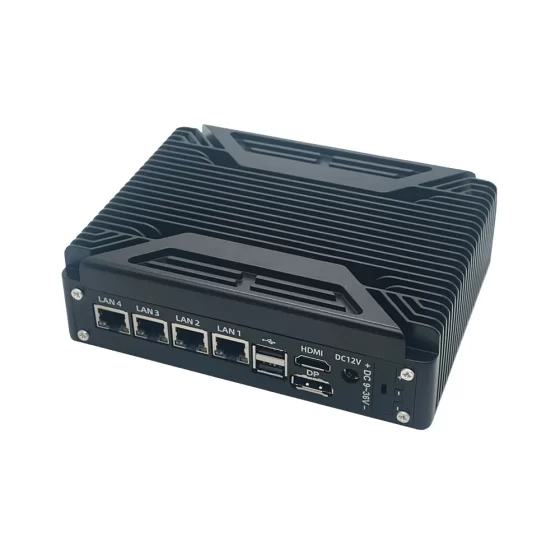
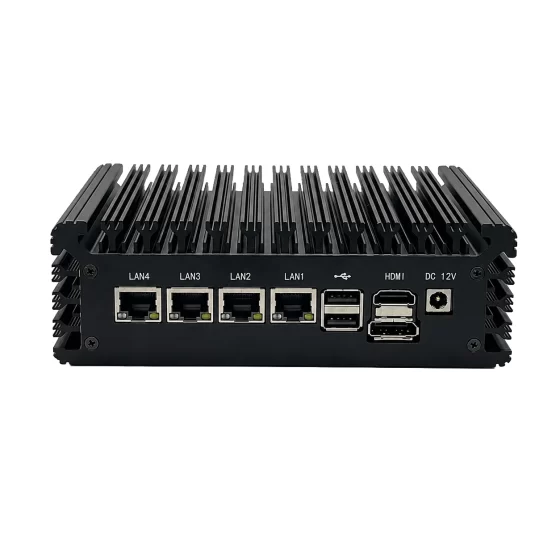
Soluciones de informática industrial CoreIPC

IA perimetral para ciudades inteligentes: Computación urbana inteligente Edge AI para infraestructura urbana
Resumen ejecutivo
Los sistemas de ciudades inteligentes Edge AI proporcionan la base informática local para el transporte inteligente, monitoreo de infraestructura pública, análisis de vídeo urbano, detección ambiental, iluminación inteligente, monitoreo de servicios públicos, y operaciones urbanas conectadas.
Las ciudades modernas generan grandes volúmenes de datos a partir de cámaras, sensores, sistemas de tráfico, puntos de acceso, controladores de iluminación, medidores de energía, instalaciones publicas, y redes de comunicacion. Si todos los datos sin procesar se envían directamente a plataformas en la nube centralizadas, Los operadores urbanos pueden enfrentar un uso elevado del ancho de banda, respuesta retrasada, presión de almacenamiento de datos, y dependencia de la disponibilidad de la red.
Una computadora industrial o una computadora integrada implementada en el borde puede procesar datos más cerca de la fuente. Puede analizar transmisiones de cámaras., recopilar datos de sensores, ejecutar modelos de inferencia de IA, generar alertas locales, registros de buffer, y enviar información seleccionada a plataformas de gestión de la ciudad, sistemas de tráfico, centros de mando, o paneles de control en la nube.
En comparación con las PC comerciales estándar, Las computadoras industriales son más adecuadas para la implementación perimetral de ciudades inteligentes porque admiten una instalación robusta., Amplia flexibilidad de E/S, redes estables, opciones de diseño sin ventilador, almacenamiento confiable, y disponibilidad de ciclo de vida prolongado.
Este artículo explica cómo funciona la informática urbana inteligente con IA de vanguardia, ¿Qué desafíos de implementación aparecen en entornos urbanos?, cómo está estructurada la arquitectura de la solución, y qué características de hardware son importantes al seleccionar una computadora industrial o una computadora integrada para aplicaciones de ciudades inteligentes.
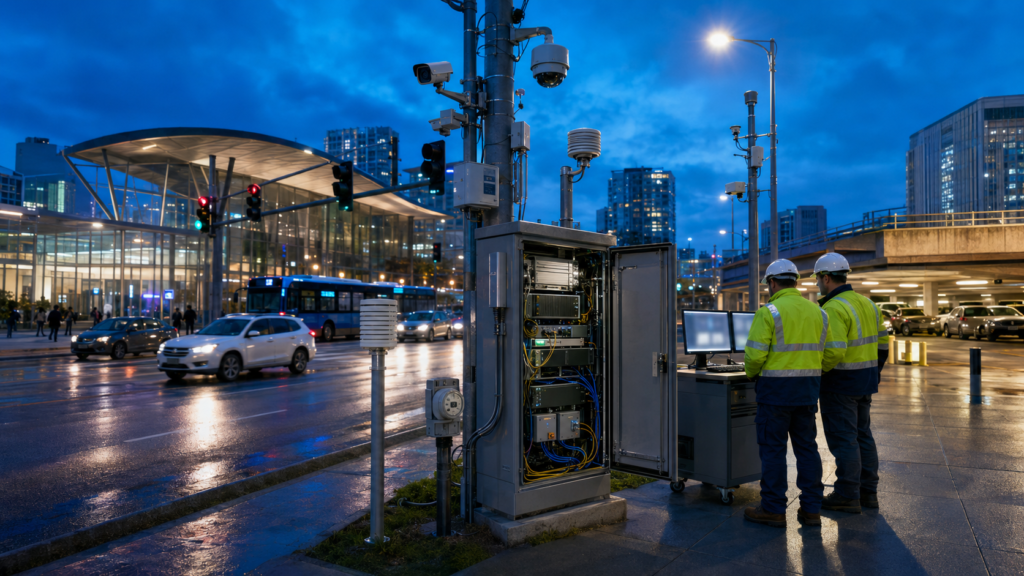
Implementación de ciudades inteligentes con IA perimetral
Descripción general de la industria
Las ciudades se basan cada vez más en datos
Los proyectos de ciudades inteligentes dependen de la infraestructura conectada.
Intersecciones de tráfico, edificios publicos, zonas de aparcamiento, sistemas de servicios públicos, zonas logísticas, estaciones de tránsito, sistemas de iluminación, y los puntos de monitoreo ambiental pueden generar datos operativos útiles.
Estos datos pueden apoyar:
- Monitoreo del flujo de tráfico
- Análisis de vídeo en carretera
- Aparcamiento inteligente
- Monitoreo de seguridad pública
- Detección ambiental
- Control de iluminación inteligente
- Monitoreo de energía
- Gestión de instalaciones
- Optimización de la recogida de residuos
- Monitoreo del estado de la infraestructura
- Apoyo a la respuesta de emergencia
Sin embargo, La recopilación de datos es sólo el primer paso..
Las ciudades necesitan sistemas prácticos que puedan procesar datos rápidamente, reducir la transmisión innecesaria, y apoyar la toma de decisiones locales.
Por qué la IA perimetral es importante para las ciudades inteligentes
Las plataformas en la nube centralizadas son útiles para análisis a largo plazo, paneles de control multisitio, y gestión de toda la ciudad.
Sin embargo, Muchas aplicaciones de ciudades inteligentes se benefician del procesamiento local..
Es posible que una cámara de tráfico necesite detectar rápidamente congestiones o condiciones anormales en la carretera.. Una instalación pública puede necesitar alertas ambientales locales. Un sitio de infraestructura remoto puede necesitar un monitoreo continuo incluso cuando las conexiones de red son inestables.
Edge AI ayuda procesando datos cerca de las cámaras, sensores, y equipamiento urbano.
En lugar de cargar cada fotograma o valor del sensor sin procesar, el sistema puede enviar eventos procesados, resúmenes, alertas, y registros seleccionados.
La informática industrial es la base del hardware
Los dispositivos Smart City Edge se pueden instalar en gabinetes exteriores, sistemas en carretera, centros de transporte, edificios publicos, cuartos de servicio, zonas de aparcamiento, y sitios de monitoreo distribuidos.
Estos ambientes pueden incluir polvo., variación de temperatura, vibración, ruido electrico, poder inestable, acceso de mantenimiento limitado, y funcionamiento continuo.
Los ordenadores industriales y los ordenadores integrados proporcionan una base de hardware más adecuada que los ordenadores de oficina estándar..
Apoyan las redes industriales, recintos resistentes, almacenamiento local, E/S flexibles, opciones de expansión inalámbrica, y una implementación de ciclo de vida prolongado.

Desafíos de implementación de IA en Smart City Edge
Desafíos clave
Implementación distribuida en muchos sitios
Los sistemas de ciudades inteligentes suelen estar distribuidos.
Un proyecto puede incluir muchas intersecciones., estaciones de monitoreo, zonas de aparcamiento, gabinetes de utilidad, nodos de tránsito, e instalaciones remotas.
Cada ubicación puede tener un espacio diferente., fuerza, red, y condiciones ambientales.
Esto crea requisitos para hardware compacto., montaje estable, mantenimiento remoto, y diseño de plataforma consistente.
Una plataforma informática industrial estandarizada puede ayudar a simplificar la implementación en muchos sitios.
Grandes volúmenes de datos de sensores y vídeos
Muchas aplicaciones de ciudades inteligentes implican vídeo..
Cámaras de tráfico, camaras de seguridad, camaras de aparcamiento, y las cámaras de monitoreo de infraestructura pueden generar grandes flujos de datos.
Los sistemas de sensores también pueden generar datos continuos a partir de dispositivos de calidad del aire., estaciones meteorológicas, medidores de energía, sensores de vibración, sistemas de agua, y controladores de iluminación.
Es posible que la computadora Edge AI deba manejar:
- Múltiples transmisiones de cámara
- Recopilación de datos de sensores
- inferencia de IA
- Almacenamiento de eventos locales
- Carga de red
- Comunicación del tablero
- Almacenamiento en búfer local
- Monitoreo del estado del sistema
El hardware debe seleccionarse según el número real de cámaras., Carga de trabajo de IA, política de almacenamiento, y diseño de redes.
Respuesta local de baja latencia
Algunas aplicaciones de ciudades inteligentes requieren una respuesta local rápida.
Los ejemplos incluyen la detección de eventos de tráfico., alertas en carretera, monitoreo de acceso, detección de anomalías en el equipo, o alarmas del sistema de servicios públicos.
Si los datos deben viajar a un servidor remoto antes del análisis, la respuesta puede demorarse.
Los sistemas de ciudad inteligente Edge AI reducen la latencia al procesar datos localmente y enviar solo resultados útiles a plataformas de nivel superior..
Esto hace que el sistema sea más práctico para aplicaciones de infraestructura urbana urgentes..
Confiabilidad de la red y control del ancho de banda
Los despliegues de ciudades inteligentes pueden depender de la fibra, celular, redes privadas, o métodos de comunicación mixtos.
La disponibilidad de la red puede variar según la ubicación.
La computadora perimetral debe admitir el almacenamiento en búfer de datos local para que los registros no se pierdan durante interrupciones temporales de la red..
El control del ancho de banda también es importante.
Cargar cada transmisión de video sin procesar desde muchas ubicaciones puede resultar costoso e ineficiente. El análisis de IA local ayuda a reducir la transferencia de datos mediante la carga de clips de eventos, metadatos, alertas, y resúmenes.
Seguridad y gobernanza de datos
Los sistemas de ciudades inteligentes pueden manejar infraestructura sensible y datos operativos.
El diseño del sistema debe considerar el control de acceso., segmentación de red, retención de datos, reglas de mantenimiento remoto, y transferencia segura de datos.
La computadora Edge AI puede ubicarse entre redes de cámaras, redes de sensores, plataformas de la ciudad, y sistemas en la nube.
Múltiples puertos LAN, conectividad controlada, y las prácticas de implementación segura ayudan a respaldar una mejor organización de la red y gobernanza de datos.

Arquitectura de ciudad inteligente Edge AI
Arquitectura de solución de ciudad inteligente Edge AI
Capa de dispositivo y sensor
La capa de dispositivos y sensores incluye los dispositivos de infraestructura urbana que generan datos..
Esta capa puede incluir:
- Cámaras de tráfico
- camaras ip
- Cámaras industriales
- Sensores ambientales
- Medidores de energía
- Controladores de iluminación inteligentes
- Sensores de aparcamiento
- Dispositivos de control de acceso
- Sensores meteorológicos
- Equipo de carretera
- Dispositivos de monitoreo de servicios públicos
- Pasarelas de comunicación
Estos dispositivos proporcionan los datos sin procesar necesarios para el procesamiento local de IA y la gestión de la ciudad..
Capa informática de IA perimetral
La capa informática de IA de borde es donde la computadora industrial o la computadora integrada realiza el procesamiento local..
en esta capa, el sistema puede:
- Recibir transmisiones de cámara
- Recopilar datos de sensores
- Ejecute modelos de inferencia de IA
- Detectar eventos de tráfico o instalaciones
- Procesar datos ambientales
- Almacenar registros locales
- Almacenar datos durante problemas de red
- Generar alertas
- Mostrar estado local
- Enviar datos seleccionados a plataformas de la ciudad.
Esta capa reduce la latencia y ayuda a que los sistemas de ciudades inteligentes permanezcan operativos incluso cuando las condiciones de la red varían..
Capa de análisis de IA
La capa de análisis de IA contiene los modelos de software y la lógica utilizados para interpretar los datos..
Dependiendo de la aplicación, puede incluir:
- Detección de objetos
- conteo de vehículos
- Análisis de congestión
- Detección de plazas de aparcamiento
- Detección de anomalías ambientales
- Monitoreo del estado del equipo
- Análisis de vídeo
- Análisis de uso de energía.
- Clasificación de eventos
- Lógica de alerta basada en reglas
La computadora industrial debe soportar el sistema operativo requerido., Tiempo de ejecución de IA, software de cámara, herramientas de comunicacion, y aplicaciones de gestión de datos.
Capa de comunicación y plataforma
El sistema de inteligencia artificial de vanguardia conecta la infraestructura local con plataformas de software de toda la ciudad.
Puede enviar datos seleccionados a:
- Plataformas de ciudades inteligentes
- Sistemas de gestión de tráfico.
- Sistemas de seguridad pública
- Plataformas de gestión de instalaciones
- Sistemas de gestión de energía.
- Paneles de control en la nube
- Centros de comando locales
- Plataformas de mantenimiento
- Industrial IoT systems
En lugar de enviar todos los datos sin procesar, the system can upload alerts, valores procesados, imágenes seleccionadas, videoclips, statistics, and status records.
Maintenance and Remote Management Layer
Smart city devices are often distributed across many locations.
Maintenance teams need practical visibility into system status.
The edge AI computer may support:
- Local health monitoring
- Storage status reporting
- Network status reporting
- Camera connection status
- Remote software updates
- Colección de registros
- Revisión de alerta
- Local dashboard access
This helps reduce field maintenance workload and supports scalable operation.
Características clave
Rendimiento de inferencia de IA
Smart city edge AI workloads vary widely.
A small environmental monitoring node may need moderate CPU performance. A multi-camera roadside analytics system may require stronger processing, aceleración de GPU, or AI accelerator support.
La selección debe considerar:
- Recuento de cámaras
- Resolución de vídeo
- Velocidad de fotogramas
- Complejidad del modelo de IA
- Frecuencia de actualización del sensor
- Carga de trabajo de almacenamiento
- Frecuencia de carga de la red
- Local dashboard needs
- Soporte del sistema operativo
The platform should be selected based on actual workload and deployment conditions.
Múltiples interfaces de red
Los sistemas perimetrales de ciudades inteligentes a menudo necesitan varias conexiones de red.
Múltiples puertos LAN pueden ayudar a separar:
- Red de cámaras
- Red de sensores
- Red de mantenimiento local
- Conexión de plataforma de la ciudad
- Subir a la nube
- Red de acceso remoto
La separación de redes puede mejorar la gestión del tráfico y reducir la exposición innecesaria entre sistemas..
Para implementaciones en carretera y gabinetes, La conexión en red estable es uno de los requisitos de hardware más importantes..
E/S industriales flexibles
Las aplicaciones de ciudades inteligentes pueden conectarse a muchos tipos de dispositivos.
Las opciones de E/S útiles pueden incluir:
- LAN
- USB
- RS232
- RS485
- GPIO
- Entrada digital
- Salida digital
- hdmi
- DisplayPort
- M.2
- PCIe
- Almacenamiento SATA o NVMe
Estas interfaces pueden admitir cámaras., sensores, metros, controladores, puertas de enlace, muestra, dispositivos de alarma, y módulos inalámbricos.
La E/S flexible reduce la necesidad de convertidores externos y hace que la implementación sea más confiable.
Almacenamiento local y almacenamiento en búfer de datos
Los sistemas de ciudades inteligentes Edge AI pueden necesitar almacenamiento local.
La computadora puede almacenar:
- Imágenes del evento
- Videoclips
- Historial de sensores
- Archivos de modelo de IA
- Registros de alarma
- Registros del sistema
- Bases de datos locales
- Búfers de carga temporales
Generalmente se prefiere el almacenamiento SSD o NVMe porque proporciona un acceso rápido y una mejor resistencia a los golpes que las unidades mecánicas..
El diseño del almacenamiento debe considerar el período de retención., escribe resistencia, método de copia de seguridad, y comportamiento de interrupción de la red.
Diseño robusto y sin ventilador
Se pueden instalar computadoras inteligentes en la ciudad en gabinetes, salas de equipos, cajas de carretera, instalaciones de transporte, y sitios de infraestructura.
El diseño sin ventilador ayuda a reducir la entrada de polvo y eliminar un punto común de falla mecánica.
Los gabinetes resistentes ayudan a proteger el sistema de las vibraciones., tensión del cable, y condiciones de instalación en campo.
El diseño térmico debe revisarse cuidadosamente, especialmente para gabinetes al aire libre, zonas de alta temperatura, o cargas de trabajo de IA que utilizan aceleradores.
Largo ciclo de vida y mantenibilidad
Los proyectos de infraestructura de ciudades inteligentes suelen durar muchos años.
Los cambios frecuentes de hardware pueden crear problemas de validación de software, problemas de mantenimiento, y desafíos de repuestos.
Las plataformas informáticas industriales con planificación del ciclo de vida ayudan a los integradores de sistemas y a los operadores urbanos a mantener implementaciones consistentes en muchos sitios..
Esto es especialmente importante para proyectos de infraestructura y ciudades inteligentes a gran escala..

Operaciones de IA en el borde de la ciudad inteligente
Escenarios de implementación
Monitoreo de tráfico inteligente
El monitoreo del tráfico es una de las aplicaciones de ciudades inteligentes con IA de borde más comunes.
Una computadora con IA de vanguardia puede procesar secuencias de cámaras cerca de las intersecciones, caminos, o corredores de transporte.
Puede soportar el conteo de vehículos., detección de congestión, monitoreo de carril, detección de eventos de tráfico, y generación de alertas locales.
Los datos procesados se pueden enviar a plataformas de gestión de tráfico o centros de mando..
Sistemas de aparcamiento inteligentes
Los sistemas de aparcamiento inteligentes utilizan cámaras o sensores para detectar la ocupación del espacio, entrada de vehículo, y flujo de estacionamiento.
Una computadora integrada puede procesar datos de estacionamiento localmente y enviar información seleccionada a plataformas de gestión de estacionamiento..
Esto permite una mejor visibilidad del estacionamiento y reduce la transferencia de datos innecesaria..
Monitoreo de instalaciones públicas
Edificios publicos, estaciones, campus, y las instalaciones de servicios pueden utilizar IA de vanguardia para el monitoreo operativo.
El sistema puede analizar vídeo., sensores ambientales, datos de acceso, y estado del equipo de las instalaciones.
Las computadoras industriales brindan procesamiento local y manejo confiable de datos para la administración de instalaciones distribuidas..
Monitoreo Ambiental
Las ciudades pueden utilizar la computación de punta para monitorear la calidad del aire, temperatura, humedad, ruido, condiciones del agua, y otros factores ambientales.
Una computadora integrada puede recopilar datos de sensores, ejecutar la detección de anomalías locales, almacenar registros, y cargar resúmenes en paneles ambientales.
Esto apoya la conciencia ambiental distribuida..
Iluminación inteligente y gestión de energía
Los sistemas de iluminación inteligentes pueden utilizar computadoras perimetrales para recopilar datos de los controladores de iluminación, medidores de energía, y sensores ambientales.
El sistema puede admitir lógica de control local., análisis de uso de energía, detección de fallas, y reportando.
Esto ayuda a los operadores de la ciudad a mejorar la eficiencia energética y la respuesta de mantenimiento..
Monitoreo del centro de transporte
Centros de transporte como estaciones., depósitos, terminales logísticas, y los estacionamientos pueden usar IA de vanguardia para análisis de video, monitoreo de flujo, conciencia de acceso, y monitoreo del estado del equipo.
Las computadoras industriales pueden procesar datos locales y enviar eventos seleccionados a plataformas de gestión.
Esto respalda operaciones más seguras y eficientes..
Monitoreo de infraestructura de servicios públicos
Los sitios de servicios públicos pueden incluir sistemas de agua., equipo de distribución de energía, estaciones de bombeo, gabinetes de comunicación, o equipo de la instalación.
Las computadoras Edge AI pueden recopilar datos de sensores, monitorear las condiciones del equipo, generar alertas, y registros de buffer localmente.
Esto ayuda a respaldar la operación remota de la infraestructura..
Integración de equipos de ciudad inteligente OEM
Los integradores de sistemas y fabricantes de equipos pueden integrar computadoras industriales o placas integradas en dispositivos de ciudades inteligentes..
Los ejemplos incluyen cajas de IA en la carretera., puertas de enlace de análisis de tráfico, sistemas de monitoreo ambiental, controladores de iluminación inteligentes, sistemas de estacionamiento, y dispositivos de monitoreo de infraestructura.
La plataforma informática puede proporcionar inferencia de IA, conectividad del dispositivo, almacenamiento local, y comunicación de plataforma.
Beneficios comerciales
Toma de decisiones locales más rápida
Edge AI procesa datos cerca de la infraestructura de la ciudad.
Esto reduce el retraso entre la captura de eventos y la respuesta..
El procesamiento local rápido es útil para eventos de tráfico, alarmas de infraestructura, monitoreo de instalaciones, y alertas ambientales.
Uso reducido de ancho de banda
Los sistemas de ciudades inteligentes pueden generar grandes cantidades de datos de sensores y vídeos sin procesar.
Las computadoras Edge AI pueden analizar datos localmente y cargar solo información seleccionada.
Esto puede incluir alertas, statistics, metadatos, clips de eventos, y actas resumidas.
La reducción de la transmisión de datos sin procesar hace que la implementación a gran escala sea más eficiente.
Mejor resiliencia operativa
El procesamiento de borde local reduce la dependencia de la conectividad continua en la nube.
Si la red se interrumpe, La computadora perimetral puede continuar con el análisis local., almacenar registros, y cargar datos en buffer.
Esto mejora la resiliencia de la infraestructura urbana distribuida..
Visibilidad de la infraestructura mejorada
Los sistemas de ciudad inteligente Edge AI ayudan a los operadores a ver lo que sucede en las carreteras, instalaciones, utilidades, zonas de aparcamiento, e infraestructura pública.
Convirtiendo datos sin procesar en eventos y resúmenes útiles, Los equipos de la ciudad pueden responder más rápido y gestionar los activos de forma más eficaz..
Mayor control de datos
Procesar datos localmente puede ayudar a reducir la cantidad de datos sin procesar que salen del sitio..
Esto respalda un mejor control de los datos y permite a los diseñadores de sistemas definir lo que se almacena., que esta subido, ¿Quién puede acceder a él?, y durante cuánto tiempo se conservan los registros.
Implementación escalable de ciudades inteligentes
Una plataforma informática de IA de vanguardia estandarizada facilita la implementación de aplicaciones de ciudades inteligentes en muchas ubicaciones.
El hardware consistente simplifica las imágenes de software, validación del conductor, planificación de repuestos, entrenamiento de mantenimiento, y soporte del ciclo de vida.
Esto ayuda a los integradores de sistemas a escalar desde proyectos piloto hasta una implementación más amplia en toda la ciudad..
Por qué CoreIPC
CoreIPC proporciona plataformas informáticas industriales para IA de vanguardia, IoT industrial, transporte inteligente, visión artificial, e integración de sistemas integrados. Para aplicaciones de ciudades inteligentes con IA de vanguardia, CoreIPC se centra en hardware informático industrial confiable, soluciones informáticas integradas, Configuraciones de E/S flexibles, implementación de múltiples redes, diseño de sistema compacto, y soporte de personalización OEM/ODM. CoreIPC ayuda a los integradores de sistemas, proveedores de soluciones de infraestructura, y los fabricantes de equipos seleccionan plataformas informáticas que coincidan con los requisitos de implementación reales, incluyendo el recuento de cámaras, Carga de trabajo de IA, interfaces de sensores, diseño de red, necesidades de almacenamiento, métodos de montaje, entrada de energía, condiciones termicas, y planificación del ciclo de vida.
Preguntas frecuentes
1. ¿Qué es la IA de vanguardia para ciudades inteligentes??
Edge AI para ciudades inteligentes utiliza hardware informático local para procesar datos de las cámaras, sensores, metros, e infraestructura urbana cerca de la fuente de datos.
En lugar de enviar todos los datos sin procesar a un servidor remoto, La computadora perimetral analiza los datos localmente y envía los resultados seleccionados., alertas, registros de eventos, o resúmenes a plataformas de la ciudad.
2. ¿Por qué utilizar una computadora industrial para la IA en el borde de la ciudad inteligente??
Una computadora industrial es más adecuada para la implementación en ciudades inteligentes porque admite una instalación robusta, operación continua, múltiples puertos de red, E/S flexibles, almacenamiento confiable, y disponibilidad de ciclo de vida prolongado.
Estas características son importantes para los gabinetes de carretera., centros de transporte, instalaciones publicas, sitios de servicios públicos, e implementaciones de infraestructura distribuida.
3. ¿Cómo se utiliza una computadora integrada en los sistemas de ciudades inteligentes??
Se puede instalar una computadora integrada dentro del equipo en carretera., sistemas de estacionamiento, estaciones de monitoreo ambiental, controladores de iluminación, gabinetes de utilidad, o puertas de enlace de ciudades inteligentes.
Puede recopilar datos locales., ejecutar inferencia de IA, almacenar registros, y cargar información seleccionada en plataformas de ciudades inteligentes.
4. ¿Qué aplicaciones de ciudades inteligentes pueden mejorar el soporte de la IA??
Edge AI puede soportar el monitoreo del tráfico, estacionamiento inteligente, detección ambiental, monitoreo de instalaciones públicas, iluminación inteligente, monitoreo de servicios públicos, monitoreo del centro de transporte, análisis de vídeo, y conciencia sobre el estado de la infraestructura.
La aplicación exacta depende de los dispositivos conectados., tienes un modelo, diseño de red, y requisitos del sitio.
5. ¿La IA de la ciudad inteligente necesita una GPU??
Algunas aplicaciones pueden necesitar compatibilidad con GPU o acelerador de IA, especialmente para análisis de vídeo multicámara o modelos complejos de IA.
Otras aplicaciones, como monitoreo de sensores o detección de eventos livianos, puede ejecutarse en computadoras integradas basadas en CPU. El hardware debe seleccionarse en función de las pruebas de carga de trabajo reales..
6. ¿Qué interfaces son importantes para las computadoras perimetrales de las ciudades inteligentes??
Las interfaces importantes pueden incluir múltiples puertos LAN, USB, RS232, RS485, GPIO, entrada digital, salida digital, hdmi, DisplayPort, M.2, PCIe, sata, y soporte de almacenamiento NVMe.
Estas interfaces ayudan a conectar cámaras., sensores, metros, controladores de iluminación, puertas de enlace, muestra, y módulos de comunicación.
7. ¿Pueden las computadoras industriales sin ventilador soportar la IA de la ciudad inteligente??
Las computadoras industriales sin ventilador pueden admitir muchas aplicaciones de IA de ciudad inteligente porque reducen la entrada de polvo y eliminan un punto de falla mecánica..
Sin embargo, El análisis de vídeo con IA o la implementación de gabinetes exteriores pueden crear desafíos térmicos. Carga de trabajo del procesador, uso de acelerador, flujo de aire del gabinete, temperatura ambiente, y el método de montaje deben revisarse cuidadosamente.
8. ¿Cómo reduce la IA de vanguardia el uso del ancho de banda de las ciudades inteligentes??
La computadora perimetral procesa los datos de la cámara y el sensor localmente.
Carga solo información útil como alertas., metadatos, clips de eventos, statistics, o resúmenes. Esto reduce la necesidad de enviar todos los datos de sensores o videos sin procesar a plataformas centrales..
9. ¿Pueden los sistemas de ciudades inteligentes de IA perimetral conectarse con plataformas en la nube??
Sí. Las computadoras industriales pueden enviar datos seleccionados a paneles de control en la nube, plataformas de ciudades inteligentes, sistemas de tráfico, plataformas de gestión de instalaciones, o sistemas de mantenimiento.
También pueden almacenar datos localmente durante interrupciones de la red y cargar registros cuando se recupera la conexión..
10. Qué se debe probar antes de la implementación?
Antes del despliegue, El sistema debe probarse con cámaras reales., sensores, conexiones de red, Modelos de IA, carga de trabajo de almacenamiento, paneles locales, y operación de larga duración.
Estabilidad térmica, almacenamiento en búfer de datos, comportamiento de carga, acceso de mantenimiento remoto, y las condiciones ambientales también deben validarse.
Conclusión
La computación urbana inteligente Edge AI es una base práctica para el transporte inteligente, estacionamiento inteligente, monitoreo ambiental, gestión de instalaciones públicas, iluminación inteligente, monitoreo de servicios públicos, e inteligencia distribuida de infraestructura urbana.
Colocando una computadora industrial o una computadora integrada cerca de las cámaras, sensores, metros, controladores, y dispositivos de infraestructura, las ciudades pueden procesar datos localmente, reducir el uso de ancho de banda, mejorar el tiempo de respuesta, y respaldar una mejor visibilidad operativa.
La plataforma de ciudad inteligente con IA de vanguardia adecuada debe seleccionarse de acuerdo con los requisitos de implementación reales., incluyendo el recuento de cámaras, Carga de trabajo de IA, interfaces de sensores, arquitectura de red, configuración de E/S, necesidades de almacenamiento local, método de montaje, entrada de energía, condiciones termicas, soporte del sistema operativo, y planificación del ciclo de vida.
CoreIPC respalda proyectos de ciudades inteligentes con IA de vanguardia con plataformas informáticas industriales diseñadas para infraestructura práctica y despliegue de campo.. Con la base de hardware adecuada, Los integradores de sistemas y los fabricantes de equipos pueden construir sistemas confiables., escalable, y soluciones de ciudades inteligentes basadas en datos.
Contáctenos
Busco ordenador industrial, computadora integrada, o plataforma de IA de vanguardia para aplicaciones de ciudades inteligentes?
Póngase en contacto con CoreIPC para analizar los requisitos de su proyecto., incluyendo el recuento de cámaras, Carga de trabajo de IA, interfaz de sensores, arquitectura de red, diseño de almacenamiento, configuración de E/S, método de montaje, entrada de energía, entorno operativo, necesidades del ciclo de vida, y opciones de personalización OEM/ODM.