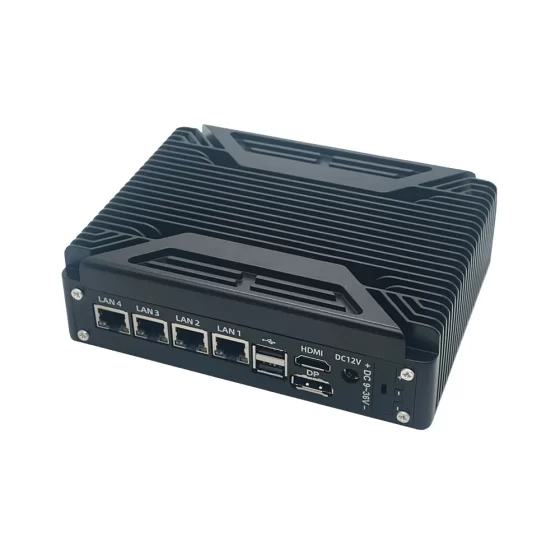
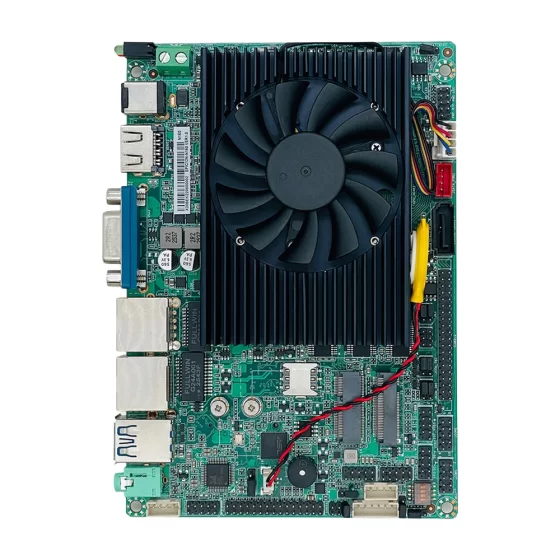
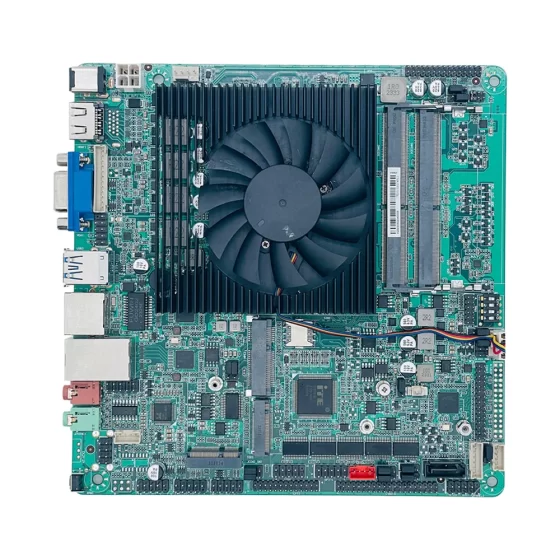
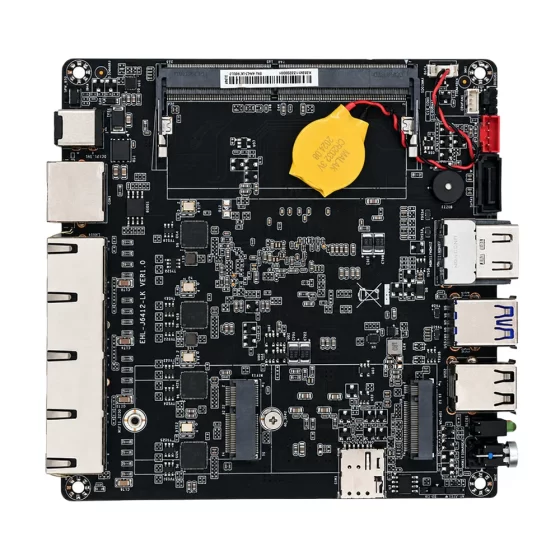
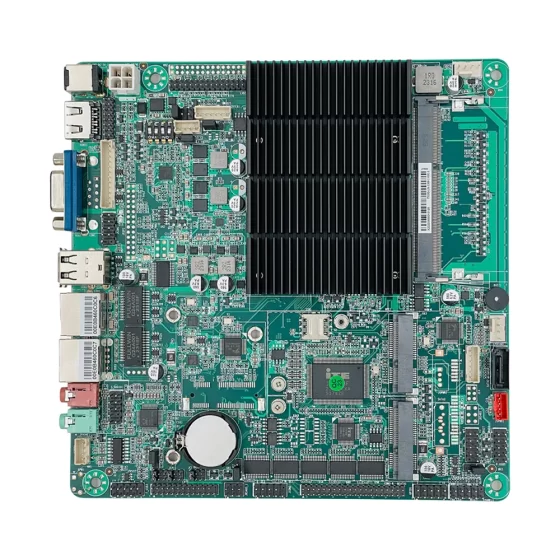
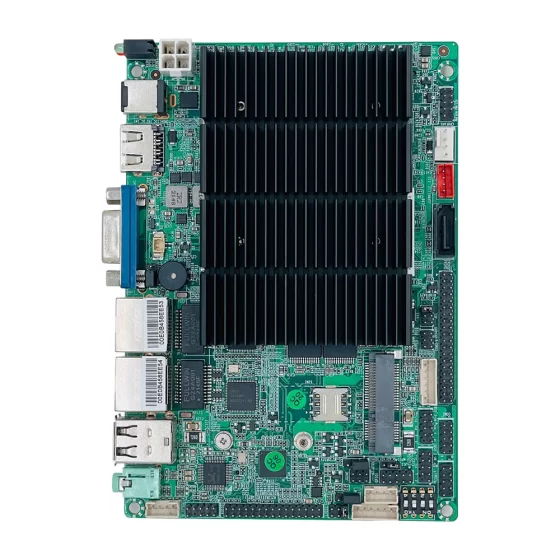
Soluciones de informática industrial CoreIPC

Plataforma informática IDS: Dispositivo IDS para la detección de intrusiones en redes industriales
Resumen ejecutivo
An IDS appliance provides the industrial computing foundation for network intrusion detection, monitoreo de tráfico, security visibility, detección de anomalías, and industrial network protection.
Modern industrial environments are becoming increasingly connected. Fábricas, instalaciones energéticas, sistemas de transporte, almacenes, and remote infrastructure sites now rely on PLCs, Sistemas SCADA, PC industriales, computadoras integradas, Puertas de enlace IIoT, camaras, sensores, HMI, and remote maintenance platforms.
This connectivity improves productivity and visibility, but it also creates more network security exposure.
An IDS computing platform helps monitor network traffic and detect suspicious activity without directly interrupting production communication. Unlike inline security devices that actively block traffic, an intrusion detection system usually observes traffic, analyzes events, and generates alerts for review.
An industrial computer or embedded computer can act as the IDS hardware platform. It can connect to mirrored network traffic, monitor multiple network zones, store security logs, run detection software, and send alerts to security dashboards or monitoring platforms.
En comparación con las PC de oficina estándar, industrial computers are better suited for IDS appliance deployment because they support rugged installation, configuraciones de LAN múltiple, almacenamiento confiable, opciones de diseño sin ventilador, entrada de energía estable, y disponibilidad de ciclo de vida prolongado.
This article explains how IDS appliances support industrial cybersecurity, ¿Qué desafíos aparecen en el despliegue real?, cómo funciona la arquitectura de la solución, and which hardware features are important when selecting an industrial computer or embedded computer for IDS computing platforms.
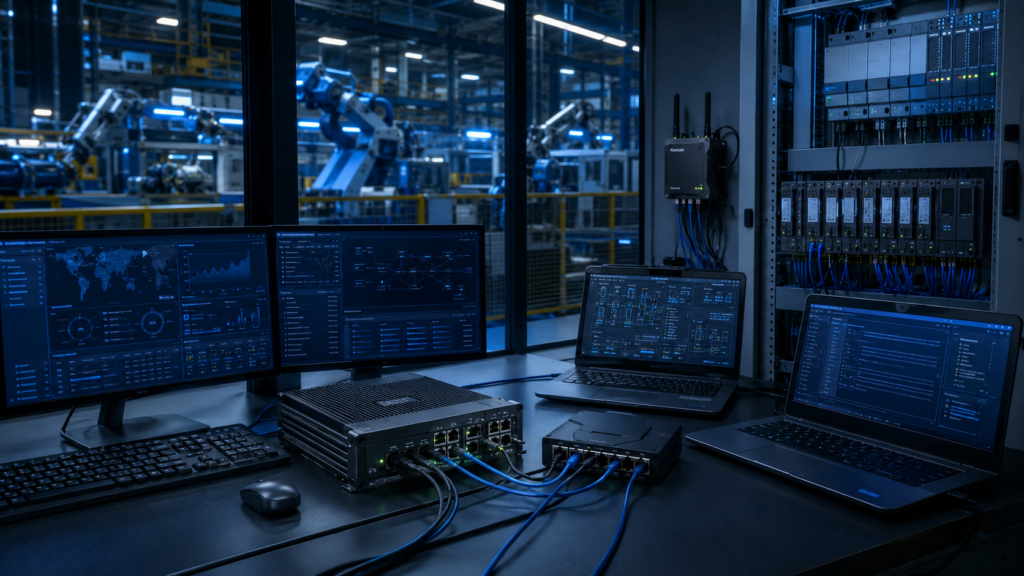
IDS computing platforms help monitor factory IT, Antiguo Testamento, SOCIEDAD ANÓNIMA, SCADA, y redes de máquinas.
Descripción general de la industria
Industrial Networks Need Better Security Visibility
Industrial networks are no longer isolated.
Production systems often exchange data with MES, SCADA, ERP, plataformas en la nube, herramientas de mantenimiento remoto, Pasarelas industriales de IoT, y redes multisitio.
This makes security visibility more important.
Industrial operators need to know what is happening across:
- Redes de PLC
- Redes SCADA
- Redes de máquinas
- Industrial IoT systems
- Redes de cámaras
- Remote service connections
- Estaciones de trabajo de ingeniería
- Sistemas de monitorización de energía.
- Sistemas de automatización de almacenes.
- Infraestructura de transporte
- Instalaciones de servicios públicos remotas
A practical IDS appliance helps monitor network behavior and identify suspicious communication patterns.
IDS Appliances Support Detection Without Immediate Blocking
An intrusion detection system is usually deployed to observe traffic and generate alerts.
This is especially useful in industrial environments because production communication must remain stable. Blocking the wrong traffic can stop machines, disrupt SCADA polling, or interfere with remote monitoring.
An IDS appliance can detect:
- Unusual network scans
- Unauthorized connection attempts
- Abnormal protocol behavior
- Suspicious remote access activity
- Unexpected device communication
- Malware-like traffic patterns
- Policy violations
- Unknown devices on the network
- Excessive traffic from specific endpoints
- Changes in baseline communication
The goal is to improve awareness before making network changes that could affect production.
Industrial Hardware Is Important for IDS Deployment
IDS systems are often deployed near network boundaries, gabinetes de control, production cells, instalaciones remotas, o sitios de infraestructura.
Estas ubicaciones pueden incluir vibraciones., polvo, flujo de aire limitado, variación de temperatura, ruido electrico, y horarios de funcionamiento continuo.
Industrial computers and embedded computers provide a suitable foundation for this type of deployment.
They support multi-LAN networking, almacenamiento local, diseño mecánico robusto, montaje industrial, opciones de operación sin ventilador, and stable long-term availability.

Mirrored traffic, network TAPs, high traffic volume, Redes de PLC, and IIoT gateways affect IDS deployment planning.
Desafíos clave
Monitoring Without Interrupting Production
Industrial networks often carry critical traffic.
comunicación PLC, Encuesta SCADA, Acceso HMI, robot controller traffic, datos de la máquina, and alarm communication may be sensitive to disruption.
An IDS appliance is often deployed passively through network mirroring, SPAN ports, or network TAPs.
This helps monitor traffic without becoming an inline point of failure.
Sin embargo, passive deployment still requires careful planning.
System designers must understand:
- Which network segments should be monitored
- How mirrored traffic will be delivered
- Whether packet loss may affect visibility
- How much traffic the IDS must inspect
- Where alerts should be sent
- How logs should be retained
- How monitoring will scale across sites
High Network Traffic Volume
Industrial sites may generate large amounts of network traffic.
Camera systems, Puertas de enlace IIoT, Encuesta SCADA, historian uploads, remote service connections, and multi-site data transfer can all increase traffic volume.
An IDS appliance must process this traffic reliably.
Los factores importantes de la carga de trabajo incluyen:
- Number of monitored network segments
- Velocidad del puerto
- Mirrored traffic volume
- Packet inspection workload
- Detection rule complexity
- Volumen de registro
- Alert frequency
- Local storage workload
- Dashboard integration
- Operación de larga duración
If the hardware is underpowered, detection performance may become unstable.
Understanding Industrial Protocols
Industrial networks may use protocols and traffic patterns that differ from office networks.
The IDS platform may need to observe communication related to PLCs, Sistemas SCADA, puertas industriales, HMI, sensores, metros, robots, y dispositivos de automatización.
A useful IDS deployment should distinguish normal industrial communication from suspicious behavior.
This requires correct configuration, baseline monitoring, rule tuning, and cooperation between IT security teams and OT engineers.
Managing Alerts and False Positives
An IDS appliance can generate many alerts if it is not tuned properly.
Too many false positives can cause operators to ignore warnings. Too few alerts may miss important events.
A practical deployment should define:
- Critical alert types
- Baseline traffic behavior
- Allowed communication patterns
- Trusted devices
- Ventanas de mantenimiento
- Remote service policies
- Logging priority
- Review workflow
- Escalation process
The hardware platform should support stable logging, paneles locales, and integration with monitoring systems.
Long-Term Reliability in Industrial Sites
IDS appliances may run continuously for years.
They may be installed inside security cabinets, salas de control, áreas de producción, sitios de energía, gabinetes de transporte, o instalaciones remotas.
If the IDS platform fails, security visibility may be lost.
Industrial hardware helps reduce this risk through rugged design, almacenamiento confiable, opciones sin ventilador, industrial power support, y planificación de un largo ciclo de vida.

IDS appliances connect mirrored network traffic, sistemas industriales, bases de datos de eventos, y plataformas de monitoreo de seguridad.
IDS Appliance Solution Architecture
Capa de red industrial
The industrial network layer includes the systems being monitored.
Esta capa puede incluir:
- PLC
- HMI
- servidores SCADA
- PC industriales
- Controladores integrados
- Controladores de máquinas
- Robots
- Cámaras
- Sensores
- Medidores de energía
- Puertas de enlace IIoT
- Estaciones de trabajo de ingeniería
These systems may be divided into multiple network zones.
The IDS appliance observes traffic across selected zones to detect suspicious behavior.
Traffic Collection Layer
The traffic collection layer provides the IDS appliance with network visibility.
Common methods include:
- Switch SPAN ports
- Network TAPs
- Mirrored traffic
- Dedicated monitoring ports
- Segmented network monitoring
- Aggregated traffic feeds
This layer should be designed carefully.
Poor traffic collection can create blind spots, pérdida de paquetes, or incomplete detection.
IDS Computing Layer
The IDS computing layer is where the industrial computer or embedded computer processes monitored traffic.
en esta capa, el sistema puede:
- Receive mirrored network traffic
- Inspect packets
- Analyze protocol behavior
- Detect suspicious patterns
- Compare traffic against rules
- Almacenar registros
- Generar alertas
- Mostrar paneles locales
- Send events to security platforms
- Monitorear la salud del sistema
This layer provides the computing foundation for intrusion detection.
Detection and Analytics Layer
The detection and analytics layer contains the software logic used to identify potential threats.
Dependiendo del despliegue, puede incluir:
- Signature-based detection
- Detección de anomalías
- Protocol analysis
- Baseline comparison
- Device behavior monitoring
- Rule-based alerting
- Traffic pattern analysis
- Security event correlation
- Industrial protocol visibility
La computadora industrial debe soportar el sistema operativo requerido., IDS software, almacenamiento, network drivers, and monitoring tools.
Capa de monitoreo de seguridad
The monitoring layer connects IDS results with operators and security teams.
The IDS appliance may send alerts to:
- Paneles de seguridad locales
- plataforma SIEM
- sistemas SOC
- Industrial network monitoring tools
- Paneles de seguridad SCADA
- Plataformas de monitoreo en la nube
- Estaciones de trabajo de mantenimiento
- Sistemas de gestión centrales
This helps convert network detection data into actionable security visibility.
Características clave
Multi-LAN Monitoring Capability
Multiple LAN ports are important for IDS appliances.
They allow the platform to monitor different network zones or receive mirrored traffic from multiple switches.
Las configuraciones útiles pueden incluir:
- Monitoring port for PLC network
- Monitoring port for machine network
- Monitoring port for camera network
- Monitoring port for industrial IoT network
- Management port
- Alert uplink port
- Conexión TI de fábrica
- Local service port
Multi-LAN design improves visibility and deployment flexibility.
Packet Processing Performance
IDS workloads can be demanding.
The hardware must inspect network traffic without dropping important data.
La selección debe considerar:
- rendimiento de la CPU
- Capacidad de memoria
- Recuento de puertos LAN
- Velocidad del puerto
- Volumen de tráfico
- Detection rule complexity
- Tasa de generación de registros
- Velocidad de almacenamiento
- Soporte del sistema operativo
- Estabilidad a largo plazo
Para sitios más grandes, the IDS platform should be validated using realistic traffic volume and detection rules.
Almacenamiento local confiable
IDS appliances may generate large amounts of logs and security records.
Local storage may be used for:
- Packet captures
- Alert logs
- Registros de eventos
- Registros del sistema
- Baseline data
- Copias de seguridad de configuración
- Detection rules
- Datos de diagnóstico
- Security investigation files
Generalmente se prefiere el almacenamiento SSD o NVMe porque proporciona un acceso rápido y una mejor resistencia a los golpes que las unidades mecánicas..
El diseño del almacenamiento debe considerar el período de retención., escribe resistencia, flujo de trabajo de respaldo, and log export requirements.
Passive Monitoring Support
Many industrial IDS appliances are deployed passively.
This reduces the risk of interrupting production communication.
Hardware design should support dedicated monitoring ports and management separation.
A practical IDS deployment may use one set of ports for traffic monitoring and another port for management, alert upload, or dashboard access.
This helps maintain clear separation between observed traffic and administrative communication.
Diseño robusto y sin ventilador
Fanless industrial computers are useful for IDS deployment in dusty cabinets, áreas de producción, e instalaciones remotas.
Reducen la entrada de polvo y eliminan un punto común de falla mecánica..
Los gabinetes resistentes ayudan a proteger contra las vibraciones, tensión del cable, impacto de montaje, y operación industrial a largo plazo.
Thermal design should still be reviewed carefully because continuous traffic inspection can create sustained processing load.
E/S industriales flexibles
Although IDS appliances mainly focus on networking, industrial I/O can still be valuable.
Las opciones útiles pueden incluir:
- LAN
- USB
- RS232
- RS485
- GPIO
- Entrada digital
- Salida digital
- hdmi
- DisplayPort
- M.2
- PCIe
- SATA o NVMe
GPIO puede admitir salida de alarma. USB and display ports can support local maintenance. PCIe or M.2 expansion can support additional network cards or storage.
Largo ciclo de vida y mantenibilidad
Industrial security systems may remain in service for many years.
Los cambios frecuentes de hardware pueden crear problemas de compatibilidad de software, problemas de validación del conductor, desafíos de repuestos, y complejidad del mantenimiento.
Industrial computing platforms with lifecycle planning help system integrators and operators maintain consistent IDS deployments across multiple sites and equipment generations.
Escenarios de implementación
Factory Network Intrusion Detection
A factory can deploy an IDS appliance to monitor traffic between IT and OT networks.
The appliance can observe communication between enterprise systems, redes de producción, servidores SCADA, y puertas industriales.
This helps detect suspicious access attempts or unexpected traffic patterns.
PLC Network Monitoring
PLC networks are critical to production.
An IDS appliance can monitor PLC communication passively and alert security teams when abnormal device behavior, unauthorized access, or unexpected communication appears.
This supports better visibility without directly interfering with PLC operation.
SCADA Security Monitoring
Los sistemas SCADA a menudo conectan salas de control, dispositivos remotos, operadores, and field equipment.
An IDS computing platform can monitor SCADA network traffic and send alerts to security dashboards.
Esto es útil para la energía., agua, transporte, and facility infrastructure systems.
Industrial IoT Security Monitoring
Los sistemas industriales de IoT conectan máquinas, sensores, puertas de enlace, y plataformas en la nube.
An IDS appliance can monitor communication between IIoT gateways and external systems.
This helps detect unusual data flow, unauthorized connections, or abnormal gateway behavior.
Remote Maintenance Visibility
Remote maintenance connections are useful but need oversight.
An IDS appliance can monitor traffic related to remote access, VPN connections, estaciones de trabajo de ingeniería, and machine service sessions.
This improves visibility into who is connecting and how the network is being used.
Monitoreo de Almacén y Logística
Warehouses may use barcode systems, transportadores, computadoras industriales, camaras, plataformas WMS, and sorting systems.
An IDS platform can monitor network traffic across automation systems and detect unusual communication patterns.
This supports more secure logistics infrastructure.
Seguridad de la infraestructura de transporte
Transportation environments may include roadside equipment, sistemas de estaciones, plataformas de estacionamiento, controladores de tráfico, y centros de seguimiento.
An industrial IDS appliance can monitor distributed infrastructure networks and provide security visibility for remote sites.
OEM IDS Appliance Development
System integrators and cybersecurity solution providers can build IDS appliances using industrial computers or embedded boards.
The hardware platform can support multi-LAN monitoring, almacenamiento local, inspección de tráfico, tableros, alert forwarding, y una implementación robusta estilo dispositivo.
Beneficios comerciales
Improved Network Security Visibility
An IDS appliance helps industrial operators understand what is happening on the network.
It can detect suspicious traffic, abnormal device behavior, unexpected connections, y violaciones de políticas.
This visibility is important for factories, instalaciones remotas, utilidades, almacenes, y sistemas de transporte.
Lower Risk of Production Disruption
Because IDS appliances can be deployed passively, they can monitor traffic without directly blocking production communication.
This is useful for industrial environments where availability is critical.
Operators can review alerts and investigate issues before deciding whether to change firewall or access policies.
Stronger OT Monitoring
Industrial networks often contain devices that are difficult to monitor with standard IT tools.
An IDS computing platform can observe OT traffic, comunicación de la máquina, PLC activity, SCADA connections, and industrial gateway behavior.
This helps security teams understand industrial network conditions more clearly.
Better Incident Investigation
IDS logs and alerts support security investigation.
Records can help teams understand when suspicious activity occurred, which devices were involved, and what communication patterns appeared.
Reliable local storage improves traceability and supports post-event review.
Scalable Security Deployment
A standardized IDS appliance platform makes it easier to deploy network monitoring across multiple machines, líneas de producción, fábricas, sitios remotos, and infrastructure facilities.
El hardware consistente simplifica las imágenes de software, plantillas de configuración, planificación de repuestos, entrenamiento de mantenimiento, y soporte del ciclo de vida.
Support for Cybersecurity Maturity
Many industrial operators begin cybersecurity improvement with visibility.
An IDS appliance provides a practical first step because it can monitor traffic and generate alerts without major changes to production control systems.
This helps teams build a stronger security baseline over time.
Por qué CoreIPC
CoreIPC proporciona plataformas informáticas industriales para la seguridad de la red, IoT industrial, automatización de fábrica, monitoreo remoto, e integración de sistemas integrados. For IDS appliance applications, CoreIPC se centra en hardware informático industrial confiable, soluciones informáticas integradas, configuraciones de LAN múltiple, E/S flexibles, diseño de sistema compacto, opciones de implementación sin ventilador, y soporte de personalización OEM/ODM. CoreIPC ayuda a los integradores de sistemas, proveedores de soluciones de seguridad, constructores de maquinaria, y los operadores industriales seleccionan plataformas informáticas que se ajustan a los requisitos de implementación reales, incluido el recuento de puertos LAN, traffic monitoring workload, necesidades de almacenamiento, métodos de montaje, entrada de energía, condiciones termicas, y planificación del ciclo de vida.
Preguntas frecuentes
1. What is an IDS appliance?
An IDS appliance is a hardware platform used to run intrusion detection software.
It monitors network traffic, analyzes communication patterns, detects suspicious behavior, and generates alerts. En entornos industriales, IDS appliances are commonly used to monitor PLC networks, Sistemas SCADA, redes de máquinas, Pasarelas industriales de IoT, and remote access traffic.
2. Why use an industrial computer for an IDS appliance?
Una computadora industrial proporciona hardware resistente y conectividad flexible para implementación en fábrica y en campo..
Puede admitir múltiples puertos LAN, operación sin ventilador, almacenamiento local confiable, montaje industrial, entrada de energía estable, y disponibilidad de ciclo de vida prolongado. These features make it suitable for IDS deployment in control cabinets, áreas de producción, instalaciones remotas, y sitios de infraestructura.
3. How is an embedded computer used as an IDS platform?
An embedded computer can act as a compact IDS appliance inside a control cabinet, recinto de la máquina, instalación remota, o puerta de enlace de seguridad OEM.
It can receive mirrored traffic, inspect packets, almacenar registros, generar alertas, and forward events to monitoring systems.
4. ¿Cuál es la diferencia entre IDS e IPS??
Un IDS detecta actividad sospechosa y genera alertas.
An IPS can actively block or prevent traffic according to security policies. En entornos industriales, IDS is often used first because passive monitoring reduces the risk of interrupting production communication. IPS deployment usually requires more careful testing.
5. Why are multiple LAN ports important for IDS appliances?
Multiple LAN ports allow the appliance to monitor different network segments.
One port may monitor a PLC network, another may monitor a machine network, another may connect to a management network, and another may send alerts to a monitoring platform. This improves visibility and network organization.
6. Can fanless industrial computers support IDS workloads?
Sí. Fanless industrial computers can support many IDS deployments because they reduce dust intake and remove one mechanical failure point.
Sin embargo, IDS traffic inspection can create sustained CPU and storage load. Volumen de tráfico, diseño de recinto, temperatura ambiente, y el flujo de aire del gabinete deben revisarse antes de la implementación.
7. What hardware features matter for industrial IDS platforms?
Las características importantes incluyen múltiples puertos LAN, suficiente rendimiento de la CPU, memoria confiable, Almacenamiento SSD o NVMe, recinto resistente, diseño sin ventilador, entrada de energía industrial, USB, salida de pantalla, y opciones de expansión.
La configuración final debe coincidir con el volumen de tráfico., detection rules, retención de registros, carga de trabajo de almacenamiento, y entorno de instalación.
8. Can IDS appliances monitor industrial IoT systems?
Sí. IDS appliances can monitor communication between IIoT gateways, maquinas, plataformas en la nube, y redes de fábricas.
They can help detect unusual data flow, unauthorized connections, abnormal gateway behavior, or unexpected communication between devices.
9. Does an IDS appliance block attacks automatically?
Usually, IDS appliances are designed to detect and alert rather than block traffic.
This is useful in industrial environments where accidental blocking can affect production. Some deployments may integrate IDS alerts with firewalls or other security systems, but blocking policies should be tested carefully.
10. What should be tested before deploying an IDS appliance?
Antes del despliegue, El sistema debe probarse con una topología de red real., mirrored traffic, volumen de tráfico, detection software, carga de trabajo de registro, comportamiento de almacenamiento, alert forwarding, y operación de larga duración.
Estabilidad térmica, pérdida de paquetes, network visibility, management access, y el flujo de trabajo de mantenimiento también debe validarse.
Conclusión
An IDS appliance is a practical foundation for industrial network intrusion detection, security visibility, passive traffic monitoring, detección de anomalías, and cybersecurity investigation.
By placing an industrial computer or embedded computer at key network monitoring points, fabricantes, constructores de maquinaria, integradores de sistemas, and infrastructure operators can observe PLC networks, Sistemas SCADA, redes de máquinas, industrial IoT traffic, y conexiones de mantenimiento remoto más efectivas.
The right IDS computing platform should be selected according to real deployment requirements, incluido el recuento de puertos LAN, volumen de tráfico, detection workload, monitoring method, necesidades de almacenamiento, método de montaje, entrada de energía, condiciones termicas, soporte del sistema operativo, política de seguridad, y planificación del ciclo de vida.
CoreIPC supports IDS appliance projects with industrial computing platforms designed for practical factory, lado de la máquina, y despliegue sobre el terreno. Con la base de hardware adecuada, Los operadores industriales y los proveedores de soluciones de seguridad pueden construir sistemas confiables., escalable, and production-friendly intrusion detection systems.
Contáctenos
Busco ordenador industrial, computadora integrada, or multi-LAN platform for IDS appliance deployment?
Póngase en contacto con CoreIPC para analizar los requisitos de su proyecto., incluido el recuento de puertos LAN, monitored network zones, volumen de tráfico, diseño de almacenamiento, método de montaje, entrada de energía, entorno operativo, necesidades del ciclo de vida, y opciones de personalización OEM/ODM.