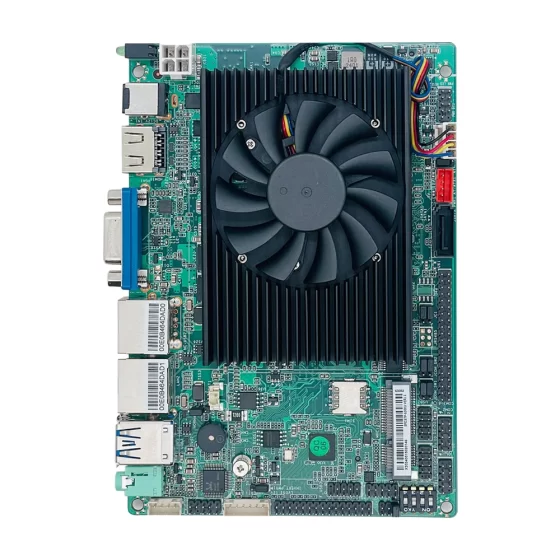
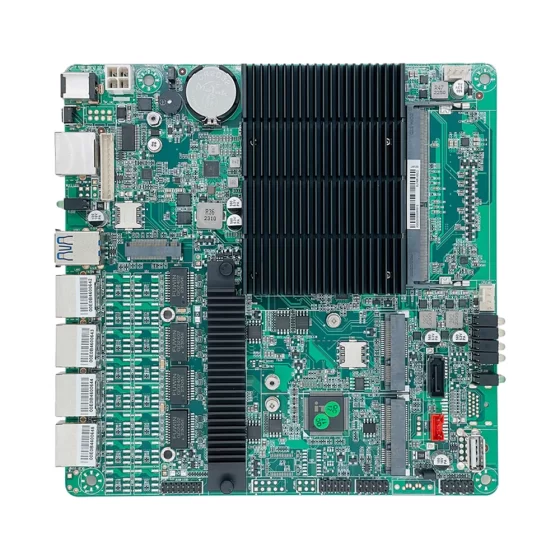
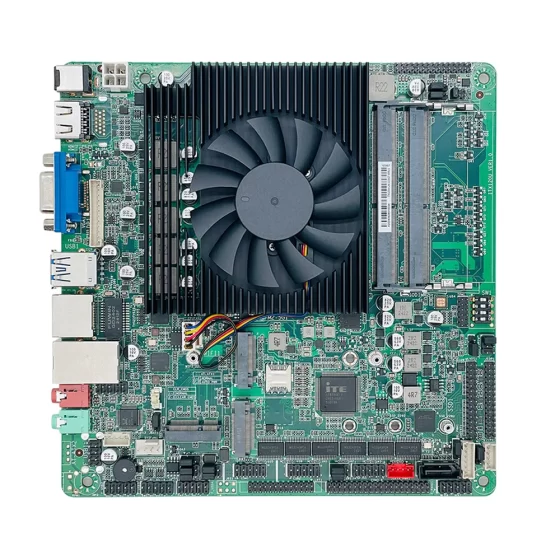
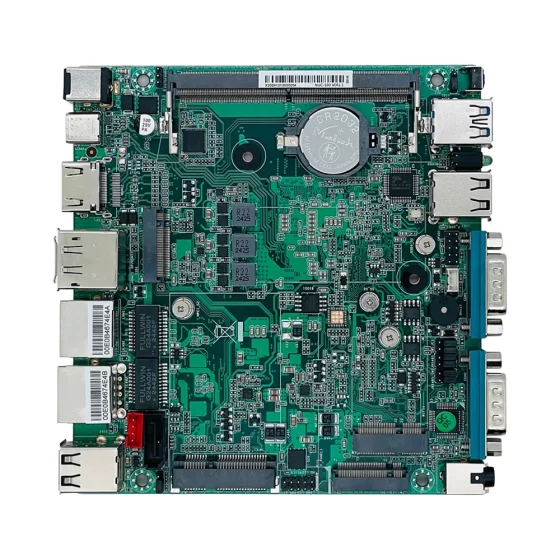
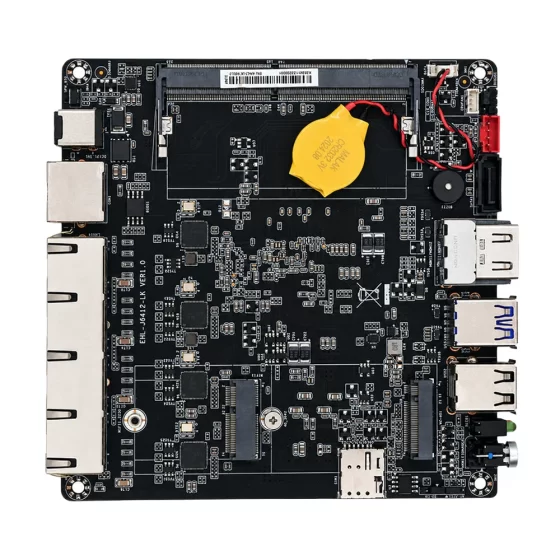
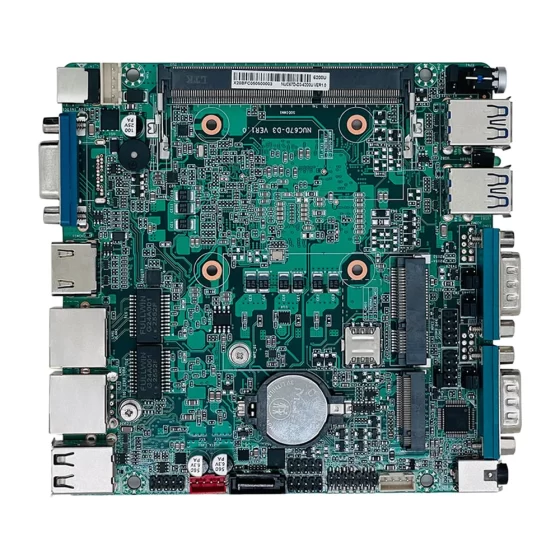
Soluciones de informática industrial CoreIPC

Enrutador de seguridad para sucursales: Enrutador de sucursal para conectividad de red distribuida segura
Resumen ejecutivo
A branch office router provides the secure networking foundation for distributed offices, instalaciones remotas, almacenes, retail sites, centros de servicio, industrial branches, and edge locations that need reliable access to enterprise systems, plataformas en la nube, y dispositivos locales.
Modern organizations are no longer limited to one headquarters network. Many companies operate across multiple branches, fábricas, centros logísticos, sitios de energía, instalaciones de transporte, and remote service locations. Each site may need secure internet access, Conectividad VPN, firewall protection, local routing, gestión remota, y segmentación de red.
A branch office security router built on an industrial computer or embedded computer can provide flexible multi-LAN connectivity, acceso remoto seguro, Túneles VPN, políticas de firewall, SD-WAN functions, tala local, and reliable edge deployment.
Compared with standard consumer routers, industrial computers provide stronger reliability for business and industrial branch environments. Soportan instalación robusta, opciones de diseño sin ventilador, entrada de energía estable, almacenamiento confiable, E/S flexibles, múltiples puertos LAN, y disponibilidad de ciclo de vida prolongado.
For branch offices connected to industrial environments, a security router may also need to protect PLC networks, warehouse automation systems, Puertas de enlace IIoT, camaras, sensores, servidores locales, y herramientas de mantenimiento remoto.
This article explains how a branch office router supports secure distributed connectivity, what deployment challenges appear in real environments, cómo funciona la arquitectura de la solución, and which hardware features matter when selecting an industrial computer or embedded computer for branch office security router deployment.
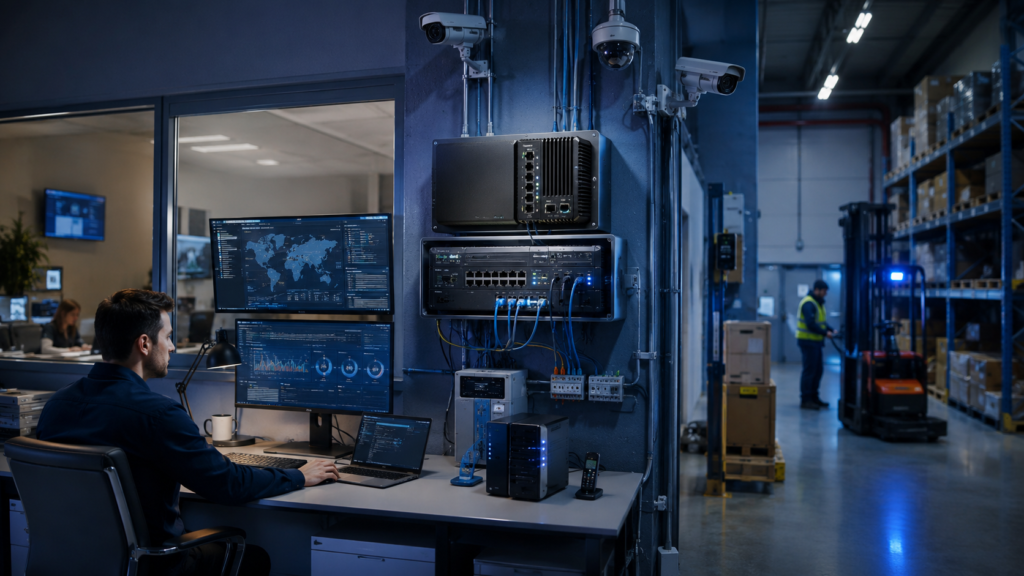
Branch office routers connect remote sites, headquarters, plataformas en la nube, and local devices through controlled network paths.
Descripción general de la industria
Distributed Sites Need Secure Network Access
Branch offices and remote facilities need more than basic internet access.
They often connect users, local devices, aplicaciones en la nube, enterprise platforms, remote support systems, and site equipment. In industrial or operational environments, they may also connect machines, sensores, puertas de enlace, camaras, y sistemas de automatización.
Common branch connectivity needs include:
- Secure internet gateway
- VPN de sitio a sitio
- Remote user VPN
- Cloud platform access
- Local firewall protection
- Segmentación de red
- SD-WAN connectivity
- Monitoreo remoto
- Local device management
- Industrial IoT access
- Camera and security system connectivity
A branch office router helps create a controlled and manageable network boundary for each distributed site.
Branch Routers Are Becoming Security Appliances
Traditional branch routers mainly focused on routing traffic between local networks and wide area connections.
Modern branch environments require more security functions.
A practical branch office security router may support:
- Reglas del cortafuegos
- Túneles VPN
- Conmutación por error de WAN
- Gestión remota
- Monitoreo de tráfico
- Segmentación de red
- control de acceso
- Registro local
- SD-WAN routing
- Secure cloud connectivity
- User and device policy control
This is especially important when branch offices connect to headquarters, plataformas en la nube, and operational networks.
Industrial Computing Expands Branch Router Deployment
Many branch sites are not clean office environments.
Some routers are installed in warehouses, salas de equipos, factory cabinets, roadside facilities, sitios de energía, retail back rooms, logistics hubs, or remote monitoring stations.
Estos ambientes pueden incluir polvo., vibración, calor, poder inestable, flujo de aire limitado, y acceso de mantenimiento limitado.
Industrial computers and embedded computers provide a stronger hardware foundation for these deployments.
They can support rugged enclosures, múltiples puertos LAN, compact mounting, almacenamiento local, operación sin ventilador, y una implementación de ciclo de vida prolongado.

LAN zones, VPN workloads, Conmutación por error de WAN, camaras, IIoT devices, explotación florestal, and field conditions affect router deployment.
Desafíos clave
Connecting Branches Without Increasing Risk
Branch sites need access to enterprise and cloud systems, but they should not become weak points in the network.
A poorly secured branch router can expose internal systems, local devices, or remote access paths.
Las preguntas de seguridad importantes incluyen:
- Which users need access?
- Which applications are required?
- Which local systems should remain isolated?
- Which traffic should use VPN?
- Which traffic can go directly to the internet?
- Which devices should be blocked?
- Qué eventos deben registrarse?
- Which remote access paths are allowed?
The branch office router must support secure connectivity without creating unnecessary exposure.
Managing Multiple Network Zones
A branch office may contain different networks.
A typical site may include office user devices, guest Wi-Fi, servidores locales, camaras de seguridad, point-of-sale systems, warehouse devices, puertas industriales, o equipo de automatización.
These systems should not always share one flat network.
A branch office router may need to separate:
- enlace ascendente WAN
- Office LAN
- Guest network
- Red de cámaras
- Local server network
- Red industrial de IoT
- Red de mantenimiento remoto
- Red de gestión
Multiple LAN ports and clear policies help improve segmentation.
Supporting VPN and Site-to-Site Connectivity
Many branch offices need secure communication with headquarters, centros de datos, plataformas en la nube, or other sites.
VPN performance depends on encryption workload, recuento de túneles, volumen de tráfico, and hardware capability.
The branch router may need to support:
- VPN de sitio a sitio
- Remote user VPN
- Branch-to-cloud tunnels
- Headquarters connectivity
- Acceso de mantenimiento remoto
- Secure backup links
- Tráfico de gestión centralizada
- Industrial monitoring data
The hardware should be selected according to real traffic requirements, not only basic routing needs.
WAN Reliability and Failover
Branch offices often depend on wide area network links.
If the internet connection fails, business applications, monitoreo remoto, acceso a la nube, and support workflows may be interrupted.
A branch office security router may need to support primary and backup links.
Los ejemplos incluyen:
- Fiber uplink
- Broadband uplink
- Cellular backup router
- Secondary WAN connection
- SD-WAN policy routing
- Automatic failover
- Monitoreo del estado del enlace
- Almacenamiento en búfer de datos locales
Reliable WAN design improves business continuity.
Field Deployment and Maintenance
Branch routers may be deployed in locations with limited IT staff.
A device may need to run for long periods with minimal maintenance.
Los desafíos de implementación pueden incluir:
- Small cabinet space
- Tensión del cable
- Polvo
- Calor
- Vibración
- poder inestable
- Solución de problemas remota
- Limited on-site technical support
- Long hardware lifecycle requirements
Industrial hardware helps reduce maintenance risk and improves long-term stability.

Branch routers connect local networks, Túneles VPN, plataformas en la nube, logging systems, headquarters, and remote management tools.
Branch Office Router Solution Architecture
Local Branch Network Layer
The local branch network layer includes users, dispositivos, and systems at the branch site.
Esta capa puede incluir:
- Office PCs
- Printers
- Servidores locales
- Wi-Fi access points
- Camaras de seguridad
- Dispositivos de control de acceso
- Pasarelas industriales de IoT
- Warehouse equipment
- Point-of-sale devices
- Sensores
- Controladores integrados
- Local monitoring systems
The branch office router provides routing, segmentación, and security control between these devices and external networks.
Branch Security Router Layer
The branch security router layer is the core platform.
en esta capa, el ordenador industrial o el ordenador integrado pueden:
- Route branch traffic
- Aplicar reglas de firewall
- Establecer túneles VPN
- Segmentar redes locales
- Admite conmutación por error de WAN
- Supervisar el estado del enlace
- Almacenar registros
- Controlar el acceso remoto
- Support SD-WAN policies
- Provide local management access
This layer connects the branch site securely with enterprise and cloud resources.
Capa de política de seguridad
La capa de política de seguridad define qué tráfico está permitido., obstruido, enrutado, inspeccionado, o registrado.
Las políticas pueden basarse en:
- User group
- Tipo de dispositivo
- Zona de red
- Tipo de aplicación
- Destination system
- Branch location
- Remote access need
- ventana de tiempo
- Security risk
- Business priority
Clear policies help prevent broad network exposure and support safer branch operations.
WAN and VPN Connectivity Layer
The WAN and VPN connectivity layer connects the branch office to external systems.
Puede incluir:
- Internet uplink
- Backup WAN link
- VPN de sitio a sitio
- Remote user VPN
- Headquarters connection
- Cloud platform tunnel
- SD-WAN control path
- Remote management link
This layer allows the branch to communicate securely with enterprise applications, sistemas en la nube, and remote teams.
Capa de monitoreo y gestión
Branch router deployments need visibility.
The router may provide local and remote status information, incluido:
- Estado del enlace WAN
- Estado del túnel VPN
- Eventos de cortafuegos
- Blocked traffic logs
- Device health
- Uso de CPU y memoria
- Estado de almacenamiento
- Historial de acceso remoto
- Volumen de tráfico de red
- Configuration change records
This helps IT teams manage distributed sites more efficiently.
Características clave
Segmentación de redes LAN múltiples
Multiple LAN ports are important for branch office router hardware.
They allow the router to separate local networks and apply different policies.
Las configuraciones útiles pueden incluir:
- enlace ascendente WAN
- Enlace ascendente WAN de respaldo
- Office LAN
- Guest network
- Red de cámaras
- Red industrial de IoT
- Local server network
- Red de gestión
Multi-LAN design improves security, control de tráfico, and network organization.
Rendimiento del cortafuegos y VPN
A branch office router must process routing, reglas de firewall, Túneles VPN, and traffic monitoring reliably.
La selección de hardware debe considerar:
- rendimiento de la CPU
- Capacidad de memoria
- Recuento de puertos LAN
- Velocidad del puerto
- Recuento de túneles VPN
- Rendimiento cifrado
- Complejidad de las reglas del firewall
- WAN speed
- Carga de trabajo de registro
- Soporte del sistema operativo
For larger branch sites, performance should be validated with realistic traffic patterns.
WAN Failover and Link Management
WAN failover is important for distributed sites.
A practical router platform should support primary and backup connectivity planning.
The system may support:
- Enlace ascendente WAN principal
- Backup broadband link
- Conexión de enrutador celular
- Monitoreo del estado del enlace
- Automatic failover
- Policy-based routing
- Traffic prioritization
- Remote alerting
This helps keep branch systems connected during uplink problems.
Almacenamiento local confiable
Local storage supports router software, registros, copias de seguridad de configuración, certificados, diagnostic files, and security event records.
Generalmente se prefiere el almacenamiento SSD o NVMe porque proporciona un acceso rápido y una mejor resistencia a los golpes que las unidades mecánicas..
La planificación del almacenamiento debe considerar:
- Retención de registros
- VPN certificates
- Copia de seguridad de configuración
- Local diagnostics
- Registros de seguridad
- Escribir resistencia
- Flujo de trabajo de recuperación
Reliable storage helps support troubleshooting and audit review.
Diseño robusto y sin ventilador
Fanless industrial computers are useful for branch router deployment in dusty, remoto, or low-maintenance environments.
Reducen la entrada de polvo y eliminan un punto común de falla mecánica..
Los gabinetes resistentes ayudan a proteger contra las vibraciones, tensión del cable, tensión de instalación del gabinete, y funcionamiento continuo.
Thermal design should still be reviewed because VPN encryption, procesamiento de firewall, and logging can create sustained workload.
E/S industriales flexibles
Branch office security routers may need more than Ethernet.
Las opciones de E/S útiles pueden incluir:
- LAN
- USB
- RS232
- RS485
- GPIO
- Entrada digital
- Salida digital
- hdmi
- DisplayPort
- M.2
- PCIe
- SATA o NVMe
Serial ports may support legacy service access. GPIO puede admitir salida de alarma. M.2 or PCIe expansion can support wireless modules, LAN adicional, or storage.
Largo ciclo de vida y mantenibilidad
Branch router hardware may be deployed across many locations.
Consistent hardware simplifies configuration templates, Imágenes de software, planificación de repuestos, mantenimiento remoto, y gestión del ciclo de vida.
Industrial computing platforms with lifecycle planning help system integrators and operators maintain stable deployments across distributed branch networks.
Escenarios de implementación
Branch Office Network Gateway
A branch office router can act as the main security gateway for a remote office.
It can provide local routing, políticas de firewall, acceso VPN, internet gateway functions, y segmentación de red.
This supports secure connectivity between the branch site and enterprise systems.
Warehouse Branch Router
Warehouses may include office networks, plataformas WMS, sistemas de códigos de barras, camaras, transportadores, y ordenadores industriales.
A branch office security router can separate these networks and connect the warehouse securely to headquarters or cloud systems.
This supports logistics operations and remote management.
Retail and Service Site Router
Retail branches and service locations need secure connectivity for POS systems, local devices, camaras, staff networks, and cloud applications.
An embedded computer-based router can provide compact, reliable deployment for distributed locations.
It can also support VPN access and local segmentation.
Industrial Branch Connectivity
Some branch offices are connected to production or operational systems.
The router may need to protect industrial IoT gateways, local PLC networks, sensores, metros, o sistemas de monitoreo.
An industrial computer platform provides the rugged hardware and I/O flexibility required for these environments.
Remote Facility Router
Remote facilities may include utility rooms, sitios de energía, gabinetes de transporte, estaciones de monitoreo, or small field offices.
A branch office router can provide secure uplink connectivity, monitoreo remoto, local firewall functions, and data transfer.
Reliable hardware is important when on-site maintenance is limited.
Site-to-Site VPN Gateway
Branch offices often need secure tunnels to headquarters or data centers.
A security router can manage site-to-site VPN connections and route traffic according to policy.
This supports enterprise application access, file services, monitoring platforms, and remote management.
SD-WAN Branch Appliance
A branch office security router can also act as an SD-WAN edge appliance.
It can manage multiple uplinks, soporte de conmutación por error, prioritize traffic, and connect the branch to centralized platforms.
This is useful for larger distributed organizations.
OEM Branch Security Appliance
System integrators and network security providers can build custom branch routers using industrial computers or embedded boards.
The platform can support firewall software, vpn, SD-WAN, explotación florestal, enrutamiento, y una implementación robusta estilo dispositivo.
Beneficios comerciales
Secure Distributed Connectivity
A branch office router helps connect remote locations to enterprise systems through controlled network paths.
Puede aplicar reglas de firewall, VPN policies, and segmentation between local devices and external networks.
This improves security for distributed operations.
Better Network Segmentation
Multi-LAN branch routers help separate office devices, guest networks, camaras, industrial devices, servidores locales, y gestión del tráfico.
This reduces unnecessary exposure and improves network organization.
Segmentation is especially important when branch sites include operational or industrial equipment.
Improved Business Continuity
WAN failover and link monitoring help keep branch sites connected.
If the primary uplink fails, the router can switch to a backup path when configured properly.
This reduces downtime risk for cloud applications, sistemas de monitoreo, and remote management.
Easier Remote Management
Branch sites may not have full-time IT staff.
A security router with remote monitoring, registros, and stable hardware helps central teams manage distributed locations.
This reduces field maintenance workload and improves troubleshooting efficiency.
Implementación de campo confiable
Industrial computers provide stronger hardware for branch router deployment in warehouses, fábricas, salas de equipos, sitios de transporte, e instalaciones remotas.
Diseño sin ventilador, montaje robusto, almacenamiento confiable, y el soporte de ciclo de vida prolongado ayudan a reducir el riesgo de mantenimiento.
Scalable Branch Network Rollout
A standardized branch office router platform makes it easier to deploy across many sites.
Consistent hardware simplifies configuration, Imágenes de software, VPN templates, planificación de repuestos, y gestión del ciclo de vida.
This supports scalable branch expansion and distributed network security.
Por qué CoreIPC
CoreIPC proporciona plataformas informáticas industriales para la seguridad de la red, IoT industrial, monitoreo remoto, automatización de fábrica, e integración de sistemas integrados. For branch office router applications, CoreIPC se centra en hardware informático industrial confiable, soluciones informáticas integradas, configuraciones de LAN múltiple, E/S flexibles, diseño de sistema compacto, opciones de implementación sin ventilador, capacidad de almacenamiento local, y soporte de personalización OEM/ODM. CoreIPC ayuda a los integradores de sistemas, proveedores de soluciones de seguridad, y los operadores industriales seleccionan plataformas informáticas que se ajustan a los requisitos de implementación reales, incluido el recuento de puertos LAN, Carga de trabajo de VPN, Conmutación por error de WAN, necesidades de almacenamiento, métodos de montaje, entrada de energía, condiciones termicas, y planificación del ciclo de vida.
Preguntas frecuentes
1. What is a branch office router?
A branch office router is a network gateway used to connect a remote office or branch site to the internet, headquarters, plataformas en la nube, or other enterprise networks.
It may support routing, reglas de firewall, Túneles VPN, Conmutación por error de WAN, monitoreo de tráfico, local segmentation, and remote management. In industrial branches, it may also protect IoT gateways, camaras, sensores, or automation devices.
2. Why use an industrial computer for a branch office router?
An industrial computer provides rugged hardware and flexible connectivity for branch locations that may not have clean office conditions.
Puede admitir múltiples puertos LAN, almacenamiento confiable, operación sin ventilador, montaje industrial, entrada de energía estable, y disponibilidad de ciclo de vida prolongado. These features are useful for warehouses, instalaciones remotas, fábricas, y sitios de infraestructura.
3. How is an embedded computer used as a branch router?
An embedded computer can act as a compact branch router or security gateway.
It can be installed in a cabinet, equipment room, retail site, warehouse, o instalación remota. It can run routing, cortafuegos, vpn, explotación florestal, and segmentation functions while using less space than larger network appliances.
4. Why are multiple LAN ports important for branch routers?
Multiple LAN ports allow the router to separate different networks.
Un puerto puede conectarse a WAN, another to office LAN, otro a las camaras, another to industrial IoT devices, and another to management or remote maintenance systems. This supports segmentation and better traffic control.
5. Can a branch office router support VPN?
Sí. A branch office router can support site-to-site VPN, remote user VPN, branch-to-cloud tunnels, and secure access to headquarters systems.
The required hardware depends on VPN tunnel count, rendimiento cifrado, number of users, and traffic volume.
6. Can a fanless industrial computer support branch router workloads?
Sí. Fanless industrial computers can support many branch router deployments because they reduce dust intake and remove one mechanical failure point.
Sin embargo, Cifrado VPN, reglas de firewall, WAN traffic, and logging can create sustained heat. Diseño de gabinete, temperatura ambiente, y el flujo de aire del gabinete deben revisarse antes de la implementación.
7. What hardware features matter for branch office security routers?
Las características importantes incluyen múltiples puertos LAN, suficiente rendimiento de la CPU, memoria confiable, Almacenamiento SSD o NVMe, recinto resistente, diseño sin ventilador, entrada de energía industrial, USB, puertos serie, GPIO, salida de pantalla, y opciones de expansión.
The final configuration should match branch size, volumen de tráfico, Carga de trabajo de VPN, WAN failover design, y entorno de instalación.
8. Can branch office routers support SD-WAN?
Sí. A branch office security router can serve as an SD-WAN edge platform if the software stack supports SD-WAN functions.
It may manage multiple uplinks, encaminar el tráfico según la política, soporte de conmutación por error, and connect distributed branches with centralized platforms.
9. Can branch routers protect industrial IoT devices?
Sí. Branch routers can help protect industrial IoT devices by separating them from office networks, controlling external communication, and securing cloud or platform access.
This is useful when branch sites include sensors, metros, puertas de enlace, camaras, or automation systems.
10. Qué se debe probar antes de la implementación?
Antes del despliegue, El sistema debe probarse con una topología de red real., WAN links, Túneles VPN, reglas de firewall, segmentation design, volumen de tráfico, comportamiento de registro, y operación de larga duración.
Estabilidad térmica, Conmutación por error de WAN, gestión remota, copia de seguridad de configuración, y los procedimientos de recuperación también deben validarse.
Conclusión
A branch office router is a practical foundation for secure distributed connectivity, local firewall protection, acceso VPN, Conmutación por error de WAN, segmentación de red, and remote branch management.
By placing an industrial computer or embedded computer at the branch network edge, organizations can connect remote offices, almacenes, retail sites, industrial branches, nodos de transporte, and remote facilities through controlled and reliable communication paths.
The right branch office router platform should be selected according to real deployment requirements, incluido el recuento de puertos LAN, diseño WAN, Carga de trabajo de VPN, reglas de firewall, branch size, segmentación de red, necesidades de almacenamiento, método de montaje, entrada de energía, condiciones termicas, soporte del sistema operativo, y planificación del ciclo de vida.
CoreIPC supports branch office router projects with industrial computing platforms designed for practical business, industrial, y despliegue sobre el terreno. Con la base de hardware adecuada, system integrators and security solution providers can build reliable, escalable, and secure branch network appliances.
Contáctenos
Busco ordenador industrial, computadora integrada, or multi-LAN platform for branch office router deployment?
Póngase en contacto con CoreIPC para analizar los requisitos de su proyecto., incluido el recuento de puertos LAN, Conmutación por error de WAN, Carga de trabajo de VPN, funciones de firewall, segmentación de red, configuración de almacenamiento, método de montaje, entrada de energía, entorno operativo, necesidades del ciclo de vida, y opciones de personalización OEM/ODM.