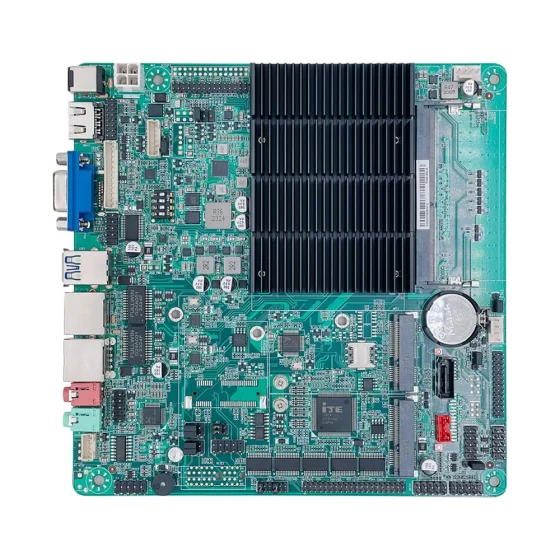
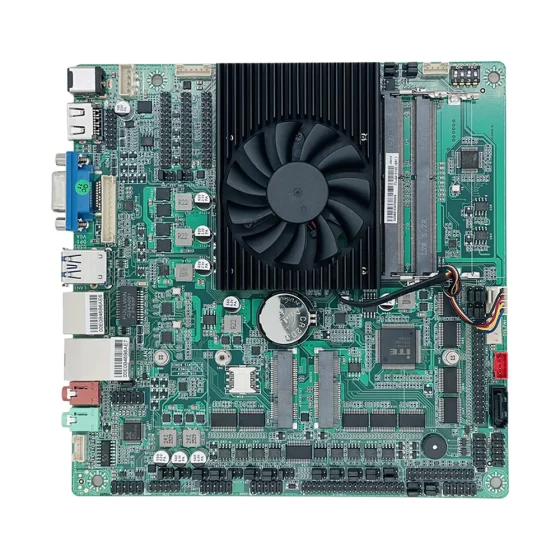
Soluciones de informática industrial CoreIPC

Dispositivo de seguridad SD-WAN: Dispositivo SD WAN para conectividad de red industrial segura
Resumen ejecutivo
Un dispositivo SD WAN proporciona la base informática industrial para una conectividad segura en múltiples sitios, enrutamiento de tráfico inteligente, segmentación de red, acceso remoto, y comunicación de red industrial resiliente.
Fábricas modernas, almacenes, sistemas de transporte, sitios de energía, y las instalaciones industriales remotas están cada vez más conectadas. maquinas, PLC, Sistemas SCADA, Pasarelas industriales de IoT, camaras, sensores, y las computadoras de borde a menudo necesitan intercambiar datos entre diferentes ubicaciones. Al mismo tiempo, Las redes industriales deben permanecer protegidas., segmentario, y confiable.
Una red de área amplia definida por software, o SD-WAN, ayuda a conectar sitios distribuidos mediante enrutamiento flexible, control de tráfico basado en políticas, gestión de enlaces, Túneles VPN, y visibilidad de la red centralizada. Cuando se implementa como dispositivo de seguridad industrial, SD-WAN puede ayudar a los fabricantes e integradores de sistemas a gestionar la conectividad remota de forma más eficiente que los diseños de redes tradicionales de enlace único..
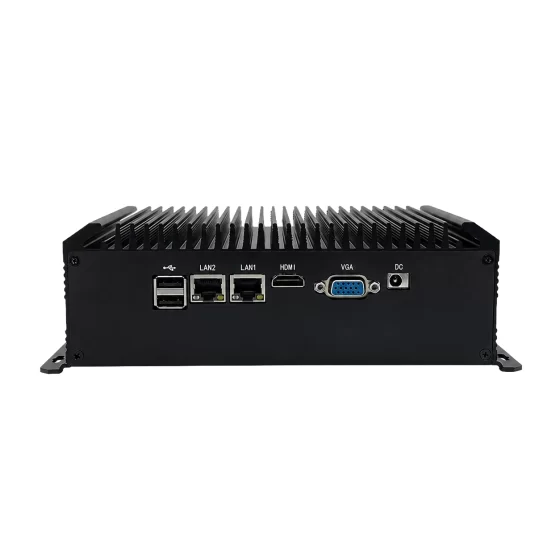
Una computadora industrial o una computadora integrada puede actuar como dispositivo de seguridad SD-WAN local.. Puede conectar enlaces ascendentes WAN, LAN de fábrica, redes de máquinas, Redes de PLC, sistemas industriales de IO, plataformas de servicio remoto, y sistemas de gestión en la nube.
En comparación con los dispositivos de red de oficina estándar, Las computadoras industriales son más adecuadas para la implementación en fábricas y en el campo porque admiten una instalación robusta., configuraciones de LAN múltiple, opciones de diseño sin ventilador, entrada de energía estable, E/S flexibles, almacenamiento confiable, y disponibilidad de ciclo de vida prolongado.
Este artículo explica cómo los dispositivos de seguridad SD-WAN respaldan las redes industriales., ¿Qué desafíos aparecen en el despliegue real?, cómo está estructurada la arquitectura de la solución, y qué características de hardware son importantes al seleccionar una computadora industrial o una computadora integrada para aplicaciones de dispositivos SD-WAN.
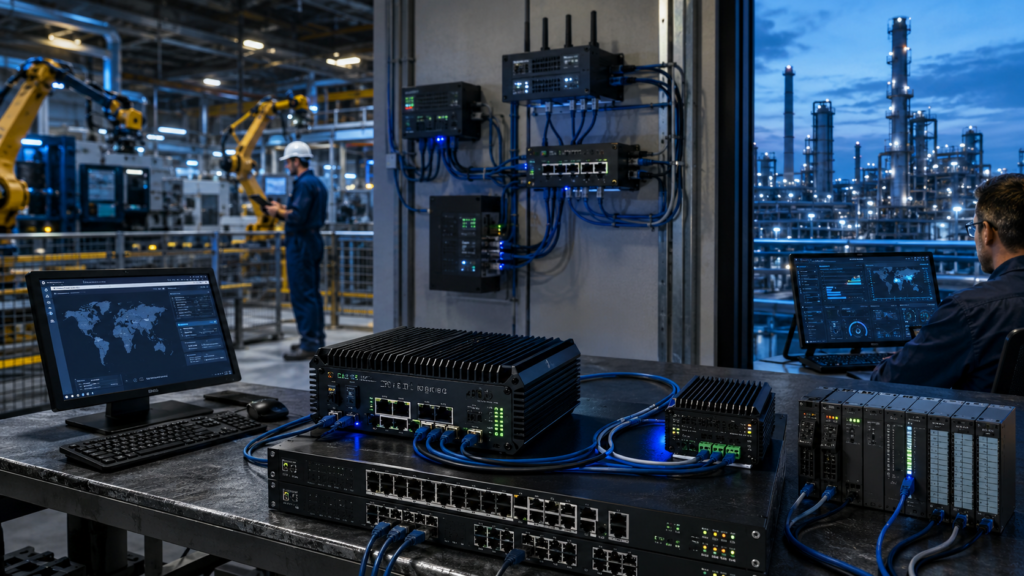
Los dispositivos SD-WAN ayudan a conectar fábricas distribuidas, sitios remotos, y redes industriales de forma segura.
Descripción general de la industria
La conectividad industrial está cada vez más distribuida
Las redes industriales ya no se limitan a una fábrica local.
Los fabricantes pueden operar varias plantas., sitios de producción remotos, almacenes, instalaciones energéticas, nodos de transporte, centros de servicio, y equipos instalados por el cliente. Estas ubicaciones a menudo necesitan una conectividad confiable y segura..
Las necesidades comunes de conectividad industrial incluyen:
- Redes de fábrica a fábrica
- Mantenimiento remoto de la máquina
- Transferencia de datos industriales de IoT
- Conectividad del sitio SCADA
- Comunicación multialmacén
- Acceso seguro a la plataforma en la nube
- Paneles de control remoto
- Gestión de puerta de enlace perimetral
- Backhaul de red de cámaras y sensores
- Visibilidad de la red centralizada
Los diseños de redes tradicionales pueden depender de enlaces WAN fijos, VPN configuradas manualmente, o enrutadores de sitios separados. Estos pueden volverse difíciles de administrar a medida que crece el número de sitios..
Un dispositivo de seguridad SD-WAN ayuda a simplificar la conectividad industrial distribuida.
Por qué SD-WAN es importante para las redes industriales
SD-WAN uses software-defined policies to manage wide area network traffic.
Instead of treating every connection the same way, it can route traffic according to application type, link condition, política de seguridad, and site priority.
En entornos industriales, this can help manage:
- Primary and backup uplinks
- VPN tunnels between sites
- Conectividad en la nube
- Acceso de mantenimiento remoto
- Industrial IoT data traffic
- Camera or monitoring traffic
- Production data communication
- Segmentación de red
- Traffic prioritization
- Centralized configuration
This is useful when industrial operators need both reliable communication and controlled access across distributed networks.
Industrial Hardware Is Required for Real Deployment
Many SD-WAN appliances are installed in office server rooms.
Industrial environments are different.
An industrial SD-WAN appliance may be installed inside a factory cabinet, near machinery, in a warehouse network rack, inside a transportation cabinet, at an energy site, or in a remote facility.
Estas ubicaciones pueden incluir vibraciones., polvo, variación de temperatura, poder inestable, ruido electrico, flujo de aire limitado, y largas horas de funcionamiento.
Industrial computers and embedded computers provide a stronger hardware foundation for these conditions.
Soportan recintos resistentes, configuraciones de LAN múltiple, instalación compacta, almacenamiento confiable, E/S industriales, y una implementación de ciclo de vida prolongado.

WAN links, zonas de red, Redes de PLC, redes de máquinas, and IIoT gateways affect SD-WAN deployment planning.
Desafíos clave
Connecting Multiple Industrial Sites Securely
A major challenge is connecting distributed sites without exposing industrial systems unnecessarily.
Factories may need secure communication between production lines, remote maintenance teams, plataformas en la nube, and central data systems. Sin embargo, PLC, servidores SCADA, controladores de máquina, and industrial gateways should not be open to uncontrolled networks.
An SD-WAN appliance must support secure connectivity while keeping network boundaries clear.
Las preguntas de diseño importantes incluyen:
- Which sites need to communicate?
- ¿Qué usuarios necesitan acceso remoto??
- Which networks must remain isolated?
- ¿Qué tráfico se debe priorizar??
- ¿Qué enlaces deberían actuar como rutas de conmutación por error??
- ¿Qué sistemas deberían conectarse a plataformas en la nube??
- Qué registros y eventos deben conservarse?
El objetivo es mejorar la conectividad sin debilitar la seguridad de la red.
Gestión de múltiples enlaces WAN
Los sitios industriales pueden utilizar diferentes enlaces ascendentes.
Una fábrica podrá utilizar fibra como enlace principal y 4G o 5G como respaldo. Un sitio remoto puede depender de la conectividad celular. Un nodo de transporte puede utilizar conexiones mixtas cableadas e inalámbricas..
Un dispositivo de seguridad SD-WAN debería ayudar a administrar estos enlaces de acuerdo con la política.
Puede que necesite apoyo:
- Enlace ascendente WAN principal
- Enlace ascendente WAN de respaldo
- Conexión de enrutador celular
- Equilibrio de carga
- Enrutamiento de conmutación por error
- Monitoreo del estado del enlace
- Traffic prioritization
- Restablecimiento del túnel
- Soporte de almacenamiento en búfer local
La gestión confiable de la WAN es importante cuando las operaciones industriales dependen de la visibilidad remota y la transferencia de datos..
Segmentación de red entre TI y OT
Las redes industriales a menudo contienen sistemas de TI y OT.
Las redes de TI pueden incluir sistemas de oficina., software empresarial, acceso a la nube, y dispositivos de usuario. Las redes OT pueden incluir PLC, robots, controladores de máquina, Sistemas SCADA, sensores, y puertas industriales.
Estas redes no deben tratarse como una red plana..
Es posible que sea necesario separar un dispositivo SD-WAN práctico:
- enlace ascendente WAN
- Red informática de fábrica
- Red PLC
- Red de máquinas
- Red industrial de IoT
- Red de cámaras
- Red de servicio remoto
- Red de gestión
Múltiples puertos LAN y un cuidadoso diseño de políticas ayudan a respaldar la segmentación.
Tráfico cifrado y rendimiento de enrutamiento
Es posible que los dispositivos SD-WAN necesiten procesar túneles cifrados, políticas de firewall, reglas de enrutamiento, y seguimiento del tráfico continuamente.
El rendimiento requerido depende de:
- Número de sitios conectados
- Recuento de túneles VPN
- Rendimiento cifrado
- velocidad del enlace WAN
- Complejidad de las reglas del firewall
- Carga de trabajo de monitoreo de tráfico
- Usuarios remotos
- Requisitos de conexión a la nube
- Volumen de registro
- Reglas de segmentación de red
Una pequeña puerta de enlace de máquina remota puede necesitar un rendimiento moderado. Un centro industrial con múltiples sitios puede necesitar una computadora industrial más potente.
El hardware debe seleccionarse según la carga de trabajo real de la red..
Confiabilidad de campo a largo plazo
Los dispositivos industriales SD-WAN a menudo se convierten en parte de la infraestructura de red crítica.
Si el aparato falla, acceso remoto, comunicación del sitio, flujo de datos industriales de IoT, escucha, y el soporte del servicio puede verse interrumpido.
La implementación industrial requiere un diseño de hardware estable.
Los factores clave de confiabilidad incluyen:
- Caja robusta
- Diseño sin ventilador
- Rendimiento térmico estable
- Entrada de energía industrial
- Montaje seguro
- organización de cables
- almacenamiento SSD
- Registros locales
- Manejabilidad remota
- Soporte de ciclo de vida prolongado
El hardware confiable ayuda a reducir el tiempo de inactividad inesperado de la red.

Los dispositivos SD-WAN conectan sitios remotos, redes de fábrica, sistemas de máquinas, y plataformas en la nube a través de enrutamiento basado en políticas.
Arquitectura de la solución del dispositivo SD WAN
Capa de red de sitio industrial
La capa de red del sitio industrial incluye los sistemas locales que necesitan conectividad segura..
Esta capa puede incluir:
- PLC
- HMI
- Sistemas SCADA
- PC industriales
- Controladores integrados
- Controladores de máquinas
- Robots
- Cámaras
- Sensores
- Pasarelas industriales de IoT
- Medidores de energía
- Servidores locales
Estos sistemas pueden dividirse en diferentes zonas de red..
El dispositivo SD-WAN proporciona comunicación controlada entre zonas locales y redes remotas..
Capa de dispositivo de seguridad SD-WAN
La capa del dispositivo de seguridad SD-WAN es el núcleo de la implementación..
en esta capa, el ordenador industrial o el ordenador integrado pueden:
- Administrar enlaces ascendentes WAN
- Establecer túneles cifrados
- Enrutar el tráfico según la política
- Segmentar redes locales
- Aplicar reglas de firewall
- Supervisar el estado del enlace
- Soporte de conmutación por error
- Registrar eventos de conexión
- Conéctese a plataformas en la nube
- Apoyar la gestión centralizada
Esta capa ayuda a convertir las redes industriales distribuidas en una arquitectura más manejable y segura..
Capa de política de red
La capa de política de red define cómo se mueve el tráfico..
La política puede basarse en la zona de red., tipo de aplicación, ubicación del sitio, rol de usuario, requisito de servicio, o condición del enlace.
Por ejemplo:
- El tráfico SCADA puede utilizar un enlace preferido.
- El mantenimiento remoto puede limitarse a una red de servicio..
- Los datos industriales de IoT pueden enrutarse a una plataforma en la nube.
- El tráfico de cámaras puede permanecer local a menos que ocurra un evento.
- Los enlaces de respaldo pueden activarse solo cuando falla el enlace principal.
El enrutamiento basado en políticas ayuda a mejorar tanto la seguridad como la eficiencia.
Capa de conectividad remota y multisitio
La capa de conectividad remota conecta sitios industriales distribuidos.
Puede incluir:
- Túneles de fábrica a fábrica
- Conectividad del almacén al centro de datos
- Acceso remoto al servicio de la máquina
- Conexión de plataforma en la nube
- Monitoreo del sitio de servicios públicos
- Comunicación del nodo de transporte.
- Acceso de ingeniería remota
- Plataformas de monitoreo centralizadas
Esta capa permite a los operadores industriales gestionar la infraestructura distribuida sin crear una exposición incontrolada de la red..
Capa de monitoreo y gestión
Los sistemas SD-WAN necesitan visibilidad.
El dispositivo puede admitir paneles locales, gestión centralizada, registros, monitoreo de salud del sistema, estado del enlace, estado del túnel, y estadísticas de tráfico.
Los datos de seguimiento útiles pueden incluir:
- Estado del enlace WAN
- Estado del túnel
- Volumen de tráfico
- Estado del enlace ascendente
- Eventos de cortafuegos
- Registros de acceso remoto
- Uso de CPU y memoria
- Estado de almacenamiento
- Temperatura del dispositivo
- Estado de conectividad del sitio
Una buena visibilidad ayuda a los equipos de red y de mantenimiento a solucionar problemas más rápidamente.
Características clave
Configuración de LAN múltiple
Múltiples puertos LAN son una de las características más importantes de un dispositivo SD-WAN industrial.
Permiten que la plataforma separe diferentes zonas de red y tipos de tráfico..
Las configuraciones útiles pueden incluir:
- enlace ascendente WAN
- Enlace ascendente WAN de respaldo
- LAN de TI de fábrica
- Red PLC
- Red de máquinas
- Red de cámaras
- Red industrial de IoT
- Red de mantenimiento remoto
Esto apoya una mejor segmentación., enrutamiento más limpio, y un despliegue industrial más práctico.
SD-WAN y rendimiento del tráfico cifrado
Un dispositivo de seguridad SD-WAN debe procesar el tráfico de red de manera confiable.
El hardware debe coincidir con el enrutamiento esperado., vpn, cortafuegos, y seguimiento de la carga de trabajo.
La selección debe considerar:
- rendimiento de la CPU
- Capacidad de memoria
- Recuento de puertos LAN
- Velocidad del puerto
- Rendimiento cifrado
- Recuento de túneles
- Carga de trabajo del cortafuegos
- Requisitos de registro
- Necesidades de almacenamiento
- Soporte del sistema operativo
Para implementaciones más grandes, El rendimiento debe validarse con patrones de tráfico reales..
Soporte confiable de conmutación por error de WAN
Las redes industriales a menudo necesitan conectividad de respaldo.
Un dispositivo SD-WAN práctico debería admitir la supervisión de enlaces y la planificación de conmutación por error.
Esto ayuda a mantener importantes rutas de comunicación disponibles cuando el enlace ascendente principal es inestable.
El diseño de conmutación por error puede incluir:
- Enlace de fibra primaria
- Enrutador celular de respaldo
- Enlace de banda ancha secundario
- Almacenamiento en búfer de datos locales
- Recuperación de túneles
- Traffic prioritization
- Verificaciones de estado del enlace
Esto mejora la resiliencia de sitios remotos e instalaciones distribuidas..
E/S industriales flexibles
Una plataforma SD-WAN puede necesitar más que puertos Ethernet.
Las opciones de E/S útiles pueden incluir:
- LAN
- USB
- RS232
- RS485
- GPIO
- Entrada digital
- Salida digital
- hdmi
- DisplayPort
- M.2
- PCIe
- Almacenamiento SATA o NVMe
Los puertos serie pueden admitir acceso a equipos heredados o funciones de servicio. GPIO puede admitir la integración de alarmas. Las opciones de expansión pueden admitir módulos inalámbricos, puertos LAN adicionales, o dispositivos de almacenamiento.
Diseño robusto y sin ventilador
Las computadoras industriales sin ventilador son valiosas para la implementación de dispositivos de red.
Reducen la entrada de polvo y eliminan un punto común de falla mecánica.. Los gabinetes resistentes ayudan a proteger el sistema de las vibraciones., impacto de la instalación del gabinete, y tensión del cable.
Esto es útil para gabinetes de fábrica., sitios remotos, gabinetes de transporte, instalaciones energéticas, y despliegue del lado de la máquina.
El diseño térmico aún debe revisarse cuidadosamente, especialmente cuando el dispositivo maneja tráfico cifrado continuo y múltiples enlaces de red.
Almacenamiento local para registros y configuración
Los dispositivos SD-WAN pueden necesitar almacenamiento local para los registros, archivos del sistema, copias de seguridad de configuración, certificados, registros de seguimiento, y datos de diagnóstico.
Generalmente se prefiere el almacenamiento SSD porque proporciona un acceso rápido y una mejor resistencia a los golpes que las unidades mecánicas..
La planificación del almacenamiento debe considerar:
- Retención de registros
- Copia de seguridad de configuración
- Registros de eventos de seguridad
- Registros de túnel
- Recuperación del sistema
- Datos de monitoreo local
- Escribir resistencia
- Flujo de trabajo de mantenimiento
El almacenamiento confiable admite la resolución de problemas, revisión de auditoría, y recuperación del sistema.
Largo ciclo de vida y mantenibilidad
Los dispositivos de redes industriales pueden permanecer en servicio durante muchos años.
Los cambios frecuentes de hardware pueden crear problemas de compatibilidad de software, problemas con el conductor, desafíos de repuestos, y complejidad del mantenimiento.
Las plataformas informáticas industriales con planificación del ciclo de vida ayudan a los integradores de sistemas, OEM, y los operadores industriales mantienen plataformas de implementación SD-WAN consistentes en múltiples sitios y generaciones de equipos.
Escenarios de implementación
Conectividad de fábrica en múltiples sitios
Los fabricantes con varias fábricas pueden utilizar dispositivos SD-WAN para conectar sitios de forma segura.
El sistema puede soportar el enrutamiento del tráfico entre plantas., servidores centrales, plataformas MES, paneles de seguimiento, y equipos de ingeniería remotos.
Esto mejora la comunicación entre sitios múltiples al tiempo que admite la segmentación de la red..
Servicio de máquina remota
Los fabricantes de máquinas OEM pueden utilizar dispositivos SD-WAN para proporcionar acceso remoto controlado a servicios.
El dispositivo puede conectar las máquinas de los clientes con equipos de servicio remotos a través de túneles administrados y políticas de acceso limitado..
Esto ayuda a reducir las necesidades de viajes y mejora la respuesta del servicio sin abrir toda la red de máquinas..
Backhaul de datos de IoT industrial
Los sistemas industriales de IoT a menudo recopilan datos de máquinas y puertas de enlace distribuidas..
Un dispositivo SD-WAN puede ayudar a enrutar estos datos de forma segura a plataformas centrales, centros de datos locales, o sistemas en la nube.
También puede separar las redes de máquinas de las rutas de comunicación externas..
Redes de Almacenes y Logística
Los almacenes y centros logísticos podrán incluir sistemas de clasificación., estaciones de código de barras, camaras, transportadores, computadoras industriales, y plataformas WMS.
Un dispositivo de seguridad SD-WAN puede conectar sitios de almacén distribuidos y admitir una comunicación segura entre sistemas de automatización y plataformas de gestión..
Sitios de energía y servicios públicos
Las instalaciones de energía y servicios públicos a menudo operan en ubicaciones remotas.
Un dispositivo SD-WAN puede ayudar a conectar subestaciones, estaciones de bombeo, sistemas de monitoreo de energía, metros, y centros de control.
El hardware industrial es importante porque estos sitios pueden tener acceso de mantenimiento limitado y condiciones ambientales desafiantes..
Infraestructura de transporte
Los sistemas de transporte pueden incluir equipos en la carretera., gabinetes de tráfico, estaciones, sistemas de estacionamiento, túneles, patios logísticos, y centros de seguimiento.
Los dispositivos SD-WAN pueden admitir una conectividad segura del sitio, mantenimiento remoto, y comunicación entre nodos de infraestructura distribuida.
Redes de Monitoreo y Cámaras Industriales
Algunas plantas industriales utilizan sistemas de cámaras para la visibilidad de los procesos., seguimiento logístico, y conciencia de seguridad.
Un dispositivo SD-WAN puede ayudar a enrutar el tráfico de monitoreo seleccionado mientras mantiene las redes de cámaras segmentadas de las redes de producción u oficina..
Esto mejora la organización de la red..
Integración de dispositivos de seguridad OEM
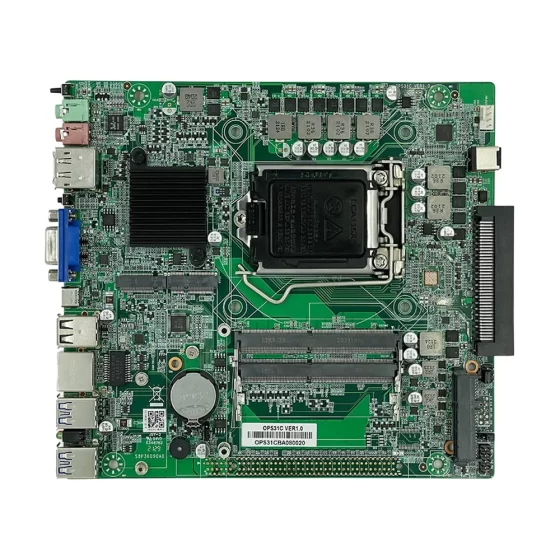
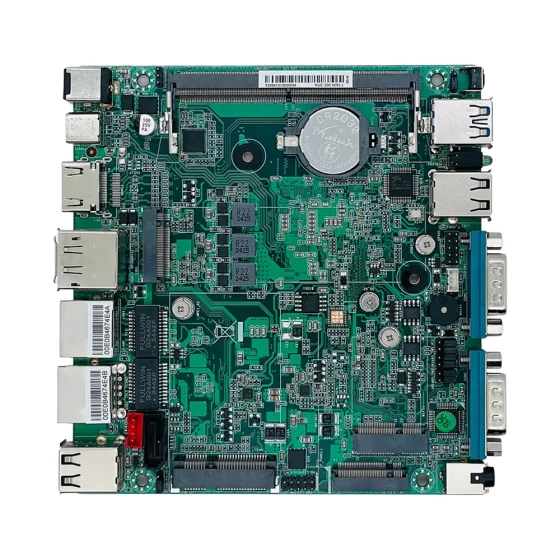
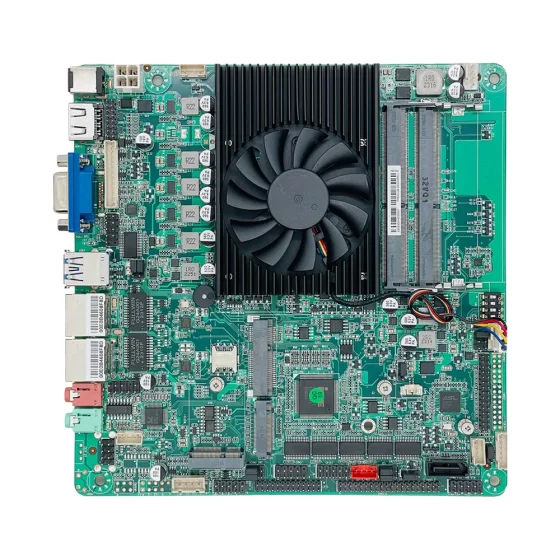
Los integradores de sistemas y proveedores OEM pueden construir dispositivos de seguridad SD-WAN utilizando plataformas informáticas industriales..
La plataforma puede admitir redes multi-LAN, enrutamiento, conectividad cifrada, explotación florestal, interfaces de gestión, y una implementación robusta estilo dispositivo.
Esto admite productos de seguridad de redes industriales personalizados..
Beneficios comerciales
Conectividad multisitio más confiable
Un dispositivo SD-WAN ayuda a los operadores industriales a conectar múltiples sitios de manera más flexible.
Puede gestionar diferentes enlaces ascendentes., monitorear el estado del enlace, y encaminar el tráfico según la política.
Esto mejora la confiabilidad de la comunicación para las fábricas., almacenes, sitios remotos, y sistemas de infraestructura.
Una segmentación de red más fuerte
Múltiples puertos LAN y enrutamiento basado en políticas ayudan a separar la TI, Antiguo Testamento, máquina, cámara, y redes de mantenimiento.
Esto reduce la exposición innecesaria entre zonas y admite una mejor arquitectura de seguridad de red..
La segmentación también hace que las redes industriales sean más fáciles de gestionar..
Mantenimiento remoto mejorado
Una plataforma SD-WAN bien diseñada admite el acceso seguro a servicios remotos.
Los ingenieros autorizados pueden conectarse al equipo requerido sin exponer toda la red de la fábrica..
Esto ayuda a reducir el tiempo de resolución de problemas y mejora la eficiencia del soporte para los fabricantes de máquinas y operadores industriales..
Complejidad de red reducida
Las configuraciones de enrutamiento y VPN multisitio tradicionales pueden volverse difíciles de administrar a medida que los sitios crecen.
SD-WAN proporciona un enfoque más estructurado para el enrutamiento basado en políticas, gestión de enlaces, monitoreo de túneles, y configuración centralizada.
Esto ayuda a los integradores de sistemas a gestionar implementaciones más grandes de manera más eficiente..
Mejor visibilidad operativa
Los dispositivos SD-WAN pueden proporcionar visibilidad de los túneles, estado del enlace, patrones de tráfico, eventos de firewall, y salud del sistema.
Esto ayuda a los equipos de mantenimiento y de red a identificar problemas más rápidamente..
Una mejor visibilidad respalda la revisión de auditoría, solución de problemas, y planificación de redes a largo plazo.
Despliegue de red industrial escalable
Una plataforma de dispositivos SD-WAN estandarizada facilita la implementación de conectividad segura en múltiples fábricas., instalaciones remotas, almacenes, sitios de energía, y nodos de transporte.
El hardware consistente simplifica las imágenes de software, plantillas de configuración, planificación de repuestos, entrenamiento de mantenimiento, y soporte del ciclo de vida.
Esto respalda la transformación digital industrial escalable.
Por qué CoreIPC
CoreIPC proporciona plataformas informáticas industriales para la seguridad de la red, IoT industrial, automatización de fábrica, transporte inteligente, e integración de sistemas integrados. Para aplicaciones de dispositivos SD-WAN, CoreIPC se centra en hardware informático industrial confiable, soluciones informáticas integradas, configuraciones de LAN múltiple, E/S flexibles, diseño de sistema compacto, opciones de implementación sin ventilador, y soporte de personalización OEM/ODM. CoreIPC ayuda a los integradores de sistemas, constructores de equipos, y los operadores industriales seleccionan plataformas informáticas que se ajustan a los requisitos de implementación reales, incluido el diseño WAN, Recuento de puertos LAN, segmentación de red, Carga de trabajo de VPN, necesidades de almacenamiento, métodos de montaje, entrada de energía, condiciones termicas, y planificación del ciclo de vida.
Preguntas frecuentes
1. ¿Qué es un dispositivo de seguridad SD-WAN??
Un dispositivo de seguridad SD-WAN es un dispositivo de red o plataforma informática industrial que se utiliza para gestionar la conectividad segura de la red de área amplia..
Puede admitir enrutamiento basado en políticas, túneles cifrados, Conmutación por error de WAN, monitoreo de enlaces, políticas de firewall, y segmentación de red. En entornos industriales, ayuda a conectar fábricas, maquinas, sitios remotos, plataformas en la nube, y equipos de servicio de forma segura.
2. ¿Por qué utilizar una computadora industrial para un dispositivo SD-WAN??
Una computadora industrial proporciona hardware resistente y conectividad flexible para implementación en fábrica o en campo..
Puede admitir múltiples puertos LAN, operación sin ventilador, almacenamiento confiable, montaje industrial, entrada de energía estable, y disponibilidad de ciclo de vida prolongado. Estas características lo hacen adecuado para dispositivos SD-WAN instalados en gabinetes., maquinas, almacenes, sitios de transporte, e instalaciones remotas.
3. ¿Cómo se utiliza una computadora integrada en la implementación de SD-WAN??
Una computadora integrada puede actuar como una puerta de enlace SD-WAN compacta.
Se puede instalar dentro de armarios de control., recintos de máquinas, equipo de carretera, instalaciones remotas, o dispositivos de seguridad OEM. Puede gestionar túneles., tráfico de ruta, redes de segmentos, registrar eventos, y conectar sistemas industriales locales con plataformas remotas.
4. ¿Cuál es la diferencia entre SD-WAN y un dispositivo VPN tradicional??
Un dispositivo VPN tradicional se centra principalmente en la conectividad cifrada.
Un dispositivo SD-WAN también puede gestionar múltiples enlaces WAN, encaminar el tráfico según la política, monitorear la calidad del enlace, soporte de conmutación por error, y proporcionar visibilidad centralizada. En muchas implementaciones industriales, Las funciones SD-WAN y VPN funcionan juntas.
5. ¿Por qué son importantes varios puertos LAN para los dispositivos SD-WAN??
Múltiples puertos LAN permiten la separación de la red.
Un puerto puede conectarse a WAN, otro a TI de fábrica, otro para maquinar redes, otro a redes PLC, y otro al mantenimiento remoto o sistemas en la nube. Esto mejora la organización del tráfico y respalda una mejor arquitectura de seguridad..
6. ¿Pueden las computadoras industriales sin ventilador admitir dispositivos SD-WAN??
Sí. Las computadoras industriales sin ventilador pueden admitir muchas implementaciones de dispositivos SD-WAN porque reducen la entrada de polvo y eliminan un punto de falla mecánica..
Sin embargo, El tráfico cifrado y el enrutamiento de enlaces múltiples pueden generar procesamiento y carga térmica.. rendimiento de la CPU, diseño de recinto, temperatura ambiente, y el flujo de aire del gabinete deben revisarse antes de la implementación.
7. Qué características de hardware son importantes para un dispositivo SD-WAN industrial?
Las características importantes incluyen múltiples puertos LAN, suficiente rendimiento de la CPU, memoria confiable, almacenamiento SSD, recinto resistente, diseño sin ventilador, entrada de energía industrial, USB, puertos serie, GPIO, salida de pantalla, y opciones de expansión.
La configuración final debe coincidir con el número de túneles., rendimiento, carga de trabajo del cortafuegos, complejidad de enrutamiento, y entorno de instalación.
8. ¿Pueden los dispositivos SD-WAN soportar sistemas industriales de IoT??
Sí. Los dispositivos SD-WAN pueden admitir una conectividad segura entre puertas de enlace de IoT industriales, maquinas, plataformas de fábrica, sistemas en la nube, y centros de monitoreo remoto.
Pueden ayudar a enrutar datos de IIoT mientras mantienen las redes de máquinas segmentadas de los sistemas externos..
9. ¿Puede un dispositivo SD-WAN admitir la conmutación por error de WAN??
Sí. Las plataformas SD-WAN se utilizan comúnmente para administrar enlaces primarios y de respaldo..
Por ejemplo, un sitio puede usar fibra como enlace ascendente principal y celular como respaldo. El dispositivo puede monitorear el estado del enlace y enrutar el tráfico de acuerdo con las políticas configuradas..
10. Qué se debe probar antes de la implementación?
Antes del despliegue, La plataforma debe probarse con una topología de red real., WAN links, recuento de túneles, políticas de enrutamiento, reglas de firewall, comportamiento de conmutación por error, tala local, carga de trabajo de almacenamiento, y operación de larga duración.
Estabilidad térmica, procedimientos de recuperación, acceso a gestión remota, y la copia de seguridad de la configuración también debe validarse.
Conclusión
Un dispositivo SD WAN es una base práctica para una conectividad segura entre múltiples sitios, acceso remoto industrial, Conmutación por error de WAN, segmentación de red, y gestión distribuida de redes industriales.
Colocando una computadora industrial o una computadora integrada en el borde de la red, fabricantes, constructores de maquinaria, y los integradores de sistemas pueden conectar fábricas, maquinas, almacenes, sitios remotos, plataformas en la nube, y equipos de mantenimiento a través de políticas de red controladas.
Se debe seleccionar el dispositivo de seguridad SD-WAN adecuado según los requisitos de implementación reales., incluido el diseño WAN, Recuento de puertos LAN, recuento de túneles, rendimiento cifrado, carga de trabajo de enrutamiento, políticas de firewall, necesidades de almacenamiento, método de montaje, entrada de energía, condiciones termicas, soporte del sistema operativo, política de seguridad, y planificación del ciclo de vida.
CoreIPC admite proyectos de dispositivos SD-WAN con plataformas informáticas industriales diseñadas para fábricas prácticas, lado de la máquina, y despliegue sobre el terreno. Con la base de hardware adecuada, Los operadores industriales y los fabricantes de equipos pueden construir sistemas confiables., escalable, y soluciones seguras de red de área amplia.
Contáctenos
Busco ordenador industrial, computadora integrada, o plataforma multi-LAN para la implementación de dispositivos SD-WAN?
Póngase en contacto con CoreIPC para analizar los requisitos de su proyecto., incluido el recuento de puertos LAN, diseño WAN, Carga de trabajo SD-WAN, segmentación de red, diseño de almacenamiento, método de montaje, entrada de energía, entorno operativo, necesidades del ciclo de vida, y opciones de personalización OEM/ODM.