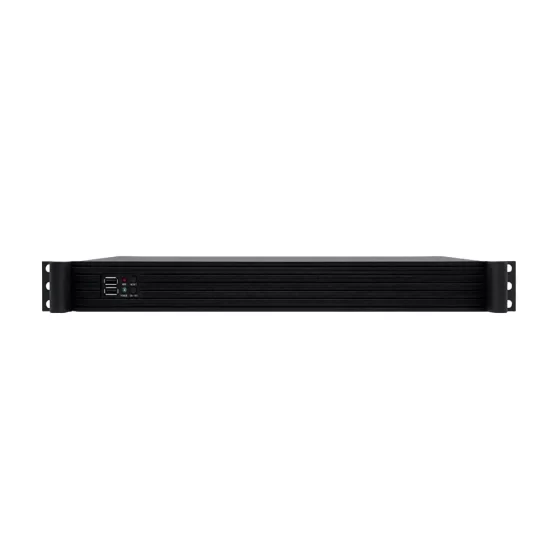
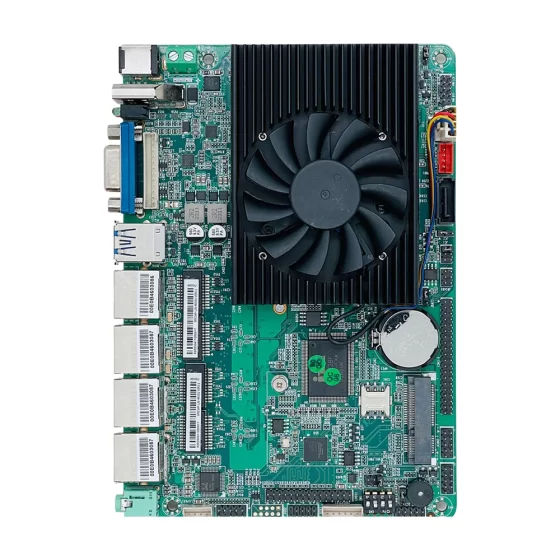
Решения CoreIPC для промышленных вычислений

Промышленный ПК для автоматизированных производственных линий: Производственная линия Промышленный ПК для интеллектуального производства
Управляющее резюме
A production line industrial pc provides the computing foundation for automated production lines, управление машиной, сбор данных, промышленная связь, Управление ЧМИ, интеграция машинного зрения, периферийная аналитика, и возможность подключения к заводской системе.
Modern production lines are no longer simple mechanical systems. They may include PLCs, сервоприводы, роботы, конвейеры, датчики, промышленные камеры, считыватели штрих-кодов, системы контроля, HMI, SCADA-платформы, MES-системы, и промышленные шлюзы Интернета вещей. These systems must work together reliably to support stable output, consistent quality, and real-time production visibility.
An industrial computer or embedded computer can serve as the local computing node for automated production lines. It can connect machines, collect production data, process local events, run HMI software, support inspection systems, буферные записи, и обмениваться информацией с МЧС, СКАДА, ERP-система, облачные информационные панели, или локальные базы данных.
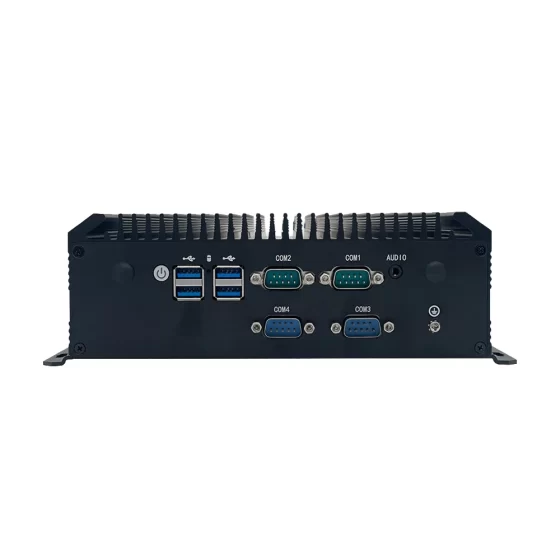
По сравнению со стандартными офисными ПК, industrial computers are better suited for production line deployment because they support rugged construction, несколько портов локальной сети, последовательная связь, GPIO, локальное хранилище, варианты безвентиляторного дизайна, промышленный монтаж, стабильная потребляемая мощность, и доступность в течение длительного жизненного цикла.
This article explains how production line industrial PC systems support smart manufacturing, какие проблемы возникают в реальных производственных условиях, как работает архитектура решения, and which hardware features matter when selecting an industrial computer or embedded computer for automated production lines.
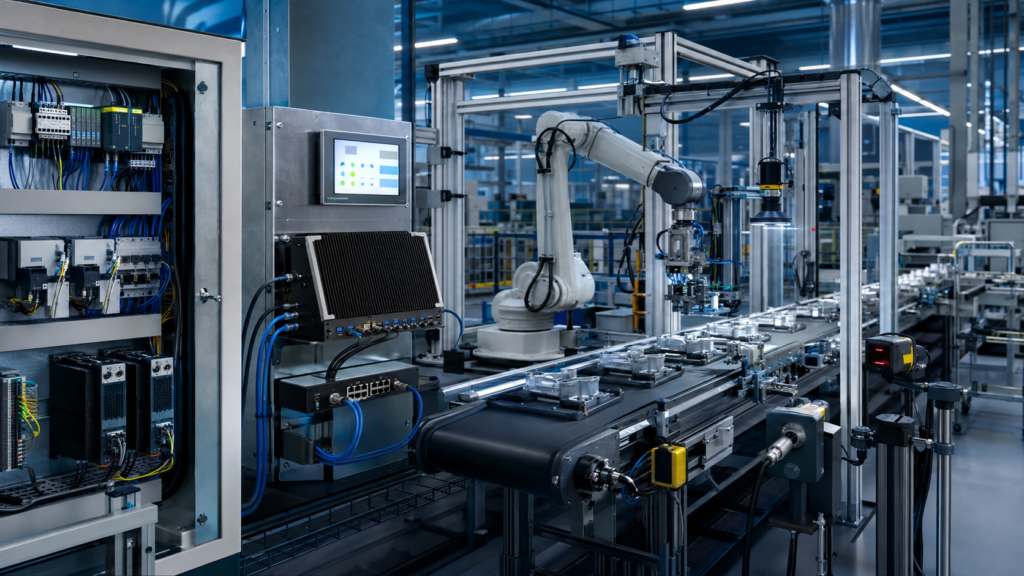
Production Line Industrial PC Data Collection
Обзор отрасли
Production Lines Are Becoming More Connected
Automated production lines depend on reliable communication between machines, контролеры, датчики, и программные системы.
A single line may include multiple workstations, конвейеры, роботизированные клетки, испытательное оборудование, инспекционные станции, packaging units, системы маркировки, and data collection points.
Each part of the line generates useful information.
Common production line data includes:
- Статус машины
- Cycle count
- Записи тревог
- Значения датчика
- Production speed
- Качественные результаты
- Barcode data
- События оператора
- Equipment runtime
- Потребление энергии
- Maintenance signals
- Параметры процесса
A production line industrial PC helps collect and organize this information.
Industrial PCs Connect Control and Data Layers
Traditional automation systems often separate control and data.
PLCs handle machine logic. HMIs display operator information. SCADA systems monitor equipment. MES platforms manage production records.
Modern production lines need better integration between these layers.
An industrial PC can provide a bridge between machine-side automation and factory software platforms. It can collect device data, run local software, process events, хранить записи, отображать информационные панели, and forward information to higher-level systems.
This makes it a key hardware platform for smart manufacturing.
Automated Lines Require Reliable Edge Computing
Production lines often run continuously.
If the computing platform becomes unstable, operators may lose HMI access, производственные записи, inspection data, or machine communication.
The industrial PC must operate reliably near machines, моторы, диски, конвейеры, и шкафы управления.
Industrial computers and embedded computers provide the rugged hardware foundation needed for these environments.
They support compact installation, варианты безвентиляторного дизайна, надежное хранение, гибкий ввод-вывод, и долгосрочная доступность.

Production Line Industrial PC Deployment Challenges
Ключевые проблемы
Connecting Multiple Machines and Devices
Automated production lines include many devices from different vendors.
The industrial PC may need to connect:
- ПЛК-контроллеры
- Сервоприводы
- Датчики
- Считыватели штрих-кодов
- Промышленные камеры
- Роботы
- Конвейеры
- Испытательное оборудование
- HMI
- Модули ввода-вывода
- Системы взвешивания
- Labeling machines
- Промышленные выключатели
These devices may use Ethernet, USB, RS232, RS485, GPIO, цифровой ввод/вывод, or fieldbus communication.
Flexible connectivity is essential for practical production line integration.
Maintaining Stable Production Data Flow
Production data must be collected continuously.
If records are missing, производственные отчеты, отслеживаемость качества, maintenance analysis, and operational dashboards become unreliable.
A production line industrial PC should support local data buffering and storage.
This helps preserve data during network interruptions or temporary software communication issues.
Important records may include:
- Производство имеет значение
- Batch data
- Результаты проверки
- Журналы тревог
- Записи штрих-кода
- Действия оператора
- Machine runtime
- Значения процесса
- Мероприятия по техническому обслуживанию
Reliable data continuity improves factory visibility and traceability.
Supporting HMI and Operator Interaction
Many production lines require local operator interfaces.
An industrial PC may run HMI software, line monitoring dashboards, recipe management screens, alarm interfaces, или инструменты для обслуживания.
The system should support stable display output, отзывчивая операция, and easy integration with local controls.
Operator-facing systems must remain reliable because they affect line operation, Поиск неисправностей, and production changeover.
Integrating Machine Vision and Inspection
Automated production lines often use cameras for inspection, выравнивание, чтение штрих-кода, обнаружение дефектов, проверка этикетки, и подсчет продуктов.
Vision workloads may create additional requirements for processing performance, хранилище, интерфейсы камеры, and network bandwidth.
The industrial PC may need to connect cameras, контроллеры освещения, триггеры, ПЛК, и качественные базы данных.
For AI-based inspection, higher-performance edge AI hardware may be required.
Managing Network Segmentation
Production lines often include control networks, сети камер, заводские ИТ-сети, и сети удаленного обслуживания.
A flat network can create reliability and security problems.
Multiple LAN ports help separate:
- Сеть ПЛК
- Машинная сеть
- Сеть камер
- Роботизированная сеть
- Сеть ЧМИ
- СКАДА-сеть
- MES network
- Сеть удаленного обслуживания
- Промышленная сеть Интернета вещей
Network segmentation improves traffic organization and reduces unnecessary exposure.
Operating in Harsh Industrial Environments
Production line computers may be installed inside cabinets or near machines.
Эти среды могут включать пыль, вибрация, нагревать, электрический шум, ограниченный поток воздуха, и непрерывная работа.
Industrial-grade hardware is important.
Варианты безвентиляторного дизайна, прочные корпуса, reliable SSD or NVMe storage, надежный монтаж, and stable power input help reduce downtime risk.

Production Line Industrial PC Solution Architecture
Production Line Industrial PC Solution Architecture
Уровень машины и устройства
The machine and device layer includes the physical systems on the production line.
Этот слой может включать в себя:
- ПЛК
- Датчики
- Сервоприводы
- Роботы
- Конвейеры
- Моторы
- Камеры
- Считыватели штрих-кодов
- Испытательное оборудование
- Приводы
- Устройства безопасности
- Модули ввода-вывода
Эти системы генерируют управляющие сигналы., производственные записи, данные о качестве, and machine status information.
Уровень периферийных вычислений
The edge computing layer is where the industrial computer or embedded computer operates.
На этом слое, платформа может:
- Сбор данных о машине
- Запустите программное обеспечение HMI
- Обработка локальных событий
- Store production records
- Буферные данные
- Общайтесь с ПЛК
- Connect inspection systems
- Manage line dashboards
- Поддержка удаленной диагностики
- Пересылать данные в заводские системы
This layer provides local computing close to the production line.
Control and Communication Layer
The communication layer connects the industrial PC with machine devices and automation systems.
Он может включать в себя:
- Ethernet
- USB
- RS232
- RS485
- Цифровой ввод/вывод
- GPIO
- Промышленный Ethernet
- Связь с ПЛК
- Сети камер
- Промышленные выключатели
The exact communication design depends on the line architecture and equipment mix.
Уровень обработки данных
The data processing layer turns raw machine data into useful production information.
Платформа может обрабатывать:
- Количество циклов
- Тревожные события
- Production speed
- Качественные результаты
- Записи штрих-кода
- Статус машины
- Runtime records
- Значения процесса
- Maintenance signals
- Энергетические данные
Local processing improves response time and reduces the amount of unnecessary data sent to central systems.
Уровень интеграции заводской системы
The production line industrial PC may connect with higher-level factory systems.
Эти системы могут включать в себя:
- МЧС
- СКАДА
- ERP-система
- Качественные базы данных
- Промышленные IoT-платформы
- Локальные информационные панели
- Системы технического обслуживания
- Системы облачного мониторинга
- Платформы отслеживания
This integration helps production data become part of the factory-wide information system.
Уровень безопасности и управления
The security and management layer supports controlled access and long-term maintainability.
Он может включать в себя:
- Сегментация сети
- Безопасный удаленный доступ
- Разрешения пользователя
- Локальное ведение журнала
- Резервное копирование конфигурации
- Мониторинг хранилища
- Мониторинг состояния устройства
- Удаленная диагностика
- Управление обновлениями программного обеспечения
This helps keep production line systems reliable and easier to service.
Ключевые особенности
Возможность подключения нескольких устройств
A production line industrial PC must support many device interfaces.
Полезные параметры ввода-вывода могут включать в себя:
- локальная сеть
- USB
- RS232
- RS485
- GPIO
- Цифровой вход
- Цифровой выход
- HDMI
- ДисплейПорт
- М.2
- PCIe
- SATA или NVMe хранилище
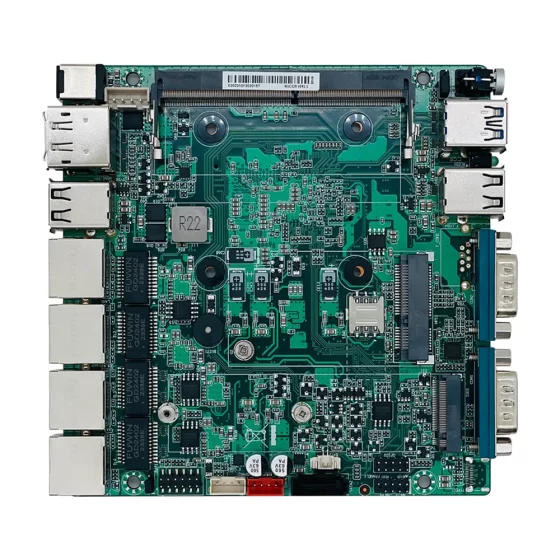
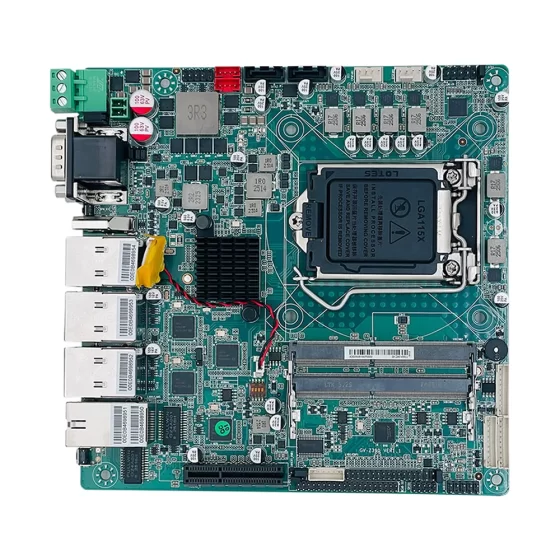
Native industrial interfaces reduce external converter requirements and simplify control cabinet wiring.
This improves deployment reliability.
Проектирование сети с несколькими локальными сетями
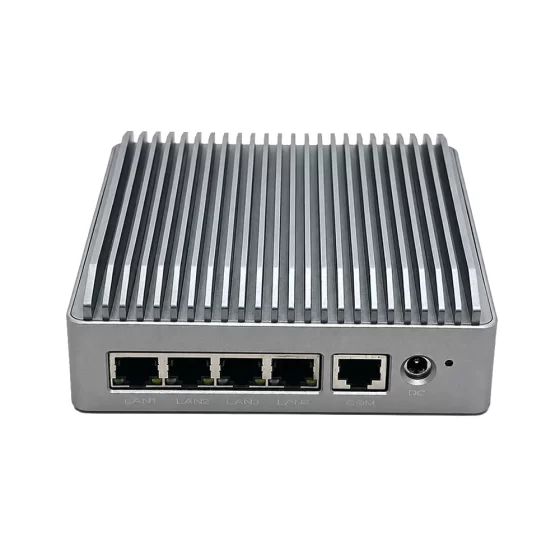
Multiple LAN ports are valuable for automated production lines.
They allow different communication paths to remain separated.
A line computer may use separate ports for:
- Связь с ПЛК
- Camera traffic
- Роботизированная сеть
- Заводское ИТ-подключение
- Интеграция MES или SCADA
- Удаленное обслуживание
- Местное управление
This improves network stability and helps prevent high-bandwidth traffic from affecting control communication.
HMI and Visualization Support
Many production line systems require local display output.
An industrial PC may support operator dashboards, alarm screens, maintenance panels, recipe selection, and production status visualization.
Display interfaces such as HDMI or DisplayPort can support local HMI screens.
Stable graphics performance and reliable software operation are important for operator-facing systems.
Локальное хранилище и буферизация данных
Local storage supports production records, журналы тревог, результаты проверки, файлы рецептов, резервные копии конфигурации, и загрузить буферы.
Обычно предпочтение отдается твердотельным накопителям или хранилищам NVMe, поскольку они обеспечивают быстрый доступ и лучшую ударопрочность, чем механические накопители..
При проектировании хранилища следует учитывать:
- Data retention
- Напишите выносливость
- Рабочий процесс резервного копирования
- Процесс восстановления
- Объем записи инспекции
- Размер локальной базы данных
- Поведение при прерывании сети
Reliable storage improves traceability and system recovery.
Интеграция машинного зрения
Production lines may require camera-based inspection or guidance.
The industrial PC may connect industrial cameras, контроллеры освещения, считыватели штрих-кодов, и триггерные сигналы.
It may process images locally and send pass/fail results to PLCs, МЧС, или качественные базы данных.
For advanced inspection, AI acceleration may be considered.
The final hardware should match camera count, разрешение, частота кадров, и загруженность программного обеспечения.
Edge Analytics Capability
Production line data can support local analytics.
The system may detect abnormal cycle time, downtime patterns, equipment faults, quality changes, или отклонения процесса.
Edge analytics can help operators respond quickly.
For advanced applications, the industrial PC may run AI models for defect detection, anomaly recognition, or predictive maintenance.
Прочная и безвентиляторная конструкция
Production line environments can be dusty, склонный к вибрации, and thermally demanding.
Безвентиляторные промышленные компьютеры уменьшают попадание пыли и устраняют одну распространенную точку механического отказа..
Прочные корпуса защищают от вибрации, напряжение кабеля, Влияние установки шкафа, и непрерывная работа.
Thermal design should be validated based on real workload and cabinet conditions.
Доступность в течение длительного жизненного цикла
Production line systems may remain in service for many years.
Согласованное оборудование помогает поддерживать образы программного обеспечения, водители, HMI-приложения, SDK камеры, запчасти, и процедуры валидации.
Доступность в течение длительного жизненного цикла важна для машиностроителей., системные интеграторы, and manufacturers deploying the same platform across multiple lines.

Automated Production Line Monitoring Operations
Сценарии развертывания
Assembly Line Control
Assembly lines may include PLCs, датчики, роботы, конвейеры, отвертки, считыватели штрих-кодов, и операторские станции.
A production line industrial PC can collect line data, run HMI software, хранить записи, and connect the line with MES or SCADA systems.
This supports traceable and connected assembly operations.
Packaging Line Automation
Packaging lines often include conveyors, этикетировщики, sealers, checkweighers, сканеры штрих-кода, камеры, и ПЛК.
An industrial computer can collect data from these devices and provide local monitoring.
It can support recipe management, протоколы проверок, and production reporting.
Electronics Manufacturing Line
Electronics production requires precise data collection, инспекция, и отслеживаемость.
An embedded computer can connect test equipment, камеры, считыватели штрих-кодов, ПЛК, и MES-системы.
This supports quality control and production visibility.
Food and Beverage Production Line
Food and beverage lines may require stable monitoring of conveyors, датчики, checkweighers, системы маркировки, упаковочные машины, и инспекционное оборудование.
An industrial PC can collect process data, поддержка функций ЧМИ, и хранить производственные записи.
The final system should be selected according to hygiene zone and enclosure requirements.
Automotive Production Line
Automotive lines often include robots, fixtures, конвейеры, инспекционные станции, системы штрих-кодов, and assembly tools.
A production line industrial PC can collect equipment data, connect quality systems, and support line-level dashboards.
This improves visibility and traceability.
Machine Vision Inspection Station
Inspection stations may use cameras, освещение, триггеры, считыватели штрих-кодов, и качественные базы данных.
Промышленный компьютер может обрабатывать изображения, отчеты о проверках магазинов, and send results to PLCs or MES platforms.
This supports automated quality control.
Multi-Line Factory Data Collection
A factory may use multiple industrial computers to collect data from different lines.
Each computer can act as a local edge node and forward structured information to central systems.
This supports scalable smart factory deployment.
OEM Production Line Equipment
Machine builders can integrate industrial computers or embedded boards into custom production line equipment.
The platform can support control software, ЧМИ, регистрация данных, машинное зрение, удаленная диагностика, и индивидуальный ввод-вывод.
This helps create repeatable automation systems.
Преимущества для бизнеса
Улучшенная видимость производства
A production line industrial PC helps collect machine status, записи цикла, журналы тревог, качественные результаты, and operator events.
This gives production teams better visibility into line performance.
Better visibility supports faster troubleshooting and continuous improvement.
Better Quality Traceability
Production lines often require traceability across products, партии, инспекции, and process steps.
The industrial PC can collect barcode data, результаты проверки, machine records, и действия оператора.
This supports quality analysis and customer reporting.
Снижение риска простоя
Industrial computers provide rugged hardware for continuous line operation.
Варианты безвентиляторного дизайна, надежное хранение, стабильная потребляемая мощность, надежный монтаж, and long lifecycle availability help reduce system failure risk.
This supports production uptime.
Более быстрый местный ответ
Edge computing allows important production events to be processed near the line.
Alarms, результаты проверки, cycle time changes, and equipment status updates can be handled locally.
This improves response time and reduces dependence on remote systems.
Easier Factory Integration
The industrial PC helps connect machines, ПЛК, камеры, датчики, HMI, МЧС, СКАДА, и промышленные IoT-платформы.
This reduces information silos and helps manufacturers build more connected factories.
Масштабируемое развертывание автоматизации
A standardized industrial PC platform can be deployed across multiple production lines and factories.
Согласованное оборудование упрощает образы программного обеспечения, шаблоны конфигурации, планирование запасных частей, обучение техническому обслуживанию, и управление жизненным циклом.
This supports long-term smart manufacturing expansion.
Почему CoreIPC
CoreIPC предоставляет промышленные вычислительные платформы для промышленной автоматизации, машинное зрение, промышленный Интернет вещей, крайний ИИ, робототехника, и встроенная системная интеграция. For production line industrial PC applications, CoreIPC специализируется на надежном промышленном компьютерном оборудовании., встроенные компьютерные решения, гибкий ввод-вывод, конфигурации с несколькими локальными сетями, компактная конструкция системы, варианты безвентиляторного развертывания, возможность локального хранения, и поддержка настройки OEM/ODM. CoreIPC помогает машиностроителям, системные интеграторы, и производители выбирают вычислительные платформы, соответствующие реальным требованиям развертывания, включая интерфейсы устройств, line data workload, Количество портов локальной сети, потребности в хранении, способы крепления, потребляемая мощность, термические условия, и планирование жизненного цикла.
Часто задаваемые вопросы
1. What is a production line industrial PC?
A production line industrial PC is an industrial computing platform used to support automated production line operation.
Он может подключать ПЛК, датчики, камеры, роботы, считыватели штрих-кодов, HMI, и заводские программные системы. Он может собирать данные, run local applications, хранить записи, and support production monitoring.
2. Why use an industrial computer for automated production lines?
An industrial computer provides rugged hardware and flexible connectivity for factory environments.
Он может поддерживать несколько портов LAN., последовательная связь, USB, GPIO, надежное хранение, безвентиляторный режим, промышленный монтаж, стабильная потребляемая мощность, и доступность в течение длительного жизненного цикла.
These features make it suitable for continuous production line deployment.
3. How is an embedded computer used in production line automation?
Встроенный компьютер может быть установлен внутри шкафа управления., корпус машины, or line workstation.
Он может собирать машинные данные, общаться с ПЛК, run HMI software, данные контроля процесса, хранить журналы, и отправить структурированную информацию в МЧС, СКАДА, или промышленные IoT-платформы.
4. What production line devices can be connected?
A production line industrial PC may connect PLCs, датчики, сервоприводы, роботы, конвейеры, промышленные камеры, считыватели штрих-кодов, испытательное оборудование, HMI, Модули ввода-вывода, этикетировочные машины, и промышленные выключатели.
Точная поддержка зависит от интерфейсов, программное обеспечение, protocols, и требования к приложению.
5. Why are multiple LAN ports important?
Несколько портов LAN помогают разделить связь с ПЛК., camera traffic, robot networks, заводские ИТ, MES или SCADA-системы, удаленное обслуживание, and local management.
Это улучшает организацию дорожного движения, безопасность, and communication stability.
6. Can production line industrial PCs support machine vision?
Да. Production line industrial PCs can connect cameras, контроллеры освещения, считыватели штрих-кодов, и триггерные сигналы.
They can process images locally, отчеты о проверках магазинов, and send results to PLCs, МЧС, или качественные базы данных.
For advanced AI inspection, higher-performance edge AI computers may be required.
7. Why is local storage important for production lines?
Local storage helps preserve production records during network interruptions.
It can store cycle counts, журналы тревог, результаты проверки, записи штрих-кода, файлы рецептов, локальные базы данных, и загрузить буферы.
This improves traceability and recovery.
8. What hardware features matter for automated production lines?
Важные функции включают несколько портов LAN., USB, RS232, RS485, GPIO, цифровой ввод/вывод, надежная память, SSD или NVMe-хранилище, прочный корпус, безвентиляторный дизайн, промышленная потребляемая мощность, вывод дисплея, М.2, PCIe, и возможности расширения.
Окончательная конфигурация должна соответствовать количеству устройств., нагрузка на данные, и среда установки.
9. Can fanless industrial PCs support production line operation?
Да. Fanless industrial PCs can support many production line applications because they reduce dust intake and remove one mechanical failure point.
Однако, thermal design should be validated when the system handles continuous data collection, Программное обеспечение ЧМИ, обработка зрения, or local storage writes.
10. Что следует протестировать перед развертыванием?
Перед развертыванием, the platform should be tested with real PLCs, датчики, камеры, роботы, Программное обеспечение ЧМИ, топология сети, production data rates, поведение хранилища, и длительная эксплуатация.
Термическая стабильность, восстановление связи, рабочий процесс удаленного доступа, процедуры резервного копирования, and integration with MES or SCADA should also be validated.
Заключение
A production line industrial pc is a practical foundation for automated production lines, machine control support, Управление ЧМИ, production data collection, интеграция машинного зрения, локальное хранилище, удаленная диагностика, и возможность подключения к заводской системе.
By placing an industrial computer or embedded computer near the production line, manufacturers and system integrators can connect PLCs, датчики, сервоприводы, роботы, конвейеры, камеры, считыватели штрих-кодов, HMI, MES-платформы, СКАДА-системы, и панели мониторинга промышленного Интернета вещей через надежные и контролируемые каналы связи..
The right production line industrial PC should be selected according to real deployment requirements, including device count, Дизайн порта LAN, последовательная связь, Требования к вводу/выводу, Рабочая нагрузка ЧМИ, camera integration, хранение данных, метод монтажа, потребляемая мощность, термические условия, поддержка операционной системы, и планирование жизненного цикла.
CoreIPC supports production line industrial PC projects with industrial computing platforms designed for practical machine-side, кабинет, фабрика, и OEM-развертывание. С правильной аппаратной основой, производители и машиностроители могут создавать надежные, масштабируемый, and connected automated production lines.
Связаться с нами
Ищу промышленный компьютер, встроенный компьютер, or compact IPC platform for automated production line deployment?
Свяжитесь с CoreIPC, чтобы обсудить требования вашего проекта, включая интерфейсы устройств, Конфигурация порта локальной сети, Связь с ПЛК, Рабочая нагрузка ЧМИ, возможность подключения камеры, хранение данных, метод монтажа, потребляемая мощность, операционная среда, потребности жизненного цикла, и варианты настройки OEM/ODM.