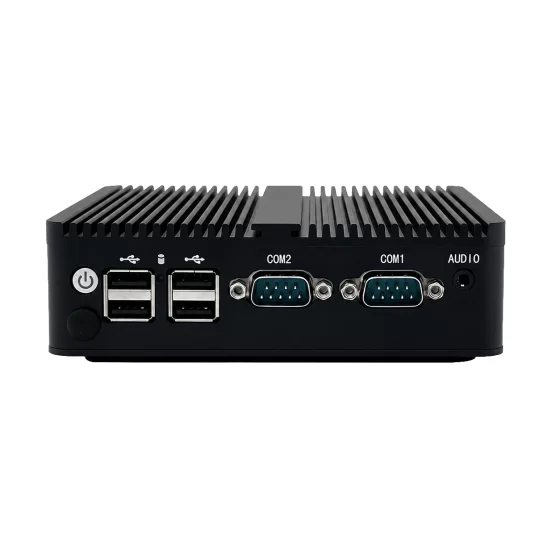
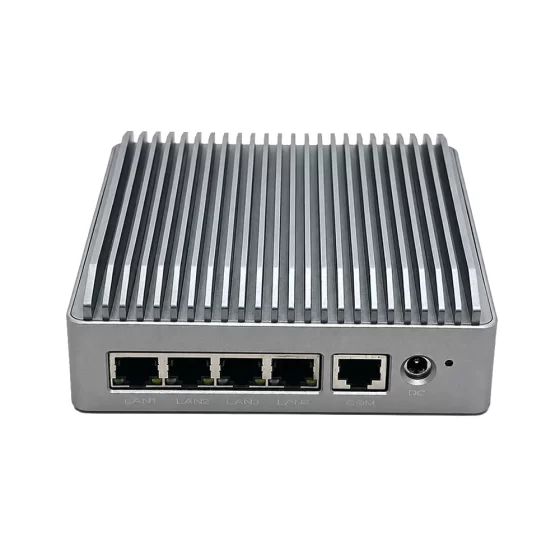
CoreIPC工业计算解决方案

AGV导航工业PC
执行摘要
Automated Guided Vehicles (AGV) 已成为现代智能工厂的重要组成部分, 仓库, 物流中心, and manufacturing facilities. 作为工业 4.0 initiatives accelerate worldwide, AGVs are increasingly deployed to automate material transportation, improve operational efficiency, reduce labor costs, and enhance workplace safety.
At the core of every AGV system is a reliable industrial computing platform responsible for navigation, sensor processing, path planning, 避障, 车队通讯, 和实时决策. Unlike traditional consumer computing systems, AGV applications require industrial-grade reliability, 长生命周期支持, 坚固的结构, and continuous operation capabilities.
An AGV Industrial PC provides the computing foundation necessary to support autonomous navigation technologies such as LiDAR, 机器视觉, SLAM (Simultaneous Localization and Mapping), 传感器融合, and wireless communication. These systems process large volumes of environmental data in real time while maintaining stable operation in challenging industrial environments.
This article explores AGV navigation technologies, 部署挑战, architecture design, key computing requirements, and how industrial PCs enable intelligent autonomous vehicle operation across modern industrial environments.
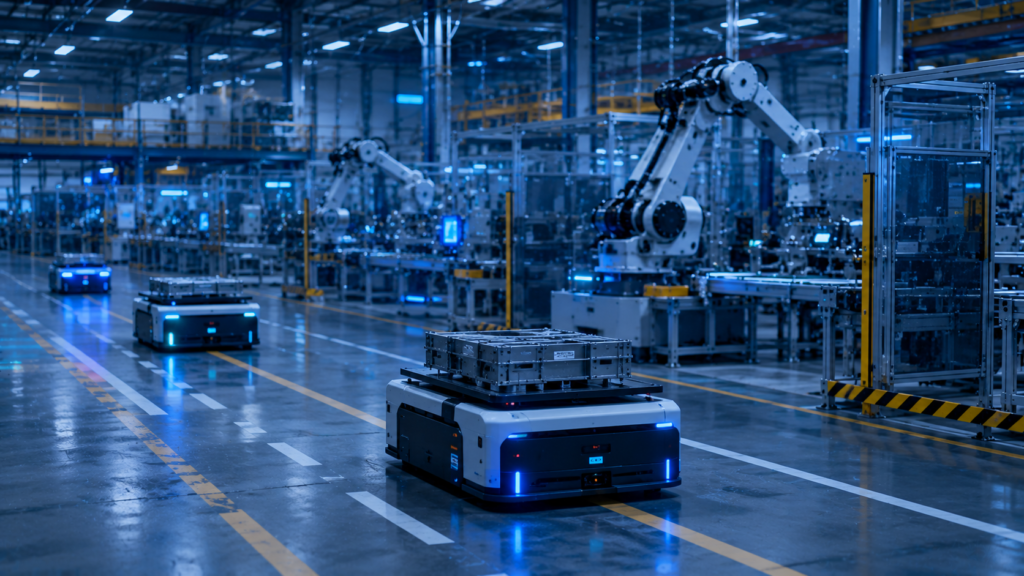
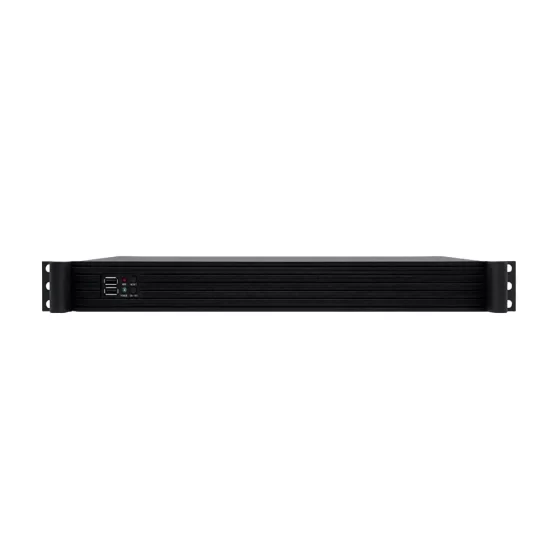
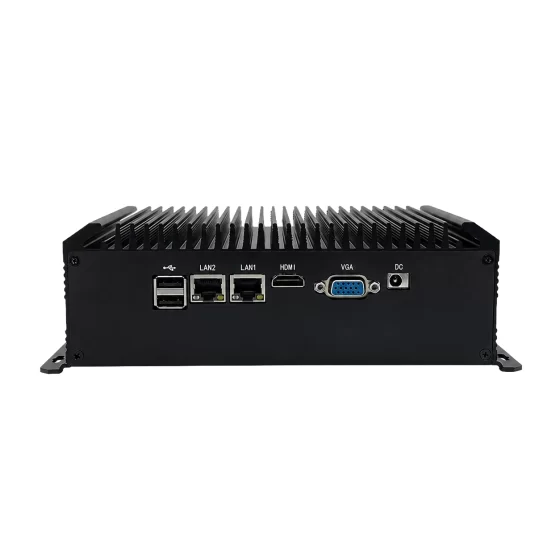
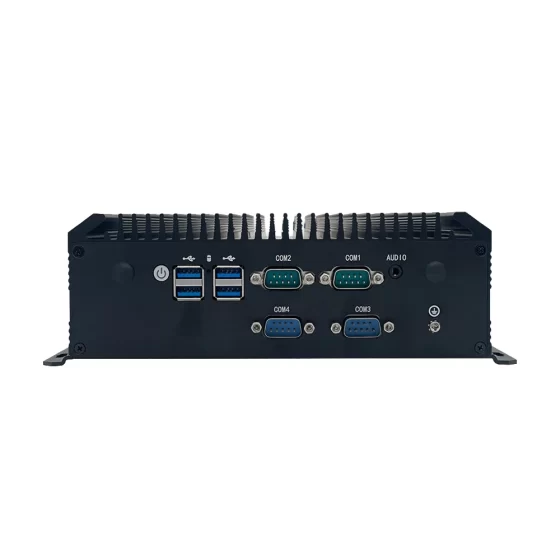
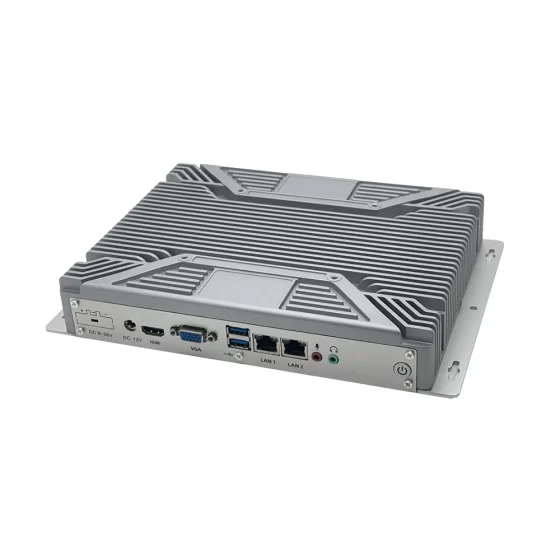
AGV industrial PCs support autonomous navigation, fleet coordination, and intelligent material handling in smart manufacturing and warehouse automation environments.
行业概况
The Rise of AGV Automation
Manufacturers and logistics providers increasingly rely on AGVs to automate material movement and streamline operations.
常见的应用包括:
- Warehouse logistics
- Manufacturing material transport
- Production line delivery
- Distribution centers
- Healthcare logistics
- Airport logistics
- E-commerce fulfillment centers
AGVs help organizations improve efficiency while reducing operational costs.
Evolution Toward Autonomous Systems
Traditional AGVs followed fixed routes using magnetic strips or predefined paths.
Modern AGV systems now incorporate:
- LiDAR navigation
- 机器视觉
- 人工智能算法
- Dynamic route planning
- Autonomous decision-making
- 车队管理
These technologies require significantly more computing power than previous generations.
行业 4.0 and Smart Logistics
行业 4.0 强调:
- Connected systems
- Real-time visibility
- 智能自动化
- Autonomous operation
- Data-driven decision-making
AGVs have become a critical component of smart factory ecosystems.
主要挑战
Real-Time Navigation Requirements
AGVs continuously process environmental information while moving.
Navigation systems must support:
- Millisecond-level response times
- Dynamic route updates
- Real-time localization
- Collision avoidance
Computing delays can directly impact safety and productivity.
Sensor Fusion Complexity
Modern AGVs typically utilize:
- 激光雷达传感器
- 工业相机
- Ultrasonic sensors
- IMU
- 编码器
- GPS系统
Integrating and processing data from multiple sources requires powerful industrial computing platforms.
Obstacle Avoidance
Industrial facilities are dynamic environments containing:
- Personnel
- Forklifts
- 设备
- Pallets
- Temporary obstacles
AGVs must identify and react to changing conditions instantly.
Wireless Communication Requirements
AGVs require continuous communication with:
- 车队管理系统
- 仓库管理系统
- 制造执行系统
- 云平台
Reliable networking is essential.
Harsh Operating Environments
Industrial deployments may involve:
- 灰尘
- 振动
- 温度波动
- 电磁干扰
Consumer-grade computers often cannot withstand these conditions.
Continuous Operation
AGVs frequently operate:
- 24/7
- Multi-shift environments
- Mission-critical logistics operations
Reliability is a primary requirement.
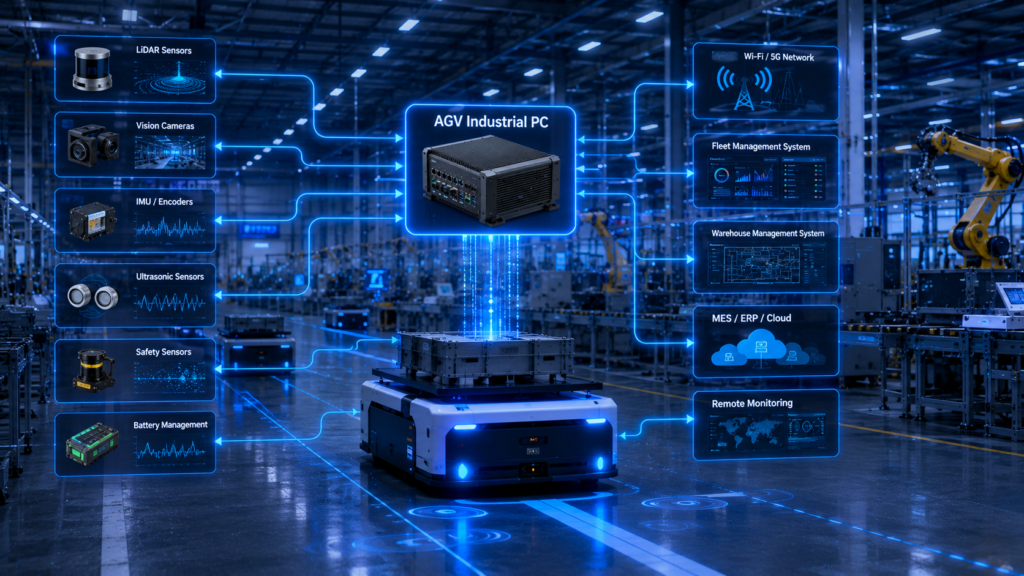
AGV industrial PC architecture integrating LiDAR, 机器视觉, 传感器融合, 车队管理, and enterprise systems for autonomous vehicle navigation.
解决方案架构
AGV Navigation System Architecture
Perception Layer
Environmental data is collected through:
- 激光雷达传感器
- Stereo cameras
- Depth cameras
- Ultrasonic sensors
- IMU
These devices continuously monitor surroundings.
工业计算层
The AGV Industrial PC performs:
- 传感器融合
- 本土化
- Path planning
- Navigation control
- Obstacle detection
- 人工智能推理
This layer serves as the brain of the AGV.
Motion Control Layer
Processed navigation decisions are transmitted to:
- 电机控制器
- Steering systems
- 安全系统
- Vehicle actuators
for vehicle movement.
连接层
通信协议可包括:
- 以太网
- 无线上网
- 5G
- MQTT
- OPC统一协议
These networks connect AGVs to facility infrastructure.
管理层
Enterprise systems include:
- Fleet management software
- 仓库管理系统平台
- 制造执行系统
- 企业资源计划系统
providing centralized operational control.
主要特点
1. 高性能处理
AGV Industrial PCs provide the computational resources required for:
- Navigation algorithms
- Sensor processing
- Real-time control
2. Sensor Fusion Support
Industrial computers integrate information from multiple sensors to improve navigation accuracy.
3. LiDAR Processing
LiDAR systems generate large amounts of environmental data that require real-time analysis.
4. 机器视觉能力
AGVs increasingly utilize cameras for:
- 导航
- 物体识别
- 安全监控
- Barcode reading
5. Real-Time Decision Making
Industrial PCs enable immediate responses to changing environmental conditions.
6. Wireless Connectivity
Support for Wi-Fi and industrial networking enables seamless fleet communication.
7. Fanless Reliability
Fanless designs improve reliability by eliminating moving parts and reducing maintenance requirements.
8. 紧凑型嵌入式设计
Compact form factors simplify installation inside AGV chassis.
9. 长生命周期支持
Industrial deployments require stable hardware availability and lifecycle management.
推荐的CoreIPC产品
嵌入式计算机
非常适合:
- Compact AGV systems
- Mobile robotics
- 空间受限的安装
好处:
- 占地面积小
- 低功耗
- 灵活集成
无风扇工业电脑
非常适合:
- AGV navigation systems
- 自动驾驶汽车
- Mobile automation
好处:
- 坚固的结构
- 高可靠性
- 免维护运行
边缘人工智能计算机
非常适合:
- Vision-guided navigation
- 物体识别
- AI-powered robotics
好处:
- GPU加速
- AI inference capability
- 实时分析
工业电脑
非常适合:
- High-performance AGV platforms
- Multi-sensor systems
- Complex navigation applications
好处:
- 扩展能力
- Processing performance
- 丰富的连接性
Mini-ITX 主板
非常适合:
- Custom AGV controller development
- Robotics OEM projects
好处:
- 灵活的系统设计
- 长生命周期支持
部署场景
智能制造
AGVs transport:
- Components
- Raw materials
- Finished products
between production areas.
仓库自动化
AGVs automate storage and retrieval processes to improve logistics efficiency.
E-Commerce Fulfillment
Distribution centers use AGVs for:
- Order picking
- Inventory movement
- Package transportation
Healthcare Logistics
Hospitals deploy AGVs to transport:
- Medical supplies
- Laboratory samples
- Pharmaceuticals
Airport Operations
AGVs support:
- Baggage handling
- Equipment transport
- Ground logistics
Smart Logistics Centers
AGVs improve material flow and operational visibility.
商业效益
提高生产力
Automated transportation reduces manual handling activities.
Reduced Labor Costs
AGVs help address labor shortages while lowering operational expenses.
提高安全性
Autonomous navigation minimizes risks associated with manual transportation.
更好的运营可见性
Fleet management systems provide real-time monitoring capabilities.
Higher Scalability
Organizations can expand AGV fleets as business requirements grow.
Enhanced Efficiency
Optimized routing improves material movement and facility throughput.
为什么选择CoreIPC
CoreIPC provides industrial computing platforms designed for robotics, AGV navigation, autonomous systems, 和智能自动化应用.
CoreIPC 功能包括:
- 工业计算机开发
- 嵌入式系统设计
- 贴牌生产
- ODM定制
- 长生命周期支持
- 工业级可靠性
- 全球部署经验
Whether building AGV navigation systems, warehouse automation solutions, or autonomous mobile robots, CoreIPC delivers reliable computing platforms for demanding mobile robotics environments.
常见问题解答
1. What is an AGV Industrial PC?
An AGV Industrial PC is an industrial-grade computing platform used for autonomous navigation, sensor processing, 车队通讯, and real-time decision-making within AGV systems.
2. Why do AGVs require industrial computers?
工业计算机提供可靠性, 表现, and environmental durability required for continuous operation.
3. What sensors are commonly used in AGVs?
激光雷达, 相机, 超声波传感器, IMU, 编码器, and GPS systems are commonly deployed.
4. What is sensor fusion?
Sensor fusion combines information from multiple sensors to improve navigation accuracy and environmental awareness.
5. Can AGV systems use machine vision?
是的. Machine vision is widely used for navigation, 物体检测, and safety applications.
6. What role does LiDAR play?
LiDAR provides precise environmental mapping and obstacle detection capabilities.
7. Are fanless industrial PCs suitable for AGVs?
是的. Fanless systems improve reliability and reduce maintenance requirements.
8. Can AGV Industrial PCs support AI applications?
是的. Many AGV systems use AI for navigation, 物体识别, and route optimization.
9. How do AGVs communicate with management systems?
Through Wi-Fi, 以太网, MQTT, OPC统一协议, and other industrial communication technologies.
10. What industries use AGVs?
制造业, 后勤, 卫生保健, airports, 仓储, and e-commerce industries commonly deploy AGVs.
11. What is SLAM?
SLAM stands for Simultaneous Localization and Mapping, enabling AGVs to navigate and map environments simultaneously.
12. What should be considered when selecting an AGV Industrial PC?
Processing performance, 连接性, 可靠性, 扩展能力, 生命周期支持, and environmental durability are key considerations.
结论
AGV Industrial PCs serve as the intelligent control center of modern autonomous vehicle systems. By supporting sensor fusion, LiDAR processing, 机器视觉, wireless communication, and real-time navigation, these industrial computing platforms enable AGVs to operate safely and efficiently in dynamic industrial environments. As automation continues to expand across manufacturing, 后勤, 卫生保健, and transportation sectors, selecting a reliable industrial computing platform becomes increasingly critical for successful AGV deployments.
联系我们
Looking for an AGV Industrial PC solution?
CoreIPC提供工业计算平台:
- AGV Navigation
- AMR Systems
- 机器人技术
- 仓库自动化
- 机器视觉
- 边缘人工智能
- 智能制造
- 代工项目
- ODM项目
Contact CoreIPC today to discuss your AGV navigation requirements and identify the ideal industrial computing platform for your autonomous vehicle project.